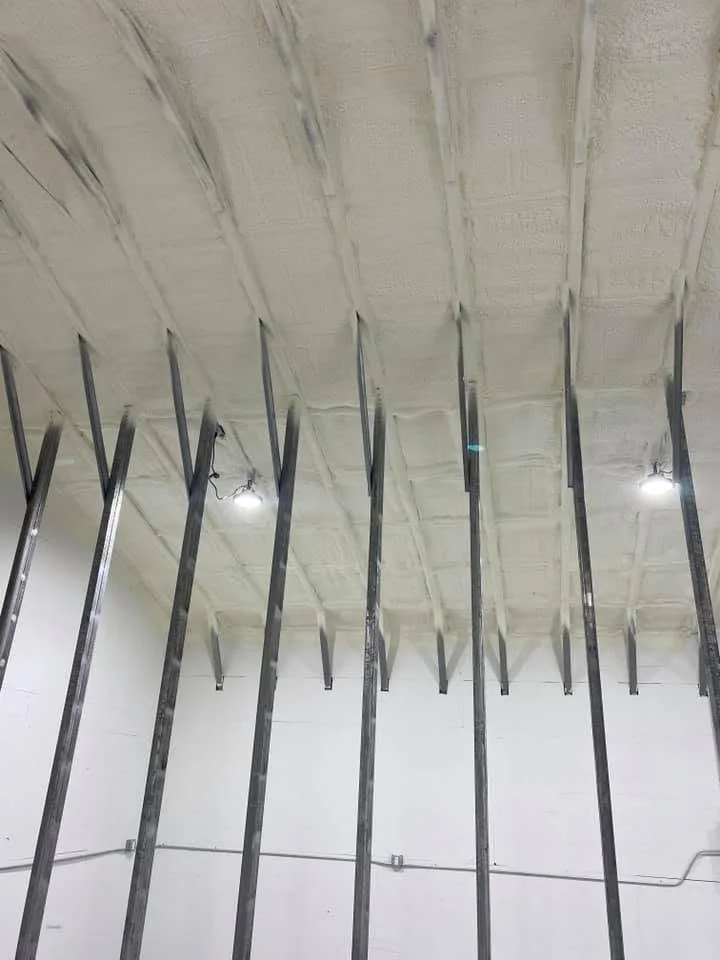
How Does Residential Spray Foam Insulation Protect Victor, ID Homes From Extreme Cold and Moisture Damage?
Skeeter Aimone
August 24th, 2026
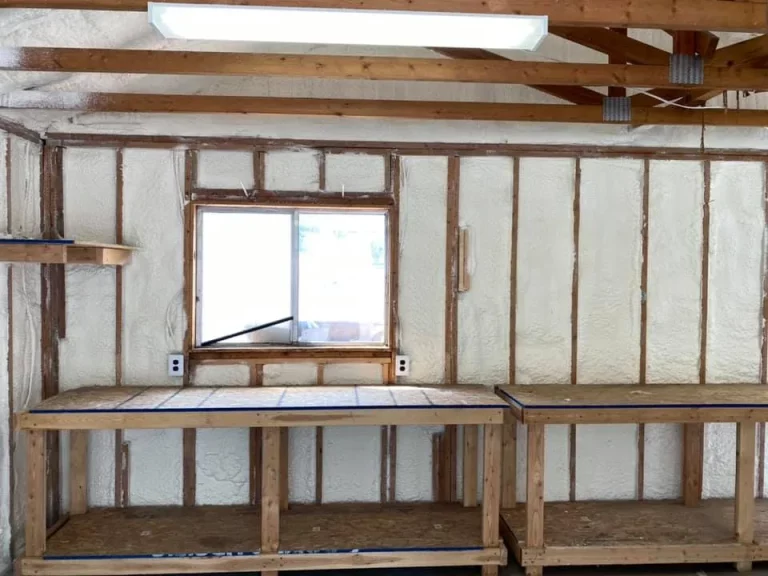
Residential spray foam insulation protects Victor, ID homes from extreme cold and moisture damage by serving as a single material that provides thermal resistance, air sealing, vapor control, and water resistance simultaneously. In a climate where January temperatures regularly drop below zero and snowmelt moisture drives condensation risk inside wall and roof assemblies, spray foam insulation guidance can help homeowners understand how different applications address these building-envelope challenges. The right type and application of spray foam depends on the specific building assembly, whether it is a wall, roof, crawlspace, or basement, and the IECC climate zone requirements for your area.
TL;DR
Spray foam provides continuity of water, air, vapor, and thermal control layers in a single application, which is unique among insulation materials
Victor, ID sits in a cold climate zone (IECC Zone 6 or 7) where condensation control and high R-values are both code-mandated
Closed-cell spray foam delivers R-5.5 to R-6.5 per inch and acts as a Class II vapor retarder at 1.5 inches, making it the preferred choice for cold-climate wall assemblies
Open-cell spray foam at R-3.6 per inch works in some applications but requires a separate interior vapor retarder in cold climates
Idaho experiences extreme winter temperature swings with seasonal precipitation concentrated November through May, creating persistent moisture pressure on building envelopes
ENERGY STAR recommends R-49 to R-60 for attics and R-38 for floors in zones 6 through 8
Air sealing with spray foam at rim joists, wall tops, and penetrations addresses the leakage paths that account for a large share of residential heat loss
The 2021 IECC specifies both R-value and air barrier criteria that spray foam can satisfy in a single step for many assemblies
Why Victor’s Climate Demands More Than Basic Insulation
Victor sits in Teton Valley at roughly 6,200 feet elevation, where winters are long and cold with January average highs around 25°F and lows near 8°F. Idaho’s climate is characterized by large seasonal temperature differences, cold winters, and the majority of precipitation falling during the cool season from November through May. The state also experiences extreme precipitation events that have been trending upward since 2000, increasing flood and moisture-load risks for residential structures (Idaho State Climate Summary 2022 – NOAA NCEI / NCICS).
This combination of sustained sub-freezing temperatures and seasonal moisture creates a specific problem for homes: warm indoor air carries water vapor that wants to move toward the cold exterior. When that vapor meets a surface below its dew point inside a wall or ceiling cavity, condensation forms. Over time, that trapped moisture causes rot, mold, and structural decay, so homeowners considering professional help can see our Google reviews before choosing a contractor. None of this damage is visible until the damage is extensive.
The U.S. EPA recommends reducing condensation potential by raising the temperature of cold surfaces using insulation, and by keeping indoor relative humidity below 25% when outdoor temperatures reach -10°F. For Victor homeowners, that means the building envelope has to do two things at once: resist conductive heat loss and prevent interior moisture from reaching cold surfaces where it can condense.
How Spray Foam Handles the Four Control Layers
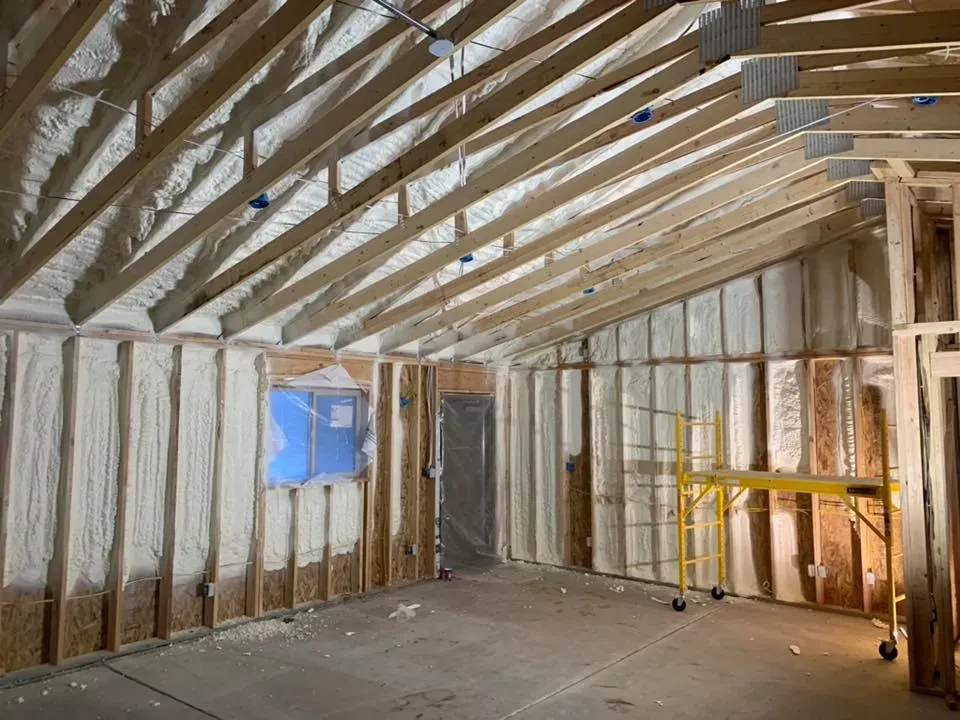
According to Building Science Corporation, spray polyurethane foam is unique among insulation materials because it has the ability to provide continuity of all four environmental separation layers: water control, air control, vapor control, and thermal control. Traditional insulation like fiberglass or cellulose only addresses thermal resistance. Spray foam expands into gaps, cracks, and irregular surfaces, creating a monolithic seal that blocks air movement and moisture transport while delivering high R-value per inch.
In practice, this means spray foam applied to rim joists, wall cavities, roof decks, or foundation walls creates a continuous barrier with no gaps around framing members, plumbing penetrations, or electrical runs. That continuity is what separates an effective insulation job from one that still allows heat loss and moisture migration through hundreds of small leaks.
Closed-Cell vs. Open-Cell Spray Foam for Victor Homes
Not all spray foam performs the same way in cold, wet conditions. The two types serve different purposes, and choosing the wrong one for a given assembly in Victor’s climate can lead to condensation problems.
Property
Closed-Cell Spray Foam
Open-Cell Spray Foam
R-Value per Inch
R-5.5 to R-6.5
R-3.6
Vapor Permeability
Acts as a Class II vapor retarder at 1.5 inches
Vapor permeable
Density
High (approximately 2.0 lb/ft³)
Low (approximately 0.5 lb/ft³)
Air Barrier
Yes, at any sprayed depth
Yes, at minimum classified depth
Water Resistance
Resists liquid water absorption
Absorbs and holds water
Best Victor Applications
Exterior walls, rim joists, basement walls, unvented roofs, crawlspaces
Interior wall cavities (with separate vapor retarder), sound attenuation
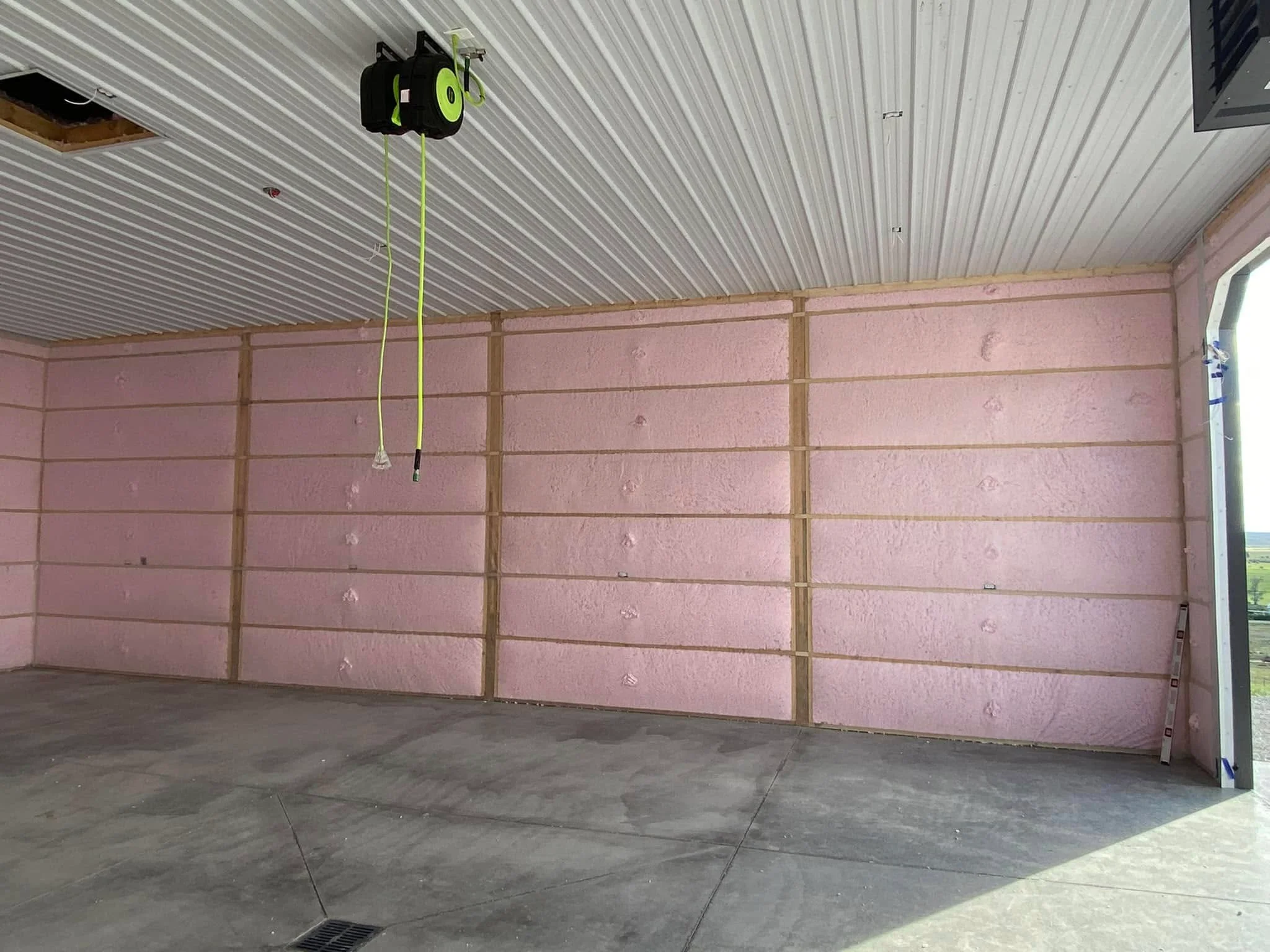
Building Science Corporation recommends high-density closed-cell spray foam in IECC Climate Zones 5 and higher because it provides additional condensation control and qualifies as a Class II vapor retarder at 1.5 inches thickness. For unvented conditioned attics in these zones, residential spray foam services can address the specific insulation and moisture-control requirements of these assemblies. Low-density open-cell foam can work in wall assemblies in cold climates, but only when paired with an interior vapor retarder such as vapor retarder paint on the gypsum board.
For Victor homeowners, closed-cell is the safer, more versatile choice across most building assemblies, particularly at rim joists, basement walls, and any below-grade or crawl space applications where moisture exposure is highest.
Where Spray Foam Delivers the Most Protection
Rim Joists and Floor Assemblies
The rim joist area where the floor framing meets the foundation is one of the most leak-prone locations in any home. The DOE identifies rim joists as a priority air-sealing location, recommending caulk or spray foam to seal each joist bay from the interior. In Victor’s climate, air leaking through rim joists carries warm, moist air into a cold zone, driving condensation on cold framing and sheathing. Closed-cell spray foam applied to rim joists provides both the air seal and the vapor retarder needed to prevent this.
Basement and Crawlspace Walls
Building Science Corporation recommends closed-cell spray foam on the interior of concrete basement foundation walls in IECC Climate Zones 5 and higher. The cold concrete surface is a prime condensation target, and spray foam applied directly to the concrete keeps interior air from reaching that cold surface. For vented crawlspaces, only high-density closed-cell spray foam should be used across all climate zones to keep moisture-laden crawl space air out of the floor assembly.
Attics and Roof Assemblies
For unvented conditioned attics, spray foam applied directly to the underside of the roof deck creates the thermal, air, and vapor control layers in a single application. In IECC Climate Zones 5 and higher, only closed-cell foam is recommended for this purpose. A hybrid approach is also possible, where a layer of closed-cell foam provides the vapor control and air seal, and a second layer of open-cell foam or fiberglass fills the remaining cavity for added R-value.
Code Requirements for Victor’s Climate Zone
Victor falls within IECC Climate Zone 6 or 7, depending on the specific mapping reference used. Guidance from the U.S. Department of Energy and recommendations from ENERGY STAR both specify high insulation levels for these zones.
Building Component
Zones 6 Requirement
Zones 7 and 8 Requirement
Uninsulated Attic
R-60
R-60
Existing Attic (3-4 inches present)
R-49
R-49
Wood Frame Wall (2×4, uninsulated)
R-20 + R-5 CI or R-13 + R-10 CI
R-20 + R-5 CI or R-13 + R-10 CI
Floor Over Unconditioned Space
R-30
R-38
Basement/Crawlspace Wall
R-15 CI or R-19 batt
R-15 CI or R-19 batt
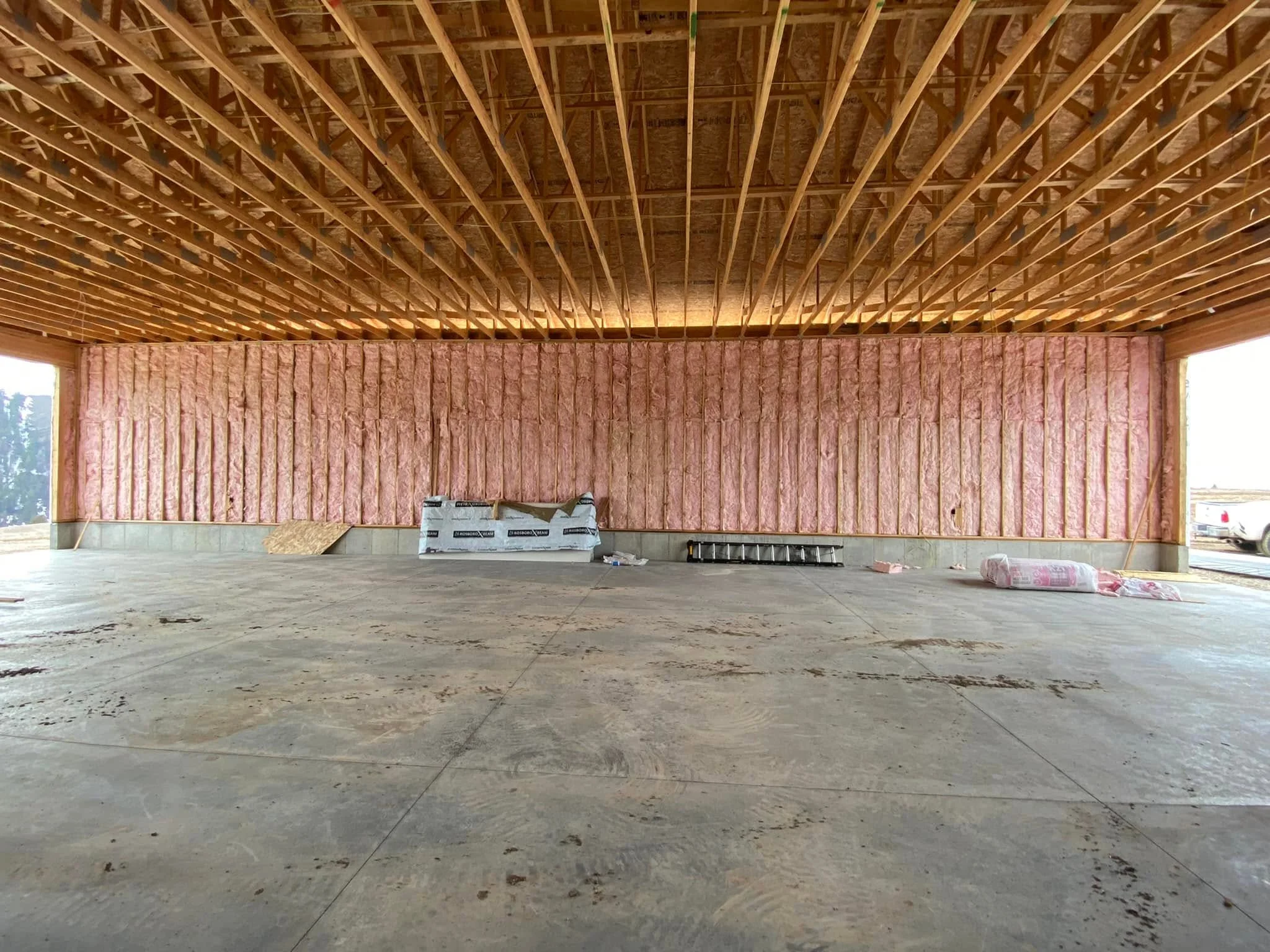
Closed-cell spray foam at approximately R-6 per inch can achieve these wall requirements in fewer inches than fiberglass or cellulose, which is a significant advantage in retrofit applications where cavity depth is limited to standard framing dimensions.
Recommendations by Home Type
New Construction in Victor: Use closed-cell spray foam in wall cavities for thermal, air, and vapor control in one step. Apply closed-cell foam to basement walls and rim joists. Consider an unvented conditioned attic with closed-cell foam on the roof deck to bring ductwork and mechanical systems inside the conditioned envelope.
Existing Homes With Fiberglass Insulation: The highest-impact upgrade is air sealing and insulating the rim joists with closed-cell spray foam, followed by sealing attic penetrations and adding R-value to meet the R-49 to R-60 target. Wall cavity upgrades are more invasive but can be addressed when re-siding.
Homes With Unconditioned Crawlspaces: Seal and insulate the floor framing above the crawlspace with closed-cell spray foam, or convert to a conditioned crawlspace by insulating the perimeter walls and providing air exchange with the living space.
Signs You’ve Found the Right Insulation Approach
The provider explains which foam type (closed-cell vs. open-cell) they recommend for each specific assembly and why, rather than applying one product everywhere
They discuss vapor retarder requirements and condensation control, not just R-value
The proposal addresses air sealing at rim joists, top plates, penetrations, and other priority leakage locations identified by the DOE
They reference IECC climate zone requirements for your area and design the installation to meet or exceed those standards
They explain how the insulation integrates with your home’s ventilation strategy, since a tighter envelope requires controlled fresh air intake
Protect Your Victor Home With High Country Solutions
Our team at High Country Solutions has the experience and building science knowledge to recommend and install the right spray foam solution for your Victor home’s specific needs. We assess each assembly, from rim joists to roof decks, and apply the foam type and thickness that match your climate zone, building design, and moisture control requirements.
Call us at (307) 248-9063 or email [email protected] to get started. Proper insulation is not a seasonal concern; it is the foundation of a durable, comfortable, and efficient home in the Teton Valley.
FAQs
Is spray foam insulation worth it for an older Victor home that already has fiberglass?
Yes, the biggest gains come from air sealing rim joists and attic penetrations with spray foam, which fiberglass cannot do regardless of its R-value.
Can spray foam cause moisture problems if installed incorrectly?
Incorrect foam type selection, such as using open-cell in a cold-climate wall without a vapor retarder, can allow condensation. Proper material selection and installation prevent this.
How does spray foam handle the freeze-thaw cycles common in Teton Valley?
Closed-cell spray foam adheres to substrates and expands to fill gaps, maintaining its seal through thermal cycling without the settling or compression that affects batt insulation.
Does spray foam insulation require any special ventilation upgrades?
A tighter building envelope reduces uncontrolled air leakage, so mechanical ventilation may be needed to maintain indoor air quality, but this depends on your existing HVAC system.
What is the difference between using spray foam in a vented versus unvented attic?
In an unvented attic, closed-cell foam is applied directly to the roof deck to serve as the air, vapor, and thermal barrier. In a vented attic, spray foam is used to seal the ceiling plane while air-permeable insulation fills the attic floor.
Sources
Residential Spray Foam Guide – Building Science Corporation – Comprehensive technical guide covering spray foam applications in walls, roofs, and foundations across all IECC climate zones, including condensation control requirements and vapor retarder specifications.
I’m Skeeter Aimone, owner of High Country Solutions in Alpine, Wyoming, leading the company since 2019. I focus on quality installation, building science, and insulation solutions suited to harsh Wyoming and eastern Idaho conditions.