How Does Residential Spray Foam Insulation in Driggs, ID Support a Tighter Building Envelope?
Skeeter Aimone
September 11th, 2026
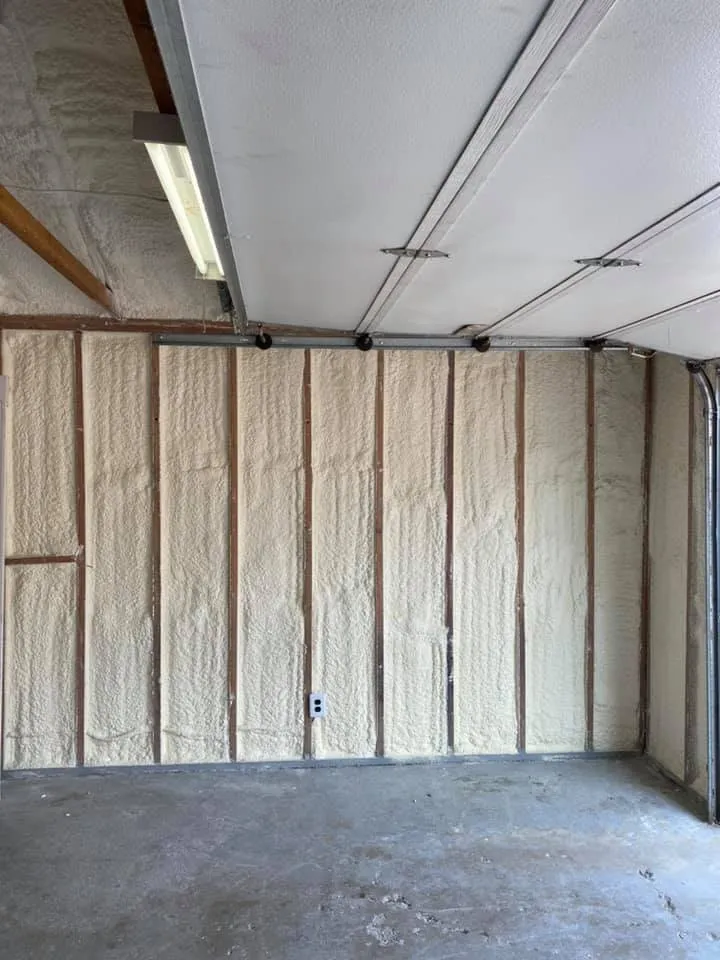
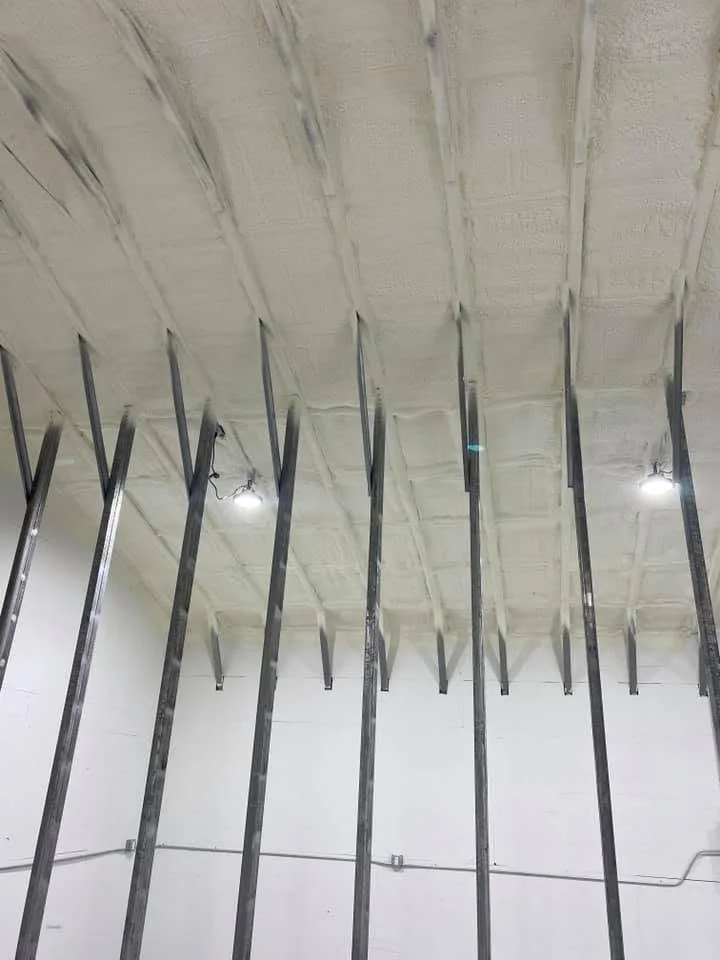
Residential spray foam insulation in Driggs, ID supports a tighter building envelope by expanding up to 30 to 60 times its liquid volume as it cures, filling the gaps, cracks, and penetrations where air would otherwise pass through walls, rooflines, and rim joists. Because Driggs sits at 6,145 feet in Teton Valley and posts January lows that average near 9°F, spray foam insulation for homes can help address heat loss through air leakage in residential assemblies. Closed-cell foam serves wall cavities, crawlspaces, and moisture-exposed assemblies by acting as both an air barrier and a vapor barrier, while open-cell foam fits interior walls and attic applications where vapor permeability is acceptable. The right choice depends on the assembly, moisture exposure, and whether the project is new construction or a retrofit.
TL;DR
Spray polyurethane foam expands up to 60 times its liquid volume, sealing cavities that batt and blanket products cannot reach
U.S. Department of Energy research indicates roughly 40% of a home’s energy is lost to air infiltration through walls, windows, and doorways
Closed-cell foam delivers about R-5.5 to R-6.5 per inch and works as an air and vapor barrier; open-cell delivers about R-3.8 per inch and becomes an air barrier at 5.5 inches or thicker
Driggs averages about 69 inches of snow per year and has recorded a low of -50°F, so heating losses dominate annual energy use
Convective loops inside poorly sealed walls and ceilings can account for 10% to 20% of heat loss on their own
Blower door testing verifies envelope tightness with a measurable ACH50 number
Tighter homes need planned mechanical ventilation rather than random air leaks
Why the Driggs Climate Makes Building Envelope Tightness Matter
The building envelope is the physical separator between conditioned and unconditioned space, and its control job covers rain, air, heat, and vapor in that order of importance (Wikipedia – Building Envelope). In cold-climate buildings, space heating consumes the largest share of energy, which is exactly why air sealing pays off most in places like Teton Valley.
Driggs has a humid continental climate with large seasonal temperature swings. January mean daily minimums sit near 9.3°F, the record low reached -50°F, and the area averages about 68.8 inches of snow each year (Wikipedia – Driggs, Idaho). Understanding the demands of this climate is important when reviewing a residential spray foam insulation guide, especially because cold climates require careful control of air and moisture movement. Winter temperature differences between inside and outside drive heated air through every unsealed gap. Cold climates are also especially demanding on moisture control, so a high-mountain envelope has to manage air and vapor together, not just insulation thickness.
How Spray Foam Insulation Air-Seals the Envelope
Spray foam begins as a two-component liquid that reacts at the spray gun and expands into a cellular structure that adheres to the substrate, filling cracks, crevices, and voids while conforming to irregular surfaces (Wikipedia – Spray Foam). That expansion is what sets it apart: the insulation and the air barrier form in a single step, producing a continuous seal rather than a material that simply sits inside a cavity.
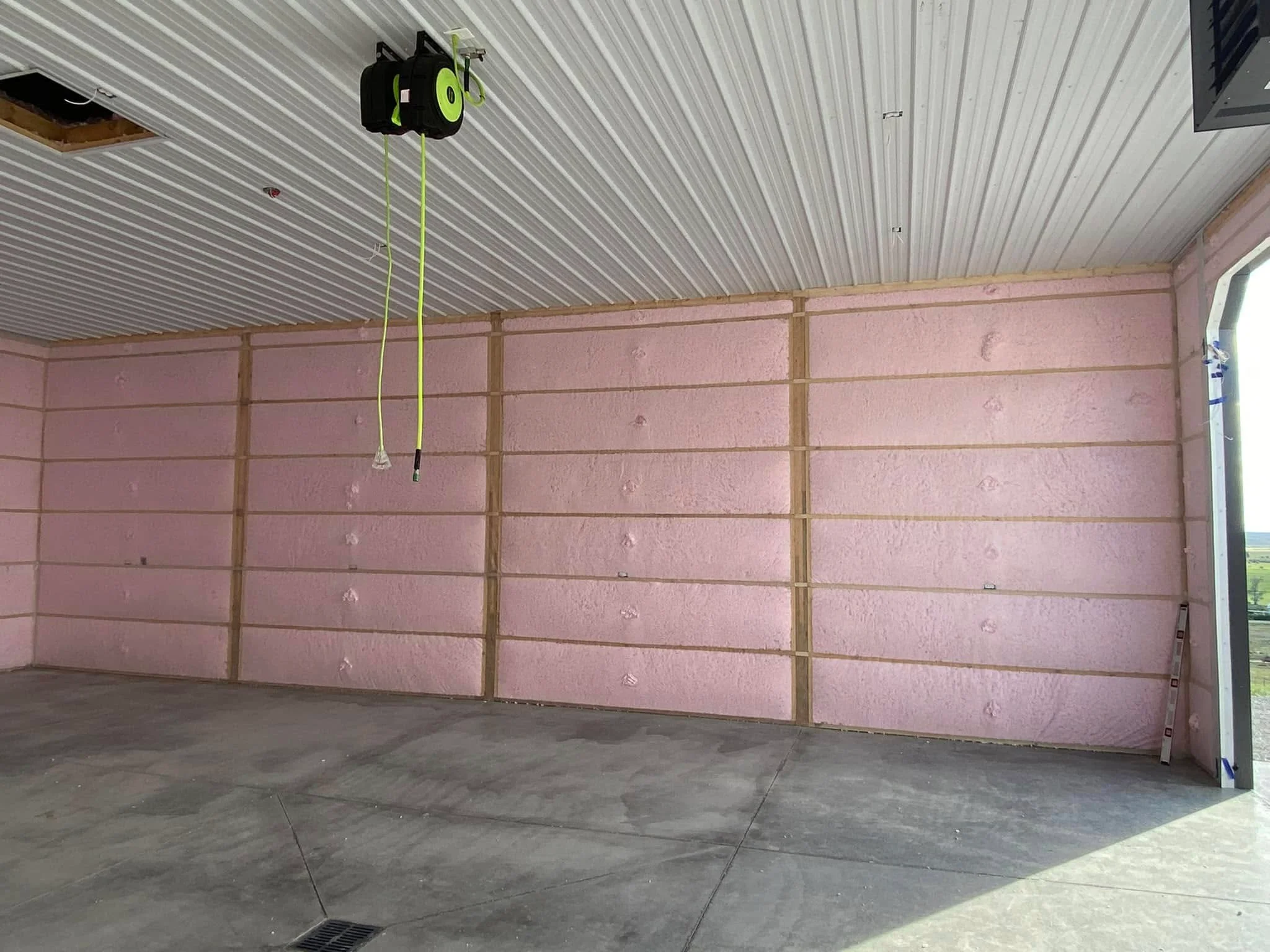
Foam also blocks all three modes of heat transfer. Its cell structure slows conduction, its opacity limits radiant transfer, and its air-sealing ability stops convective heat transfer, which moves the most heat through a leaky assembly. Fibrous insulation placed between studs reduces air leakage but does not eliminate it, which is why the airtight seal directly against the substrate is considered one of the primary values of spray foam (Wikipedia – R-value (Insulation)).
Open-Cell vs. Closed-Cell Spray Foam: Matching Product to Assembly
Property
Open-Cell Foam
Closed-Cell Foam
Typical R-value per inch
About R-3.8
About R-5.5 to R-6.5
Air barrier performance
Requires 5.5 inches or more
Functions at roughly 2 inches (50 mm)
Vapor barrier behavior
No, stays vapor permeable
Yes, at minimum thickness
Character
Soft, sponge-like, sound absorbent
Rigid, dense, adds structural integrity
Best uses
Interior walls, attic assemblies, sound control
Exterior walls, crawlspaces, rim joists, roof decks
In Driggs, the vapor question matters as much as the R-value. Because cold climates place heavy demands on moisture control, closed-cell is often the fit for assemblies that face outdoor conditions directly, while open-cell works where drying toward the interior is desired and sound damping is a bonus.
Why R-Value Alone Does Not Create a Tight Envelope
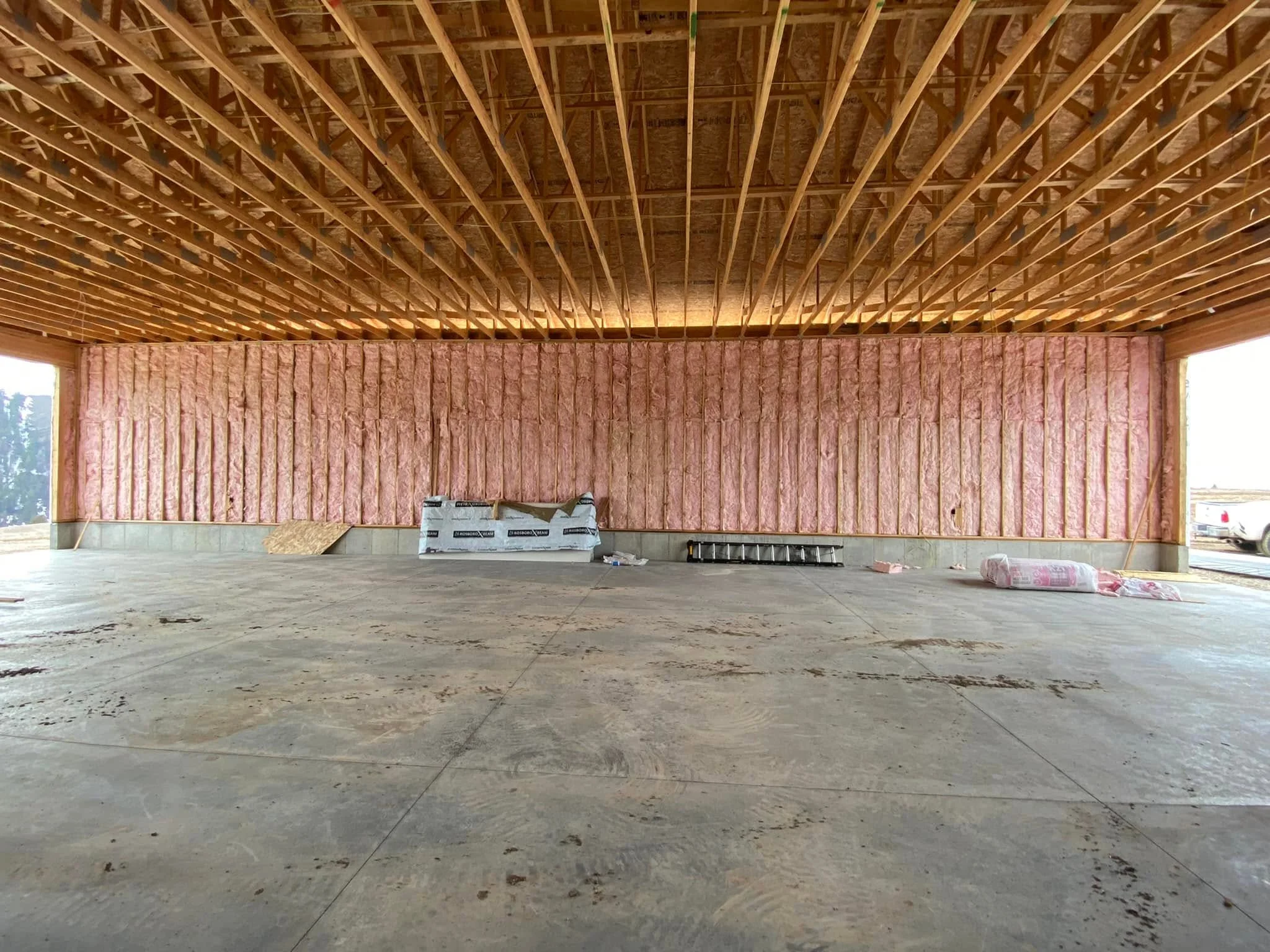
R-value measures conductive resistance under steady laboratory conditions. It does not reward air sealing, and it does not stop framing members from short-circuiting the insulation. Studs create a parallel heat path, so doubling the R-value between studs yields substantially less than a doubling of whole-wall performance, as noted in our local reviews on Google. Fiberglass batts, for example, rate around R-3.1 to R-4.3 per inch, yet a leaky assembly can still underperform.
Air movement is the bigger wildcard. Windwashing and convective loops inside walls and ceilings can account for 10% to 20% of heat loss by themselves (Wikipedia – Building Envelope). A tight envelope attacks those losses directly by stopping the air that carries the heat out.
Verifying Tightness With a Blower Door Test
A blower door is a calibrated fan sealed into an exterior doorway with a pressure gauge. It pressurizes or depressurizes the house, forcing air through every hole in the envelope so leakage can be measured and located. Wikipedia – Spray Foam.
The most common residential metric is ACH50, air changes per hour at 50 pascals, which lets homes of different sizes be compared fairly. The same test produces an effective leakage area, often described to homeowners as the size of a window left open around the clock. Paired with an infrared camera during depressurization, it shows exactly where remaining leaks sit.
Tight Envelope, Planned Fresh Air
Blower door testing also determines whether a home needs mechanical ventilation once it is tight. The goal is not a house that cannot breathe; it is a house that breathes on purpose through controlled ventilation instead of through random gaps in the walls.
Recommendations by Home Type in Teton Valley
Home Type
Recommended Approach
Key Notes
Expected Outcome
New construction
Closed-cell at walls and roof deck
Seal as you build, test before drywall
Verified ACH50 result with continuous insulation
Existing home, cold floors
Closed-cell at rim joists and crawlspace
Small areas carry a large share of leakage
Warmer floors and reduced winter infiltration
Attic retrofit
Open-cell at 5.5 inches or more
Reaches air-barrier thickness
Slowed heat loss plus sound control
Existing walls
Injection foam through small drilled holes
Retrofits cavities without opening walls
Improved performance in finished assemblies
Signs You Have Found the Right Approach
The right installer talks in numbers, not adjectives. Look for:
A clear explanation of open-cell versus closed-cell and why each fits a given assembly
ACH50 targets and blower door verification written into the project scope
A ventilation plan for the home once it is tight
Surface prep, temperature, and curing protocols, since applied foam needs correct conditions to perform
A written scope stating product type, installed thickness, and resulting R-value
Seal Your Envelope With High Country Solutions
At High Country Solutions, we install residential spray foam insulation throughout Driggs and the greater Teton Valley, and we plan every project around the air barrier, vapor control, and R-value your specific assembly needs. Email us at [email protected] or call (307) 248-9063 to talk through your home with our team.
Let us help you build an envelope that holds heat through every Teton Valley winter.
Frequently Asked Questions
How does spray foam create a tighter building envelope than fiberglass batts?
Spray foam expands up to 60 times its liquid volume and adheres to framing, sealing gaps as it installs. Batt insulation only slows conduction and leaves leakage paths around wiring, studs, and top plates.
What does a blower door test actually measure?
It measures air changes per hour at 50 pascals (ACH50), with lower numbers indicating a tighter envelope. The test also pinpoints specific leak locations so they can be addressed.
Is closed-cell foam necessary for the Driggs climate?
Closed-cell is the stronger fit for assemblies exposed to outdoor conditions because it functions as both an air barrier and a vapor barrier at about 2 inches. Open-cell remains a good option for interior walls and attics with proper vapor management.
Will an airtight home cause indoor air quality problems?
Only if ventilation is ignored. A tight home simply needs planned mechanical fresh air, and blower door results help confirm how much ventilation to provide.
Can spray foam be installed in an existing Driggs home?
Yes. Common retrofits include rim joists, crawlspaces, attics, and injection foam applied through small drilled holes in finished walls, all without major demolition.
Sources
Wikipedia – Spray Foam – Covers how spray polyurethane foam expands and cures, the differences between open-cell and closed-cell products, and Department of Energy findings on air infiltration energy loss.
Wikipedia – Driggs, Idaho – Provides NOAA-based climate normals for Driggs, including January temperature minimums, record lows, annual snowfall, and elevation in Teton Valley.
Wikipedia – Building Envelope – Defines the building envelope and its air, heat, rain, and vapor control functions, including research on convective loop heat loss in cold climates.
Wikipedia – Blower Door – Explains blower door equipment, ACH50 metrics, effective leakage area, and how airtightness testing verifies envelope quality.
Wikipedia – R-value (Insulation) – Details R-values for spray foam and other insulation types, thermal bridging through framing, and the role of air sealing in real-world insulation performance.
I’m Skeeter Aimone, owner of High Country Solutions in Alpine, Wyoming, leading the company since 2019. I focus on quality installation, building science, and insulation solutions suited to harsh Wyoming and eastern Idaho conditions.