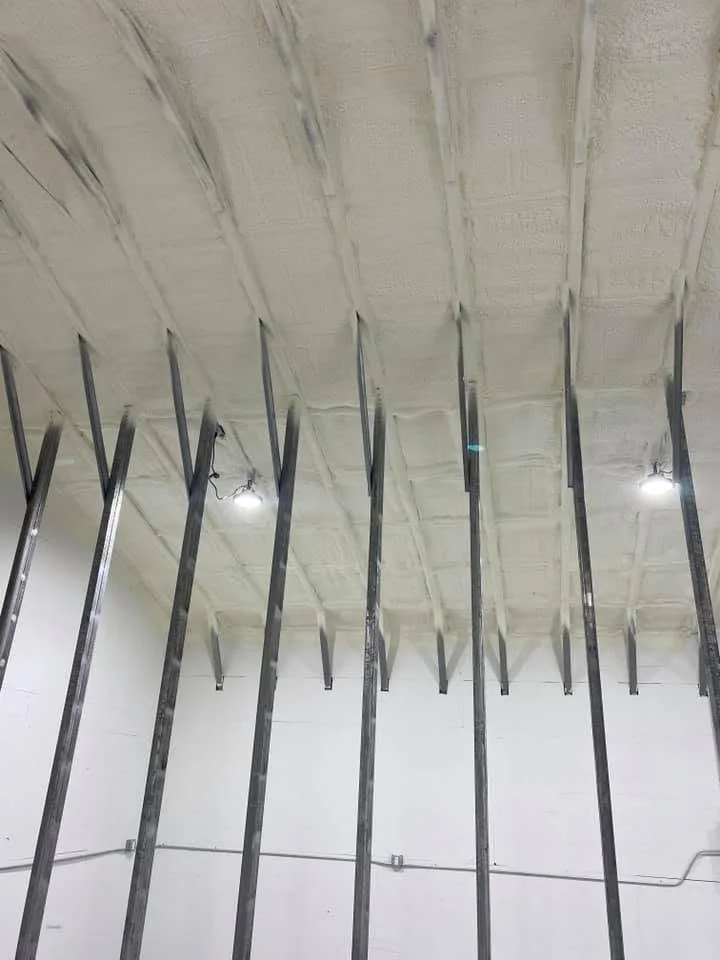
How Spray Foam Helps Keep Pipes from Freezing in Winter
Skeeter Aimone
October 24th, 2025
Property owners in cold-weather regions ask us the same question every fall: Will spray foam insulation keep pipes from freezing when the temperature suddenly drops? The answer is yes, and spray foam insulation protection explains how the material helps protect plumbing in cold conditions. Spray foam expands on contact, sealing every gap that frigid air could sneak through, then cures into one unbroken shield around the plumbing. Batts and sleeves leave seams where cold air slips in, but this material gives the cold nowhere to get a grip.
A ruptured water line is never just a plumbing bill. Residential spray foam contractor services can help protect vulnerable plumbing by improving insulation and air sealing around the home. One split pipe can pour out gallons of water every minute, soaking drywall, flooring, and everything you own, and the dampness left behind often invites mold. This guide breaks down exactly how this insulation method helps prevent that disaster before it starts. Our team at High Country Solutions has insulated hundreds of homes and buildings in harsh winter country, and we have packed everything property owners should know into the sections below.
The Physics Behind a Burst Pipe
A common myth claims ice splits pipes by pushing outward. The real culprit is pressure. As water freezes, it swells by roughly 9 percent, according to the University of Illinois Extension, forming a plug of ice inside the line. Liquid trapped between that plug and the nearest closed faucet keeps pressurizing, and the force can climb past 2,000 PSI, enough to split copper, steel, or even iron. A popular thread on Reddit’s r/homeowners community explains this same principle: the pipe fails somewhere between the freeze and the faucet, not at the ice itself.
Some runs are far more exposed than others. The most vulnerable plumbing is usually found in:
Crawl spaces
Attics
Basements, especially along the rim joists
Exterior walls
Garages
Insulation that keeps the pipe wall, and the water inside it, above 32°F (0°C) is what stands between these runs and a pressure blowout.
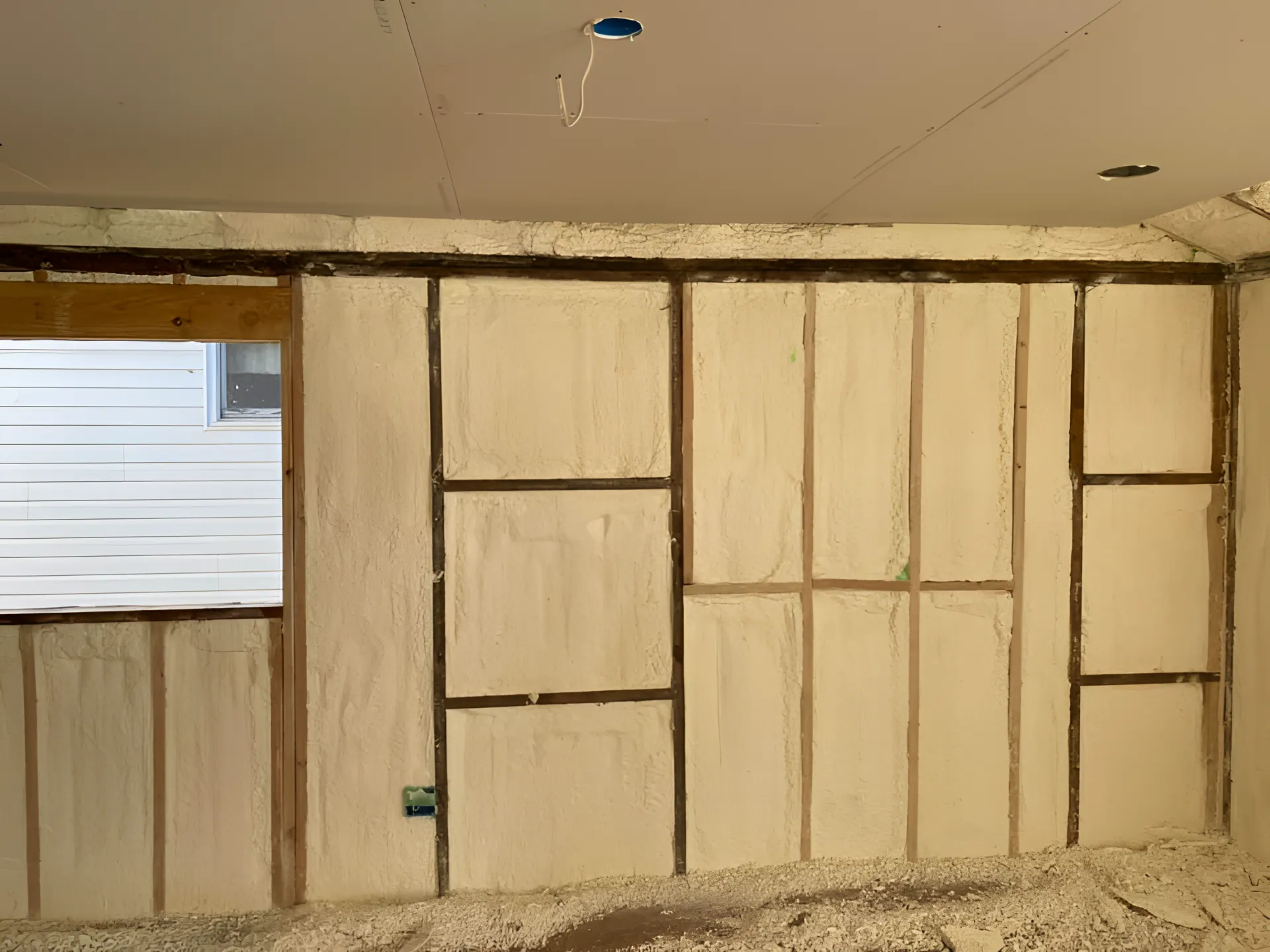
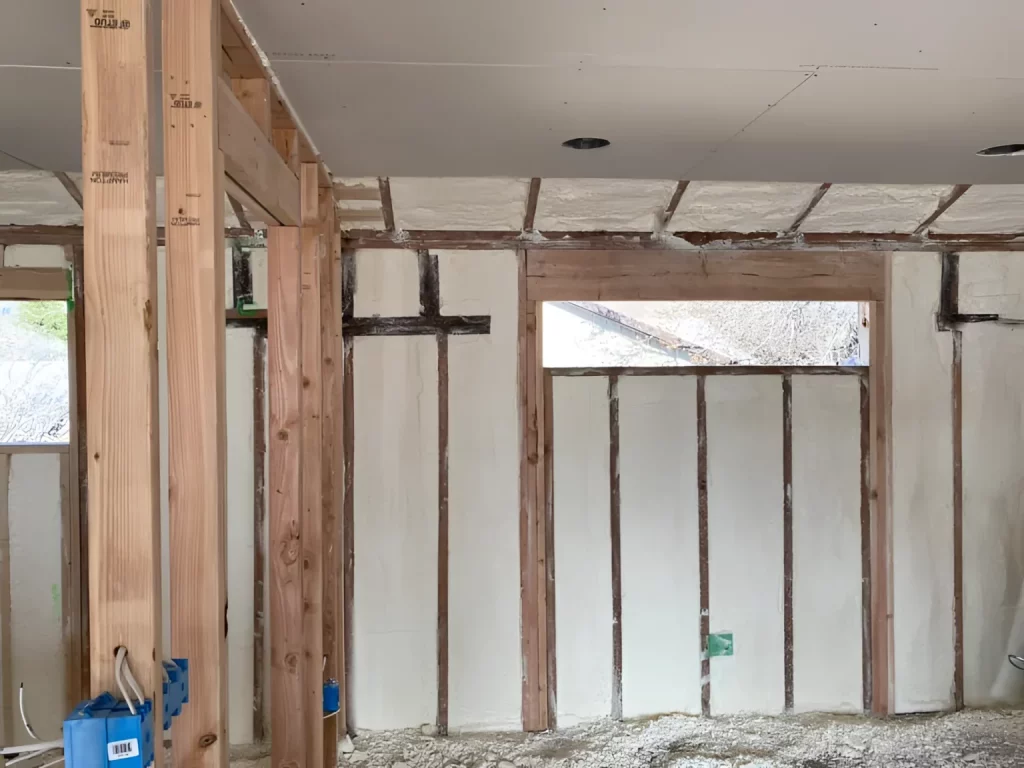
How Spray Foam Pipe Insulation Builds Its Shield
Spray polyurethane foam (SPF) starts as two liquid parts that combine at the tip of the spray gun. The moment the blended material lands on a surface, a chemical reaction kicks in and the foam balloons up to 60 times its original volume before curing into a rigid mass. That dramatic expansion is what lets it reach the awkward gaps no other product can.
Two varieties exist, and one is the clear winner for plumbing protection.
Closed-Cell Spray Foam
For spray foam for pipes, closed-cell is the version our crew recommends without hesitation. It cures dense and rigid, delivers roughly R-6 to R-7 per inch, and traps a low-conductivity gas inside each cell. Just as valuable, cured closed-cell foam refuses to soak up water and acts as a vapor barrier, which stops condensation from forming on cold pipe surfaces in damp spaces and heading off corrosion and mold.
Open-Cell Spray Foam
Open-cell foam is softer, lighter, and rated near R-3.5 per inch. Its ruptured cell walls absorb and hold water the way a sponge does. It has legitimate uses, sound dampening among them, but in a damp crawl space it would stay wet against your plumbing, so we never suggest it for this job.
Comparing Pipe Insulation Spray Foam With Other Materials
If you are hunting for the best pipe insulation to prevent freezing, the table below makes the winner obvious. Fiberglass lets air drift through it, and foam sleeves only perform if every seam is taped perfectly.
Feature
Closed-Cell Spray Foam
Fiberglass Batts
Foam Pipe Sleeves
R-Value per Inch
6.0 to 7.0
3.1 to 3.4
3.0 to 4.0
Air Sealing
Excellent (one unbroken seal)
Poor (gaps and seams remain)
Fair (every seam must be taped)
Moisture Resistance
Excellent (doubles as a vapor barrier)
Poor (loses R-value when wet)
Good
Application
Professional installation required
DIY-friendly
DIY-friendly
Here is where those numbers matter most around a typical property:
Vulnerable Location
Freezing Risk
Recommended Approach
Crawl space
High
Closed-cell foam on walls and rim joists
Exterior wall cavity
High
Foam applied during renovation or new construction
Attic
High
Foam sleeves topped with a closed-cell foam layer
Basement rim joists
Moderate
Foam seal across the entire rim joist band
Garage
Moderate
Insulate shared walls and cover exposed runs
Bonus Tip: In a bone-dry but bitterly cold attic, sliding foam sleeves over the runs first and then spraying closed-cell foam over the top gives you two layers of defense. In most situations, though, a properly applied closed-cell job on its own does the whole task.
What to Weigh Before Applying Spray Foam Around Pipes
Because spray foam insulation around pipes is essentially permanent, a handful of points deserve your attention before installation day.
This Is Not a DIY Product: Mixing and spraying involves isocyanates and related compounds. The U.S. Environmental Protection Agency warns that exposure during or after installation can cause respiratory harm plus skin and eye irritation, which is why trained applicators with protective gear and proper ventilation handle every job we take on.
Future Plumbing Access: Once closed-cell foam hardens around a line, reaching that pipe for a repair means cutting the foam away first.
Fix Leaks First: Any existing drip must be repaired before encapsulation. Sealing a leak inside foam buries the evidence and invites far bigger damage later.
Upfront Cost vs. Long-Term Savings: Foam costs more out of pocket than rolled batts, but it also outlasts and outperforms everything cheaper. The IBHS Winter Ready guide lists burst pipes among the most common and expensive winter property losses, so prevention usually wins the math.
Bonus Tip: When we treat a crawl space, our crew always includes the rim joists. That band of framing is a notorious entry point for cold air, and sealing it lifts the thermal performance of the whole space, not just the plumbing inside it.
Final Thoughts
Keeping plumbing safe through winter is less about wrapping pipe, and more about erasing every path cold air can take toward it. Closed-cell foam accomplishes that in one pass: it fills the gaps, blocks airflow, repels moisture, and holds heat where it belongs. For basements, crawl spaces, and exterior walls, no competing material matches that combination. Walk your property before the first hard freeze, note the exposed runs, and give serious thought to a fix that lasts the life of the building instead of one that breaks down after a few seasons.
Get a Free Quote
Whether you own a single home or manage a portfolio of rentals, our team can inspect the vulnerable areas, explain your options in plain language, and hand you a free quote with no obligation attached. Call High Country Solutions at (307) 248-9063 or email [email protected] to schedule your no-cost assessment and head into winter with your plumbing already protected.
Frequently Asked Questions
Can you spray foam over plumbing directly?
Yes, professional applicators spray directly over pipe runs all the time. The heat released during curing is minimal, and the expansion will not crush or deform standard plumbing materials.
Does foam stop condensation on cold water lines?
Closed-cell foam doubles as a vapor barrier, so warm, moist air never reaches the cold pipe surface and condensation never forms in the first place.
Is spray foam insulation for pipes a fire risk?
Quality products include flame retardants and are tested to code standards such as ASTM E84. Installed correctly, they present no unusual fire hazard.
How long will spray foam insulation for water pipes last?
Shielded from direct sunlight, cured foam is inert and stable, so it should last as long as the building itself without sagging, settling, or breaking down.
Does insulating hot water lines actually cut energy bills?
Yes. Foam slows heat loss between the heater and the tap, so water arrives hotter and the water heater cycles less often, which lowers energy use.
I’m Skeeter Aimone, owner of High Country Solutions in Alpine, Wyoming, leading the company since 2019. I focus on quality installation, building science, and insulation solutions suited to harsh Wyoming and eastern Idaho conditions.