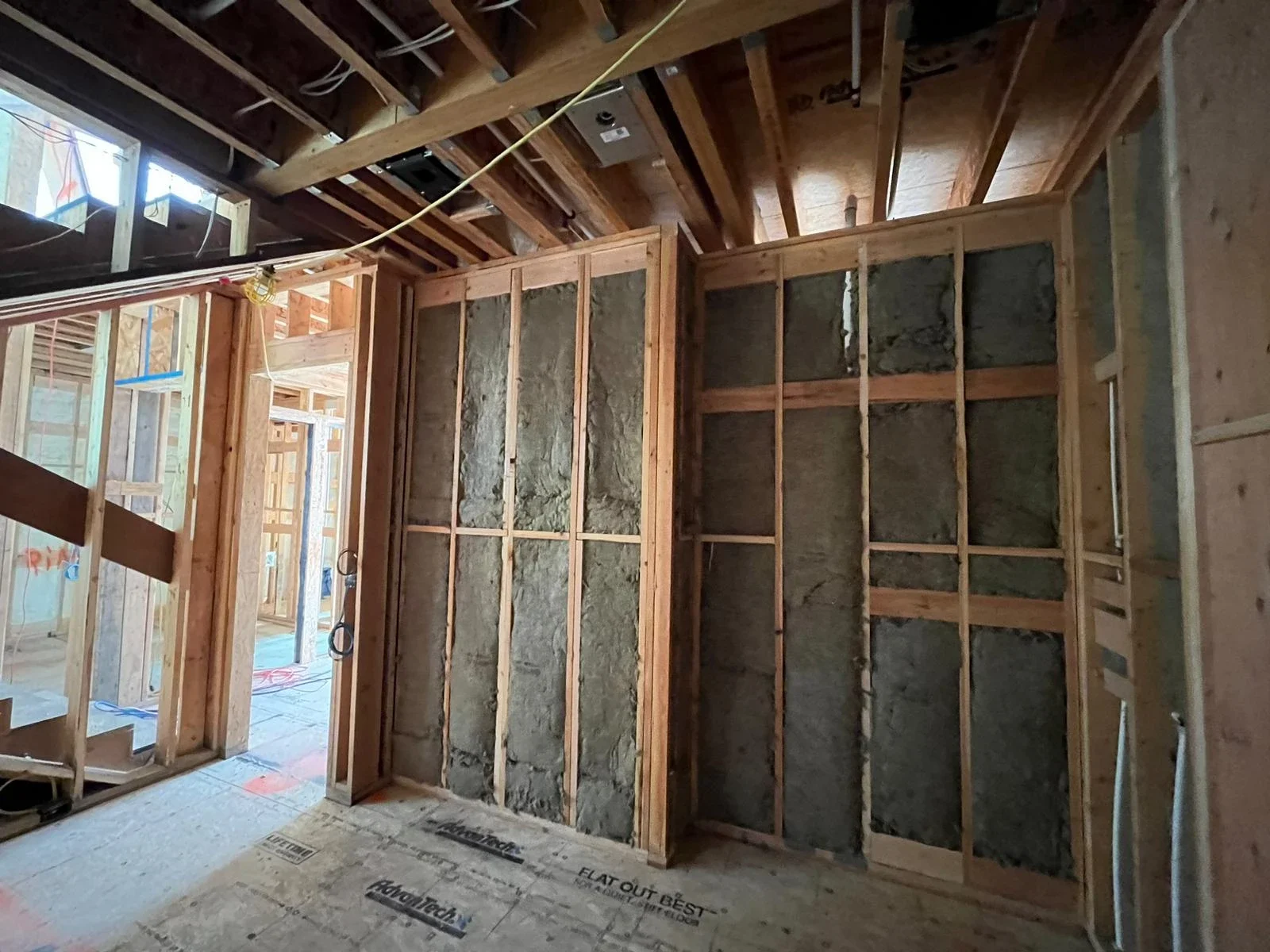
Mineral Wool vs Fiberglass Insulation: Which Option Is Better for Your Home?
Quick answer: In the mineral wool vs fiberglass insulation debate, mineral wool usually wins on fire resistance, moisture handling, sound…


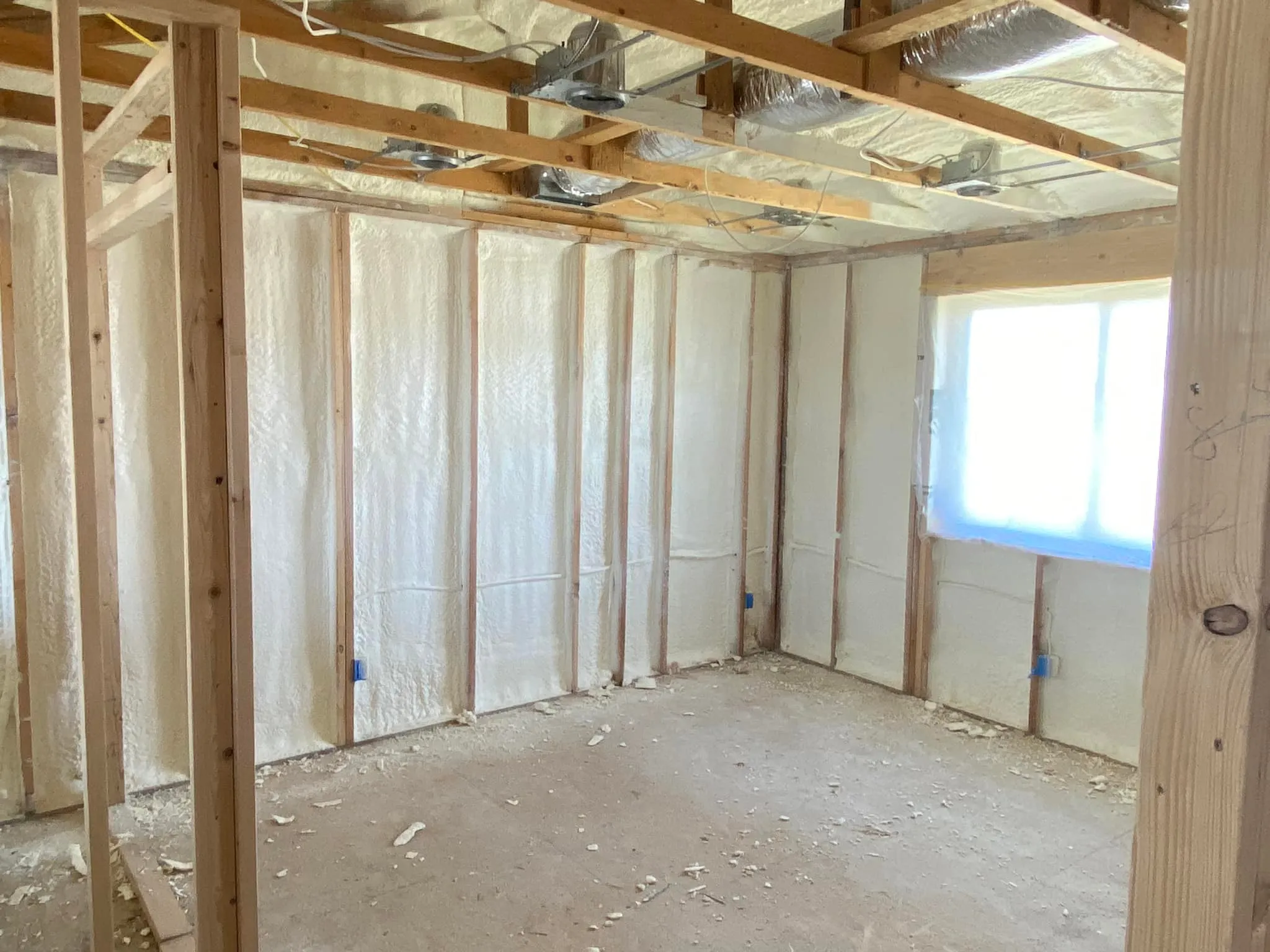
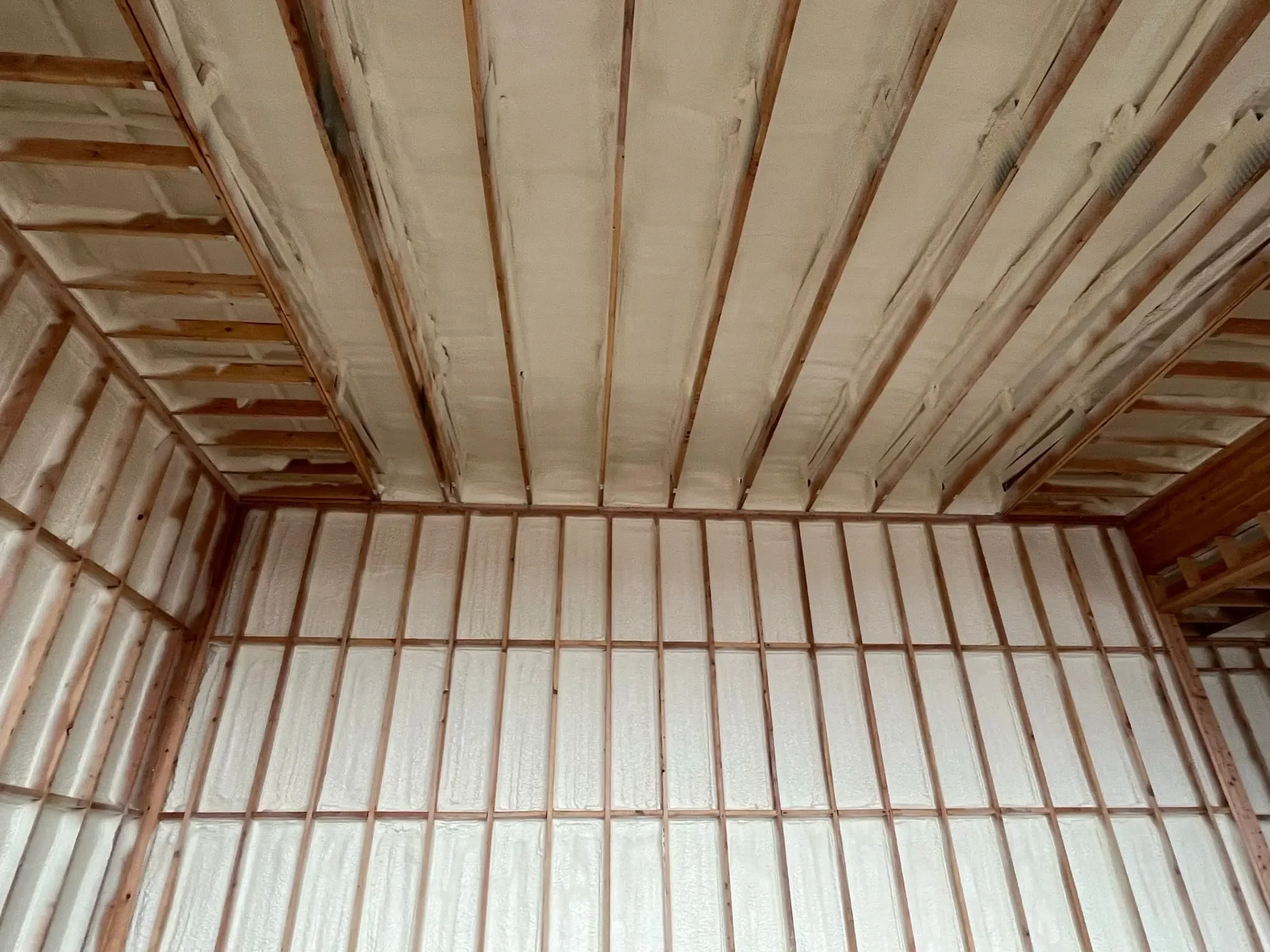
New builders in Rexburg, ID are increasingly locking in spray foam insulation partners before breaking ground, and the reasoning comes down to three realities shaping this market. Rexburg’s population grew 54.6% between 2010 and 2020, as detailed in this Rexburg, Idaho Wikipedia entry, pushing from 25,484 to 39,409 residents, which has fueled a surge in new housing demand that shows no signs of slowing [source]. At the same time, Rexburg sits at 4,862 feet in elevation with a humid continental climate that delivers freezing winters, record lows reaching -36°F, and average January daily minimums around -13.8°F. Builders working in this environment cannot afford to treat insulation as an afterthought. Pairing with a spray foam insulation partner early allows builders to optimize their framing designs, plan for proper HVAC sizing reductions of up to 35%, meet IECC Climate Zone 6 code requirements, and deliver homes that outperform standard builds on energy efficiency and comfort. The decision to engage an insulation specialist during the design phase, rather than at the dry-in stage, has become a competitive advantage for new construction builders operating in Rexburg’s demanding climate while maximizing spray foam insulation protection throughout the building envelope.
Rexburg is not just growing; it is one of the fastest-expanding small cities in Idaho. BYU-Idaho anchors the local economy and draws a steady flow of families and students, pushing new subdivision development outward in every direction. For builders entering this market or scaling their operations, the pressure to deliver quality homes quickly is intense. That pressure is leading many to rethink how they manage their trade partnerships to deliver lower energy bills through better insulation for future homeowners.
The old model went like this: frame the house, run mechanicals, dry it in, then call an insulation subcontractor to fill cavities before drywall. This sequence works fine with batt insulation, but spray foam insulation demands a different approach. Because spray foam expands to fill gaps, seals around penetrations, and acts as a continuous air barrier, it needs to be integrated into the construction plan from the start. Questions about framing depth, vapor control layers, wall assembly design, and crawlspace conditioning all need answers before lumber goes up.
Building Science Corporation’s residential spray foam guide emphasizes that spray foam provides continuity of water control, air control, vapor control, and thermal control layers, making it unique among insulation systems. When builders understand this capability early in the design process, they can specify wall assemblies and roof systems that take full advantage of these properties rather than defaulting to generic framing details.
Understanding the performance benefits of spray foam insulation helps explain why builders in cold climates are adopting it as a standard specification.
Air sealing and insulation in one step. Traditional insulation like fiberglass or cellulose is installed in cavities but does little to stop air movement through gaps, cracks, and penetrations. Spray foam expands on application and bonds directly to the substrate, creating a monolithic layer that insulates and air seals simultaneously. Spray foam can lower energy bills by 5% to 30% per year, according to the Spray Polyurethane Foam Alliance’s Energy Efficiency data, by keeping conditioned air inside the building envelope.
Moisture control in a climate that demands it. Rexburg’s cold winters and snowfall create significant condensation risks in wall assemblies and roof systems. In IECC Climate Zone 6, Building Science Corporation recommends closed-cell spray foam for unvented conditioned attics, where it provides both insulation and condensation control. The same material acts as a Class II vapor retarder when applied at 1.5 inches, meeting IRC section R702.7 requirements.
Structural reinforcement. Closed-cell spray foam adheres to wall framing and sheathing, adding rigidity to the assembly. FEMA classifies spray foam as highly resistant to floodwater damage, noting that these materials can survive wetting and drying cycles and be cleaned after a flood. For a region that experienced the devastating Teton Dam flood in 1976, that kind of resilience matters.
Choosing a spray foam insulation partner before construction starts delivers measurable benefits that compound across every phase of the build.
When builders collaborate with their insulation contractor during the planning stage, they can make informed decisions about framing spacing, header depths, and wall assembly configurations. Spray foam’s high R-value per inch means builders can achieve required thermal performance with thinner wall cavities in some cases, or they can over-insulate within standard framing to exceed code. This kind of coordination prevents the common problem of framing a house, then discovering that the specified insulation strategy requires modifications.
The EPA’s Energy Star program estimates that adding insulation and sealing air leaks can save up to 20% on monthly energy bills. The Department of Energy notes that 56% of home energy consumption goes to heating and cooling. When spray foam creates a tight building envelope, the mechanical load drops significantly. Builders working with spray foam specialists early can right-size their HVAC systems, reducing equipment costs while maintaining comfort. Research indicates HVAC sizing can be reduced by as much as 35% in spray foam-insulated homes. Professional insulation services in Rexburg, ID help builders achieve these energy efficiency goals while meeting local code requirements and long-term performance expectations.
Rexburg builders operate under the Idaho Building Code, which adopts the International Residential Code with amendments. Insulation requirements vary by climate zone, and in Zone 6, the specifications for spray foam thickness in walls, attics, and foundations are precise. An insulation partner who understands these requirements ensures that every assembly meets or exceeds code before the inspector arrives. This prevents the callbacks, rework, and scheduling delays that derail build timelines.
The federal 25C tax credit provides a 30% credit, up to $1,200 annually, for homeowners installing energy-efficient insulation. More relevant for builders is the federal 45L tax credit, which offers $2,500 per home meeting Energy Star standards and $5,000 per home meeting DOE Zero Energy Ready Home standards. These credits are available through 2032 and require specific insulation and air sealing performance levels that spray foam is well positioned to meet. Builders who specify spray foam early, with the guidance of an experienced partner, can design homes that qualify for these credits, creating a measurable selling advantage.
| Partnership Timing | Design Coordination | HVAC Optimization | Code Compliance | Build Timeline Impact |
|---|---|---|---|---|
| Before framing | Full assembly integration, wall system design | Right-sized equipment from day one | Specs reviewed before construction | No rework, smooth inspections |
| At dry-in stage | Limited to existing framing | May need HVAC redesign | Risk of failed inspections | Potential delays for corrections |
| After drywall | No coordination possible | HVAC already oversized/installed | Insulation hidden, hard to verify | Costly remediation, callbacks |
Rexburg falls within IECC Climate Zone 6, a cold climate classification that has direct implications for how spray foam should be specified and installed in new construction.
In Zone 6, builders can use either open-cell or closed-cell spray foam in wall cavities, provided the foam meets minimum depth requirements for air-impermeable classification. Closed-cell spray foam is preferred because it also qualifies as a Class II vapor retarder at the required thickness, eliminating the need for an additional interior vapor barrier layer. This simplifies the wall assembly and reduces material costs.
For unvented conditioned attics, Building Science Corporation specifies that only closed-cell spray foam should be used in Climate Zone 5 and higher. Closed-cell foam applied directly to the underside of the roof deck provides insulation, air sealing, and condensation control in a single layer. This approach is particularly valuable in Rexburg, where mechanical systems are commonly located in attic spaces. A vented unconditioned attic in this climate represents a significant thermal penalty.
For basement foundations in Zone 6, closed-cell spray foam is recommended for interior application on concrete walls. In vented crawlspaces, only closed-cell spray foam should be used to keep air and vapor out of floor framing assemblies. Builders who plan for these applications during the design phase avoid the complication of retrofitting insulation in tight crawlspace conditions.
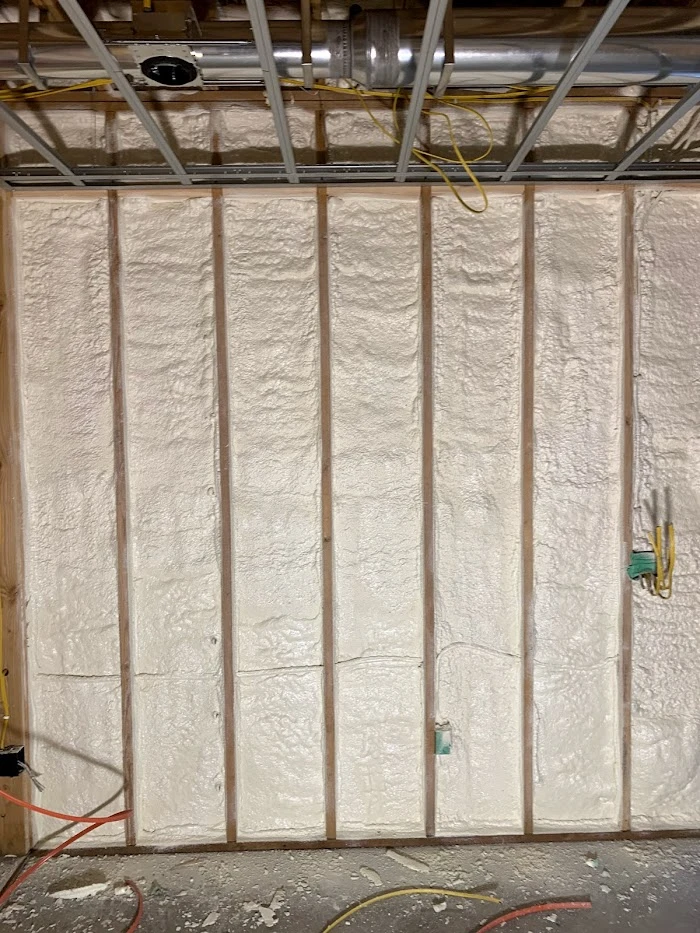
| Application | Recommended Foam Type | Zone 6 Minimum Specification | Key Performance Benefit |
|---|---|---|---|
| Wall cavities | Closed-cell (preferred) or open-cell | Per IRC Table 702.7.1 | Air barrier + vapor retarder in one layer |
| Unvented attic | Closed-cell only | Per IRC Table R806.5 | Condensation control + thermal performance |
| Basement walls | Closed-cell | Minimum 1.5 inches | Moisture control + thermal resistance |
| Vented crawlspace | Closed-cell only | Full cavity fill | Prevents air and vapor intrusion |
Not every insulation contractor delivers the same level of planning, communication, and technical expertise. For builders evaluating potential partners, these indicators matter.
Design-phase consultation. A strong partner reviews plans before framing begins, identifies potential conflicts between the insulation strategy and framing details, and provides written recommendations on foam type, thickness, and application areas.
Code knowledge specific to Idaho and Climate Zone 6. Understanding IRC requirements for condensation control, vapor retarder classification, and minimum R-values in Zone 6 is non-negotiable. Your insulation partner should be able to cite the relevant code sections for each assembly.
Clear communication on scheduling. Spray foam application has specific temperature and moisture requirements during installation. A reliable partner communicates openly about weather constraints, curing times, and how insulation fits into the overall construction schedule.
Documentation and warranty support. Proper spray foam installation should include product data sheets, installation records, and warranty information. This documentation protects the builder and adds value for the homeowner.
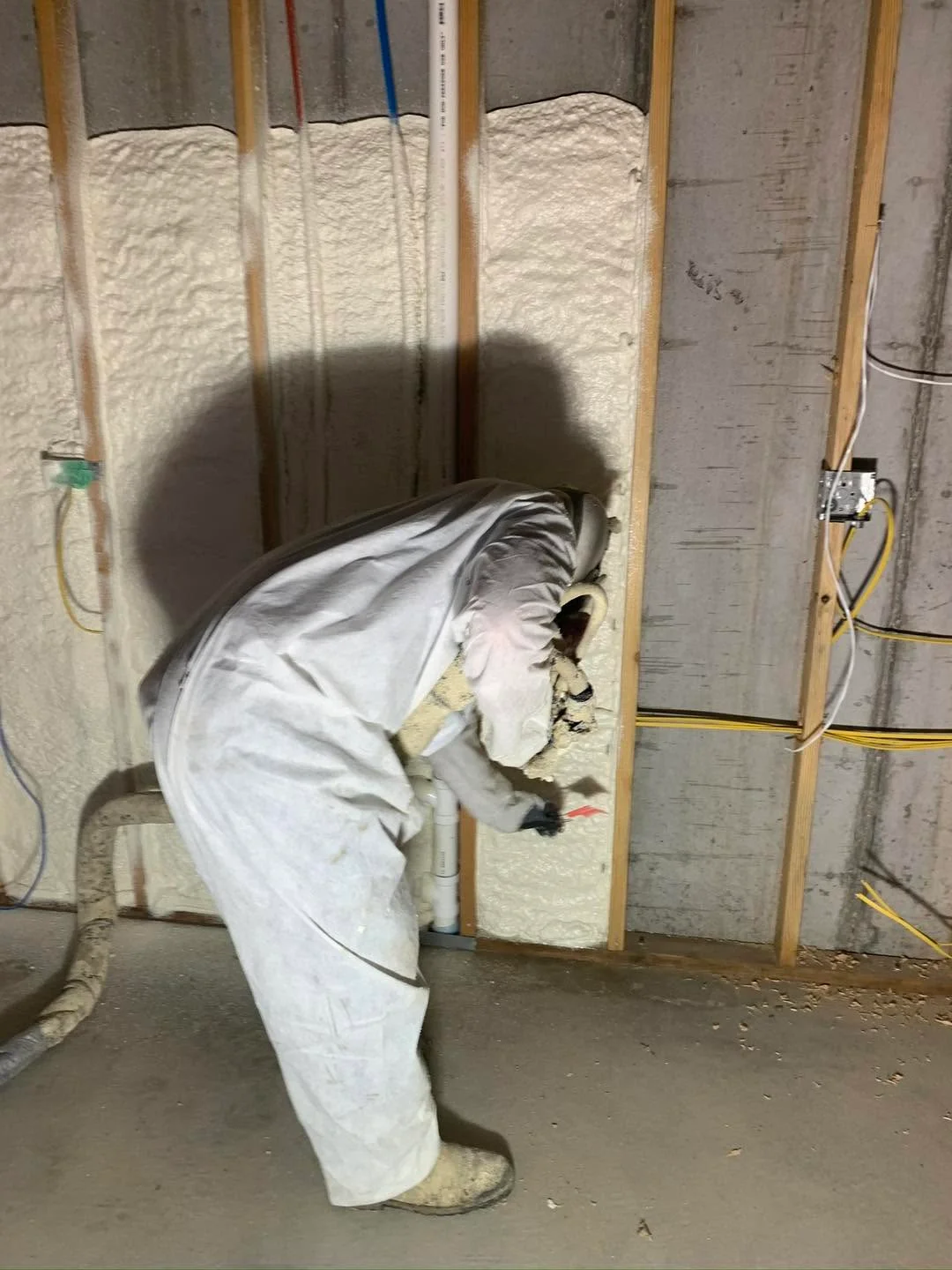
Safety and compliance. Spray foam installation involves chemical handling and personal protective equipment requirements governed by OSHA. A professional partner maintains current safety certifications and trains their crews on proper application procedures.
High Country Solutions brings technical expertise, code knowledge, and design-phase consultation to every new construction project in the Rexburg area. Our team helps builders specify the right spray foam insulation strategy for Climate Zone 6, coordinate with framing and mechanical trades, and keep build timelines on track from start to finish. Whether you are breaking ground on your first spec home or managing a full subdivision, we work alongside you to deliver homes that perform.
Request a Quote | Schedule a Consultation
Call us at (307) 248-9063 or email [email protected] to discuss your next project. Our specialists are ready to review your plans and help you build smarter from day one.
Ideally before framing begins. Early engagement allows the insulation contractor to review plans, recommend foam types and thicknesses for each assembly, and coordinate with your framing and mechanical trades.
In most cases, standard framing works. However, your insulation partner may recommend adjustments to header depths, stud spacing, or blocking details to optimize foam performance and ensure complete cavity fill.
Yes. Homes meeting Energy Star or DOE Zero Energy Ready Home standards can qualify for the 45L tax credit, which provides up to $5,000 per home through 2032. Spray foam insulation is a key component in meeting those performance targets.
Closed-cell spray foam is higher density, provides a vapor retarder, and is required for unvented attics and crawlspaces in Climate Zone 6. Open-cell is lower density, more flexible, and works well in wall cavities but requires an additional vapor retarder in cold climates.
A tight building envelope created by spray foam reduces heating and cooling loads significantly. Builders can downsize HVAC equipment by up to 35% when spray foam is properly specified, which reduces both equipment costs and long-term operating expenses.