Is Spray Foam Insulation a Good Choice for Homes in Cold and Changing Climates in Alpine, WY?
Yes, spray foam insulation is an excellent choice for homes in Alpine, WY, provided you choose the right material and…


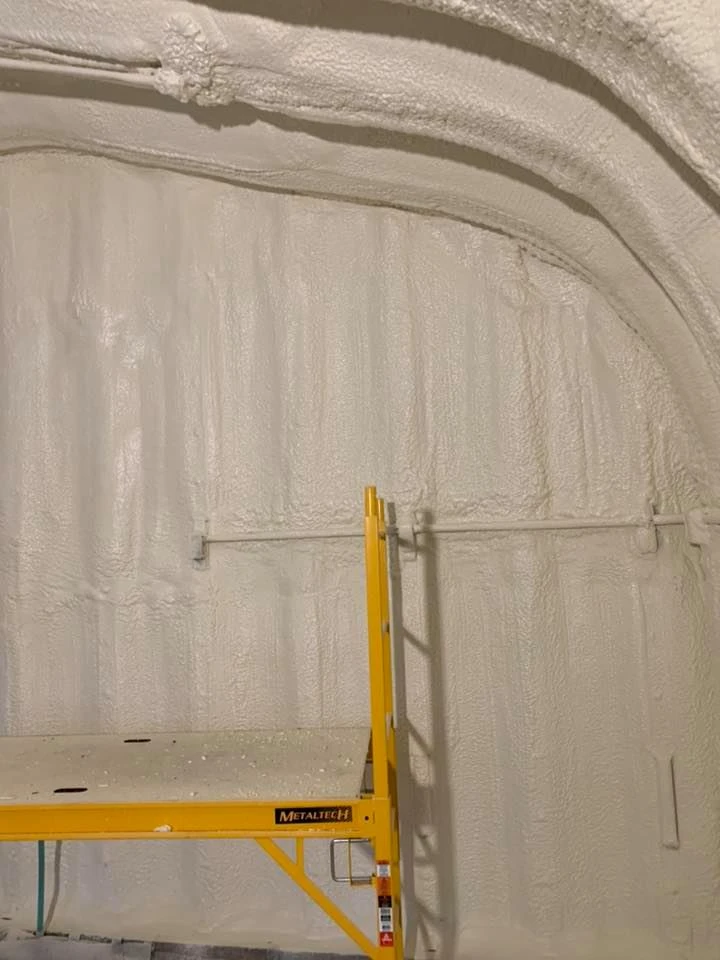
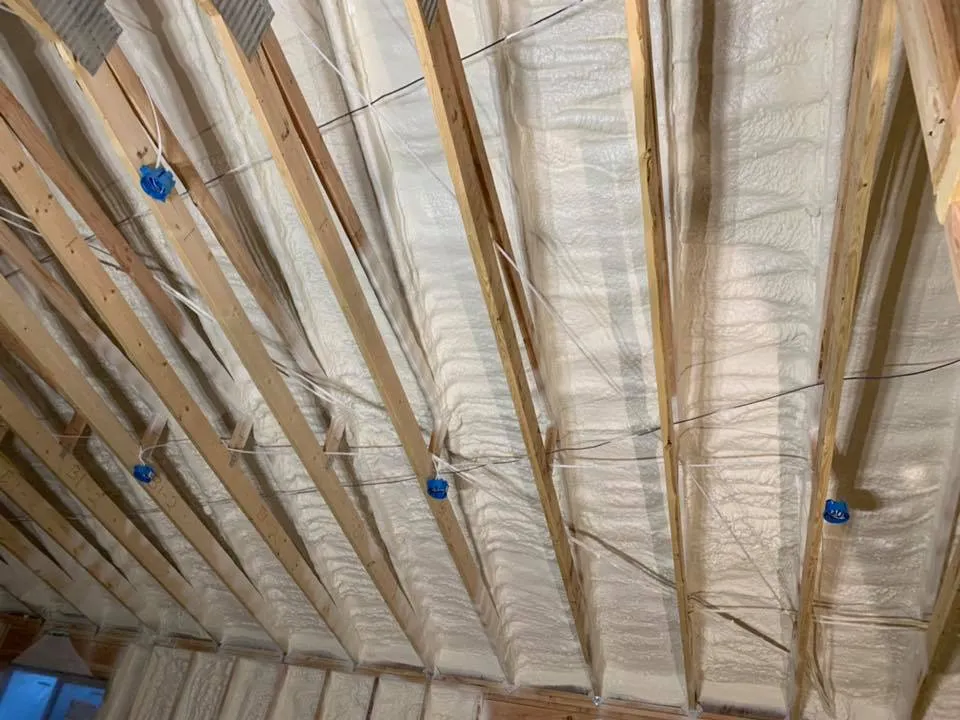
Spray foam insulation stands out for new builds in Jackson Hole because it delivers the combination of high R-value thermal resistance, airtight sealing, and moisture management that this extreme mountain climate demands. At an average elevation of over 6,800 feet, the valley experiences long, severe winters with calm nights that routinely plunge below freezing due to radiational cooling from snow-covered ground. These conditions make air leakage and inadequate insulation costly problems that spray foam addresses in a single application. The right choice depends on your building type, budget, and specific site conditions. Still, for most new construction in this region, the thermal and structural advantages of spray foam are difficult to match with traditional materials like fiberglass batts or blown cellulose. Understanding spray foam insulation protection can help property owners see how this system improves long-term building performance.
Building in Jackson Hole is unlike building in most of the country. The valley sits between the Gros Ventre and Teton mountain ranges, and its geography creates a specific microclimate that punishes poorly insulated structures. High altitude and steep mountain slopes on all sides cause calm winter nights to become extremely cold, as dense cold air slides down from the surrounding peaks and settles into the valley floor. The state record low of -66 degrees F was recorded near Moran at the north end of the valley in 1933, and the official National Weather Service station recorded -56 degrees F in 1993 during a severe cold snap. These extreme conditions make spray foam for builders in Driggs, ID a valuable solution for creating energy-efficient, well-sealed homes.
These are not occasional anomalies. Prolonged sub-zero stretches define the heating season, which runs roughly from October through April. Heating systems in Jackson Hole work harder and longer than in most U.S. locations. That makes every gap in the building envelope a direct path for expensive heat loss.
Traditional insulation materials like fiberglass batts and blown cellulose rely on trapped air pockets to slow heat transfer, but they do little to stop air movement through gaps around framing, electrical boxes, plumbing penetrations, and window rough openings. According to the building insulation reference, air infiltration through the building envelope is a leading cause of reduced insulation performance and can create convective heat transfer that bypasses the insulation entirely. In a climate like Jackson Hole, that translates directly to higher energy bills and comfort complaints.
Not all spray foam is the same, and the distinction between open-cell and closed-cell formulations matters a great deal in a cold-weather, high-altitude environment.
| Feature | Open-Cell Spray Foam | Closed-Cell Spray Foam |
|---|---|---|
| R-value per inch | ~R-3.6 | ~R-5.5 to R-6.5 |
| Density | Low (approximately 0.5 lb/ft3) | High (approximately 2.0 lb/ft3) |
| Air sealing | Good | Excellent |
| Vapor retarder | Not a vapor retarder (permeable) | Class II vapor retarder |
| Structural reinforcement | Minimal | Adds shear strength and rigidity |
| Best application | Interior walls, sound dampening | Exterior walls, crawl spaces, roof decks |
| Water resistance | Absorbs water if exposed | Resists water absorption |
Closed-cell spray foam is generally the stronger choice for Jackson Hole new builds for several reasons. First, its higher R-value per inch means you can achieve the total R-values required by code for Climate Zone 7 with less cavity depth, preserving interior floor space without sacrificing performance. The ASHRAE 90.1 standard requires minimum cavity insulation of R-20 plus R-5 continuous insulation for residential wood-framed walls in Zone 7, among the highest thresholds in the country. Closed-cell spray foam installed at typical depths of 3 to 4 inches in a 2×6 wall cavity can meet or approach these requirements in a single layer.
Second, closed-cell foam acts as a vapor retarder, which matters enormously in a region where indoor heating creates a strong vapor drive pushing moisture outward through wall assemblies during winter. Without proper vapor management, moisture can condense inside wall cavities, leading to mold growth, wood rot, and degraded insulation performance. Open-cell foam, while less expensive and effective for sound dampening on interior partitions, does not provide this vapor control.
Third, the higher density of closed-cell foam adds structural rigidity. It adheres to framing members and sheathing, creating a monolithic assembly that resists racking and shear forces. This is a tangible benefit in a mountain environment subject to heavy snow loads and high winds.
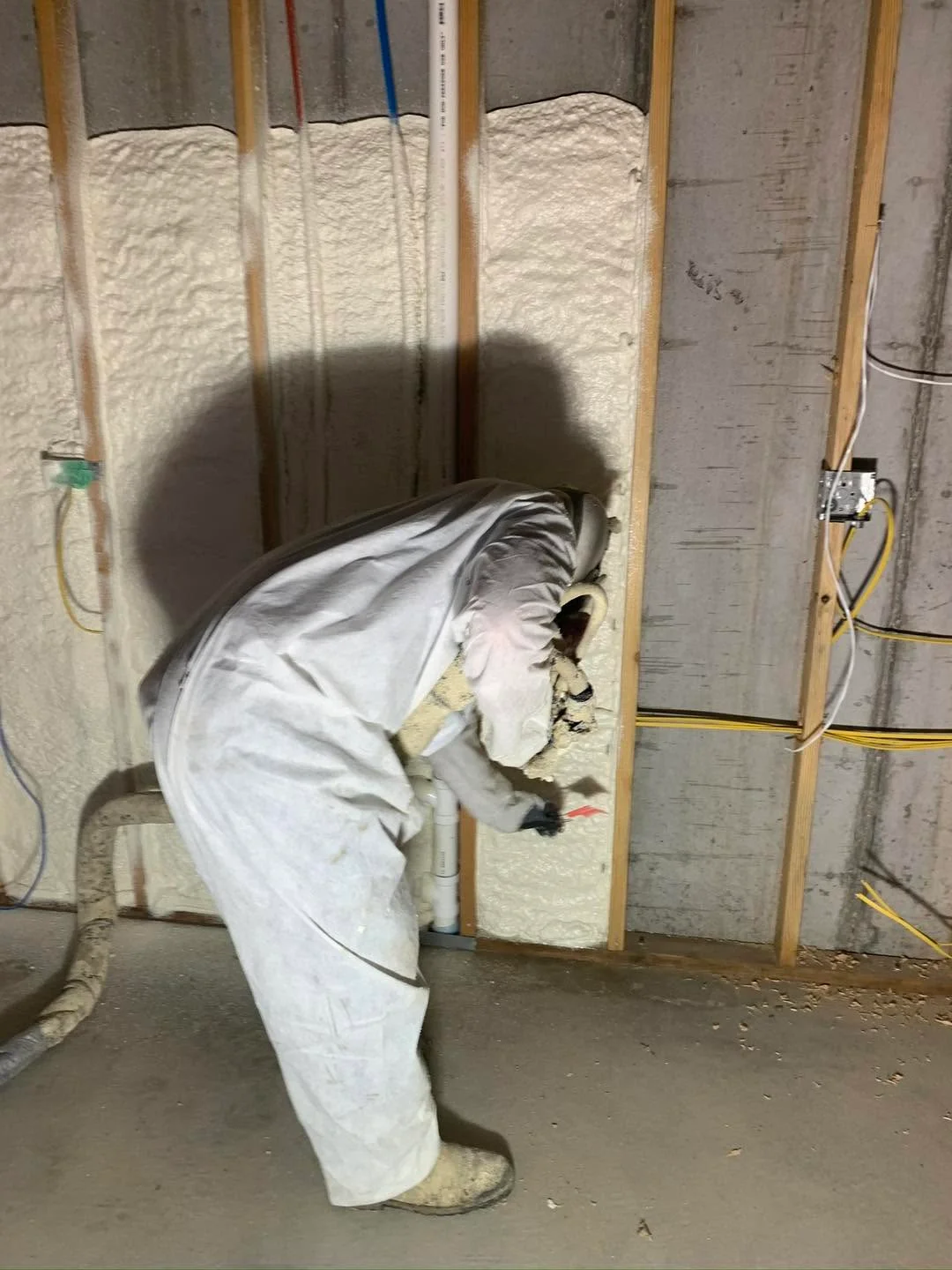
Perhaps the single most significant difference between spray foam and other insulation types is the air sealing that happens as a byproduct of application. Spray foam is applied as a liquid that expands into a solid, filling every crack, gap, joint, and penetration in the building cavity. Once cured, it forms a continuous barrier against air movement.
The R-value of any insulation material only tells part of the story. A wall insulated to R-19 with fiberglass batts can perform far worse than its rated value if air is moving through the cavity due to poor sealing around windows, doors, top plates, and rim joists. Spray foam eliminates these bypasses at the point of installation, which is why buildings insulated with spray foam consistently outperform their theoretical R-value calculations in real-world conditions.
For passive house and high-performance building standards, which require airtightness measured at 0.6 air changes per hour or less at 50 Pascals of pressure, spray foam is one of the most effective tools available. In Jackson Hole, where the temperature differential between indoors and outdoors can exceed 70 or 80 degrees on the coldest nights, even minor air leaks result in substantial heat loss and condensation risk.
Moisture control is a make-or-break issue for building durability in Jackson Hole. During the heating season, warm indoor air carries water vapor that wants to migrate toward colder exterior surfaces. When that vapor encounters a surface below the dew point, it condenses. In a wall cavity, this means water accumulating on cold exterior sheathing, inside insulation, or on framing members.
Closed-cell spray foam addresses this challenge in two ways. As a Class II vapor retarder, it slows the rate of moisture diffusion through the wall assembly, reducing the amount of water vapor that reaches cold surfaces. And because it fills cavities with a solid material, it leaves no air spaces where convective moisture transport can occur.
The building science community has documented that high humidity inside the building envelope is a direct cause of condensation, rot, and microbial growth. One research review found that 12.7 to 14 percent of all reported building damage was caused by mold problems linked to inadequate thermal insulation and poor moisture management. In Jackson Hole, where the heating season is long and the temperature gradients across wall assemblies are extreme, getting moisture management right from the start of construction is essential.
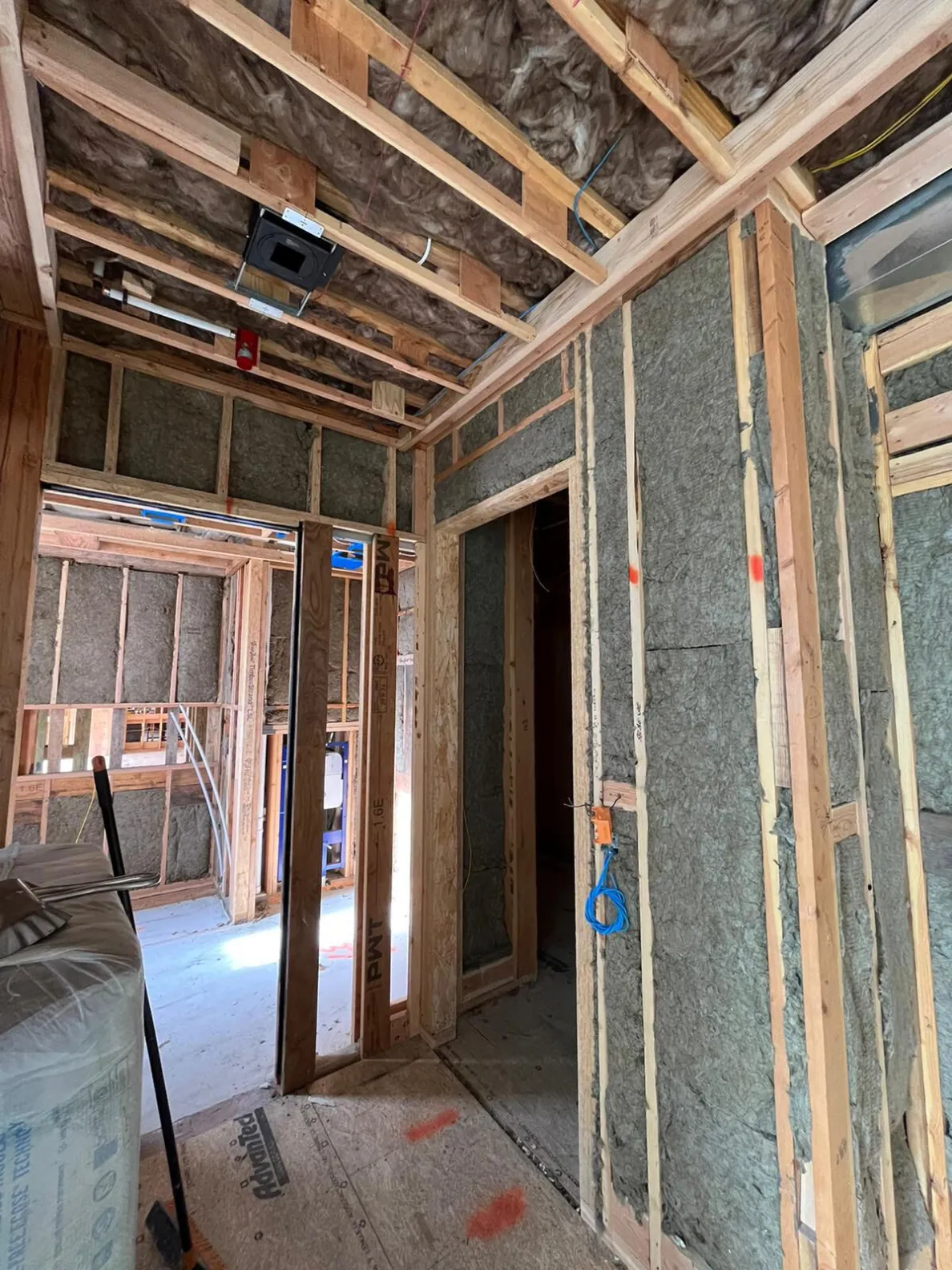
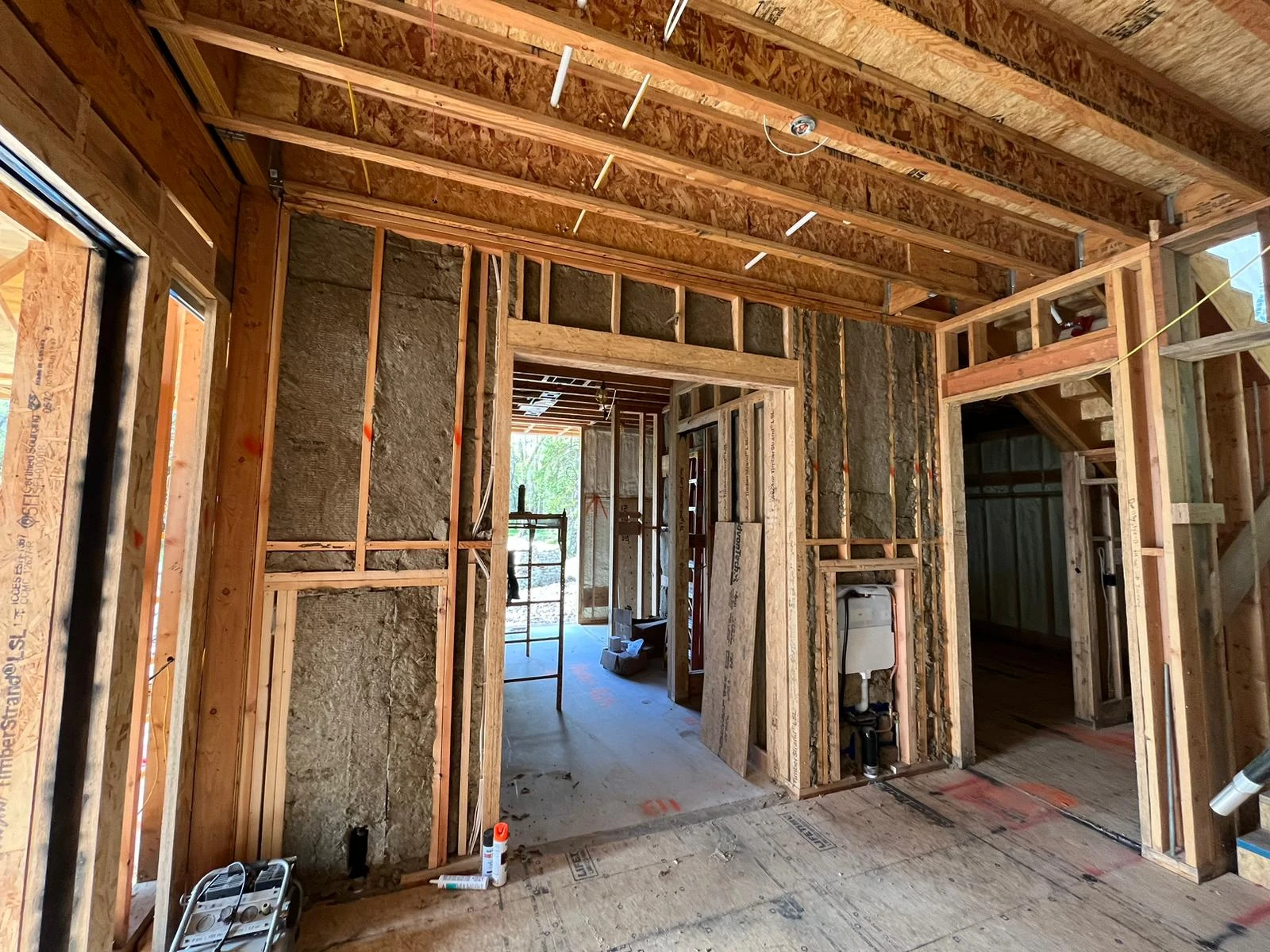
Installing spray foam during new construction offers advantages that retrofits cannot replicate. In a new build, framing cavities are wide open and fully accessible before drywall, siding, and finishes are applied. Our installers can see every stud bay, every penetration, every rim joist bay, and every top plate gap. This allows for complete, unobstructed coverage.
In a retrofit scenario, installers often have to work through small access holes, drill through finished surfaces, or remove sections of drywall to reach areas that need insulation. The result is typically less uniform coverage and a higher risk of gaps or voids.
New construction also allows for coordination between the insulation installation and other building systems. Electrical wiring, plumbing runs, HVAC ductwork, and structural framing can all be planned with spray foam application in mind, minimizing penetrations and optimizing cavity access.
| Building Type | Recommended Approach | Key Notes |
|---|---|---|
| Custom mountain homes | Closed-cell in walls and roof deck | Maximizes thermal performance and moisture protection in high-value builds |
| Multifamily housing | Closed-cell in exterior walls, open-cell in partitions | Balances exterior performance with sound isolation between units |
| Accessory dwelling units | Closed-cell in walls and ceiling | Smaller footprint means every square foot of thermal performance counts |
| Timber frame or log hybrid | Closed-cell in roof system and rim joists | Addresses the most leak-prone areas while preserving exposed timber aesthetics |
A solid insulation plan for this climate should include several clear indicators. Your insulation provider should be able to explain the specific R-value targets for Climate Zone 7 and how their proposed assembly meets or exceeds those numbers. They should address air sealing as an integral part of the insulation discussion, not as an add-on. They should explain the vapor drive direction in winter and how the proposed insulation manages moisture transport through the assembly. And they should be willing to walk through the framing before installation to identify and seal all penetrations, bypasses, and trouble spots.
Builders and homeowners in Jackson Hole should also ask about quality assurance. The FTC’s R-value Rule exists specifically to ensure that insulation products are labeled and advertised with tested, verified R-value data. A reputable installer will use products from manufacturers that comply with this regulation and will stand behind the installed performance.
High Country Solutions brings extensive experience installing spray foam insulation in new builds throughout the Jackson Hole valley. Our team understands the specific demands of this mountain climate and works directly with builders and homeowners to specify the right product, depth, and application for every project. From custom homes to multifamily developments, we deliver complete cavity coverage and the airtight performance that Wyoming’s harsh winters require.
Ready to plan your insulation strategy? Request a Quote or contact our team at (307) 248-9063. We will review your plans, identify the best approach, and provide a detailed assessment tailored to your project.
Given the severity and length of the heating season at 6,800 feet elevation, the energy savings and comfort improvements from spray foam typically offset the investment over the life of the building, especially when compared to traditional insulation that allows air leakage.
Yes. Spray foam is commonly applied in roof systems, rim joists, and framed wall sections of timber frame and log hybrid homes to address the areas most vulnerable to air infiltration and heat loss.
In most climate zone 7 wall assemblies, closed-cell spray foam at adequate thickness functions as a Class II vapor retarder, which satisfies the vapor control requirement for many new builds. Your specific assembly should be reviewed by a building science professional.
Spray foam maintains its R-value and airtight seal in sub-zero temperatures, whereas fiberglass batts can allow convective air movement through gaps and compression points that reduce effective performance during extreme cold events.
Yes. The Federal Trade Commission’s R-value Rule (16 CFR 460) requires manufacturers and installers to disclose tested R-value information for home insulation products, giving builders a verified basis for comparing performance claims.