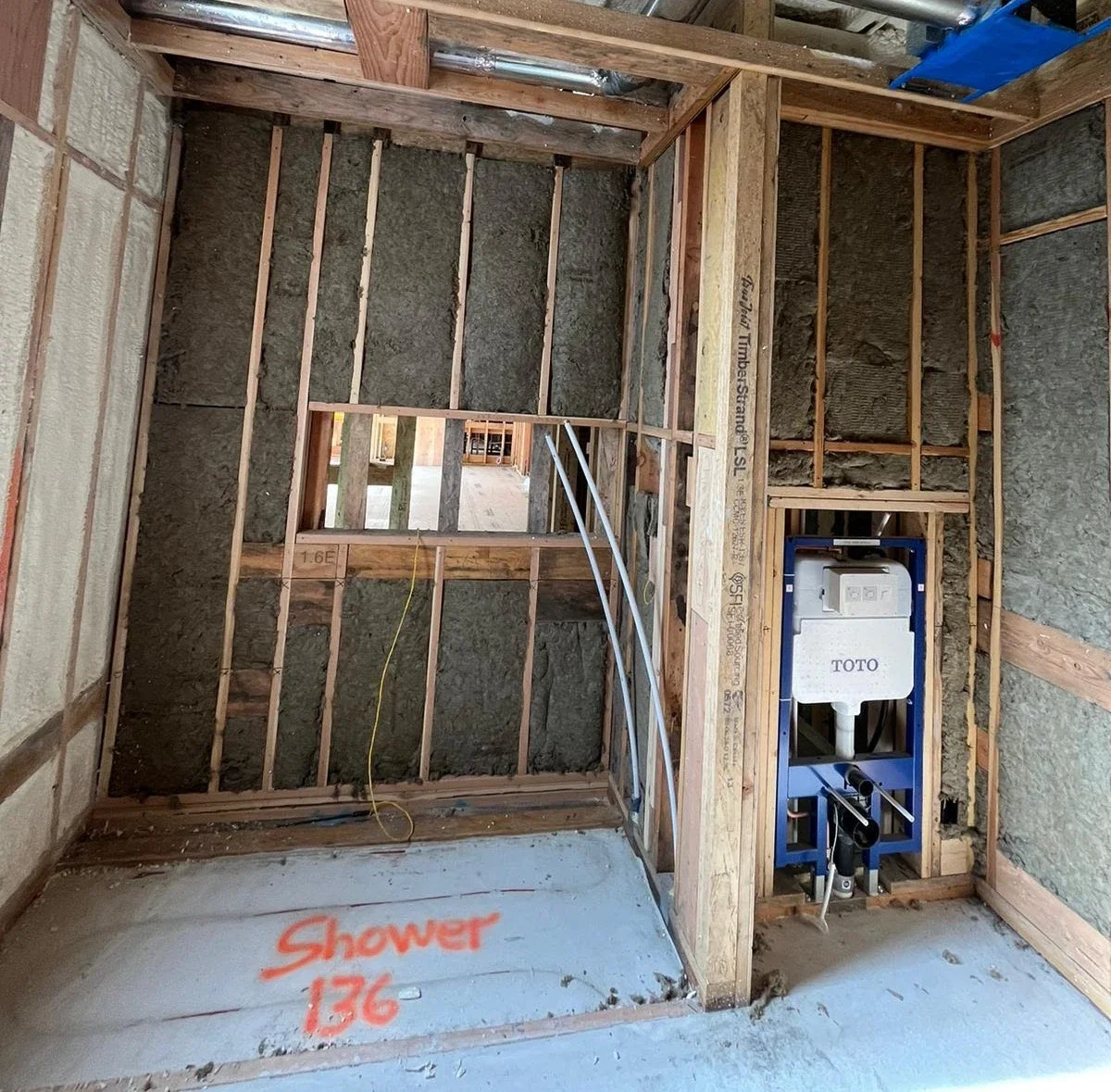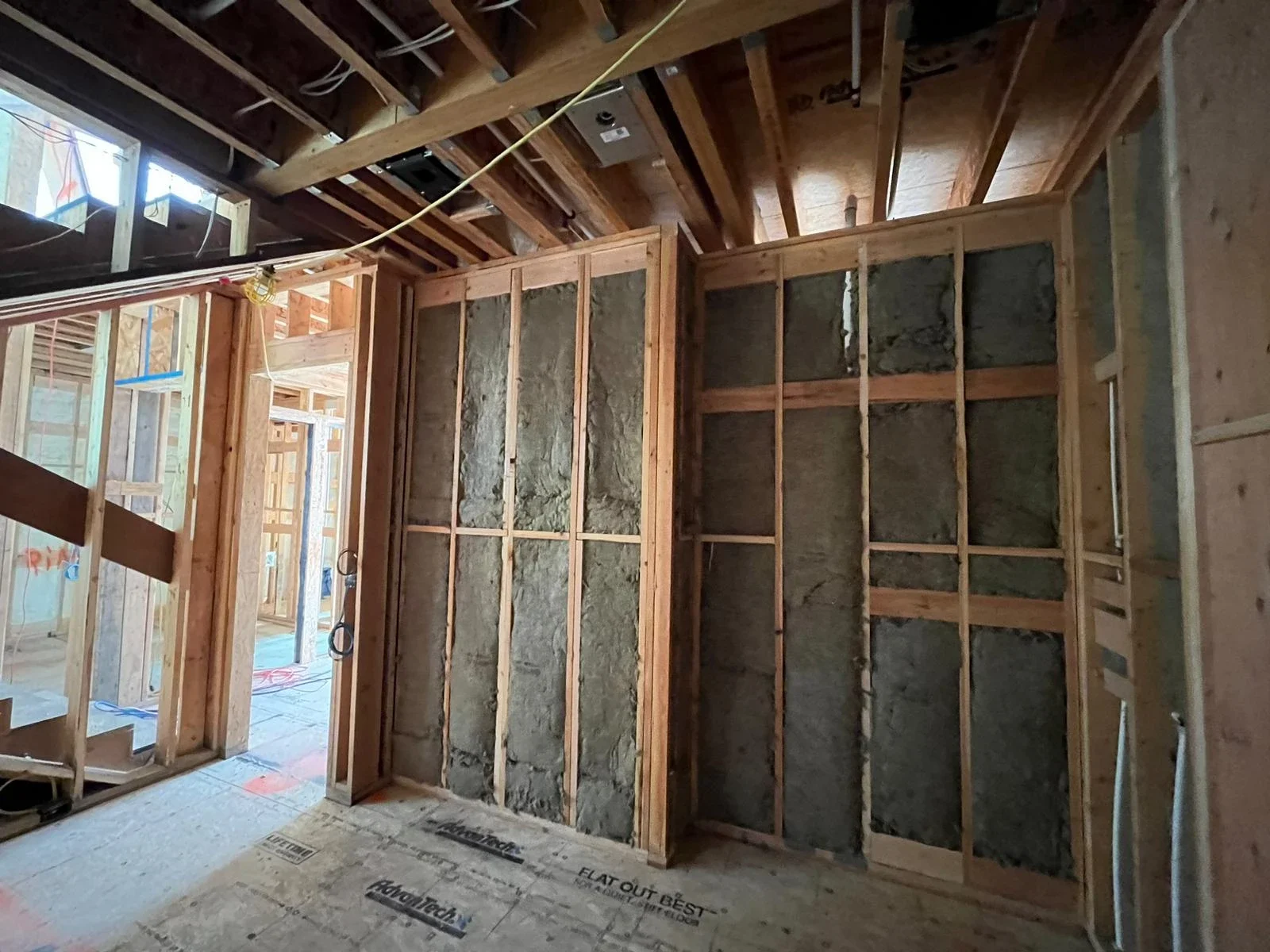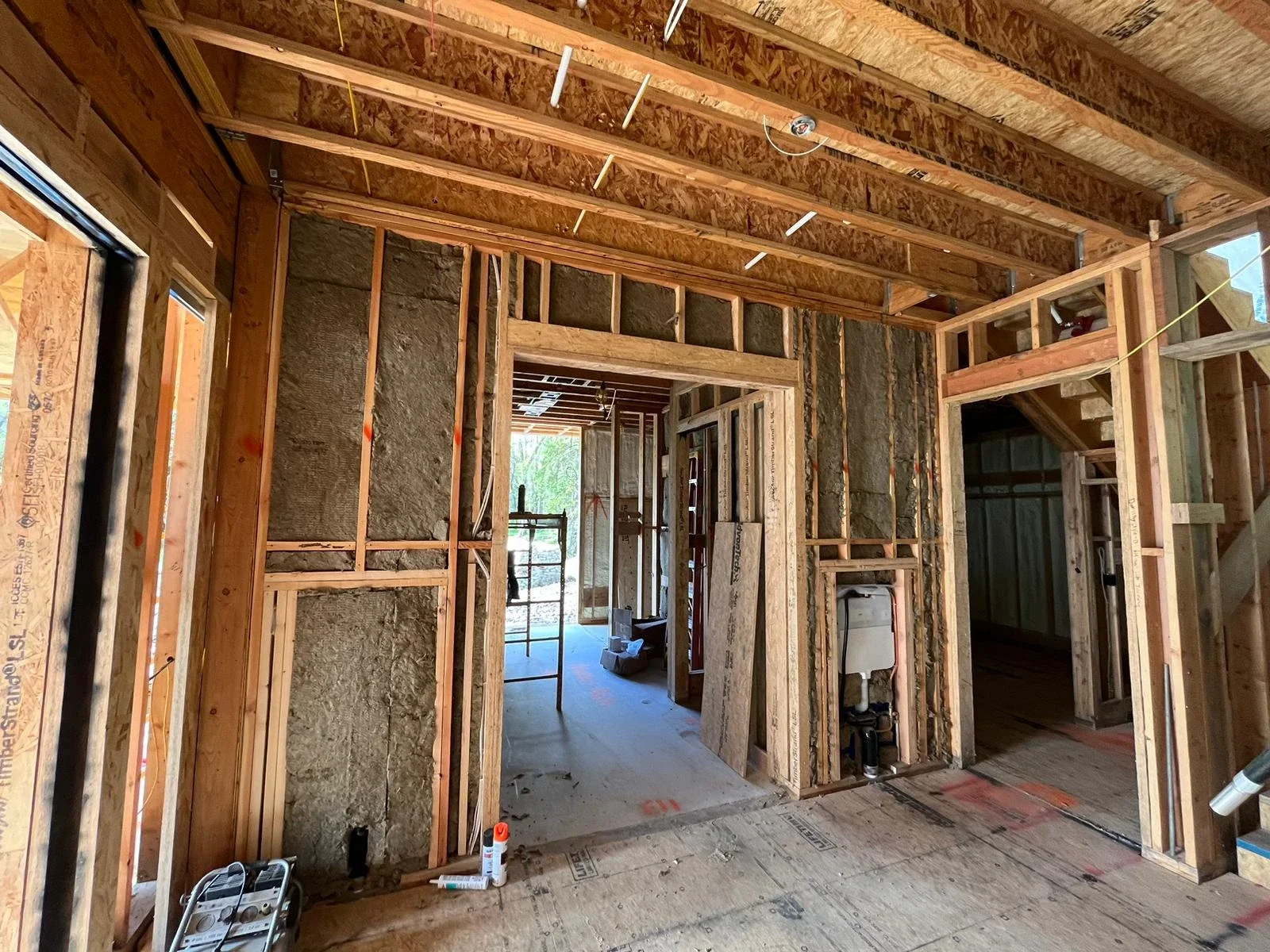
What Problems Can Mineral Wool Insulation Help Solve in Residential Buildings?
Quick answer: The main benefits of mineral wool insulation in a house come down to five problems: rooms that lose…


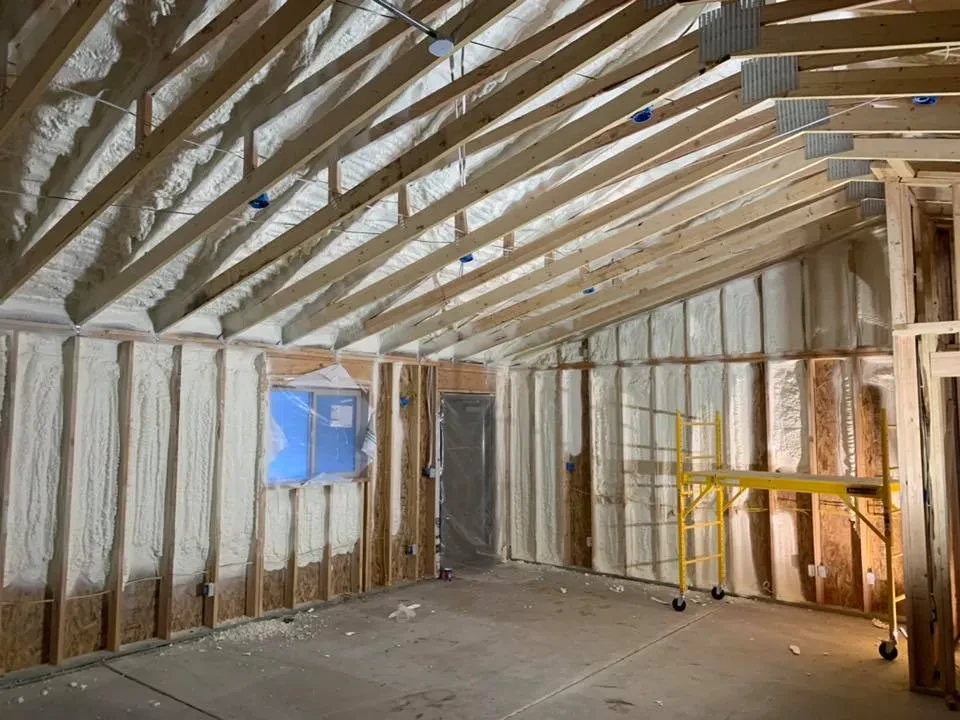
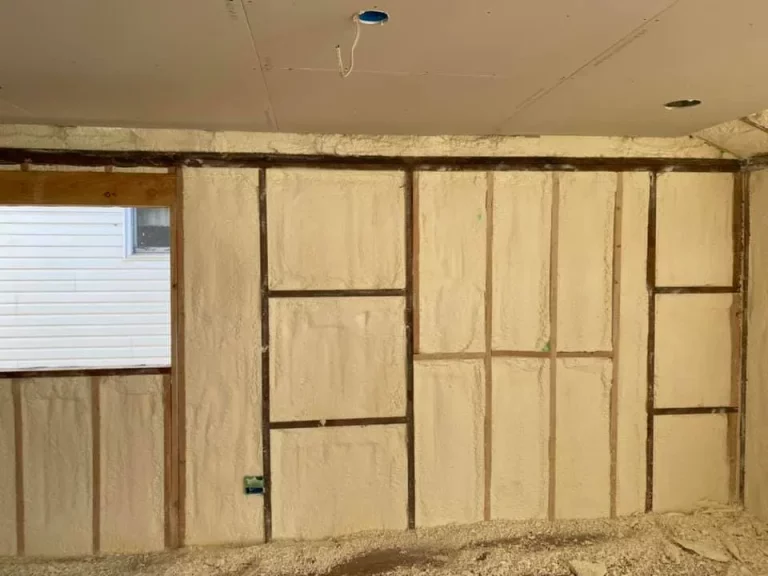
Spray foam insulation gives builders in Driggs, ID, a material that handles water control, air control, vapor control, and thermal control in a single application, which is especially important in a cold climate zone where condensation risk and heat loss are serious concerns. Driggs sits in IECC Climate Zone 6, where the Idaho Energy Conservation Code demands ceiling insulation of R-49, wood frame wall assemblies of R-20 or greater, floor insulation of R-30, and crawlspace or basement wall insulation of R-15/R-19. The two main types of spray foam, open cell and closed cell, each serve different purposes. Open cell foam delivers approximately R-3.6 per inch and works well for general cavity fills, while closed cell foam delivers R-5.7 to R-6.1 per inch and also functions as a Class II vapor retarder, making it the preferred option for roof assemblies and foundation walls in cold climates. The right choice for any new build depends on the application area, climate zone requirements, and budget, but the building science supporting spray foam in Zone 6 construction is clear. Working with experienced builder insulation specialists helps ensure the right material is selected for each assembly.
Teton County sits in IECC Climate Zone 6, placing it among the colder regions in Idaho alongside counties like Bonner, Boundary, and Madison. The climate zone table in the Idaho IECC compliance guide confirms that Zone 6 carries some of the most demanding insulation requirements in the continental United States, short of the extreme northern tier.
Builders working in this region face long heating seasons, significant temperature differentials between conditioned and unconditioned spaces, and interior moisture that can condense inside wall and roof assemblies if the enclosure is not designed properly. Traditional insulation types like fiberglass batts handle thermal resistance but do little to stop air leakage or moisture diffusion. Spray foam addresses all three simultaneously, which reduces the risk of condensation, mold, and structural degradation over the life of the building while providing long-term moisture protection.
The large temperature gradient from warm interior spaces to cold exteriors in Zone 6 means even small gaps in air sealing lead to substantial energy loss. According to Building Science Corporation’s residential spray foam guide, spray foam’s ability to provide continuity of the water control, air control, vapor control, and thermal control layers results in low exterior air leakage, significant energy efficiency, and excellent sound attenuation.
Understanding the material differences between the two spray foam types helps builders make specification decisions that align with code requirements and project budgets. The table below summarizes the key distinctions.
| Property | Open Cell Spray Foam | Closed Cell Spray Foam |
|---|---|---|
| R-Value Per Inch | R-3.6 | R-5.7 to R-6.1 |
| Density | 0.5 lb/cu ft | 2.0 lb/cu ft |
| Air Barrier | Yes | Yes |
| Vapor Retarder | No (permeable) | Yes, Class II at 1.5 inches or more |
| Water Absorption | Absorbs and holds liquid water | Hydrophobic, does not absorb water |
| Expansion Ratio | Up to 150x liquid volume | 35 to 50x liquid volume |
| Structural Benefit | Minimal | Adds racking strength and wall rigidity |
| Best Applications | Wall cavities, band joists (with vapor control) | Roofs, foundations, crawlspaces, exterior walls |
The U.S. Department of Energy’s spray foam guide notes that both types are chemically similar but differ significantly in physical properties and performance. Open cell foam is soft, flexible, and less expensive, while closed cell foam is rigid, moisture-resistant, and roughly 60% more expensive per R-value achieved.
In Zone 6, closed-cell spray foam applied in wall cavities provides both the thermal resistance and vapor control needed without requiring an additional interior vapor retarder. The Building Science Corporation vapor retarder study confirmed that closed-cell foam at thicknesses over two inches controls vapor diffusion to safe levels in climates up to 10,000 heating degree days with interior relative humidity up to 50%. Open-cell foam is acceptable in Zone 6 wall cavities only when paired with an interior vapor retarder, such as a vapor-retarder primer or multiple coats of latex paint. Understanding cold-climate spray foam requirements helps builders choose the right assembly for long-term performance.
For unvented conditioned attics, which are increasingly common in modern construction, closed-cell spray foam is the required choice in IECC Climate Zone 5 and higher. Applied directly to the underside of the roof deck, closed-cell foam provides the air sealing, vapor retarder, and thermal resistance needed in a single layer. Hybrid attic assemblies using a layer of closed-cell foam beneath fiberglass or cellulose are also code-compliant and reduce material costs on larger roof areas.
Below-grade applications demand closed-cell foam exclusively. Open-cell foam absorbs and holds water, making it unsuitable for basement or crawlspace walls where moisture exposure is a given. Closed-cell foam applied to the interior of concrete foundation walls keeps moist interior air from contacting cool surfaces and condensing, while also resisting water intrusion from the exterior.
Not every project budget supports full-cavity closed-cell spray foam. Hybrid assemblies offer a practical middle ground:
The spray foam industry resource center emphasizes that R-value alone does not fully express the benefits of spray foam insulation. Air sealing a home, in addition to maximizing R-value, further improves energy performance in ways that traditional cavity-fill insulation cannot match.
The Idaho Energy Conservation Code, adopted from the IECC, sets specific requirements for Climate Zone 6 residential construction. Builders should be aware of the following code provisions:
Spray foam simplifies compliance with several of these requirements simultaneously. The air barrier quality of both foam types directly supports the air leakage testing requirement. The vapor retarder capability of closed-cell foam at the right thickness eliminates the need for a separate polyethylene vapor barrier, reducing installation steps and labor time.
Choosing an insulation installer matters as much as choosing the product. Here are the indicators that a spray foam contractor is qualified for new construction work:
| Project Type | Recommended Foam Strategy | Key Reason |
|---|---|---|
| Custom single-family home | Full closed cell in roofs and foundations; hybrid flash-and-batt in walls | Maximum comfort and moisture protection where homeowners invest in quality |
| Spec home/production build | Closed cell in crawlspaces and attics; open cell in walls with vapor retarder paint | Lower per-unit cost while meeting code and maintaining build speed |
| Multifamily / townhome | Closed cell in party walls, roofs, and foundations; open cell in interior partition cavities | Sound attenuation between units plus code-compliant envelope |
| Pole barn/shop | Closed cell on roof deck and foundation; open cell on walls | Condensation control where temperature differences are largest |
| Basement finish | Closed cell only | Below-grade moisture protection and vapor diffusion control |
Planning a new build in Driggs requires insulation decisions that affect energy performance, occupant comfort, and long-term durability for decades. Our team at High Country Solutions brings hands-on experience with both open-cell and closed-cell spray foam applications across wall assemblies, attics, crawlspaces, and foundations in cold climate zones. We work directly with builders to specify the right foam type, thickness, and hybrid strategy for each project phase, keeping your timeline on track and your builds code-compliant. Reach out to us at [email protected] or call (307) 248-9063 to discuss your next project.
Request a Quote | Schedule a Project Consultation
Yes. Closed-cell spray foam at 1.5 inches or greater qualifies as a Class II vapor retarder under the IRC, controlling diffusion condensation without an additional polyethylene layer.
No. Open-cell foam absorbs and holds water, making it unsuitable for below-grade or crawlspace applications in any climate zone. Closed-cell foam is the only appropriate choice.
Both open-cell and closed-cell spray foam create an airtight seal when sprayed into cavities and around penetrations, directly supporting the IECC requirement of no more than 3 air changes per hour for residential construction.
Yes, provided the closed-cell foam layer meets the minimum thickness specified in IRC Table 702.7.1 for condensation control, which varies by climate zone and wall framing depth.
Occupancy should be delayed until the foam has fully cured and any off-gassing has dissipated. The timeline varies by product and thickness, and your installer should provide specific guidance based on the manufacturer’s technical data sheet.