A Spray Foam Insulation Crew That Works on Your Schedule, Not Around It in Idaho Falls, ID
Spray Foam Insulation in Idaho Falls, ID works best when the crew fits your calendar, not the other way around.…


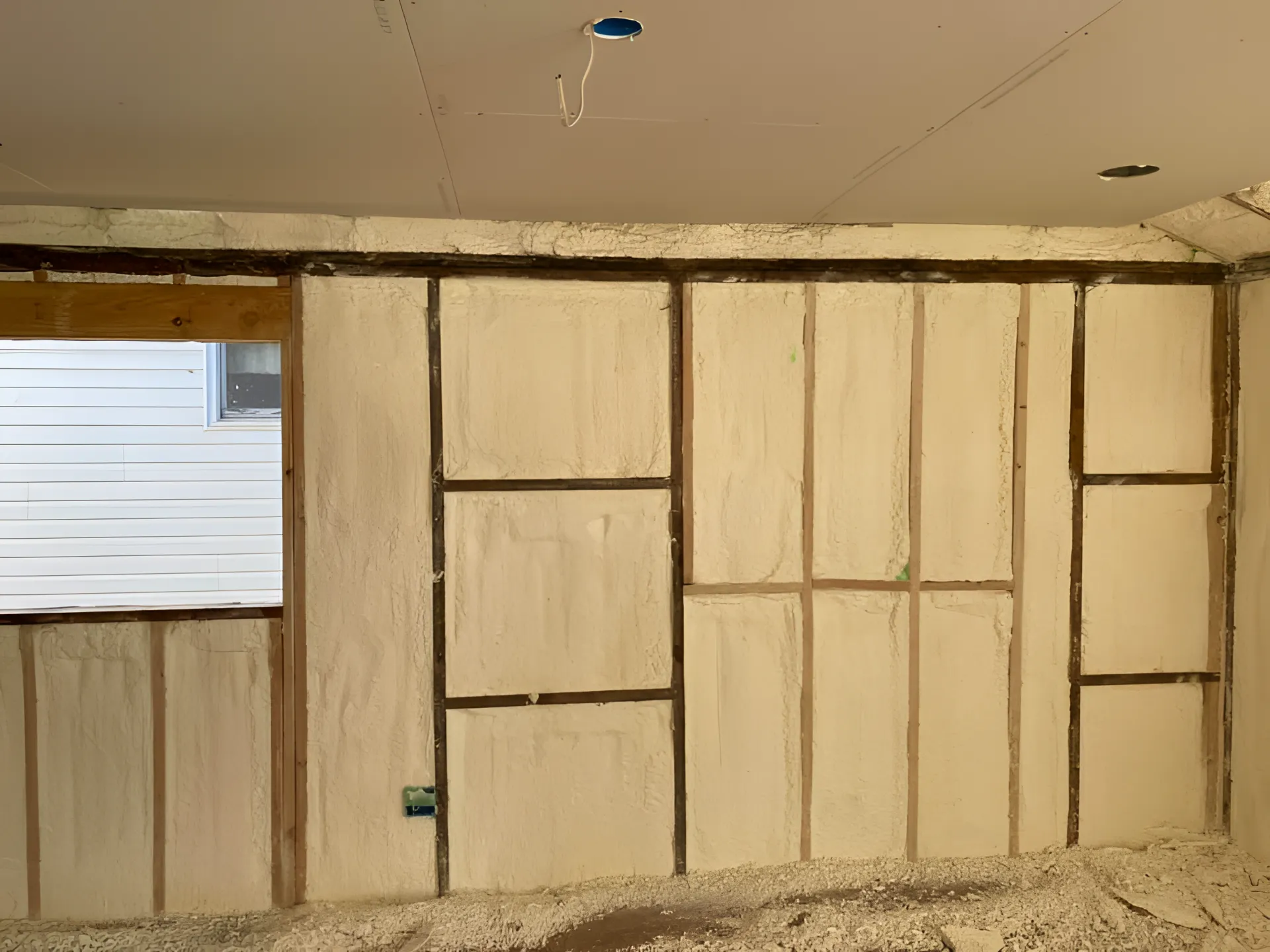
Rim Joist Spray Foam Insulation in Alpine, WY homeowners rely on works because closed-cell foam seals the air leaks along the foundation edge. It also warms the framing around your pipes, so single-digit winter air stays off your water lines, and freezing stops right at the source before any damage starts.
The rim joist is the band of lumber that sits on top of your foundation wall. It’s thin, it has gaps, and it’s the first place winter air gets in.
Alpine gets cold enough to make this a real problem. Weather U.S. lists an average January low of about 7°F and a December low near 9°F. Water lines that run along or through that cold edge can drop below 32°F fast, especially on windy nights.
Most freeze-ups we see follow the same pattern. Cold air leaks through the gaps, pushes across the pipe, and the pipe has no heat source to fight it. When the ice expands, the pipe can split, and you won’t know until it thaws.
A few spots tend to fail first:
Spray foam does two jobs at once. It blocks moving air, and it adds insulation to the cold wood. Fiberglass batts can’t do either job well, since air flows through and around them.
Beyond protecting pipes from cold drafts, spray foam offers several benefits for homeowners. These include improved energy efficiency, better indoor comfort, reduced air leakage, and added insulation performance. Understanding the residential spray foam benefits can help Alpine homeowners see how proper insulation supports year-round home comfort.
The U.S. Department of Energy says foam can air-seal and insulate a rim joist in one step. Closed-cell foam needs a finished thickness of at least 1.5 inches to count as an air barrier. That’s a useful number to hold any installer to.
Here’s a simple example. Say a copper line runs 6 inches from the rim joist in an unheated crawl space. Without foam, a draft hits it directly. With foam, that draft never makes it through the wall.
Closed-cell foam is the better pick for a cold, snowy area like ours. It resists moisture, and it works as a vapor retarder at the right thickness. Open-cell foam soaks up moisture more easily, which isn’t what you want on a wood edge that sits against concrete.
Fine Homebuilding says closed-cell foam is the safer choice in climate zone 6 and colder, and puts its R-value around R-6.5 per inch. Thickness depends on your home’s framing and local code, so we measure on site rather than guess.
Here’s how the two types compare at the rim joist:
| Type | Air Sealing | Moisture Handling | Fit for Cold Climates |
|---|---|---|---|
| Closed-cell foam | Strong | Resists moisture | Preferred |
| Open-cell foam | Good at greater thickness | Absorbs moisture | Less suited |
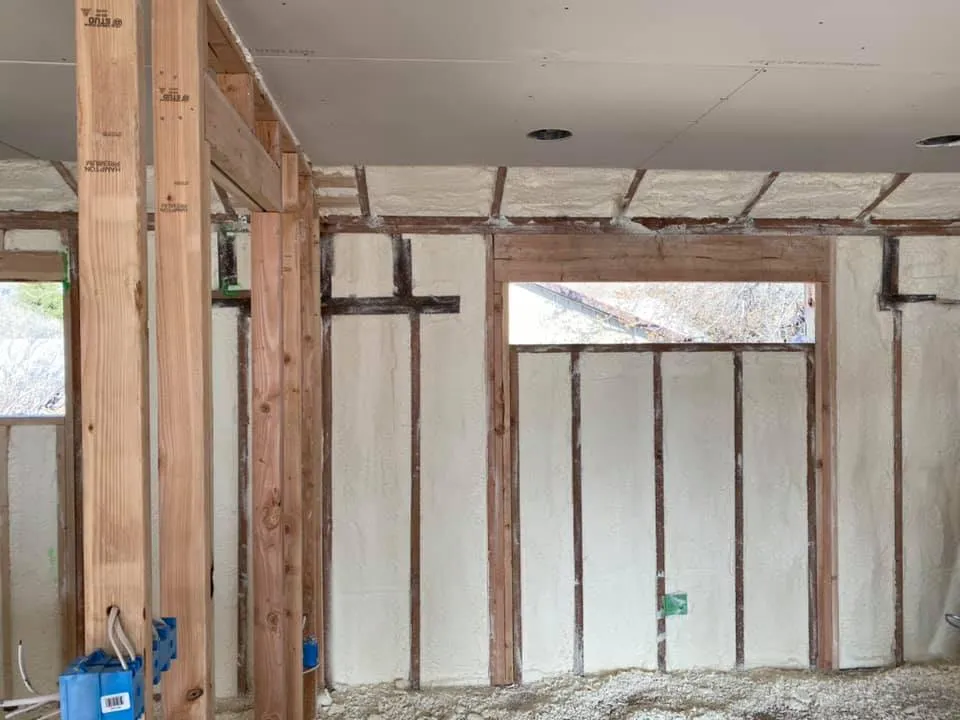
Foam on the rim joist won’t help much if the pipe sits in another cold spot. We walk the whole lower level before we spray anything.
Crawl spaces are the most common trouble area. Our crew handles crawl space rim joist insulation for Alpine, WY homes by checking vents, access doors, and any bare pipe runs that sit below the floor. A sealed rim with an open crawl vent still lets cold air reach the lines.
We also check for:
You shouldn’t have to guess what happens in your basement or crawl space. The process is simple, and most of the work is prep.
Doing the job by hand with a kit is possible, but it’s easy to leave small gaps. Even a small gap is enough for a pipe to freeze.
Foam handles the air leaks. It doesn’t add heat. We pair our work with simple steps that give you real pipe freeze prevention Alpine, WY winters demand.
Keep your thermostat steady, open cabinet doors on exterior walls during cold snaps, and know where your main shutoff is. If you plan to be away in winter, tell someone to check the house. Foam raises the odds your pipes stay safe, and these habits cover the rest.
Our team at High Country Solutions can look at your rim joist and show you where the cold is getting in. If you’re planning spray foam rim joist sealing for Alpine, WY winters call for, we’ll walk the area with you and explain what we find. No pressure, just straight answers.
Call or email us for a free quote.
Not always. Foam blocks drafts and slows heat loss, but pipes in unheated spaces may still need extra protection or a heat source.
In cold areas, it’s usually the safer choice because it handles moisture better. Your home’s setup can change that, so we check first.
It can if the wood is already wet. We look for moisture before spraying and fix the source first.
Cold floors, drafts near the baseboards, and frost on the band in winter are common signs.
We keep foam thin around pipes so they can still be reached later, and we seal the gaps around them instead.
Weather U.S. – Alpine’s average winter temperatures.
U.S. Department of Energy – Spray foam as a one-step air seal and insulation, and the thickness needed for an air barrier.
Fine Homebuilding – Closed-cell foam in cold zones and its R-value per inch.