What’s the Right Residential Spray Foam Insulation Thickness for a Roofline vs. an Attic Floor in Alpine, WY?
For a roofline in Alpine, closed-cell foam needs about 4 inches to meet the cold-climate minimum, and many homes go…


For a roofline in Alpine, closed-cell foam needs about 4 inches to meet the cold-climate minimum, and many homes go thicker. An attic floor needs R-49 to R-60 total, which takes far more foam or a different insulation. That’s why Spray Foam Insulation Thickness Alpine, WY depends on where the foam goes, not one fixed number.
Alpine has long, cold winters, and that pushes insulation targets higher than in most of the country. Before you pick a thickness, you need to know what your local code asks for and where the foam will sit.
Wyoming has no statewide energy code, so each city or county decides what it adopts. Meltplan reports that most of the state falls in climate zones 6 and 7, with R-60 as the typical attic target under the 2021 IECC. We recommend confirming with your local building office before any work starts.
That’s why residential spray foam insulation in Alpine, WY jobs start with a code check, not a guess. Two homes on the same street can need different foam depths if one insulates the roofline and the other insulates the floor.
Choosing the right foam type and thickness is important for achieving the desired insulation performance. This Residential Spray Foam Insulation Guide explains the available options, their benefits, and key considerations for improving home insulation.
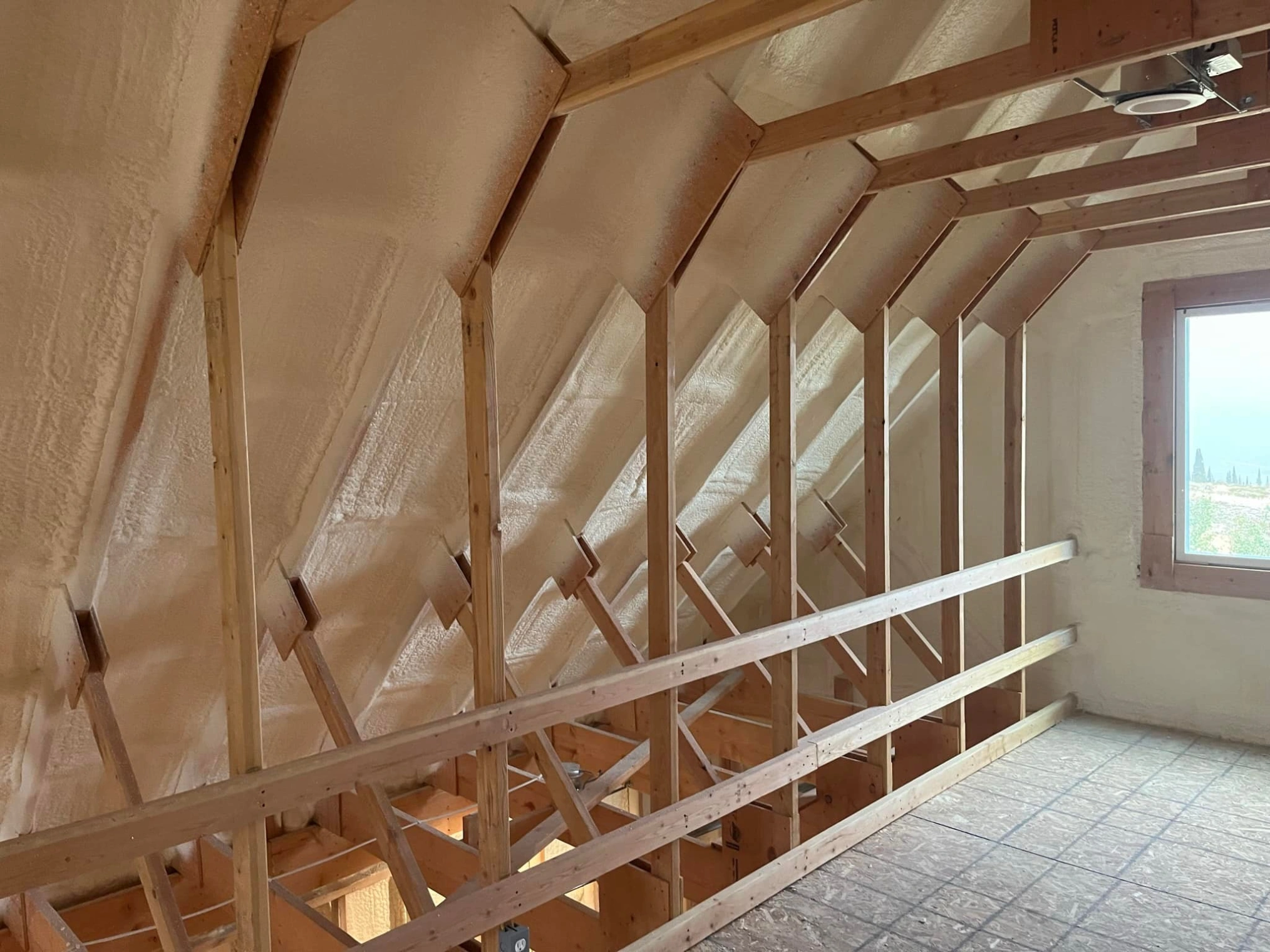
In cold zones, closed-cell foam is the safer pick. Building Science Corporation says closed-cell foam is the right call in climate zone 5 and colder, and it allows a hybrid roof with open-cell foam layered over a closed-cell layer sized by code.
The code sets a minimum for the closed-cell layer that touches the deck. Jaspector lists R-25 for zone 7 and R-20 for zone 6. Closed-cell foam runs about R-6.6 per inch, according to Journal of Light Construction, so R-25 works out to roughly 4 inches.
Keep in mind that spray foam R-value Alpine, WY varies by product. We check the manufacturer’s data sheet for the real per-inch number before we spec a job.
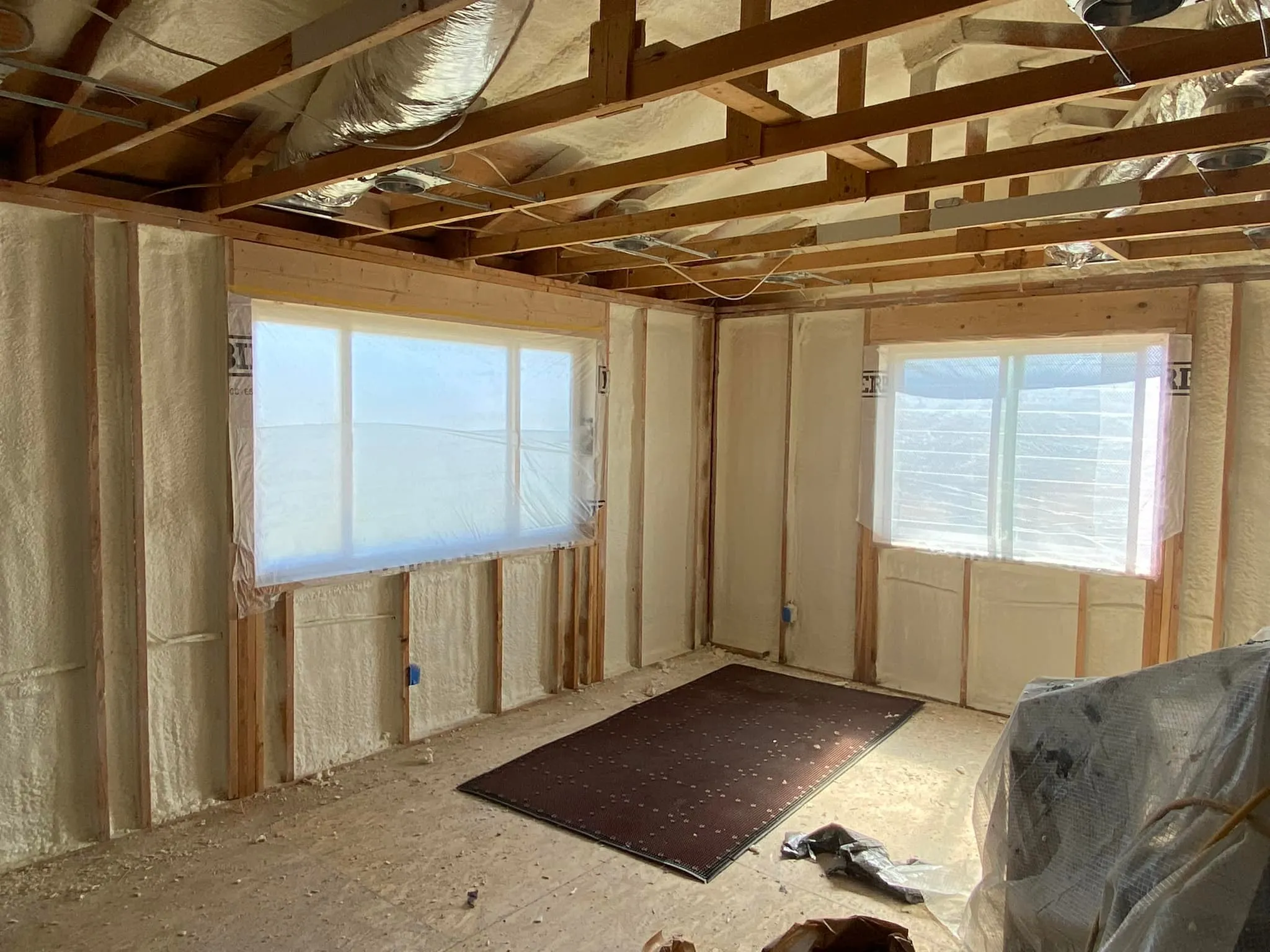
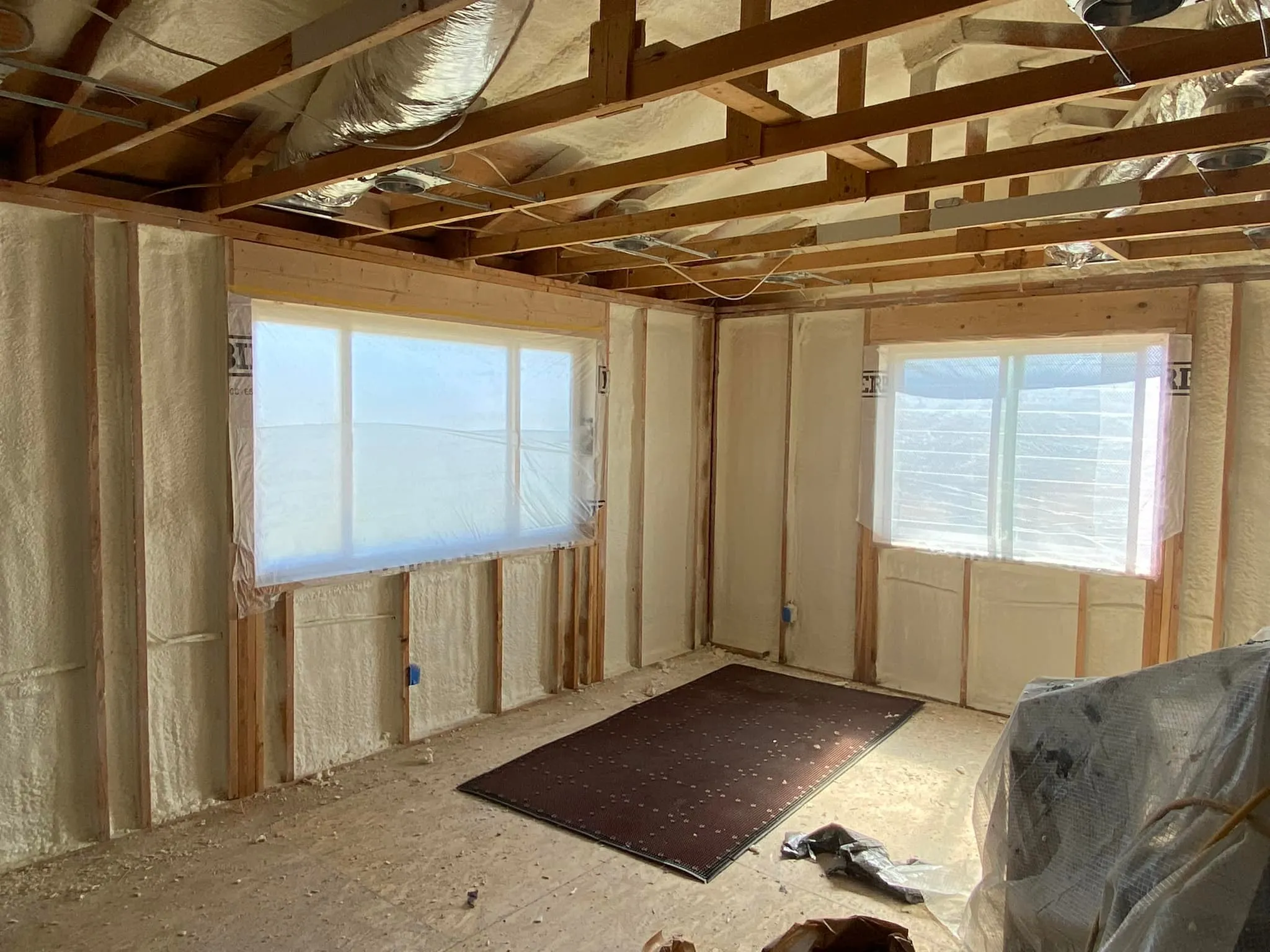
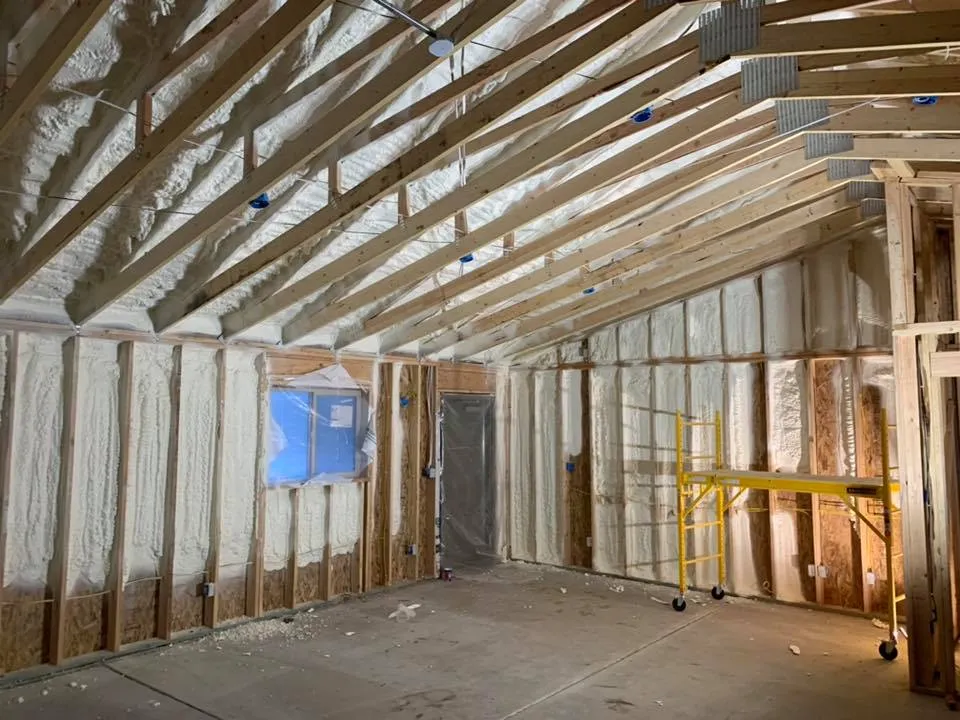
Your roofline spray foam insulation in Alpine, WY plan can go past that minimum. Many homes add open-cell foam over the closed-cell layer until the rafter bays are full, which adds more R-value. For example, a 2×10 rafter bay is about 9.25 inches deep, so 4 inches of closed-cell plus roughly 5 inches of open-cell would fill it.
Insulating the attic floor keeps the attic cold and vented. The foam only has to stop heat from leaving the rooms below, so the goal is a bigger R-value, and that means more depth.
At R-6.6 per inch, R-60 would take about 9 inches of closed-cell foam. That’s deeper than most floor joists, and it gets expensive fast. For example, a 2×6 joist is 5.5 inches deep, so foam alone would fill it at roughly R-36.
Because of that, attic floor insulation Alpine, WY projects often use a few inches of foam to seal air leaks, then add blown insulation on top to reach the full target.
The tradeoff is that any ducts or furnace in the attic stay out in the cold. If you have equipment up there, the roofline is usually the better choice.
Here’s a quick look at how the two approaches differ. Use it to see which one fits your attic and your goals.
| Factor | Roofline | Attic Floor |
|---|---|---|
| Where foam goes | Underside of roof deck | Between and over joists |
| Foam type | Closed-cell, or hybrid | Closed-cell for sealing, blown insulation on top |
| Thickness | About 4 inches minimum | Up to 9 inches for R-60 with foam alone |
| Attic temperature | Part of the heated space | Cold and vented |
| Ducts and furnace | Inside the heated space | Left in the cold attic |
The recommended spray foam thickness Alpine, WY homeowners should aim for starts with the code minimum, then rises with your comfort goals. Your attic’s use and what’s in it decide the rest.
A few errors show up again and again. Most are easy to avoid when you plan the thickness first.
If you’re deciding between the roofline and the attic floor, High Country Solutions can look at your attic and give you a straight answer. We offer a free quote for homes in Alpine, WY.
Phone: (307) 248-9063
Email: [email protected]
It can be. Foam seals air leaks and adds R-value in one step, which matters during long winters, though it costs more upfront than batts or blown insulation.
Often the old insulation needs to come out first, especially if it’s wet, dusty or compressed. That lets the foam bond and seal properly.
It can help. Sealing air leaks and keeping heat away from the roof deck means less snow melts from below, which is what feeds ice dams.
No. Each extra inch adds less benefit than the first few, so past your code target the money often does more in air sealing or open rafter space.
Often it can, but the foam needs the surface and air temperature to stay within the manufacturer’s range. We check that before scheduling.