What’s the Right Residential Spray Foam Insulation Thickness for a Roofline vs. an Attic Floor in Alpine, WY?
For a roofline in Alpine, closed-cell foam needs about 4 inches to meet the cold-climate minimum, and many homes go…


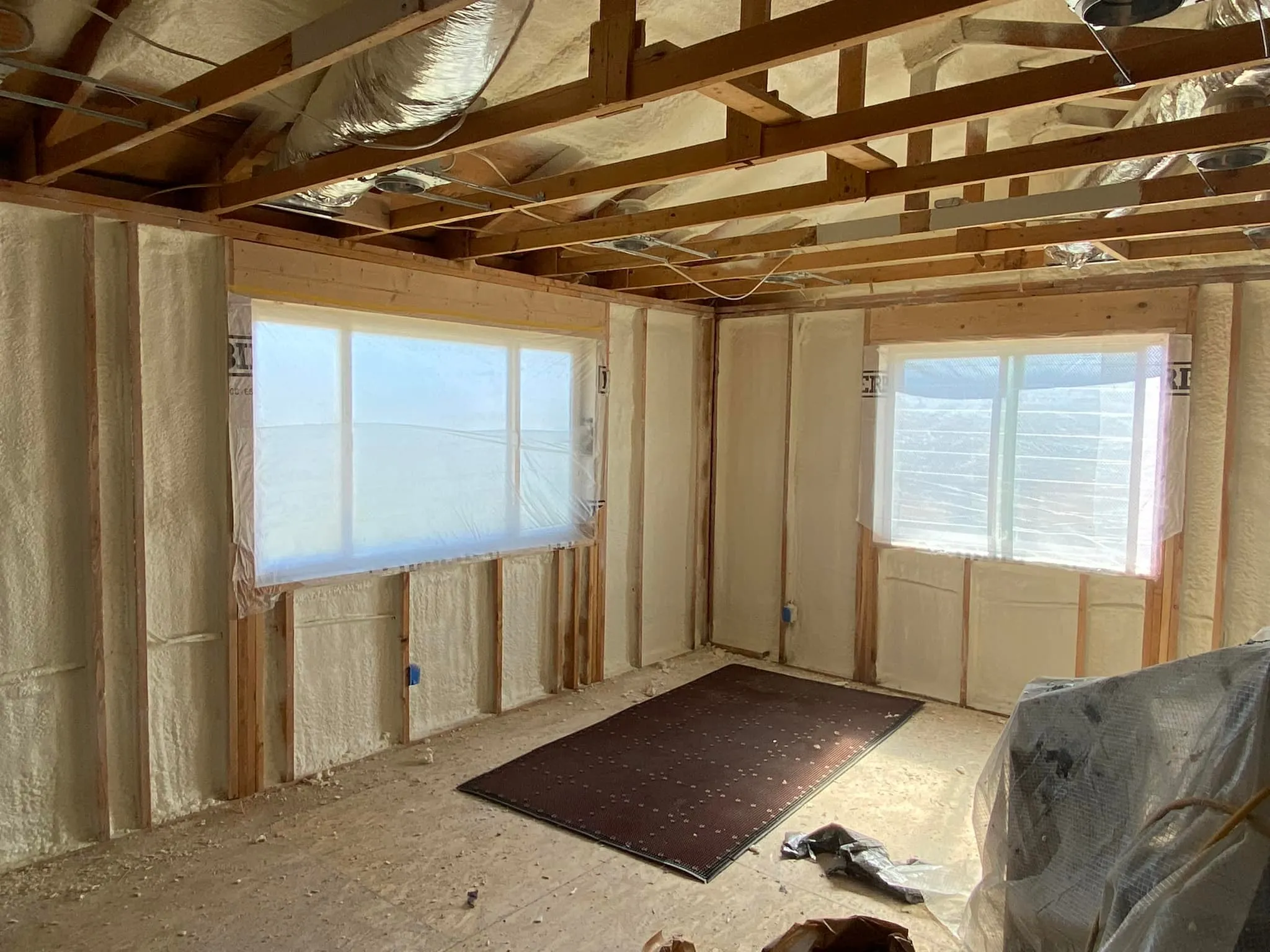
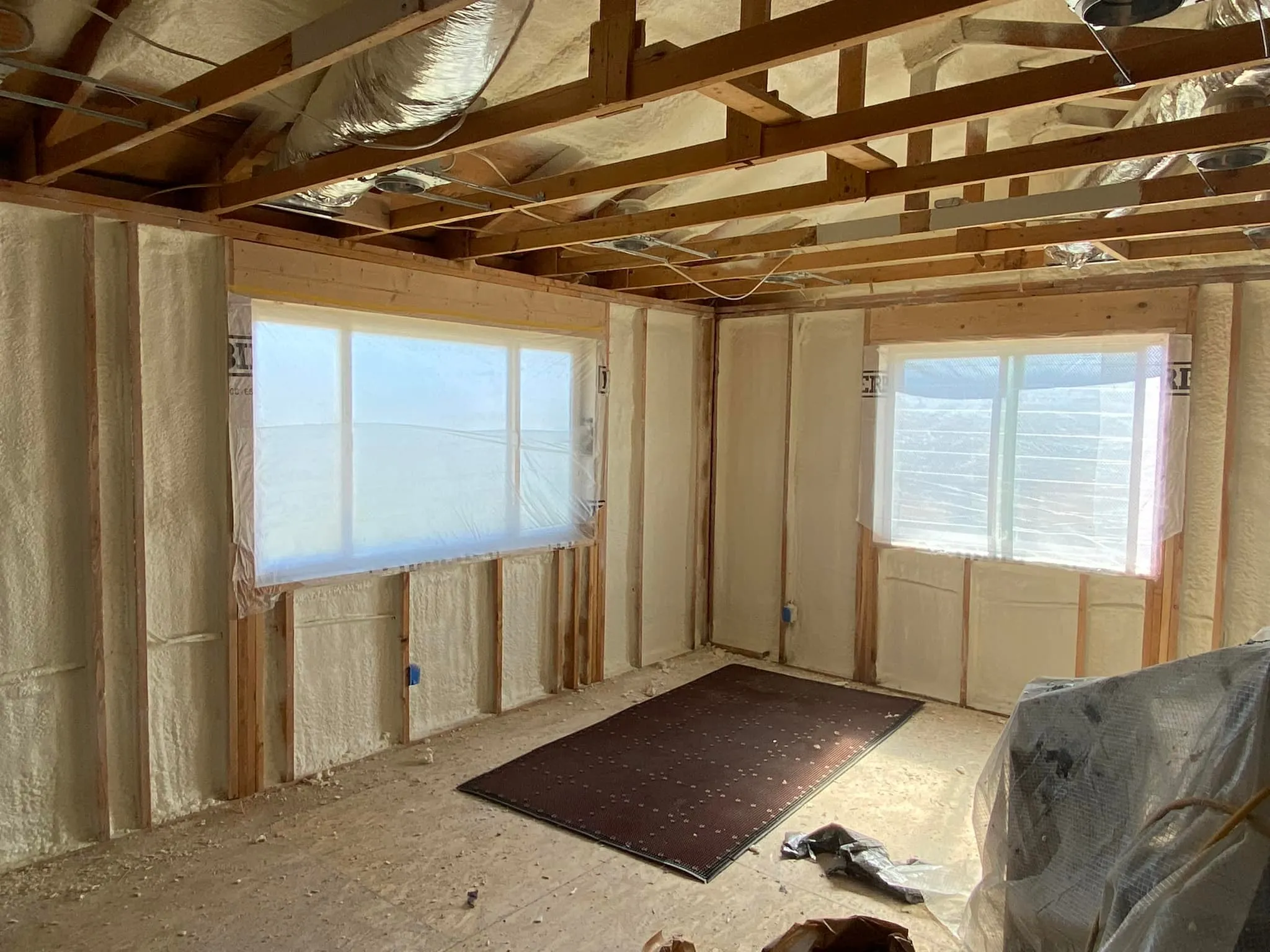
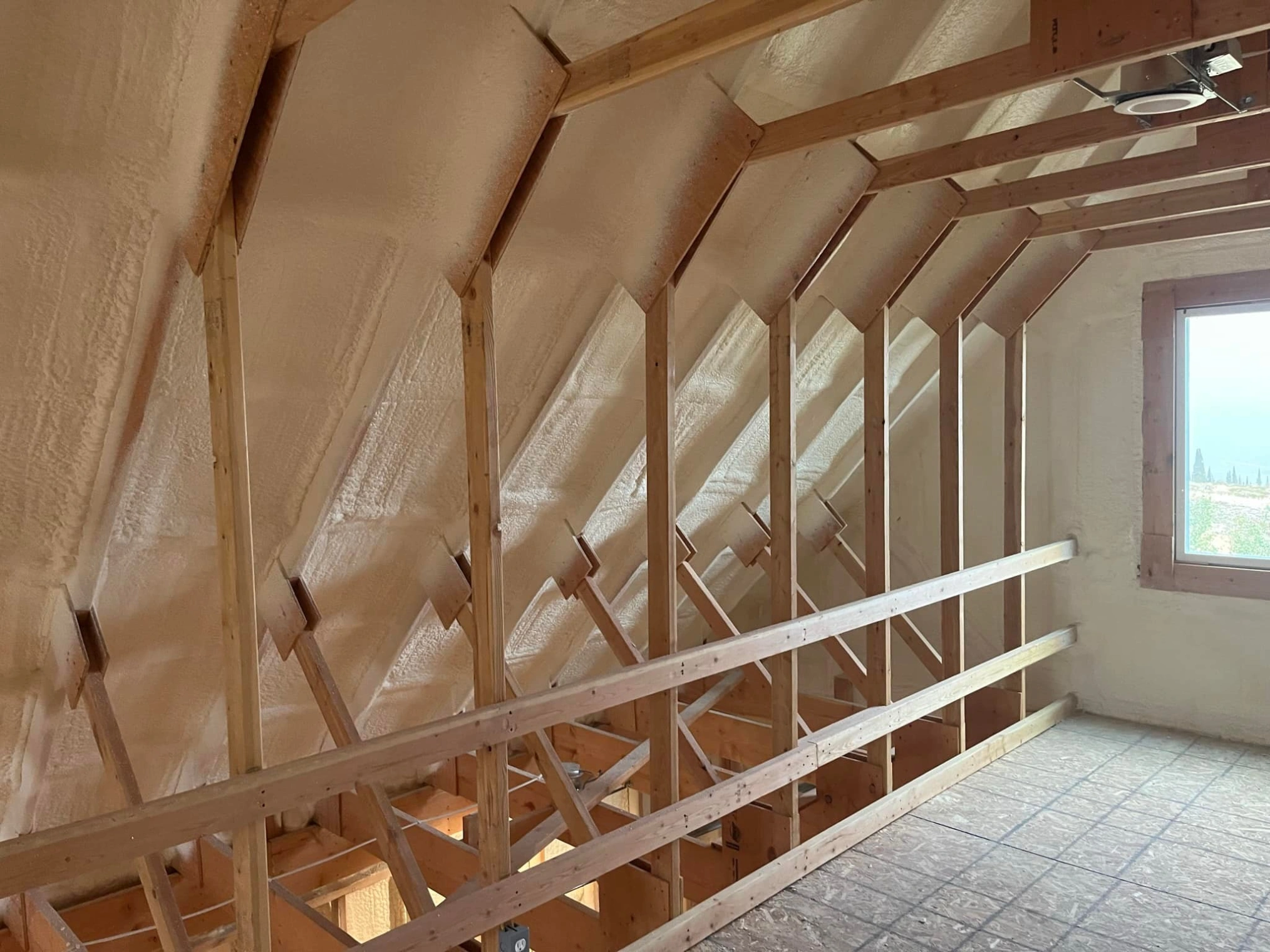
Skip it, and your new attic space leaks heat, collects moisture, and invites ice dams. Spray Foam Insulation for attic remodels in Shelley, ID seals air gaps and insulates in one step, so the room stays comfortable through Eastern Idaho winters. Leaving it out means opening finished walls later to fix problems you could have prevented before the drywall went up.
An attic remodel opens up framing you won’t see again once the drywall goes on. That makes it the cheapest time to seal and insulate. Skip it and these problems tend to show up.
On Attic Remodel Insulation in Shelley, ID projects, we often see homeowners spend heavily on flooring, paint, and windows, then leave the shell leaky. You end up with a nice room that’s hard to heat. Fixing it later means opening finished surfaces.
Eastern Idaho winters are long, and attic heat loss shows up fast on a roof. Snow that melts unevenly tells you where heat is escaping. Here’s what that means for your remodel.
Most of Idaho falls in Climate Zone 5 or 6, according to the Idaho Office of Energy and Mineral Resources. That means a long heating season, and every gap in your attic works against you for months.
That’s why Residential Spray Foam Insulation in Shelley, ID draws so much attention from homeowners finishing attics. Foam fills gaps that batts and loose fill tend to miss.
Researchers at the University of Minnesota name three core causes of ice dams: too little attic insulation, poor air sealing between the house and attic, and weak attic ventilation. Skipping foam in a remodel can stack the first two problems on you at once.
The difference shows up in comfort, moisture, and what you’ll pay to fix mistakes. Here’s a quick side-by-side for a typical remodeled attic.
| Factor | Without Spray Foam | With Spray Foam |
|---|---|---|
| Air Leaks | Gaps stay open | Gaps sealed as foam expands |
| Moisture Risk | Humid air reaches cold wood | Air movement is blocked |
| Room Comfort | Hot and cold swings | More even temperatures |
| Ice Dam Risk | Higher with heat loss | Lower with less heat loss |
| Later Fixes | Open finished walls | Done before drywall |
Spray Foam Magazine explains that foam can insulate the underside of the roof deck, a spot where batts sag and blown insulation falls. That’s a big reason foam suits remodels where the attic becomes living space.
Spray Foam Insulation Installation in Shelley, ID works best when it’s scheduled after framing and wiring are done but before drywall goes up. That timing keeps the crew from working around finished surfaces.
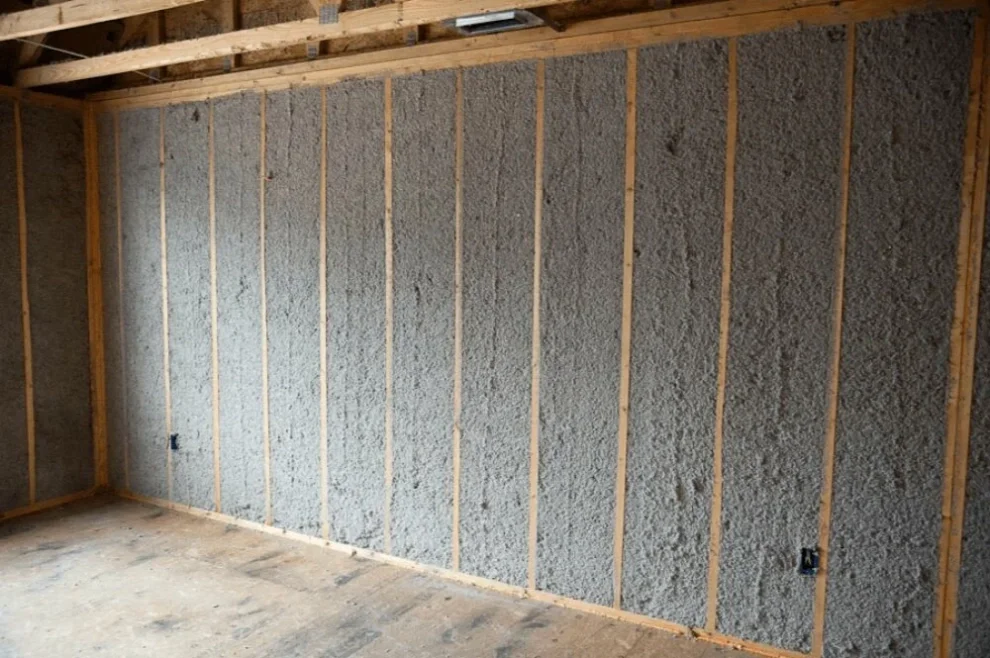
Foam isn’t the only way to insulate, and it costs more up front than some options. We’d rather tell you that than oversell it. Your attic design decides what fits.
Attic Spray Foam Insulation in Shelley, ID isn’t the only path. If your attic is unused storage with a flat, accessible floor, careful air sealing plus blown insulation can work. Once you turn the attic into finished living space, though, sloped ceilings and knee walls become harder to insulate effectively. This residential spray foam insulation guide explains different foam options and their benefits, helping homeowners understand which solution may work best for their property.
Run through these items before the drywall crew shows up. Each one is cheap to handle now and expensive later.
Ask for Attic Air Sealing in Shelley, ID before any insulation goes in, then confirm these points.
If you’re framing an attic remodel, we can walk through your plans with you before drywall goes up. We’ll look at the roof design, the leaks, and what makes sense for your budget. Contact to get a free quote.
Phone: (307) 248-9063
Email: [email protected]
Closed-cell foam gives more R-value per inch and resists moisture better. Open-cell costs less and works well where you have deeper rafter bays. Your roof design decides the best fit.
Yes. A thin foam layer seals the air leaks, and blown insulation on top adds depth. That hybrid setup can cut cost where space allows.
It depends on the design. Foam on the attic floor keeps the attic vented, while foam under the roof deck makes it an unvented, conditioned space.
Plan on staying out of the work area while the foam is applied and cures. Follow the re-entry time listed on the product’s label.
Look for dirty insulation, frost on nails in winter, and snow that melts unevenly on the roof. A blower door test can pinpoint leaks you can’t see.