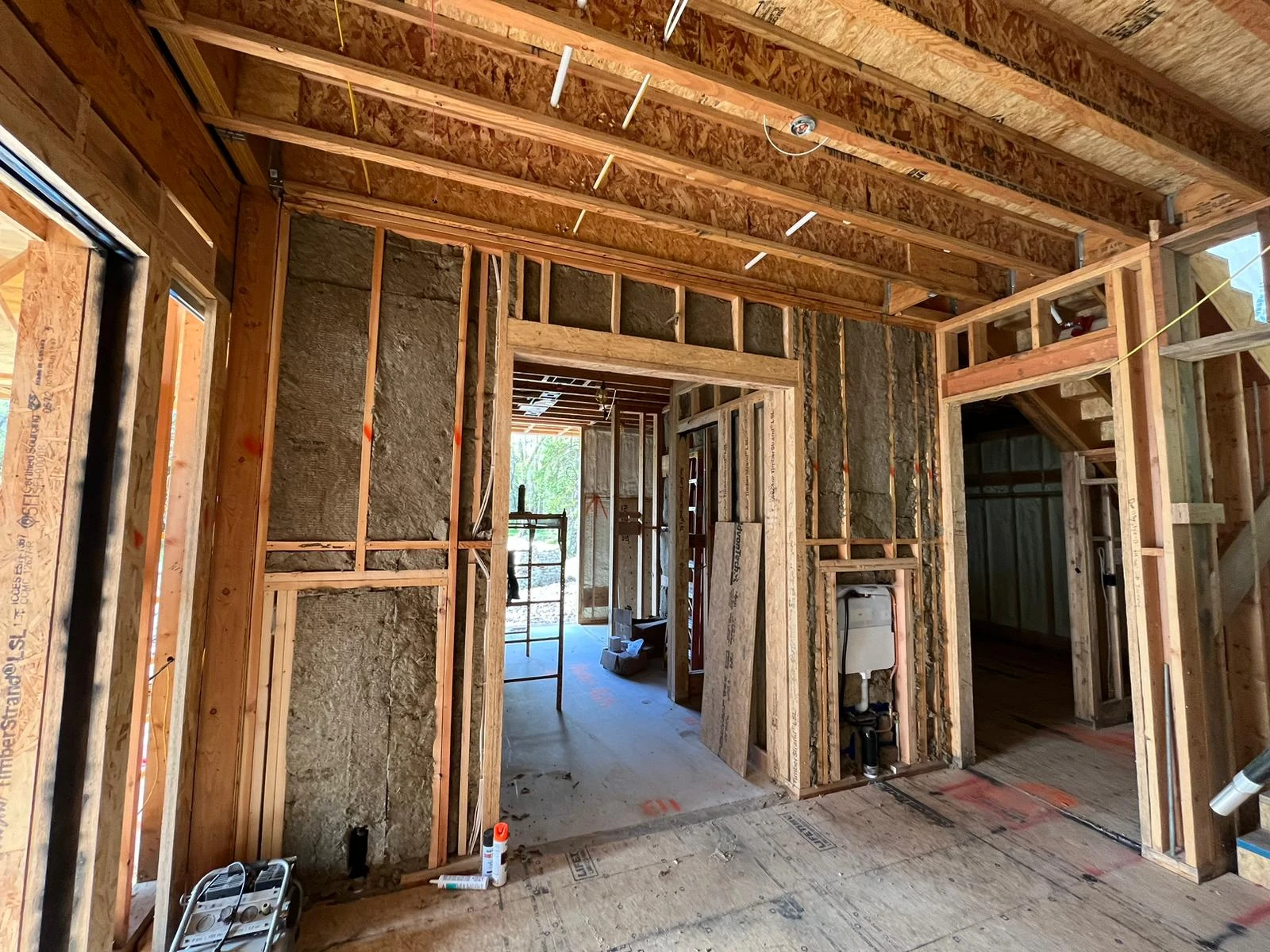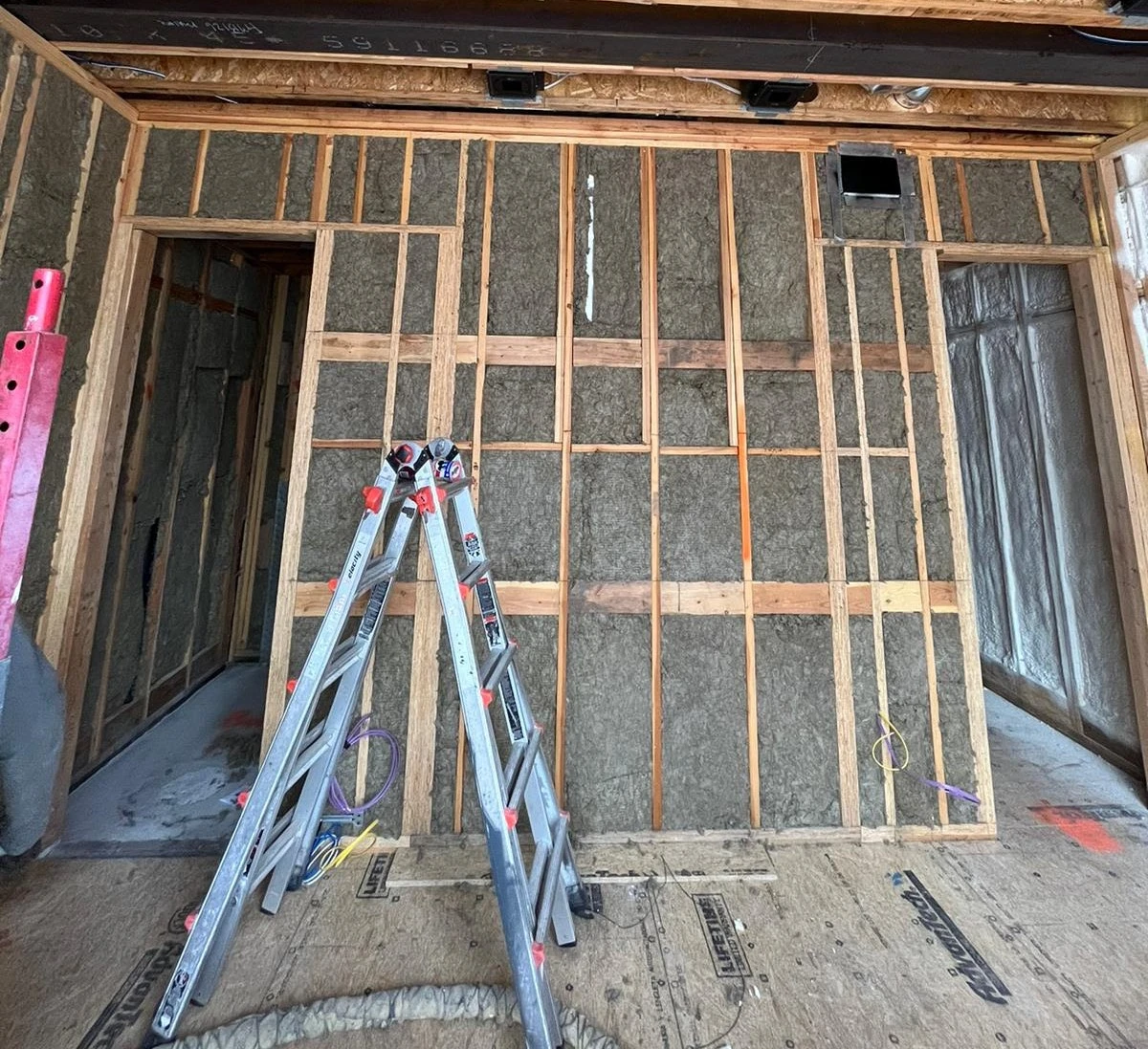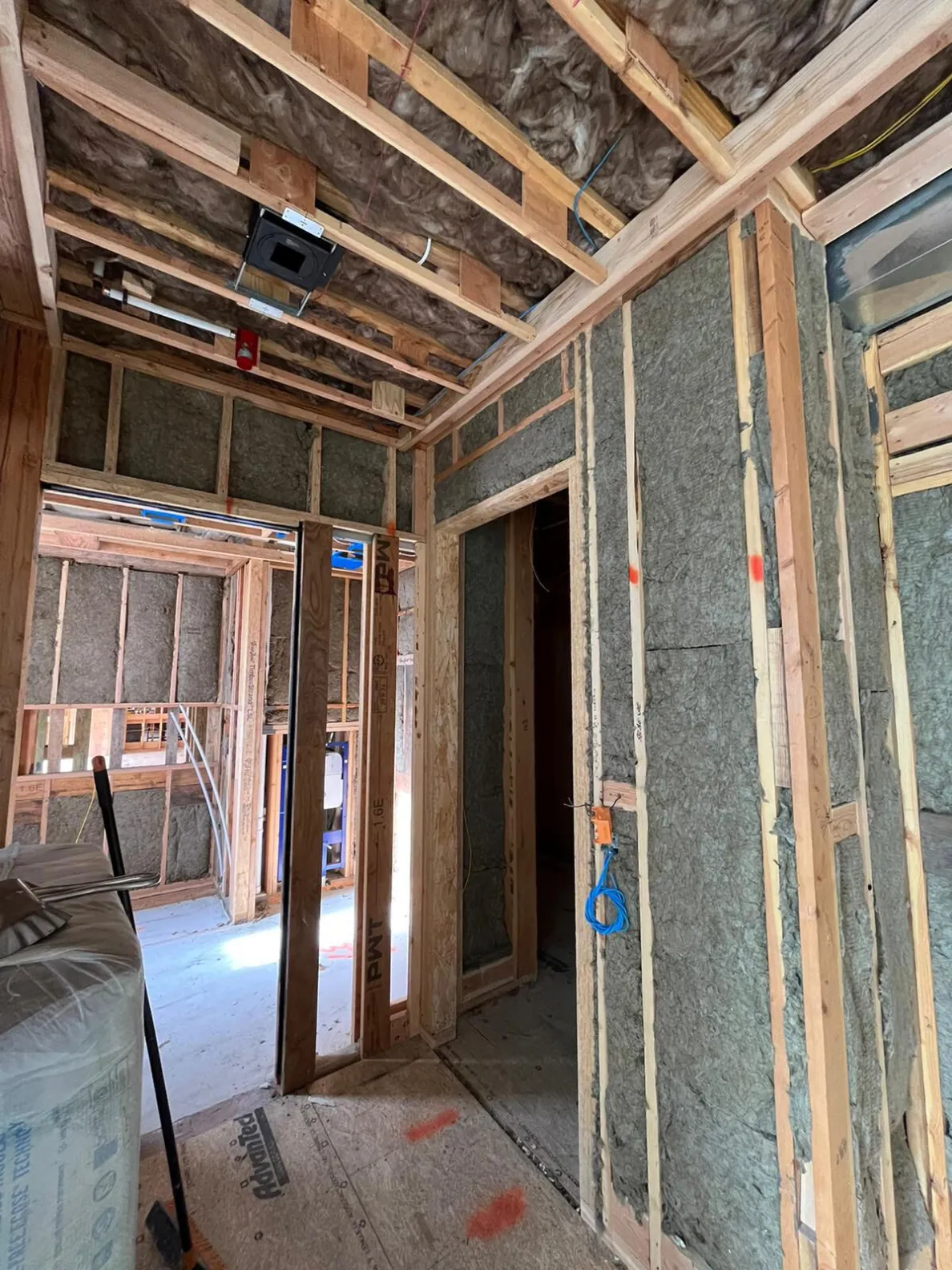
Why Are Homeowners in Thayne, WY Considering Mineral Wool for Insulation Upgrades?
Homeowners in Thayne, WY are turning to a mineral wool insulation guide because Star Valley winters push heating systems to their…


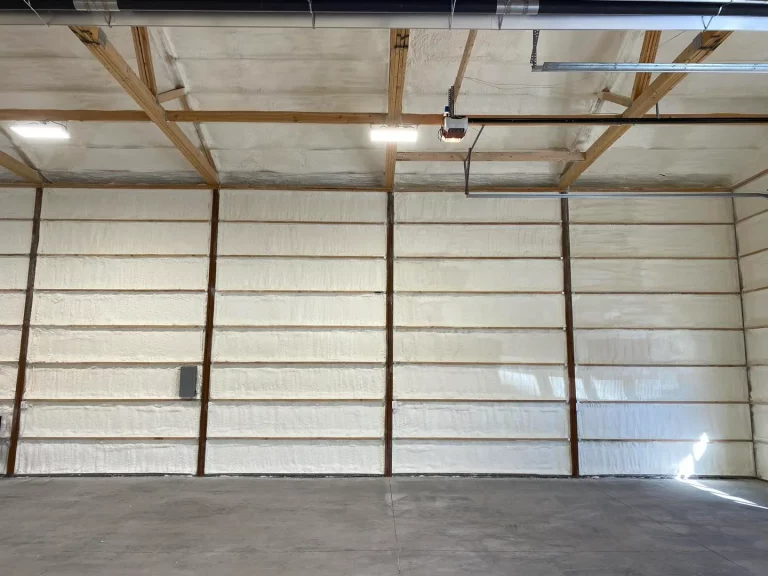
Installing insulation at the right stages of new construction in Ucon, Idaho, determines how comfortable, energy-efficient, and durable a home will be for decades. Ucon sits in Bonneville County at an elevation of roughly 4,800 feet, placing it in the Idaho Falls metropolitan area, where winters are cold, and heating demands are significant. According to the Department of Energy’s climate zone map, this region falls within IECC Climate Zone 5, which carries specific insulation requirements that exceed what many builders consider minimum code. The insulation process is not a single event, but a series of strategically timed installations that span from the foundation pour to the final attic blow-in, each stage tied to different new construction insulation phases.
New construction insulation follows a specific sequence that mirrors the building process itself. Each phase targets a different part of the building envelope and depends on prior work being completed.
Foundation insulation is the first opportunity and must be completed before backfilling. In Ucon’s cold climate, insulating the exterior of basement walls and foundation footings protects the damp-proof coating, minimizes thermal bridging, and places the concrete’s thermal mass inside the conditioned space to moderate indoor temperature swings. Slab-on-grade homes benefit from foam board installed either directly against the exterior of the slab edge before backfilling or under the slab along the inside of the stem wall. Crawlspace insulation follows a similar early-schedule approach. If the crawlspace is unventilated, the recommended practice is to seal and insulate the foundation walls rather than the floor above, keeping ductwork and piping within the conditioned volume, which helps prevent common issues that require new construction insulation fixes later on.
After framing but before siding goes on, builders have a window to install continuous exterior insulation, typically rigid foam board over the structural sheathing. The DOE recommends combining cavity insulation with insulated sheathing for the best thermal performance in most climates. Continuous insulation eliminates thermal bridging through wood studs, a significant source of heat loss that standard cavity insulation alone cannot address. Foam sheathing also protects against condensation forming on the inside wall surface by keeping the wall cavity closer to interior temperature conditions.
This is what most people picture when they think of insulation day. After framing, plumbing, and electrical rough-in are complete and inspections have passed, wall cavity insulation is installed across all exterior walls, including walls adjacent to garages and unconditioned spaces. This phase typically happens just before drywall is hung. The timing matters because cavity insulation needs full, unobstructed access to every stud bay, and once drywall closes the walls, making corrections becomes difficult and expensive. For Climate Zone 5, the DOE recommends wall assemblies of R-20 cavity insulation plus R-5 continuous exterior insulation, or equivalent combinations.
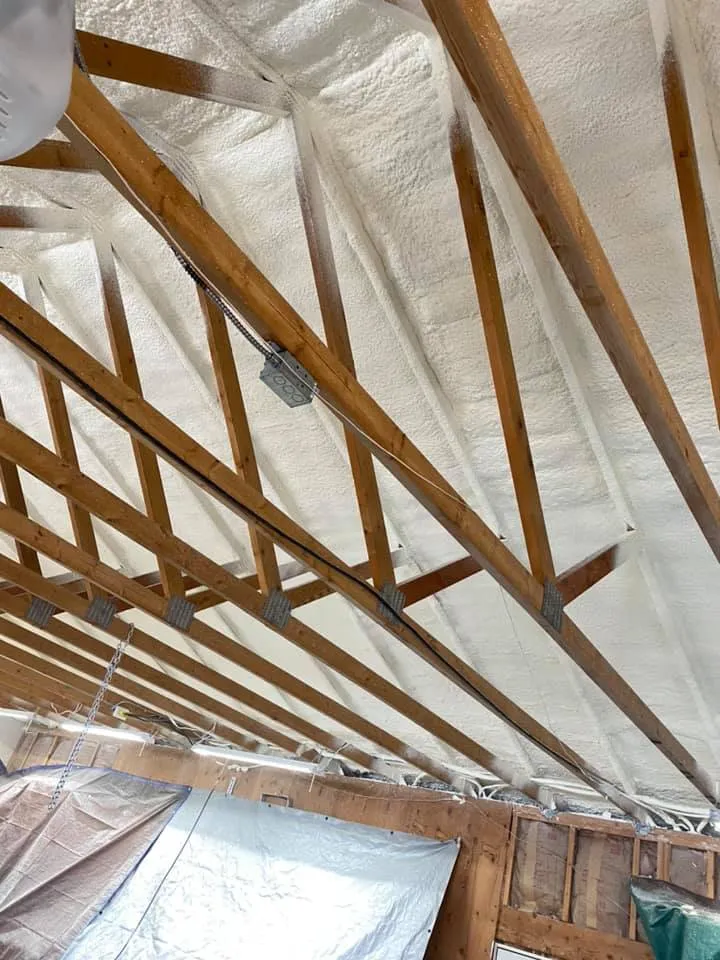
Attic insulation is often the single most impactful insulation in a cold-climate home, and in Ucon, the target is R-60 for uninsulated attics. If the home has a vented attic with insulation on the floor, loose-fill or batt insulation is blown or laid between and over the ceiling joists after the ceiling drywall is in place, but before any attic flooring or storage decking is installed. For cathedral ceilings or unvented attic assemblies, insulation is installed between the rafters, often using a combination of high-density batts and rigid foam to reach the required R-value while maintaining ventilation channels where needed. Radiant barriers, while helpful in hot climates, are generally less cost-effective in Ucon’s heating-dominated climate compared to adding more thermal insulation.
The band joist area, where the floor framing meets the foundation, is one of the most commonly under-insulated locations in new homes, yet it represents a major source of air infiltration and heat loss. Band joist insulation should be installed while the home is under construction, before the rims are covered. Floors over vented crawlspaces, unheated garages, and cantilevered sections also require insulation during this phase. All penetrations around wiring, plumbing, and HVAC runs should be sealed before insulation is placed.
Selecting the right insulation material depends on the building assembly, budget, and performance targets. The DOE outlines nine primary insulation types suitable for new construction, each with distinct advantages depending on where and how it is applied.
| Insulation Type | Best Application in New Construction | Installation Method | Key Advantage |
|---|---|---|---|
| Batts and Rolls | Standard wall cavities, attics, and floors | Fitted between studs, joists, and beams | Widely available, relatively low cost, suited to standard spacing |
| Spray Foam (Closed-Cell) | Wall cavities, band joists, rim areas | Pressure-sprayed into cavities | Highest R-value per inch, acts as an air and moisture barrier |
| Spray Foam (Open-Cell) | Wall cavities, attic floors, hard-to-reach areas | Pressure-sprayed, expands to fill | Lower cost than closed-cell, good air sealing |
| Rigid Foam Board | Exterior wall sheathing, foundation walls, and under slabs | Mechanically fastened, taped at seams | Continuous coverage eliminates thermal bridging |
| Loose-Fill (Blown-In) | Attic floors, enclosed wall cavities | Blown in with special equipment | Conforms to irregular spaces, good coverage |
| Insulating Concrete Forms | Foundation walls, full-wall assemblies | Forms filled with concrete during pour | Insulation built into the structure, high thermal resistance |
| Structural Insulated Panels | Walls, roofs, floors | Prefabricated panels assembled on site | Superior uniform insulation, faster construction |
Moisture management is one of the most frequently misunderstood aspects of insulation in cold climates. The DOE advises that vapor retarders perform best when installed closest to the warm side of a structural assembly, which in Ucon means toward the interior of the building. In most new construction homes in Climate Zone 5, a Class I or Class II vapor retarder (such as polyethylene sheet or kraft-faced batts) is installed on the interior side of insulated walls and ceilings to prevent warm indoor air from carrying moisture into wall cavities where it can condense on cold surfaces.
The vapor retarder installation must be continuous and as close to perfect as possible. Any tears, gaps, or poorly sealed penetrations create paths for moist air to reach cooler surfaces, potentially leading to wet insulation, mold growth, and wood rot. The DOE notes that effective moisture control requires both proper vapor retarder placement and thorough air sealing. The International Residential Code classifies vapor retarders into three classes based on permeability, and the appropriate class depends on the specific wall assembly and climate conditions.
The DOE is clear that air sealing should precede insulation in every new construction home. Energy losses due to air leakage can actually exceed conductive losses in a well-insulated home, making air sealing not optional but essential. Common air-leakage locations include window and door frames, electrical boxes, plumbing penetrations, recessed lighting, attic hatches, and the band joist area.
Spray foam insulation provides a notable advantage here because it expands to fill gaps and creates an air barrier as part of the insulation process. This can reduce or eliminate the need for separate caulking, housewrap application, and joint-taping steps. However, spray foam requires professional installation and specialized equipment, and some building codes still require an additional vapor retarder depending on the foam type and wall assembly used, which is why expert spray foam installation in Ucon, ID is important for long-term performance.
Even experienced builders can run into insulation problems when timelines get compressed or coordination between trades breaks down. The most frequent issues we see in Ucon-area new construction include:
Working with a qualified insulation team makes a measurable difference in the final performance of a new home. Strong indicators of quality installation include a pre-insulation air-sealing walkthrough, documentation of R-values for every assembly, attention to band joist and rim areas, proper vapor retarder placement on the warm side, and a willingness to walk through the work before drywall covers the wall cavities. Installers who understand Ucon’s climate-specific requirements and who coordinate closely with the framing and HVAC trades tend to deliver better long-term results.
| Building Scenario | Recommended Approach | What to Prioritize |
|---|---|---|
| Standard stick-frame home on a basement | Batts in walls + blown-in attic + exterior foundation foam | Foundation insulation before backfill, R-60 in attic, band joist sealing |
| Slab-on-grade construction | Rigid foam under and around slab edge + wall cavity insulation + attic blow-in | Slab edge insulation before pour, continuous exterior wall insulation |
| Home with an unvented crawlspace | Foundation wall insulation + sealed crawlspace floor vapor barrier | Ground vapor barrier, sealed rim joist, wall insulation on foundation |
| Custom home with cathedral ceilings | High-density batts + rigid foam in rafter bays or spray foam | Ventilation baffles where needed, full rafter cavity coverage, and air sealing |
High Country Solutions brings detailed knowledge of Climate Zone 5 insulation requirements, vapor barrier placement, and air sealing best practices to every new construction project in Ucon and the surrounding Bonneville County area. Our team coordinates with your builder’s schedule to ensure insulation is installed at the right stage, with the right materials, and to the right R-values for lasting comfort and energy efficiency.
Call us at (307) 248-9063 or email [email protected] to discuss your new construction insulation timeline. We will walk through your plans, identify the right approach for every building assembly, and make sure nothing gets missed before the drywall goes up.
Insulation is installed across multiple phases, starting with foundation insulation before backfilling, followed by exterior sheathing insulation during framing, wall cavity insulation after rough-in inspections and before drywall, and attic insulation once the ceiling is enclosed but before storage decking is installed.
Ucon falls in IECC Climate Zone 5, which calls for R-60 in uninsulated attics, R-30 in floors over unconditioned spaces, and R-20 cavity plus R-5 continuous insulation in wood-frame walls.
It depends on the foam type and local building code interpretation. Some spray foam products act as a vapor retarder, but not all building codes recognize sprayed foam as a full vapor barrier, so an additional vapor retarder may still be required.
In Ucon’s cold climate, vapor retarders should be installed on the interior (warm) side of the wall and ceiling assemblies to prevent indoor moisture from migrating into cavities and condensing on cold surfaces.
Air sealing closes the gaps and penetrations that allow conditioned air to escape. If insulation is installed without prior air sealing, those air leaks continue, and energy losses from air infiltration can actually exceed the conductive losses that insulation is designed to prevent.