Why Are Homeowners in Thayne, WY Considering Mineral Wool for Insulation Upgrades?
Homeowners in Thayne, WY are turning to a mineral wool insulation guide because Star Valley winters push heating systems to their…


Builders in Driggs, Idaho, work in one of the most demanding climate zones in the lower 48 states. Teton County sits in IECC Climate Zone 7, with a winter design temperature of -30°F, a frost depth of 34 inches, and a mean annual temperature of just 38°F according to Teton County Design Criteria. These conditions mean that a professional insulation installation team must deliver far more than basic material placement. Builders should expect a crew that understands local code requirements, applies installation quality standards like RESNET Grade I, coordinates with other trades, and stands behind their work with documentation. The right insulation partner makes the difference between a home that passes inspection and one that performs efficiently for decades, which is why choosing a trusted spray foam insulation company in Driggs, ID matters.
Driggs’s location in the Star Valley, surrounded by mountains, creates temperature extremes that stress building envelopes year-round. Winter temperatures regularly plummet below zero, while summer days can push cooling systems hard. The U.S. Department of Energy emphasizes that energy losses from air leakage can be greater than conductive losses in even a well-insulated home, making both insulation quality and air sealing equally important.
A professional insulation team working in this region must understand how altitude, dry air, and extreme cold interact with different insulation materials. What works in a moderate climate may underperform or fail in Climate Zone 7.
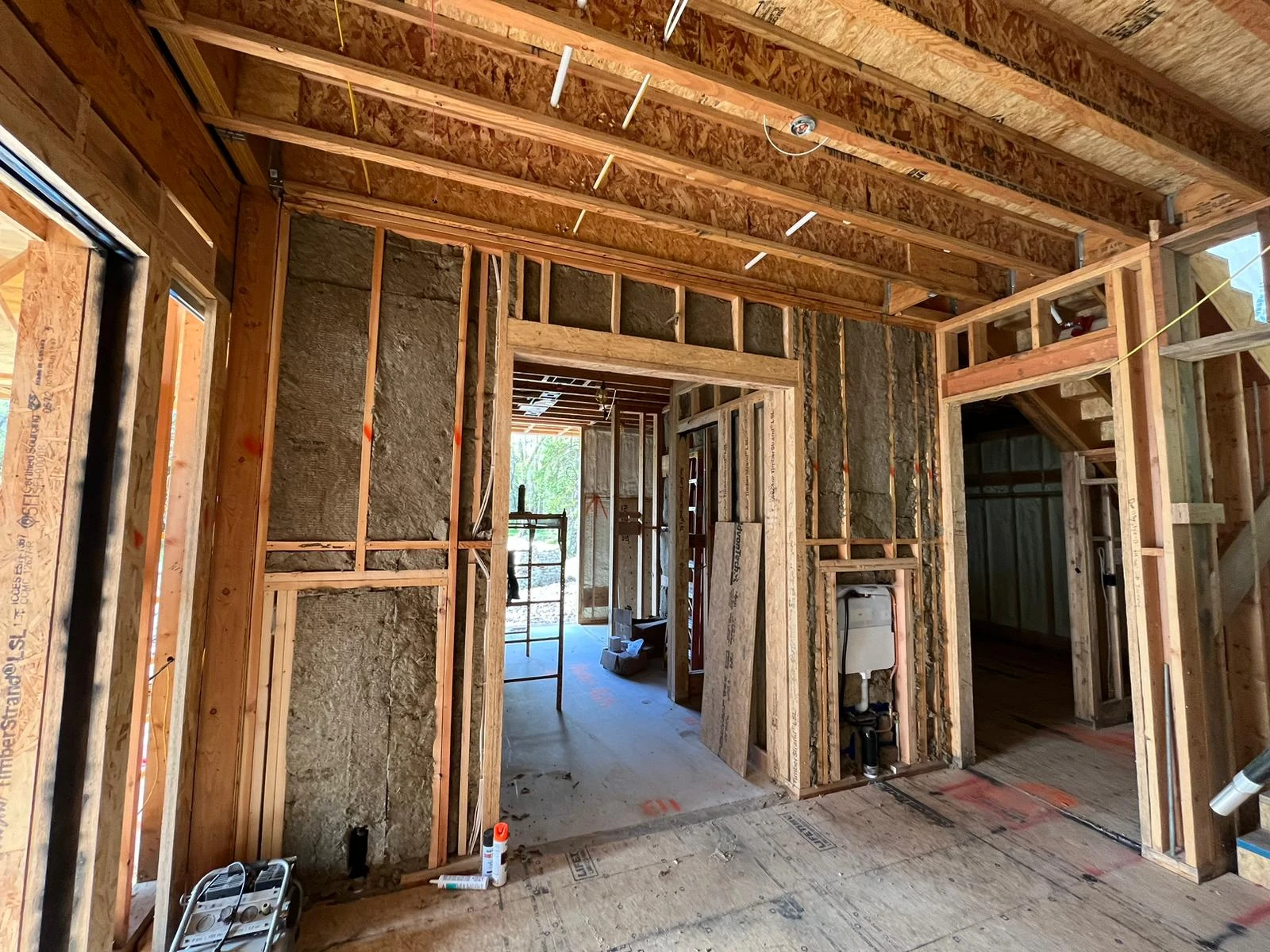
Before any material arrives, a professional insulation crew should conduct a thorough walkthrough of the framing. This step identifies potential problem areas such as bypasses above cabinets, dropped soffits, chase ways around ductwork, and gaps around windows and doors. The team should coordinate with the framer, plumber, electrician, and HVAC installer to confirm that all cavities are accessible and that there are no hidden holes in the air barrier, which is essential when working with a spray foam insulation contractor for builders in Alpine.
According to the Insulation Institute, builders should verify that installers inspect for common air leakage paths before insulation goes in. Sealing these hidden gaps before drywall is far easier and cheaper than fixing them after.
Driggs falls under Teton County’s adopted code requirements, which mandate specific R-values for each building component in Climate Zone 7:
| Building Component | Required R-Value |
|---|---|
| Ceiling / Attic | R-60 |
| Wood Frame Wall | R-20+5 or R-13+10 or R-0+20 |
| Mass Wall | R-19/21 |
| Floor (over unconditioned space) | R-38 |
| Basement Wall | R-15/19 or R-13+5 |
| Slab-on-Grade | R-10 at 4 ft depth |
| Crawlspace Wall | R-15/19 or R-13+5 |
A professional team knows these requirements cold and will not guess or default to lower standards. They should discuss R-value targets upfront and guarantee those values in their contract.
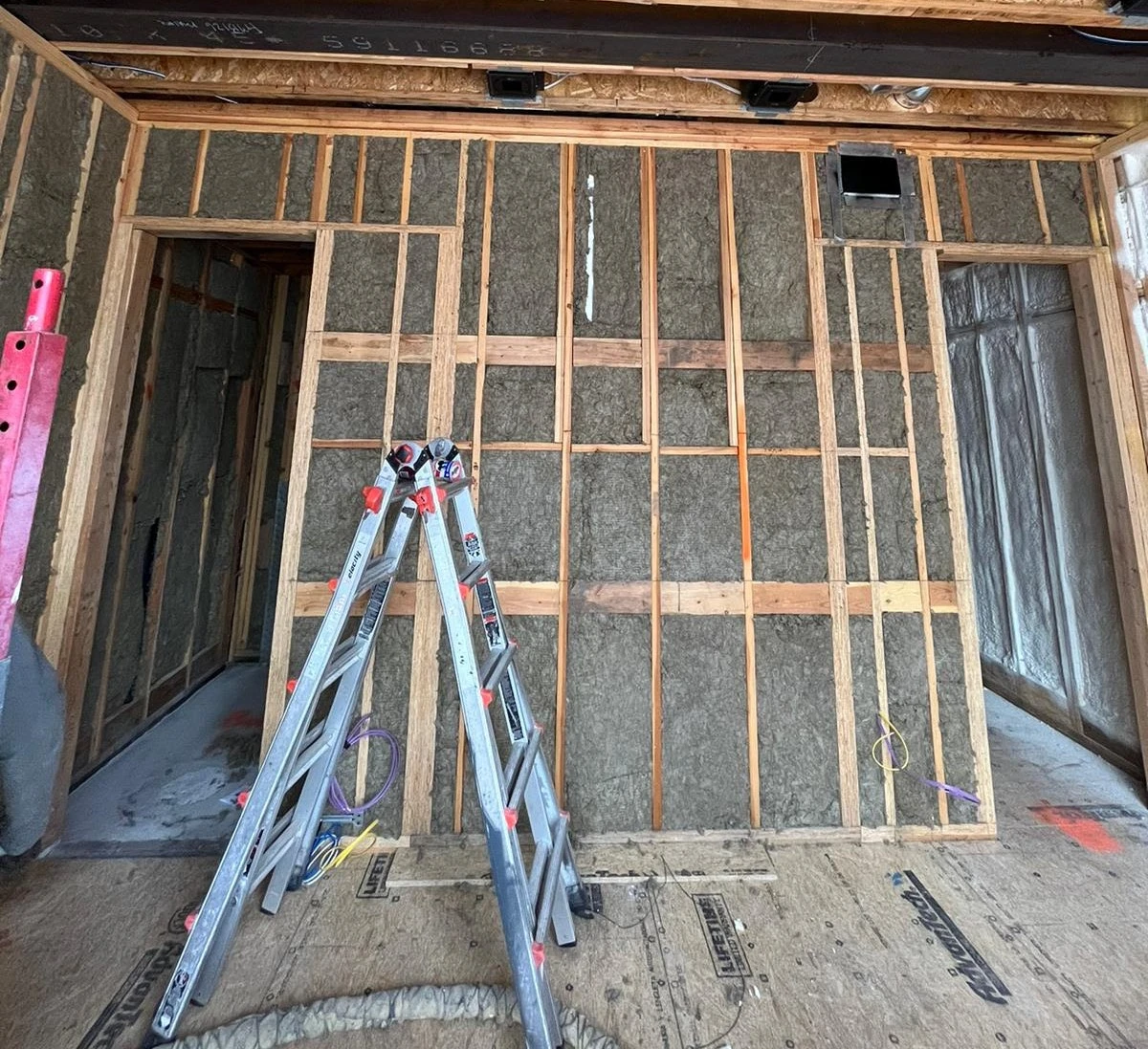
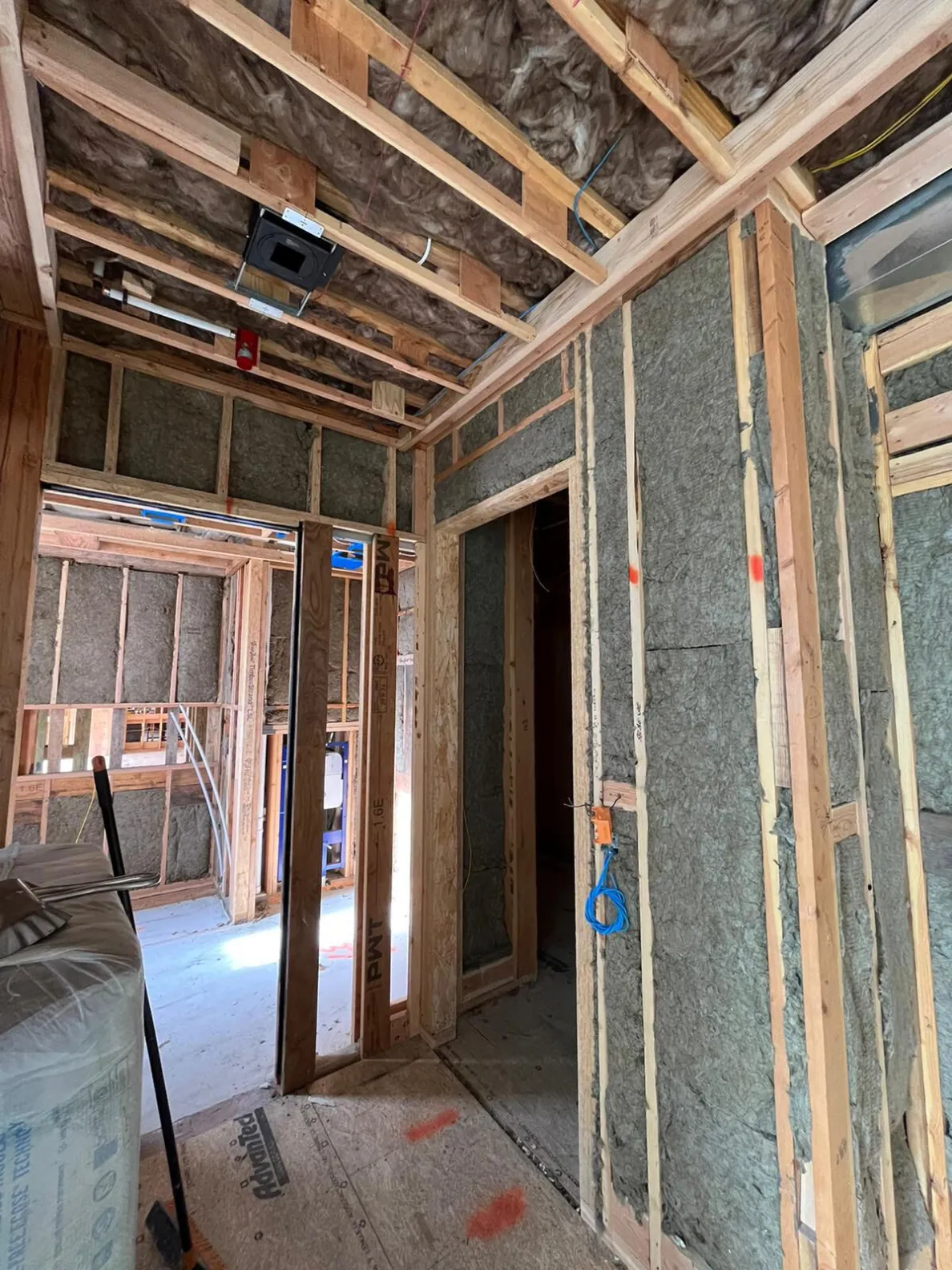
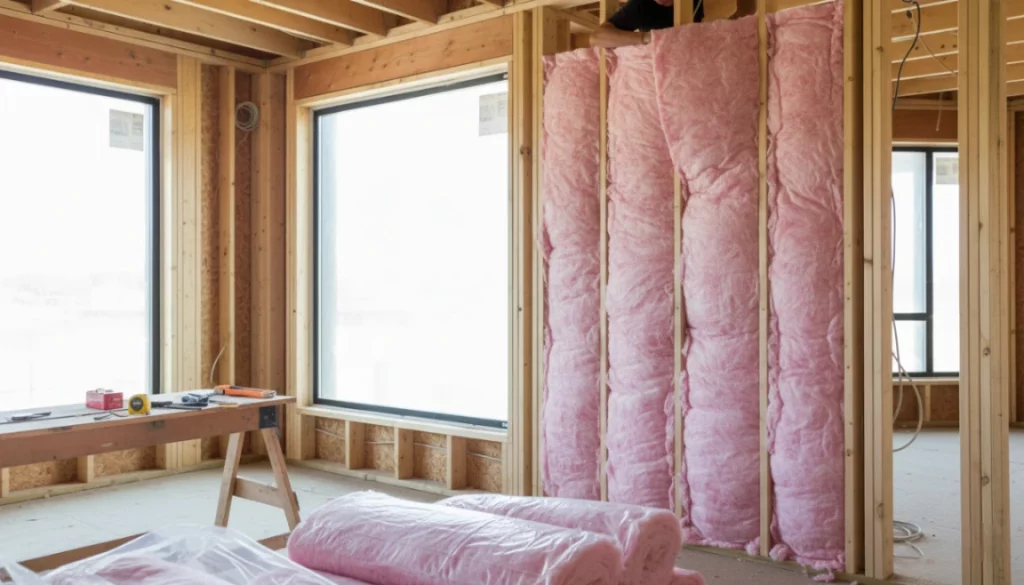
The Residential Energy Services Network (RESNET) grades insulation installation on a three-tier scale, with Grade I representing the highest quality. According to the Pacific Northwest National Laboratory’s Building America Solution Center, Grade I requires insulation to uniformly fill cavities without substantial gaps, voids, compressions, or misalignments. Batt insulation must be cut to fit around wiring and piping, not compressed behind them.
Why does this matter for builders? The Insulation Institute notes that installations failing to meet Grade I criteria can result in construction delays, callbacks, HERS rating penalties, and failed code inspections. A professional team delivers Grade I quality consistently because their reputation and your project timeline depend on it.
Builders should ask about certifications from recognized industry organizations. Look for teams trained in RESNET Grade I installation standards, BPI (Building Performance Institute) certification, or ICAA (Insulation Contractors Association of America) membership. These credentials signal that the crew has received formal training and follows established best practices.
Verify that the insulation contractor carries appropriate insurance to protect both their workers and your property. Ask for proof of current coverage. This is especially important with spray foam applications, which involve chemicals that require temperature-controlled storage, specific ventilation requirements, and defined re-entry and re-occupancy times.
The Insulation Institute raises an important but often overlooked point: ask how installers are paid. If they are compensated by square footage rather than by the hour, there is a risk they may rush through jobs to move to the next one. Teams paid hourly or salaried tend to take more care with quality.
Different insulation types serve different purposes in a mountain climate. Here is how the primary materials compare for Driggs-area construction:
| Material | Best Application | Key Strength | Consideration |
|---|---|---|---|
| Closed-cell spray foam | Rim joists, crawlspaces, exterior walls | Air seals and insulates; acts as a vapor retarder | Requires specific temperature and humidity for application |
| Open-cell spray foam | Wall cavities, sound-dampening | Fills irregular cavities completely | Lower R-value per inch; not a vapor barrier |
| Fiberglass batts | Standard wall cavities, ceilings | Cost-effective; well-known product | Must be cut precisely around obstructions for Grade I |
| Blown-in fiberglass/cellulose | Attics, irregular cavities | Flows around obstructions for full coverage | Settling must be accounted for in the initial depth |
| Mineral wool | Walls, fire-rated assemblies | Fire resistant; excellent sound control | Heavier material; requires proper support |
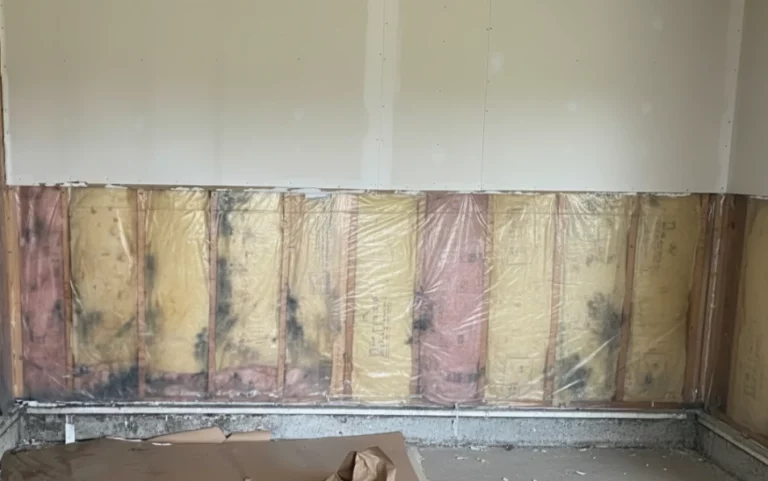
In a climate zone where temperatures swing from -30°F in winter to warm summers, vapor drive and condensation risk are real concerns. A professional team will select appropriate vapor retarders and ensure that wall assemblies dry properly in at least one direction. The U.S. Department of Energy notes that moisture control is particularly important in basements and crawlspaces, where water intrusion and humidity problems are common.
Federal law requires that insulation installers provide a contract or receipt showing the coverage area, thickness, R-value, and number of bags used (for loose-fill). Your insulation team should provide this documentation without being asked. For loose-fill attic installations, they should attach vertical rulers to joists so you can verify proper depth was installed, as outlined in this Driggs insulation energy cost guide.
Builders can evaluate their insulation contractor by looking for these indicators of quality:
| Project Type | Recommended Focus | Key Notes |
|---|---|---|
| New custom home | Whole-house systems approach with Grade I installation | Coordinate insulation with framing, HVAC, and window placement |
| Spec home/production | Code-compliant R-values with Grade I batts | Standardize material choices for efficiency without sacrificing quality |
| Remodel/addition | Dense-pack cellulose or spray foam for existing walls | Air seal before insulating; match new R-values to current code |
| Commercial build-out | Mineral wool for fire rating and acoustics | Follow IECC and ASHRAE 90.1 requirements for commercial buildings |
When you need insulation that meets code, passes inspection, and performs in extreme cold, High Country Solutions delivers. Our team understands Driggs’s Climate Zone 7 requirements inside and out, from R-60 attic assemblies to properly sealed rim joists and below-grade walls. We work directly with builders to coordinate schedules, deliver RESNET Grade I quality, and provide the documentation your project demands.
Request a Quote | Schedule a Pre-Construction Consultation
Reach out to our team at (307) 248-9063 or [email protected] to discuss your next Driggs-area build. We make sure the insulation is done right the first time so your project stays on track and your clients stay comfortable for years to come.
Most residential new construction projects require 2 to 4 days for full insulation installation, depending on home size, number of stories, and material types selected.
Yes, and you should. The Insulation Institute specifically recommends inspecting insulation before drywall is installed because mistakes are far more expensive to fix once walls are closed.
Driggs falls in Climate Zone 7, which requires a minimum ceiling R-value of R-60 per the Teton County adopted building code.
Yes. Federal Trade Commission regulations require insulation installers to provide a signed contract or receipt showing coverage area, thickness, R-value, and, for loose-fill, the number of bags installed.
Installers paid by the square foot may rush to maximize volume, potentially compromising quality. Teams compensated hourly or on a salary tend to prioritize installation accuracy and Grade I standards.