Why Are Homeowners in Thayne, WY Considering Mineral Wool for Insulation Upgrades?
Homeowners in Thayne, WY are turning to a mineral wool insulation guide because Star Valley winters push heating systems to their…


Builders in Victor, Idaho, face insulation challenges that most temperate-climate contractors never encounter. Sitting in DOE Climate Zone 6, with winter temperatures regularly plunging well below zero, Victor demands insulation strategies that go beyond standard practice. The most frequent insulation problems in this region, including cold-weather condensation inside wall cavities, thermal bridging through framing, air leakage through unsealed penetrations, and inadequate exterior continuous insulation, all stem from treating cold-climate construction the same as mixed-climate buildings. Avoiding these problems requires builders to prioritize continuous exterior insulation, install airtight vapor control layers, maintain the correct ratio of exterior-to-cavity insulation, and insist on proper installation quality at every step, as outlined in this insulation guide for homeowners.
Victor experiences long, harsh winters with average temperatures during the coldest months well below freezing. According to the U.S. Department of Energy’s climate zone map, Zone 6 locations require R-60 in attics, R-20 plus R-5 continuous insulation (CI) in walls, and R-30 in floors as baseline code-compliant levels. These are minimums, not performance targets.
What makes Victor different from a mixed-climate zone is that the temperature difference between indoors and outdoors during winter is so extreme that even small insulation errors become major problems. A gap in an air barrier that might cause minor discomfort in Zone 4 can produce frost accumulation, moisture damage, and energy loss that compounds over months in Zone 6.
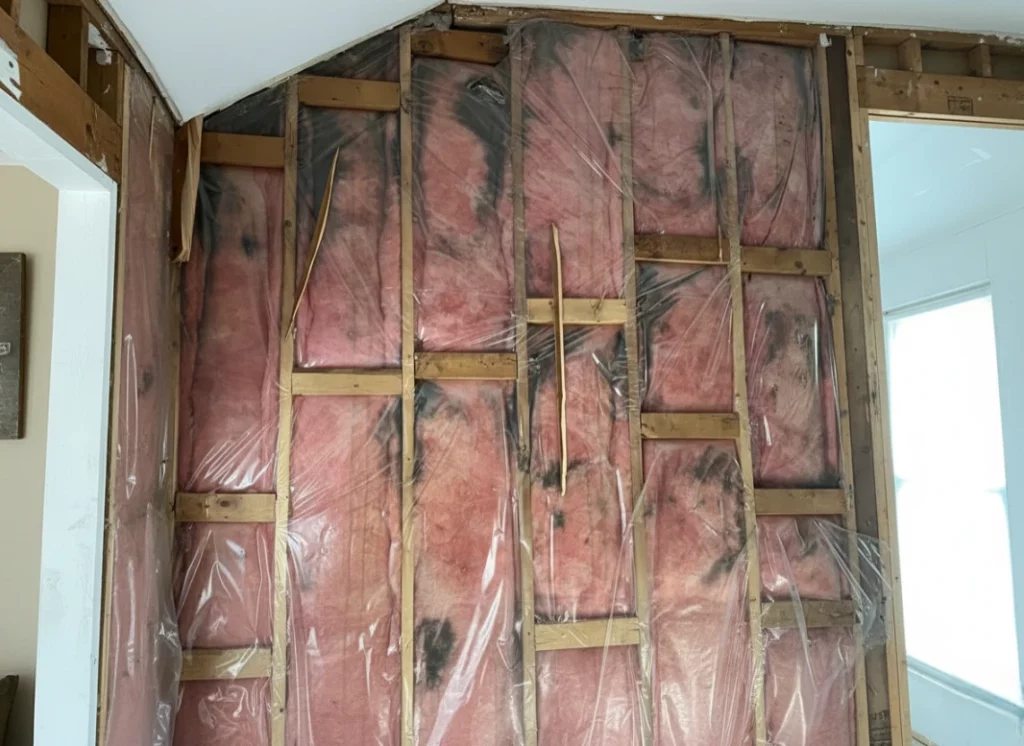
The single most damaging insulation problem in cold climates is condensation within wall assemblies. As Building Science Corporation explains, most cold-weather condensation is caused by outward air leakage, not vapor diffusion. Warm, moist indoor air leaks through gaps in the air barrier and contacts the cold back side of exterior sheathing. This moisture accumulates as frost during winter, then thaws and causes rot, mold, and structural damage when temperatures rise.
In Zone 6, the winter average temperature hovers in the teens or single digits Fahrenheit. If a wall relies only on cavity insulation (fiberglass batts between studs), the sheathing temperature drops far below the dew point of interior air. Any air that reaches the sheathing condenses immediately.
Thermal bridging occurs when highly conductive materials like wood studs, steel framing, or concrete extend through the insulation layer from interior to exterior. According to Wikipedia’s thermal bridge article, these bridges create paths of least resistance for heat transfer, reducing the overall thermal resistance of the assembly. A wall rated at R-19 with fiberglass batts may perform at only R-10 to R-13 in practice because studs conduct heat around the insulation.
In Victor’s extreme cold, thermal bridges show up as cold stripes on interior walls, promote condensation at stud locations, and drive up heating costs significantly.
Even the highest R-value insulation performs poorly when air flows through and around it. Air leakage accounts for a substantial portion of heat loss in cold-climate homes. Gaps around electrical boxes, plumbing penetrations, rim joists, and attic bypasses allow warm air to escape and cold air to enter, undermining the entire insulation system, which is why proper detailing is critical when working with a spray foam insulation contractor for builders in Alpine.
In cold climates, vapor barriers belong on the warm side of the wall assembly. Placing a vapor barrier on the wrong side, or using materials with incorrect permeance ratings, can trap moisture inside walls and prevent drying. Some builders skip vapor control altogether, relying on luck rather than building science.
Fiberglass batts that are compressed into cavities, cut too short, or stuffed around obstructions lose much of their rated R-value. The DOE insulation guide notes that insulation compressed during installation will not provide its full rated performance in Zone 6, where every R-value point matters; this loss translates directly to higher heating bills and colder interior surfaces.
| Insulation Type | R-Value per Inch | Air Barrier | Moisture Barrier | Best Application in Victor |
|---|---|---|---|---|
| Closed-Cell Spray Foam | R-6.0 to R-7.0 | Yes | Yes (low perm) | Rim joists, crawlspaces, cavity fill in extreme cold |
| Open-Cell Spray Foam | R-3.5 to R-3.7 | Yes | No (vapor open) | Wall cavities with exterior CI, sound control |
| Rigid XPS Foam Board | R-5.0 | At seams | Yes | Continuous exterior insulation |
| Rigid Polyiso Foam Board | R-5.6 to R-6.5 | At seams | Yes (foil-faced) | Exterior CI in walls and roofs |
| Fiberglass Batts | R-3.1 to R-3.4 | No | No | Cavity fill only with proper air sealing |
| Blown-In Cellulose | R-3.2 to R-3.8 | No | No | Attics, dense-pack walls with an air barrier |
| Mineral Wool (Rockwool) | R-3.3 to R-4.2 | No | No (vapor open) | Fire-rated walls, cavity fill |
| Scenario | Home Type | Problem | Solution | Outcome |
|---|---|---|---|---|
| New build mountain home | 2-story custom, 2×6 walls | Fiberglass batts only, no exterior CI, condensation in walls | Added R-10 rigid foam exterior CI plus closed-cell spray foam at rim joists | Walls dried properly, no condensation, reduced heat loss |
| Cabin retrofit near Victor | 1970s log cabin, crawl space | Uninsulated floor over vented crawl space, frozen pipes | Spray foam applied to crawl space walls and rim band, floor insulated with rigid foam | Pipes stopped freezing, and floors warmed significantly |
| Spec home development | Production home, 2×4 walls | R-13 batts compressed around wiring and plumbing, thermal bypass at attic knee wall | Switched to 2×6 advanced framing with R-23 mineral wool and R-5 exterior CI | Met Zone 6 code, improved comfort, reduced callbacks |
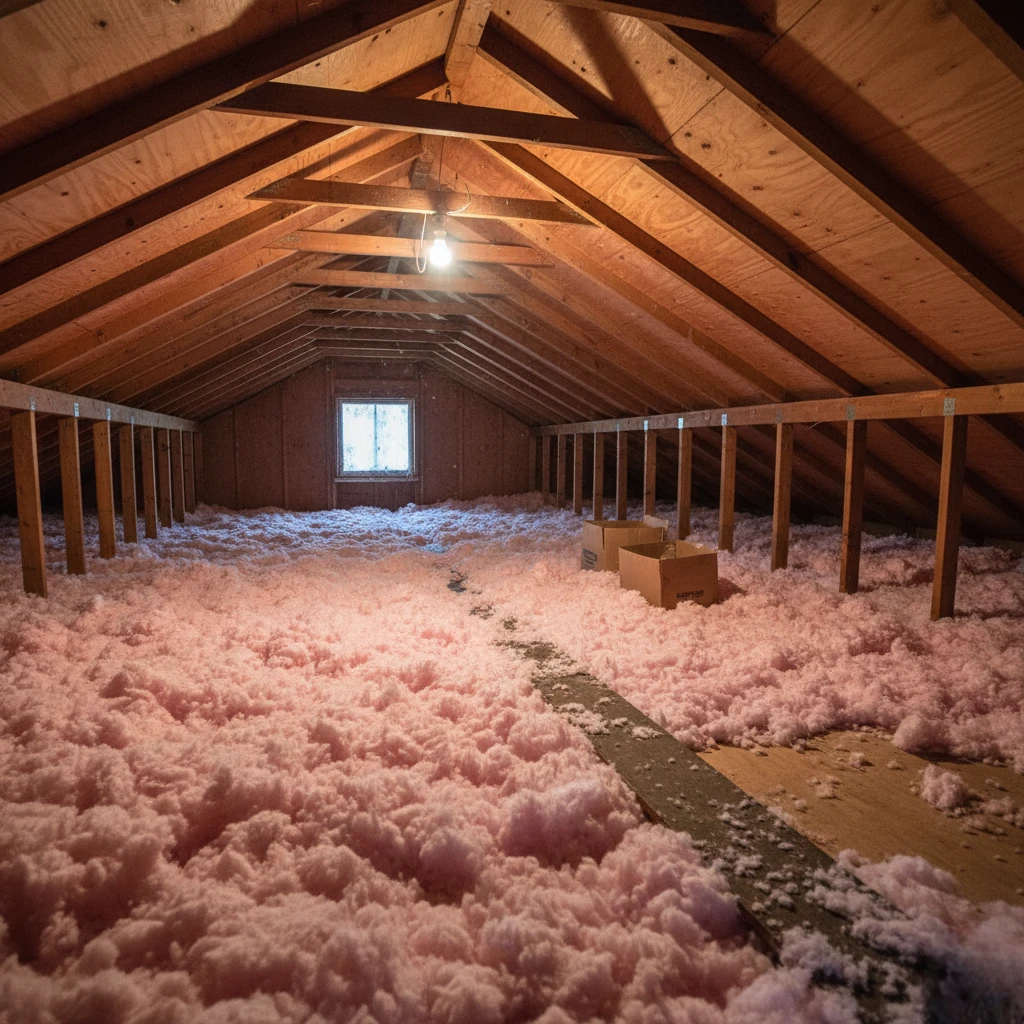
| Vacation home with ice dams | Steep-pitch roof, vented attic | Inadequate ceiling insulation and air leakage caused ice dams and water intrusion | Air-sealed ceiling plane, upgraded to R-60 blown-in cellulose, improved soffit ventilation | Ice dams eliminated, no further water damage |
| Multi-family duplex | Steel-stud framed | Thermal bridging through steel studs reduced the wall R-value to R-6 despite R-19 cavity insulation | Continuous R-15 exterior insulation eliminated thermal bridging and condensation risk | Actual wall performance matched design intent, no moisture problems |
Building Science Corporation provides a clear method: the back-of-sheathing temperature must stay above the interior dew point to prevent condensation. For Victor’s winter average temperatures, roughly 35 to 40 percent of the total wall R-value should be on the exterior side as continuous insulation. For a wall targeting R-20 total, that means at least R-7 to R-8 of exterior rigid foam over cavity insulation. This ratio keeps the sheathing warm enough that condensation cannot form even if air leakage occurs, as explained in this spray foam insulation guide for Victor, ID.
Build the air barrier as a continuous system, not a collection of products. Seal all seams, transitions, and penetrations. Pay special attention to rim joists, attic floor penetrations, and wall-to-ceiling connections. In extreme cold, even small air leaks move enough moisture to cause damage over a single heating season. Use closed-cell spray foam at rim joists and critical transition points for reliable, long-lasting air sealing.
Continuous insulation on the exterior of framing is the most effective way to eliminate thermal bridging. Even R-5 of exterior rigid foam over a standard framed wall dramatically improves real-world performance and reduces condensation risk. For steel-stud construction, the Building Science Corporation’s extreme cold research recommends placing all insulation on the exterior of the framing because cavity insulation between steel studs provides minimal effective R-value.
Match insulation type to the job. Use closed-cell spray foam where you need an air barrier, vapor retarder, and high R-value in a limited space (rim joists, crawl spaces, tricky framing). Use rigid foam boards for continuous exterior insulation. Use blown-in insulation for attics. Avoid relying on fiberglass batts alone in cold-climate walls unless paired with robust air sealing and exterior insulation.
Place vapor control layers on the warm-in-winter side of the assembly. In Zone 6, this means the interior side of the wall. Use a Class II vapor retarder (such as kraft-faced batts or a smart vapor retarder) rather than a full vapor barrier (Class I, like 6-mil polyethylene), which can trap moisture if the wall gets wet. When exterior rigid foam provides sufficient R-value, interior vapor control can be reduced because the sheathing stays warm enough to prevent condensation. Experienced spray foam insulation contractors for builders can evaluate wall assemblies and recommend the most effective moisture-control strategy for new construction projects.
Do not assume the insulation and air sealing are correct. Conduct blower door testing to verify airtightness. Use infrared thermography to identify thermal bridges, voids, and air leakage paths. These diagnostics catch problems before they become expensive repairs.
Victor falls in Zone 6, which defines minimum R-values for every building assembly. Meeting code is the floor, not the ceiling. Homes built to higher R-values consistently perform better and cost less to operate over their lifetime. The DOE Building America program provides cold-climate case studies showing homes achieving 30 to 40 percent energy savings beyond code minimums through proper insulation strategies.
Spray foam thickness must be consistent and complete. Thin spots, voids, or pulls in the foam create weak points where air and moisture can pass. Professional installation with proper temperature and moisture conditions during application ensures the foam cures correctly and delivers its rated performance.
Older homes in Victor often lack any wall insulation, have minimal attic insulation, and were built before modern air sealing practices. Retrofitting these buildings requires careful assessment of existing conditions, including moisture history, structural integrity, and available cavity depth. Exterior insulation retrofits are often the most effective approach because they avoid disturbing interior finishes while adding continuous thermal protection.
The direction and rate of vapor diffusion change with the seasons in cold climates. During winter, vapor drives from warm interior spaces toward cold exterior surfaces. During brief summer periods, the drive may reverse. Wall assemblies must be designed to dry in at least one direction, and preferably both, to handle seasonal moisture fluctuations without accumulating damage.
Wood framing occupies 15 to 25 percent of a typical wall area, and each stud is a thermal bridge. Steel framing is even more conductive. Advanced framing techniques (24-inch on-center spacing, single top plates, and eliminated jack studs) reduce the framing factor and leave more room for insulation while maintaining structural integrity.
When you are building or renovating in Victor, ID, getting the insulation right the first time saves years of problems and thousands in avoidable energy costs. Our team at High Country Solutions brings deep experience with cold-climate insulation challenges specific to this region. We understand the building science behind condensation control, thermal bridging, and air sealing, and we apply it on every project. Contact us at (307) 248-9063 or email [email protected] to get started.
Victor falls in Climate Zone 6, where the DOE recommends a minimum of R-20 cavity insulation plus R-5 continuous exterior insulation, or R-13 cavity insulation plus R-10 continuous insulation, for wood-frame walls.
Fiberglass batts can work in Zone 6 walls only when paired with proper air sealing, a vapor control layer, and sufficient exterior continuous insulation to prevent condensation. Used alone, they are highly vulnerable to air leakage and convective losses.
Continuous exterior insulation warms the sheathing above the interior dew point, preventing condensation inside the wall. It also eliminates thermal bridging through studs, which can otherwise reduce wall R-value by 30 to 50 percent.
Yes. Inadequate ceiling insulation and air leakage into the attic warm the roof deck from below, melting snow that refreezes at the edges. Proper air sealing and R-60 ceiling insulation prevent the heat loss that causes ice dams.
Calculate the ratio of exterior-to-cavity R-value. If at least 35 to 40 percent of the total wall R-value is on the exterior as continuous insulation, the sheathing will generally stay warm enough to prevent condensation in Zone 6 conditions.