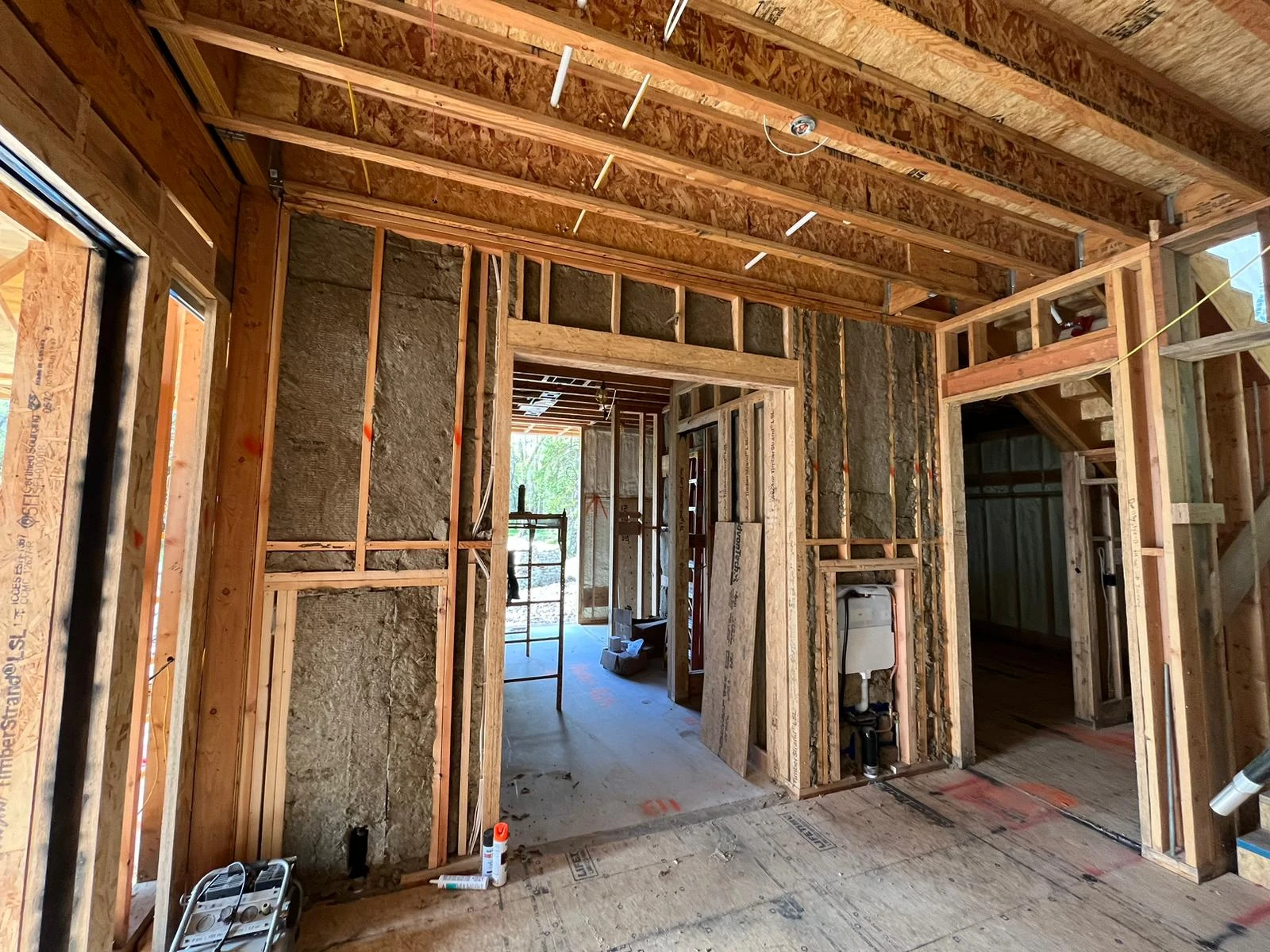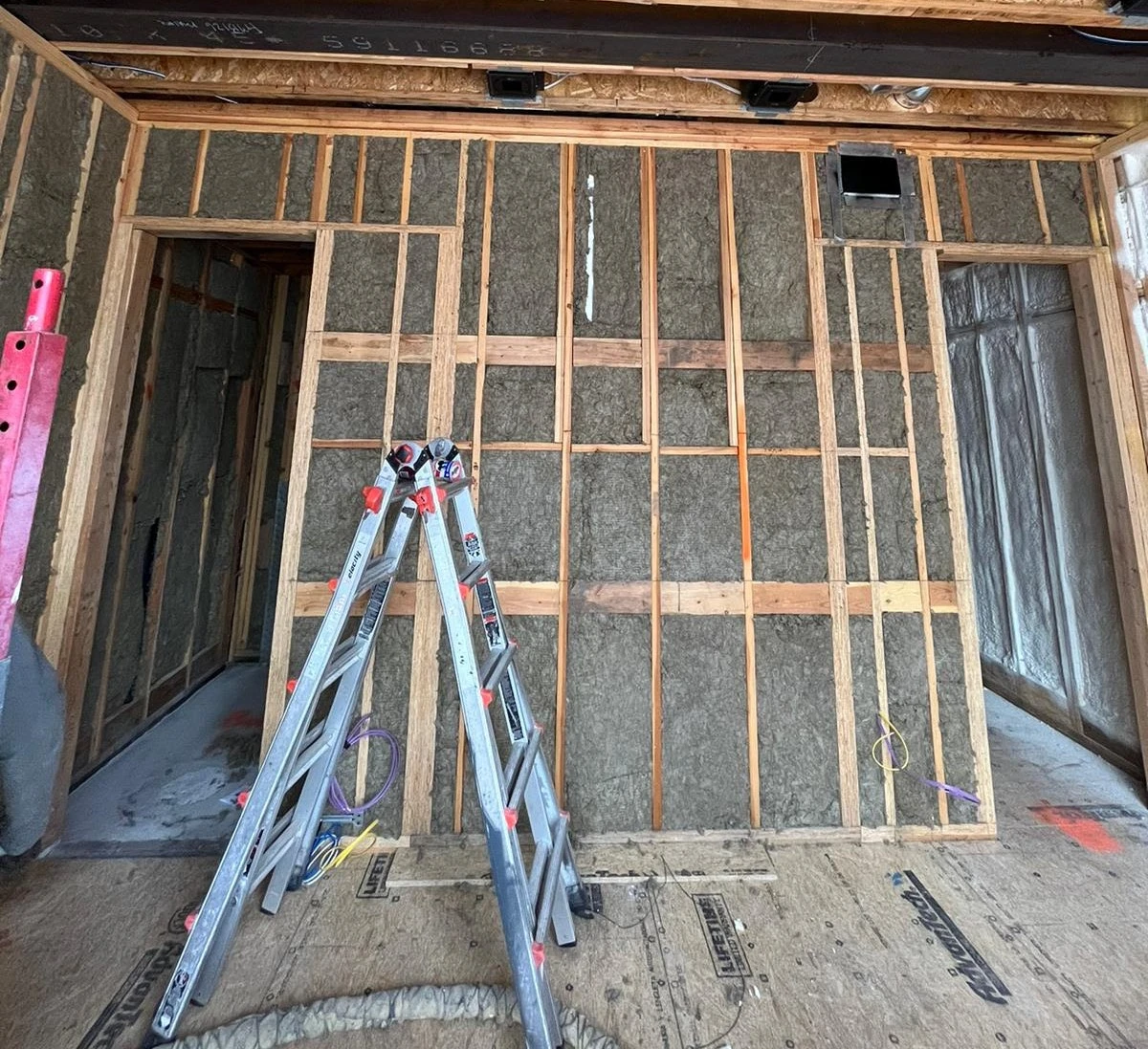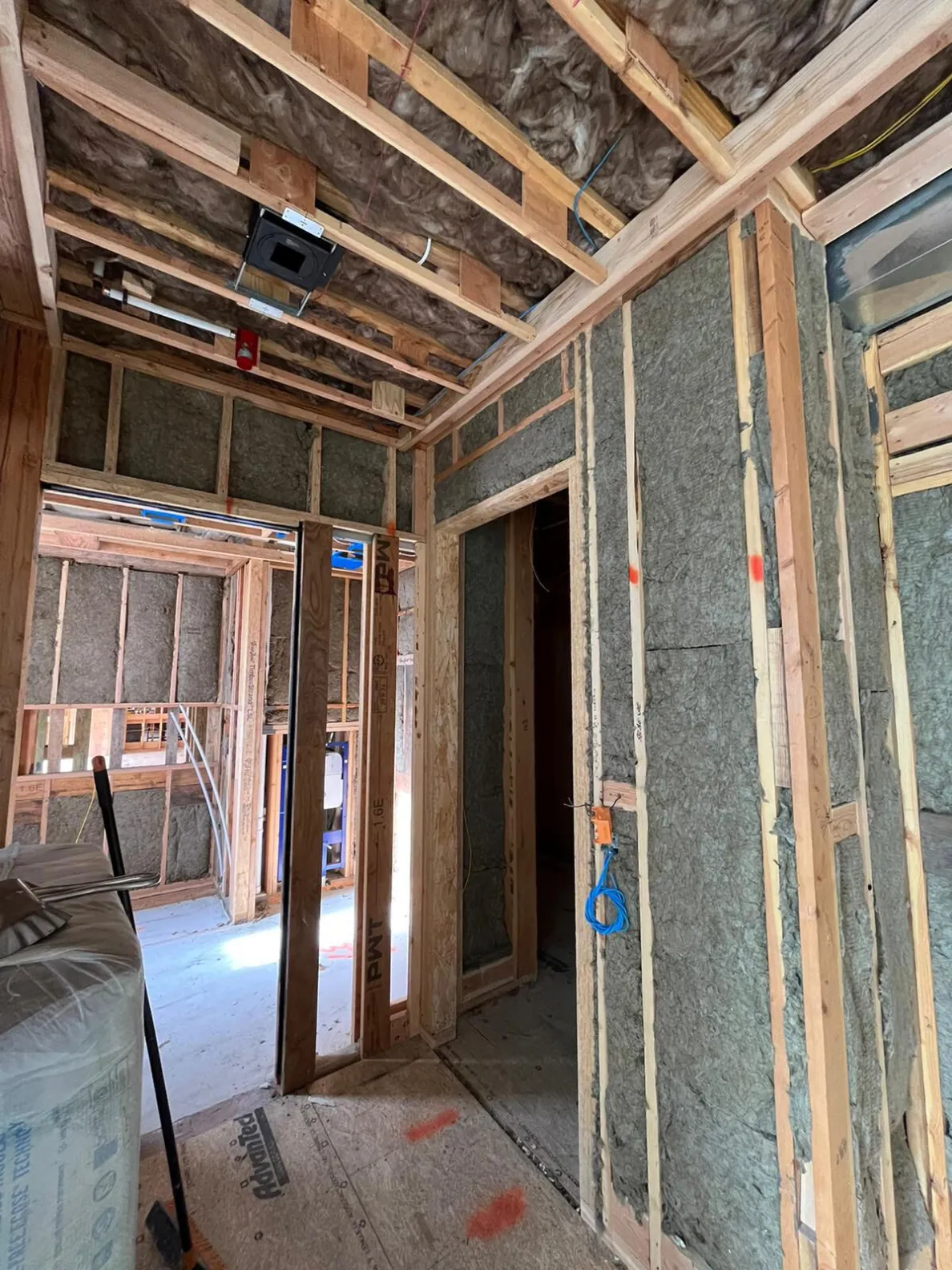
Why Are Homeowners in Thayne, WY Considering Mineral Wool for Insulation Upgrades?
Homeowners in Thayne, WY are turning to a mineral wool insulation guide because Star Valley winters push heating systems to their…


If you have ever lived in a home that was drafty in winter and stuffy in summer, you already understand why insulation matters. But when you are building a new home, insulation decisions are not an afterthought; they are baked into every wall, ceiling, and foundation from day one. Get these choices right, and your home will be comfortable, efficient, and durable for decades. Get them wrong, and you will pay the price in energy bills, comfort complaints, and costly fixes down the road.
This guide is written from our years of hands-on experience working on new construction projects. We have seen what works, what fails, and what separates a truly well-built home from one that just meets the bare minimum code. By the end of this guide, you will know how to evaluate insulation types, understand R-values and climate zones, plan for proper air sealing and moisture control, and avoid the installation mistakes that compromise even the best materials with help from a trusted new construction insulation contractor.
There is a big difference between adding insulation to an existing home and planning it into a new build. When you are starting from scratch, you have full access to wall cavities, floor assemblies, and roof decks before drywall, siding, or finishes go up. As the U.S. Department of Energy points out, it is far more cost-effective to add insulation during construction than to retrofit it after the house is finished.
In a new build, you can also coordinate insulation with the structural design itself. You can choose advanced framing techniques that leave more room for insulation, specify structural insulated panels that combine framing and insulation in one, or use insulating concrete forms for foundation walls. These options simply are not available when you are working with an existing structure.
The global building thermal insulation market reflects how important this topic has become. According to Grand View Research, the building thermal insulation market was estimated at USD 26.9 billion in 2024 and is projected to reach USD 37.8 billion by 2030, growing at a compound annual growth rate of 5.9%. That growth is driven by rising energy costs, stricter building codes, and growing awareness among homeowners and builders alike.
The U.S. Department of Energy recommends a whole-house systems design approach, which means thinking about how insulation interacts with every other component of the home, from HVAC sizing to window placement to ventilation strategy. When you approach insulation this way, the result is a home that performs as a unified system rather than a collection of independent parts.
Before you can choose insulation, you need to understand R-values. R-value is a measure of thermal resistance, or how well a material resists the flow of heat. The higher the R-value, the better the insulating power. As ENERGY STAR explains, insulation levels are specified by R-value, and the recommended levels vary depending on where you live and what part of the home you are insulating.
R-value is not just about the material itself. It depends on the type of insulation, its thickness, and its density. For example, fiberglass batts and rigid foam boards can achieve very different R-values per inch of thickness. Understanding these differences matters when you are working within the fixed depth of a 2×4 or 2×6 wall cavity.
The United States is divided into eight climate zones, ranging from Zone 1 (the warmest, covering southern Florida and Hawaii) to Zone 8 (the coldest, covering parts of Alaska). Each zone has different minimum R-value requirements for different parts of the building envelope.
The 2021 International Energy Conservation Code (IECC) serves as the baseline for most local building codes. According to ENERGY STAR, here are the recommended R-values for attic insulation in wood-framed buildings:
| Climate Zone | Uninsulated Attic | Attic with 3-4 Inches Existing Insulation | Floor Over Unconditioned Space |
|---|---|---|---|
| Zone 1 | R-30 | R-25 | R-13 |
| Zone 2 | R-49 | R-38 | R-13 |
| Zone 3 | R-49 | R-38 | R-19 |
| Zones 4A and 4B | R-60 | R-49 | R-19 |
| Zones 4C, 5, and 6 | R-60 | R-49 | R-30 |
| Zones 7 and 8 | R-60 | R-49 | R-38 |
These are the minimums for cost-effective energy savings. Many energy-efficient homes exceed these numbers, sometimes significantly. If you are building a high-performance home or targeting programs like ENERGY STAR or Zero Energy Ready Home, you will want to aim well above code minimums.
Key Takeaways:
The U.S. Department of Energy identifies several major categories of insulation. Each has its own strengths, weaknesses, and ideal applications. Understanding these differences is one of the most important decisions you will make for your new build.
Batts and rolls are the most common and widely available type of insulation. They are made from flexible fibers, usually fiberglass, though mineral wool and natural fibers like cotton are also options. Batts come in pre-cut widths designed to fit standard stud and joist spacing, while rolls are continuous and can be cut to length.
Batts are inexpensive and relatively easy to install, which makes them a popular choice for standard wood-framed walls, attics, and floors. They work best in cavities that are free from obstructions. A 2×4 wall can hold R-13 or R-15 batts, while a 2×6 wall can accommodate R-19 or R-21 products.
The downside of batts is that they can leave gaps around pipes, electrical boxes, and other obstructions if not carefully fitted. Compressed or poorly installed batts lose significant R-value. According to the Insulation Institute, misalignment of insulation, where the material is not in full contact with the air barrier, is one of the top five installation flaws found in new homes.
Mineral wool is made from molten rock, or slag, spun into fibers. It offers similar R-values per inch to fiberglass (around R-3.1 to R-4.3 per inch) but has several advantages. It is naturally fire-resistant, does not melt until it exceeds 2,000 degrees Fahrenheit, and provides excellent sound dampening. Mineral wool also holds its shape well over time and is less prone to settling or sagging compared to fiberglass.
These qualities make mineral wool a strong choice for walls, especially in multi-family or attached housing where sound isolation between units is important. It is also a good option for fire-rated assemblies. The main trade-off is cost. Mineral wool typically costs more than fiberglass, though many builders consider the fire and acoustic benefits worth the premium.
Loose-fill insulation consists of small particles of fiber, foam, or other materials that are blown into place using special equipment. The most common materials are cellulose, fiberglass, and mineral wool. Cellulose is primarily made from recycled newsprint, while most fiberglass products contain 40% to 60% recycled glass.
Loose-fill is especially useful in attics with irregular joist spacing, lots of obstructions, or limited access. It fills gaps and conforms to shapes that batts cannot easily cover. In new construction, it is also used in wall cavities through a dense-pack technique that provides both high R-value and some air sealing.
The U.S. Department of Energy notes that for loose-fill insulation, the R-value depends on settled density, not just thickness. As installed thickness increases, the material compresses under its own weight, so the R-value does not increase proportionally. Manufacturers provide coverage charts that specify how many bags are needed per square foot to achieve a given R-value at the correct settled density.
Expert Tip: When specifying blown-in insulation for attics, always require the installer to mark the target depth on each truss with a permanent marker line before blowing begins. This ensures consistent coverage across the entire attic and gives the building inspector a clear verification point.
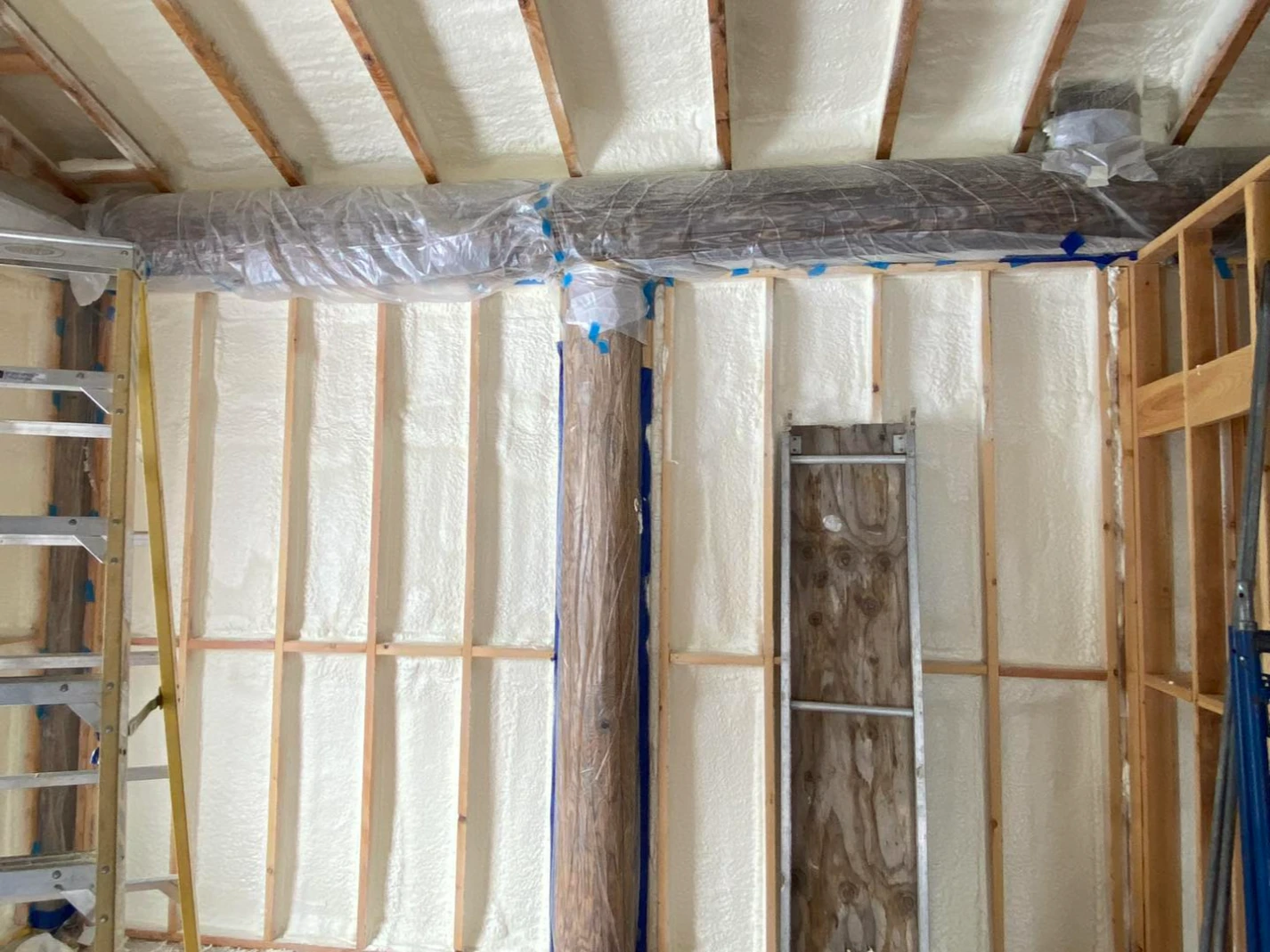
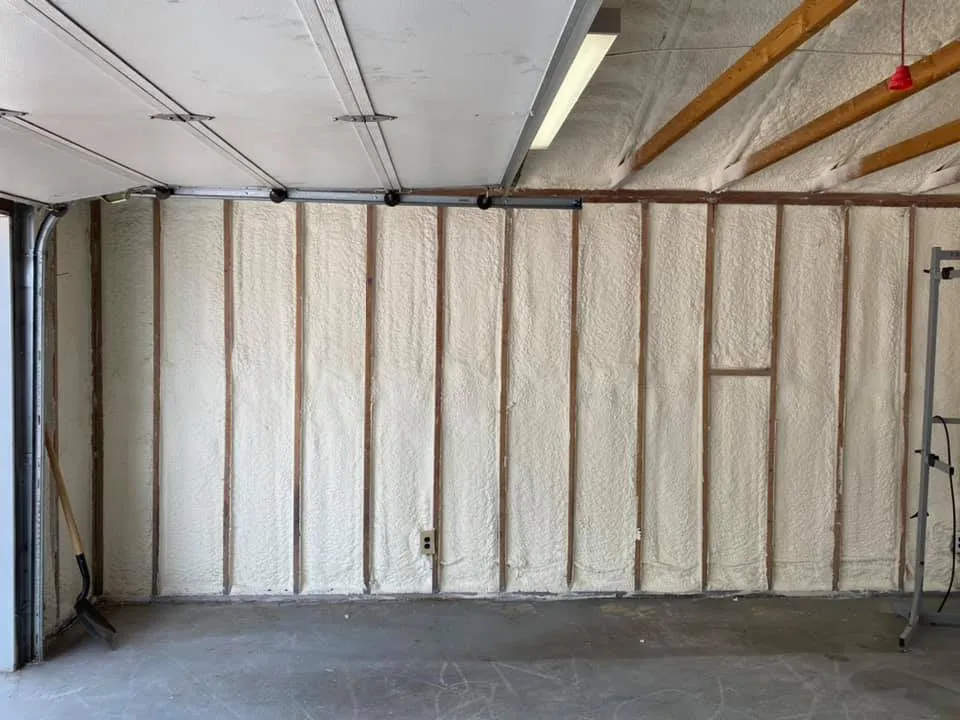
Spray foam insulation is applied as a liquid that expands and cures into a solid foam. It fills even the smallest gaps and crevices, creating both insulation and an effective air barrier in one step. There are two main types:
The U.S. Department of Energy notes that foam insulation has higher R-values and forms an air barrier, which can reduce other weatherization costs like caulking, housewrap, and vapor barrier installation. The trade-off is that spray foam is significantly more expensive than batts or blown-in, and it requires professional installation with specialized equipment and certification. After installation, all foam materials must be covered with an approved thermal barrier, typically half-inch gypsum board, to meet fire codes.
Foam board or rigid foam insulation comes in large panels of varying thicknesses. The most common materials are:
Foam boards provide high R-value per inch (polyiso can reach R-6.0 to R-6.5 per inch) and are especially effective when installed as a continuous layer over framing. This continuous insulation approach eliminates thermal bridging, which is heat loss that occurs through wood or steel studs that connect the interior and exterior of the wall.
In new construction, rigid foam is commonly used as exterior wall sheathing, on basement walls, under slab foundations, and on attic hatches or cantilevered floors. When used on interior surfaces, it must be covered with a fire-rated material like gypsum board.
Unlike most insulation that resists conductive and convective heat flow, radiant barriers work by reflecting radiant heat. They are typically installed in attics, primarily in hot climates, to reduce summer heat gain. Radiant barriers can lower cooling costs by 5% to 10% in warm, sunny climates, according to the U.S. Department of Energy. In cooler climates, standard bulk insulation is generally more cost-effective.
SIPs are prefabricated panels that combine structural framing with an insulating foam core, usually polystyrene or polyiso, sandwiched between two sheets of oriented strand board or similar sheathing. They are used for walls, roofs, and floors in new construction. According to the U.S. Department of Energy, SIP-built homes offer energy savings of 12% to 14% compared to traditional stick framing, along with superior uniform insulation and a much more airtight building envelope.
SIPs require experienced builders for proper assembly, and a well-built SIP structure may need mechanical ventilation to maintain indoor air quality because the building is so airtight.
ICFs are stay-in-place forms made of foam boards or interlocking foam blocks that are filled with concrete to create structural walls. The foam stays in place as permanent insulation, providing typical wall R-values around R-20. ICF homes offer excellent thermal mass, sound dampening, and resistance to high winds. They are most commonly used for foundation walls, but can be used for above-grade walls as well.
| Insulation Type | R-Value Per Inch | Best Applications | Air Sealing | Fire Resistance |
|---|---|---|---|---|
| Fiberglass batts | R-3.1 to R-4.3 | Standard walls, attics, and floors | Low | Requires facing |
| Mineral wool | R-3.1 to R-4.3 | Walls, fire-rated assemblies | Low | Excellent |
| Cellulose (blown) | R-3.2 to R-3.8 | Attics, wall cavities | Moderate (dense-pack) | Treated with borates |
| Open-cell spray foam | R-3.5 to R-3.8 | Wall cavities, attics | High | Needs a thermal barrier |
| Closed-cell spray foam | R-6.0 to R-7.0 | Basements, crawl spaces, rims | High | Needs a thermal barrier |
| Polyiso rigid foam | R-5.6 to R-6.5 | Continuous wall sheathing, roofs | Low | Needs a thermal barrier |
| EPS/XPS rigid foam | R-3.8 to R-5.0 | Foundations, slabs, walls | Low | Needs a thermal barrier |
| SIPs | Varies (panel R) | Walls, roofs, floors | High | Varies by facing |
Key Takeaways:
The U.S. Department of Energy recommends insulating from the roof down to the foundation. In a new build, you have the opportunity to address every area systematically. Here is a breakdown of the key locations.
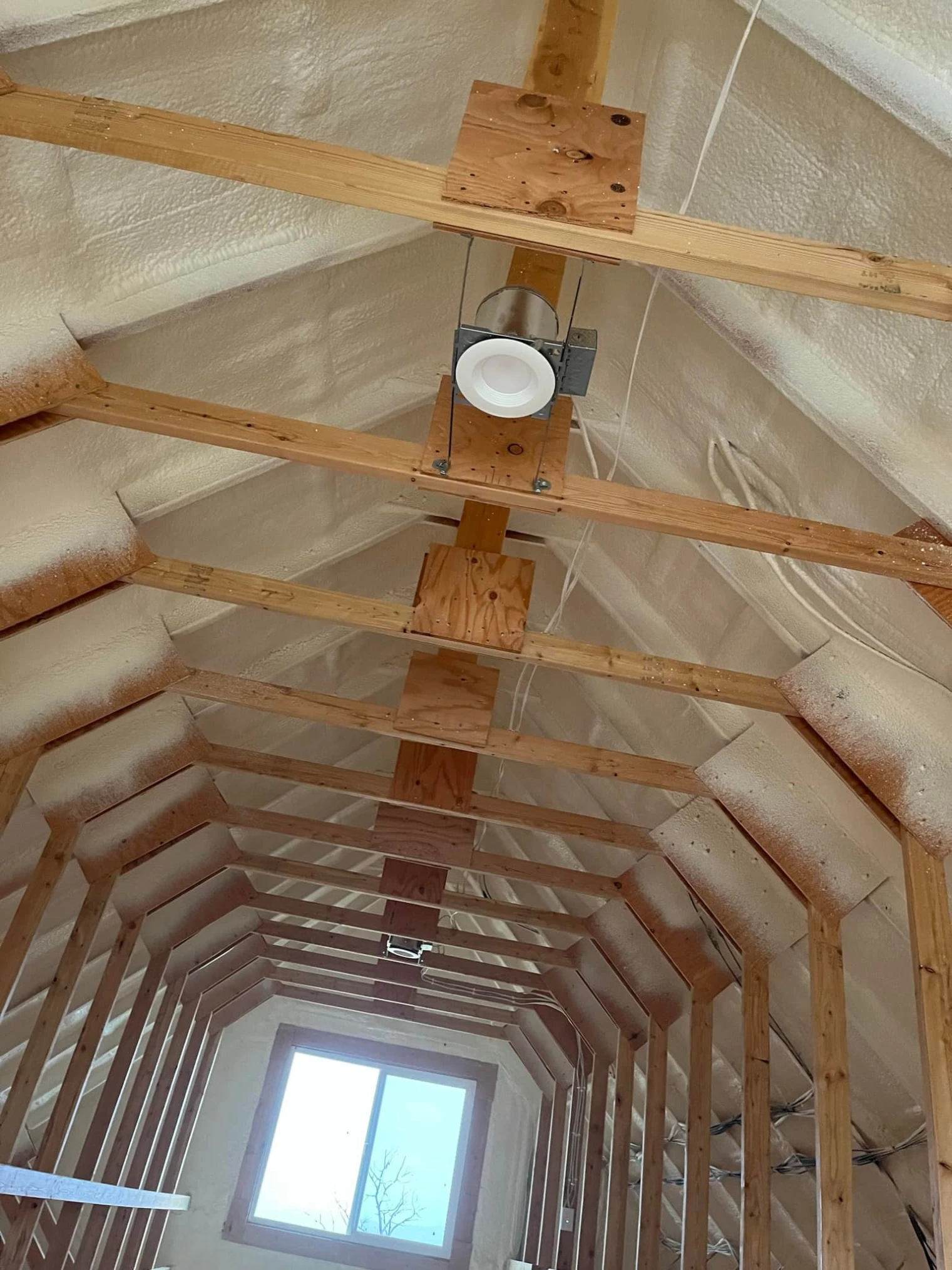
Attics are typically the largest single source of energy loss in a home, which makes them the highest-priority area for insulation. In most climates, you should target at least R-49 to R-60, depending on your zone. You can insulate either the attic floor (creating an unconditioned attic) or the roof deck (creating a conditioned attic). Unvented, conditioned attics are increasingly popular because they keep ductwork and HVAC equipment inside the building’s thermal envelope, reducing energy losses.
All exterior walls should be insulated. In new construction, combining cavity insulation (batts, blown-in, or spray foam) with continuous exterior insulation (rigid foam) provides the best performance. The cavity fills the stud bays, while the continuous layer eliminates thermal bridging through the studs. For a 2×4 wall, cavity insulation up to R-15 combined with R-5 continuous sheathing is a common code-compliant assembly. In 2×6 walls, you can achieve R-21 in the cavity plus continuous insulation for even better performance.
Basement walls, whether conditioned or unconditioned, benefit from insulation. In new construction, exterior foundation insulation minimizes thermal bridging, protects the damp-proof coating during backfill, and keeps the thermal mass of the concrete within the conditioned space. Interior insulation is less expensive and easier, but does not protect against moisture intrusion from the outside.
For slab-on-grade foundations, insulating the perimeter edge can reduce heating bills by 10% to 20% in most parts of the United States, according to the U.S. Department of Energy. Foam board is typically installed either directly against the exterior of the slab edge or under the slab along the stem wall.
For slab-on-grade foundations, insulating the perimeter edge can reduce heating bills by 10% to 20% in most parts of the United States, according to the U.S. Department of Energy. Foam board is typically installed either directly against the exterior of the slab edge or under the slab along the stem wall.
Crawl spaces can be vented or unvented. In hot and humid climates, many building professionals now recommend unvented crawl spaces with insulation on the foundation walls and a ground-moisture barrier covering the dirt floor. This keeps ductwork and piping within the conditioned volume of the house, protects them from temperature extremes, and reduces moisture problems.
The band joist (also called the rim joist) is the area where the floor framing meets the foundation wall. These areas are notoriously leaky and often under-insulated. In new construction, sealing and insulating band joists is essential for a tight building envelope. Rigid foam with spray foam sealant, or mineral wool batts with careful air sealing, are common approaches.
Expert Tip: Pay special attention to rim joist areas during framing inspections. These are easy to overlook during insulation, yet they represent one of the largest sources of air leakage in a typical home. Sealing them properly before insulation goes in can make a measurable difference in blower door test results.
Insulation and air sealing work together. Without proper air sealing, even the highest R-value insulation will underperform. The U.S. Department of Energy notes that air leakage can account for 30% or more of a home’s heating and cooling energy costs. That is heat escaping (or entering) through cracks, gaps, and penetrations that insulation alone cannot address.
Air sealing should happen before and during insulation installation, not after. In new construction, key air sealing locations include:
A house wrap applied to the exterior sheathing and sealed at all seams with manufacturer-approved tape is one of the most common air barrier strategies. According to the U.S. Department of Energy, sealing house wrap joints with tape improves performance by about 20%.
Moisture is one of the biggest threats to building durability. If water vapor gets trapped inside wall or ceiling assemblies, it can condense on cool surfaces, wet the insulation, promote mold growth, and cause wood rot. Proper moisture control is essential.
The U.S. Department of Energy identifies three classes of vapor retarders based on permeability:
Where you place the vapor retarder matters and depends on your climate zone, in cold climates, it should be on the interior (warm) side of the assembly to prevent indoor moisture from migrating into the wall and condensing. In hot and humid climates, the vapor retarder should be on the exterior side to prevent outdoor humidity from entering the wall cavity. In mixed climates, the approach is more nuanced, and many building scientists recommend using vapor-retarder paint on the interior drywall rather than a sheet polyethylene barrier.
Expert Tip: In mixed or cold climates, avoid using Class I vapor barriers (like polyethylene sheeting) on the interior of wall assemblies unless your building design specifically calls for it. These can trap moisture inside the wall during the cooling season. A Class II kraft-facing on batt insulation or vapor-retarder paint on drywall is usually a safer choice that still provides adequate moisture control.
In a new construction project, insulation installation typically follows framing, plumbing, and electrical rough-in and precedes drywall installation. Here is the general sequence we follow.
Before any insulation goes in, the building should be inspected for air sealing completeness. Every penetration through the top plate, bottom plate, and exterior wall should be sealed with caulk, foam sealant, or appropriate tape. Window and door rough openings should be sealed, and any gaps in the sheathing or house wrap should be addressed. This is also the time to verify that the correct insulation materials have been delivered to the site.
Walk through with the insulation installer and verify that plumbing, electrical, and HVAC rough-ins are complete. Once insulation goes in, making changes becomes difficult and expensive. Pay special attention to shower and tub enclosures, which should have proper air barriers installed before insulation. Missing air barriers behind tubs and showers are one of the most common deficiencies found in new construction.
Depending on the insulation type, wall cavities are filled with batts, blown-in material, or spray foam. For batts, each piece should be friction-fit between studs without gaps, voids, or compression. The insulation should be trimmed carefully around electrical boxes, not stuffed behind them. For blown-in or spray foam, installers should follow the manufacturer specifications for density and coverage.
Attic insulation can be installed on the floor (for unconditioned attics) or against the roof deck (for conditioned attics). For floor insulation, baffles should be installed at the eaves to maintain soffit ventilation airflow. The insulation should be distributed evenly at the specified depth, with care taken not to block ventilation. For roof deck insulation, spray foam or rigid foam is commonly used, and the assembly must be detailed to prevent moisture issues.
Foundation insulation, typically rigid foam board, is installed before backfilling for exterior applications, or against interior foundation walls for retrofit or unvented crawl space applications. Slab-edge insulation is installed before or during the concrete pour. Ground-moisture barriers (typically 6-mil polyethylene) are installed in crawl spaces before any wall insulation goes in.
After insulation is complete, a quality assurance inspection should verify that all areas are covered to the specified R-value, there are no gaps or voids, air barriers are intact, and vapor retarders are correctly placed (where required). Many jurisdictions require a pre-drywall insulation inspection as part of the permitting process.
Even with the best materials, poor installation can severely compromise insulation performance. The Insulation Institute surveyed top production builders and identified the most common insulation problems. Here are the issues we see most frequently on job sites.
Insulation must be in continuous contact with the air barrier on at least one side of the cavity. When insulation is compressed, gaps around it, or pulls away from the sheathing, air can circulate it and bypass the thermal resistance entirely. This is one of the most widespread problems and one of the most damaging to energy performance.
Electrical boxes, plumbing pipes, HVAC registers, and framing blocks all create obstructions in wall and ceiling cavities. If insulation is not carefully fitted or trimmed around these items, gaps remain that allow air movement. In a typical home, these small gaps add up to a significant amount of lost performance.
When insulation is installed in attics, it must not block soffit vents, ridge vents, or other ventilation openings. Blocked ventilation traps moisture in the attic, which can lead to condensation, mold, and roof decking deterioration. Baffles or vent chutes should always be installed at the eaves before insulation is blown or laid in.
Tub and shower enclosures are often installed before insulation goes in. If the air barrier behind these enclosures is missing or improperly installed, conditioned air can leak into the wall cavity behind the shower, leading to moisture problems and reduced comfort.
If the drywall at the ceiling-to-wall intersection is not caulked or gasketed to the top plate, air can leak from the wall cavity into the attic or vice versa. This is a subtle but important detail that significantly impacts blower door test results.
Expert Tip: Before drywall goes up, walk through with a flashlight and inspect every exterior wall cavity. Look for gaps, compressed batts, and missing air seals. It takes about an hour and can save thousands of dollars in callbacks and energy performance complaints. Document any issues with photos and have the insulation contractor correct them before covering up.
State and local building codes set the legal minimum for insulation levels in new construction. Most jurisdictions have adopted some version of the International Energy Conservation Code (IECC), which specifies minimum R-values for each part of the building envelope based on climate zone. The 2021 IECC, which is the current reference standard, requires higher performance than earlier editions.
Meeting code is not the same as building a high-performance home. Code represents the floor, not the ceiling. Programs like ENERGY STAR Certified Homes and the DOE Zero Energy Ready Home program require insulation levels that exceed code, along with stricter air sealing requirements and third-party verification.
When planning your insulation strategy, check with your local building department to confirm which edition of the IECC is currently adopted in your area. Requirements can vary significantly from one jurisdiction to another, and some areas have additional state or local amendments.
Proper insulation pays for itself over time through reduced energy bills. The U.S. Environmental Protection Agency estimates that homeowners can save an average of 15% on heating and cooling costs, or an average of 11% on total energy costs, by air sealing their homes and adding insulation in attics, floors over crawl spaces, and basement rim joists.
In new construction, where you are starting with a blank slate, the savings potential is even greater because you can optimize the entire building envelope from the start rather than treating symptoms one area at a time. Homes built to ENERGY STAR or Zero Energy Ready Home standards routinely achieve 20% to 30% lower energy costs than standard code-built homes.
The return on investment varies by climate, insulation type, energy prices, and the overall efficiency of the home. In colder climates with higher heating demands, the payback period tends to be shorter. In milder climates, the savings are still meaningful but may take longer to recoup through energy bills alone. Either way, the comfort benefits, improved indoor air quality, and increased durability are hard to put a price on.
The insulation industry continues to evolve. Here are some trends we are watching.
Manufacturers are developing insulation products with higher R-values per inch, allowing builders to achieve better thermal performance within the same wall thickness. Vacuum insulated panels (VIPs), for example, can achieve R-25 to R-50 per inch, though their high cost currently limits them to specialty applications.
There is growing attention to the environmental impact of insulation materials themselves, not just their in-service performance. Materials like mineral wool and cellulose, which are made from abundant or recycled raw materials, are gaining favor among builders focused on sustainability. Some spray foam formulations have shifted to lower-global-warming-potential (GWP) blowing agents in response to environmental regulations.
Each new edition of the IECC raises the bar for insulation and air sealing requirements. As energy codes become more demanding, builders who already understand and practice high-performance insulation techniques will be ahead of the curve. Building to current ENERGY STAR or Zero Energy Ready Home standards is a good way to future-proof your investment.
As homes become more connected, insulation performance is increasingly monitored alongside HVAC efficiency, solar generation, and energy storage. Some builders are incorporating sensors into wall and ceiling assemblies during construction to track moisture levels, temperature differentials, and air leakage over time.
Choosing and installing insulation in a new construction project is not a decision you make once and forget. It is a system-level choice that affects your home’s comfort, energy efficiency, durability, and indoor air quality for as long as you live in it. Start by understanding your climate zone and the R-value requirements for each area of the building envelope. Then select insulation types that match your performance goals, budget, and construction approach. Prioritize air sealing before insulation, plan your vapor control strategy carefully, and insist on quality installation with thorough inspection before walls and ceilings are closed up.
This guide is designed to serve as a reference you can return to at every stage of your build, from early design conversations with your architect through final insulation inspection. The homes that perform best over time are the ones where insulation decisions were made deliberately and installed with care.
Building a new home involves hundreds of decisions, and insulation is one of the most consequential. If you want to make sure your insulation strategy is sound, our team at High Country Solutions is here to help. We bring hands-on experience with every insulation type covered in this guide and can help you design an approach that matches your climate, budget, and performance goals. Reach out to us at [email protected] or call (307) 248-9063 to discuss your project.
There is no single best option. Fiberglass and mineral wool batts are cost-effective for standard walls, spray foam provides the highest R-value per inch and air sealing, and rigid foam continuous insulation eliminates thermal bridging. The best approach is to match the insulation type to the specific application, climate zone, and performance goals of your project.
Most U.S. climate zones call for R-49 to R-60 in attics. Check your local climate zone against the IECC requirements or ENERGY STAR recommendations to determine the right target for your area.
Spray foam offers a higher R-value per inch and provides air sealing, but costs significantly more. Fiberglass batts are more affordable and work well when paired with continuous exterior insulation. The right choice depends on your budget, climate, and whether the wall assembly includes other air sealing strategies.
It depends on your climate zone and wall assembly. In cold climates, a Class II vapor retarder (like kraft-faced batts) on the warm side of the wall is usually appropriate. In hot and humid climates, the vapor control strategy is different. Consult with a building professional familiar with your local climate.
Yes, but it should not be packed tightly around wires. Most batt insulation can be split and placed behind and in front of wiring. For spray foam and blown-in insulation, wiring is typically encapsulated without issue. Always follow manufacturer guidelines and local electrical codes.
Most insulation materials, when properly installed and protected from moisture, will last the life of the building. Fiberglass, mineral wool, and foam board do not degrade or settle significantly over time. Cellulose can settle slightly, which is why it should be installed to the manufacturer’s specified settled density.