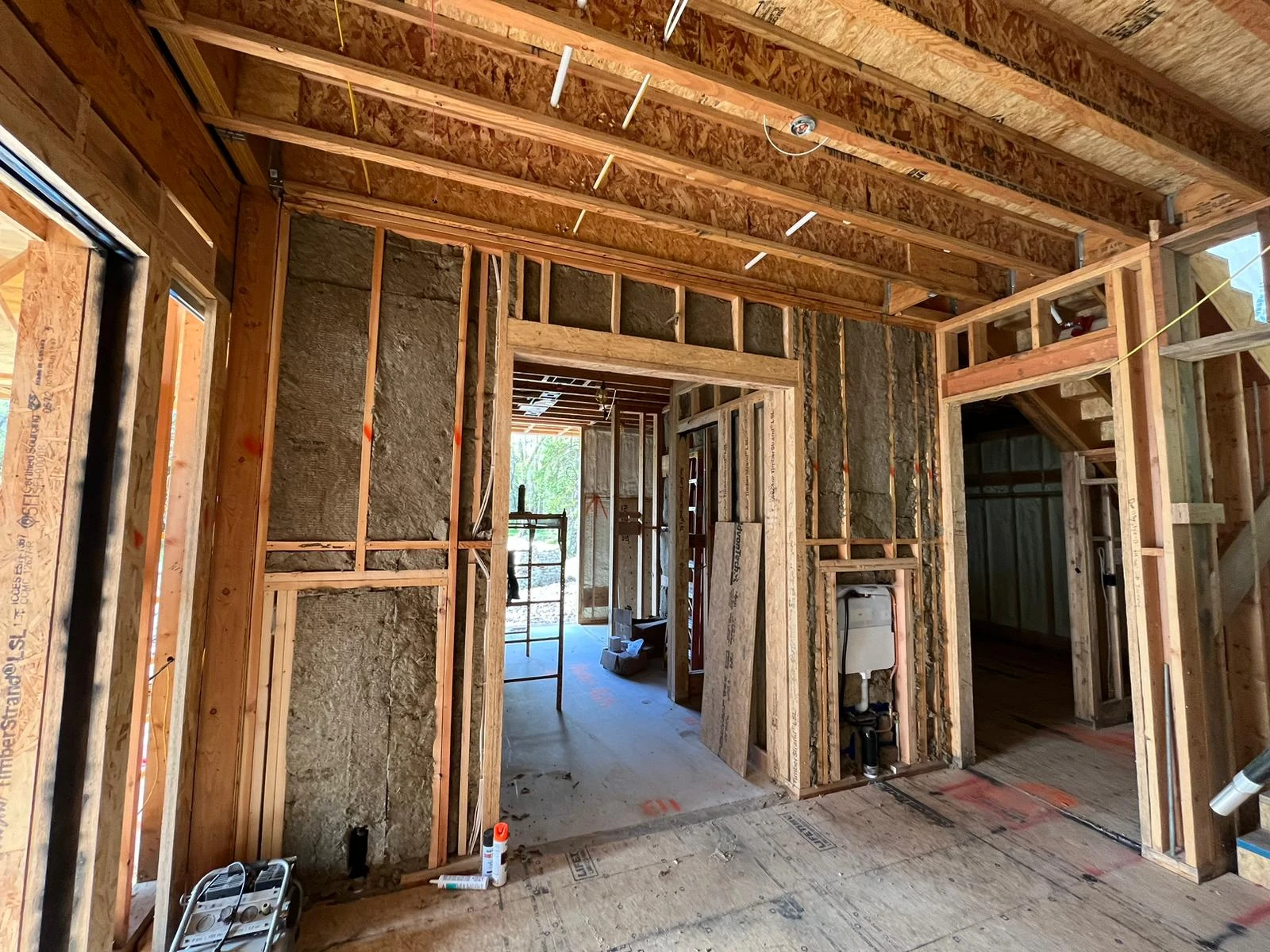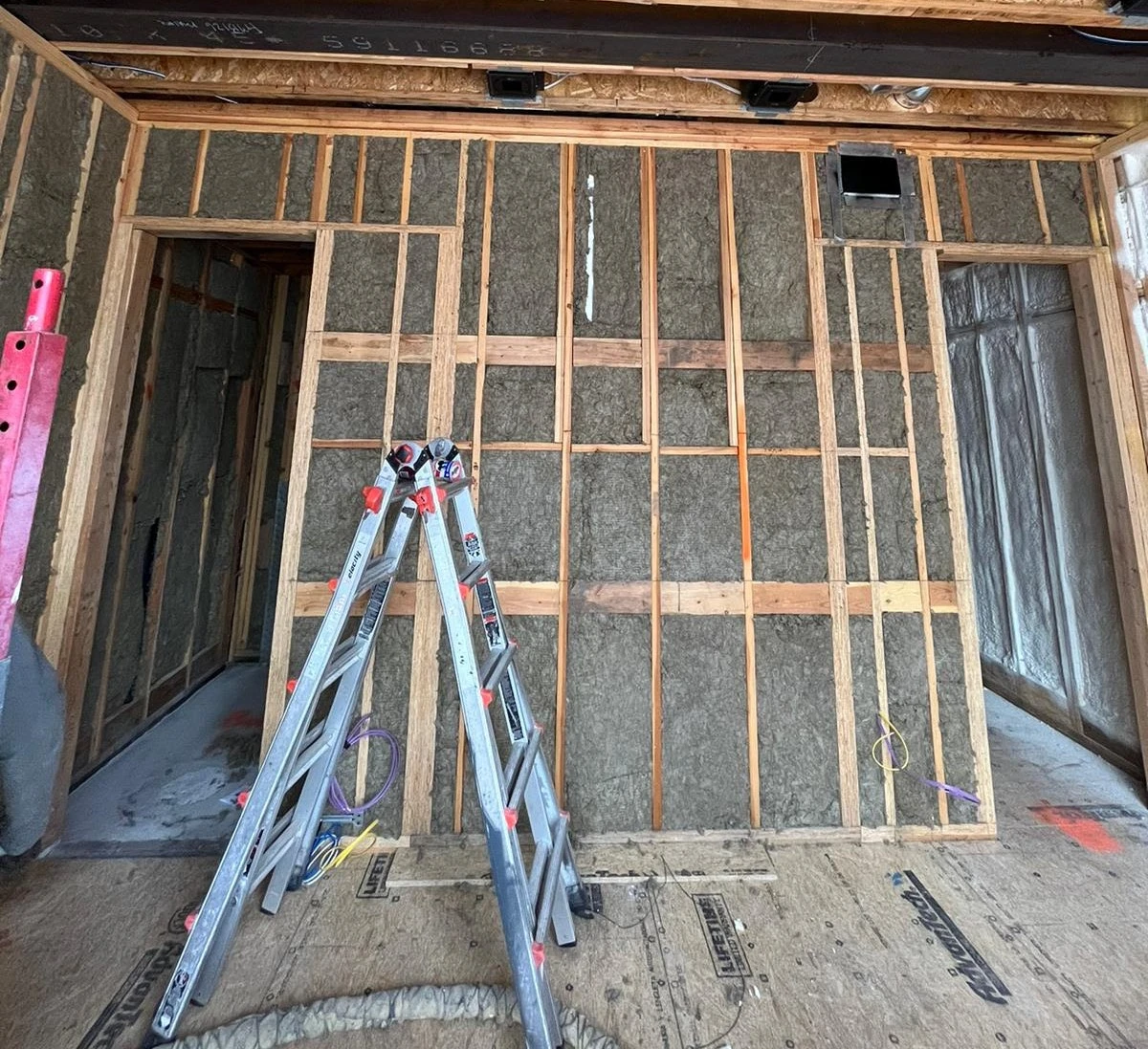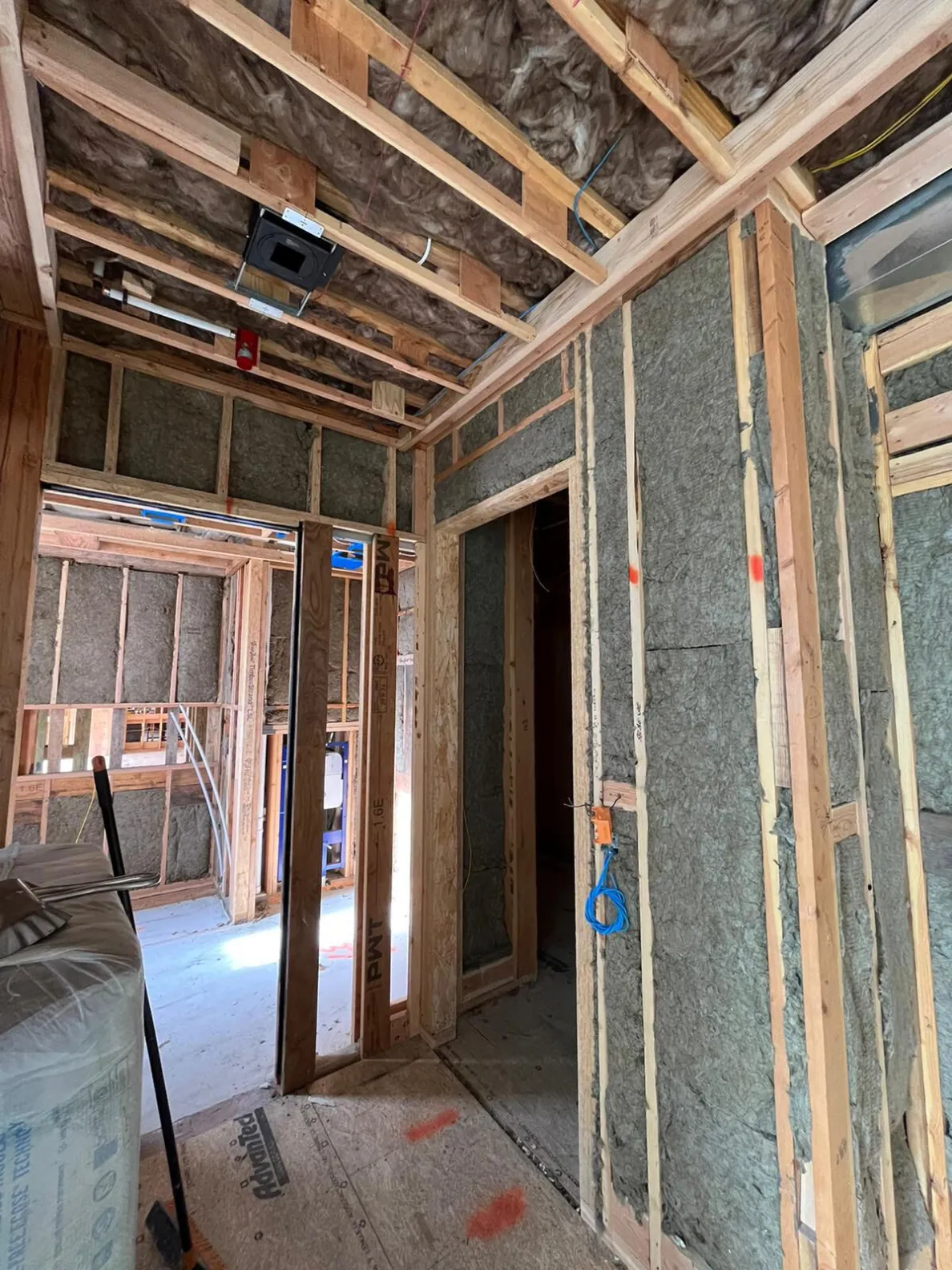
Why Are Homeowners in Thayne, WY Considering Mineral Wool for Insulation Upgrades?
Homeowners in Thayne, WY are turning to a mineral wool insulation guide because Star Valley winters push heating systems to their…


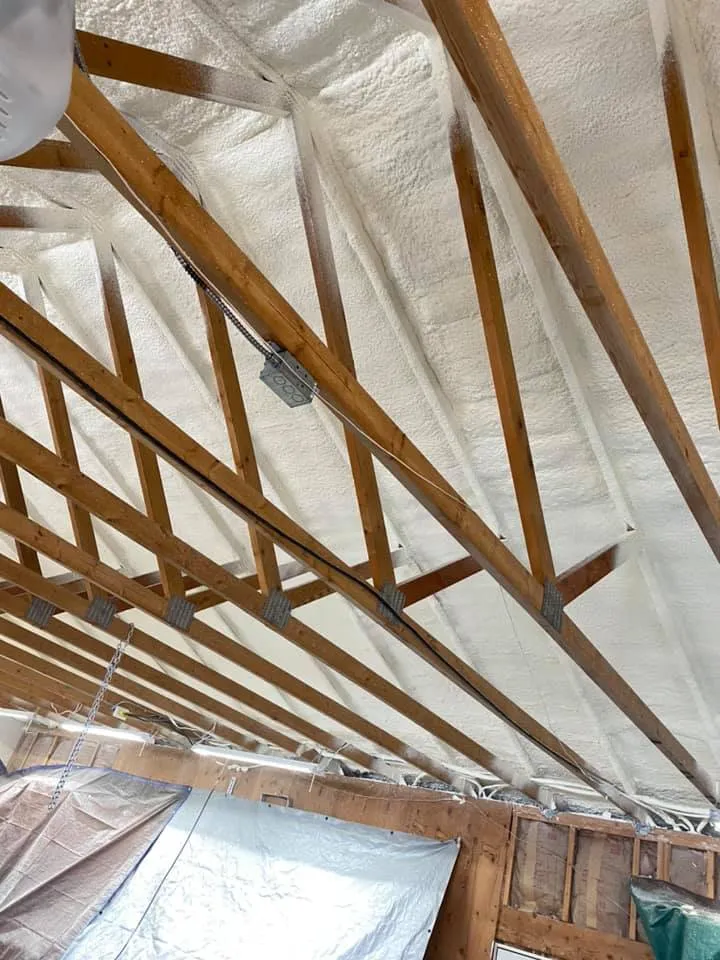
New construction insulation in Jackson Hole, Wyoming, fails because the building industry routinely installs air-permeable materials like fiberglass batts and blown cellulose into wall cavities without adequate exterior insulation, air barriers, or moisture control. In a climate zone where winter temperatures average 15°F with a design temperature of -30°F, interior moisture driven outward by air leakage condenses against cold wall sheathing, creating frost buildup, mold growth, and R-value degradation that can destroy a wall assembly from the inside out. The fix requires a shift from cavity-only insulation to systems that combine continuous exterior insulation with air-impermeable cavity fills, proper vapor control, and sealed building envelopes designed for the specific demands of climate zones 7 and 8, as detailed in this new construction insulation guide.
Jackson Hole is not a standard cold climate. It sits in a mountain valley at roughly 6,200 feet elevation, surrounded by the Teton, Gros Ventre, and Snake River ranges. The local climate station data shows January average highs of 27°F and average lows of 4°F, with December and January record lows plunging to -52°F and -50°F, respectively. Teton County’s official building design criteria lists the outdoor design dry-bulb temperature at -30°F, which is the temperature used by mechanical engineers and code officials to size heating systems and evaluate envelope performance.
The county is classified under IECC Climate Zones 7 and 8, the two most demanding thermal zones in the continental United States. Code minimums are already steep: R-60 ceilings, R-20+5 or R-13+10 wood-frame walls, R-38 floors, and R-15 continuous or R-19 cavity basement walls. These minimums are the floor, not the ceiling, of acceptable performance. In practice, many new homes built in the valley still underperform because the insulation materials and installation methods cannot handle the temperature differential between a 70°F interior and a -30°F exterior, making proper planning for new construction insulation in Thayne, WY, essential.
Joseph Lstiburek of Building Science Corporation has written extensively about construction in extreme cold, noting that even tiny air leaks that would be insignificant in milder climates lead to substantial icicles, frost boles, and moisture damage in severe cold. In Jackson Hole, where temperatures stay below freezing for five consecutive months, those tiny leaks compound daily for roughly 150 days per year.
The most frequent failure we see in Jackson Hole new builds is relying entirely on cavity insulation, typically fiberglass batts, inside 2×6 wood-framed walls. The problem is straightforward physics. When warm indoor air leaks through electrical boxes, window rough openings, and other penetrations, it passes through the fiberglass batt and hits the back of the exterior sheathing, which in January may be at or below freezing. The moisture in that air condenses, accumulates as frost, and thaws when temperatures rise. Over multiple winters, this cycle causes sheathing rot, mold growth behind drywall, and staining on interior finishes.
According to Building Science Corporation’s research on cold-weather condensation, adding more air-permeable insulation to the stud bay actually increases condensation risk because it makes the sheathing colder. The same study shows that adding continuous exterior insulation, even a modest amount, raises the sheathing temperature above the dew point and eliminates the problem entirely. For a climate like Jackson Hole, where the average winter temperature is around 18°F, the ratio of exterior insulation to total wall R-value needs to be substantial, often exceeding 40%.
The rim joist area, where the floor framing meets the foundation wall, is one of the most neglected locations in new construction insulation. It is a massive thermal bridge, an air leakage hotspot, and a condensation magnet all at once. Fiberglass batts stuffed into rim joist bays are almost never effective because they cannot seal against air movement. The DOE’s Building America program specifically identifies the rim joist as a location that must be air sealed and insulated, and recommends closed-cell spray foam as the most effective approach for this critical transition point, which is why professional insulation services in Jackson, WY focus heavily on air sealing these vulnerable areas.
Basements in cold climates can account for 10% to 30% of a home’s total heat loss. The DOE’s research found that fiberglass batt or cellulose insulation should not be installed in direct contact with basement foundation walls because these materials absorb moisture, stay chronically damp, and support mold growth. When a polyethylene vapor barrier is placed over fiberglass against concrete, it traps moisture in the wall and creates a double vapor barrier problem. For Jackson Hole’s 34-inch frost depth and -30°F design temperature, basement insulation must be installed with an air gap or use closed-cell spray foam applied directly to the concrete.
In a climate zone 7 environment, the vapor drive is overwhelmingly from the interior to the exterior during winter. A Class II vapor retarder (such as kraft-faced insulation or latex paint on drywall) is needed on the warm side of the insulation. However, many new construction projects in Jackson Hole either skip vapor control entirely or install it on the wrong side of the assembly. When combined with cavity-only insulation, the result is wall assemblies that cannot dry in either direction once moisture accumulates.
Recessed lights, electrical outlets, plumbing vents, HVAC penetrations, and window rough openings are all locations where interior air can bypass insulation entirely. Air leakage through a single unsealed penetration can transport enough moisture to saturate an entire wall section. In a climate where the temperature differential regularly exceeds 90 degrees between inside and outside, even small air leaks carry significant latent heat and moisture.
| Insulation Type | R-Value per Inch | Air Barrier | Vapor Barrier | Best Application in Cold Climates |
|---|---|---|---|---|
| Fiberglass Batts | 3.1 – 3.4 | No | No | Non-contact applications only; avoid direct contact with cold surfaces |
| Blown Cellulose | 3.2 – 3.8 | No | No | Attic floors; dense-pack wall retrofits with proper air barrier |
| Open-Cell Spray Foam | 3.5 – 3.7 | Yes | No (vapor permeable) | Interior wall fills with a separate vapor retarder; sound attenuation |
| Closed-Cell Spray Foam | 6.0 – 7.0 | Yes | Yes (Class II at 1″+) | Rim joists, foundation walls, band joists, flash-and-batt systems |
| Rigid XPS Foam Board | 5.0 | No (needs sealed joints) | Yes | Continuous exterior insulation; below-grade foundation insulation |
| Rigid EPS Foam Board | 3.8 – 4.4 | No (needs sealed joints) | Semi-permeable | Exterior continuous insulation; budget-friendly wall sheathing |
| Mineral Wool Board | 4.2 – 4.5 | No | Yes (semi-permeable) | Exterior continuous insulation; fire-rated assemblies |
The Teton County building code requires wood-frame walls to achieve R-20+5 continuous, R-13+10 continuous, or R-0+20 continuous. On paper, these assemblies appear sufficient. In practice, the difference between a wall that meets code and one that actually performs depends on three factors: air tightness, vapor control, and the ratio of exterior to interior insulation.
A wall with R-13 fiberglass cavity insulation and R-5 exterior foam technically meets code. But if the air barrier is discontinuous and the vapor retarder is missing or misplaced, that same wall can accumulate enough moisture over a single heating season to require a gut renovation. Conversely, a wall with R-10 continuous exterior insulation and no cavity fill will outperform the code-minimum wall because the sheathing stays warm and dry, even though the total R-value is lower.
For BSI-031: Building in Extreme Cold – Building Science Corporation, the emphasis is on a continuous air barrier, continuous vapor control, and exterior insulation as the primary thermal layer. Interior cavity insulation is secondary and should only be added if the exterior insulation ratio is high enough to keep sheathing above the dew point.
| Scenario | Home Type | Problem | Solution | Outcome |
|---|---|---|---|---|
| Mountain townhome | 2,400 sq ft, 2×6 framed walls | Fiberglass batts with no exterior insulation; frost damage to the sheathing after the first winter | Removed drywall, applied 2″ closed-cell foam to sheathing, added R-5 exterior rigid foam under new siding | Sheathing stayed above the dew point; no further frost or mold issues |
| Custom ski-in home | 4,100 sq ft, great room with cathedral ceiling | Open-cell foam only in cathedral roof; condensation staining at ceiling joints | Added 4″ rigid foam above the roof deck with ventilated cladding over the top | Eliminated condensation; ice dam issues at eaves resolved |
| Basement finishing | 1,800 sq ft walkout basement | Fiberglass batts placed directly against the concrete foundation; musty odor within 6 months | Removed batts, applied 2″ closed-cell spray foam directly to concrete, framed interior wall with 2″ gap | Odor eliminated; basement RH dropped below 40% |
| New spec home | 3,200 sq ft, standard production build | Rim joist areas are insulated with fiberglass; ice formation at the band joist is visible from the outside | Removed fiberglass, sprayed closed-cell foam in all rim joist bays | Thermal bridging eliminated; no further ice buildup |
| Retrofit addition | 900 sq ft master suite addition | R-13 cavity-only walls; homeowner complaints of cold walls and high heating bills | Added R-10 mineral wool continuous insulation to the exterior before new siding | Interior wall surface temperatures increased by 12°F; heating load reduced |
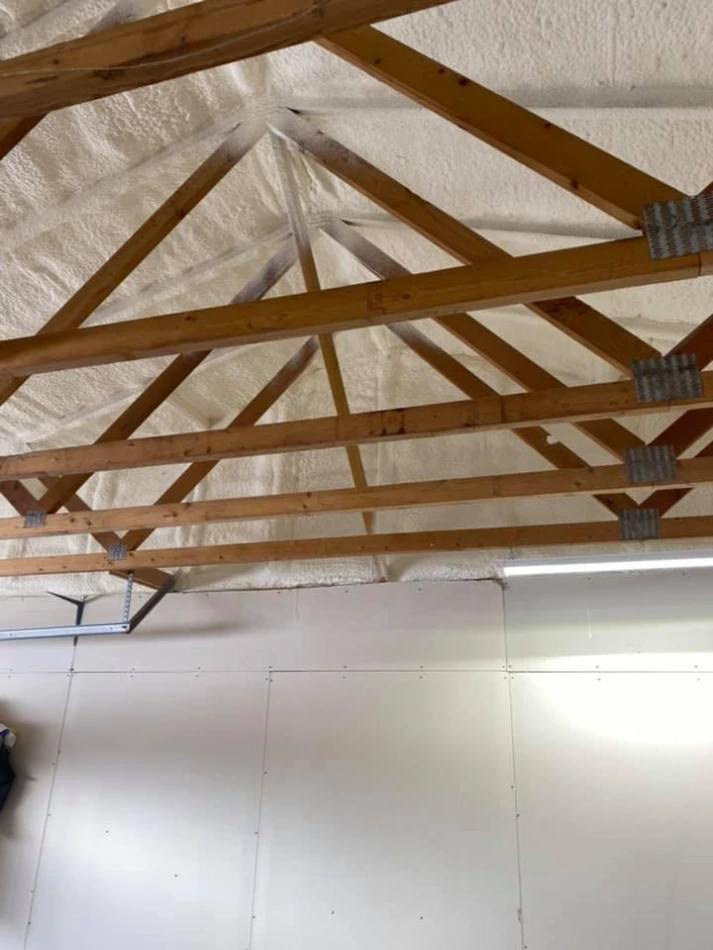
The single most effective upgrade for any new construction wall in Jackson Hole is adding continuous exterior insulation. This layer keeps the structural sheathing warm, which prevents condensation regardless of what happens inside the cavity. For climate zone 7, we recommend a minimum of R-10 to R-15 of continuous exterior insulation. The material can be rigid XPS, EPS, mineral wool board, or a combination. Joints must be sealed with tape or a liquid-applied membrane to function as part of the air barrier system.
Rim joists, band joists, cantilevered floor assemblies, and the junction between the foundation wall and the wood frame are all locations where air sealing is extremely difficult with conventional materials. Closed-cell spray foam applied at a minimum of 1.5 to 2 inches seals air leaks, blocks vapor diffusion, and provides meaningful R-value in a single step. These transitions represent a small percentage of the total envelope area but account for a disproportionate share of heat loss and moisture problems.
In climate zones 7 and 8, the vapor drive is from the interior outward for the majority of the heating season. The vapor retarder belongs on the warm (interior) side of the insulation assembly. This means kraft-faced batts, vapor-retarder paint on drywall, or a dedicated Class II vapor retarder sheet behind the interior finish. Avoid double vapor barriers, which trap moisture between two impermeable layers. If closed-cell spray foam is used as the primary cavity insulation at sufficient thickness, it can serve as both the air barrier and the vapor retarder, simplifying the assembly.
Air sealing must be completed before any insulation is installed. This includes caulking window and door rough openings, sealing electrical boxes with approved covers, using fire-rated sealant at top plates and utility penetrations, and applying foam or gasket material at rim joist framing. Blower door testing during construction can identify leakage points that are not visible during a visual inspection. A home in climate zone 7 with fiberglass cavity insulation and poor air sealing can lose more heat through air leakage than through conduction through the walls.
The DOE’s Building America research explicitly warns against using fiberglass or cellulose in contact with foundation walls in cold climates. Closed-cell spray foam applied directly to the basement concrete provides an air barrier, a vapor retarder, and insulation in one application. For crawlspaces, sealing the vents, insulating the walls with foam board or spray foam, and conditioning the space is the recommended approach. Insulating the crawlspace ceiling while leaving the walls and floor uninsulated is not appropriate for climate zone 7.
Jackson Hole receives heavy snow loads, and snow sitting on a roof has an insulating effect estimated at R-1 to R-2 per inch. This means a foot of snow adds R-12 to R-24 to the roof assembly, which is significant. Unvented roof assemblies with only interior insulation can develop condensation problems when snow insulates the exterior. Ventilated roof assemblies with insulation at the ceiling plane and air flow above the insulation remain the most durable approach for this climate. If an unvented cathedral ceiling is desired, sufficient rigid foam above the roof deck must be installed to keep the sheathing warm, or closed-cell spray foam must be applied directly beneath the roof deck.
| Factor | Impact on Performance | What to Do |
|---|---|---|
| Temperature differential | Drives both heat loss and moisture transport | Design for -30°F exterior, 70°F interior (100°F differential) |
| Frost depth (34 inches) | Below-grade insulation must extend below the frost line | Extend rigid foam or spray foam on foundation walls to full depth |
| Snow load on roofs | Adds R-value above the roof deck, altering condensation calculations | Use ventilated roof assemblies or increase above-deck foam thickness |
| Wind exposure | Valley funneling increases pressure differences across the envelope | Verify air barrier continuity, especially at corners and roof-wall intersections |
| Indoor humidity levels | Higher RH increases condensation risk and vapor drive | Target 30-35% winter RH; install mechanical ventilation if needed |
| Building orientation | North-facing walls stay colder, south-facing walls get solar gain | Increase exterior insulation on north and west exposures |
| Elevation (6,200+ ft) | Thinner air, greater temperature swings, higher UV exposure | Use UV-stable exterior insulation facers and durable cladding systems |
| Construction quality | Gaps, compressed batts, and missed penetrations bypass insulation | Require third-party blower door testing and thermal imaging before closing walls |
Building in Jackson Hole demands more than code-minimum insulation, and the cost of getting it wrong shows up in frost-damaged sheathing, mold remediation, and heating bills that never stop climbing. Our team at High Country Solutions designs and installs insulation systems specifically engineered for climate zone 7 conditions, from closed-cell spray foam air sealing to continuous exterior insulation packages that keep wall assemblies dry and performing at their rated R-value year after year.
Call us at (307) 248-9063 or email [email protected] to discuss your project. We work with builders and homeowners across the Jackson Hole area to make sure new construction performs the way it was designed to.
Teton County requires R-20+5ci, R-13+10ci, or R-0+20ci for wood-frame walls under climate zones 7 and 8. However, meeting code minimums does not guarantee condensation-free performance without proper air sealing and vapor control.
Fiberglass batts can be used in wall cavities if adequate continuous exterior insulation is installed to keep the sheathing above the dew point. Fiberglass should never be used alone in a cavity-only wall assembly in climate zone 7 without exterior insulation.
Rim joists are major thermal bridges and air leakage paths. Fiberglass batts cannot seal the air movement at these locations. Closed-cell spray foam applied to the rim joist bays seals air leaks, blocks vapor, and provides R-6 to R-7 per inch of insulation.
In climate zones 7 and 8, closed-cell spray foam provides air barrier performance, vapor retardation, and high R-value per inch in a single application. For foundation walls, rim joists, and band joists, it is the most effective solution available and addresses the primary failure mechanisms in cold climate construction.
Ice dams form when heat escapes through the ceiling and warms the roof deck enough to melt snow, which then refreezes at the eaves. The solution is a combination of adequate attic insulation (R-60 for zones 7 and 8 per ENERGY STAR), proper air sealing at the ceiling plane, and a ventilated roof assembly that keeps the roof deck cold.