Why Are Homeowners in Thayne, WY Considering Mineral Wool for Insulation Upgrades?
Homeowners in Thayne, WY are turning to a mineral wool insulation guide because Star Valley winters push heating systems to their…


Choosing the right insulation for new construction in Thayne, WY, means matching material performance to one of the most demanding climate zones in the continental United States. Thayne sits in IECC Climate Zone 7, where winter design temperatures can drop to -30°F and the frost line depth reaches 34 inches below grade. That combination of extreme cold, significant snow loads, and a relatively short building season means your insulation strategy cannot be an afterthought. The right approach depends on your building type, framing method, budget, and long-term energy goals. Fiberglass batts, mineral wool, spray foam, rigid foam board, structural insulated panels, and blown-in cellulose each serve different roles within a well-designed building envelope, and the best results typically come from combining multiple materials across different parts of the structure, as explained in this new construction insulation guide.
Thayne sits at approximately 6,200 feet in elevation in the Salt River Valley of western Wyoming. According to the Teton County Design Criteria, the mean annual temperature is just 38°F, and the winter outdoor design dry-bulb temperature reaches 30°F. The air freezing index, which measures cumulative freezing degree-days, is 2,531, placing it among the coldest locations in the lower 48 states.
These numbers are not abstract. They dictate how much heat your building loses through every square foot of wall, roof, and foundation. In a Climate Zone 7 environment, under-insulating by even a modest amount translates to measurable energy waste every month of the heating season, which in Thayne runs roughly from October through April, making it critical to properly fix new construction insulation in Jackson Hole, WY.
The Department of Energy’s guide to insulation for new home construction makes clear that it is far more cost-effective to add insulation during construction than to retrofit it after the home is finished. This is especially true in Thayne, where the building season is compressed, and any post-construction work means added labor in difficult conditions.
R-value measures a material’s resistance to heat flow. Higher R-values mean better thermal performance. The Teton County design criteria specify the following minimum prescriptive R-values for new construction:
| Building Area | Minimum R-Value Requirement |
|---|---|
| Ceiling / Attic | R-60 |
| Wood Frame Wall | R-20+5 ci or R-13+10 ci |
| Mass Wall | R-19/21 |
| Floor Over Unconditioned Space | R-38 |
| Basement Wall | R-15 ci or R-19 cavity, or R-13+5 ci |
| Crawl Space Wall | R-15 ci or R-19 cavity, or R-13+5 ci |
| Slab Edge | R-10, depth 2 feet or to footing |
The notation “ci” means continuous insulation, which is applied across the entire surface rather than just between framing members. Continuous insulation eliminates thermal bridging, the heat loss that occurs through wood studs, steel framing, and other structural elements that conduct heat more readily than the insulation between them.
The ENERGY STAR recommended R-values for Climate Zones 7 and 8 confirm these targets. For attics with no existing insulation, ENERGY STAR recommends R-60, and for floors over unconditioned spaces, R-38. These align directly with Teton County’s code requirements.
Each insulation type brings distinct strengths and tradeoffs. The Department of Energy’s guide to insulation types provides a thorough breakdown of the major categories. The table below summarizes the most common options for new construction in cold climates.
| Insulation Type | R-Value Per Inch | Best Application in Zone 7 | Air Sealing | Moisture Resistance | Fire Resistance |
|---|---|---|---|---|---|
| Fiberglass Batts | R-3.1 to R-4.3 | Wall cavities, standard stud bays | Low (gaps around penetrations) | Low (absorbs moisture, loses R-value) | Moderate |
| Mineral Wool Batts | R-3.2 to R-3.7 | Walls, ceilings, fire-rated assemblies | Low to Moderate | Good (hydrophobic) | Excellent (noncombustible) |
| Cellulose (Blown) | R-3.1 to R-3.8 | Attics, enclosed wall cavities | Moderate (dense-pack) | Moderate (treated with borates) | Moderate |
| Closed-Cell Spray Foam | R-5.5 to R-6.8 | Rim joists, crawl spaces, complex cavities | Excellent (acts as an air barrier) | Excellent (closed cell) | Requires thermal barrier (drywall) |
| Open-Cell Spray Foam | R-3.6 | Wall cavities, sound control | Very Good | Poor (should not be used below grade) | Requires a thermal barrier |
| EPS Rigid Foam Board | R-3.8 to R-5.0 | Continuous exterior insulation, under the slab | Good when taped | Moderate | Requires a thermal barrier |
| XPS Rigid Foam Board | R-4.0 to R-5.0 | Below grade, foundation walls | Good when taped | Good | Requires a thermal barrier |
| Polyiso Foam Board | R-5.6 to R-7.0 | Exterior wall sheathing, roof assemblies | Good when taped | Good | Requires a thermal barrier |
| SIPs (Structural Insulated Panels) | Varies by core (R-4 to R-6.5/inch) | Entire wall and roof system | Excellent | Good (depends on facing) | Requires interior finish |
Data on R-values per inch comes from the InspectAPedia insulation R-values table, which compiles values from DOE, ASHRAE, and manufacturer specifications.
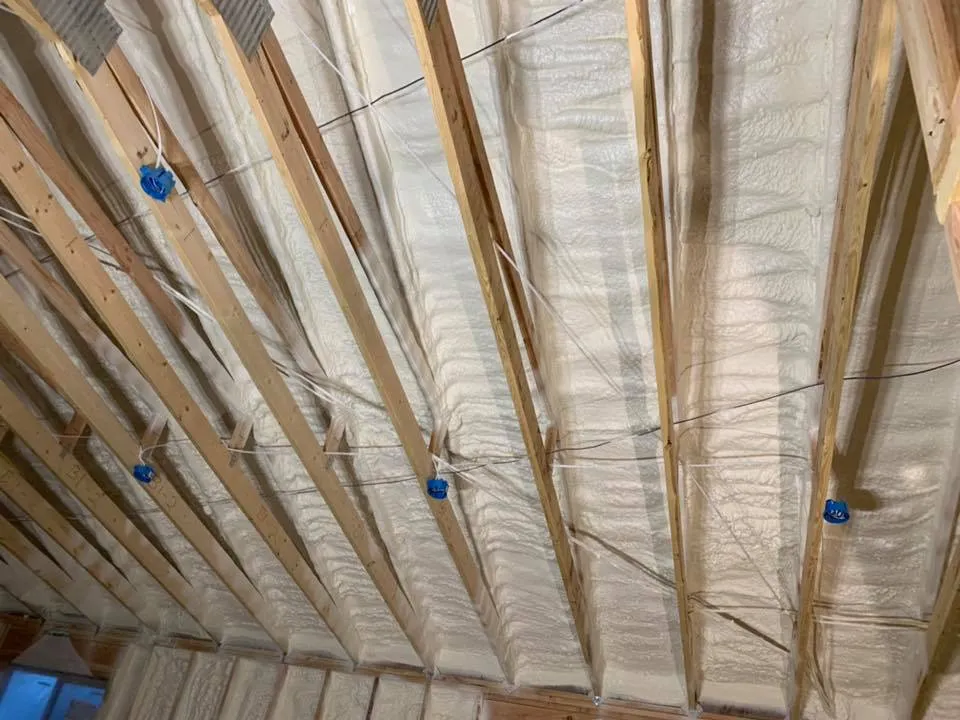
Attics require the highest R-values in the building envelope. In Climate Zone 7, you need R-60 at the ceiling plane. Fiberglass batts, blown-in cellulose, or blown-in fiberglass are all common choices for attic floors. Blown-in materials tend to cover framing members more completely, reducing thermal bridging. For vaulted or cathedral ceilings, the insulation moves to the rafter bays, and spray foam or rigid foam combined with batt insulation can achieve the required R-value within a limited cavity depth.
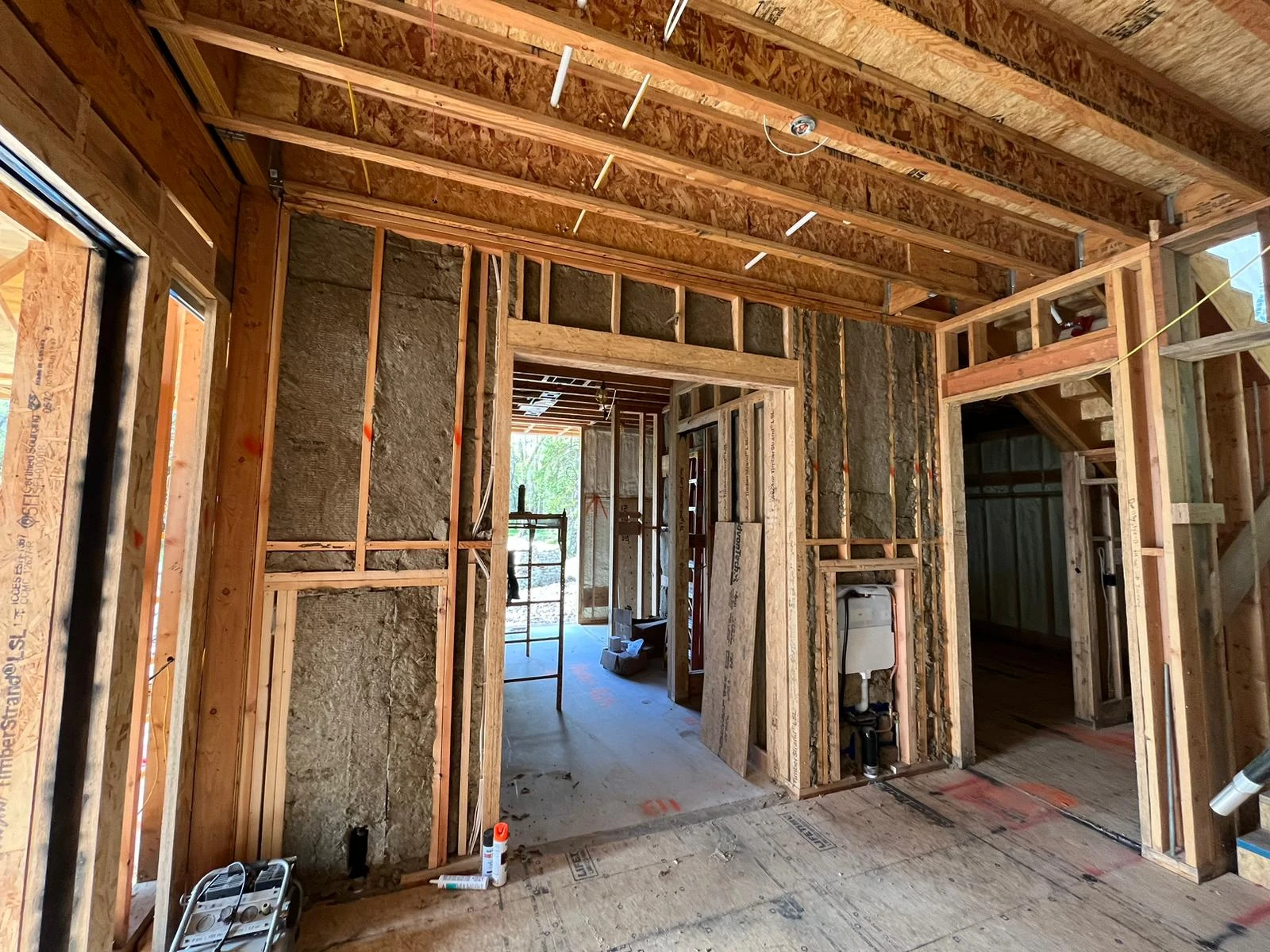
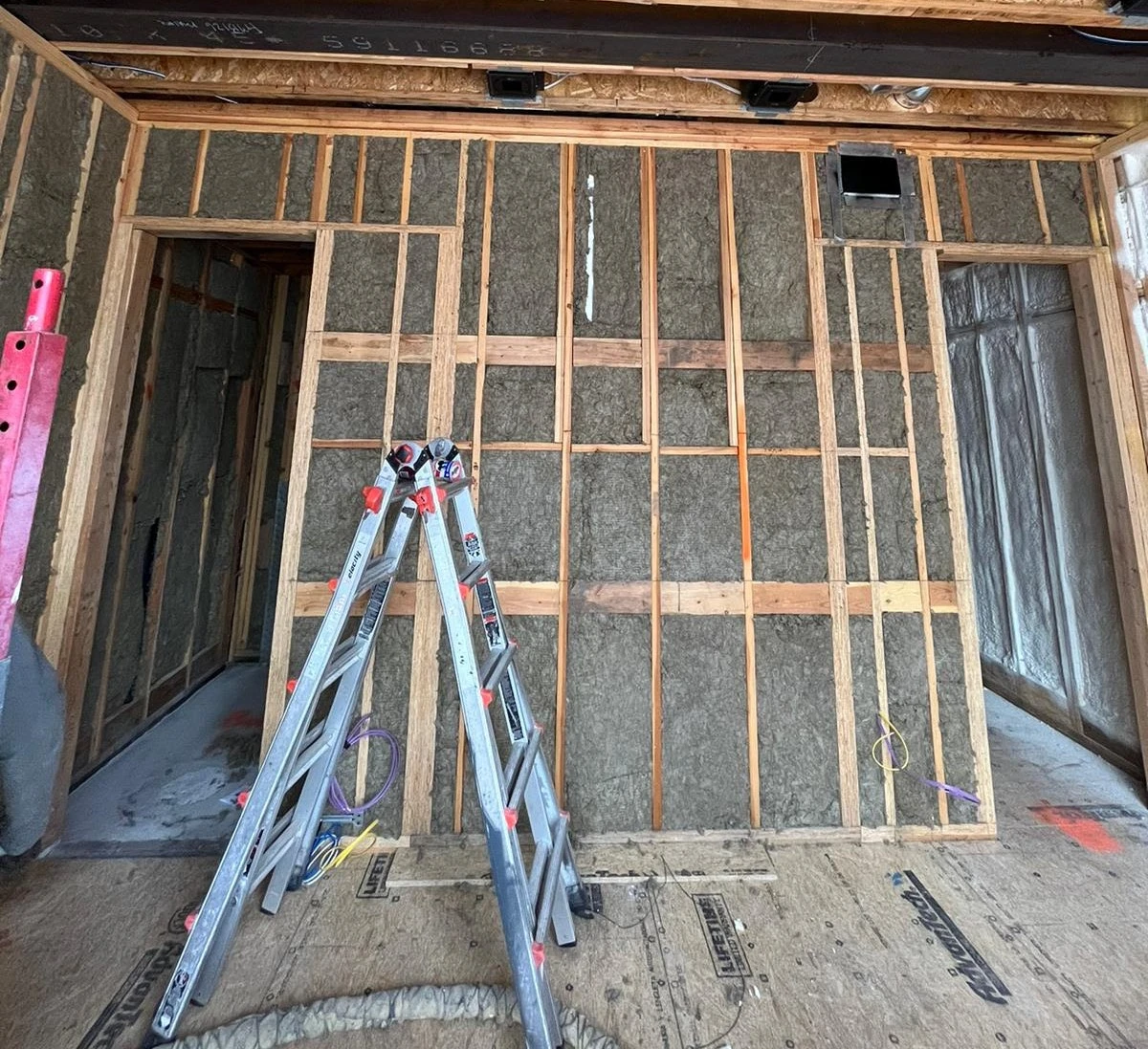
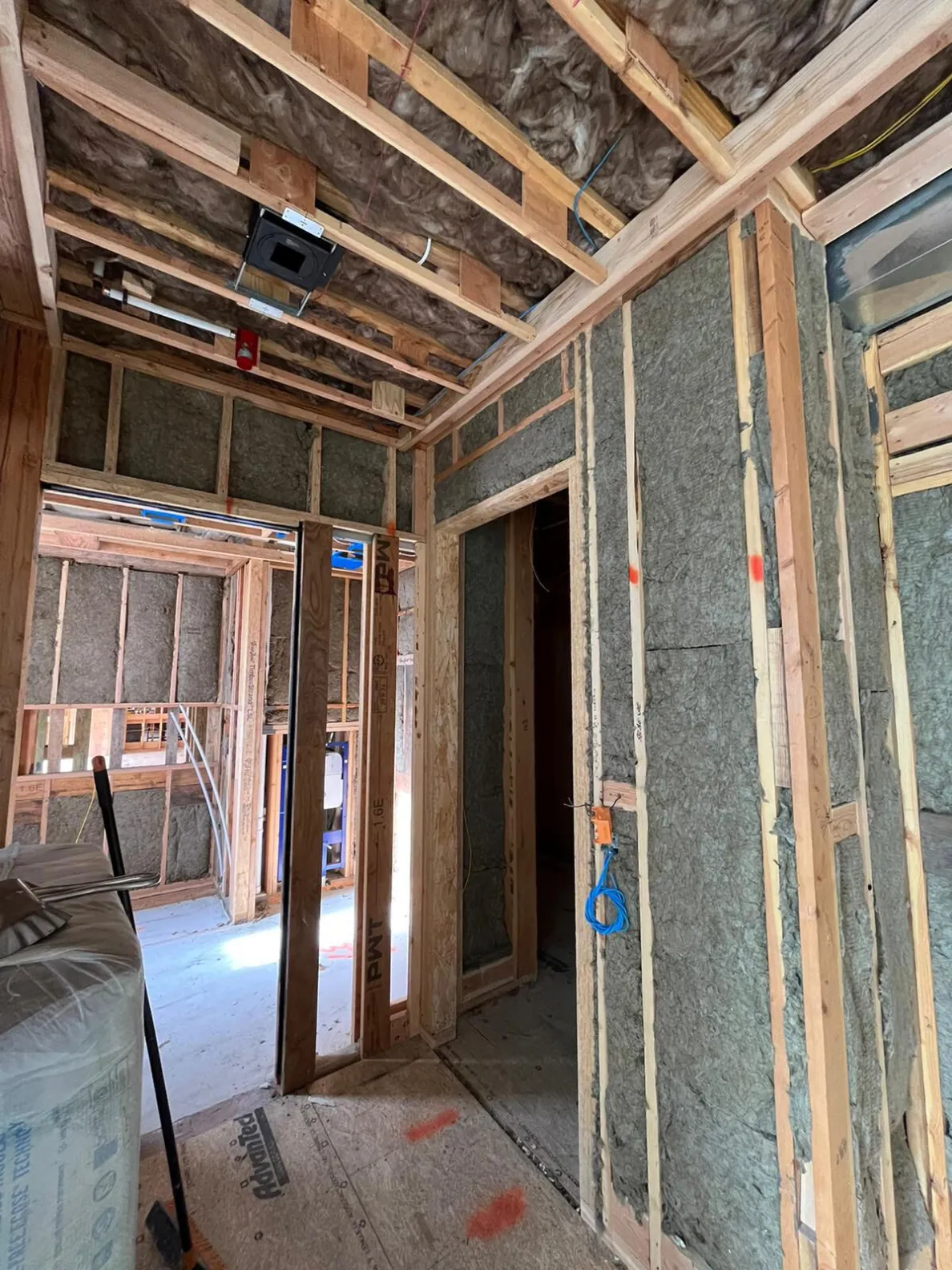
For standard 2×6 wood-frame walls, the prescriptive path allows either R-20 cavity insulation plus R-5 continuous insulation, or R-13 cavity insulation plus R-10 continuous insulation. Mineral wool batts at R-23 fit cleanly into a 2×6 cavity and offer better fire resistance than fiberglass. Adding rigid foam board or mineral wool continuous insulation to the exterior eliminates thermal bridging through the studs and significantly improves effective wall performance.
Below-grade insulation is critical in Thayne’s climate. The frost line depth of 34 inches means that foundation walls and footings are exposed to sustained freezing temperatures for months. Closed-cell spray foam applied to the interior of basement walls or XPS rigid foam on the exterior are both effective. Per the Teton County criteria, basement walls need R-15 continuous or R-19 cavity, or a combination of R-13 cavity plus R-5 continuous.
The rim joist area, where the floor framing meets the foundation, is one of the most common sources of air leakage and heat loss in any home. Closed-cell spray foam is particularly effective here because it seals both against air infiltration and provides a high R-value in a thin layer. For floors over unconditioned crawl spaces or garages, the R-38 requirement can be met with fiberglass or mineral wool batts between the floor joists, supplemented with rigid foam or spray foam at the rim.
Several missteps can undermine even a well-planned insulation strategy in Thayne.
Skipping air sealing before insulating. The Department of Energy explicitly states that energy losses from air leakage can exceed conductive losses in a well-insulated home. All penetrations, joints, and transitions should be sealed with caulk, foam, or tape before any insulation is installed.
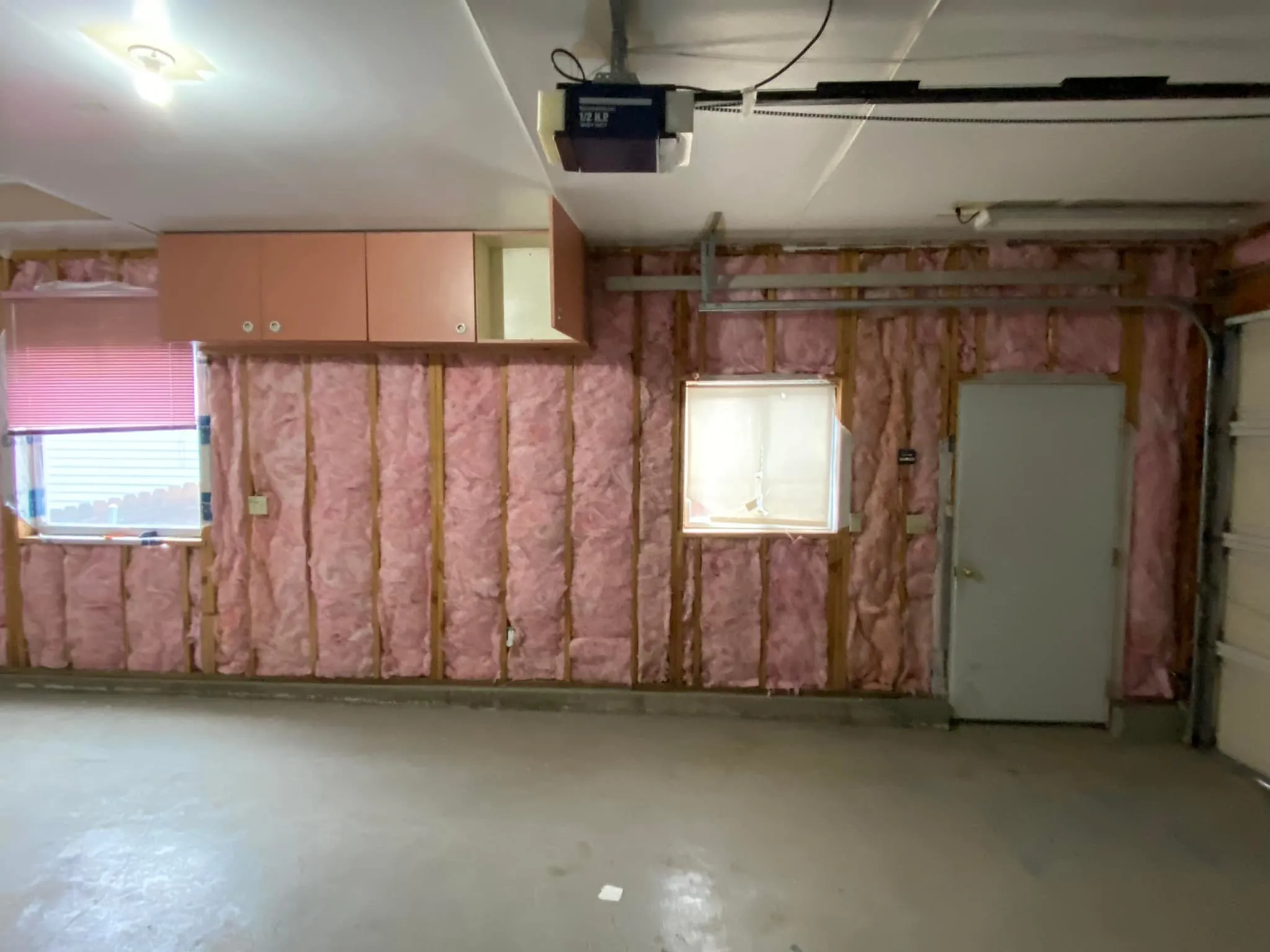
Compressing batt insulation. Fiberglass and mineral wool batts lose R-value when compressed. Stuffing R-19 batts into a 2×4 cavity, for example, reduces their effective performance below the rated value.
Ignoring vapor barriers and moisture management. In cold climates, the vapor barrier belongs on the warm side of the insulation, typically the interior. Getting this wrong can trap moisture within the wall cavity, leading to mold, rot, and insulation degradation. Closed-cell foam can act as its own vapor barrier at sufficient thickness, but most other materials require a separate vapor retarder.
Leaving gaps and voids. Gaps as small as 4% of the insulated area can reduce overall thermal performance by up to 50%. This is why blown-in and sprayed materials tend to outperform batts in practice. They conform to irregular shapes and fill around obstructions more completely.
| Project Type | Recommended Approach | Key Considerations |
|---|---|---|
| Custom single-family home | Hybrid system: spray foam at rim joists and complex areas, mineral wool in walls, rigid foam continuous insulation on exterior, blown cellulose or fiberglass in attic | Prioritize continuous insulation and air sealing. Budget for R-10 to R-15 exterior continuous insulation. |
| Production/tract home | Fiberglass or mineral wool batts in walls, blown fiberglass in attic, rigid foam on exterior walls | Balance cost and speed of installation with code compliance. Ensure quality control on batt installation. |
| Multifamily building | Spray foam at party walls and corridors for sound and air sealing, mineral wool in individual units, and rigid foam exterior continuous insulation. | Fire-rated assemblies in party walls. Sound control between units is as important as thermal performance. |
| Accessory dwelling unit (ADU) | SIPs for walls and roof, or advanced framing with mineral wool and exterior rigid foam | A smaller footprint makes SIPs cost-competitive. A tight building envelope reduces heating loads significantly. |
How can you tell if your insulation plan is solid before the walls close up? Look for these indicators:
High Country Solutions works with builders and homeowners across the Thayne, WY area to design and install insulation systems that meet the demands of Climate Zone 7. Our team understands the local building conditions, the Teton County requirements, and the insulation materials that perform best in extreme cold. Whether you are building a custom home, a multifamily project, or an ADU, we can help you select the right combination of materials and ensure quality installation that delivers real energy savings and lasting comfort.
Request a Quote | Schedule a Consultation
Call us at (307) 248-9063 or email [email protected] to discuss your project. The decisions you make about insulation during construction will affect your building’s performance and comfort for decades. Let us help you get it right the first time.
Thayne falls under Teton County’s Climate Zone 7 requirements, which mandate R-60 for ceilings, R-20+5 or R-13+10 for wood-frame walls, R-38 for floors, and R-15/19 for basement walls.
Spray foam provides both high R-value and air sealing in one application, which makes it particularly valuable at rim joists, crawl spaces, and complex framing areas where air leakage is most common.
Wyoming does not have a statewide energy code. Requirements are set at the local level, so Teton County’s IECC Climate Zone 7 prescriptive table governs insulation standards for Thayne projects.
Fiberglass batts alone in a 2×6 wall typically reach R-19 to R-21, which does not meet the R-20+5 or R-13+10 prescriptive path. You need to add continuous insulation on the exterior to comply.
The deep frost line means foundation walls are exposed to sustained sub-freezing temperatures. Rigid foam or spray foam insulation on basement and crawl space walls, meeting the R-15/19 requirement, is essential to prevent heat loss and frost heave damage.