How Does Fiberglass Insulation Handle Heat Transfer in Different Conditions?
Skeeter Aimone
April 16th, 2026
Fiberglass insulation manages heat transfer primarily by trapping millions of tiny air pockets within a matrix of spun glass fibers, creating resistance to conductive and convective heat flow through building cavities. According to the U.S. Department of Energy, the most common insulation materials work by slowing conductive and convective heat movement, while the effectiveness of that resistance depends on the type of insulation, its thickness, density, and the environmental conditions it faces. How well fiberglass performs in any given situation depends on three things: the temperature differential across the assembly, the moisture content within the material, and the installation quality. No single insulation product is universally ideal. The right choice depends on your climate zone, building type, and specific thermal goals.
TL;DR
Fiberglass insulation resists heat transfer through conduction and convection by trapping air between fine glass fibers, with R-values typically ranging from R-2.2 to R-4.3 per inch, depending on density.
The R-value of fiberglass insulation is not fixed. It can decrease by 10% to 20% when mean insulation temperatures rise significantly in summer conditions, according to Lawrence Berkeley National Laboratory research.
In extreme cold (below -20°F), fiberglass insulation can lose up to 50% of its rated R-value, making supplementary insulation or continuous insulation necessary in harsh climates.
Moisture is one of the biggest threats to fiberglass thermal performance. Absorption of just 20% moisture can cause up to a 55% loss in insulation value, per Building Enclosure Online.
High-density fiberglass batts deliver better performance per inch than standard batts, offering R-15 in a 2×4 wall compared to R-11 for low-density products.
Proper installation matters more than product rating. Compressed, gaps-filled, or poorly fitted fiberglass loses much of its effective thermal resistance regardless of its labeled R-value.
The Three Mechanisms of Heat Transfer in Fiberglass
Understanding how fiberglass insulation works requires knowing the three ways heat moves through building assemblies.
Conduction is the transfer of heat through solid materials. When warm air inside a building contacts an interior wall surface, heat conducts through the drywall, studs, and sheathing to the exterior. Fiberglass interrupts this path because glass fibers have low thermal conductivity and the air trapped between them is an even poorer conductor. Research from NC State University’s PMMF Laboratory confirms that conductive heat within fibrous materials travels through both the air (interstitial fluid) and the solid glass fibers, and that the overall conductivity depends heavily on the fiber orientation and packing density.
Convection is the movement of heat through circulating air. Warm air rises, cool air sinks, and that cycle carries thermal energy from one place to another. Fiberglass combats convection by creating friction against airflow within its tangled fiber matrix. The NC State research notes that fibrous insulations can essentially eliminate convective heat transfer thanks to the resistance their fibers create against fluid motion.
Radiation is the transfer of heat through electromagnetic waves, much like the warmth you feel from sunlight on your skin. Fiberglass provides some resistance to radiant heat transfer, but it is not primarily designed for this purpose. The Department of Energy notes that radiant barriers and reflective insulation systems are the products specifically designed to reduce radiant heat gain, while standard fiberglass handles conduction and convection far more effectively.
How Temperature Affects Fiberglass Performance
The rated R-value printed on a fiberglass batt is measured under controlled laboratory conditions, typically at 75°F. Real-world conditions rarely match those in lab settings, and the gap between rated and actual performance can be significant.
Cold Weather Performance
When outdoor temperatures drop well below freezing, the mean temperature of the insulation layer shifts lower, and fiberglass R-values change as a result. Testing at the Oak Ridge National Laboratory Large Scale Climate Simulator showed that fiberglass insulation can experience a 40% to 50% loss in effective R-value when outside temperatures reach -18°F or lower. This happens because conduction through the glass fibers becomes a larger share of total heat transfer at lower temperatures, and air trapped in the material begins to transfer heat more readily.
In cold climates, this R-value degradation means that a wall insulated to R-19 might only perform at R-10 to R-11 during the coldest stretches of winter. Builders in northern climate zones often address this by using high-density fiberglass batts, adding continuous rigid insulation to the exterior of wall assemblies, or combining fiberglass with other insulation types that maintain more stable R-values at low temperatures. For deeper insights, review fiberglass insulation performance and applications to understand how it fits within broader insulation strategies.
Hot Weather Performance
Heat transfer through fiberglass also changes during the summer months. Research from Lawrence Berkeley National Laboratory found that when the mean temperature of roof insulation rises significantly above room temperature in summer, the thermal resistance of fiberglass decreases by 10% to 20%. In their building energy simulations, this R-value reduction led to a 2% to 4% increase in annual cooling energy loads for a typical office building across five different climates.
The mechanism here is different from cold-weather degradation. At higher temperatures, radiant heat transfer within the fiberglass matrix increases because the glass fibers absorb and re-emit more infrared energy. Air conduction through the interstitial spaces also rises. For buildings in hot climates, particularly those with dark roofing, this performance drop matters. Adding a radiant barrier above the fiberglass in attic spaces or using reflective roof coatings can offset the effect by reducing the radiant heat that reaches the insulation in the first place. For more detail, see fiberglass insulation in high-heat conditions.
Condition
R-Value Impact
Primary Cause
Practical Implication
Moderate (50-80°F)
Rated R-value maintained
Balanced heat transfer mechanisms
Lab-rated performance is reliable
Hot weather (>100°F mean)
10-20% R-value reduction
Increased radiant transfer through fibers
Higher cooling costs, add a radiant barrier
Extreme cold (<0°F mean)
40-50% R-value reduction
Fiber conduction dominance, air conduction increase
Supplement with continuous insulation
High humidity/moisture
Up to 55% R-value reduction
Water replaces air in pockets
Vapor barriers and proper sealing are essential
Moisture: The Silent Performance Killer
Water has roughly 24 times the thermal conductivity of still air. When moisture enters fiberglass insulation and displaces the trapped air pockets, thermal resistance drops dramatically. Building Enclosure Online reports that absorption of only 20% moisture can cause up to a 55% loss in insulation value. Even a small moisture content increase of 1.5% in fiberglass insulation measurably reduces thermal performance.
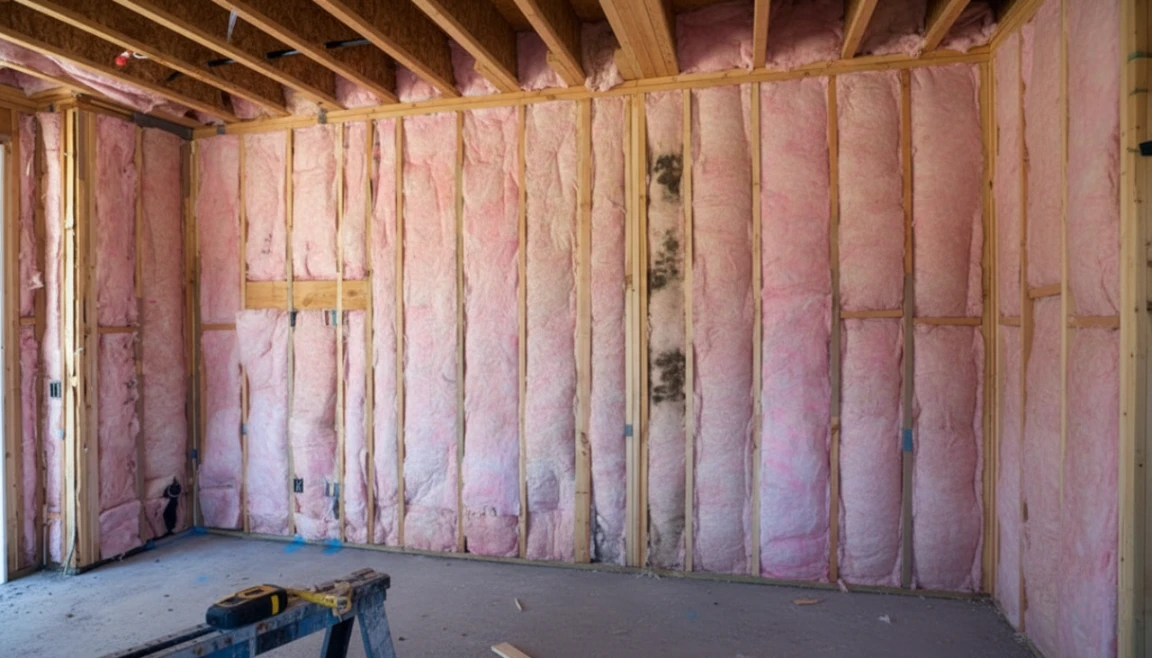
Sources of moisture include roof leaks, condensation from inadequate vapor barriers, plumbing failures, and humidity from daily occupant activities. Once fiberglass becomes saturated, it can take a long time to dry, especially in wall cavities with limited airflow. Persistent moisture also creates conditions for mold growth and can degrade structural materials over time.
The fix is prevention. Proper vapor barrier placement depends on the climate zone. In colder climates, the vapor barrier typically goes on the warm side (interior) of the insulation. In hot, humid climates, it may need to be on the exterior. Air sealing around penetrations, using proper flashing, and ensuring adequate ventilation in attic and crawl spaces all help keep fiberglass dry and performing at its rated capacity.
Fiberglass Density and Installation Quality
Not all fiberglass insulation is created equal. The Department of Energy’s insulation materials guide details how manufacturers now produce medium- and high-density fiberglass batts with higher R-values than standard products. For a 2×4 framed wall, high-density batts achieve R-15 compared to R-11 for standard low-density batts. In 2×6 walls, high-density batts reach R-21, and in 8.5-inch cavities, they deliver approximately R-30.
Higher density matters because it reduces the proportion of air conduction and increases the solid fiber content in a way that improves thermal resistance per inch. It also helps the batts fit more snugly within cavities, reducing gaps and voids that allow convective loops to develop.
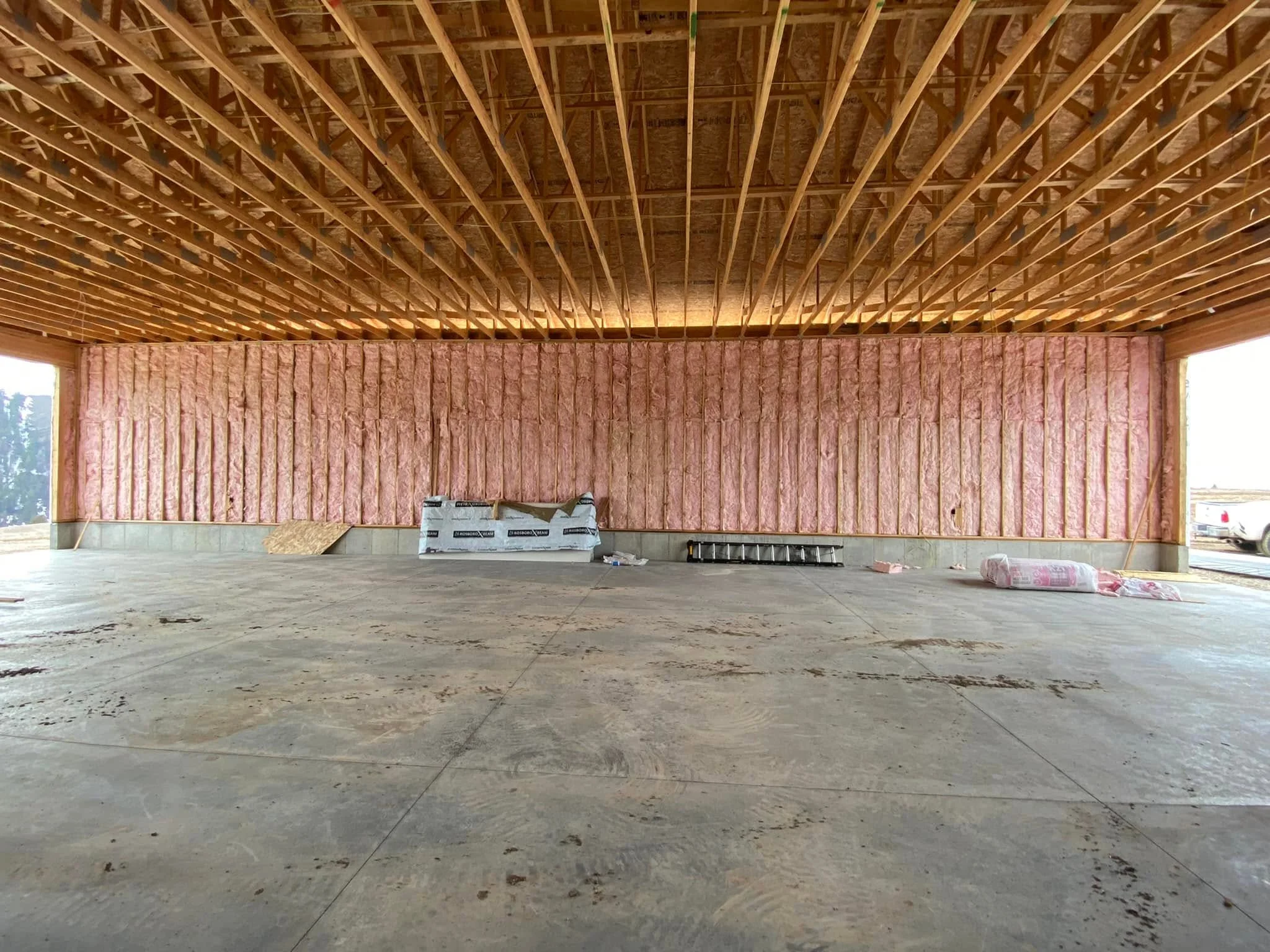
Installation quality has an outsized impact on real-world performance. Fiberglass that is compressed behind electrical wires or plumbing, stuffed into cavities that are too narrow, or left with gaps around framing members will underperform its rated R-value by a significant margin. The DOE notes that insulation filling building cavities reduces airflow and leakage, but only when it is properly fitted. Gaps of even a quarter inch at the edges of batts can create convective currents that bypass the insulation entirely.
How Fiberglass Compares to Other Insulation Types
Insulation Type
R-Value Per Inch
Handles Moisture
Best Application
Key Weakness
Fiberglass (standard)
R-2.9 to R-3.8
Poor if wet
Wall cavities, attics, and floors
Loses R-value in extreme temperatures
Fiberglass (high-density)
R-4.0 to R-4.3
Poor if wet
Limited cavity spaces, cathedral ceilings
Higher cost per square foot
Mineral wool
R-3.3 to R-4.2
Better resistance
Fire-rated assemblies, sound control
Heavier, more expensive
Cellulose (blown)
R-3.1 to R-3.8
Moderate
Existing wall cavities, attics
Can settle over time
Closed-cell spray foam
R-6.0 to R-7.0
Excellent
Rim joists, crawl spaces, and air sealing
Significantly higher cost
Rigid foam board (XPS)
R-5.0
Good
Continuous exterior insulation
Not for cavities, environmental concerns
Recommendations by Climate and Building Type
Cold Climates (Zones 5-8)
Fiberglass alone may not be sufficient for extreme cold without supplementation. We recommend combining high-density fiberglass batts within wall cavities with a layer of continuous rigid foam insulation on the exterior. This approach addresses thermal bridging through studs and compensates for the R-value drop fiberglass experiences at very low mean temperatures. Attics in cold climates should target a minimum of R-49 to R-60 with blown-in fiberglass or batts.
Mixed and Moderate Climates (Zones 3-4)
Standard or medium-density fiberglass performs well in these regions where temperatures swing between seasonal extremes but rarely reach the extremes found in zones 5-8. Wall cavities with R-13 to R-15 batts and attic insulation of R-38 to R-49 provide reliable year-round thermal resistance. Pair fiberglass with proper air sealing and a correctly placed vapor barrier for the best results.
Hot and Humid Climates (Zones 1-2)
Fiberglass in hot climates benefits from a radiant barrier installed in the attic space above the insulation. The 10-20% R-value reduction during peak summer is real but manageable with the right complementary measures. Focus on air sealing, adequate attic ventilation, and keeping the fiberglass dry. Wall insulation of R-13 is generally sufficient, with attic levels at R-30 to R-38.
Commercial and Industrial Buildings
Large commercial buildings with flat or low-slope roofs should be aware that roof membrane temperatures can push fiberglass insulation well above its rated testing conditions. Consider using rigid foam board as the primary roof insulation layer and fiberglass as a supplementary layer in wall systems where cavity depth allows full-depth installation without compression.
Signs Your Insulation Is Performing as Expected
Stable indoor temperatures with minimal variation between rooms, even during extreme outdoor weather, indicate the fiberglass is maintaining its thermal resistance.
Consistent energy bills month to month during heating and cooling seasons suggest the insulation is performing close to its rated value.
No musty odors or visible moisture in attic spaces, crawl spaces, or behind wall plates means the fiberglass is staying dry and effective.
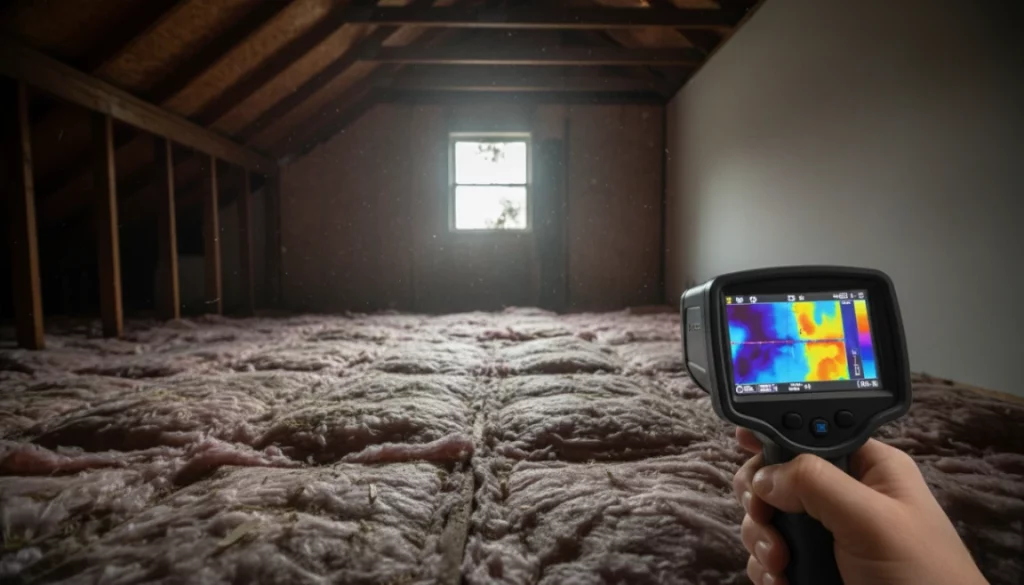
Even temperatures across exterior walls, when checked with an infrared thermometer, show the insulation is properly fitted without gaps or voids.
HVAC systems run shorter cycles to maintain set temperatures, which means the insulation is doing its job of reducing heat loss and gain.
Ready to Get Your Insulation Right
At High Country Solutions, we help builders, contractors, and property owners select and install the right insulation systems for their specific climate and building conditions. Whether you need an assessment of existing insulation performance, help choosing between fiberglass types, or a full insulation installation plan, our team brings the experience and technical knowledge to get it done correctly the first time.
Reach us at (307) 248-9063 or [email protected]. We make sure your insulation works as hard as it should, season after season.
Frequently Asked Questions
Does fiberglass insulation lose R-value over time?
Fiberglass does not degrade or lose R-value from aging alone. However, if it gets compressed, settles, absorbs moisture, or is displaced by air movement, its effective thermal resistance will drop below the rated value.
Can fiberglass insulation handle both hot and cold climates?
Yes, fiberglass works in both heating and cooling scenarios, but its R-value shifts depending on the mean temperature of the insulation layer. In extreme cold or sustained heat, the effective R-value can be noticeably lower than the lab rating.
How does moisture affect fiberglass insulation compared to other types?
Moisture impacts fiberglass more severely than closed-cell foam or mineral wool. Fiberglass absorbs and holds water in its air pockets, replacing the insulating air with conductive water, which can cut thermal performance by over half even at moderate moisture levels.
Is high-density fiberglass worth the extra cost?
For walls with limited cavity depth, such as 2×4 framing, high-density fiberglass delivers measurably better R-value per inch (R-15 vs. R-11), which can justify the cost difference. For attics or open cavities where depth is not constrained, standard density is usually sufficient.
Does fiberglass insulation stop radiant heat transfer?
Fiberglass provides limited resistance to radiant heat transfer. For buildings in hot climates where radiant heat from the sun is a major concern, pairing fiberglass with a dedicated radiant barrier in the attic space will deliver noticeably better cooling performance.
I’m Skeeter Aimone, owner of High Country Solutions in Alpine, Wyoming, leading the company since 2019. I focus on quality installation, building science, and insulation solutions suited to harsh Wyoming and eastern Idaho conditions.