Understanding Fiberglass Insulation: A Comprehensive Guide for Every Property
Skeeter Aimone
February 18th, 2026
You walk into your home on a freezing winter day, and despite the furnace running full blast, you feel drafts near the windows. Or maybe it’s summer, and your air conditioning seems to be working overtime without ever quite cooling your living space. These scenarios point to a common issue many property owners face: inadequate insulation. Among the various options available, fiberglass insulation stands as one of the most widely used and cost-effective solutions for controlling temperature and reducing energy costs. This comprehensive guide will walk you through everything you need to know about fiberglass insulation, from basic principles to advanced installation techniques and long-term maintenance strategies.
This guide covers the fundamental science behind how fiberglass insulation works, the types available for various applications, proper installation methods to maximize effectiveness, common pitfalls to avoid, and how to calculate the return on your insulation investment. This information comes from years of hands-on experience helping property owners make informed decisions about their insulation needs. By the end, you’ll have the knowledge to evaluate whether fiberglass insulation is right for your property and how to ensure it performs optimally for years to come.
What Is Fiberglass Insulation and Why Does It Matter?
Fiberglass insulation consists of extremely fine glass fibers woven together to create a material that traps air in countless tiny pockets. These trapped air pockets are what give fiberglass its insulating properties by slowing down heat transfer. The material was first developed in the 1930s as a commercial product, and since then, it has become one of the most common insulation choices in residential and commercial buildings.
The importance of proper insulation cannot be overstated when it comes to energy efficiency and comfort. According to the U.S. Department of Energy, heating and cooling account for approximately 50-70% of the energy used in the average American home. Proper insulation can reduce heating and cooling needs by 20% or more, leading to significant savings on energy bills while also reducing your carbon footprint.
The Three Types of Heat Transfer
To understand how fiberglass insulation works, you need to know about the three types of heat transfer:
Conduction: Heat moving through solid materials (like through wall studs)
Convection: Heat moving through air currents (like warm air rising)
Radiation: Heat traveling in electromagnetic waves (like sunlight heating a roof)
Fiberglass primarily addresses conduction and convection. The glass fibers conduct heat poorly, while the trapped air spaces prevent convective currents from forming and moving heat around. This dual action makes fiberglass particularly effective at maintaining stable indoor temperatures.
R-Value: The Measure of Insulation Effectiveness
When shopping for insulation, you’ll encounter the term “R-value.” This measurement indicates how resistant a material is to heat flow higher R-values mean better insulating properties. The appropriate R-value for your property depends on several factors including your climate zone, the area of the building being insulated, and local building codes.
The U.S. Department of Energy provides recommended R-values for different regions. For example, homes in colder northern climates might need R-49 to R-60 in attics, while those in warmer southern regions might only need R-30 to R-60. Understanding these requirements helps ensure you select the right product for your specific needs.
The Science Behind How Fiberglass Insulation Works
The effectiveness of fiberglass insulation comes from its unique physical structure. Each glass fiber is incredibly thin, typically between 4 and 9 micrometers in diameter—roughly one-tenth the thickness of a human hair. These fibers are manufactured by melting sand and recycled glass at temperatures around 2,500°F (1,370°C), then forcing the molten material through fine openings to create filaments.
These filaments are coated with a binding agent and collected into a matte or formed into batts. The resulting material contains millions of tiny air pockets between the fibers. Air is actually a poor conductor of heat when it’s trapped in small spaces and unable to circulate freely. This principle is similar to how a down jacket works the trapped air provides thermal insulation.
The fibers themselves also contribute to the insulating effect. Glass is a poor conductor of heat compared to materials like metal or concrete. This means that heat moving through the insulation must navigate a complex maze of glass fibers and dead air spaces, significantly slowing down the transfer process.
Moisture Resistance and Air Barrier Properties
While fiberglass insulation doesn’t typically act as a complete air barrier, it does reduce air movement through wall cavities and attics. This property helps prevent convective heat loss, which occurs when warm air moves to cooler areas. Some fiberglass products come with facings made from materials like Kraft paper or foil that can improve air sealing properties when properly installed.
It’s worth noting that fiberglass insulation can lose some of its insulating properties when wet. The air pockets fill with water instead of air, and water conducts heat more readily than air. That’s why proper moisture control is essential when installing fiberglass insulation. This includes using vapor barriers where appropriate and ensuring any roof leaks or plumbing issues are addressed before installation.
Key Takeaways
Fiberglass insulation works through two main mechanisms: the poor heat conductivity of glass fibers and the thermal resistance of trapped air pockets.
The effectiveness of insulation is measured in R-value, with higher values indicating better insulating properties.
Proper installation and moisture protection are essential to maintain the designed R-value over time.
Different climate zones require different R-values for optimal energy efficiency.
Types of Fiberglass Insulation Products
Fiberglass insulation comes in several forms, each designed for specific applications and installation methods. Understanding these variations helps you choose the right product for your particular project.
Blanket Insulation (Batts and Rolls)
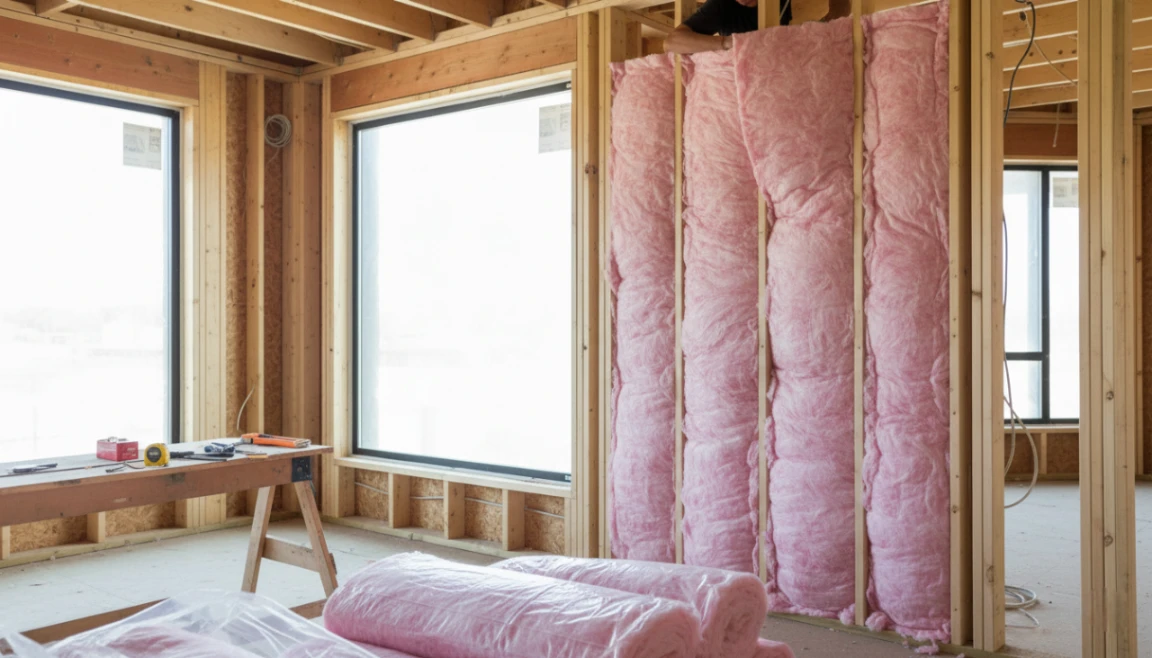
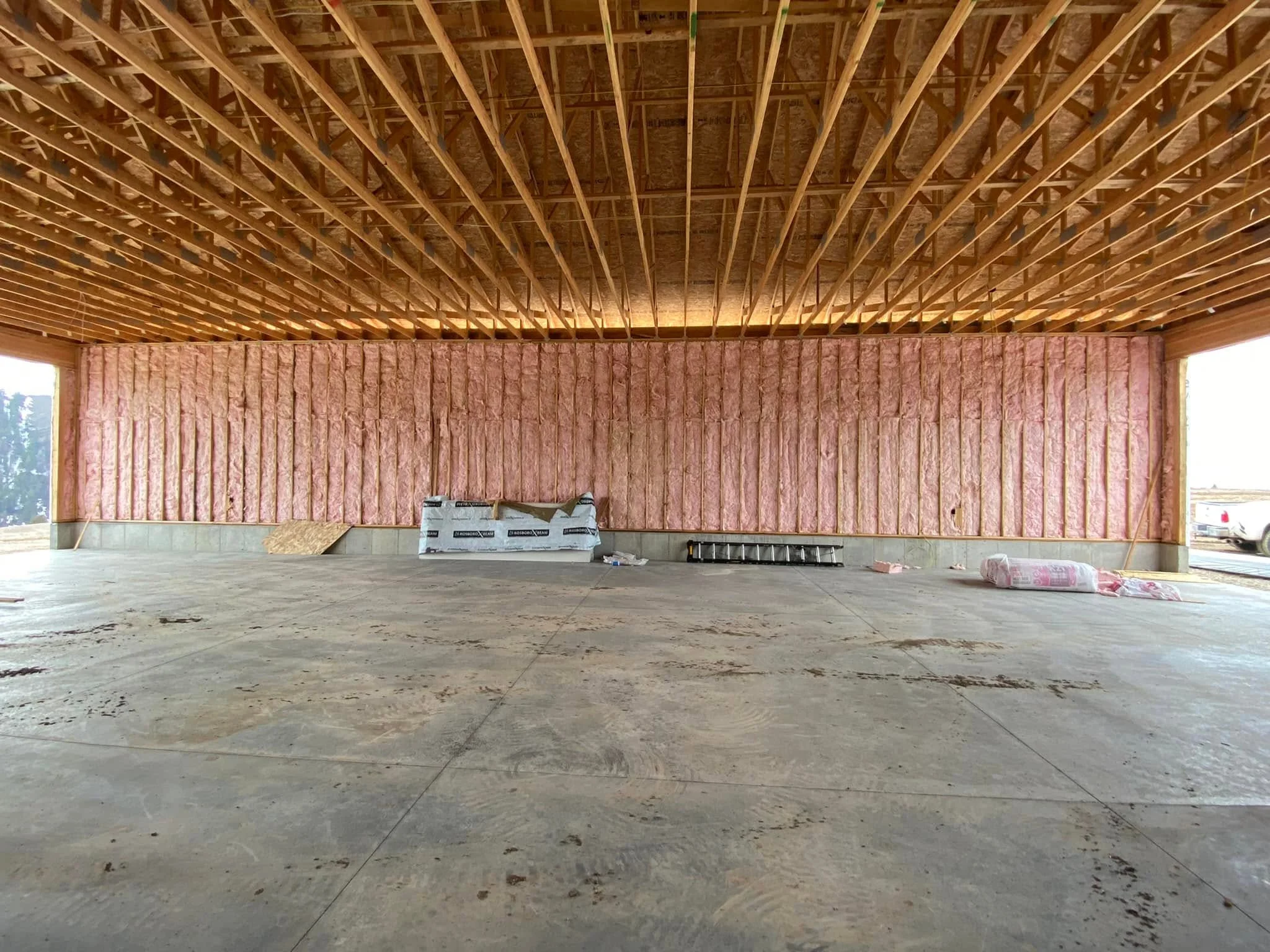
Blanket insulation is the most common form of fiberglass and comes in pre-cut pieces called batts or continuous rolls. These products are sized to fit standard wall stud cavities (usually 16 or 24 inches on center) and attic joist spaces. They’re the most DIY-friendly option because they require minimal special equipment to install.
Blanket insulation comes with or without facing. Unfaced batts are just the raw fiberglass material, while faced batts have a layer of Kraft paper, foil, or plastic on one side. This facing acts as a vapor barrier and helps with installation by providing a stapling surface. Faced insulation should be installed with the facing toward the warm-in-winter side of the building (typically the interior in cold climates).
Loose-Fill Insulation
Loose-fill fiberglass consists of small pieces of insulation blown into place using specialized equipment. This form is ideal for hard-to-reach areas, irregularly shaped spaces, or for adding insulation to existing attics without completely removing the old material.
The installation process requires a blowing machine, which you can often rent from home improvement stores. The machine shreds packaged insulation into smaller pieces and uses air pressure to distribute it evenly. Professional installers typically achieve more consistent coverage because they have experience with the proper thickness and density required for different R-values.
Rigid Fiberglass Boards
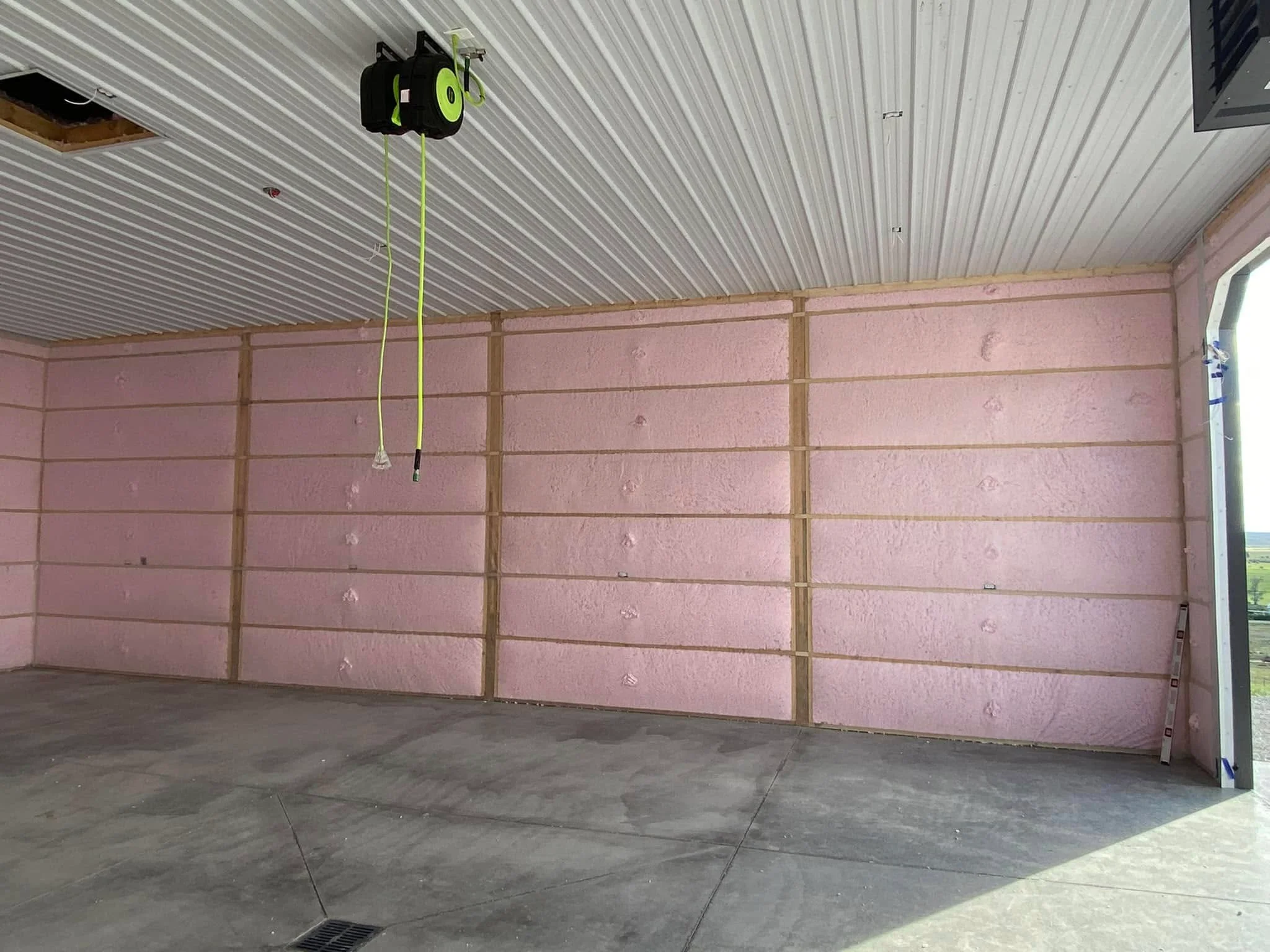
Rigid fiberglass insulation comes in board form and is primarily used for commercial applications or specialized residential situations. These boards offer higher R-values per inch than blanket insulation and provide better sound dampening properties. They’re commonly used in:
Metal building insulation
Ductwork insulation
Roof deck insulation
Soundproofing applications between units
High-Density Fiberglass Products
For space-constrained areas or when higher R-values are needed, manufacturers produce high-density fiberglass insulation. These products offer improved thermal performance per inch compared to standard-density options. For example, standard fiberglass might provide R-3.2 per inch, while high-density versions can achieve R-4.0 or more.
These products are particularly useful in cathedral ceilings, retrofit projects where cavity depth is limited, or in exterior wall assemblies when space is at a premium but energy efficiency is a priority.
Choosing the Right Type for Your Project
The table below compares the main types of fiberglass insulation to help you decide which is best for your specific needs:
Insulation Type
Best For
DIY Friendly
Typical R-Value per inch
Blanket Batts/Rolls
Standard walls, attics, crawl spaces
High
2.9 – 3.8
Loose-Fill
Attics, irregular spaces, retrofits
Low (requires equipment)
2.2 – 3.8
Rigid Boards
Commercial, metal buildings, ductwork
Medium
4.0 – 4.5
High-Density
Space-constrained areas, high-performance needs
Medium-High
3.7 – 4.3
Market data point: According to the North American Insulation Manufacturers Association, fiberglass insulation accounts for approximately 70% of the U.S. insulation market, making it the dominant choice for residential and commercial construction.
Installing Fiberglass Insulation: Step-by-Step
Proper installation is just as important as choosing the right product. Even the best insulation won’t perform well if installed incorrectly. Here’s how to properly install different types of fiberglass insulation in various applications.
Preparing for Installation
Before beginning any insulation project, take these preparation steps:
Seal air leaks first: Insulation slows heat transfer but doesn’t stop air movement. Seal gaps around windows, doors, and penetrations with caulk or spray foam before adding insulation.
Check for moisture problems: Address any leaks, condensation issues, or water damage before installing insulation. Wet insulation is ineffective and can lead to mold growth.
Wear proper protective gear: Fiberglass particles can irritate skin, eyes, and lungs. Wear:
Long sleeves and pants
Gloves
Safety goggles
NIOSH-approved respirator mask
Hat or head covering
Measure carefully: Calculate the square footage of the area to be insulated and buy slightly extra to account for waste and mistakes.
Installing Blanket Insulation in Walls
When insulating wall cavities with fiberglass batts:
Cut batts to length: Use a utility knife and a straightedge to cut batts slightly longer than the cavity height to ensure a snug fit without compression.
Friction-fit unfaced batts: For unfaced insulation, gently press the batt into the cavity so it stays in place without sagging or gaps.
Staple faced batts: For faced insulation, staple the flanges to the face of the studs, not the inside edge. Use staples about every 8-12 inches.
Avoid compressing the insulation: Compressed fiberglass loses R-value because it reduces the number of air pockets. Never stuff insulation behind wiring or plumbing—split the batt around these obstacles instead.
Don’t leave gaps: Fill the entire cavity from end to end and top to bottom. Cut small pieces to fill around electrical boxes and other penetrations.
Expert Tip: When insulating around electrical outlets and light switches, use foam gaskets behind the plates and caulk around the box edges to reduce air leakage that batts alone can’t stop.
Installing Blanket Insulation in Attics
Attic insulation requires some special considerations:
Ventilation first: Ensure your attic has proper ventilation before adding insulation. Most attics need intake vents at the eaves and exhaust vents at the roof peak or gable ends.
Protect recessed lights: Keep insulation at least 3 inches away from non-IC rated recessed lights unless you use insulation dams. IC (insulation contact) rated lights can be covered.
Install baffles: Place cardboard or plastic baffles at the eaves to maintain air flow from the soffit vents above the insulation level.
Layer perpendicular to joists: When adding a second layer of insulation, run it perpendicular to the first layer to cover the joists and reduce thermal bridging.
Don’t block ventilation: Keep insulation away from soffit vents, ridge vents, and gable vents to maintain proper air circulation.
Installing Loose-Fill Insulation
For loose-fill installation in attics:
Set depth markers: Before beginning, place depth markers throughout the attic space to ensure even coverage at the target depth for your desired R-value.
Blow in even layers: Start at the farthest point from the machine and work your way back, blowing insulation in even layers rather than deep piles.
Watch density: Proper density is crucial too little and you won’t reach the desired R-value, too much and you may cause structural issues over time.
Protect yourself: The blowing process creates a lot of airborne particles, so a good respirator is essential.
Common Installation Mistakes to Avoid
Even experienced installers can make these common mistakes:
Leaving gaps: Any uninsulated spot creates a thermal bridge for heat to escape. Pay special attention to around windows, doors, and electrical boxes.
Vapor barrier placement: In most cold climates, the vapor barrier (facing) should face the interior heated space. Placing it backward can trap moisture in the wall cavity.
Compressing insulation: Never step on or compress insulation in attics once installed. Use temporary walkways made of plywood if you need to move through the space.
Blocking air flow: Don’t cover soffit vents with insulation, and avoid blocking roof vents with insulation materials.
Preparation work including air sealing and moisture control must happen before insulation installation.
Protective gear is essential when working with fiberglass to prevent irritation.
Different installation methods are required for walls versus attics, with ventilation being particularly important in attic applications.
Common mistakes like compressing insulation or blocking vents can significantly reduce effectiveness.
Professional installation may be worth the cost for loose-fill applications or complex projects.
Common Problems and How to Fix Them
Even properly installed fiberglass insulation can develop issues over time. Understanding these problems and their solutions helps maintain your insulation’s effectiveness throughout its lifespan.
Moisture Issues
Moisture is perhaps the biggest enemy of fiberglass insulation. Wet fiberglass loses R-value and can support mold growth.
Causes of moisture problems include:
Roof leaks allowing water to enter attics
Condensation from air leakage
Improperly installed vapor barriers
Plumbing leaks within wall cavities
Ground moisture wicking up from crawl spaces
Solutions:
Identify and fix the source: Before addressing the insulation itself, repair any leaks or moisture sources.
Replace severely affected insulation: If insulation has been wet for an extended time or shows signs of mold, it’s best to replace it entirely.
Improve ventilation: In attics, ensure proper ventilation to remove moisture-laden air.
Install vapor barriers correctly: In most climates, vapor barriers should be installed on the warm-in-winter side of the assembly.
Expert Tip: If you’re adding insulation to an existing attic with moisture problems, consider spray foam insulation on the roof deck instead. It acts as both insulation and air/vapor barrier, solving multiple issues at once.
Compression and Settling
Over time, fiberglass insulation can compress or settle, reducing its effective R-value.
Causes:
Walking on attic insulation
Heavy objects placed on insulation
Natural settling of loose-fill insulation
Improper installation techniques
Solutions:
Add additional insulation: If insulation has settled below recommended levels, add more to reach the target depth.
Use walkways: Install temporary plywood paths when accessing areas with insulation to prevent compression.
Fluff compressed areas: For lightly compressed areas, gently fluff the insulation with your hands or a soft brush.
Choose high-density products: In areas prone to compression, consider high-density insulation products that resist settling.
Pest Infestations
Fiberglass insulation can provide a tempting nesting material for rodents and other pests.
Prevention:
Seal entry points: Prevent pest problems by sealing all potential entry points in your building’s exterior.
Use pest-resistant products: Some insulation products incorporate pest deterrents like boric acid or have dense structures that discourage nesting.
Regular inspections: Check attic and crawlspace areas regularly for signs of pest activity.
If you already have pest problems:
Remove affected insulation: Heavily soiled or contaminated insulation should be removed and replaced.
Clean the area: Thoroughly clean the space before installing new insulation.
Address the pest problem: Work with pest control professionals to eliminate the underlying problem before reinsulating.
Air Leakage Around Insulation
While insulation reduces heat transfer, it doesn’t stop air movement. Gaps around insulation can create significant thermal bypasses.
Common air leakage points:
Around electrical outlets and switches
At the junction between floors and walls
Around window and door frames
Where pipes and wires penetrate walls
At attic hatches and knee walls
Solutions:
Caulk and foam: Seal small gaps with appropriate caulk or expanding foam.
Use air sealing products: Install weatherstripping around doors and windows, and foam gaskets behind outlet covers.
Install housewrap: For new construction, properly installed housewrap provides an effective air barrier.
Consider dense-pack insulation: For retrofit situations, dense-pack cellulose or foam insulation can provide both thermal insulation and air sealing.
Market data point: Research from the Building Science Corporation shows that up to 40% of a home’s energy loss can come from air leakage, making air sealing just as important as insulation installation.
Energy Savings and ROI Calculations
Understanding the financial benefits of fiberglass insulation helps justify the investment and select the most cost-effective approach for your specific situation.
Calculating Energy Savings
The energy savings from insulation depend on several factors:
Your local climate
Current insulation levels
Heating and cooling systems efficiency
Local utility rates
Building size and construction
Basic savings calculation: A simplified approach estimates savings as a percentage of heating and cooling costs. The Department of Energy suggests that homeowners can save 10-20% on heating and cooling costs by adding insulation and sealing air leaks.
Potential annual savings: [Significant portion of utility bill]
Professional energy audit: For more accurate projections, consider a professional energy audit. These audits use tools like blower doors and infrared cameras to identify specific areas of heat loss and calculate precise savings potential for various improvements.
Return on Investment (ROI)
To calculate ROI for insulation projects:
Determine total cost: Include materials, labor (if hiring professionals), and any necessary preparatory work like air sealing.
Calculate annual savings: Based on current energy costs and projected reduction.
Payback period: Total investment divided by annual savings = years to recover investment.
Lifetime savings: Multiply annual savings by the expected lifespan of insulation (typically 20-30 years for fiberglass).
Example ROI calculation:
Total insulation project cost: [Investment Amount]
Annual energy savings: [Yearly Savings Amount]
Payback period: [Investment] ÷ [Savings] = 5 years
20-year savings: [Savings] × 20 = [Substantial Total Savings] (minus any maintenance costs)
Cost-Effectiveness by Application
Different insulation projects offer different returns on investment. The table below ranks common insulation upgrades by typical cost-effectiveness:
Project
Typical Cost Range
Average Payback Period
Difficulty
Attic insulation (adding to existing)
Budget-friendly to Moderate
3-5 years
Easy to Moderate
Crawl space insulation
Moderate Investment
5-8 years
Moderate
Wall insulation (retrofit)
Significant Investment
7-12 years
Difficult
Basement wall insulation
Moderate to High Investment
4-7 years
Moderate
Duct insulation
Low Investment
2-4 years
Easy
Incentives and Rebates
Various incentives can improve the financial return on insulation projects:
Federal incentives: The Inflation Reduction Act of 2022 includes tax credits for home energy improvements, including insulation. Homeowners can claim 30% of project costs up to a capped annual amount for insulation materials and installation.
State and local programs:
Many utilities offer rebates for insulation projects. Check with your local energy provider for specific programs.
Some state energy offices offer additional incentives for energy efficiency improvements.
How to find incentives:
Database of State Incentives for Renewables & Efficiency (DSIRE): Comprehensive database of federal, state, and local incentives.
ENERGY STAR rebate finder: Tool to locate rebates in your area.
Utility company websites: Most major utilities list available programs on their websites.
Long-Term Benefits Beyond Energy Savings
While energy savings are often the primary motivation for insulation upgrades, other benefits add to the overall value:
Increased comfort:
More consistent temperatures throughout your home
Reduced drafts and cold spots
Better humidity control
Environmental impact:
Reduced energy consumption means lower carbon emissions
Decreased strain on the electrical grid during peak demand periods
Conservation of natural resources
Home value:
Energy efficiency features increasingly important to home buyers
Some appraisers begin accounting for energy efficiency in valuations
Potential for “green home” certifications that increase marketability
Market data point: According to a study published in the Appraisal Journal, every unit of currency decrease in annual energy bills increases home value by approximately twenty times that amount. This means an insulation project saving a moderate amount per year could potentially add significantly to your home’s market value.
Safety Considerations and Best Practices
Working with fiberglass insulation requires attention to safety protocols and best practices to protect both installers and building occupants.
Personal Protective Equipment (PPE)
Fiberglass insulation consists of tiny glass fibers that can irritate skin, eyes, and respiratory systems if proper precautions aren’t taken.
Essential PPE includes:
Respiratory protection: A NIOSH-approved N95 mask or better is required to prevent inhaling fibers
Eye protection: Safety goggles or glasses prevent fibers from reaching the eyes
Skin protection: Long-sleeved shirts, long pants, and gloves keep fibers off the skin
Head covering: A hat or disposable hood prevents fibers from accumulating in hair
Expert Tip: Keep a change of clothes available when working with fiberglass. Remove work clothes before entering living areas to avoid tracking fibers throughout your home.
Handling and Installation Safety
Beyond personal protection, several safety considerations apply to the installation process:
Workspace preparation:
Clear the area: Remove obstacles and tripping hazards before starting
Ensure proper lighting: Good visibility helps prevent accidents and ensures thorough installation
Maintain ventilation: Open windows and use fans to circulate air during installation
Cover HVAC registers: Prevent fibers from circulating through your ductwork
Installation techniques:
Use caution around electrical: Turn off power when working near electrical boxes or fixtures
Watch your step: Attic spaces may have limited walking space and hidden hazards
Don’t overreach: Use proper ladders and platforms rather than stretching to reach difficult areas
Work with a partner: For attic installations, having someone else nearby provides both safety and efficiency
Fire Safety Considerations
While fiberglass itself is non-combustible, some insulation products and installation practices create fire hazards:
Facings and coverings:
Kraft paper facings are combustible and must be covered with drywall or other approved materials
Foil-faced insulation should not be in direct contact with heat-producing fixtures
Vapor barriers should never be left exposed in living areas
Proximity to heat sources:
Maintain clearance between insulation and recessed lighting fixtures unless they’re rated for direct insulation contact
Keep insulation away from chimneys, flues, and other heat-producing elements
Use appropriate firestopping materials around penetrations in fire-rated assemblies
Post-Installation Safety
The job isn’t finished just because the insulation is installed:
Cleanup procedures:
Proper disposal: Place scrap insulation in sealed bags for disposal according to local regulations
Thorough cleaning: Use a HEPA vacuum for fine particles—regular vacuums may just recirculate fibers
Showering: Shower and change clothes after completing insulation work to remove any lingering fibers
Occupant protection:
Air circulation: Run ventilation fans for 24-48 hours after installation
Dusting: Carefully dust surfaces to remove any settled fibers
HVAC filter change: Replace filters after insulation projects to catch any fibers that entered the system
When to Call Professionals
While many insulation projects can be DIY-friendly, some situations require professional expertise:
Consider professional installation for:
Large-scale projects requiring significant material quantities
Complex installations in finished walls or hard-to-reach areas
Situations involving hazardous materials like asbestos removal
Projects requiring specialized equipment like blowing machines
Situations where you’re uncertain about proper techniques or safety protocols
What to look for in a professional installer:
Proper licensing and insurance: Verify credentials before hiring
Experience with similar projects: Ask about relevant past work
Understanding of building science: Good installers understand air sealing, moisture control, and ventilation
Warranty offerings: Reputable installers typically stand behind their work
Detailed estimates: Professionals should provide written quotes outlining scope and materials
Comparing Fiberglass to Other Insulation Types
While fiberglass is popular, understanding how it compares to other insulation options helps you make the best choice for your specific needs.
Fiberglass vs. Cellulose
Cellulose insulation is made from recycled paper products, primarily newsprint, treated with fire retardants.
Advantages of cellulose:
Higher density provides better air sealing properties
Higher R-value per inch (approximately 3.2-3.8 compared to fiberglass at 2.9-3.8)
Made from recycled materials (typically 75-85% post-consumer content)
Better resistance to air movement
Advantages of fiberglass:
Generally lower cost
Less irritating during installation (when properly protected)
Doesn’t settle as much over time
Better moisture resistance when installed correctly
Wider availability of products and experienced installers
Best applications:
Choose cellulose for dense packing in walls or for superior air sealing in attics
Choose fiberglass for cost-sensitive projects or where moisture resistance is a priority
Fiberglass vs. Spray Foam
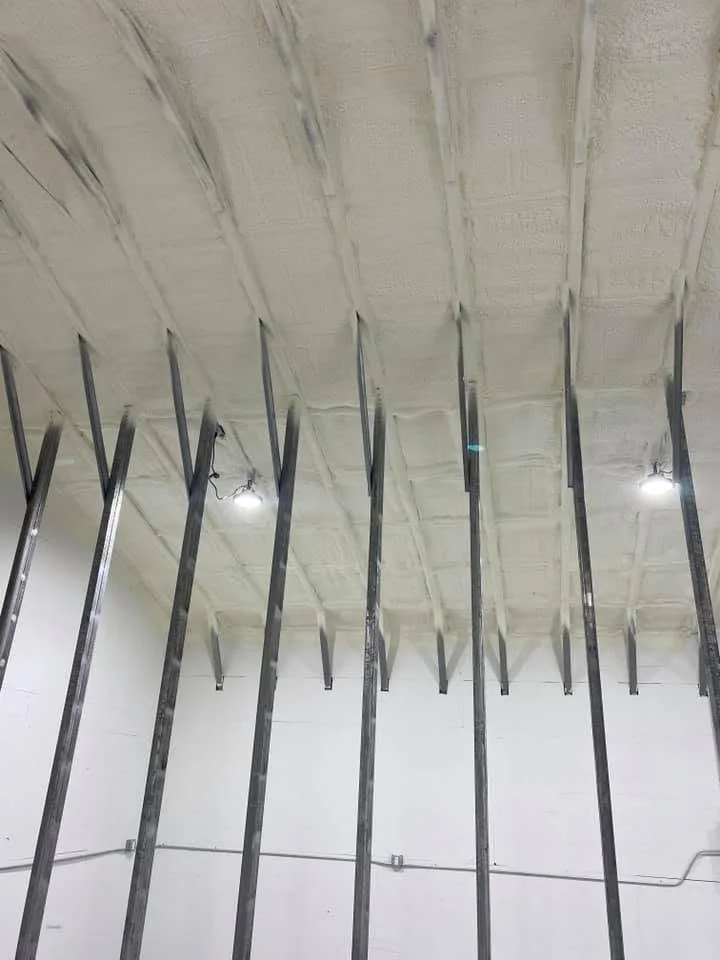
Spray foam insulation comes in two types: open-cell and closed-cell, both applied as liquids that expand and harden in place.
Advantages of spray foam:
Highest R-value per inch (open-cell: 3.5-3.6, closed-cell: 6.0-6.5)
Excellent air sealing properties
Can fill irregular shapes and gaps completely
Moisture barrier (closed-cell)
Structural reinforcement (closed-cell)
Advantages of fiberglass:
Significantly lower cost (spray foam can be significantly higher investment)
DIY-friendly for many applications
Doesn’t require special equipment for installation
Can be removed or adjusted more easily
No off-gassing concerns after installation
Best applications:
Choose spray foam for maximum performance in tight spaces, for air sealing, or where moisture control is critical
Choose fiberglass for budget-conscious projects or where performance needs don’t justify foam’s premium cost
Fiberglass vs. Mineral Wool
Mineral wool (rock wool or slag wool) insulation is made from molten rock or industrial slag spun into fibers.
Advantages of mineral wool:
Superior fire resistance (non-combustible and can withstand temperatures over 1,800°F)
Better sound-dampening properties
Higher R-value per inch (approximately 3.1-3.4)
Naturally water-repellent
Better resistance to mold
Advantages of fiberglass:
Lower cost
Lighter weight, easier to handle
Wider availability and more product options
More installers with experience
Less dust during installation
Best applications:
Choose mineral wool for fire-rated assemblies, soundproofing, or moisture-prone areas
Choose fiberglass for standard residential applications where cost is a primary concern
Fiberglass vs. Rigid Foam Boards
Rigid foam boards include expanded polystyrene (EPS), extruded polystyrene (XPS), and polyisocyanurate (polyiso).
Advantages of rigid foam:
Highest R-value per inch among board insulations (3.6-6.5 depending on type)
Excellent moisture barrier properties
Can serve as both insulation and air/weather barrier
Adds structural strength to assemblies
Consistent R-value over time
Advantages of fiberglass:
Lower material cost
Can fill irregular cavities better than boards
Easier to install around obstacles
Better for retrofitting existing cavities
Less environmental impact during manufacturing
Best applications:
Choose rigid foam for continuous insulation on exterior walls, foundations, or under slabs
Choose fiberglass for filling wall cavities, attics, or other interior applications
Making the Right Choice
The best insulation choice depends on multiple factors specific to your project:
Key decision factors:
Budget constraints: Fiberglass often wins on pure material cost
Performance needs: Spray foam or rigid foam provide higher R-values per inch
Installation considerations: DIY capability vs. professional requirements
Specific application needs: Fire resistance, moisture control, or soundproofing
Environmental concerns: Recycled content, embodied energy, and sustainability
Local availability: Some regions have better access to certain materials and installers
Hybrid approaches: Many projects benefit from combining insulation types to maximize performance while managing costs:
Use fiberglass for general insulation with spray foam for air sealing critical areas
Apply rigid foam as continuous exterior insulation with fiberglass in wall cavities
Use mineral wool in fire-rated assemblies with fiberglass elsewhere
Expert Tip: When comparing insulation types, calculate “cost per R-value” rather than just looking at material cost. A slightly more expensive product might provide better value if it delivers higher performance per inch, especially in space-constrained applications.
Future Trends in Fiberglass Insulation
The insulation industry continues evolving, with new technologies and approaches emerging to improve performance, sustainability, and installation methods.
High-Performance Fiberglass Products
Manufacturers are developing advanced fiberglass products that address traditional limitations:
Higher R-value products:
New manufacturing techniques create denser products with improved thermal performance
Some products now achieve R-4.0+ per inch, closing the gap with mineral wool and foam
These products are particularly useful in retrofit applications where cavity depth is limited
Improved moisture management:
New facings and coatings better manage moisture while maintaining breathability
Some products incorporate phase-change materials that help regulate humidity
Enhanced vapor retarders that adapt to changing humidity conditions
Better air sealing properties:
Products designed with improved compression recovery to fill gaps more completely
Integrated air barrier systems that combine insulation with sealing functions
Self-sealing edge treatments that reduce thermal bypasses
Sustainable Manufacturing Practices
The fiberglass industry is addressing environmental concerns through various innovations:
Recycled content:
Leading manufacturers now use 50-70% recycled glass in their products
Development of processes to use post-consumer glass more effectively
Closed-loop manufacturing systems that waste less raw material
Energy-efficient production:
Modern furnaces use significantly less energy than older systems
Waste heat recovery systems improve overall plant efficiency
Some facilities are powered partially by renewable energy sources
Reduced emissions:
New binder technologies reduce or eliminate formaldehyde-based resins
Improved dust control systems reduce airborne particles during manufacturing
Water recycling and conservation measures in production facilities
Market data point: According to the North American Insulation Manufacturers Association, the fiberglass insulation industry recycles over 1.5 billion pounds of glass annually, preventing it from ending up in landfills.
Smart Insulation Technologies
Emerging technologies are adding intelligence to insulation systems:
Integrated sensors:
Moisture sensors that detect water infiltration and alert homeowners
Temperature sensors that identify thermal performance issues
Integrated pest detection systems that identify rodent activity
Responsive insulation:
Products that change properties based on temperature or humidity
Dynamic insulation systems that adjust R-value based on conditions
Phase-change materials that store and release heat as needed
IoT connectivity:
Insulation systems connected to smart home automation
Performance monitoring that identifies degradation or problems
Automated maintenance alerts based on sensor data
Installation Innovations
New approaches are making insulation installation faster, more accurate, and safer:
Improved application methods:
Better blowing machines with more consistent output
Robotic installation systems for large commercial projects
Prefabricated insulation panels that reduce installation time
Enhanced safety features:
Low-itch products that reduce skin irritation during installation
Dust-suppression technologies that improve air quality during installation
Integrated respiratory protection systems for installers
Training and certification:
Improved installer training programs focusing on building science principles
Certification programs that ensure proper installation techniques
Virtual reality training systems that simulate installation scenarios
Changing Building Codes and Standards
Evolving energy codes are driving insulation innovation:
Increased requirements:
Many jurisdictions are requiring higher R-values in new construction
Air sealing requirements are becoming more stringent
Continuous insulation requirements are becoming more common
Performance-based codes:
Some codes now focus on overall building performance rather than prescriptive requirements
Energy modeling is becoming standard for demonstrating compliance
Commissioning requirements ensure systems perform as designed
Net-zero initiatives:
Growing movement toward net-zero energy buildings
Insulation plays critical role in reducing heating and cooling loads
Integrated approach combining insulation, air sealing, and high-performance windows
These trends suggest that fiberglass insulation will continue evolving to meet higher performance standards while addressing environmental concerns. For property owners, this means more effective options for improving energy efficiency and comfort in the coming years.
Putting Your Fiberglass Insulation Strategy into Action
Effective fiberglass insulation implementation requires a systematic approach that balances performance, cost, and practical considerations. Start by assessing your current insulation situation through a professional energy audit or at least a thorough inspection of accessible areas. Identify priority areas where insulation improvements will deliver the greatest impact typically attics first, followed by walls and then crawl spaces or basements.
Once you’ve identified your target areas, calculate the required R-values based on your climate zone and local building codes. Budget for both materials and any necessary equipment rental or professional installation costs. Remember to factor in air sealing work that should happen before or alongside insulation installation for maximum effectiveness.
Consider your timeline and capabilities honestly. While DIY installation can save money, professional installers often achieve better results in less time, particularly for complex projects or loose-fill applications. Get multiple quotes if hiring professionals, and verify their experience and licensing before making a decision.
Plan for contingencies by including an extra buffer in your budget for unexpected issues like discovered moisture problems or the need for additional air sealing. Finally, document your insulation project with before and after measurements and photos—this information is valuable for verifying installation quality and tracking energy savings over time.
Remember that insulation improvements are just one part of a comprehensive energy efficiency strategy. The best results come from combining proper insulation with air sealing, high-performance windows, efficient HVAC equipment, and smart thermostat controls. Use this guide as a reference throughout your insulation project, and don’t hesitate to consult professionals when dealing with complex situations or specialized applications.
Need Expert Guidance?
High Country Solutions brings years of insulation expertise to help property owners make informed decisions about their energy efficiency needs. Whether you’re considering a DIY project or looking for professional installation services, our team can provide the guidance you need to ensure optimal results. For personalized assistance with your insulation project or to schedule a consultation, reach out to High Country Solutions at [email protected] or call (307) 248-9063. Our experienced professionals can help evaluate your specific situation and recommend the most effective insulation solutions for your property.
Frequently Asked Questions About Fiberglass Insulation
How long does fiberglass insulation last?
Fiberglass insulation typically lasts 20-30 years or more if kept dry, though regular inspections are recommended to monitor for settling or moisture damage.
Can I install fiberglass insulation myself?
Yes, blanket insulation is DIY-friendly with proper safety gear, while loose-fill applications or complex retrofits often require professional equipment.
Does fiberglass insulation cause cancer?
No, it was removed from the list of carcinogens in 2001, though proper protective gear is still required to prevent temporary irritation during installation.
Can you put new fiberglass insulation over old insulation?
Yes, you can layer new unfaced insulation perpendicular to dry existing material, but ensure you do not trap moisture by adding a second vapor barrier.
How much does it cost to insulate a house with fiberglass?
Costs vary by size and method; DIY is generally the most budget-friendly option, while professional installation requires a larger investment for labor and expertise.
What R-value do I need for my area?
Requirements vary by climate zone (typically R-30 to R-60 for attics); consult the U.S. Department of Energy or local codes for your specific targets.
I’m Skeeter Aimone, owner of High Country Solutions in Alpine, Wyoming, leading the company since 2019. I focus on quality installation, building science, and insulation solutions suited to harsh Wyoming and eastern Idaho conditions.