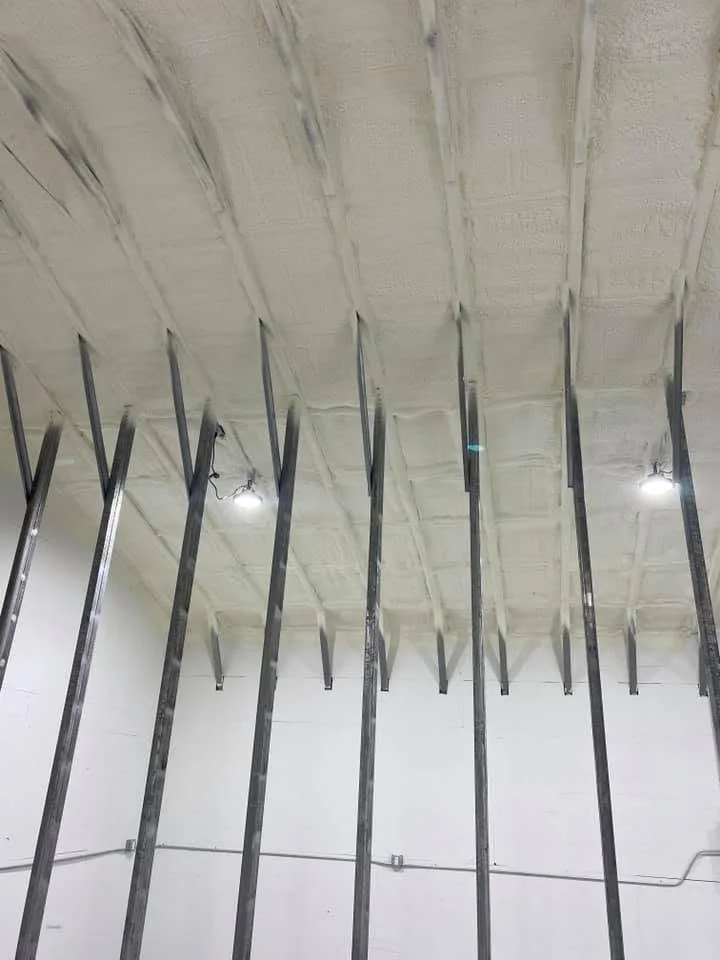
Commercial Spray Foam Insulation vs Fiberglass: Which Is Better for Businesses?
Skeeter Aimone
August 15th, 2026
Spray foam insulation delivers superior long-term energy performance for commercial buildings by combining high R-value per inch with an airtight seal that fiberglass simply cannot match. Fiberglass remains a viable option for businesses with tight upfront budgets, standard steel stud walls, or properties where the insulation cavities are already enclosed and accessible. Choosing commercial spray foam solutions depends on your building type, climate zone, moisture exposure, and whether you prioritize lower initial costs or long-term operational savings. Spray foam wins on thermal performance, moisture resistance, and structural integrity, while fiberglass wins on affordability and ease of installation in straightforward wall cavities.
TL;DR
Spray foam insulation provides significantly higher R-value per inch (closed-cell delivers roughly R-6 to R-7.5 per inch versus fiberglass at roughly R-2.9 to R-3.8 per inch), allowing better thermal performance in thinner wall cavities
Spray foam acts as both insulation and an air barrier in a single application, eliminating the drafts, air leaks, and thermal bridging that reduce fiberglass effectiveness in real-world conditions
Fiberglass batt insulation is widely used in commercial construction because it is easier to install in standard stud cavities and comes in pre-cut widths that match common framing dimensions
Spray foam requires professional installation with specialized equipment, and the EPA notes that re-occupancy after application typically requires a minimum of 24 hours for proper curing and ventilation
NIST research confirmed that emissions from spray foam can persist in buildings, particularly from flame retardant chemicals, underscoring the importance of proper installation by experienced professionals.
Fiberglass poses mainly physical irritation risks during installation (skin, eye, and respiratory irritation from airborne fibers), with no recognized carcinogenic classification according to major health reviews
The ASHRAE 90.1 commercial energy standard sets minimum prescriptive R-value requirements that vary by climate zone, from R-13 in warmer zones to R-13 plus additional continuous insulation in colder zones
For moisture-heavy commercial environments (cold storage, food processing, metal buildings), spray foam’s water resistance and vapor barrier properties make it the clear choice
R-Value and Thermal Performance
When comparing insulation for commercial buildings, R-value is the starting point but not the whole story. Spray foam insulation comes in two primary types: open-cell and closed-cell. Closed-cell spray foam delivers an R-value of approximately R-6.0 to R-7.5 per inch, while open-cell spray foam lands around R-3.5 to R-3.8 per inch. Commercial spray foam insulation considerations also include how the insulation performs within the building assembly, while fiberglass batt insulation typically provides R-2.9 to R-3.8 per inch depending on density and formulation.
In a commercial steel stud wall cavity that might be only 6 inches deep, the higher R-value per inch of closed-cell spray foam means you can achieve a higher total R-value within the same framing footprint. This matters in commercial construction where wall thickness directly affects usable floor space.
Performance Factor
Closed-Cell Spray Foam
Open-Cell Spray Foam
Fiberglass Batt
R-Value per Inch
R-6.0 to R-7.5
R-3.5 to R-3.8
R-2.9 to R-3.8
Air Sealing
Acts as air barrier
Acts as air barrier
No air sealing capability
Moisture Resistance
High (vapor barrier at 2+ inches)
Low (absorbs water)
Low (absorbs water, loses R-value)
Structural Reinforcement
Yes, adds rigidity
No
No
Sound Dampening
Moderate
Good
Moderate
The ASHRAE 90.1 standard, which governs commercial building energy requirements across the United States, sets minimum prescriptive R-values for walls based on climate zone. In colder zones (6 through 8), commercial wood-framed walls may require R-13 plus additional continuous insulation, making spray foam’s higher per-inch performance particularly advantageous when cavity depth is limited.
Air Sealing and Building Envelope Integrity
The most significant performance gap between spray foam and fiberglass goes beyond R-value. Spray foam expands on application to fill gaps, cracks, voids, and penetrations in the building envelope. This creates a continuous air seal that prevents the convective heat loss responsible for up to 40% of a building’s total energy consumption, according to building science research.
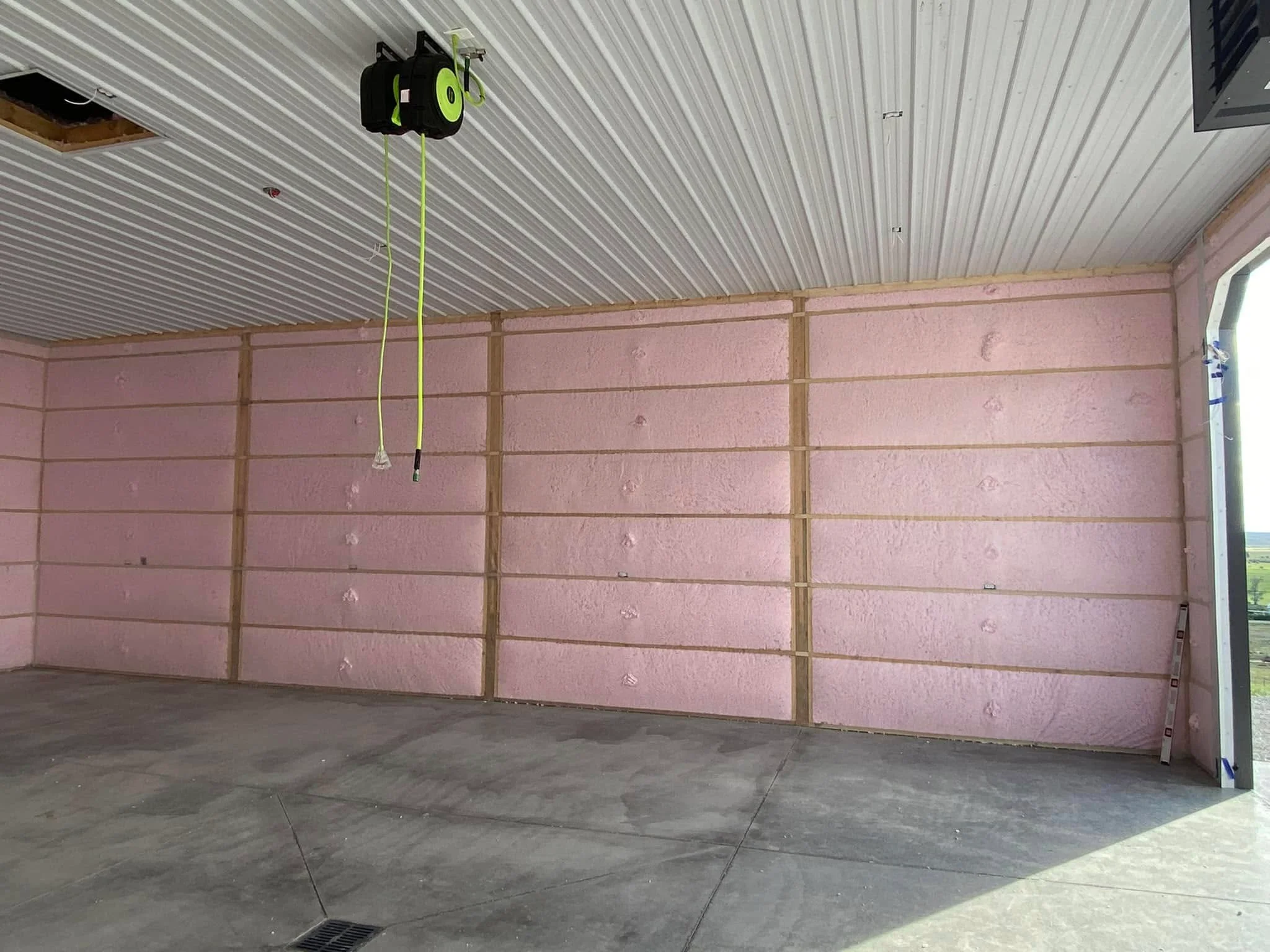
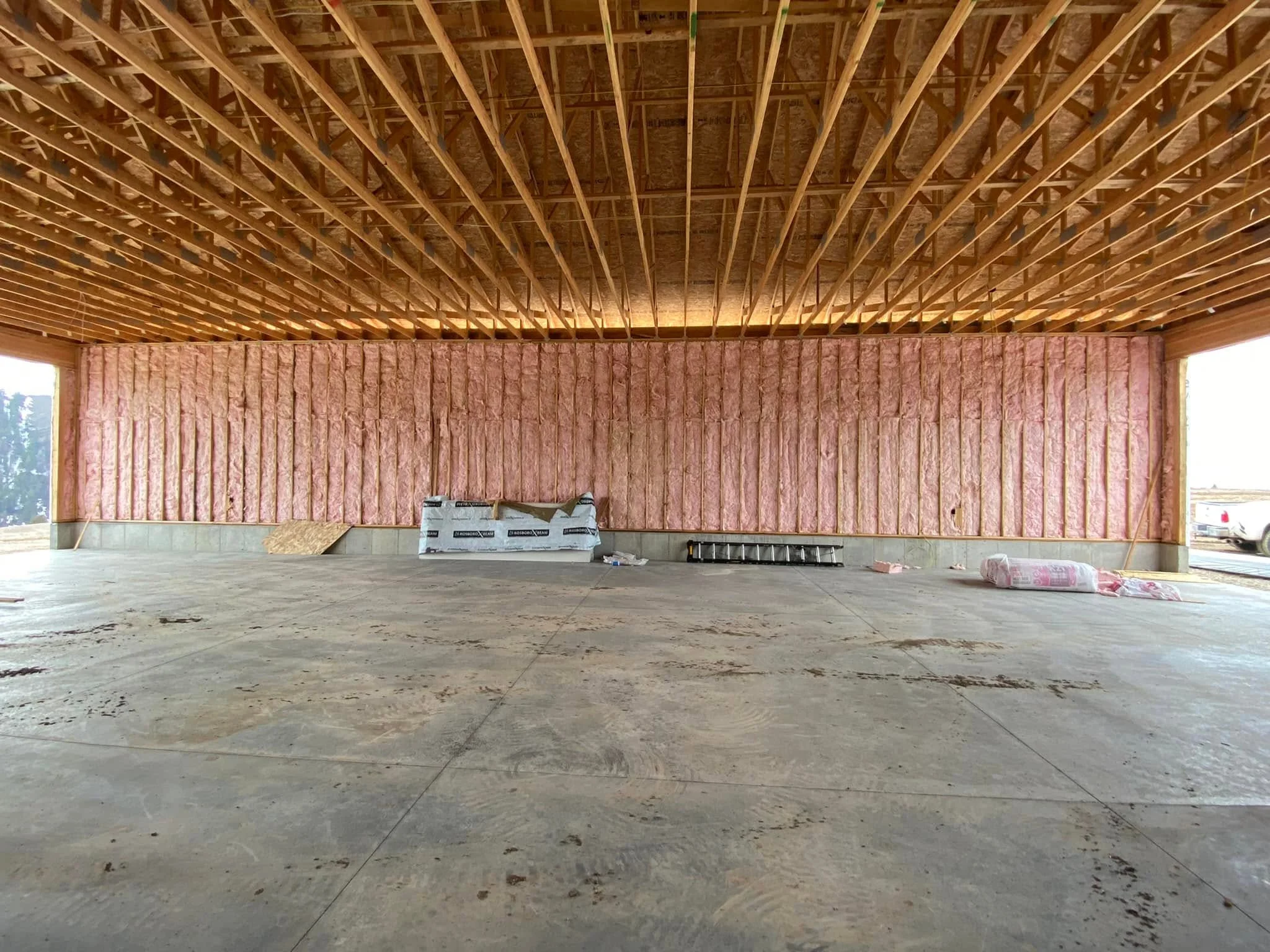
Fiberglass batts, by contrast, are friction-fit between studs and framing members. Even when installed correctly, gaps around edges, compression from wiring and plumbing, and settling over time create air pathways that reduce effective thermal performance. In commercial buildings with extensive HVAC systems, plumbing runs, and electrical conduits, these gaps compound quickly.
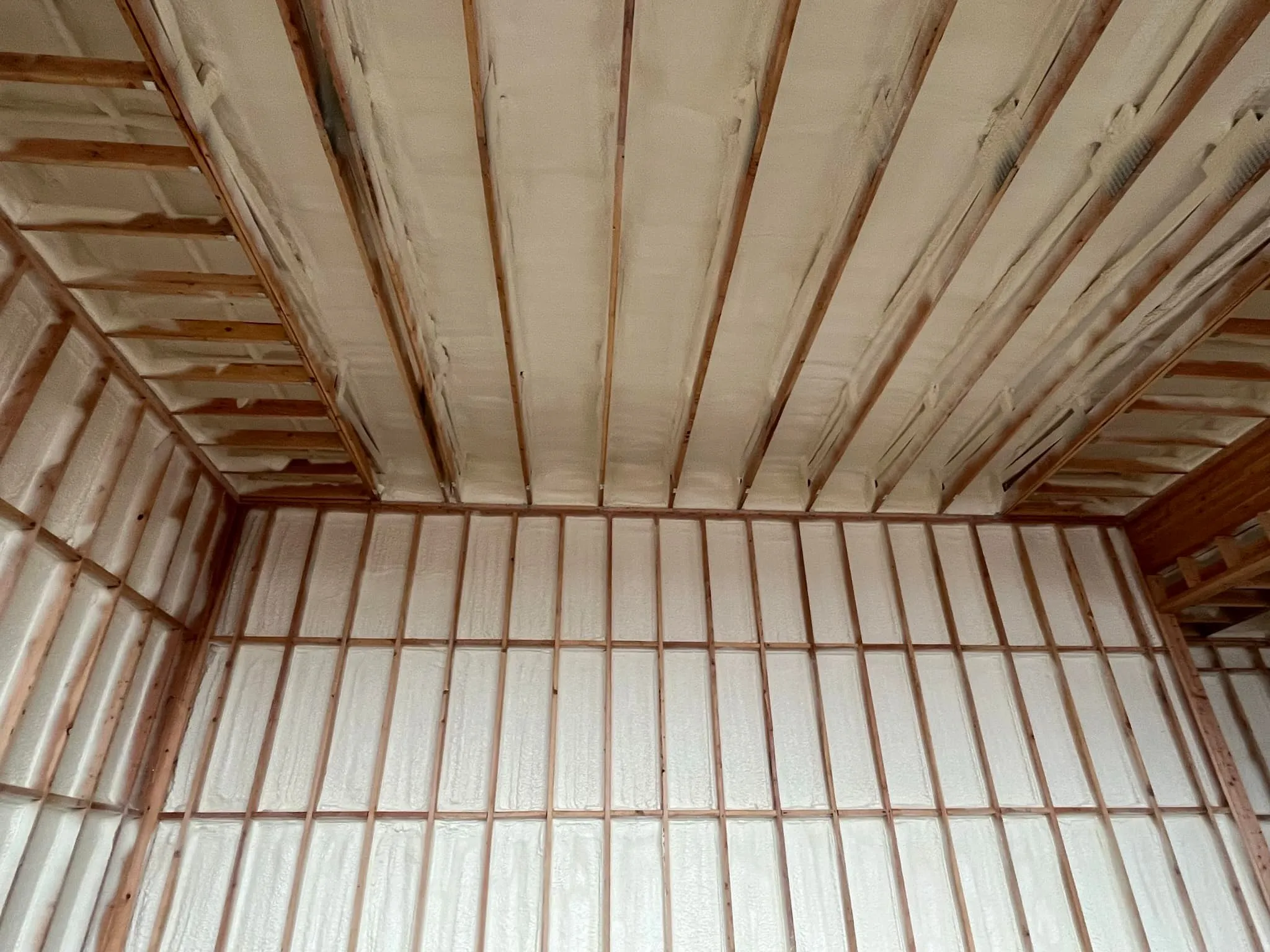
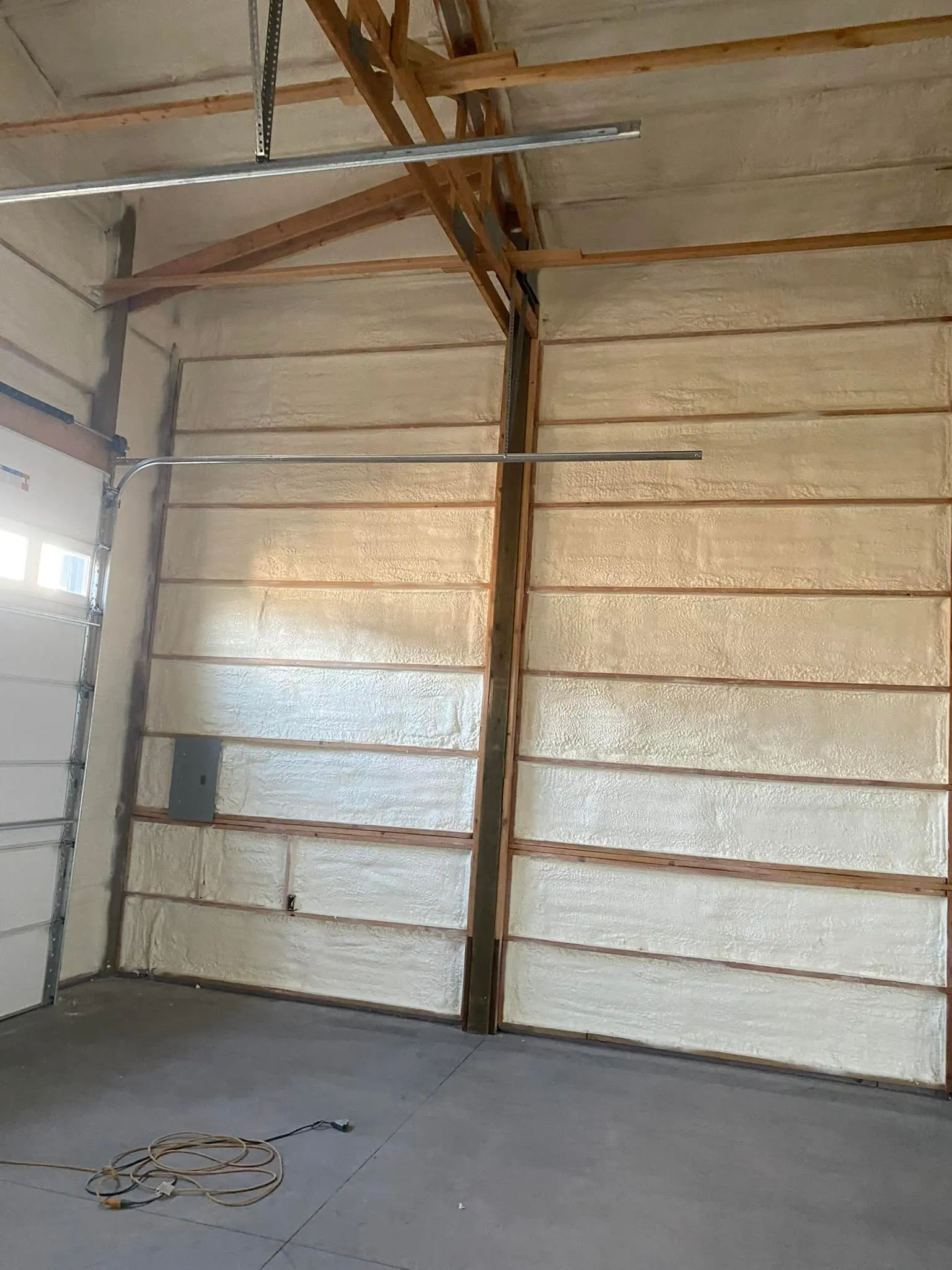
For commercial metal buildings and pole barns, where traditional batt insulation is difficult to install, and air leaks are common at seams and joints, spray foam provides a solution that adheres directly to metal surfaces and seals every penetration point.
Moisture and Mold Resistance
Commercial buildings face moisture challenges that residential properties rarely encounter. Flat roofs, large HVAC systems, humidified spaces, and varying occupancy loads all create conditions where condensation and moisture intrusion threaten insulation performance and structural integrity.
Closed-cell spray foam is hydrophobic and serves as a vapor retarder when applied at sufficient thickness (approximately 2 to 3 inches). It does not absorb water, does not support mold growth, and maintains its R-value even in damp conditions. Fiberglass, on the other hand, can trap moisture in wall cavities, lose thermal effectiveness when wet, and create conditions favorable for mold growth behind walls.
Businesses operating cold storage facilities, food processing plants, breweries, or any moisture-intensive environment should consider spray foam’s moisture resistance a primary advantage. Even in standard office buildings, condensation in exterior wall cavities during winter months can degrade fiberglass over time and lead to hidden mold problems.
Health and Safety Considerations
Both insulation types carry safety considerations that commercial building owners and facility managers need to understand.
Spray Foam Safety
The EPA has documented health concerns associated with spray polyurethane foam, particularly related to isocyanates, which are the key reactive chemicals in spray foam formulations. During and immediately after installation, exposures to isocyanates can cause asthma, lung damage, skin and eye irritation, and sensitization. The EPA emphasizes that inhalation exposures during spray foam application typically exceed OSHA occupational exposure limits, requiring proper personal protective equipment and restricted access to the work area during installation.
The EPA also notes that re-occupancy times vary depending on product formulation, temperature, humidity, and foam thickness. Some manufacturers recommend 24 hours after application for high-pressure professional spray foam systems before workers or building occupants can safely re-enter without protective equipment.
NIST conducted research confirming that emissions from spray foam, including flame retardant chemicals such as TCPP, can persist in buildings for years after application, particularly with open-cell foam. This underscores the importance of hiring experienced installers who follow proper curing and ventilation protocols.
Fiberglass Safety
Fiberglass insulation presents a different safety profile. According to the Washington State Department of Health, direct contact with fiberglass or breathing airborne dust containing fiberglass can irritate the skin, eyes, nose, and throat. These symptoms are typically temporary and include itching, coughing, or wheezing.
The International Agency for Research on Cancer classified glass wool (a form of fiberglass) as “not classifiable as a human carcinogen” in 2001. The National Academy of Sciences reviewed studies of fiberglass manufacturing workers and concluded that glass fibers do not appear to increase the risk of respiratory system cancer. OSHA and insulation industry associations established a voluntary workplace exposure limit for breathable glass fibers in 1999.
For commercial applications, the primary fiberglass safety concern is during installation. Once installed and enclosed within wall cavities, fiberglass exposure is minimal unless the material is disturbed during renovations or maintenance.
Installation and Project Considerations
Spray foam insulation requires specialized equipment, trained applicators, and specific temperature and humidity conditions for proper application. In commercial projects, this means scheduling installation during specific weather windows and planning for building vacancy during and after application. The curing process requires the HVAC system to be shut down and ventilation managed carefully.
Fiberglass batt installation is faster and simpler for standard wall cavities, requires no special equipment, and allows other trades to continue working in adjacent areas during installation. For large commercial buildings with straightforward stud wall construction, fiberglass can be installed rapidly by a larger labor crew.
However, in commercial buildings with irregular geometries, curved surfaces, hard-to-reach cavities, or metal building construction, fiberglass becomes difficult or impossible to install effectively. Spray foam’s ability to conform to any surface and expand into tight spaces gives it a clear advantage in retrofit applications and non-standard construction types.
Real-World Scenarios
Scenario
Property Type
Recommended Option
Rationale
Warehouse retrofit with metal walls and roof
Industrial warehouse
Closed-cell spray foam
Metal buildings have extensive seams, fasteners, and air leaks that fiberglass cannot seal
New office building with standard steel stud walls
Commercial office
Fiberglass batts
Straightforward stud cavities allow easy fiberglass installation at lower material cost
Cold storage facility for food distribution
Cold storage
Closed-cell spray foam
Moisture resistance, vapor barrier properties, and high R-value per inch are essential
Retrofit insulation for existing restaurant kitchen
Restaurant
Closed-cell spray foam
Grease-laden air, high humidity, and irregular framing make spray foam the practical choice
Multi-tenant strip mall with individual units
Retail
Fiberglass with separate air sealing
Lower initial cost for multiple units; air sealing handled as a separate scope of work
Factors That Influence the Decision
Several variables determine which insulation type will deliver the best results for your commercial property:
Climate zone: Colder climates demand higher R-values, where spray foam’s per-inch advantage matters most. The ASHRAE 90.1 standard requires increasing insulation levels in colder zones, making high-performance insulation more important
Building construction type: Metal buildings, pole barns, and structures with irregular framing favor spray foam. Standard wood or steel stud construction can accommodate either material
Moisture exposure: Any commercial space with high humidity, water exposure, or condensation risk should use closed-cell spray foam
Cavity depth: Shallow wall cavities in commercial construction benefit from spray foam’s higher R-value per inch
Occupancy schedule: Spray foam requires building vacancy during and after installation, which may not be feasible for 24/7 operations
HVAC system sizing: Spray foam’s air sealing properties can allow smaller HVAC systems, reducing both equipment costs and long-term energy consumption
Code compliance: Local building codes and energy codes may mandate specific R-values or continuous insulation requirements that influence material selection
Long-term ownership plans: Businesses planning to own and operate a building for decades benefit more from spray foam’s durability and energy savings
Who This Is For / Who This Is NOT For
Commercial Spray Foam Is Ideal For:
Businesses in cold or extreme climate zones where maximum thermal performance is required
Metal buildings, warehouses, and structures with irregular framing or extensive air leakage
Moisture-intensive environments such as cold storage, food processing, and breweries
Building owners planning long-term occupancy who want lower energy costs and reduced HVAC maintenance
Retrofit projects where walls and ceilings have complex geometries or are difficult to access
Fiberglass Is a Better Fit For:
New commercial construction with standard stud walls and straightforward cavity geometry
Businesses with constrained upfront budgets where insulation cost is a primary concern
Projects with tight timelines where spray foam curing and re-occupancy delays are problematic
Buildings in mild climate zones where maximum R-value per inch is less critical
Properties where future renovations are anticipated, and insulation may need to be removed and replaced
Get a Professional Insulation Assessment for Your Commercial Property
Choosing between spray foam and fiberglass insulation for your commercial building is not a decision that should be based on material cost alone. Building type, climate zone, moisture exposure, and long-term energy goals all factor into the right recommendation. At High Country Solutions, our team evaluates your specific commercial property and operational requirements to recommend the insulation solution that delivers the strongest return on your investment. We handle everything from initial assessment through professional installation, ensuring your building meets code requirements and performs at its best for years to come.
Can spray foam insulation be installed in an occupied commercial building?
Most spray foam manufacturers and the EPA recommend that building occupants vacate during application and for at least 24 hours after installation to allow proper curing and ventilation of chemical emissions.
Does fiberglass insulation lose effectiveness over time in commercial buildings?
Fiberglass can settle, compress, or absorb moisture over time, which reduces its effective R-value. When fiberglass gets wet, it can take a long time to dry and may develop mold issues in wall cavities.
Is closed-cell spray foam worth the investment for a metal commercial building?
For metal buildings, closed-cell spray foam is typically the most effective option because it adheres directly to metal surfaces, seals all seams and fasteners, adds structural rigidity, and provides both insulation and an air barrier in one application.
How does fiberglass handle fire safety compared to spray foam in commercial properties?
Fiberglass is naturally non-combustible since it is made from glass fibers. Spray foam requires added flame retardants to meet fire safety codes, and the EPA notes that fires involving spray polyurethane foam can release toxic chemicals including hydrogen cyanide and isocyanates.
Can I combine spray foam and fiberglass insulation in the same commercial building?
Yes, many commercial projects use both materials strategically. Spray foam is often applied in hard-to-seal areas like rim joists, rooflines, and irregular cavities, while fiberglass fills standard wall cavities where its lower cost and straightforward installation make it the practical choice.
Wikipedia – Building Insulation – Reference overview of building insulation materials, types, and ASHRAE 90.1 prescriptive R-value requirements for commercial construction by climate zone.
I’m Skeeter Aimone, owner of High Country Solutions in Alpine, Wyoming, leading the company since 2019. I focus on quality installation, building science, and insulation solutions suited to harsh Wyoming and eastern Idaho conditions.