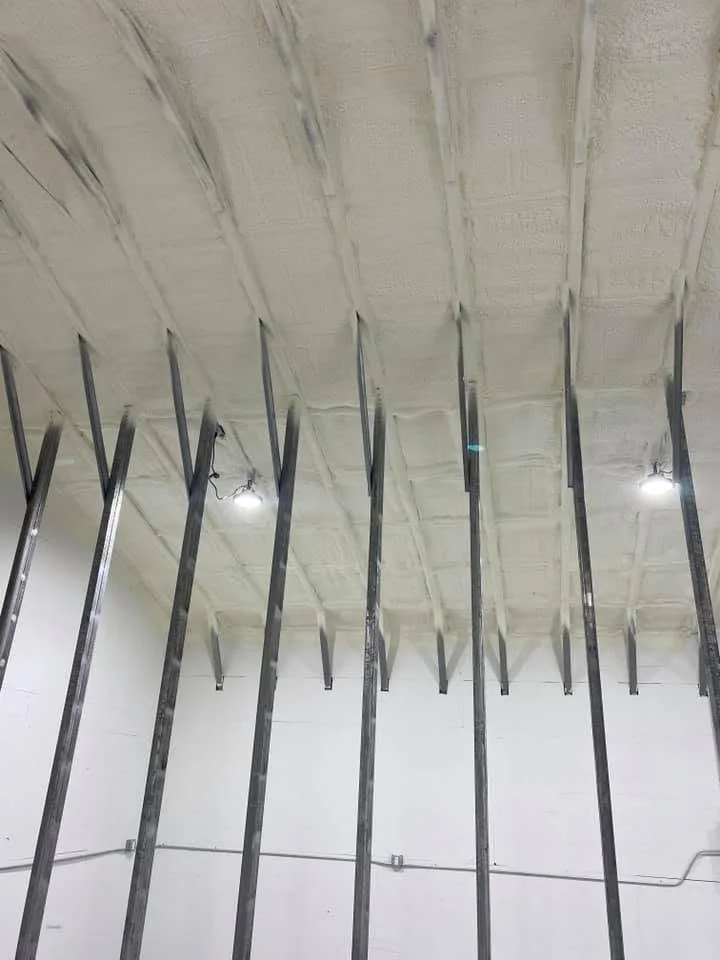
What Weather Conditions Are Best for Commercial Spray Foam Insulation Installation in Rock Springs, WY?
Skeeter Aimone
August 15th, 2026
Commercial spray foam insulation installation in Rock Springs, WY performs best when ambient and substrate temperatures fall between 60°F and 80°F, with low humidity, dry surfaces, and minimal wind. The right timing depends on the foam type (open-cell vs. closed-cell), whether the application is interior or exterior, and the specific conditions at your jobsite. Rock Springs sits at 6,742 feet in a cold semi-arid climate, which means the installation window is narrower than in most of the country, making commercial insulation guidelines useful when planning projects around local weather conditions. The low humidity is a genuine advantage for foam curing and adhesion.
TL;DR
Ideal spray foam application temperatures range from 60°F to 80°F for both ambient air and substrate surfaces
Rock Springs has a usable installation window from roughly late May through early September
June through August offers the most reliable temperature conditions for commercial projects
Low annual humidity in Rock Springs (around 31% in summer) works in your favor for proper curing
Wind is a significant factor in Rock Springs, with average speeds around 11 mph and gusts recorded above 60 mph
Exterior applications require calm conditions to prevent overspray, drift, and adhesion failures
Interior commercial projects can extend the season with temporary heating and climate control
Closed-cell spray foam is generally preferred for commercial applications in cold climates due to its vapor control properties
Understanding Rock Springs, WY Climate for Spray Foam Projects
Rock Springs experiences a cold semi-arid climate characterized by significant seasonal temperature swings, low precipitation averaging about 8.56 inches annually, and persistent wind. According to NOAA’s National Weather Service data for Rock Springs, average monthly high temperatures range from 30°F in January to 84°F in July, with overnight lows dropping to 13°F in winter. The area sees roughly 180 days per year with minimum temperatures at or below freezing.
This climate profile directly affects when commercial spray foam insulation can be installed effectively. The chemical reaction that creates spray polyurethane foam is temperature-sensitive. When temperatures fall below the recommended range, the reaction slows, producing poor mixing, reduced expansion, and weak adhesion to the substrate. When temperatures climb too high, the foam cures too quickly, leading to shrinkage, cracking, and wasted material.
Monthly Temperature Breakdown for Rock Springs
Data from US Climate Data (1991-2020 normals) gives us a clear picture of when conditions align with spray foam requirements:
Month
Avg High (°F)
Avg Low (°F)
Precip (in)
Suitability for Spray Foam
January
30
13
0.45
Not suitable
February
33
15
0.48
Not suitable
March
44
23
0.68
Marginal (interior only)
April
54
29
0.91
Marginal (interior with heat)
May
64
38
1.21
Workable (interior and exterior)
June
75
46
0.79
Ideal
July
84
54
0.64
Ideal (monitor highs)
August
82
52
0.62
Ideal
September
70
43
0.92
Good (interior and exterior)
October
56
32
0.87
Marginal (interior with heat)
November
40
21
0.49
Not suitable
December
30
13
0.50
Not suitable
The sweet spot for Rock Springs commercial spray foam projects runs from June through August, with May and September serving as shoulder months that can work under the right conditions.
Temperature Requirements for Commercial Spray Foam
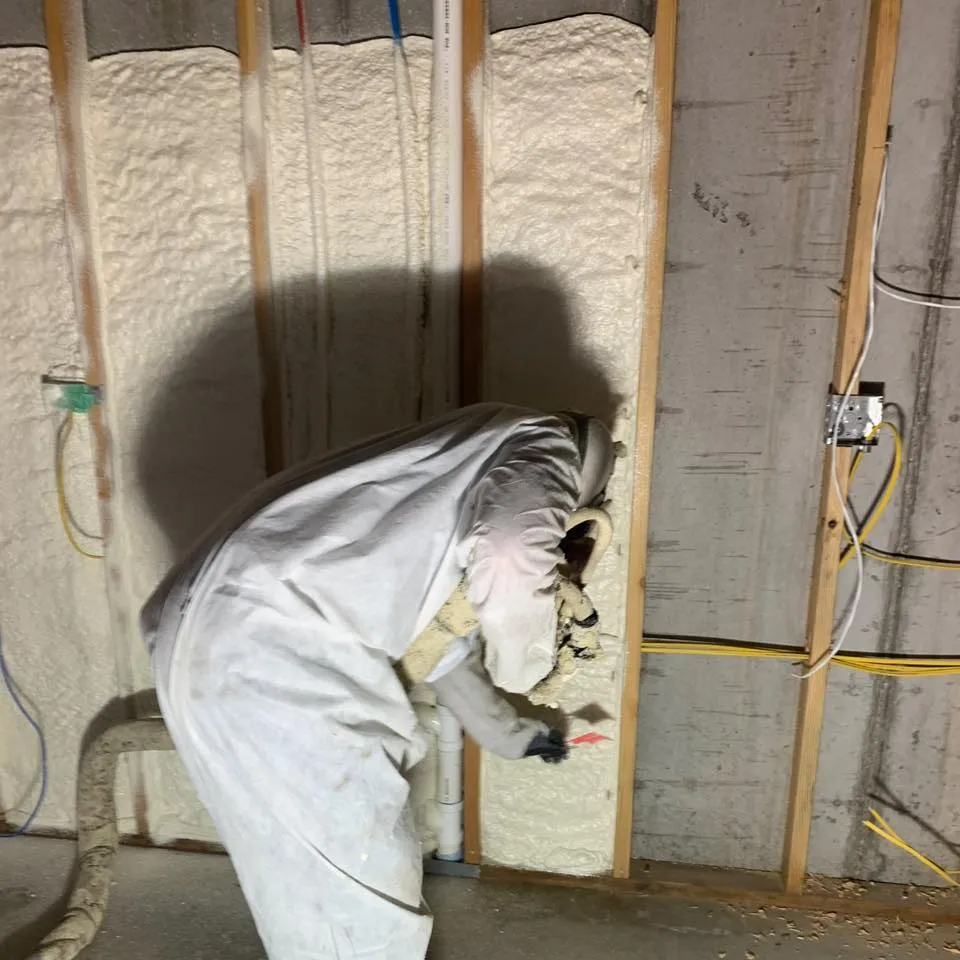
Spray polyurethane foam is created through an exothermic chemical reaction between two components: isocyanates (Side A) and a polyol blend (Side B). According to the EPA’s archived resources on spray polyurethane foam, this reaction generates heat as the chemicals combine, and the rate and quality of that reaction depend heavily on temperature.
For commercial installations, the temperature conversation involves three distinct variables:
Ambient air temperature: The air temperature in the space where foam is being sprayed
Substrate temperature: The temperature of the surface the foam adheres to (concrete block, steel studs, sheathing)
Chemical temperature: The temperature of the foam drums themselves
All three need to stay within acceptable ranges. When substrate temperatures drop below 60°F, the chemical reaction slows, and the foam may not bond properly. The Building Science Corporation’s Commercial Spray Foam Guide emphasizes that high-density closed-cell spray foam should be applied directly to the substrate without intervening layers, making surface adhesion critical to long-term performance.
Open-Cell vs. Closed-Cell Considerations
According to Wikipedia’s spray foam reference, closed-cell medium-density spray foam (often called 2-pound foam) delivers an R-value between 5.1 and 6.0 per inch and acts as both a vapor barrier and air barrier at minimum thicknesses. Open-cell foam (half-pound) offers around 3.8 R-value per inch and is typically limited to interior applications.
For commercial buildings in Rock Springs, closed-cell is the standard recommendation. It handles moisture better, provides structural support, and delivers the air, water, vapor, and thermal control layers that commercial enclosures demand. Closed-cell foam also has slightly more flexibility with temperature ranges compared to open-cell products, though both perform best within the 60°F to 80°F window.
Wind: The Overlooked Variable in Rock Springs
Temperature gets most of the attention, but wind is arguably the bigger wildcard for exterior spray foam projects in Sweetwater County. The Building Science Corporation notes in its exterior spray foam guidance that successful exterior application depends on conditions where “it is not too cold when you apply it, and it is not too windy when you spray it.”
Rock Springs wind data from NOAA shows average annual wind speeds of 11.1 mph, with monthly averages ranging from 8 mph in November to 16.7 mph in February. Maximum gusts have been recorded at 62 mph. For spray foam installation, sustained winds above 10–15 mph can cause significant overspray, material waste, and inconsistent application thickness.
This means that even during the ideal summer months, commercial contractors need to monitor daily wind forecasts and plan exterior work for calmer periods, typically early morning or late afternoon when wind tends to settle.
Humidity and Moisture: Rock Springs’ Natural Advantage
One factor that works in Rock Springs’ favor is low humidity. Summer relative humidity averages around 31% in July and August. For spray foam, low humidity is beneficial because:
Surfaces dry faster after rain events
Less ambient moisture competes with the foam’s chemical reaction
Reduced risk of trapped moisture in the cured foam
Better long-term bond integrity
However, the dryness also means contractors need to be mindful of static electricity, which can affect spray patterns, and excessive heat in mid-summer that can accelerate curing beyond optimal rates.
Seasonal Strategy for Rock Springs Commercial Projects
Summer (June through August): Peak Season
This is when conditions align most consistently with spray foam requirements. Plan large commercial projects during this window. Exterior applications on metal buildings, warehouses, and strip malls should target this period, and customer reviews can provide useful insight into previous project experiences and service quality. Monitor daily high temperatures in July, as readings can push above 84°F and may require early morning scheduling.
Shoulder Months (May and September): Workable with Planning
Both months offer daytime highs that support exterior work, but overnight lows in the 30s and 40s mean substrate temperatures may be too cold for early starts. Plan for later start times and monitor surface temperatures with infrared thermometers. Commercial insulation services can be particularly useful for interior projects where temporary heating is needed during these months.
Winter (October through April): Interior Only
Winter exterior spray foam installation in Rock Springs is generally impractical. Interior commercial work remains possible with proper heating, ventilation, and dehumidification. Tenting and temporary climate control add time and equipment costs, but for occupied commercial buildings where interior retrofits are needed, winter scheduling can still work.
Signs You’ve Found the Right Installation Partner
Choosing a contractor who understands Rock Springs’ specific climate challenges matters as much as the weather itself. Here is what to look for:
They track real-time substrate temperatures at the jobsite, not just ambient air readings
They monitor wind forecasts and adjust exterior scheduling accordingly
They understand the difference between open-cell and closed-cell application requirements in cold climates
They communicate scheduling changes proactively when conditions shift
They reference manufacturer guidelines alongside building science best practices for cold, semi-arid environments
Ready to Plan Your Commercial Spray Foam Project?
High Country Solutions has the experience and local knowledge to handle commercial spray foam insulation projects across Rock Springs and the surrounding region. Our team understands Wyoming’s climate demands and plans every installation around the conditions that deliver the best results for your building. Whether you are insulating a new metal building, retrofitting an older commercial space, or need a comprehensive building envelope solution, we are ready to help.
Can spray foam insulation be installed during winter in Rock Springs?
Interior spray foam installation is possible during winter months with temporary heating to maintain temperatures above 60°F, but exterior applications are generally not feasible due to freezing temperatures and high winds.
Does wind really affect spray foam installation that much?
Yes, wind speeds above 10-15 mph cause overspray, inconsistent foam thickness, material waste, and poor adhesion, which is especially relevant in Rock Springs where average wind speeds run around 11 mph year-round.
How does Rock Springs’ low humidity help with spray foam curing?
Low summer humidity (around 31%) means surfaces dry quickly after precipitation, reducing the risk of moisture interference with the foam’s chemical reaction and improving long-term adhesion.
Is closed-cell spray foam better than open-cell for Rock Springs commercial buildings?
Closed-cell is generally the preferred choice for commercial buildings in cold climates like Rock Springs because it acts as a vapor barrier, air barrier, and water control layer while delivering R-values of 5.1 to 6.0 per inch.
What is the shortest reliable installation window for exterior spray foam in Rock Springs?
June through August provides the most consistent temperatures for exterior work, with May and September serving as shoulder months that require careful monitoring of overnight lows and morning substrate temperatures.
US Climate Data – Rock Springs, Wyoming – Monthly climate normals (1991-2020) for Rock Springs including average highs, lows, precipitation, and snowfall data.
Wikipedia – Spray Foam – Comprehensive reference on spray polyurethane foam types, R-values, thermal properties, and application methods for building insulation.
I’m Skeeter Aimone, owner of High Country Solutions in Alpine, Wyoming, leading the company since 2019. I focus on quality installation, building science, and insulation solutions suited to harsh Wyoming and eastern Idaho conditions.