What Problems Can Mineral Wool Insulation Help Solve in Residential Buildings?
Quick answer: The main benefits of mineral wool insulation in a house come down to five problems: rooms that lose…


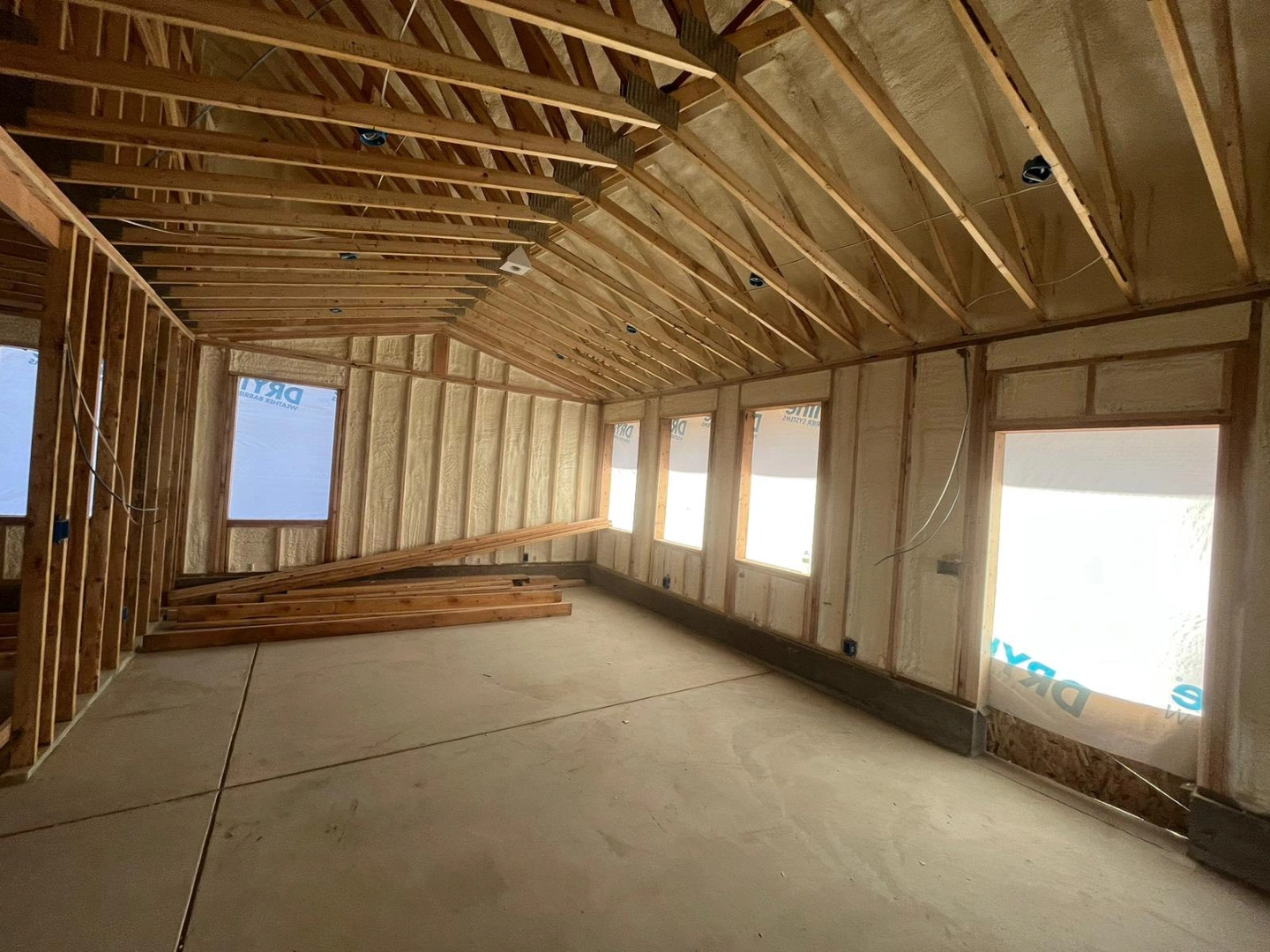
Working with a spray foam insulation contractor in Jackson Hole, WY requires a solid understanding of how insulation performance, local climate demands, and building code requirements all connect. The right contractor will help you select between open-cell and closed-cell spray foam, ensure your project meets or exceeds ASHRAE 90.1 standards for your climate zone, and coordinate installation timing with the rest of your build schedule while maximizing spray foam insulation protection throughout the building envelope. The wrong choice can leave you with moisture problems, code violations, and higher energy bills for decades. Here is what every builder needs to know before signing a contract.
According to the U.S. Energy Information Administration, households in colder states consume considerably more site energy than those in warmer regions, with space heating driving the bulk of that difference. In a climate this demanding, insulation is not a line item to value-engineer. It is foundational to the performance and durability of every structure you build.
The ASHRAE 90.1 standard, which governs thermal insulation requirements across the United States, divides the country into climate zones with prescriptive R-value minimums that increase as temperatures get colder. Based on the ASHRAE 90.1 prescriptive table from the building insulation standards, Zone 7 requires some of the highest R-values in the country for both wall cavities and continuous insulation layers. For residential wood-framed walls in Zone 7, the standard calls for cavity insulation of R-13 plus a continuous insulation layer of R-7.5 or more, depending on the framing type.
Understanding these targets before you speak with a spray foam insulation contractor helps you evaluate whether their proposed approach will actually meet code and perform as expected in the field.
Spray polyurethane foam insulation comes in two primary formulations, each with distinct properties that affect where and how it should be used in your building envelope.
| Property | Open-Cell Spray Foam | Closed-Cell Spray Foam |
|---|---|---|
| R-value per inch | R-3.6 | R-5.5 to R-6.5 |
| Density | Low (~0.5 lb/ft3) | High (~2.0 lb/ft3) |
| Vapor retarder | Vapor permeable | Acts as vapor retarder |
| Air sealing | Excellent | Excellent |
| Sound absorption | Very good | Moderate |
| Structural support | Minimal | Adds wall rigidity |
| Best application in cold climates | Interior partitions, some attics | Exterior walls, crawlspaces, rim joists |
Closed-cell spray foam is the workhorse for cold-climate exterior walls in places like Jackson Hole. Its higher R-value per inch means you achieve code-required thermal resistance in less wall cavity space, and its closed-cell structure serves as both insulation and a vapor retarder in a single application. Polyurethane foam classified as rigid with closed-cell structure also provides low thermal conductivity, making it a particularly effective insulator for demanding environments. These advantages make spray foam for new builds in Jackson Hole, WY an ideal choice for meeting modern energy code requirements and long-term performance goals.
Open-cell spray foam expands more during installation and fills cavities, which gives it an advantage for sound control in interior walls. However, its lower R-value per inch and permeable structure mean it is generally not the right choice as the primary insulation on exterior walls in Climate Zone 7 without additional continuous insulation.
The right contractor will recommend a combination strategy rather than a one-size-fits-all approach. For example, closed-cell spray foam on exterior walls and rim joists paired with open-cell in interior partitions and select attic areas can balance performance, cost, and building science principles.
Not all insulation contractors bring the same level of expertise to a mountain build. The Teton County building environment presents challenges that flatland contractors may not anticipate, including extreme temperature swings during installation, short building seasons, and strict energy code enforcement. Here are the qualifications and indicators that set a qualified spray foam insulation contractor in Jackson Hole, WY, apart from the rest.
Licensing and insurance. Verify that the contractor holds a valid Wyoming contractor license and carries general liability and workers’ compensation insurance. Request copies of both documents and confirm they are current.
Manufacturer certifications. Spray foam manufacturers require installers to complete training and maintain certifications for their products. A contractor who is certified by the manufacturer of the foam they plan to install has demonstrated competence with proper mixing ratios, substrate temperatures, and application thickness.
Local code knowledge. Ask the contractor to explain how their proposed insulation plan meets ASHRAE 90.1 Zone 7 requirements and Teton County amendments. A knowledgeable contractor will reference specific R-value targets for walls, ceilings, and foundations without hesitation.
References from similar projects. Request at least three references from builders who have completed projects in the Jackson Hole area within the last two years. Follow up on those references and ask specifically about communication, code inspection outcomes, and whether the project came in on schedule.
Written scope of work. A professional contractor provides a detailed written proposal that specifies the type of foam, application areas, target thickness, R-values to be achieved, and ventilation coordination notes. Vague proposals are a warning sign.
Even experienced builders run into problems when spray foam installation goes wrong. Understanding these common pitfalls helps you catch issues before they become expensive callbacks.
Skipping the ventilation plan. Spray foam creates an exceptionally tight building envelope. If your HVAC contractor is not involved in planning mechanical ventilation before the foam goes in, you risk indoor air quality problems, moisture buildup, and combustion appliance backdrafting. The insulation contractor and HVAC designer need to coordinate from the start.
Ignoring substrate conditions. Spray foam adheres best to clean, dry surfaces at proper temperatures. In Jackson Hole, winter installations may require temporary heating enclosures to maintain substrate temperatures within the manufacturer’s recommended range. A contractor who proceeds without checking conditions will get poor adhesion and incomplete curing.
Overlooking thermal bridging. Spray foam between studs eliminates air leakage through the cavity but does not address heat conducted through the studs themselves. In Zone 7, continuous insulation on the exterior side of wall sheathing is often necessary to interrupt thermal bridging through wood or steel framing, as noted in building science guidelines on thermal bridges.
Compressing or trimming incorrectly. Closed-cell spray foam that expands beyond the stud face should be trimmed flush, not compressed back into the cavity. Compression reduces the effective R-value and can create gaps at the edges. Open-cell foam should never be compressed, as it relies on its full expanded thickness for thermal performance.
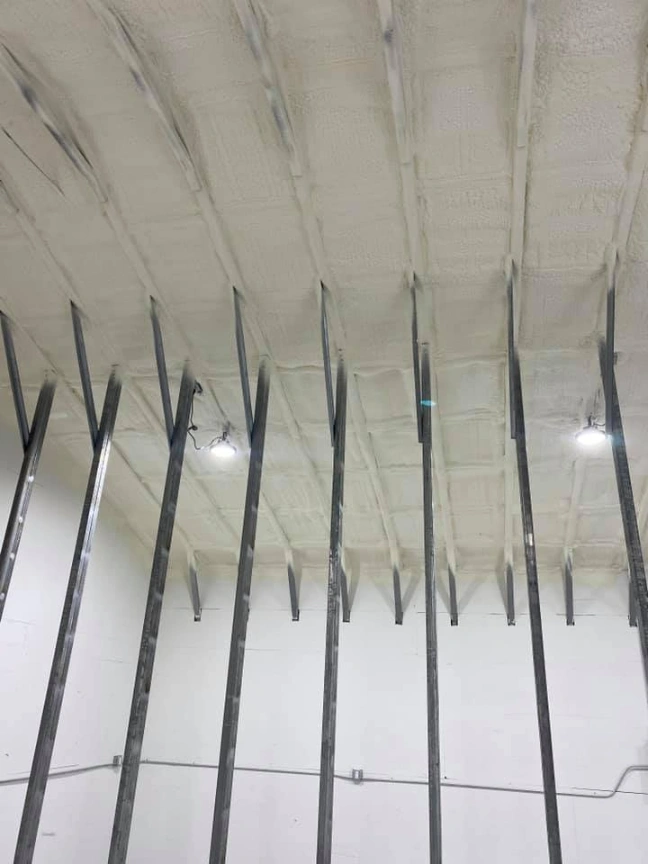
Different building types in the Jackson Hole area call for different insulation approaches. The table below outlines recommended spray foam strategies based on the type of construction you are managing.
| Project Type | Recommended Approach | Key Considerations |
|---|---|---|
| Custom single-family home | Closed-cell walls, hybrid attic strategy | Plan for continuous exterior insulation; coordinate with architect on wall assembly |
| Multifamily housing | Closed-cell common walls for fire and sound separation | Open-cell in individual unit partitions; address party wall sound transmission |
| Mountain cabin or ADU | Closed-cell on all exterior surfaces | Limited cavity depth makes high R-value per inch essential |
| Retrofit or remodel | Closed-cell rim joists and crawlspaces; open-cell in existing wall cavities if accessible | Assess existing ventilation before tightening envelope |
| Commercial or mixed-use | Closed-cell on exterior walls and roof deck | Verify fire-rating requirements for foam in commercial occupancies |
When you are interviewing contractors, pay attention to the quality of their communication and the depth of their technical knowledge. A contractor who asks detailed questions about your wall assembly, your HVAC design, and your project timeline is thinking about the build as a system rather than just a spray appointment. They should be willing to walk your framing crew through substrate preparation requirements and provide a clear timeline for how many days the insulation phase will take.
Transparency is another strong indicator. A contractor who explains the tradeoffs between open-cell and closed-cell for your specific project, rather than pushing the more expensive option across the board, is working in your interest. Look for willingness to provide manufacturer technical data sheets, installation photos from previous projects, and a clear warranty that covers both materials and workmanship.
Finally, the right contractor shows up prepared. They understand that Jackson Hole builds operate on tight schedules dictated by weather and seasonal labor availability. They bring the right crew size, the right equipment, and a plan for climate-controlled installation when conditions demand it.
High Country Solutions delivers expert spray foam insulation services for builders throughout the Jackson Hole area. Our team understands the demands of Climate Zone 7 construction, coordinates closely with framing and HVAC crews, and ensures every project meets or exceeds local energy code requirements. Whether you need closed-cell spray foam for exterior walls or a hybrid insulation strategy for a custom home, we are here to help you build it right the first time.
Request a Quote | Schedule an Insulation Consultation
Reach us at (307) 248-9063 or [email protected] to discuss your project.
Closed-cell spray foam acts as its own vapor retarder when applied at sufficient thickness, eliminating the need for a separate vapor barrier in most exterior wall assemblies.
Installation requires substrate temperatures above freezing, so temporary heating enclosures may be needed. A qualified contractor will assess conditions and plan accordingly.
Spray foam achieves higher R-value per inch and provides air sealing that fiberglass batts cannot match, making it easier to meet Zone 7 requirements in standard wall cavities.
Closed-cell foam cures within 24 hours, while open-cell foam cures more quickly. Occupancy and further construction typically require waiting until full off-gassing is complete.
Yes, the improved air tightness from spray foam insulation often allows for smaller HVAC equipment. Your HVAC contractor should recalculate loads after the insulation plan is finalized.