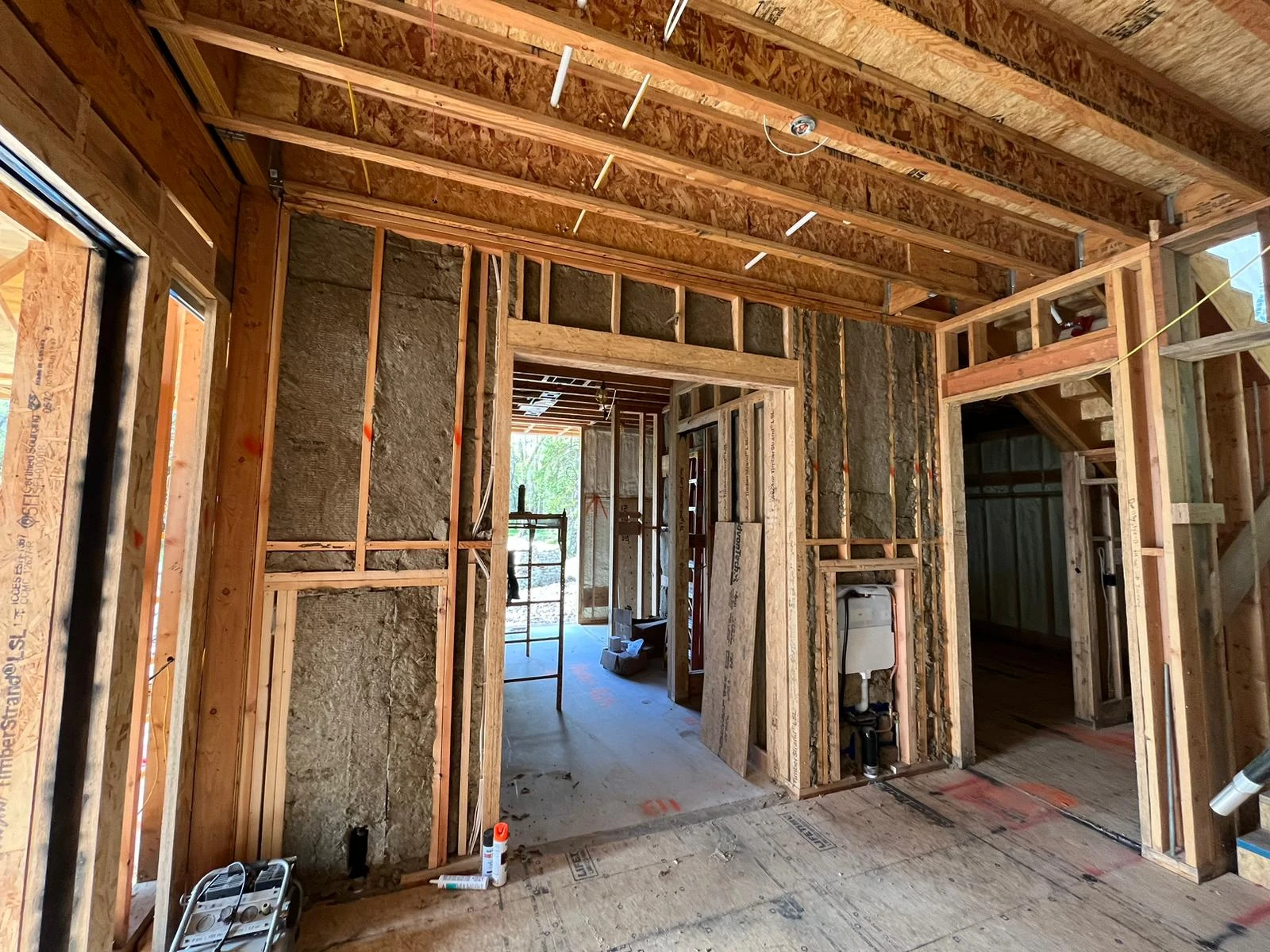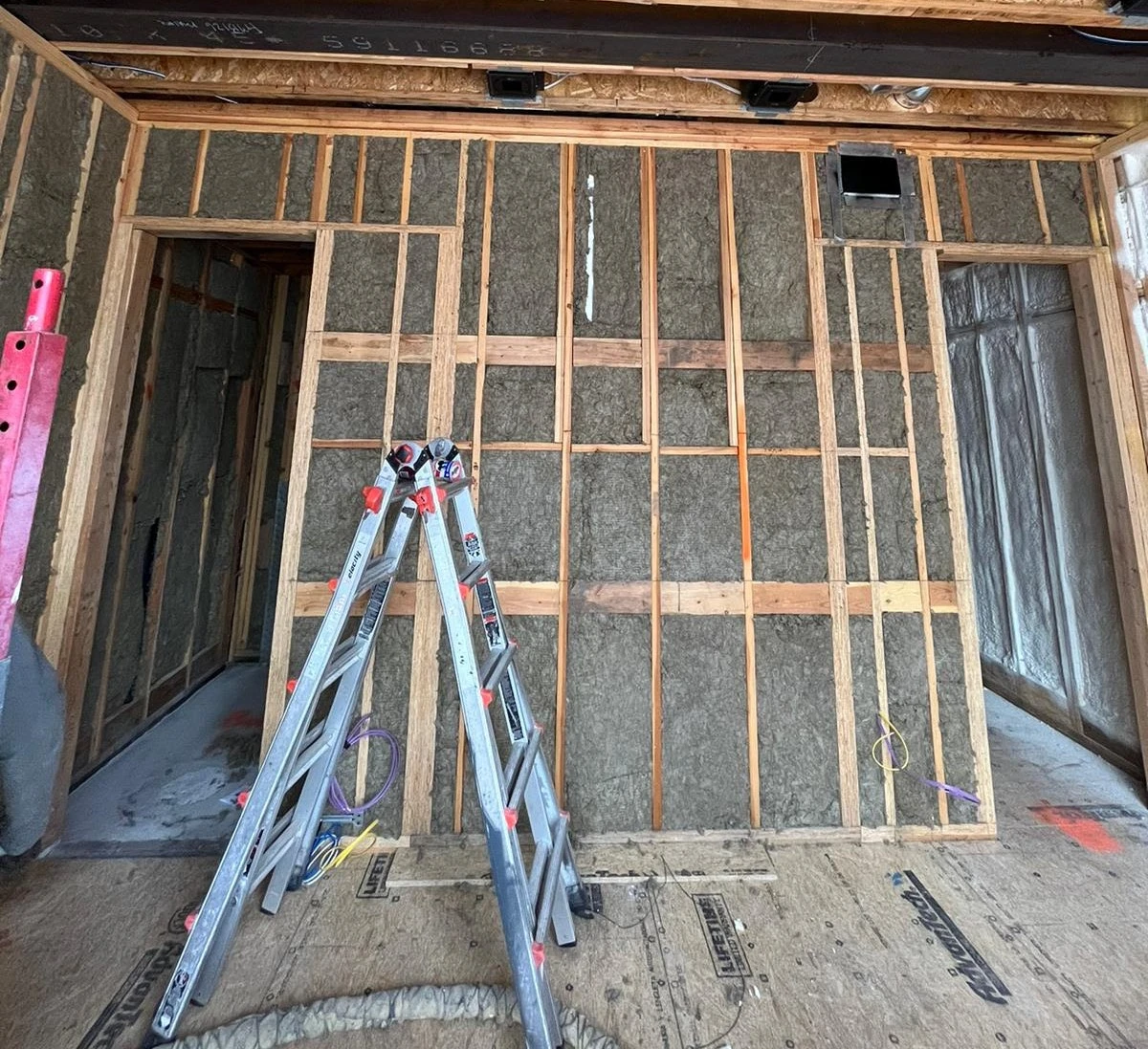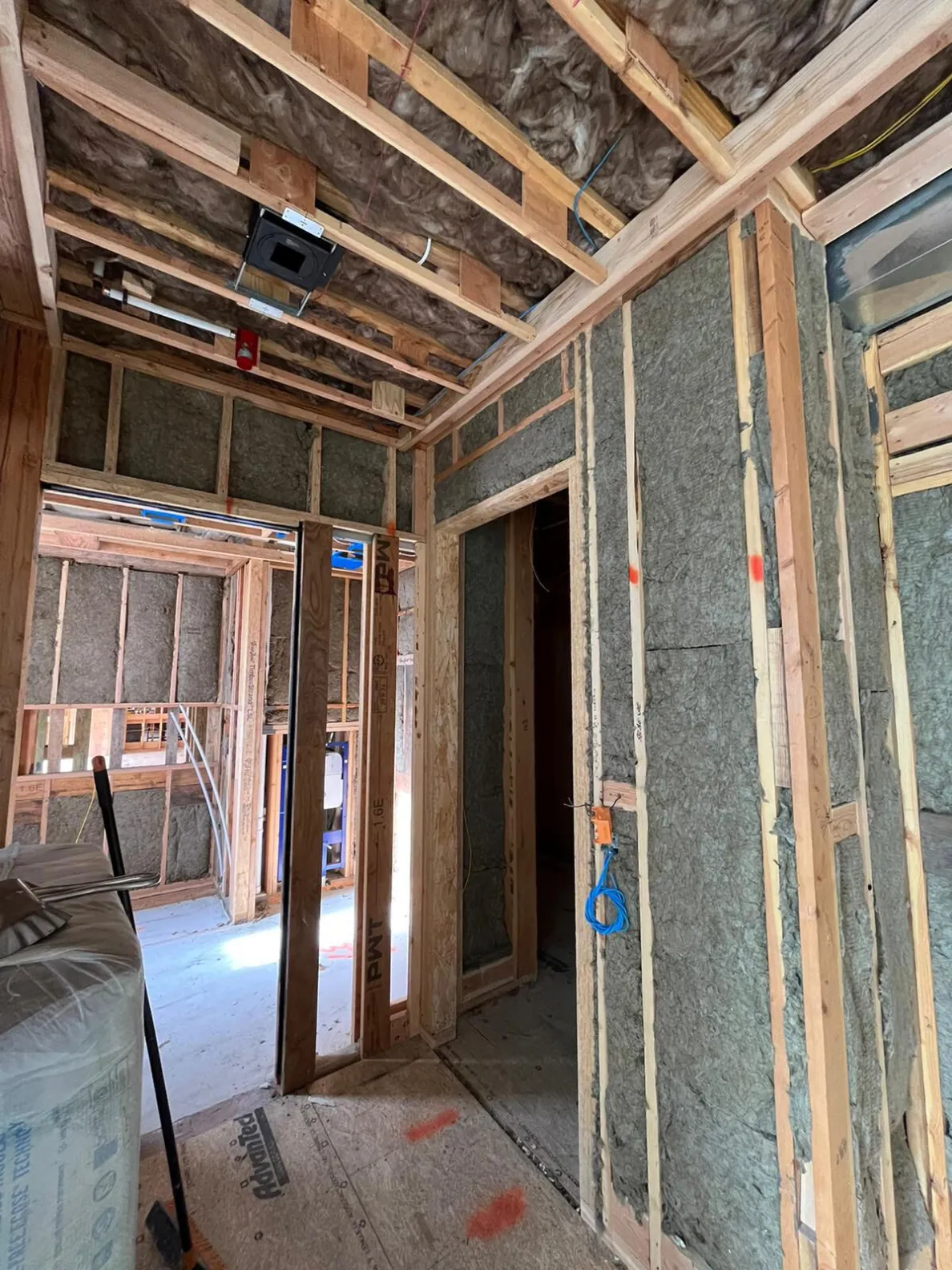
Why Are Homeowners in Thayne, WY Considering Mineral Wool for Insulation Upgrades?
Homeowners in Thayne, WY are turning to a mineral wool insulation guide because Star Valley winters push heating systems to their…


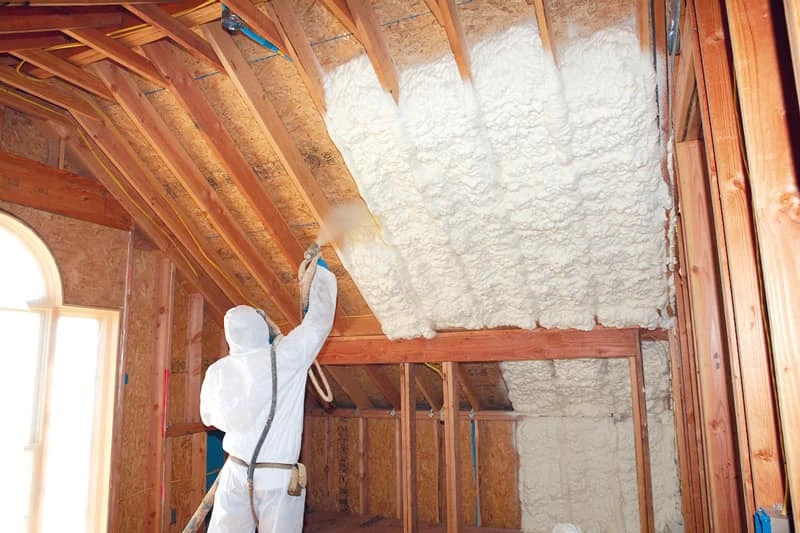
Finding the right spray foam insulation partner for construction projects in Driggs, ID comes down to one question: Does the team understand mountain climate demands and builder workflows? High Country Solutions is the spray foam insulation team that construction builders in Driggs trust for new builds, commercial developments, and large-scale residential projects. We specialize in working directly with general contractors, framers, and developers to deliver insulation that meets strict Idaho building codes while keeping project timelines on track. Driggs sits in a demanding climate zone where winter temperatures can plummet to extreme lows, making proper insulation installation a non-negotiable part of any build. Our team brings the equipment, expertise, and scheduling flexibility that builders need to keep their projects moving without insulation delays, especially in spray foam insulation systems.
Driggs, ID, sits at a high elevation in the western part of the state, where the climate creates serious challenges for building performance. According to NOAA climate data, Idaho’s elevations range from 3,100 to 13,800 feet, causing wide temperature variations and cold winters with average minimum temperatures between 5°F and 18°F depending on location and elevation. NOAA State Climate Summaries documents that temperatures in Idaho have risen approximately 2.5°F since the beginning of the 20th century, with warming most evident in winter months.
For builders working in Driggs insulation solutions, Driggs means the building envelope must be engineered for severe cold, significant snow loads, and rapid temperature swings. Local design criteria from Teton County indicate a winter design temperature of -30°F, a frost depth line of 34 inches, and a mean annual temperature of just 38°F. These are not conditions where standard fiberglass batt insulation alone can deliver the performance and comfort that homeowners expect.
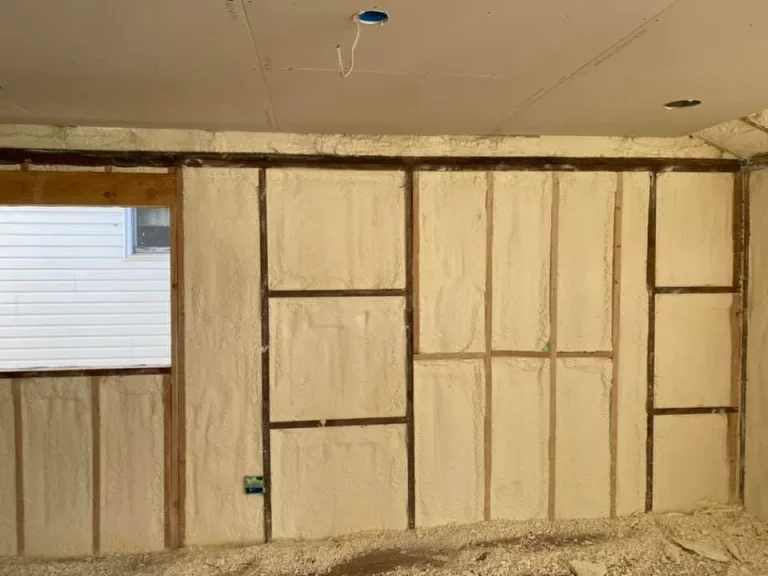
Spray foam insulation addresses these challenges directly by creating an airtight seal that blocks all three forms of heat transfer: conductive, convective, and radiant. As documented by the U.S. Department of Energy, spray foam “can yield a higher R-value than traditional batt insulation for the same thickness, and can fill even the smallest cavities, creating an effective air barrier.”
Choosing the right spray foam product depends on the application, the building assembly, and the performance goals. Here is a breakdown of the primary options available for construction projects in the Driggs area.
| Spray Foam Type | Density | R-Value Per Inch | Best Applications | Moisture Barrier |
|---|---|---|---|---|
| High-Density Closed Cell | 3 lbs/cu ft | R-5.7+ | Roofing, exterior insulation, structural reinforcement | Yes |
| Medium-Density Closed Cell | 2 lbs/cu ft | R-5.7+ | Continuous insulation, wall cavities, unvented attics | Yes |
| Low-Density Open Cell | 0.5 lbs/cu ft | R-3.6+ | Interior wall cavities, sound dampening, vented attics | No |
Closed-cell spray foam is the workhorse for cold-climate construction. According to Wikipedia’s spray foam reference, closed-cell polyurethane foam has an initial R-value ranging from R-3.4 to R-6.7 per inch, significantly outperforming glass wool at R-3 to R-4 per inch. The dense cell structure makes it an effective air barrier, vapor barrier, and water barrier simultaneously.
For builders in Driggs, closed-cell foam is particularly valuable for:
The Spray Polyurethane Foam Alliance notes that medium-density closed-cell foam “acts as an air, vapor, and water barrier, and can even help reduce noise.” This triple-barrier performance simplifies building assemblies and reduces the number of trades needed on site.
Open-cell foam costs less than closed-cell and expands significantly during application, making it excellent at filling irregular cavities and hard-to-reach spaces. However, it does not act as a vapor barrier, which limits its use in below-grade or exterior-exposed applications in cold climates like Driggs’s. Builders typically use open-cell foam for interior wall cavities, sound dampening between rooms, and vented attic applications where a separate vapor retarder is specified in the assembly.
Not every insulation contractor is set up to work with construction builders. The operational requirements for new construction are fundamentally different from retrofit or residential service work. Here are the factors that separate a true builder partner from a general insulation contractor.
Construction projects run on tight schedules with interdependent trades. A spray foam team that works with builders must be able to:
Driggs and the surrounding areas in Idaho enforce building codes based on the International Energy Conservation Code (IECC). Per Teton County design criteria, buildings in Climate Zones 7 and 8 must meet ceiling R-values of 60, wood frame wall R-values of 20+5 or 13+10, and basement wall R-values of 15 continuous insulation or 19 cavity insulation. Teton County Design Criteria
A qualified spray foam team provides:
Professional spray foam installation requires specialized equipment, including high-pressure proportioners, heated hoses, and application guns. Temperature and humidity conditions during application directly affect foam quality and performance. A team working in Driggs’s mountain environment must account for cold-weather application challenges, including material heating, substrate preparation, and curing conditions.
The right team asks about your project before quoting. They want to know the building assembly, the wall and roof types, the HVAC strategy, and the overall energy performance goals. They do not just ask for square footage and hand you a number.
A reliable spray foam contractor provides detailed proposals that specify foam type, thickness, expected R-value, and total coverage area. They explain where closed-cell versus open-cell foam is recommended and why, and they document any assumptions about substrate conditions or access requirements.
Look for a team that talks about outcomes, not just products. They should be able to explain how their installation will affect energy costs, comfort, moisture management, and building durability. They should also be willing to discuss performance testing options like blower door tests to verify the quality of the air seal.
The right partner understands construction sequencing. They know that insulation happens after framing and rough-in but before drywall, and they schedule accordingly. They also understand that weather delays, inspection backlogs, and design changes are part of the process.
| Project Type | Recommended Spray Foam Strategy | Key Considerations |
|---|---|---|
| Custom Single-Family Home | Closed-cell in walls and rim joists; open-cell in interior walls for sound | Plan for an unvented attic if HVAC is in the attic space |
| Spec Home Development | Standardized closed-cell wall package for consistent R-values | Pre-schedule multiple units for efficiency |
| Commercial Building | Closed-cell continuous insulation on exterior walls and roof deck | Coordinate with fire code requirements for commercial assemblies |
| Multi-Family Residential | Closed-cell in demising walls for fire and sound rating; exterior walls per code | Address compartmentalization for smoke and fire separation |
| Barndominium/Steel Frame | Closed-cell spray foam for steel framing with thermal break requirements | Steel framing has specific R-value requirements per IECC |
We work as a trade partner, not just a vendor. Our team builds relationships with general contractors throughout Driggs and the surrounding area by treating every project as a collaboration. We understand the building science behind spray foam insulation, and we apply that knowledge to help builders’ insulation partners make smart decisions about material selection, application thickness, and assembly design.
Our crews are trained and equipped for the specific challenges of mountain construction, including cold-weather application, altitude considerations, and code compliance in jurisdictions with stringent energy requirements. We show up when scheduled, communicate proactively about project status, and deliver insulation that performs as specified.
Whether you are building a custom mountain home, insulating a barndominium, or managing a large-scale residential development in Driggs, ID, High Country Solutions delivers spray foam systems engineered for extreme seasonal temperatures, long-term energy performance, and reliable code compliance. Our team works directly with builders, developers, and homeowners to design insulation strategies that reduce air leakage, control moisture, and support faster, more efficient project completion. Call (307) 248-9063 or email: [email protected]
We recommend scheduling spray foam installation 2 to 4 weeks before your target insulation date, especially during peak construction season when crew availability tightens.
Yes, closed-cell spray foam is particularly effective for steel-framed buildings because it provides both insulation value and a thermal break that reduces heat transfer through highly conductive steel studs.
Spray foam can be applied in cold conditions, but substrate temperatures must meet manufacturer specifications, which often requires temporary heating of the work area before and during application.
Based on IECC standards for Climate Zone 7 and 8, Driggs buildings typically require ceiling R-60, wood frame wall R-20+5 or R-13+10, and floor R-38, though local jurisdictions may have additional requirements.
Spray foam insulation may qualify for federal or state energy efficiency tax incentives depending on the product used and the building specifications. Consult with your tax advisor for current eligibility requirements.