Why Are Homeowners in Thayne, WY Considering Mineral Wool for Insulation Upgrades?
Homeowners in Thayne, WY are turning to a mineral wool insulation guide because Star Valley winters push heating systems to their…


The most effective high-density insulation options for soundproofing homes in Victor, ID are mineral wool batts, dense-pack cellulose, and high-density fiberglass, each offering different strengths depending on whether you need airborne sound blocking, impact noise reduction, or a retrofit-friendly solution. For mountain homes near Teton Pass dealing with road traffic, wind, and interior room-to-room noise, the right choice depends on your wall assembly type, budget, and whether you are building new or retrofitting an existing home, as explained in this home insulation guide for homeowners.
Before comparing insulation materials, it helps to understand how sound moves through a wall assembly. Sound travels through both air and solid structure. To block airborne sound, all air paths between rooms must be sealed. To reduce structure-borne noise, mechanical connections between framing members must be minimized or decoupled.
The most widely used metric for evaluating wall assemblies is the Sound Transmission Class (STC) rating, developed by ASTM International. STC measures how well a partition attenuates airborne sound across 16 standard frequencies from 125 Hz to 4000 Hz . A higher STC number means better sound isolation. For context, at STC 25, normal speech can be understood through the wall. At STC 50, loud sounds are only faintly heard.
A second metric, the Noise Reduction Coefficient (NRC), measures how much sound a material absorbs within a room rather than blocks from passing through. NRC ranges from 0.0 (no absorption) to 1.0 (total absorption). This distinction matters when selecting insulation because some materials are better blockers while others are better absorbers.
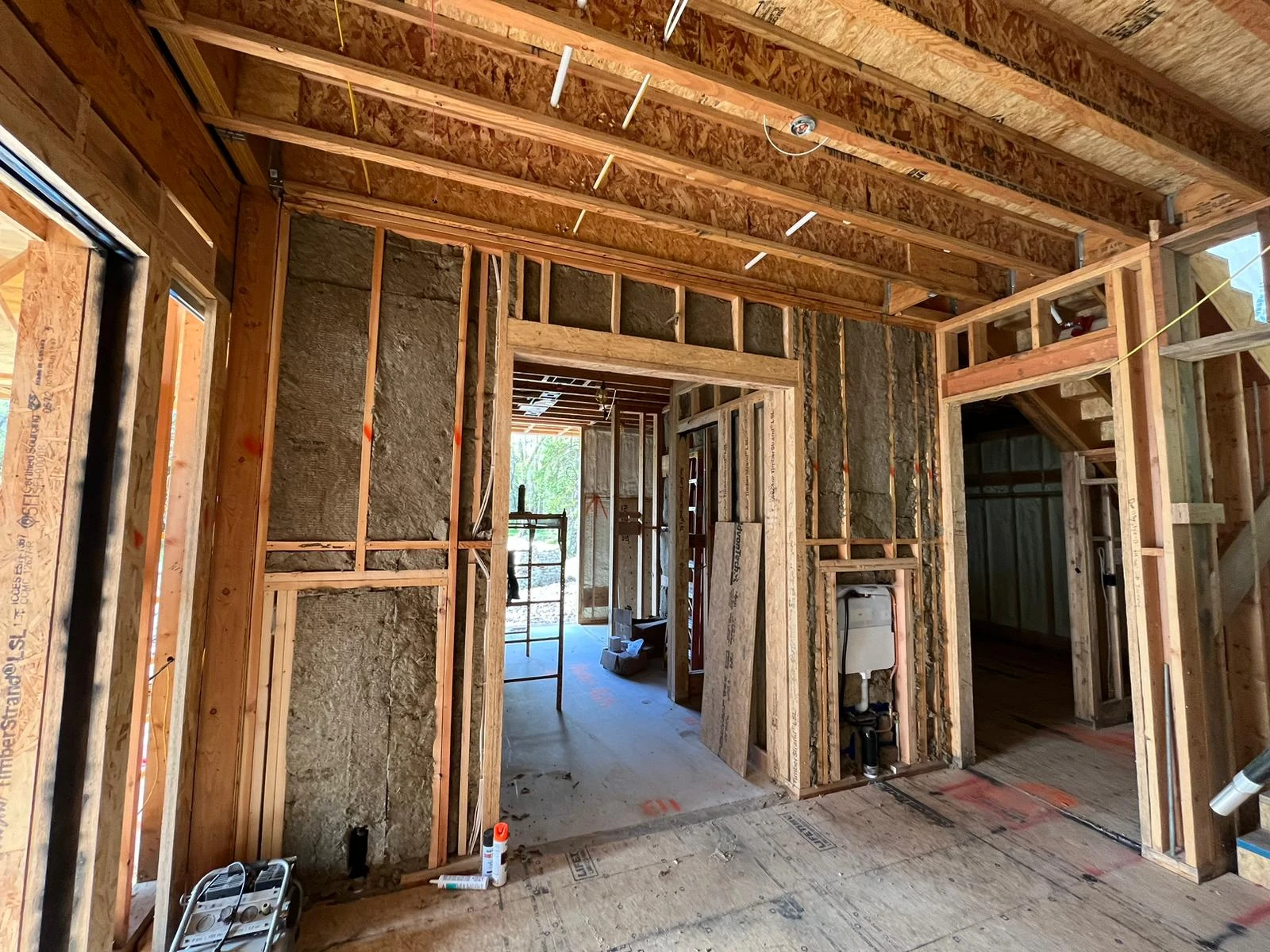
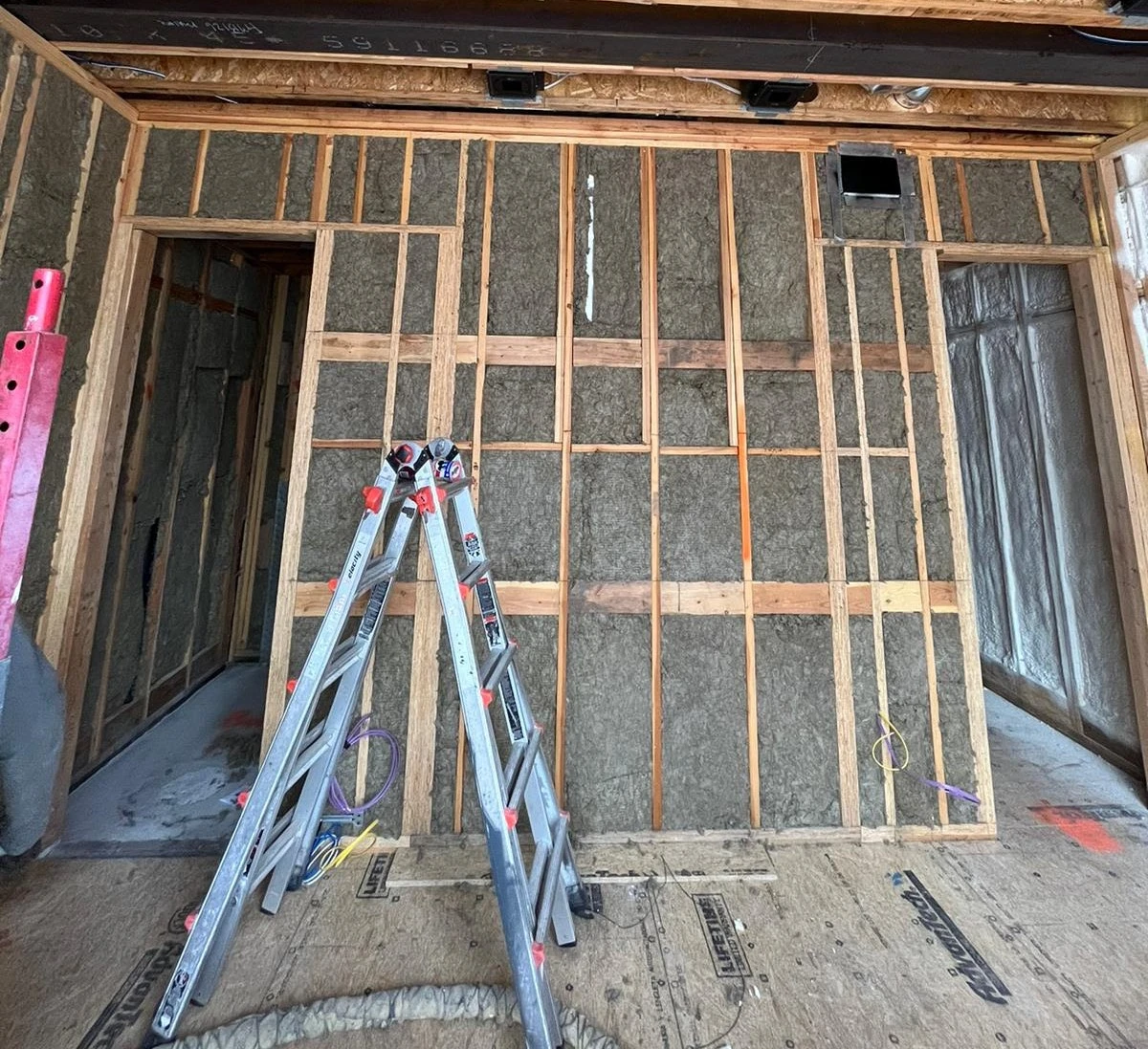
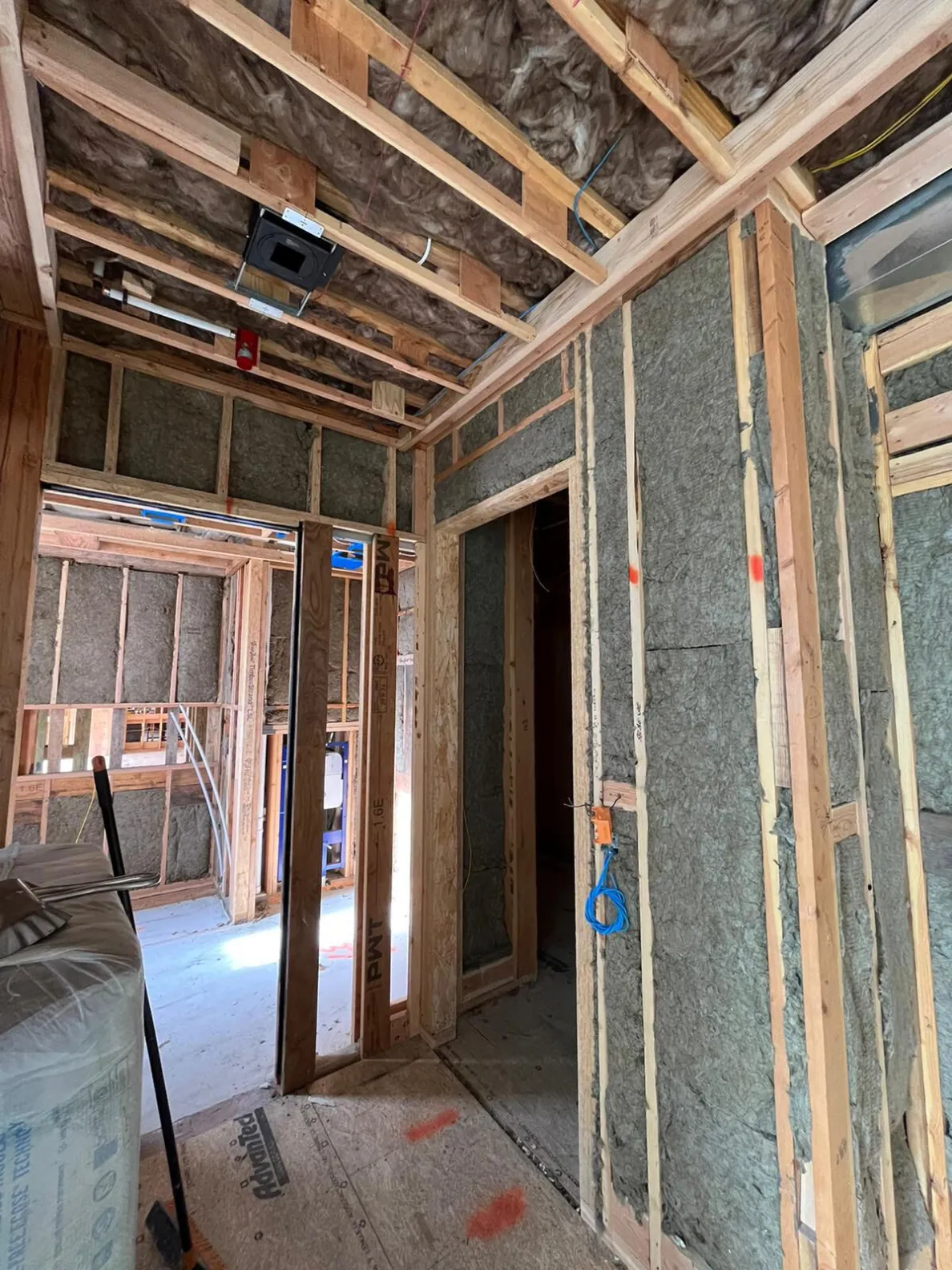
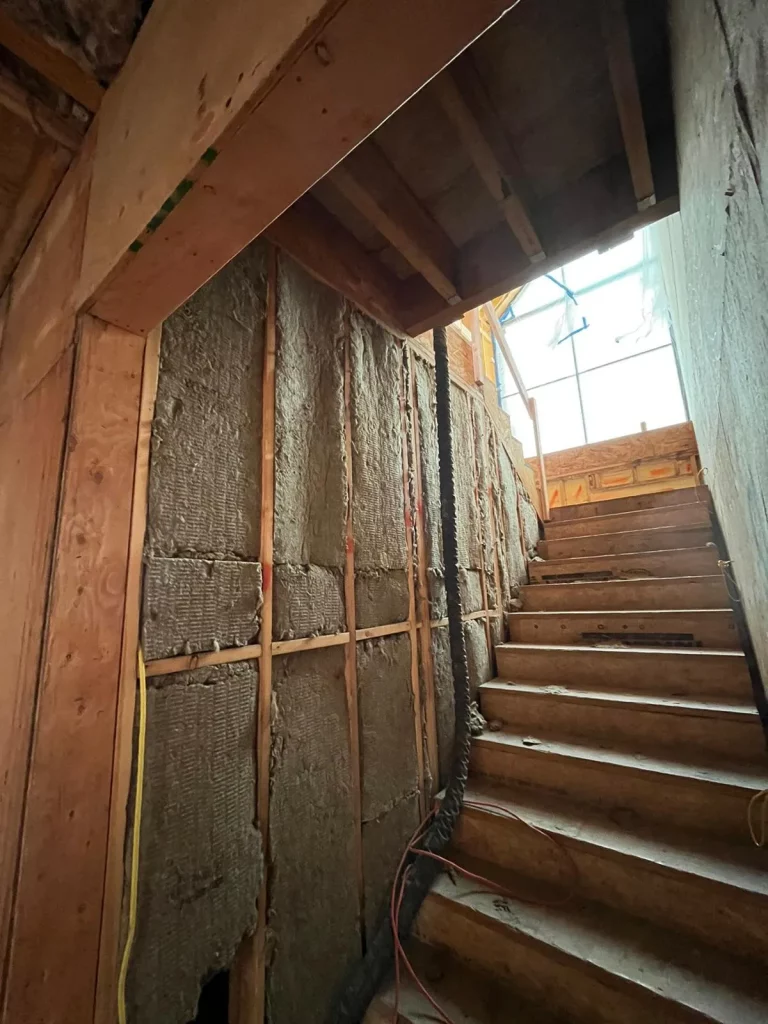
Mineral wool is made from basalt or slag, spun into dense fibers. It consistently ranks as the highest-performing standard insulation for both thermal and acoustic purposes in cavity applications. Two-inch mineral wool panels achieve STC values between 45 and 52, with NRC ratings from 0.95 to 1.09 .
Key advantages for Victor homes:
Limitations:
Cellulose insulation is made from up to 85% recycled paper fiber, treated with borate-based fire retardants. When dense-packed into wall cavities at approximately 3.5 lbs per cubic foot, it eliminates air gaps and provides solid acoustic performance. Cellulose products achieve NRC ratings of 0.80 or higher and can contribute to wall assemblies reaching STC 70 depending on the overall partition design, making proper professional spray foam air sealing and insulation strategy critical for maximizing acoustic and thermal performance.
Key advantages for Victor homes:
Limitations:
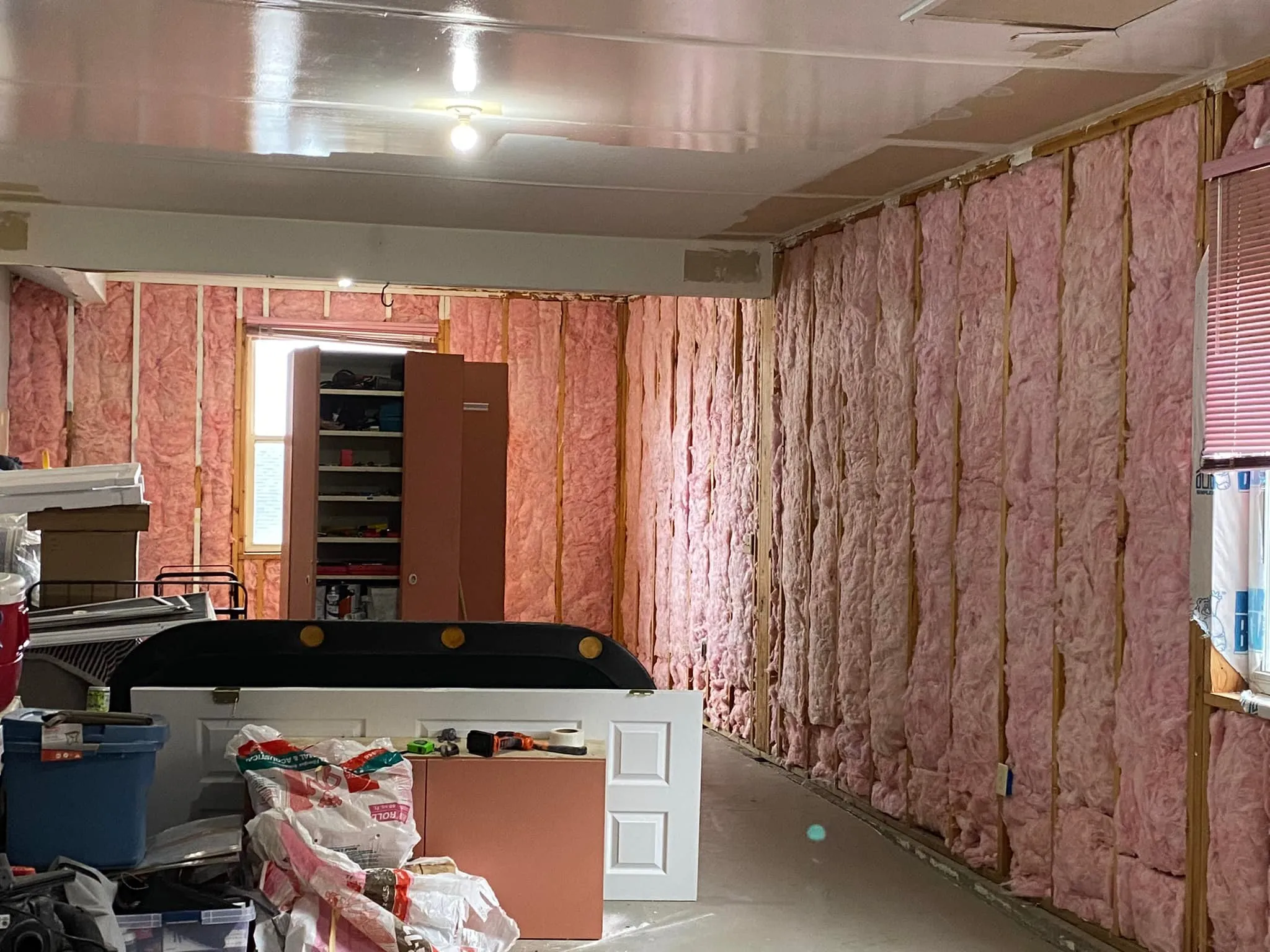
Fiberglass is the most common wall insulation in residential construction. High-density fiberglass batts, when installed in standard wall assemblies, add roughly 5-10 STC points compared to an empty cavity. According to National Gypsum research, fiberglass and mineral wool contribute the biggest gains in wall assembly STC, while spray foam provides very little benefit for sound.
Key advantages for Victor homes:
Limitations:
Spray foam is often considered for its air-sealing and thermal properties, but it performs poorly for soundproofing. As National Gypsum notes, spray foam fills the cavity completely and then hardens, forming a solid path through which sound can travel easily. This makes it the least effective cavity insulation choice when sound control is a priority, despite its effectiveness for spray foam insulation in Victor, ID.
| Material | NRC Range | Typical STC Contribution | R-Value/Inch | Best Application | Fire Resistance |
|---|---|---|---|---|---|
| Mineral Wool | 0.95-1.09 | +5-8 STC points | R-4 to R-4.2 | New walls, studios, high-priority rooms | Naturally non-combustible |
| Dense-Pack Cellulose | 0.80-0.85 | +3-5 STC points | R-3.5 to R-3.8 | Retrofit walls, floors, ceilings | Treated with fire retardants |
| High-Density Fiberglass | 0.90-0.95 | +3-6 STC points | R-3.2 to R-3.8 | Standard new construction walls | Requires facings for fire rating |
| Open Cell Spray Foam | ~0.30 | Minimal | R-3.5 to R-3.7 | Air sealing (not soundproofing) | Burns require a thermal barrier |
| Closed Cell Spray Foam | ~0.20 | Minimal | R-6 to R-6.5 | Moisture control, air sealing | Burns require a thermal barrier |
| Home Type | Noise Source | Insulation Strategy | Outcome |
|---|---|---|---|
| New construction near Teton Pass | Highway traffic, wind | Mineral wool batts in all exterior walls, double drywall with Green Glue | STC 55-60, speech barely audible from outside |
| Retrofit cabin near Driggs | Interior room-to-room noise | Dense-pack cellulose blown into existing 2×4 walls | STC 44-48, noticeable reduction in conversation bleed |
| Mountain home with home office | HVAC noise, foot traffic overhead | Mineral wool in interior office walls, cellulose between floor joists | Reduced airborne and impact noise transmission |
| Remodeled basement family room | Street noise, upstairs activity | High-density fiberglass in exterior walls, resilient channel with double drywall | STC 50+, adequate isolation for recreational use |
The insulation material is only one factor in the overall wall assembly. According to the National Gypsum research, six variables affect a wall’s STC rating: mass, cavity absorption, cavity depth, stiffness, decoupling, and damping.
Assembly upgrades that compound the effect of high-density insulation:
For Victor homeowners, the combination of mineral wool or cellulose insulation with decoupled framing and acoustic sealant around all penetrations delivers the most practical improvement over standard construction.
High Country Solutions has been helping Victor, ID, homeowners improve comfort, energy efficiency, and indoor environmental quality with professional insulation and building services. Our team evaluates your home’s specific noise challenges, wall assemblies, and climate requirements to recommend the best high-density insulation solution for soundproofing and thermal performance.
[email protected] | (307) 248-9063
For comfortable residential living, aim for a minimum STC 50 for party walls and exterior walls near roadways. This makes loud speech only faintly audible through the partition. For home offices, bedrooms, or rooms adjacent to noisy areas, STC 55 or higher is a better target.
Yes. Dense-pack cellulose can be blown into existing wall cavities through small access holes, which are then patched and finished. This approach is effective for retrofit applications and fills gaps that fiberglass batts may have left open.
Spray foam cures into a rigid solid that transmits sound vibrations through the wall assembly. Fibrous insulation like mineral wool and cellulose traps and absorbs sound within the wall cavity, which is far more effective at reducing sound transmission.
Yes. Mineral wool delivers approximately R-4 per inch, and dense-pack cellulose delivers R-3.5 to R-3.8 per inch. Both meet or exceed the thermal requirements for Idaho’s cold climate zones while simultaneously providing sound absorption.
Sealing is one of the most important steps. Research on wall partitions shows that even a 0.1% opening reduces transmission loss from 40 dB to 30 dB. Unsealed electrical boxes, plumbing penetrations, and perimeter gaps are common reasons soundproofing underperforms expectations.