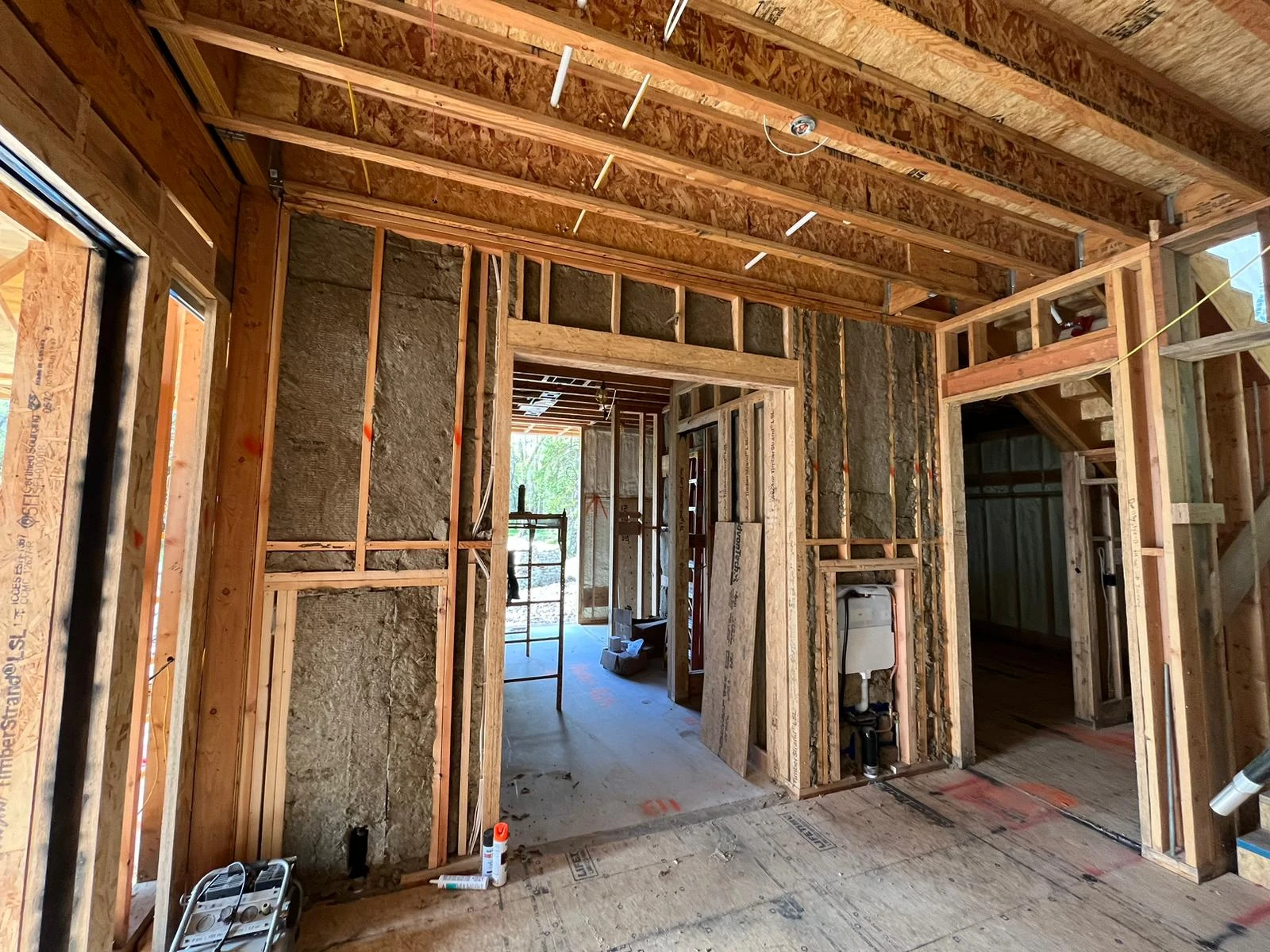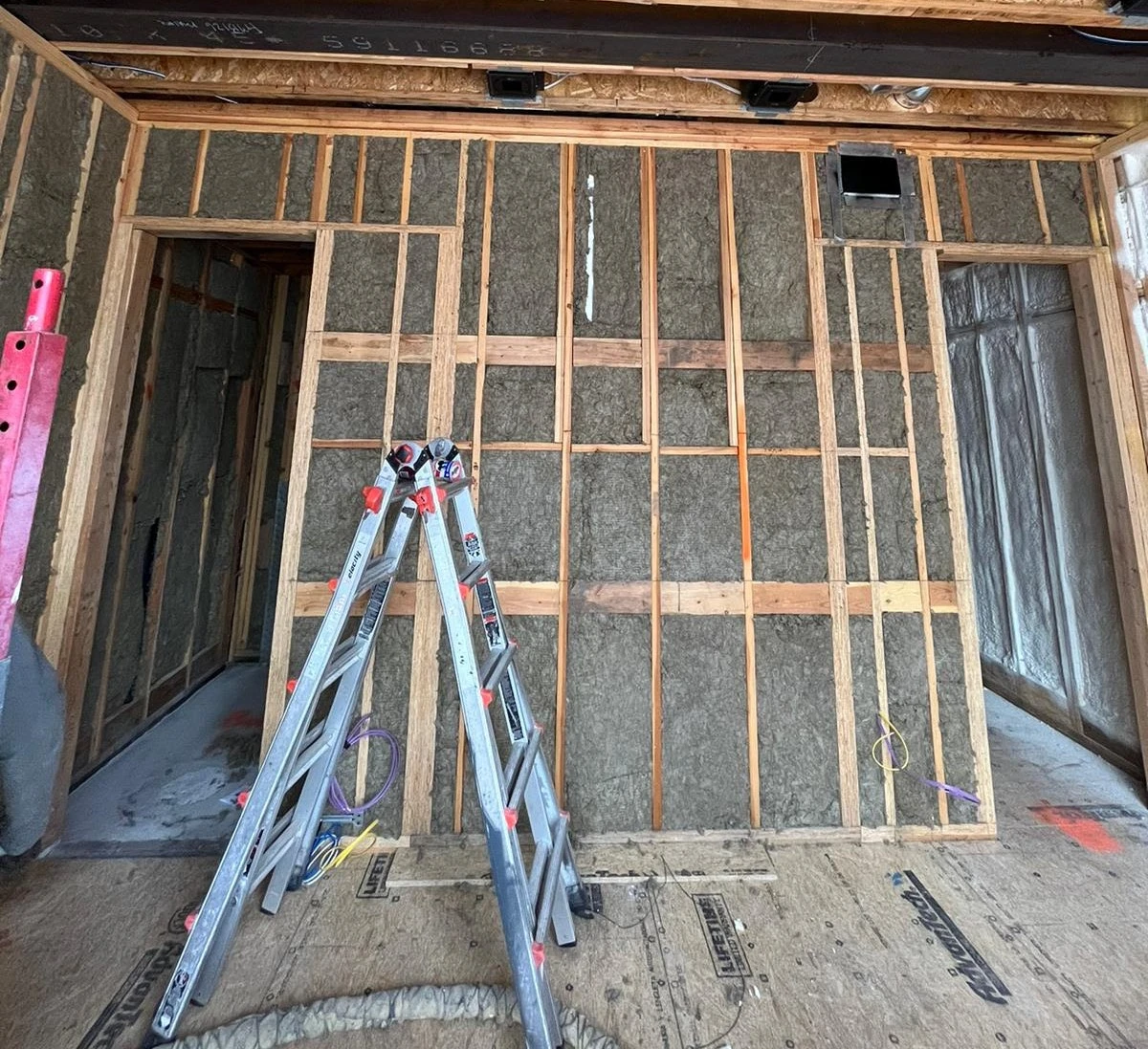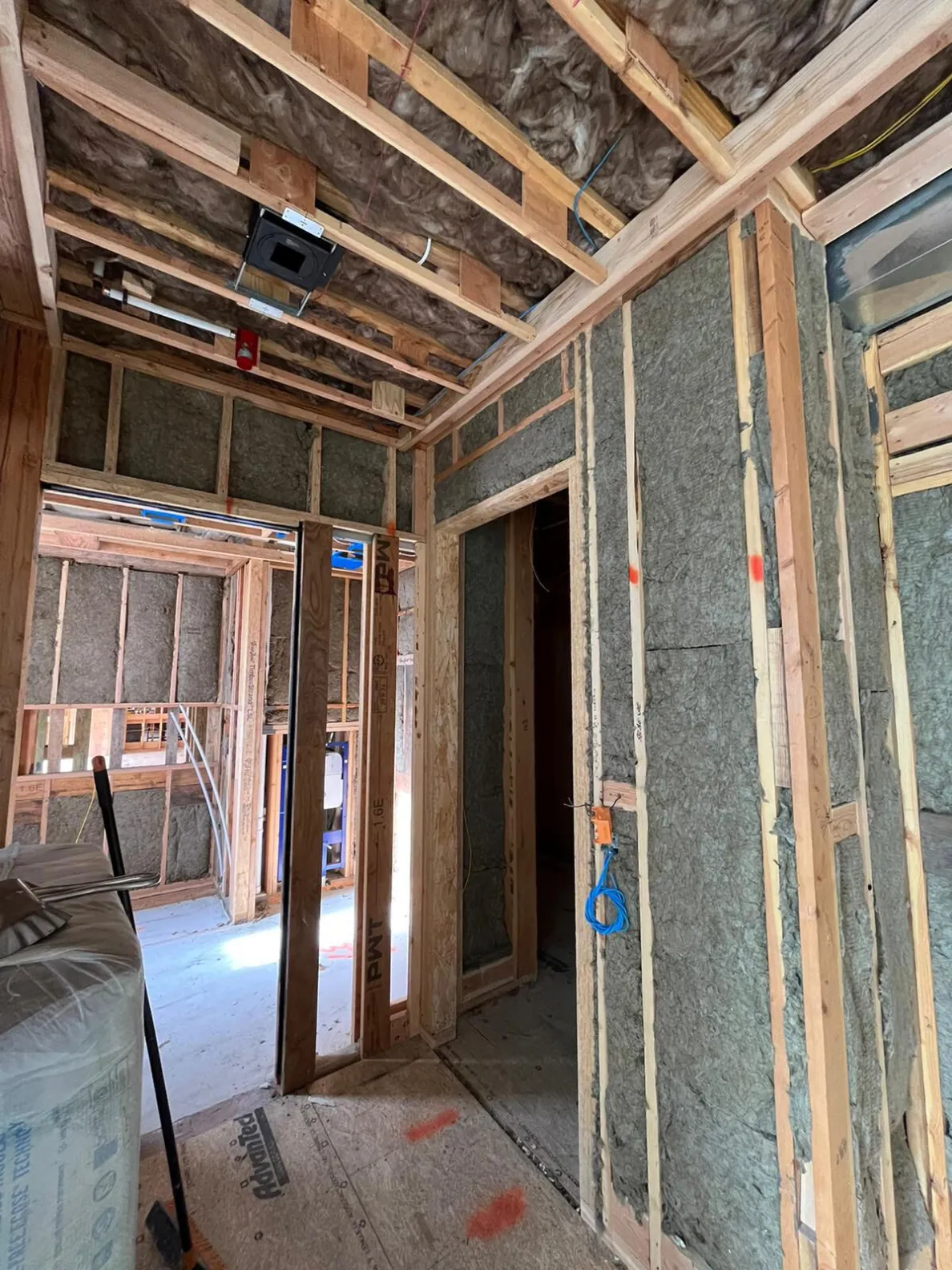
Why Are Homeowners in Thayne, WY Considering Mineral Wool for Insulation Upgrades?
Homeowners in Thayne, WY are turning to a mineral wool insulation guide because Star Valley winters push heating systems to their…


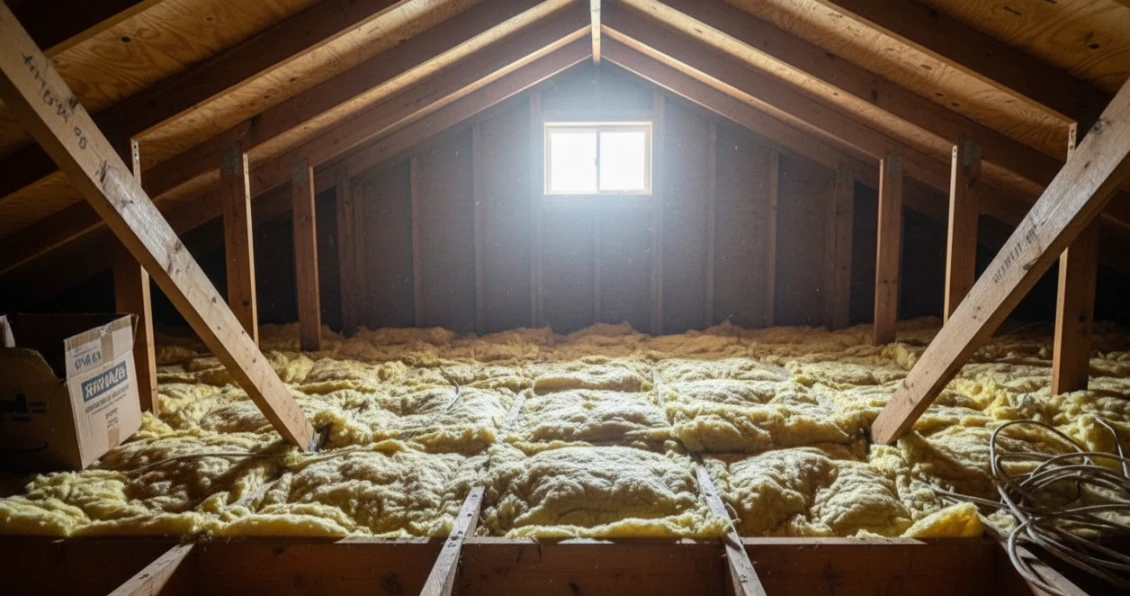
Builders in Driggs can reduce long-term energy costs by installing professional energy-efficient building insulation, where Driggs sits according to the U.S. Department of Energy’s climate zone map. In this cold climate, the EPA estimates homeowners can save an average of 14% on total energy costs (or 18% on heating and cooling alone) simply by air sealing and upgrading insulation in attics, floors over crawl spaces, and basement rim joists. Proper insulation slows conductive, convective, and radiant heat flow, meaning heating systems work less during Driggs’s long winters, and cooling loads stay manageable in summer.
Driggs sits at roughly 5,700 feet in elevation in western Idaho’s Star Valley, where winter temperatures routinely drop well below zero and heating season stretches from October through April. This places Driggs firmly in Climate Zone 6, one of the colder residential climate classifications in the lower 48 states.
In this zone, the Department of Energy recommends the following minimum R-values:
| Building Component | Minimum R-Value (Climate Zone 6) |
|---|---|
| Uninsulated Attic | R-60 |
| Attic with 3-4 Inches Existing | R-49 |
| Floor over Unconditioned Space | R-30 |
| Wood Frame Wall (Uninsulated) | R-20 + R5 CI or R-13 + R10 CI |
| Basement/Crawlspace Wall | R-15 CI or R-19 batt |
These are not aspirational targets. They represent the minimum levels that the DOE and ENERGY STAR consider cost-effective for this climate, based on the 2021 IECC residential provisions. Builders who meet or exceed these values give homeowners a measurable shield against Driggs’s extreme temperature swings.
Insulation resists heat flow through three mechanisms: conduction through solid materials, convection through air movement, and radiation from warm surfaces. According to the U.S. Department of Energy, properly installed insulation reduces this heat flow, which directly lowers the amount of energy required to maintain comfortable indoor temperatures.
In a cold climate like Driggs cold climate building solutions, Driggs’s biggest energy loss occurs during winter, when heat continuously flows from the warm interior toward the cold exterior through walls, ceilings, floors, and any gaps in the building envelope. The stronger the thermal resistance (higher R-value), the less heat escapes and the less the heating system runs.
But there is a catch. The DOE notes that thermal bridging through studs, joists, and framing members allows heat to bypass cavity insulation, meaning the overall wall R-value is always lower than the insulation’s rated value. This is why professional installers use continuous exterior insulation in addition to cavity fill, breaking the thermal bridge and delivering the full rated performance.
Professional insulation contractors do more than just fill cavities. They seal the air leaks that account for a large portion of energy loss in cold-climate homes. The EPA found that homeowners can save an average of 11% on total energy costs by combining air sealing with insulation upgrades, according to the ENERGY STAR methodology.
For Driggs builders, this means the insulation package should always include:
Not all insulation performs equally in extreme cold. Here is how the common options compare for Driggs construction:
| Insulation Type | Typical R-Value per Inch | Best Application | Cold Climate Performance |
|---|---|---|---|
| Closed-Cell Spray Foam | R-6 to R-7 | Walls, rim joists, and attics | Excellent air barrier, high R-value per inch |
| Open-Cell Spray Foam | R-3.5 to R-3.7 | Walls, cavities | Good air sealing requires a vapor retarder |
| Rigid Foam Board (Polyiso) | R-5.6 to R-6.5 | Continuous wall insulation | Effective thermal bridge break |
| Rigid Foam Board (XPS) | R-5 | Below-grade, exterior walls | Moisture-resistant, stable R-value |
| Blown Cellulose | R-3.5 to R-3.8 | Attics, dense-pack walls | Good for retrofit cavity fill |
| Fiberglass Batts | R-3 to R-3.8 | Walls, floors | Budget-friendly but prone to gaps if not installed well |
For Driggs’s Climate Zone 6, many cold-climate builders combine closed-cell spray foam for air sealing and high R-value in tight spaces with rigid foam board for continuous exterior insulation. This layered approach eliminates thermal bridging while achieving the high total R-values the climate demands.
The DOE Building America program documented numerous projects in cold and very cold climates. Here are several that demonstrate what Driggs builders can achieve:
| Project Type | Location | Key Insulation Strategy | Energy Result |
|---|---|---|---|
| Townhomes (26 units) | Wheat Ridge, CO (Zone 5) | Advanced framing, spray foam | HERS 54 without PV |
| Custom Home | South Glastonbury, CT (Zone 5) | Blown fiberglass, sealed attic | HERS 29 saves ~$600/year over 2009 IECC |
| Production Home | Omaha, NE (Zone 5) | R-100 blown cellulose attic, R-23 walls | HERS 47 without PV |
| Zero Energy Ready | Aspen, CO (Zone 6-7) | R-28 closed-cell spray foam under slab | HERS 54 townhouses |
| Deep Retrofit | Dayton, WA (Zone 5) | Ductless heat pump + insulation upgrade | Cut energy costs by $2,000+/year |
Source: DOE Building America Case Studies for Cold and Very Cold Climates
These projects show that builders in cold mountain climates consistently achieve 30-45% energy reductions through professional insulation strategies, often paired with high-performance windows and efficient HVAC systems.
Several variables determine how well insulation reduces long-term energy costs in Driggs’s specific conditions:
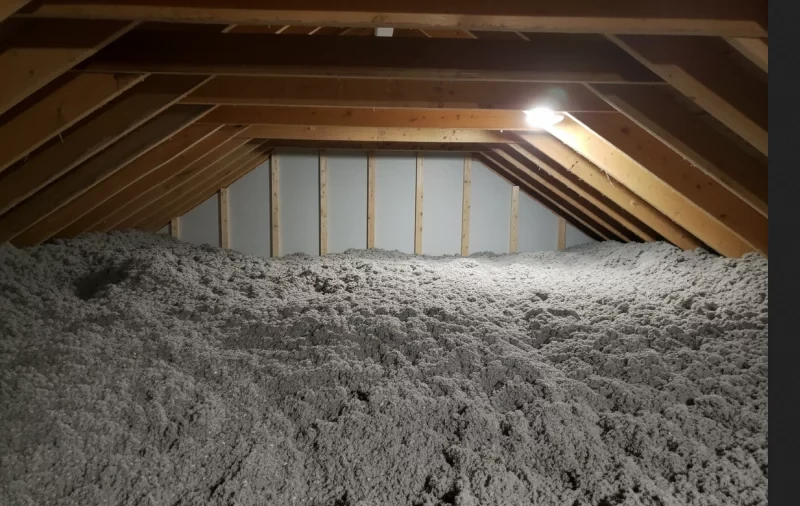
The real cost question is not how much professional insulation adds to a build budget. It is how much energy money homeowners lose every year when insulation is under-specified, poorly installed, or skipped in hard-to-reach areas. In Climate Zone 6, heating accounts for the largest share of residential energy use. Every gap in coverage, every thermal bridge, and every unsealed air leak translates directly into higher utility bills for decades. A blower door test after occupancy cannot fix what was missed during framing. The insulation decisions you make during construction determine the energy costs for the life of the building. This is why working with builders’ spray foam insulation partners ensures long-term performance and compliance.
At High Country Solutions, we specialize in professional insulation solutions designed for cold-climate construction in Driggs. Our team understands the specific demands of Climate Zone 6 and installs insulation systems that meet or exceed IECC requirements, eliminate thermal bridging, and deliver real energy savings homeowners can feel. Call us at (307) 248-9063 or email [email protected] to get started.
Request a Quote Schedule an Energy Assessment
We help builders get insulation right the first time, so your projects perform for decades to come.
Driggs sits in Climate Zone 6, which requires a minimum of R-49 in existing attics (with 3-4 inches already present) and R-60 for uninsulated attics per DOE and ENERGY STAR recommendations.
Yes. Gaps, compression, and missed areas can reduce effective R-value by 30-50%. Professional installers ensure full coverage, proper air sealing, and code compliance, which directly translates to better energy performance.
According to ENERGY STAR, homeowners in Climate Zone 6 can save approximately 14% on total energy costs and 18% on heating and cooling costs by air sealing and upgrading insulation to meet current standards.
Spray foam provides both a high R-value per inch and an effective air barrier, which is especially valuable in cold climates where air leakage is a major source of heat loss. For many Driggs builders, the performance benefit justifies the investment.
Yes. The DOE notes that insulation and air sealing improvements meeting the 2021 IECC requirements may be eligible for federal energy-efficiency tax credits. Check current IRS guidelines for specific credit amounts and eligibility.