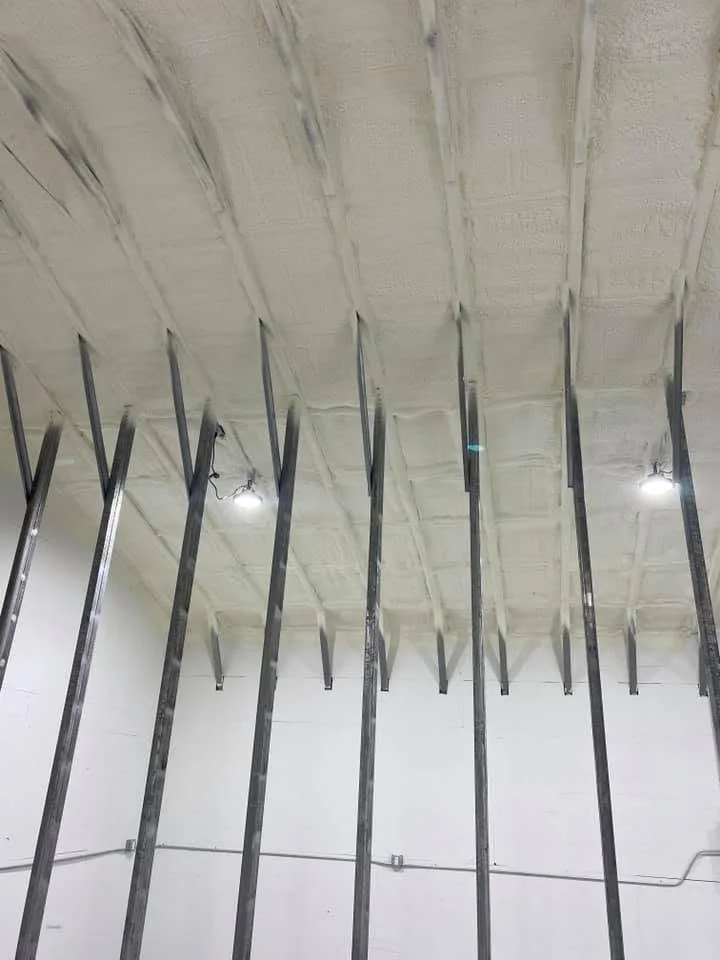
What Are the Benefits of Open-Cell Spray Foam for Homes in Victor, ID?
Skeeter Aimone
July 15th, 2026
Open-cell spray foam insulation delivers superior air sealing, sound dampening, and effective thermal performance for Victor, ID homes facing long, cold winters and wide seasonal temperature swings. Victor sits in USDA Hardiness Zones 4b and 5a, where average winter lows regularly dip well below freezing, and the temperature differential between indoors and out can exceed 60 degrees during the coldest months. For homeowners in this region, insulation is not optional; it is essential for comfort, energy efficiency, and structural longevity. Open-cell spray foam offers a specific set of advantages that make it a practical choice for certain applications in Victor homes, particularly interior wall cavities, attics, and sound-sensitive areas. The right insulation strategy depends on your home’s specific construction, your budget, and which areas of the building envelope need the most attention. This guide to open-cell spray foam explains where it performs best in residential construction.
TL;DR
Open-cell spray foam provides an effective air barrier at 3.75 inches or greater, sealing gaps and cracks that traditional insulation materials like fiberglass and cellulose cannot address.
Victor, ID homes experience extreme cold (USDA Zones 4b-5a), making insulation and air sealing among the most impactful investments for reducing heating costs.
Open-cell foam delivers R-3.6 to R-3.8 per inch and fills stud cavities, which helps offset thermal bridging through wood framing.
Unlike closed-cell foam, open-cell foam is vapor permeable, allowing moisture to pass through rather than trapping it inside wall assemblies.
Open-cell spray foam offers noticeably better sound dampening than closed-cell foam, making it a strong choice for interior walls, bedrooms, and shared walls.
Heating and cooling account for 50 to 70% of energy use in the average American home, and inadequate insulation and air leakage are the leading causes of energy waste.
Open-cell foam does not serve as a vapor barrier, so homes in Victor’s cold climate may need an additional vapor retarder depending on the wall assembly design.
Why Victor, ID Demands High-Performance Insulation
Victor, Idaho, located in the Teton Valley, experiences some of the most demanding winter conditions in the lower 48 states. According to the USDA Agricultural Research Service Plant Hardiness Zone Map, Victor falls within Zones 4b and 5a, meaning average annual extreme minimum temperatures range from -25°F to -15°F. January temperatures in Victor average a high of roughly 25°F and a low near 8°F, with temperatures dropping to -10°F or lower during cold snaps. Summer highs can reach the low 80s, creating a seasonal temperature swing of roughly 70 degrees or more.
This kind of climate places heavy demands on a home’s building envelope. The U.S. Department of Energy and ENERGY STAR Insulation Fact Sheet notes that heating and cooling account for 50 to 70% of the energy used in the average American home, and that inadequate insulation and air leakage are the leading causes of energy waste. In a place like Victor, where the heating season stretches for six or more months, every air leak and every under-insulated wall represents real, measurable heat loss.
How Open-Cell Spray Foam Works
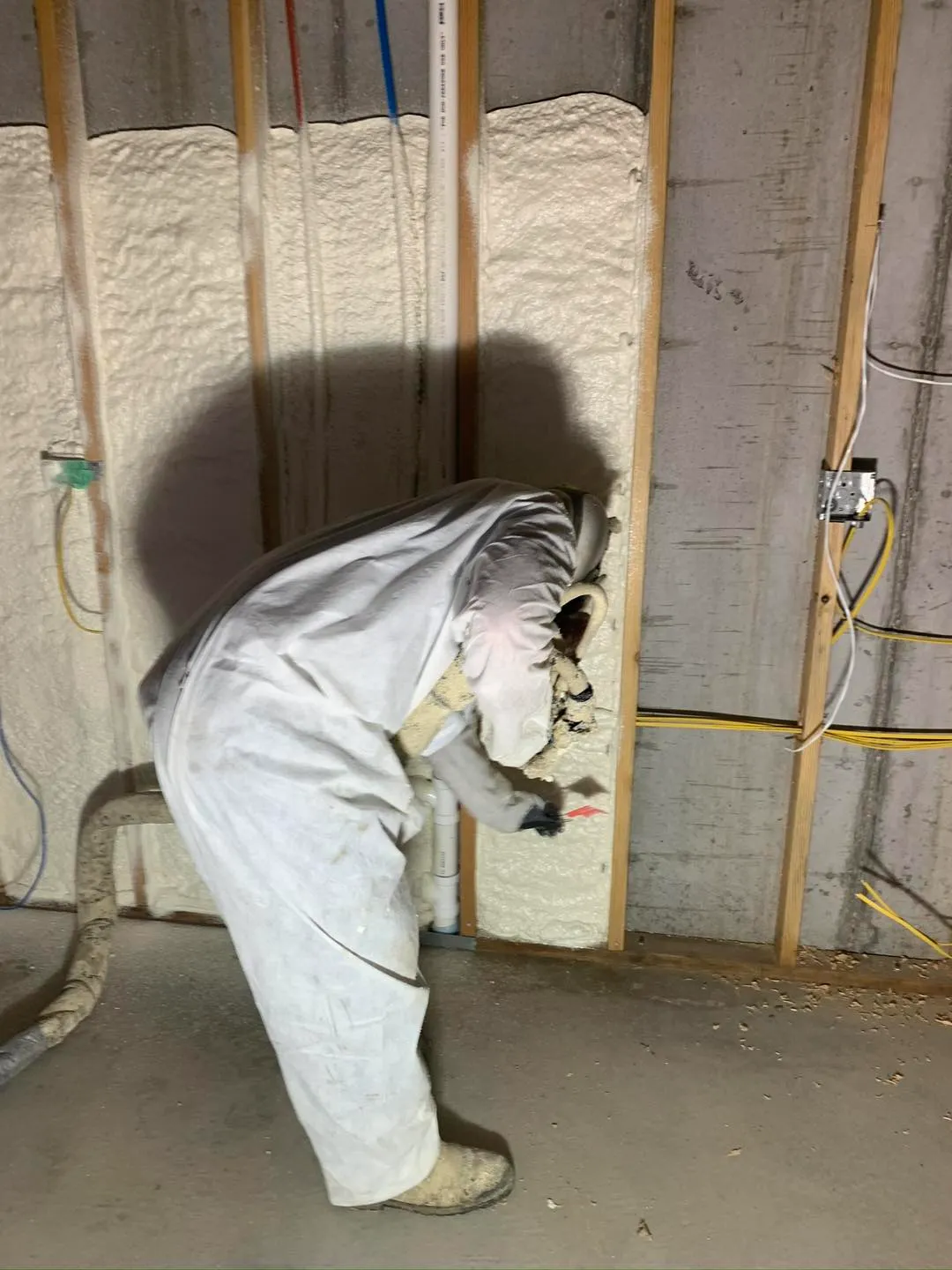
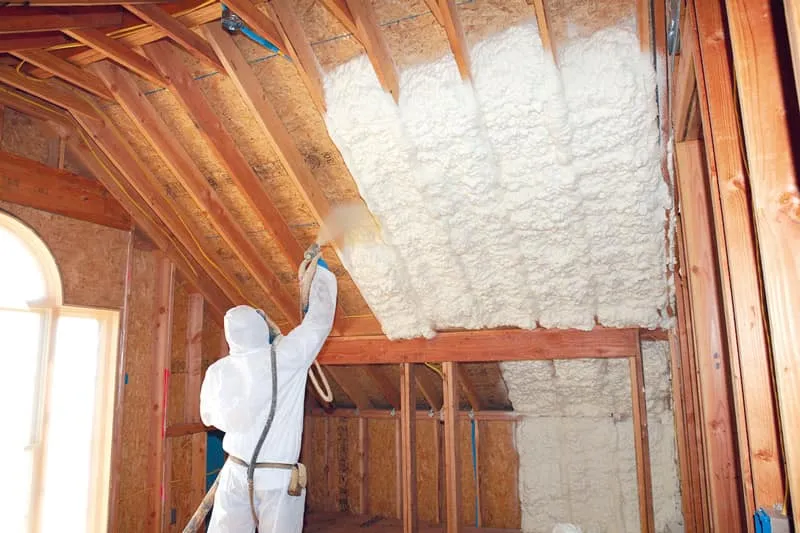
Open-cell spray foam is a low-density polyurethane insulation applied as a liquid that expands to many times its original volume, filling cavities and crevices before curing into a semi-rigid material. As Wikipedia’s thermal insulation reference explains, foam-based insulation traps air in small cells that cannot effectively transfer heat through convection, making it an effective insulator. What separates spray foam from other materials is that it expands into place, conforming to irregular shapes and sealing around wires, pipes, and framing members without gaps.
The Spray Polyurethane Foam Alliance reports that open-cell spray foam starts at R-3.6 per inch, and when applied at sufficient thickness (3.75 inches or more in standard 2×4 wall cavities), it qualifies as an air barrier. This means it resists the flow of air between conditioned and unconditioned spaces, which is one of the most significant factors in home energy performance.
Key Benefits of Open-Cell Spray Foam
Superior Air Sealing
The single largest performance advantage of open-cell spray foam over conventional insulation is its ability to seal air leaks. Traditional batt insulation sits between studs but does nothing to stop air movement through gaps around electrical boxes, plumbing penetrations, framing joints, or window rough openings. Spray foam expands into and seals all of these pathways simultaneously. The DOE Insulation Fact Sheet specifically identifies air leaks around electrical outlets, switch boxes, recessed fixtures, utility chaseways, and plumbing penetrations as major sources of energy loss, making open-cell vs. closed-cell insulation an important comparison before choosing a system.
Complete Cavity Fill
Open-cell spray foam expands to fill the stud cavity, unlike closed-cell foam, which is often applied at reduced depth in 2×4 walls because it is difficult to trim flush. A Fine Homebuilding analysis of whole-wall R-values found that when closed-cell foam is applied at 3 inches in a 3.5-inch cavity, the exposed stud faces increase thermal bridging and reduce overall wall performance. Open-cell foam, by contrast, fills the entire cavity depth, can be trimmed flush with studs, and maintains better contact with both interior and exterior surfaces of the wall assembly.
Sound Dampening
The porous, open-cell structure of this foam absorbs sound energy rather than reflecting it. This makes open-cell spray foam a practical choice for interior partition walls, bedroom walls shared with living spaces, home offices, and rooms adjacent to mechanical equipment. In Victor homes where families spend more time indoors during winter months, sound control between rooms contributes measurably to daily comfort.
Moisture Permeability
Open-cell spray foam allows water vapor to pass through the material. In a cold climate like Victor’s, this vapor permeability can be an advantage because it allows wall assemblies to dry toward one direction or the other, reducing the risk of trapped moisture and mold growth. However, this same permeability means open-cell foam does not serve as a vapor barrier, and a separate vapor retarder may be needed depending on the specific wall assembly and climate zone requirements. Builders using spray foam should account for these vapor control requirements during construction.
Open-Cell vs. Closed-Cell: Which Works Best in Victor?
The choice between open-cell and closed-cell spray foam is not about which is universally better, but about which is better suited to a specific application. Here is how they compare for Victor homes:
Feature
Open-Cell Spray Foam
Closed-Cell Spray Foam
R-Value per inch
R-3.6 to R-3.8
R-5.7 to R-7.0
Air barrier threshold
3.75 inches minimum
1.0 inch minimum
Vapor barrier capability
No
Yes (Class II at 1.5 inches)
Density
0.5 lb/ft³
2.0 lb/ft³
Sound dampening
Strong
Moderate
Cavity fill in 2×4 walls
Complete fill, easy to trim
Often partial fill, harder to trim
Best applications
Interior walls, attics, sound control
Exterior surfaces, foundations, crawlspaces
For interior wall cavities in a standard 2×4 framed Victor home, open-cell spray foam provides strong air sealing, complete cavity fill, and effective thermal resistance. For exterior-facing surfaces, continuous insulation applications, or below-grade areas like crawlspaces and basements, closed-cell foam is generally the better choice due to its vapor barrier properties and higher R-value per inch.
Where Open-Cell Spray Foam Delivers the Most Value in Victor Homes
Interior Wall Cavities
Open-cell foam is particularly effective in interior and exterior wall cavities where complete fill and air sealing are priorities. In Victor’s cold climate, the temperature differential between indoor and outdoor air drives heat loss through every gap and crack in the building envelope. Open-cell foam seals these pathways while filling the entire cavity depth, reducing both conductive heat loss and air infiltration.
Attics and Cathedral Ceilings
The DOE recommends insulating the underside of roof sheathing for cathedralized attic assemblies, and spray foam is one of the most effective materials for this application because it adheres directly to the underside of the roof deck, sealing all penetrations and irregularities. Open-cell foam is a practical option for these assemblies when a vapor-permeable insulation layer is desired, allowing the roof assembly to dry toward the interior.
Sound-Sensitive Areas
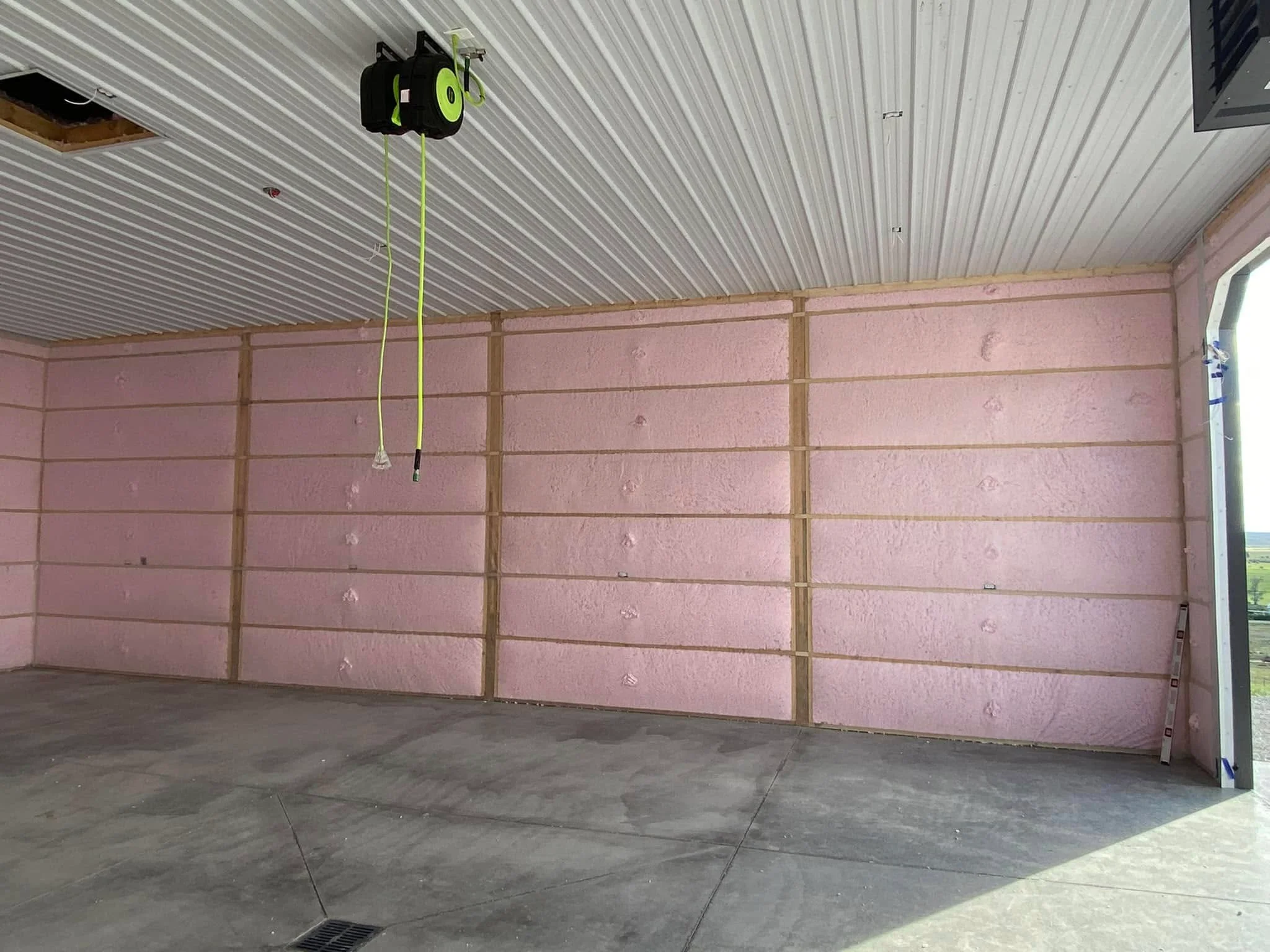
For Victor homeowners building or renovating, open-cell spray foam in interior partition walls provides a noticeable improvement in sound isolation between rooms. This is especially relevant in open-concept homes where quiet spaces need to be carved out, or in multi-family dwellings where shared walls transmit noise.
Recommendations by Home Type and Project
Home Scenario
Recommended Foam Strategy
Key Considerations
New construction, standard 2×4 walls
Open-cell in cavities, rigid foam on exterior
Open-cell handles air sealing and cavity fill; exterior foam reduces thermal bridging
Existing home retrofit, accessible attic
Open-cell at roof deck or attic floor
Seal air leaks first, then insulate; open-cell is ideal for irregular shapes
Basement or crawlspace insulation
Closed-cell on walls
Moisture exposure requires vapor barrier properties that open-cell cannot provide
Interior renovation with sound control goals
Open-cell in partition walls
Superior sound absorption compared to fiberglass or closed-cell alternatives
Cathedral ceiling with proper ventilation
Open-cell at roof deck
Allows vapor permeability while providing air seal and thermal resistance
Signs You Have Found the Right Insulation Contractor
Choosing a qualified installer matters as much as choosing the right material. Look for these indicators when evaluating a spray foam contractor for your Victor home:
Thorough assessment process: The contractor performs a detailed inspection of your home’s building envelope before recommending a specific approach, rather than applying a one-size-fits-all solution.
Clear explanation of open-cell vs. closed-cell trade-offs: A strong contractor explains why one foam type is recommended for a specific area and is transparent about where vapor retarders may be needed.
Proper certifications and documentation: The contractor provides product data sheets and safety information for all materials used, and can demonstrate relevant training and certifications.
Attention to moisture management: The contractor addresses how moisture will move through the assembly, not just how heat will be retained, especially important in Victor’s cold, snowy climate.
Willingness to explain whole-wall performance: The contractor discusses how the insulation interacts with framing, sheathing, and other building materials rather than focusing solely on R-value per inch.
Get Your Victor, ID Home Insulation Assessment
High Country Solutions helps Victor homeowners make informed insulation decisions based on local climate demands, building science principles, and the specific needs of each home. Our team evaluates your building envelope, identifies air leakage pathways, and recommends the spray foam strategy that delivers the best long-term performance for your situation. Whether you are building new, retrofitting an existing home, or upgrading specific areas, we bring the expertise needed to get it right the first time.
Is open-cell spray foam effective enough for Victor’s cold winters?
Yes, when applied at the correct thickness, open-cell spray foam serves as an effective air barrier and provides strong thermal performance. It is well suited for interior wall cavities and attic assemblies where complete fill and air sealing are the priorities.
Does open-cell spray foam prevent mold in walls?
Open-cell foam does not trap moisture like closed-cell foam can, which allows wall assemblies to dry. However, it does not act as a vapor barrier, so proper moisture management and ventilation should still be part of your overall building envelope strategy.
How does open-cell spray foam compare to fiberglass batts for energy savings?
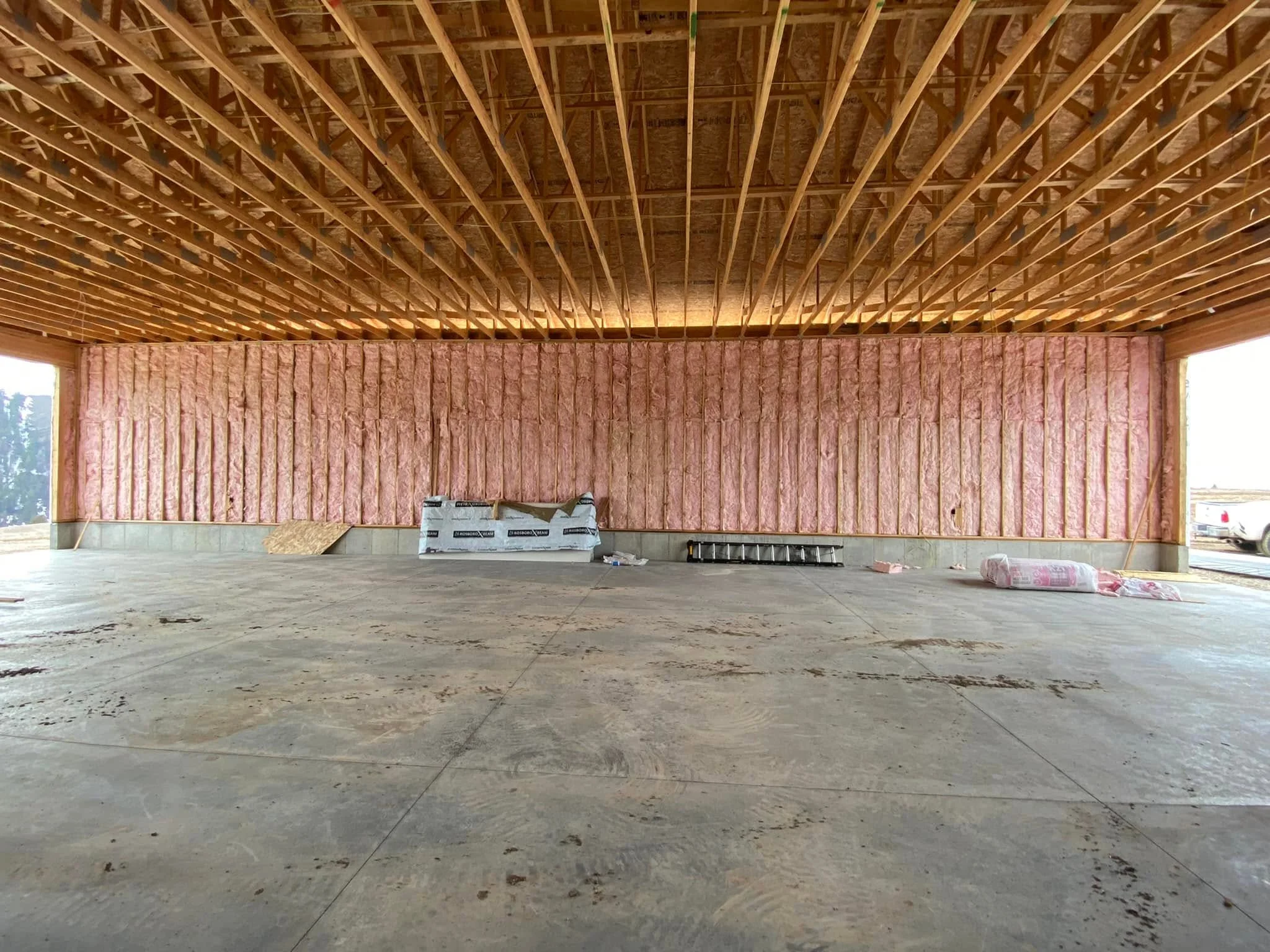
Open-cell spray foam seals air leaks that fiberglass batts cannot address, and it fills cavities around obstructions. The DOE identifies air leakage as a leading cause of energy waste, which is something fiberglass alone does not solve.
Can open-cell spray foam be used in a cathedral ceiling?
Yes, open-cell spray foam can be applied to the underside of roof sheathing in cathedral ceiling assemblies. Its vapor-permeable nature allows the assembly to dry, but a proper assessment of your specific roof design is recommended before proceeding.
Will open-cell spray foam help reduce noise between rooms?
Yes, the porous cell structure of open-cell foam absorbs sound energy effectively. It outperforms both fiberglass batts and closed-cell spray foam for sound dampening in interior partition walls.
Sources
DOE/ENERGY STAR Insulation Fact Sheet – Comprehensive government resource covering insulation types, R-values, air sealing, moisture control, and climate zone recommendations for residential buildings.
USDA ARS Plant Hardiness Zone Map – Official USDA map classifying Victor, ID within Zones 4b and 5a, confirming extreme winter minimum temperatures relevant to insulation performance requirements.
Wikipedia – Thermal Insulation – Reference encyclopedia article on thermal insulation principles, materials, and building applications including urethane foam and air-trapping insulation mechanisms.
Fine Homebuilding – Closed-Cell Foam Between Studs Is a Waste – Building science publication analyzing whole-wall R-value performance of open-cell versus closed-cell spray foam in stud wall assemblies, including cavity fill and thermal bridging considerations.
I’m Skeeter Aimone, owner of High Country Solutions in Alpine, Wyoming, leading the company since 2019. I focus on quality installation, building science, and insulation solutions suited to harsh Wyoming and eastern Idaho conditions.