How Does New Construction Insulation in Alpine, WY Support Building Code Compliance?
New Construction Insulation in Alpine, WY work supports building code compliance by meeting the required R-values for your climate zone,…


New Construction Insulation in Alpine, WY work supports building code compliance by meeting the required R-values for your climate zone, sealing air leaks that waste heat, and controlling moisture inside your walls. Alpine has adopted the 2021 International Building Codes, so your plans and installation get checked against them. Planning insulation early helps your build pass inspection on the first visit.
Before you pick materials, you need to know which rulebook your house has to follow. In Wyoming, that answer depends on your town, not the state.
Wyoming has no mandatory statewide energy code. ACEEE reports that the state’s residential code is voluntary and local jurisdictions decide what to enforce. The Town of Alpine says it has adopted the 2021 International Building Codes.
Your plans get checked against the town’s adopted codes and its local amendments. Building Code Insulation Requirements Alpine, WY inspectors apply can differ from a generic checklist, so read the town’s current text before you finalize your wall and roof assemblies.
Code compliance isn’t about piling on insulation. It’s about hitting specific targets for every part of the building shell.
Insulation for New Construction in Alpine, WY projects has to do three jobs at once:
Alpine sits in cold, snowy country, so expect the high end of the code tables. Climate zones are assigned by county, so confirm yours with the building department before you order materials. Using the 2021 IECC, TruTeam lists the following for the coldest zones.
| Component | Typical Zone 7 Minimum |
|---|---|
| Ceiling | R-49 |
| Wood frame wall | R-21 |
| Floor | R-38 |
| Slab | R-10 |
| Basement wall | R-15 |
These are prescriptive minimums. Your designer may use a performance path that trades one part of the shell against another, but your plans still have to show the math.
No single product wins every time. Your design, budget, and code path decide the right mix.
Energy-efficient insulation in Alpine, WY builders choose usually falls into three groups, and each has trade-offs:
Cold-climate builders often pair cavity insulation with exterior rigid foam to reach wall targets. That combination can also reduce the framing thickness you need, which affects your budget and plans.
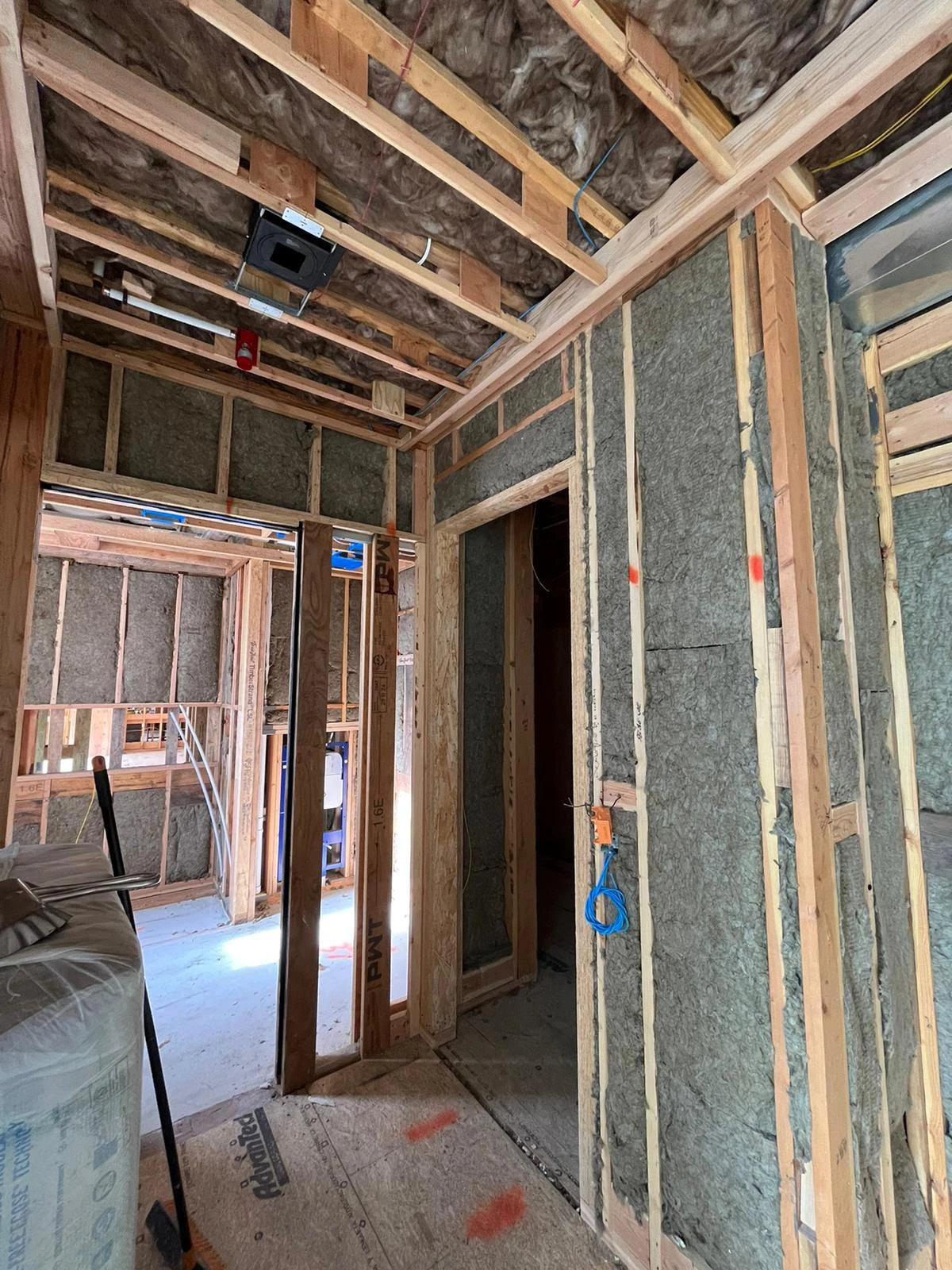
Inspectors typically check insulation after framing and rough-in work, and before drywall covers the walls. Ask the building official for the exact inspection order on your job.
They look for full cavity fill, the right R-values, sealed air gaps, and proper vapor control. Cold weather matters here. New Home Insulation Alpine, WY schedules tighten once snow arrives, and a failed check can delay drywall, heat, and finish work.
Keep the product labels and installation records your installer provides. Code typically asks for an insulation certificate showing the R-values installed, and having those papers ready speeds up the final sign-off.
Use this list while your plans are still on paper. Fixing a gap in the drawings costs far less than fixing it behind finished walls.
If you want a new construction insulation contractor in Alpine, WY, homeowners and builders can talk to us early; reach out to High Country Solutions in Alpine, WY. We can walk through your plans with you and talk through your options before your inspection date. We offer a free quote.
Phone: (307) 248-9063
Email: [email protected]
The 2021 IECC includes performance-based paths that trade one part of the shell against another. Whether Alpine accepts that path for your plans is a question for the building department, so ask before you cut insulation anywhere.
Solid log walls insulate differently than framed walls, so the roof, floor, and any framed sections usually carry more of the insulation load. Your plans and the local code official decide what’s required.
It’s usually less costly and less disruptive, because the walls are open and access is easy. Adding insulation to finished walls typically means drilling or removing finishes.
Better insulation and air sealing generally lower heat loss, so your heating system runs less. Actual savings depend on your home’s size, design, and heating fuel.
It depends on how the space is designed. Alpine’s published amendments include crawl space insulation language, so ask the building official which method they’ll accept before your installer starts.
Sources