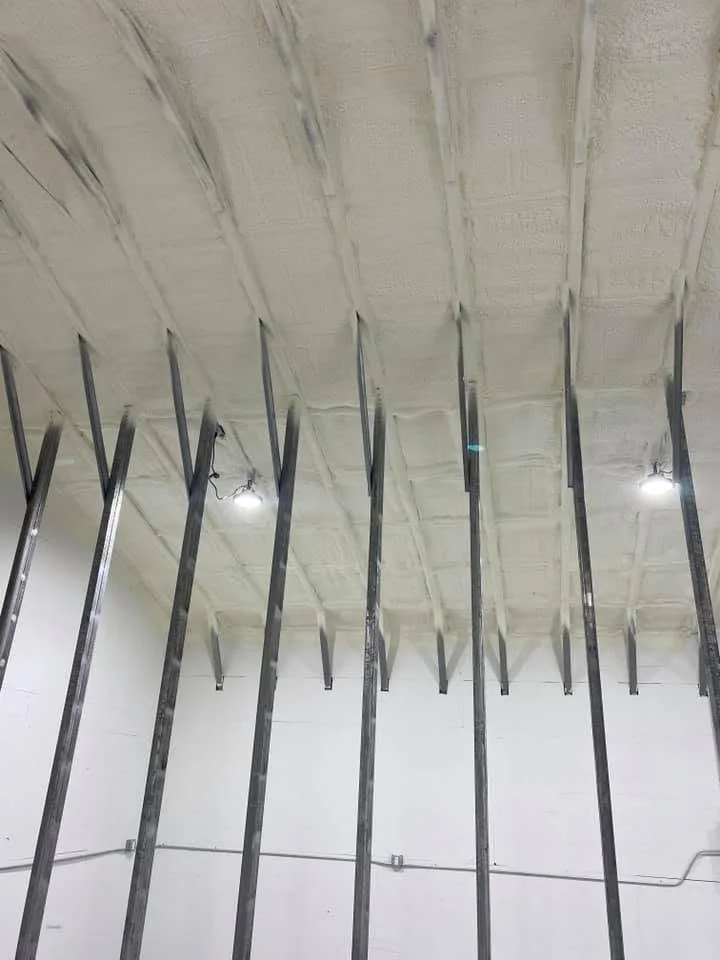
What Happens to Your Rock Springs, WY Home When Spray Foam Is Installed by an Inexperienced Contractor?
Skeeter Aimone
August 24th, 2026
When spray foam insulation is installed incorrectly in a Rock Springs, WY home, the results can range from persistent chemical odors and poor energy performance to hidden moisture damage, rotted framing, and serious health risks. Rock Springs sits in IECC Climate Zone 6, where winter temperatures regularly drop well below freezing and heating demands are high. In this environment, the margin for error on any insulation installation is thin, and spray foam is less forgiving than most alternatives because it is, in effect, manufactured on-site during application. An inexperienced installer who does not understand building science, proper chemical ratios, substrate temperatures, or lift thickness can turn a high-performance product into a liability that takes years to surface, making professional spray foam insulation services an important consideration when selecting an experienced contractor.
TL;DR
Spray foam is effectively “manufactured” at your job site, making the installer’s knowledge and technique more important than the brand of foam
In Climate Zone 6 (Rock Springs), incorrect foam type selection or improper thickness ratios can trap moisture inside wall and roof assemblies, leading to hidden wood rot
Off-gassing from improperly cured foam exposes occupants to isocyanates, which the EPA identifies as a leading chemical cause of work-related asthma
Applying foam too thick in a single pass causes cracking, charring, and incomplete curing due to trapped exothermic heat
Poorly sealed framing connections, voids, and delamination create air leaks that defeat the air-barrier purpose of spray foam entirely
The CPSC recommends homeowners vacate for at least 24 hours after installation, a step inexperienced contractors may skip or downplay
There are no federal or Wyoming state training requirements for spray foam installers, meaning any contractor can legally purchase equipment and spray your home
Remediation of botched spray foam is extremely difficult and expensive because the foam permanently bonds to framing and sheathing
Why Spray Foam Installation Skill Matters More Than the Product
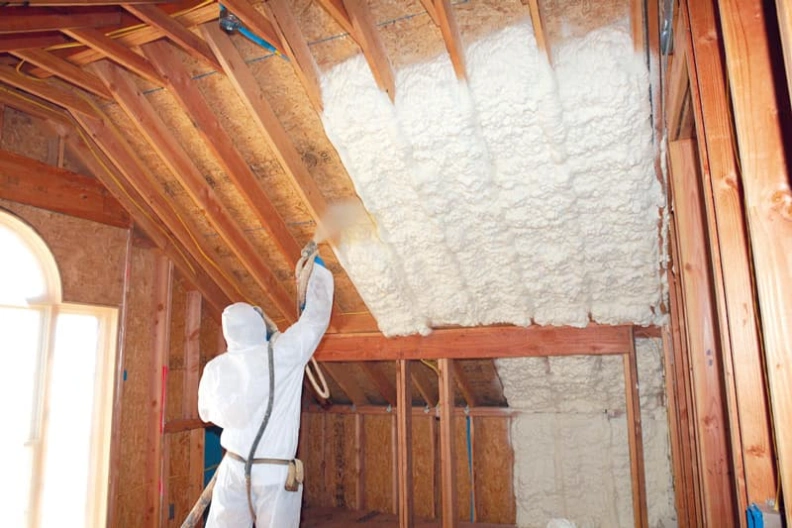
Spray polyurethane foam is unique among insulation materials because its two chemical components, isocyanates (Side A) and a polyol blend (Side B), are mixed and react at the point of application. Unlike rigid foam boards, which are produced under controlled factory conditions, spray foam’s quality depends entirely on the person holding the gun. As Green Building Advisor documents, the first rule of spray foam is to hire the installer, not the brand. An inexperienced technician may not understand how substrate temperature, humidity, chemical ratio, and pass thickness interact to produce a properly cured, adhered, and performing insulation layer.
In Rock Springs, where summer highs reach the 80s and winter lows plunge below zero, the seasonal swing in substrate and ambient temperatures adds another variable an inexperienced installer may not account for. Spray foam manufacturers recommend specific temperature ranges for application, and falling outside those ranges produces foam that does not adhere, does not cure completely, or cures with structural defects. Homeowners planning insulation work should consider Rock Springs spray foam services when they need installation performed according to proper application conditions and manufacturer requirements.
Structural Damage Hidden Behind Your Walls
The most dangerous consequence of a bad spray foam job in a cold climate like Sweetwater County is moisture damage that goes undetected for years. When spray foam creates what appears to be an airtight seal but actually contains voids, gaps, or areas of delamination, warm indoor air carrying water vapor can sneak through those defects, hit cold exterior framing or sheathing, and condense. Because spray foam is hydrophobic and restricts drying, that trapped moisture has nowhere to go and steadily degrades the wood. Homeowners concerned about protecting their insulation system can review spray foam protection solutions to better understand how proper installation and moisture control help prevent these problems.
Building science experts have documented that rot issues related to spray foam tend to surface around eight years after installation, according to investigative reporting by VTDigger. In a Vermont case, a contractor with 25 years of experience discovered his own roof rafters had crumbled to dust a decade after open-cell spray foam was installed, despite being told the foam would allow any leaks to show through. The Building Science Corporation notes that spray foam walls dry relatively slowly because the material eliminates convective looping, meaning any water that enters the assembly stays in contact with wood framing for extended periods.
In Rock Springs, the risk is amplified by the long, cold heating season. Homes produce interior moisture from cooking, bathing, and breathing. In a poorly sealed spray foam installation, that moisture drives toward the exterior and condenses within the wall or roof assembly for months on end.
Common Installation Failures and What They Cause
Applying Foam Too Thick in a Single Pass
Closed-cell spray foam generates significant heat as it cures (an exothermic reaction). When applied in lifts thicker than about 2 inches, the insulating properties of the foam itself trap that heat, causing the material to crack, char, and develop inconsistent cell structure. Green Building Advisor shows core samples from jobs where foam sprayed 6 inches thick in a single pass had a greenish hue, a strong odor even after two weeks of curing, and elongated cells with visible cracks. This compromised foam will not deliver its rated R-value and may continue off-gassing.
Voids, Gaps, and Delamination
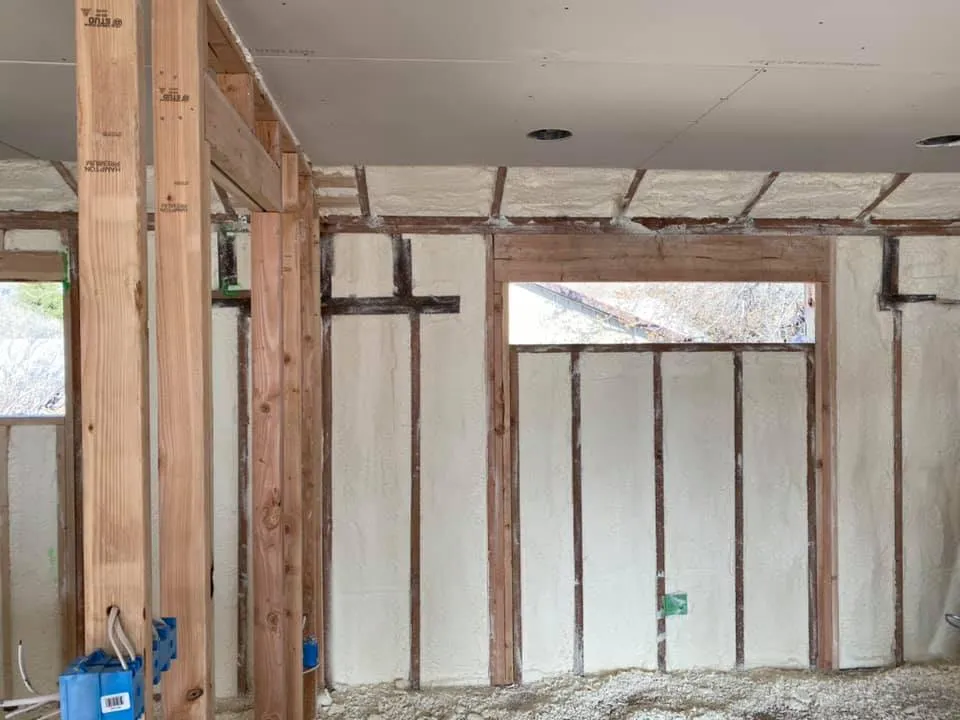
Inexperienced installers working in tight spaces, around electrical wiring, plumbing pipes, and framed corners often leave voids, areas where the foam pulls away from the substrate (delamination), or shadowed spots where the spray pattern could not reach. These defects create air leakage paths that completely undermine spray foam’s primary advantage as an air barrier. Infrared thermography during blower door testing regularly reveals air leakage at framing corners and doubled studs where the foam could not reach wood-to-wood connections.
Wrong Foam Type for the Climate and Assembly
Rock Springs is in Climate Zone 6, where the International Energy Conservation Code requires specific insulation R-values and vapor control measures. Closed-cell spray foam acts as a vapor retarder (Class II at approximately 1.5 inches), while open-cell foam is vapor-permeable. Using open-cell foam in a roof assembly without proper ventilation, or in a wall assembly without adequate vapor control, creates a high risk of condensation and moisture damage. The Building Science Corporation explicitly notes that some vapor control may be necessary with low-density spray foam in cold climates, a detail an inexperienced installer may overlook.
Failure to Address Pre-Existing Moisture
The Department of Energy’s Building America Solution Center warns that adding insulation without first fixing existing water leaks increases moisture damage risk because the reduced heat flow through the assembly means less drying occurs. An inexperienced contractor may not inspect for bulk water leaks, failing roof flashing, or moisture in the basement before spraying.
Failure Type
Cause
Consequence
Time to Discover
Cracking and charring
Foam applied too thick in one pass
Lost R-value, continued off-gassing, weak adhesion
Days to weeks
Voids and gaps
Poor technique in tight spaces, messy substrates
Air leakage, reduced thermal performance
During blower door test
Delamination
Wrong substrate temperature, dirty surfaces
Air leakage paths, hidden condensation
Months to years
Hidden wood rot
Wrong foam type, undetected moisture, incomplete seal
Improper mixing, incorrect chemical ratios, incomplete cure
Health symptoms, unlivable home
Days to months
Health Risks From Improper Curing and Off-Gassing
Spray foam contains isocyanates, a class of highly reactive chemicals that the EPA reports can cause skin and eye irritation, asthma, lung sensitization, and potentially permanent respiratory damage. When the two chemical components are mixed incorrectly, applied at wrong temperatures, or allowed to cure in poor conditions, the foam may not fully react and can continue off-gassing isocyanates and amine catalysts indefinitely.
The CPSC’s consumer safety guidance states that homeowners and building occupants have reported ongoing odors and respiratory symptoms after spray foam application, and recommends vacating the premises for at least 24 hours following installation. The CPSC also notes there are no standard processes for removing misapplied spray foam, and disturbing it can generate hazardous dust.
An inexperienced contractor may not communicate re-occupancy times clearly, may not ventilate the work area properly, or may allow occupants to return too soon. In extreme cases reported in investigative journalism, families have had to abandon their homes entirely after bad installations.
What This Means for Rock Springs Homeowners by Scenario
New Construction
In new homes, spray foam failures tend to show up as air leakage at framing connections the foam could not reach, and as moisture problems when the wrong foam type is used for the climate zone. The risk is lower because the substrate is new, clean, and accessible, but the consequences of wrong product selection or poor vapor control are the same.
Retrofit of Older Homes
Older Rock Springs homes present the highest risk. Pre-existing moisture issues, unknown conditions inside wall cavities, and the presence of materials like polyethylene vapor barriers that spray foam will not adhere to. The VTDigger investigation found that building science experts do not recommend spray foam for above-grade applications in older homes, yet it continues to be widely specified and installed.
Basement and Crawl Space Applications
Basements and crawl spaces are where spray foam is most consistently recommended by building scientists, provided water intrusion is addressed first. Closed-cell foam on basement walls provides both insulation and a vapor control layer. The risk here is lower, but an inexperienced installer may spray over active water seepage or fail to address bulk water problems before insulating.
Signs You’ve Hired the Right Spray Foam Installer
They discuss substrate temperature and humidity requirements for the specific product being used in Rock Springs conditions, and will reschedule if conditions fall outside acceptable ranges
They explain re-occupancy timelines based on the product type and your home’s ventilation, consistent with CPSC guidance
They recommend a blower door test after installation to verify the air barrier is performing as designed
They inspect for pre-existing moisture in walls, attics, and basements before any foam is sprayed
They communicate the specific risks of spray foam, including health concerns during curing and the importance of mechanical ventilation in a tightened building envelope
They understand Climate Zone 6 requirements for R-values, vapor control, and the ratio of vapor-impermeable to vapor-permeable insulation in wall assemblies
Protect Your Rock Springs Home With High Country Solutions
Spray foam insulation done right delivers exceptional comfort and energy efficiency in Rock Springs‘ demanding climate. Done wrong, it can compromise your home’s structure, indoor air quality, and your family’s health. High Country Solutions brings the building science knowledge and installation experience that spray foam demands, especially in Climate Zone 6. Our team evaluates substrate conditions, selects the correct product for each assembly, and verifies performance after installation.
Call us at (307) 248-9063 or email [email protected]. We serve Rock Springs and the surrounding Sweetwater County area with insulation services you can trust for the life of your home.
Frequently Asked Questions
How do I know if my existing spray foam was installed incorrectly?
Persistent chemical odors long after installation, visible gaps or cracks in the foam, and unexplained moisture on windows or walls are warning signs. A blower door test with infrared thermography conducted by a qualified professional can identify air leakage through or around the foam.
Is spray foam safe for my Rock Springs home if installed properly?
When correctly applied by trained professionals, fully cured spray foam is inert and performs well as both an insulation and air barrier. The risks arise from improper installation, wrong product selection for the climate zone, or failing to address pre-existing moisture issues before application.
Can bad spray foam be removed or fixed?
There are no standard removal processes for misapplied spray foam, according to the CPSC. Removal is extremely difficult because the foam permanently bonds to wood framing and sheathing, and disturbing it can generate hazardous dust. In many cases, the affected framing must be replaced entirely.
Does Wyoming require spray foam installers to be certified?
No. Wyoming does not have a statewide energy code, and there are no federal or state-mandated training or certification requirements for spray foam installers in the United States. Homeowners must verify qualifications independently through manufacturer training, trade association certifications, and references.
Why is Climate Zone 6 particularly risky for bad spray foam installations?
Climate Zone 6 has long, cold winters with sustained below-freezing temperatures. This creates a large temperature difference between indoor and outdoor surfaces, which drives moisture condensation if the insulation and vapor control are not properly designed. Mistakes that might go unnoticed in milder climates can cause significant hidden damage in Zone 6.
Sources
EPA – Health Concerns about Spray Polyurethane Foam – Detailed information on isocyanate exposure risks, sensitization, and health effects from the U.S. Environmental Protection Agency’s Safer Choice program.
Green Building Advisor – When Spray Foam Goes Bad – Building science documentation of real-world spray foam failures, including improper lift thickness, voids, delamination, and air leakage through poorly applied foam.
I’m Skeeter Aimone, owner of High Country Solutions in Alpine, Wyoming, leading the company since 2019. I focus on quality installation, building science, and insulation solutions suited to harsh Wyoming and eastern Idaho conditions.