Agricultural Insulation Guide: How Spray Foam Protects Farm Buildings
Skeeter Aimone
August 13th, 2025
Good agricultural insulation keeps warm, damp air from touching cold steel, which stops dripping, corrosion, and wasted heat. Spray foam does this by sealing air leaks and covering metal in one pass. It still needs working ventilation to carry moisture out.
TL;DR
Warm, wet air condenses on cold metal walls and roofs. That’s what drips on animals, feed, and equipment.
Closed-cell foam seals leaks and slows vapor, so metal stays warmer than the dew point.
Ventilation does the main moisture work. Foam doesn’t replace it.
Grain bins need aeration first. Foam may help by cutting cold surfaces.
Ask about fire protection and your insurer before you spray.
Why Farm Buildings Drip, Rust, and Waste Heat
Most barns and shops are steel on a frame. That’s tough and affordable, but bare metal follows the weather, and animals put a lot of moisture into the air.
Warm air holds more moisture than cold air. The Purdue AE-95 Guide explains that livestock add heat and vapor, so air touching a cool wall or ceiling cools down and drops its water. If the surface is cold enough, that water freezes. Insulation keeps the inside surface above the dew point, so the water never forms.
How Spray Foam Protects Farm Buildings
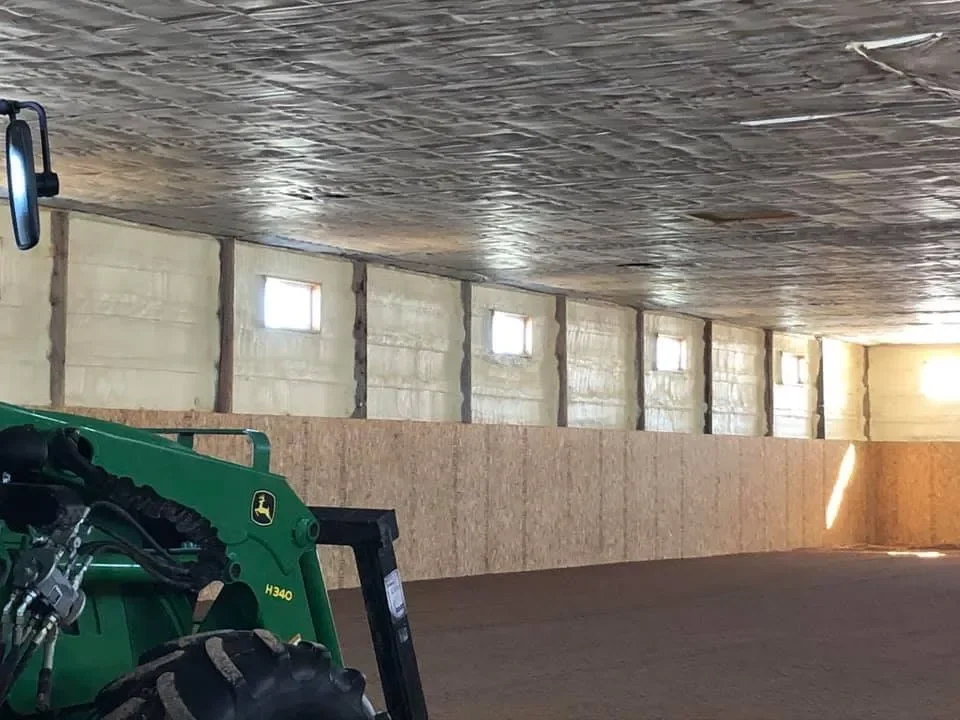
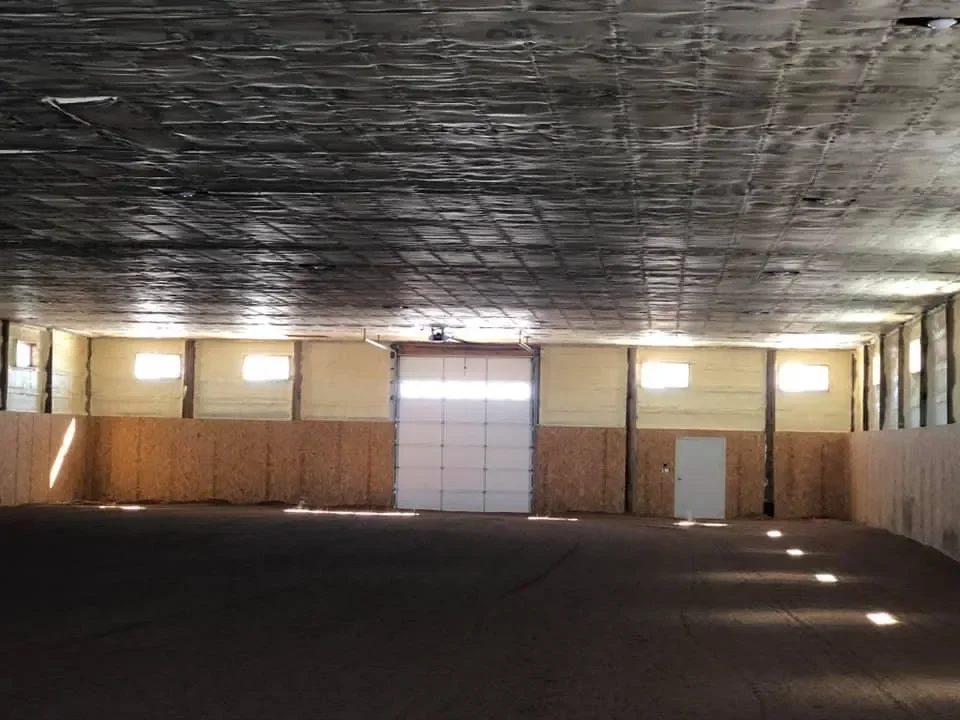
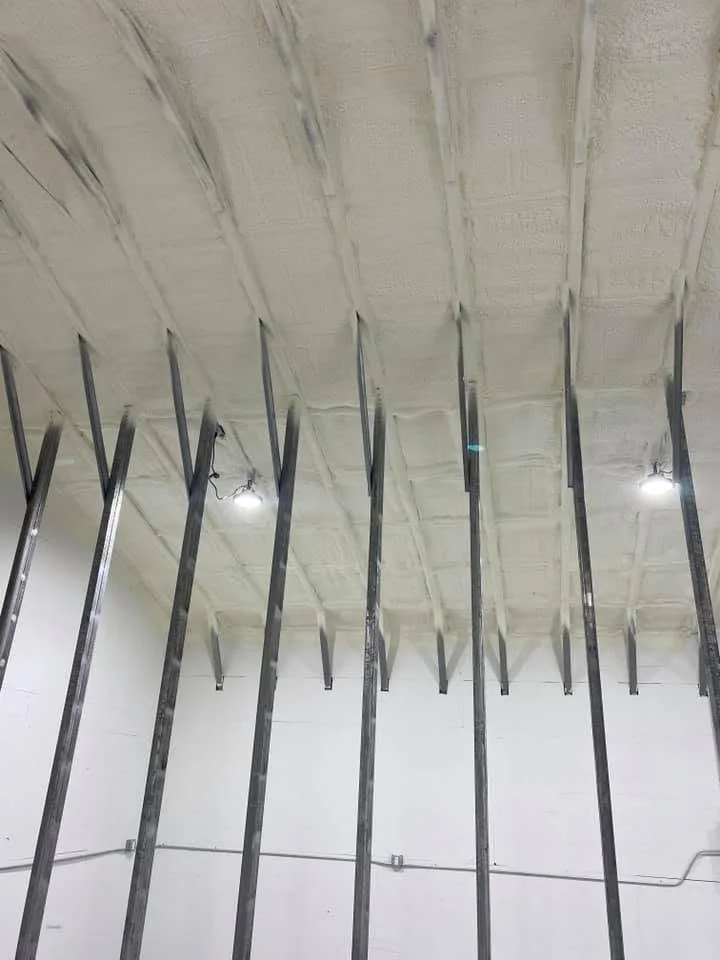
Spray foam insulation for agricultural buildings goes on as a liquid and expands into seams, laps, and corners. That suits steel buildings, where air leaks and cold spots cause most of the trouble.
With agricultural spray foam insulation, one product handles both insulation and air sealing. Illinois Extension points out that insulating the inside of metal sheathing stops surface condensation, but not condensation inside the insulation, unless the wall has a vapor barrier or closed-cell insulation. That’s why we lean toward closed-cell foam for spray foam for agricultural buildings that hold animals.
Livestock barn insulation also cuts heat loss. Purdue lists lower heating bills, better animal health, and more comfortable working conditions as common gains. Shops and equipment sheds get the same sealed shell, which can keep tools and stored supplies drier.
Don’t skip ventilation. Illinois Extension stresses that ventilation is the main way to reduce condensation. A tighter building traps more moisture, so agricultural building insulation works best as a system: foam, vapor control, and fresh air moving through.
Does Spray Foam Insulation Work for Grain Bins?
Grain spoils from moisture and temperature differences, not only from rain. So the real question is whether foam helps with those.
The Purdue AED-20 Guide says moisture migration is most critical when warm grain sits through cold winter weather. Cold air cools the grain near the bin walls, air currents carry moisture upward, and it condenses in the cooler top layer, where it can form a crust.
Aeration controls grain temperature, and no coating replaces it. Spray foam insulation for grain bins may help by reducing cold surfaces where moisture collects. Condensation or frost under the roof is a warning sign, so fix aeration first, then talk about grain storage insulation. Agricultural spray foam also fits grain-area shops, where steel sweats like any other barn.
Matching Foam to the Building
Not every farm building needs the same thing. How much insulation you want depends on how the building is used and how wet it runs.
Purdue’s guide recommends about R-13 in walls and R-20 in ceilings for heated livestock buildings, and only enough roof insulation (around R-4) in open-front sheds to keep cold surfaces from sweating. It says spray-on roof insulation suits farm shops or low-moisture buildings once it’s fire protected, and needs moisture protection where humidity runs high. Purdue is an older publication, and it also warns that poor spray work can shrink or peel. That’s a fair reason to hire experienced installers and ask how they handle vapor control.
What to Check Before You Spray
Farm building insulation pays off when the prep is right. These checks protect your money and your building.
Ventilation: Confirm fans, inlets, and ridge vents work before you tighten the building.
Fire protection: Spray foam can burn, so Purdue’s guide tells farmers to ask whether a material needs a plywood or metal liner to slow flame spread.
Insurance: Purdue advises calling your insurer first, since some companies won’t cover certain insulation types.
Surface and leaks: Repair roof leaks and heavy rust first, so you don’t seal moisture against the metal.
Get a Free Quote for Your Farm Buildings
If you’re fighting dripping steel, a cold shop, or a sweating bin, we can look at the building and give you a free quote. Price depends on building size, foam type, thickness, and prep work, so we quote each job. Call High Country Solutions at (307) 248-9063 or email [email protected] to get started.
Frequently Asked Questions About Spray Foam in Farm Buildings
Is spray foam safe around livestock and stored grain?
It can be when trained installers spray with proper ventilation and let the foam cure fully. Keep animals and feed out until the manufacturer’s cure time passes.
Can you spray foam an existing barn or shop?
Usually, yes. Foam goes onto the inside faces of the building, so you don’t tear walls out. Repair leaks and heavy rust first.
Is open-cell or closed-cell foam better for a barn?
For damp livestock buildings, closed-cell is the usual pick because it slows vapor and water better. Open-cell costs less and can suit drier shops and ceilings, but it passes more moisture.
Will birds and rodents damage spray foam?
They can peck or chew exposed foam. Purdue advises screening vent openings and protecting insulation from birds, rodents, and livestock, especially near the floor and eaves.
How much maintenance does spray foam need?
Usually little. Walk the building once or twice a year and patch damaged or sun-worn spots early. Keep ventilation working, since moisture problems start there.
Sources
Illinois Extension – condensation on metal walls, closed-cell insulation, and ventilation as the main control.
Purdue AE-95 Guide – dew point, livestock moisture, insulation benefits, fire, insurance, and animal protection.
Purdue AED-20 Guide – moisture migration, crusting, and aeration in stored grain.
I’m Skeeter Aimone, owner of High Country Solutions in Alpine, Wyoming, leading the company since 2019. I focus on quality installation, building science, and insulation solutions suited to harsh Wyoming and eastern Idaho conditions.