What Happens When Fiberglass Insulation Is Installed Incorrectly in American Falls Homes?
Skeeter Aimone
April 16th, 2026
When fiberglass insulation is installed incorrectly in American Falls homes, it can lead to energy loss of 25% or more, moisture buildup that promotes mold growth, and health risks from airborne glass fibers entering living spaces. American Falls sits in a cold climate zone where proper insulation is not optional but essential for comfort, structural integrity, and energy costs. A poorly installed job undermines every dollar spent on the material itself. To prevent these failures, review proper fiberglass insulation installation methods.
TL;DR
Incorrect fiberglass installation can reduce effective R-value by 30% or more due to gaps, compression, and voids
Moisture trapped by poorly installed insulation creates conditions for mold growth and wood rot inside wall cavities
Exposed fiberglass fibers pose skin, eye, and respiratory irritation risks, especially in attics and crawl spaces
American Falls homes fall under Idaho Climate Zone 5, requiring a minimum of R-38 in attics and R-22 in exterior walls per the current state energy code
A survey of top production builders found that improper installation accounts for 22% of insulation failures, while incorrect materials account for 27%
Air sealing must align with the thermal boundary; misalignment between insulation and air barriers is one of the most common and costly mistakes
Energy Loss and Higher Utility Bills
Fiberglass insulation works by trapping still air within its glass fibers, creating resistance to heat flow, which is measured as R-value. When batts are compressed to fit into spaces, gaps are left around obstacles, or cavities are only partially filled, the effective thermal performance drops sharply. According to building science experts, gaps and voids in fiberglass batt installations can reduce real-world performance by 30% or more compared to the rated R-value on the packaging. For a deeper breakdown, see common fiberglass insulation installation mistakes.
For homeowners in American Falls, where winters are long and heating demands are significant, this translates directly into higher energy bills. Properly installed fiberglass insulation in attics and walls can reduce heating and cooling costs by up to 15% to 25%. When the installation is substandard, those savings evaporate. You end up paying for insulation material that delivers a fraction of its promised performance.
Installation Quality
Effective R-Value Loss
Estimated Energy Waste
Typical Causes
Grade I (Excellent)
0% to 5%
Minimal
Full contact, no gaps, properly fitted
Grade II (Average)
10% to 20%
10% to 15% higher bills
Minor gaps, some compression
Grade III (Poor)
30% to 50%
20% to 30% higher bills
Large voids, excessive compression, and missing sections
Moisture Problems and Mold Growth
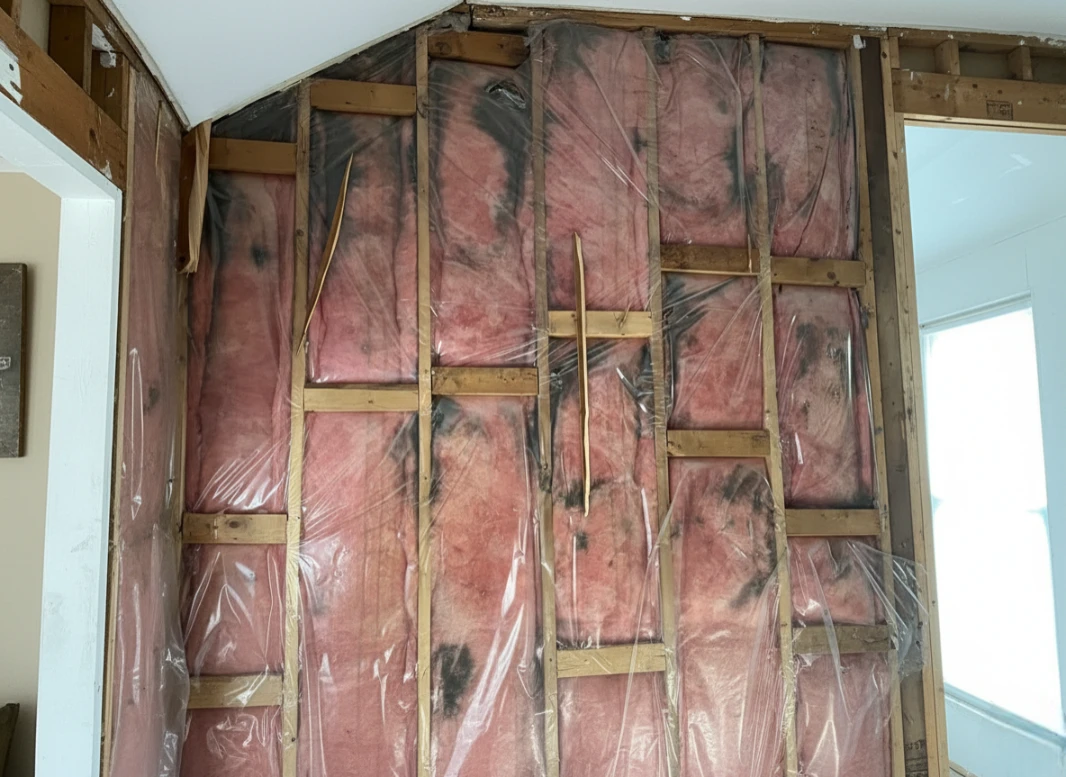
One of the most damaging consequences of incorrect fiberglass installation is moisture accumulation. Fiberglass itself does not absorb water, but it can trap moisture against building materials when installed without proper air sealing or when vapor barriers are placed on the wrong side.
When warm indoor air moves through gaps in the insulation and contacts cold surfaces inside wall or ceiling cavities, condensation forms. This moisture has nowhere to go when insulation blocks drying pathways. Over time, this creates an ideal environment for mold growth and can contribute to wood rot in framing members. The Connecticut Department of Public Health notes that fiberglass subjected to dampness, humidity, or weather can become a dirt trap and breeding ground for bacteria and mold.
In American Falls homes, where winter temperatures regularly drop below freezing, the temperature differential between heated living spaces and unheated attics or walls is substantial. Even small installation errors, such as missing insulation behind electrical boxes or poorly sealed top plates, create condensation points that compound over months and years.
Common moisture-related mistakes include:
Facing direction errors: Kraft-faced batts installed with the vapor barrier facing the wrong direction trap moisture inside the wall cavity
Double vapor barriers: Adding a polyethylene vapor barrier when kraft-faced batts already have one creates a moisture sandwich
Missing air seals around penetrations: Gaps around plumbing vents, electrical wires, and recessed lights allow humid air to reach cold surfaces
Compressed batts in exterior walls: Compression reduces the air space needed for the material to dry properly
Health and Safety Risks
Fiberglass insulation is made from tiny particles of spun glass. When these fibers become airborne, they can cause skin irritation, eye discomfort, and respiratory tract irritation. The CDC’s National Institute for Occupational Safety and Health identifies fibrous glass as a material that can harm the eyes, skin, and lungs, particularly for workers who handle or install it without proper protection.
In a home setting, health risks increase when insulation is installed poorly enough to allow fibers to enter living spaces. This happens most often when attic insulation is left uncovered, when batts are stuffed loosely into cavities and air movement carries fibers through gaps, or when damaged insulation degrades over time. OSHA guidelines for weather insulation and sealing note that the main concerns with fiberglass insulation are skin, eye, and respiratory tract irritation, and recommend protective clothing, gloves, and respiratory protection during installation.
For families in American Falls, this is especially relevant in older homes where previous insulation work may have been done by inexperienced installers or as a DIY project. If you notice fibers visible around light fixtures, attic hatches, or wall penetrations, the insulation may need professional remediation.
Idaho Code Requirements and Why They Matter
Idaho operates under the 2018 International Energy Conservation Code (IECC) with state-specific amendments. Power County, where American Falls is located, falls within Climate Zone 5B (cold and dry). The Idaho Energy Code specifies minimum R-values for residential construction in this zone:
Attics: Minimum R-38
Exterior walls: Minimum R-22
Basement walls: Minimum R-19/13 continuous
Floals over unheated spaces: Minimum R-30
These requirements exist because under-insulated or improperly insulated homes in cold, dry climates suffer disproportionate energy loss and comfort problems. When insulation is installed in a way that fails to meet these standards, even if the correct material was purchased, the home may not pass required inspections and will not perform as designed.
The Idaho Energy Code also mandates envelope tightness testing. Homes must demonstrate no more than 3 air changes per hour at 50 Pascals of pressure. Poorly installed fiberglass insulation, particularly when combined with inadequate air sealing, is a leading cause of homes failing this test.
The Most Common Installation Mistakes
Based on research from the Insulation Institute, which surveyed over 100 top production builders, the following installation flaws are the most frequently encountered:
Improper sealing around windows, doors, and rough openings: Air leakage through these penetrations creates comfort problems, moisture issues, and higher energy bills
Plate penetrations and wall chases left unsealed: The top plate to attic drywall interface represents one of the largest sources of air leakage in a home
Missing or improperly installed air barriers around tubs and showers: Because shower inserts are often installed before insulation, these areas are frequently missed
Drywall not sealed to top plates: Gaps between drywall and framing allow conditioned air to escape into attic spaces
Insulation misalignment: When insulation is not in substantial contact with the air barrier, the thermal boundary is broken, and performance suffers
In American Falls, these mistakes are compounded by the harsh winter climate. Even small gaps that might go unnoticed in milder regions become significant sources of heat loss and condensation during months of sub-freezing temperatures.
Signs You May Have Incorrectly Installed Insulation
Not every insulation problem is visible, but several warning signs indicate that your home’s fiberglass insulation may not be doing its job:
Uneven temperatures from room to room, especially between floors or between interior and exterior walls
Drafts near windows, outlets, and along baseboards, even when windows and doors are closed
Ice dams forming along the roof edges in winter, which indicate heat escaping into the attic and melting snow
High energy bills that seem inconsistent with your thermostat settings or comparable homes in the area
Visible mold or musty odors in attics, crawl spaces, or near exterior walls
Fibers visible around light fixtures, attic access points, or wall penetrations
If you recognize any of these signs in your American Falls home, a professional insulation assessment can identify specific problem areas and recommend targeted corrections Connecticut Department of Public Health.
Recommendations by Home Type
Home Type
Common Insulation Issues
Recommended Action
New construction
Misalignment, unsealed penetrations
Hire certified installers, require blower door testing
Older homes (pre-1980)
Missing insulation, degraded material, and no vapor barrier
Full energy audit, likely full replacement in attics and walls
Recently renovated
Compressed batts, gaps around new fixtures, double vapor barriers
Inspect behind new drywall, verify vapor barrier placement
DIY installs
Inconsistent density, poor fitting around obstacles, and wrong R-value material
Professional assessment and correction before covering walls
Signs You’ve Found the Right Insulation Contractor
Choosing the right professional for your American Falls home makes the difference between insulation that performs for decades and insulation that creates problems. Look for contractors who provide a detailed written assessment of your home’s current insulation condition before recommending solutions. A strong contractor will explain where air sealing is needed in addition to insulation, because the two work together as a system. They should reference Idaho energy code requirements for Climate Zone 5 and be able to explain how their proposed approach meets or exceeds those standards. To find qualified help, explore fiberglass insulation services in American Falls, ID.
Quality installers will also discuss moisture management specifically, including vapor barrier placement relative to your home’s construction and the local climate. They should carry appropriate insurance, provide a clear warranty on both materials and workmanship, and be willing to walk you through the installation process before work begins. A blower door test before and after the work demonstrates measurable results rather than guesswork.
Get Your Home’s Insulation Assessed
High Country Solutions provides expert insulation assessment and installation services for homeowners throughout the American Falls area. Our team evaluates your home’s current insulation condition, identifies installation errors and air sealing gaps, and delivers solutions matched to Idaho’s Climate Zone 5 requirements. Whether you are building new, renovating, or addressing comfort and energy issues in an existing home, we bring the experience and attention to detail that proper fiberglass installation demands.
Reach us at [email protected] or call (307) 248-9063 to get started. Your home’s comfort and energy efficiency depend on insulation that is installed right the first time.
Frequently Asked Questions
Q: How can I tell if my fiberglass insulation was installed correctly?
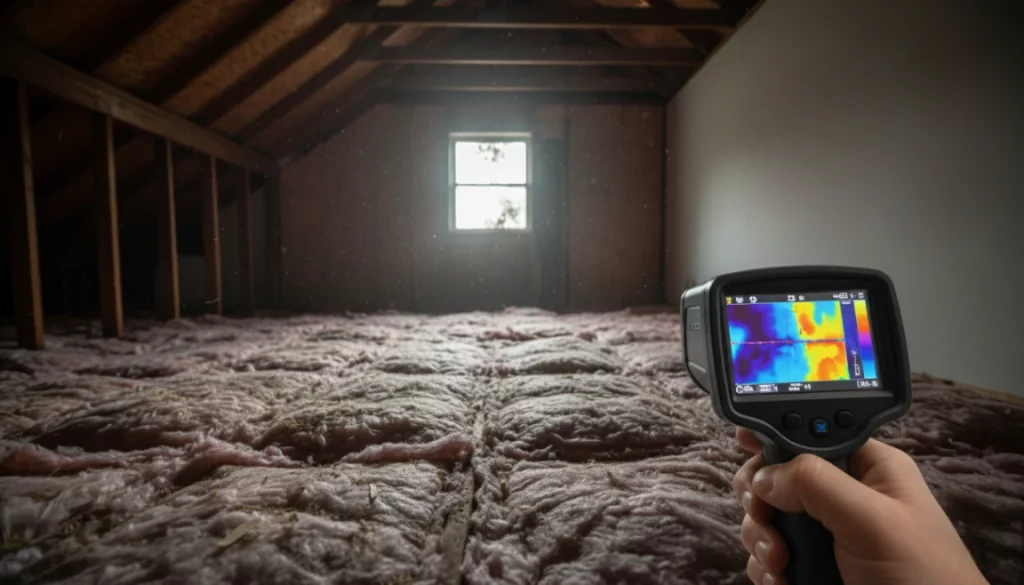
A: Look for full contact between insulation and framing without gaps, voids, or compression. An infrared inspection or blower door test can identify hidden problems.
Q: Can incorrect fiberglass installation cause mold in my walls?
A: Yes, gaps and misaligned vapor barriers allow warm, moist air to reach cold surfaces inside wall cavities, creating condensation that promotes mold growth.
Q: Is it worth fixing poorly installed fiberglass insulation?
A: Correcting poor installation typically pays for itself through reduced energy bills and prevents more expensive moisture damage over time.
Q: How much energy can be lost from incorrectly installed fiberglass insulation?
A: Studies show that gaps, compression, and voids can reduce effective R-value by 30% or more, leading to significantly higher heating and cooling costs.
Q: Does Idaho require specific insulation R-values for American Falls homes?
A: Yes, under the 2018 IECC with Idaho amendments, Climate Zone 5B requires a minimum of R-38 in attics and R-22 in exterior walls for new construction and major renovations.
Idaho Energy Code – Residential Code Provisions – Current state energy code requirements for residential insulation R-values in Idaho’s climate zones, including the 2018 IECC with state amendments.
I’m Skeeter Aimone, owner of High Country Solutions in Alpine, Wyoming, leading the company since 2019. I focus on quality installation, building science, and insulation solutions suited to harsh Wyoming and eastern Idaho conditions.