When Should You Choose Closed-Cell Spray Foam Over Open-Cell Spray Foam?
Skeeter Aimone
August 24th, 2026
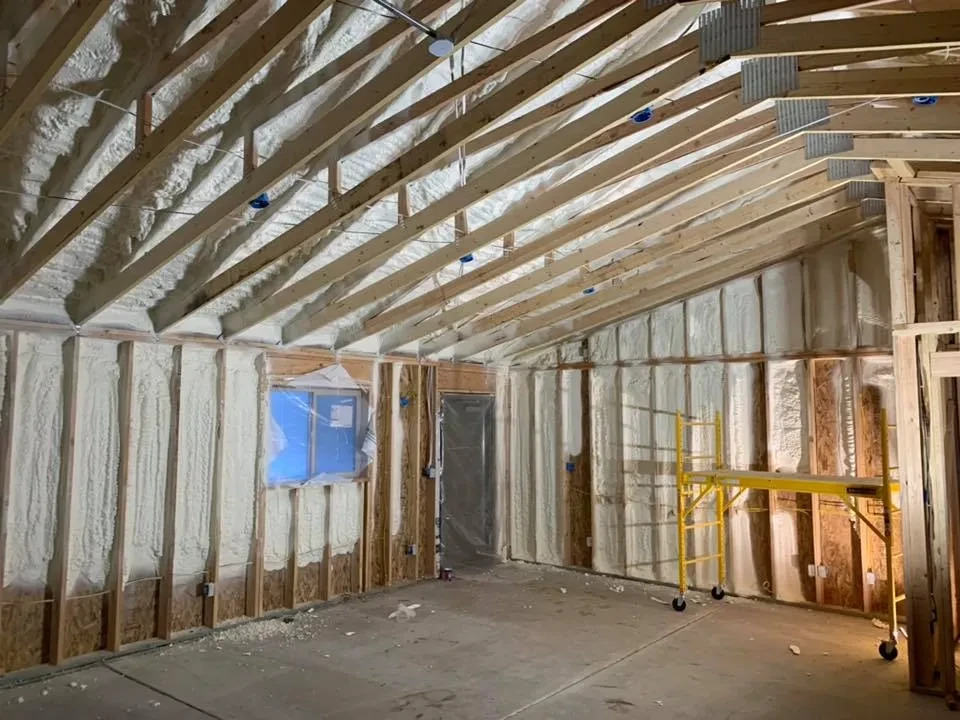
Choosing between closed-cell and open-cell spray foam insulation comes down to what the building actually needs. Closed-cell spray foam delivers higher R-value per inch, acts as a moisture and vapor barrier, and adds structural rigidity. Closed-cell spray foam insulation options are particularly relevant when moisture control and higher thermal resistance are priorities. Open-cell spray foam expands more, fills cavities thoroughly at a lower material density, and costs less per square foot. The right pick depends on your climate zone, where you are insulating, whether moisture control is a priority, and how much cavity depth you have to work with.
Closed-cell foam is non-porous and functions as a vapor retarder, making it the right call for basements, crawlspaces, and any area prone to moisture intrusion
Open-cell foam allows water vapor to pass through, which helps framed walls dry out and reduces the risk of trapped moisture in wood structures
The U.S. Department of Energy notes that closed-cell foams provide greater R-value where space is limited, such as in narrow wall cavities or thin ceiling assemblies
Closed-cell foam adds structural strength to the assembly, while open-cell foam remains soft when cured
Sealing and insulating with spray foam can reduce heating and cooling energy use by up to 20%, per the EPA Seal and Insulate guide
Both types require professional installation and proper safety protocols, including a minimum 24-hour re-occupancy period after application, per CPSC recommendations
What Makes Closed-Cell and Open-Cell Spray Foam Different
Both products are spray-applied polyurethane foams, but their cell structure and density set them apart. Closed-cell foam has tiny, closed gas bubbles that give it a higher density, typically around 1.5 to 2.0 pounds per cubic foot. Understanding these material differences helps explain why the closed cells trap insulating gases and drive the higher R-value. Open-cell foam has interconnected pores, is much lighter at roughly 0.5 pounds per cubic foot, and expands significantly more during application.
The DOE Insulation Fact Sheet categorizes polyisocyanurate as an open-celled foam and polyurethane as a closed-cell foam, noting that open-celled foam allows water vapor to pass through the material more easily, while closed-cell foams can provide greater insulating power in thinner applications.
Head-to-Head Comparison
Feature
Closed-Cell Spray Foam
Open-Cell Spray Foam
R-Value per Inch
R-5 to R-8
R-3 to R-4
Moisture Permeability
Non-porous; acts as a vapor retarder
Porous, vapor permeable
Density
1.5 to 2.0 lb/ft3
~0.5 lb/ft3
Structural Strength
Adds rigidity and wall strength
Soft when cured, minimal support
Expansion
Moderate expansion
Expands up to 100x original volume
Sound Dampening
Good
Superior, about 2x effectiveness
Best Applications
Crawlspaces, basements, metal buildings, thin cavities
Interior walls, attics, sound isolation, large cavities
Trimming Required
Rarely
Usually requires trimming and waste disposal
When Closed-Cell Spray Foam Is the Better Choice
Basements and Crawlspaces
Below-grade and below-floor areas face constant exposure to soil moisture and humidity. Closed-cell foam’s non-porous structure resists water absorption and acts as a vapor retarder, protecting the building envelope from moisture drive. The Wikipedia building insulation materials reference specifically notes that closed-cell foam forms a semi-permeable vapor barrier, which building codes often require for below-grade applications regardless of insulation type.
Limited Cavity Depth
When stud bays, floor joists, or ceiling cavities are shallow, closed-cell foam delivers more thermal resistance in less space. A 1-inch layer of closed-cell foam can match the R-value of roughly 2 inches of open-cell foam. Working with a local insulation professional can help determine the most suitable approach when cavity depth is fixed, and you cannot add thickness without altering finishes.
Metal Buildings and Pole Barns
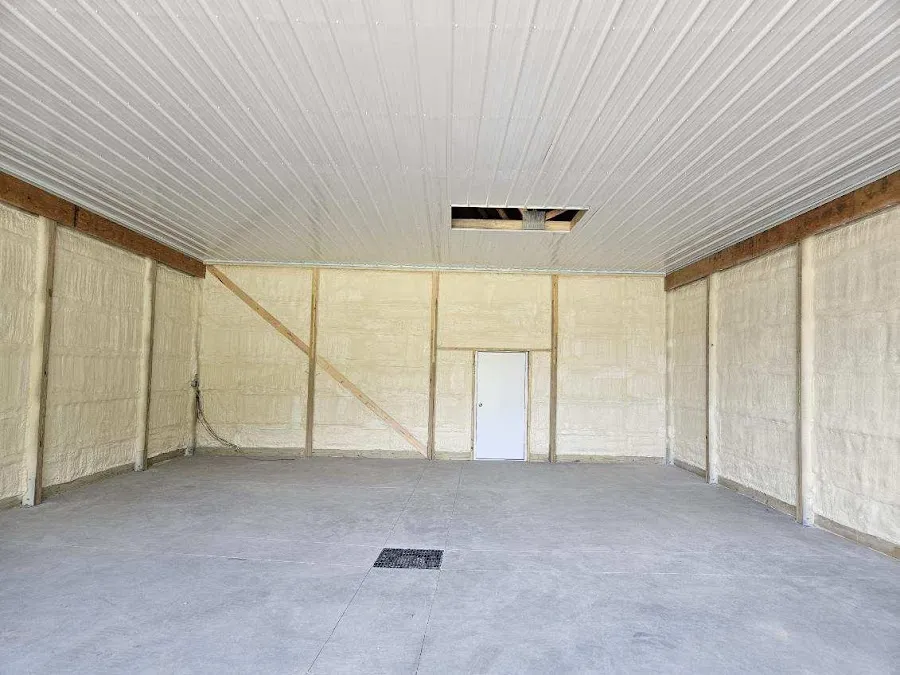
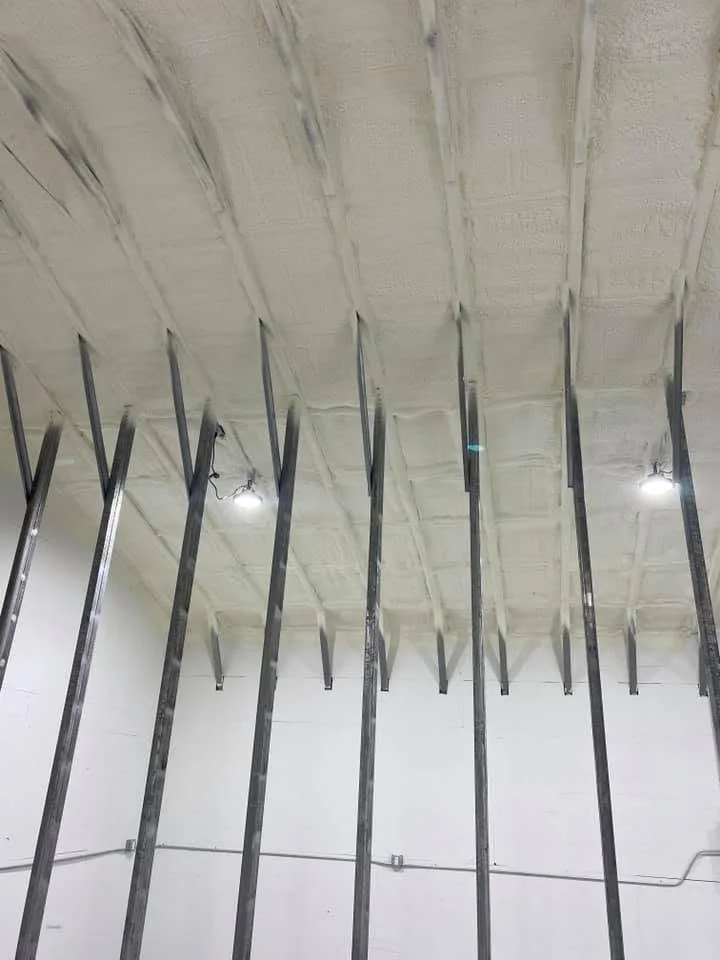
Metal structures transfer heat rapidly and offer no inherent structural insulation cavity. Closed-cell spray foam adheres directly to metal substrates, provides both insulation and an air barrier in a single application, and reinforces the building shell. The added compressive strength helps resist flexing and racking under wind loads.
Continuous Insulation and Exterior Sheathing
Closed-cell foam works well as a continuous insulation layer on the exterior of wall assemblies or as a component in structural insulated panels. Its density and closed-cell structure allow it to serve as both the thermal layer and the air/weather barrier without additional membranes.
When Open-Cell Spray Foam Makes More Sense
Standard Interior Wall Cavities
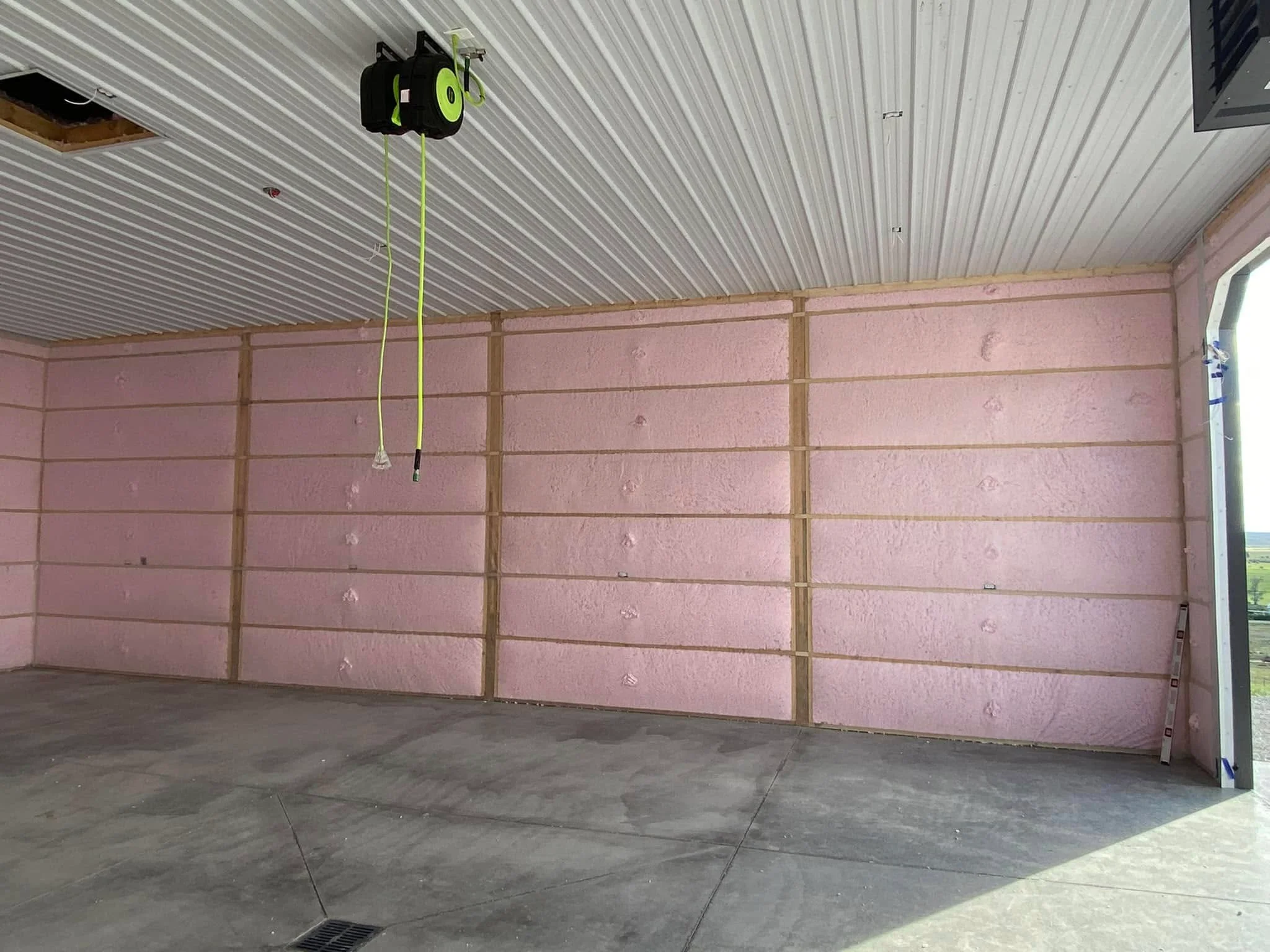
In typical 2×4 or 2×6 framed walls with adequate depth, open-cell foam fills the full cavity at a lower material cost. Its vapor-permeable nature allows wood framing to dry, which reduces long-term risk of rot and mold within the wall assembly. This matters in climates where moisture drives inward during certain seasons and outward during others.
Attic Floors and Ceilings
Open-cell foam covers large attic floor areas efficiently. It expands to fill irregular shapes around framing, wiring, and ductwork, sealing air leaks while providing sound dampening between living spaces and the attic above. The lower density also means less weight loading on ceiling drywall below.
Sound Isolation Between Rooms
Open-cell foam provides roughly twice the sound resistance of closed-cell foam in normal frequency ranges. For interior partitions between bedrooms, home offices, and media rooms, open-cell spray foam serves dual purposes: thermal insulation and acoustic separation in one application.
Large, Irregular Cavities
Open-cell foam expands significantly more than closed-cell during application, reaching up to 100 times its original volume in some formulations. This makes it highly effective for filling large, irregular, or hard-to-reach spaces where complete coverage is difficult to achieve with other materials.
Recommendations by Application
Application
Recommended Foam Type
Reasoning
Basement walls
Closed-cell
Moisture resistance and vapor barrier function
Vented crawlspace walls
Closed-cell
Blocks ground moisture and humid air
Unvented crawlspace walls
Closed-cell
Acts as vapor retarder and air seal
Standard framed walls
Open-cell or closed-cell
Open-cell for cost savings; closed-cell for thin cavities
Attic floor (existing)
Open-cell
Good coverage, lower weight, sound dampening
Cathedral ceilings
Closed-cell
Higher R-value in limited rafter depth
Metal building walls/roof
Closed-cell
Adhesion, strength, and moisture barrier
Interior sound walls
Open-cell
Superior acoustic performance
Rim joist / band joist
Closed-cell
Air sealing and moisture control at floor edge
Exterior continuous insulation
Closed-cell
Density and weather resistance
Health, Safety, and Installation Considerations
Spray polyurethane foam contains isocyanates, which require careful handling during installation. The CPSC recommends that all building occupants, including pets, vacate the premises during application and for at least 24 hours afterward. Homeowners with respiratory conditions, asthma, or skin sensitivities should review product safety data sheets carefully before selecting SPF.
The EPA requires ENERGY STAR-certified spray foam products to include clear installation practices, specific chemical reactant information, cure times, and safe re-entry times on all packaging. All certified products must be third-party tested for R-value and flame/smoke spread ratings.
Signs You Have the Right Insulation Contractor
The contractor explains the differences between closed-cell and open-cell foam for your specific project without steering you toward the higher-priced option by default
They discuss re-occupancy timelines, ventilation requirements, and safety protocols before the job starts
They provide product literature and are transparent about the specific foam formulation being installed
They verify insulation depth and coverage after installation, not just material quantity used
They understand local building code requirements for vapor barriers and thermal resistance in your climate zone
Get Expert Guidance on Your Insulation Project
Choosing between closed-cell and open-cell spray foam is not a one-size-fits-all decision. Our team at High Country Solutions evaluates your building type, climate exposure, cavity depth, and moisture conditions before recommending the right product and application method for your project. Whether you need the moisture-blocking power of closed-cell foam for a crawlspace or the sound-dampening coverage of open-cell foam for an interior retrofit, we deliver professional installation with clear communication from start to finish.
Call us at (307) 248-9063 or email [email protected] to get started. We serve homeowners and builders who want insulation done right the first time, with no shortcuts and no surprises.
Frequently Asked Questions
Can I use closed-cell spray foam in the same house as open-cell?
Yes, many homes use both types for different areas. Closed-cell works well in below-grade spaces and thin cavities, while open-cell suits large attic floors and interior partitions.
How long does spray foam off-gas after installation?
The CPSC recommends a minimum 24-hour re-occupancy period, though actual time can vary based on foam type, ventilation, and building conditions.
Does closed-cell spray foam eliminate the need for a separate vapor barrier?
In many applications, yes. Closed-cell foam acts as a semi-permeable vapor retarder, but local building codes and your specific climate zone determine whether an additional barrier is required.
Is spray foam insulation safe for homes with allergies or asthma?
Once fully cured, spray foam is inert. However, the EPA advises that individuals with respiratory conditions review product safety data carefully and follow all re-occupancy guidance.
Which foam type holds up better in flood-prone areas?
Closed-cell foam resists water absorption and retains its insulating properties when exposed to moisture, making it the better choice for basements, crawlspaces, and any area with flood risk.
Sources
Building Insulation Materials – Wikipedia – Comprehensive reference on spray foam types, R-values, and advantages of closed-cell vs. open-cell foam, including density, moisture permeability, and structural properties.
DOE Insulation Fact Sheet – U.S. Department of Energy guide covering insulation product types, R-value comparison, foam classifications, and installation guidance for new and existing homes.
EPA Seal and Insulate with ENERGY STAR – EPA publication documenting energy savings potential of sealing and insulating, spray foam as an insulation option, and R-value fundamentals.
EPA Programs Related to Spray Polyurethane Foam – EPA overview of regulatory activities, ENERGY STAR certification requirements for spray foam manufacturers, and third-party R-value testing standards.
I’m Skeeter Aimone, owner of High Country Solutions in Alpine, Wyoming, leading the company since 2019. I focus on quality installation, building science, and insulation solutions suited to harsh Wyoming and eastern Idaho conditions.