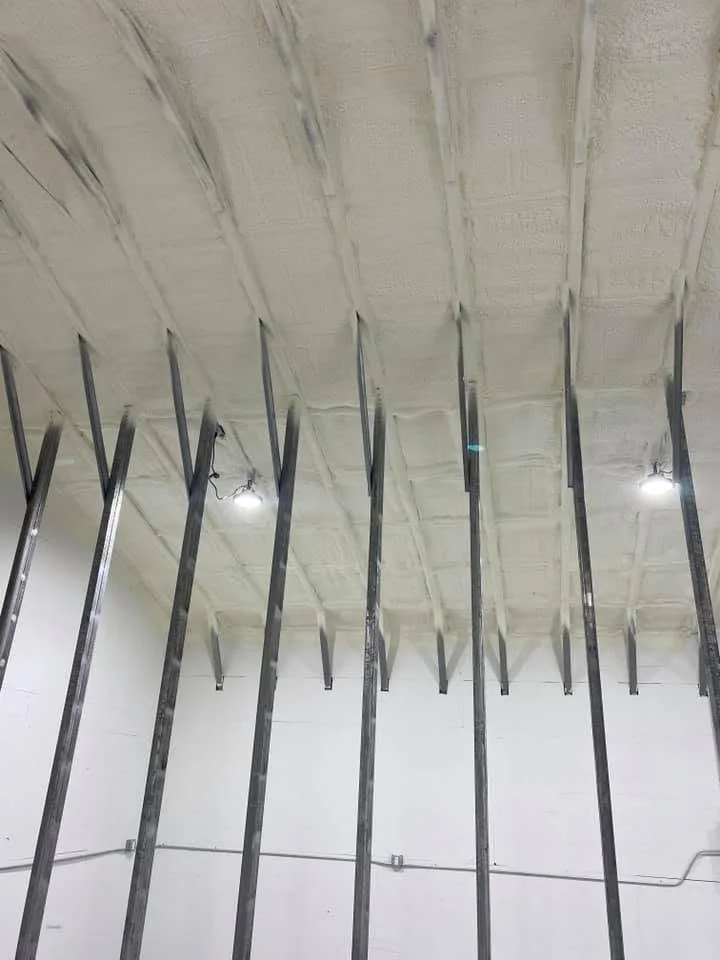
How Does Closed-Cell Spray Foam Perform in Rexburg, ID’s Extreme Winters?
Skeeter Aimone
August 24th, 2026
Closed-cell spray foam is one of the most effective insulation choices for homes and buildings in Rexburg, ID, where winters routinely push temperatures well below freezing. Rexburg sits in IECC Climate Zone 6B, with January average lows around 14°F and record lows reaching -36°F, according to NOAA climate data referenced on the Rexburg Wikipedia page. In a climate this demanding, insulation needs to do more than slow heat transfer. It must also block air infiltration, control moisture vapor diffusion, and resist the structural stress of seasonal freeze-thaw cycles. Closed-cell spray foam handles all three functions in a single application, which is why building science authorities recommend it as the preferred insulation for cold climate zones 5 through 8.
TL;DR
Rexburg falls within IECC Climate Zone 6B, where January lows average 14°F and record lows have hit -36°F, requiring insulation that delivers high thermal resistance and reliable moisture control.
Closed-cell spray foam delivers approximately R-6.5 per inch, roughly double the per-inch value of fiberglass batts, meaning thinner applications achieve higher total R-values in standard wall cavities.
At thicknesses above 1.5 inches, closed-cell spray foam qualifies as a Class II vapor retarder, eliminating the need for a separate polyethylene vapor barrier in most wall assemblies.
Building science research confirms that closed-cell foam applied at 2 inches or more controls vapor diffusion safely in climates up to 10,000 heating degree days, well within Rexburg’s range.
For unvented conditioned attics in Climate Zone 6 and above, building codes specify high-density closed-cell spray foam as the only acceptable spray foam product for direct application to the roof deck.
The material also functions as an air barrier when applied continuously, sealing gaps, cracks, and penetrations that traditional insulation cannot address.
In basements and vented crawlspaces, closed-cell is the only spray foam type recommended for IECC Zones 5 and higher, due to its low vapor permeance and structural rigidity.
Why Rexburg’s Climate Demands More Than Standard Insulation
Rexburg’s climate classification tells the full story. The city experiences a humid continental climate (Köppen Dfb) with freezing winters, warm summers, and approximately 55 inches of annual snowfall. Average daily highs in January sit around 29.5°F, while nighttime lows routinely drop into the single digits. The combination of prolonged cold, significant snow accumulation, and elevation at nearly 4,900 feet creates conditions where heat loss through walls, roofs, and foundations becomes a major expense if the building envelope is not properly insulated and sealed.
Standard insulation like fiberglass or cellulose slows conductive heat transfer but does little to stop air leakage or moisture vapor diffusion. In a Rexburg winter, the temperature difference between a heated living space (68-72°F) and the exterior (below 0°F on the coldest nights) can exceed 70 degrees. That differential drives warm indoor air toward every gap, crack, and penetration in the building envelope, making closed-cell spray foam insulation solutions particularly relevant for addressing air movement and moisture concerns. When that warm, humid air reaches a cold surface inside the wall cavity, condensation forms, and over time that moisture can rot framing, promote mold growth, and degrade insulation performance.
Closed-cell spray foam addresses all of these mechanisms simultaneously. It expands into cavities to fill gaps, adheres to surrounding materials, and creates a continuous thermal, air, and moisture control layer.
Closed-Cell vs. Open-Cell: Why the Distinction Matters in Zone 6B
Not all spray foam performs the same way in extreme cold. The two primary types, closed-cell and open-cell, differ significantly in density, R-value, and vapor permeability. Those differences matter a great deal in Rexburg’s climate.
The vapor permeance difference is the deciding factor for Rexburg. Open-cell foam at ~50 perms per inch allows water vapor to pass through readily. In winter, warm indoor air carrying moisture can migrate through open-cell foam, reach cold exterior sheathing, and condense. Closed-cell spray foam insulation systems at ~3 perms per inch, applied at 1.5 inches or more, drop below the 1.0 perm threshold required for a Class II vapor retarder. This means it physically blocks enough vapor diffusion to prevent condensation problems inside the wall assembly.
How Closed-Cell Spray Foam Protects Key Building Assemblies
Walls
In standard wood-frame walls with exterior sheathing, closed-cell spray foam fills cavities and adheres to both the interior drywall and exterior sheathing. This creates a continuous air seal that prevents the convective heat loss responsible for up to 40% of total energy waste in poorly sealed homes. According to the Building Science Corporation’s vapor retarder research (RR-0912), closed-cell foam applied at 2 inches or more controls vapor diffusion to safe levels in climates up to 10,000 heating degree days, even with interior winter relative humidity above 50%. Rexburg’s heating degree days fall well within that range, meaning closed-cell foam in wall cavities provides reliable condensation control without needing a separate polyethylene vapor barrier.
Unvented Conditioned Attics
Many homes in the Rexburg area have HVAC equipment and ductwork located in attic spaces. When those attics are vented and unconditioned, duct losses in winter can be substantial. Converting the attic to an unvented conditioned space by insulating directly at the roof deck keeps ductwork within the thermal envelope. A qualified local insulation contractor can help determine the appropriate approach for this application, especially in IECC Climate Zones 5 and higher, where Building Science Corporation’s spray foam guide specifies that only high-density closed-cell spray foam should be used. Open-cell foam is not recommended because it is impractical to apply an effective vapor retarder coating to its surface in cold climates.
Basements and Crawlspaces
Rexburg homes with basements or vented crawlspaces face unique moisture challenges. Ground moisture vapor can migrate through concrete foundation walls, and cold exterior air can penetrate through vented crawlspace openings. For IECC Zones 5 and higher, the spray foam guide recommends high-density closed-cell spray foam on the interior of concrete basement walls. For vented crawlspaces, only high-density closed-cell spray foam should be used in all IECC climate zones. The foam’s low vapor permeance keeps ground moisture out of the floor framing above, while its air sealing properties prevent cold outside air from infiltrating the building envelope through the crawlspace.
Performance Factors That Affect Real-World Results
Even with the right material, installation quality determines how well closed-cell spray foam performs. Several factors influence the outcome:
Application thickness: Installing foam below the minimum recommended thickness reduces both thermal performance and vapor control. For walls in Zone 6B, full cavity fill or the code-minimum thickness for condensation control should be the target.
Temperature at installation: Spray foam chemicals require specific substrate and ambient temperatures for proper curing. In Rexburg’s cold climate, this means winter installations require heated enclosures or scheduling during warmer months. Improperly cured foam will not achieve its rated R-value or air sealing performance.
Cavity preparation: The substrate must be clean, dry, and free of frost for proper adhesion. Gaps around windows, electrical boxes, and plumbing penetrations should be addressed before foam application to ensure continuous coverage.
Code compliance: The International Residential Code specifies minimum R-values and minimum foam thicknesses for condensation control based on climate zone and framing type. Working with installers who understand these requirements ensures the project meets code and performs as intended.
Where Closed-Cell Spray Foam Fits Best in Rexburg Buildings
Building Assembly
Closed-Cell Recommendation for Zone 6B
Key Benefit
Standard walls
Full cavity fill or hybrid approach
Thermal, air, and vapor control in one layer
Unvented conditioned attics
Required for direct-to-roof-deck application
Protects roof sheathing from condensation
Basement walls
Recommended for interior application
Blocks ground moisture and air infiltration
Vented crawlspaces
Required for floor joist insulation
Prevents moisture and cold air from entering living space
Rim joists
Strongly recommended
High air leakage area, foam fills irregular spaces
Signs You’ve Found the Right Insulation Approach
Choosing the right insulation for a Rexburg property depends on the specific building, budget, and long-term goals. Here are indicators that closed-cell spray foam is the correct choice:
The building has chronic cold spots, drafty rooms, or high heating bills that suggest air leakage through the envelope.
The project involves an unvented conditioned attic conversion where ductwork or HVAC equipment sits inside the attic space.
The home has a vented crawlspace with visible moisture issues, cold floors above, or evidence of condensation on floor framing.
There is concern about condensation risk inside wall assemblies, particularly in bathrooms, kitchens, or areas with elevated indoor humidity.
The goal is to minimize the number of separate building envelope layers by combining thermal, air, and vapor control into one material.
Get a Professional Assessment for Your Rexburg Property
High Country Solutions provides expert spray foam insulation services for homes and buildings throughout the Rexburg, ID area. Our team evaluates your specific building assembly, climate zone requirements, and performance goals to recommend the right insulation strategy for extreme winter conditions. Whether you need closed-cell spray foam for a new build, retrofit, or targeted application in attics, basements, or crawlspaces, we bring the experience and equipment to do it right.
Contact us at [email protected] or call (307) 248-9063 to discuss your project. We will walk you through your options and help you make the right choice for your property and budget.
Frequently Asked Questions
Does closed-cell spray foam actually save on heating bills in Rexburg winters?
Yes. By providing both high R-value insulation and a continuous air seal, closed-cell spray foam reduces the two largest sources of heat loss in buildings: conductive transfer through the envelope and air leakage through gaps and penetrations.
Can closed-cell spray foam be installed during a Rexburg winter?
It can be installed in cold conditions, but the installation area typically needs to be heated to allow proper foam expansion and curing. Our team takes the necessary steps to ensure correct application regardless of season.
Do I still need a separate vapor barrier if I use closed-cell spray foam?
In most wall assemblies in Zone 6B, closed-cell foam at 1.5 inches or greater qualifies as a Class II vapor retarder, so an additional polyethylene vapor barrier is not required. Your specific assembly should be evaluated by a qualified installer.
How does closed-cell spray foam handle the freeze-thaw cycles common in Rexburg?
Closed-cell foam is rigid, adheres tightly to substrates, and does not absorb moisture. These properties make it well suited to withstand repeated freeze-thaw cycles without cracking, shrinking, or losing thermal performance.
Is closed-cell spray foam worth it for an existing home retrofit in Rexburg?
For existing homes with high heating costs, air leakage problems, or moisture issues in crawlspaces and attics, closed-cell spray foam applied to key areas like rim joists, attics, and basements can deliver measurable improvements in comfort and energy efficiency.
Rexburg, Idaho – Wikipedia – Climate data for Rexburg including temperature normals, precipitation, snowfall, and NOAA-sourced records relevant to insulation performance analysis.
I’m Skeeter Aimone, owner of High Country Solutions in Alpine, Wyoming, leading the company since 2019. I focus on quality installation, building science, and insulation solutions suited to harsh Wyoming and eastern Idaho conditions.