Why Are Homeowners in Thayne, WY Considering Mineral Wool for Insulation Upgrades?
Homeowners in Thayne, WY are turning to a mineral wool insulation guide because Star Valley winters push heating systems to their…


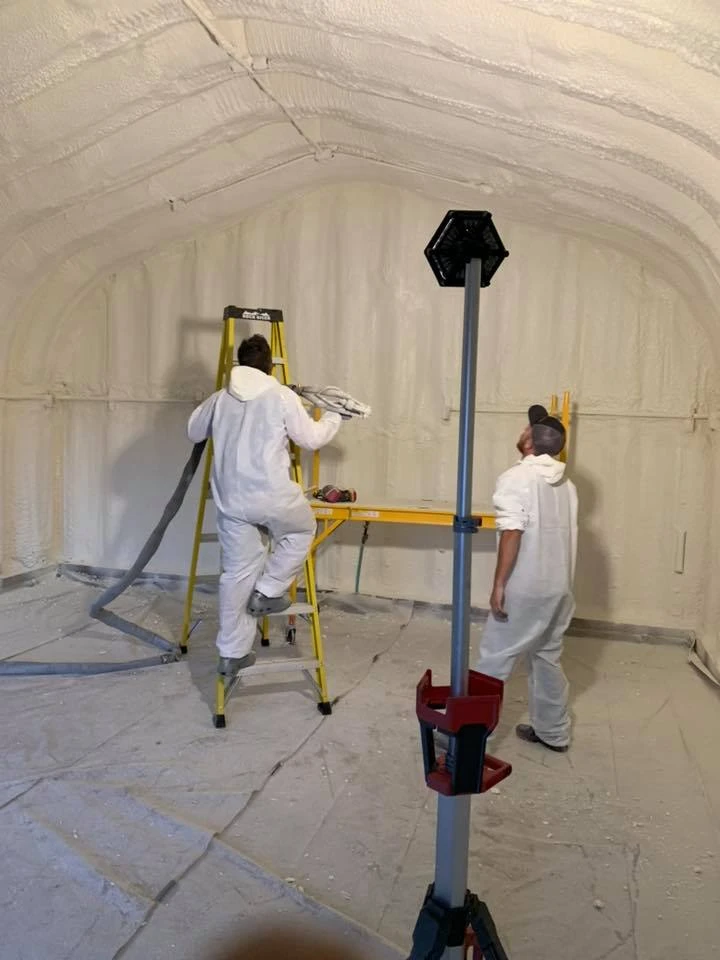
Closed-cell spray foam insulation delivers an R-value of roughly R-6.5 to R-7.0 per inch, functions as a Class II vapor retarder at approximately 1.5 inches of thickness, and simultaneously air-seals, insulates, and adds structural rigidity to your building envelope. The right installation approach depends on your climate zone, the assembly being insulated (walls, roof, or foundation), and whether you are building new or retrofitting an existing home. This guide covers what closed-cell spray foam does, where it belongs, how the installation process works, and what safety and code requirements you need to meet in this closed-cell spray foam guide.
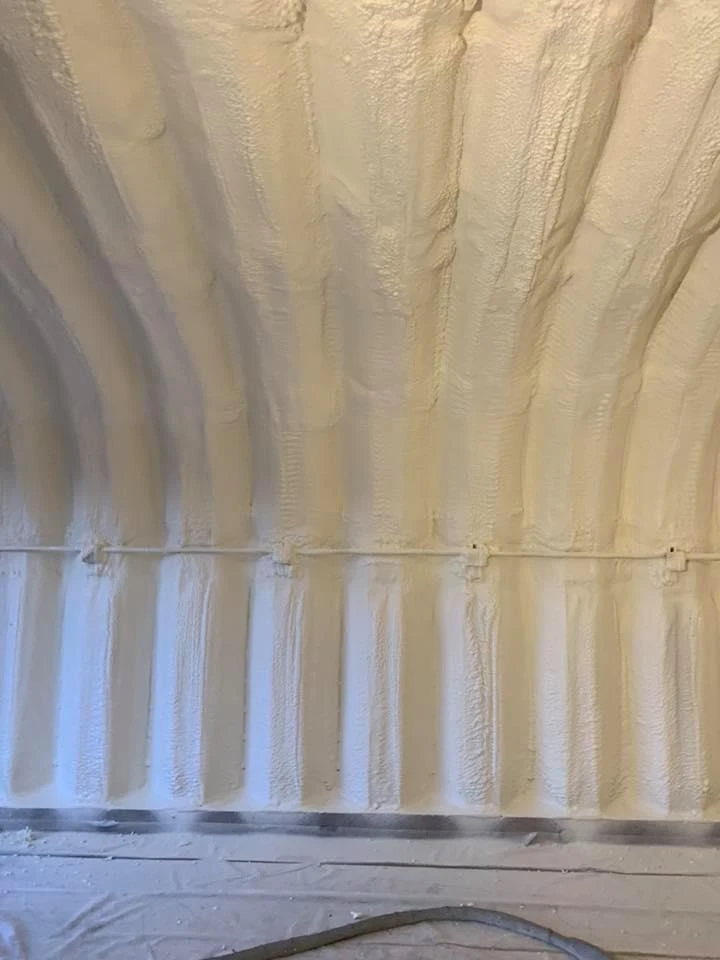
Closed-cell spray polyurethane foam is a two-component system mixed on-site and applied as a liquid that expands and cures into a dense, rigid material, creating a continuous air barrier that eliminates leaks and drafts, as explained in this closed-cell spray foam energy loss guide.
The DOE Insulation Fact Sheet from Oak Ridge National Laboratory notes that foam insulation products like polyurethane are filled with special gases that provide additional resistance to heat flow beyond what trapped air alone can achieve. That is why closed-cell foam delivers significantly higher R-value per inch than batt or loose-fill options.
Key performance characteristics include:
According to the Building Science Corporation Residential Spray Foam Guide, spray foam is unique because it has the ability to handle water control, air control, vapor control, and thermal control simultaneously. That said, you do not need it to handle all four in every assembly. The key is matching the material to the application.
| Application Area | Recommendation | Notes |
|---|---|---|
| Wall cavities | Closed-cell or open-cell | Closed-cell preferred in Climate Zones 5-8 for condensation control |
| Unvented conditioned attics | Closed-cell only in Zones 5+ | Both types work in warmer climates |
| Vented unconditioned attics | Closed-cell for air sealing at the ceiling plane | Seals the “bathtub” for fiberglass or cellulose fill |
| Basement foundation walls | Closed-cell on interior | Open-cell also works; neither on the exterior |
| Under basement slabs | Closed-cell only | Must be over a granular capillary break |
| Vented crawlspaces | Closed-cell only | Required in all IECC climate zones |
In standard wood-frame walls with wood-based sheathing, cavity insulation can be either open-cell or closed-cell spray foam. In Climate Zones 6 and above, closed-cell provides additional condensation control and qualifies as a Class II vapor retarder at 1.5 inches of thickness, meeting IRC Section R702.7 requirements. In hybrid wall designs, a thin layer of closed-cell foam is sprayed against the interior sheathing, with fiberglass or cellulose filling the remaining cavity depth.
For unvented conditioned attics, spray foam is applied directly to the underside of the roof deck. This approach keeps ductwork and mechanical systems within conditioned space, eliminating the energy penalty of locating them in a vented, unconditioned attic. In Climate Zones 5 and higher, only closed-cell foam is recommended for this application. Hybrid approaches pair closed-cell foam with open-cell foam or fiberglass batts, where the closed-cell layer thickness is dictated by the IRC based on climate zone.
Basement foundations benefit from interior closed-cell spray foam applied directly to concrete walls. In Climate Zones 5 and higher, closed-cell is recommended for its condensation control properties. For vented crawlspaces, only closed-cell spray foam should be used in floor assemblies across all climate zones, with a protective board such as fibercement installed to prevent pest intrusion.
Before any foam is sprayed, our team evaluates the building assembly, checks substrate moisture content, and confirms that surfaces are clean, dry, and free of dust, oil, and loose debris. Spraying foam over damp wood traps moisture inside the wall assembly and creates conditions for rot. Temperature matters as well: both the substrate and ambient air must fall within the manufacturer’s specified range for proper curing. The EPA’s safer workplace practices guidance emphasizes that unpredictable or uncontrolled curing rates increase the risks of chemical exposure and poor foam performance.
Preparation also includes isolating the work area to prevent chemical vapors from spreading to other rooms, removing or covering items that should not receive overspray, and setting up ventilation equipment.
The CPSC health and safety fact sheet recommends that building occupants, including pets, vacate the premises during installation and remain away for at least 24 hours. Re-occupancy times can vary based on product type, building conditions, and the presence of sensitive individuals such as children, the elderly, or those with respiratory conditions.
For the installation crew, personal protective equipment is mandatory. This includes an appropriate respirator, chemical-resistant gloves, chemical-resistant clothing, and eye protection. The EPA’s health concerns page for spray polyurethane foam warns that isocyanates are a leading chemical cause of work-related asthma and that there is no recognized safe exposure level for sensitized individuals.
The two-component system is metered, heated, and mixed through a spray gun. The applicator sprays the foam in passes, building up to the target thickness. Key quality checks during application include:
For code compliance, the foam must reach the minimum thickness specified by the IRC for the applicable climate zone and assembly type. In hybrid assemblies, the closed-cell layer must meet the prescribed R-value for condensation control before the secondary insulation is added.
After the foam cures, excess material that extends beyond the cavity is trimmed flush with the framing. This trimming process generates dust and particles that may contain uncured isocyanates, so workers must continue wearing full PPE during this stage. The work site is then cleaned thoroughly before any unprotected workers or occupants re-enter the space.
Curing times vary by product and environmental conditions. Most manufacturers recommend 24 hours before workers can re-enter without PPE, and re-occupancy for residents may extend further depending on the product and building conditions. Our team confirms that the foam has fully cured and that air quality is safe before allowing re-entry, following manufacturer guidelines and CPSC recommendations.
The IRC specifies different minimum thicknesses of closed-cell spray foam for condensation control depending on your climate zone and framing type. The Building Science Corporation guide provides detailed tables adapted from Table 702.7.1 and Table R806.5 of the 2018 IRC.
| Climate Zone | Wall Framing | Min. Closed-Cell R-Value for Condensation Control |
|---|---|---|
| 5 | 2×4 | R-5 |
| 5 | 2×6 | R-10 |
| 6 | 2×4 | R-10 |
| 6 | 2×6 | R-10 |
| 7-8 | 2×4 | R-15 |
| 7-8 | 2×6 | R-10 |
For unvented attic assemblies, the required closed-cell foam thickness increases in colder climate zones. In Climate Zone 5, a minimum of R-15 is typically required at the roof deck, while Climate Zones 6-8 may require R-20 to R-25 or more, depending on the assembly design.
| Project Type | Recommended Approach | Key Considerations |
|---|---|---|
| New construction | Full cavity fill in walls, roof deck spray for unvented attics | Coordinate with framing layout; design mechanical systems for conditioned attic space |
| Major renovation with open walls | Closed-cell cavity fill in exterior walls | Ideal access for full coverage; address any existing moisture damage first |
| Attic retrofit | Closed-cell to the roof deck for unvented conversion, or air seal at the ceiling plane | Evaluate ductwork location; budget for ventilation changes if converting to unvented |
| Crawlspace encapsulation | Closed-cell to floor joist bays | Install ground vapor retarder; consider conditioned crawlspace approach |
| Basement insulation | Closed-cell to interior concrete walls | Check for water infiltration first; foam over a dry, clean surface |
Choosing a qualified installer is as important as choosing the right material. A few clear indicators separate professional, reliable crews from the rest:
The EPA and CPSC both recommend verifying a contractor’s training, insurance, licenses, and references before hiring them for spray polyurethane foam work. A team that follows these protocols treats safety and quality as standard practice, not an afterthought.
Even with the right material and a good team, several installation errors can undermine the performance of closed-cell spray foam:
At High Country Solutions, our experienced team handles every aspect of closed-cell spray foam installation, from initial site assessment and substrate preparation through precision application and post-installation verification. We follow EPA and CPSC safety protocols, verify every project against IRC code requirements, and make sure your home performs the way it was designed to.
📞 Call us at (307) 248-9063 or email [email protected] to discuss your project.
Request a Quote | Schedule an Insulation Assessment
The two-component high-pressure system should only be used by trained professionals. Two-component low-pressure kits are available for DIY use, but the EPA advises that the same safety precautions apply, including full PPE, proper ventilation, and occupant evacuation during and after application.
Curing times depend on the product, ambient temperature, humidity, and layer thickness. Most manufacturers recommend at least 24 hours before workers re-enter without PPE, and homeowners should expect to vacate for a minimum of 24 hours per CPSC guidance.
Once fully cured, spray polyurethane foam becomes an inert, stable material. The primary health concerns are related to exposure during and immediately after application when uncured isocyanates may still be present.
At approximately 1.5 inches of thickness, closed-cell spray foam achieves a permeance low enough to qualify as a Class II vapor retarder, meeting IRC requirements in most climate zones without an additional vapor barrier layer.
Improper installation can result in incomplete curing, persistent offgassing, inadequate R-value, trapped moisture, and potential structural issues. The CPSC notes there are no standard processes for removal of misapplied spray foam, making proper installation the first line of defense.