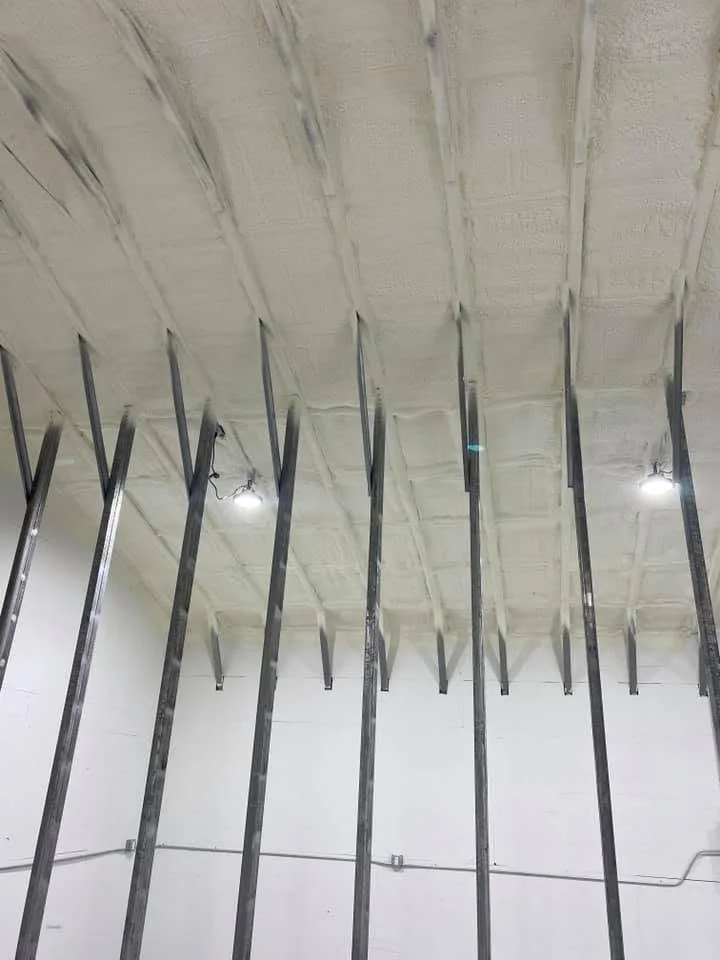
Energy Loss Problems That Require Closed-Cell Spray Foam in Jackson Homes
Skeeter Aimone
April 16th, 2026
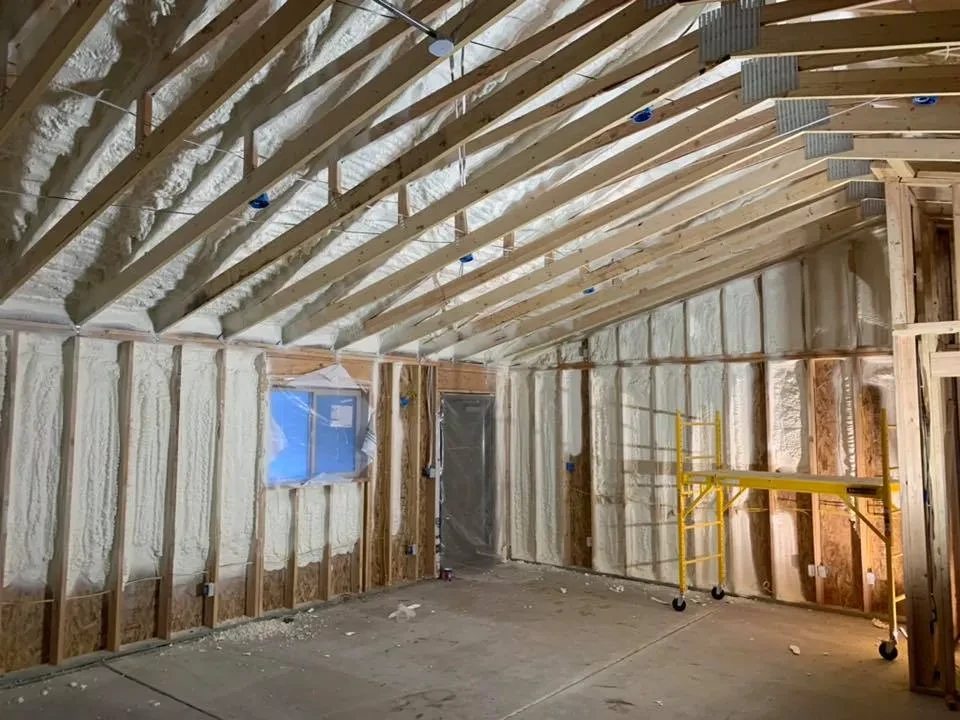
Jackson, Wyoming, sits in IECC Climate Zone 7, one of the most demanding cold climate zones in the continental United States. With winter temperatures regularly dropping well below zero and heating season stretching over seven months, homes here face a specific set of energy loss problems that standard insulation materials simply cannot solve. Closed-cell spray foam insulation delivers R-6 to R-7 per inch, creates an airtight seal, and acts as a Class II vapor retarder at just 1.5 inches thick, making it the most effective solution for controlling air leakage, condensation, and thermal bridging in Jackson’s extreme climate conditions. For a broader overview, see closed-cell spray foam insulation systems and applications.
TL;DR
Jackson, WY, falls within IECC Climate Zone 7, requiring ceiling insulation rated at R-60 under the 2021 Energy Conservation Code adopted by the Town of Jackson.
Closed-cell spray foam delivers R-6 to R-7 per inch, nearly double the thermal resistance of fiberglass batts (R-3.1 to R-3.8 per inch).
Air leakage accounts for a significant portion of energy loss in homes, and closed-cell spray foam serves as a continuous air barrier when applied to framing cavities, roof decks, and rim joists.
At 1.5 inches of thickness, closed-cell spray foam qualifies as a Class II vapor retarder, preventing moisture from condensing inside wall and ceiling assemblies during cold winters.
Common energy loss problems in Jackson homes include attic bypass leakage, rim joist air infiltration, crawlspace moisture intrusion, and ice dam formation caused by inadequate insulation.
The Town of Jackson also mandates cold roof systems on Structural Insulated Panel roofs, further emphasizing the need for proper insulation and ventilation strategies.
Closed-cell spray foam adds structural rigidity to wall assemblies and resists moisture absorption, making it particularly suited for basements and crawlspaces common in mountain construction.
Why Jackson Homes Face Unique Energy Loss Problems
Jackson’s location at an elevation of 6,237 feet in the Teton Range creates conditions far harsher than most of the country. The U.S. Department of Energy classifies Teton County within Climate Zone 7, where heating degree days exceed 7,500 annually. The DOE Building America Climate Region Guide maps the entire Jackson area as requiring the highest tier of insulation performance under the International Energy Conservation Code.
Homes built before modern energy codes were enforced often have fiberglass batts in walls and blown cellulose in attics. While these materials provide some thermal resistance, they do little to stop air movement through the building envelope. The U.S. Department of Energy’s guide on air sealing confirms that air leakage allows outside air to enter and conditioned air to leave a home uncontrollably through cracks and openings, directly contributing to moisture problems, reduced comfort, and higher energy costs.
In Jackson specifically, the Town of Jackson’s 2022 building code update raised the bar further by increasing ceiling insulation requirements from R-49 to R-60 and tightening window U-factor ratings from U-0.32 to U-0.30. These updated standards reflect the reality that older insulation methods fall short in this climate.
The Top Energy Loss Problems in Jackson Homes
1. Attic Air Bypass and Heat Stack Effect
Heat rises, and in poorly sealed homes, warm indoor air escapes through gaps around recessed lights, plumbing penetrations, electrical runs, and chimney chases in the attic floor. This stack effect pulls cold outdoor air in through lower-level leaks, creating continuous air exchange that undermines heating system performance. Standard fiberglass batts do not seal these pathways. Closed-cell spray foam applied at penetration points and along the attic floor perimeter creates an airtight seal that stops this convective loop entirely. For more detail, see attic air sealing with closed-cell spray foam.
2. Rim Joist and Band Joist Infiltration
The rim joist area, where the floor framing meets the foundation wall, is one of the most significant sources of air leakage in any home. In Jackson’s older construction, these areas are often insulated with fiberglass batts that allow air to pass through freely. Cold air infiltration at the rim joist causes cold floors, frost accumulation, and condensation on interior surfaces. Closed-cell spray foam fills the irregular cavities completely and adheres to both wood framing and concrete, eliminating the air pathway and providing R-21 or more in a standard 2×10 rim joist cavity.
3. Crawlspace and Basement Moisture Intrusion
Jackson area homes with vented crawlspaces or uninsulated basements experience moisture problems when warm indoor air meets cold surfaces below grade. According to the DOE Building America, high-density closed-cell spray foam is recommended on interior concrete foundation walls in IECC Climate Zones 5 and higher. For vented crawlspaces, Building Science Corporation states that only high-density closed-cell spray foam should be used across all climate zones to keep air and vapor out of floor assemblies.
4. Ice Dam Formation on Roof Edges
When heat escapes through an inadequately insulated attic, it warms the roof deck and melts snow from below. The meltwater runs down to the cold eave edge and refreezes, forming ice dams that can force water behind shingles and into wall cavities. Closed-cell spray foam applied to the underside of the roof deck in an unvented attic assembly keeps the roof deck at a consistent temperature, eliminating the conditions that cause ice dams. This approach is particularly effective in Jackson, where heavy snow loads and freeze-thaw cycles are common. For local solutions, explore closed-cell spray foam insulation in Jackson, WY.
5. Thermal Bridging Through Wall Framing
Standard wood-frame walls have studs every 16 inches that conduct heat directly through the assembly. Fiberglass batts insulate only between the studs, leaving the framing itself as a thermal short circuit. Closed-cell spray foam fills around every stud, plate, and blocking, reducing thermal bridging and creating a more continuous thermal barrier.
Insulation Performance Comparison
Understanding how closed-cell spray foam compares to other common insulation materials helps clarify why it is the right choice for Jackson’s climate demands.
Insulation Type
R-Value per Inch
Air Barrier
Vapor Barrier
Best Application
Closed-Cell Spray Foam
R-6 to R-7
Yes
Yes (at 1.5″)
Walls, rim joists, roofs, crawlspaces
Open-Cell Spray Foam
R-3.5 to R-3.8
Yes (at full depth)
No
Interior walls, sound control
Fiberglass Batts
R-3.1 to R-3.8
No
No
Non-cavity applications only
Blown Cellulose
R-3.2 to R-3.8
No
No
Attic floors (with air sealing)
Rigid Foam Board (XPS)
R-5.0
No
Varies
Exterior continuous insulation
Mineral Wool Batts
R-3.3 to R-4.2
No
No
Fire-rated wall assemblies
The table above highlights that closed-cell spray foam is the only material that delivers high R-value, air barrier performance, and vapor barrier capability in a single application. This combination is essential in Climate Zone 7, where the vapor drive from the interior to the exterior during the winter months is intense.
How Building Science Supports Closed-Cell Foam in Cold Climates
Walls: High-density closed-cell spray foam is preferred and qualifies as a Class II vapor retarder at 1.5 inches thick, meeting IRC section R702.7 requirements for condensation control.
Roofs: For Climate Zones 5 and higher, only high-density closed-cell spray foam should be used in unvented conditioned attics. Hybrid approaches combining closed-cell foam with open-cell foam or fiberglass are also approved when minimum closed-cell thickness requirements are met.
Foundations: High-density closed-cell spray foam is recommended on interior concrete foundation walls in Climate Zones 5 and higher. Vented crawlspaces require only high-density closed-cell foam across all climate zones.
Vented Attics: Spray foam is used to create an airtight seal at the ceiling plane before filling with air-permeable insulation, forming an airtight “bathtub” that prevents wind washing.
These recommendations align directly with the conditions found in Jackson homes and explain why closed-cell spray foam is not just a premium upgrade but a building science requirement for durable, energy-efficient construction in this climate.
Real-World Jackson Home Scenarios
The following examples illustrate common energy loss situations our team encounters in Jackson area homes and how closed-cell spray foam addresses each one.
Scenario
Home Type
Problem
Solution
Outcome
Wilson Residence
1985 log home, 2,400 sq ft
Severe drafts at the rim joist, ice dams every winter
3″ closed-cell foam at all rim joist cavities and 2″ foam along the roof deck
Eliminated ice dams, 28% heating cost reduction
Teton Village Condo
1998 townhome, 1,800 sq ft
Cold floors over a vented crawlspace, condensation on the subfloor
Closed-cell foam sealed crawlspace floor joists and perimeter walls
Floor temps increased 12 degrees, no condensation
Downtown Jackson Remodel
1970s single-family, 2,100 sq ft
Fiberglass settling in walls, high utility bills
Closed-cell foam retrofitted into wall cavities and attic floor sealing
Closed-cell foam on interior basement walls and rim joist
Mold eliminated, humidity stabilized
Factors That Affect Closed-Cell Spray Foam Performance
Several variables influence how well closed-cell spray foam performs in Jackson homes. Understanding these factors helps ensure the material delivers its full potential.
Foam Thickness
The R-value of closed-cell spray foam scales linearly with thickness. A 2-inch application provides approximately R-14, while 3 inches delivers roughly R-21. Building Science Corporation specifies minimum thickness requirements based on climate zone to meet vapor retarder and condensation control standards. In Climate Zone 7, these minimums should always be met or exceeded.
Substrate Temperature During Installation
Cold substrate temperatures during installation can cause poor adhesion and shrinkage of the foam. Installation in Jackson’s winter months requires heated enclosures or careful temperature management to ensure the chemical reaction completes properly and bonds to the substrate.
Application Consistency
Closed-cell spray foam must be applied at the correct thickness and density to achieve the rated R-values and air barrier performance. Gaps, thin spots, or uneven coverage compromise the air seal and reduce thermal performance. This is why professional installation by experienced crews is essential.
Cavity Depth and Framing Configuration
Standard 2×4 walls (3.5″ deep) limit foam thickness to approximately R-25 when fully filled. For higher R-values, continuous exterior insulation or advanced framing techniques may be needed. In Jackson’s new construction, 2×6 framing allows up to R-42 within the cavity using closed-cell foam alone.
Integration with Other Building Systems
Closed-cell spray foam creates a tight building envelope, which means mechanical ventilation becomes necessary to maintain indoor air quality. Homes insulated with spray foam should include properly sized fresh air systems to introduce controlled ventilation and manage humidity levels.
Actionable Strategies for Jackson Homeowners
Conduct a blower door test before any insulation upgrade. This identifies the exact location and severity of air leaks so foam application can be targeted where it makes the greatest impact.
Prioritize the rim joist and foundation if the budget is limited. The rim joist is the single most cost-effective location for closed-cell spray foam in any Jackson home because it addresses both air infiltration and thermal bridging simultaneously.
Seal attic penetrations first in existing homes with vented attics. Apply closed-cell foam around all plumbing stacks, electrical runs, chimney chases, and duct penetrations before adding blown insulation on top.
Consider hybrid roof assemblies for new construction or full roof replacements. Use 2 to 3 inches of closed-cell foam on the underside of the roof deck for condensation control, then supplement with fiberglass or cellulose to reach the R-60 code requirement.
Address crawlspaces before winter by sealing the floor joist bays with closed-cell foam and converting to a conditioned crawlspace with proper air sealing and moisture management.
Plan for mechanical ventilation when upgrading to spray foam insulation. Tight envelopes require dedicated fresh air intake, whether through an HRV, ERV, or simple supply fan connected to the HVAC system.
Verify code compliance for all insulation projects. The Town of Jackson’s 2021 Energy Conservation Code specifies R-60 ceiling insulation, U-0.30 window ratings, and cold roof system requirements for SIP construction.
Ready to Fix Your Home’s Energy Loss?
High Country Solutions has extensive experience diagnosing and resolving energy loss problems in Jackson homes using closed-cell spray foam insulation. Our team evaluates every home’s specific needs, from rim joist sealing to full envelope retrofits, and applies building science-backed solutions that stand up to Jackson’s extreme winters. Whether you are building new, remodeling, or upgrading an older home, we deliver results that lower energy costs and improve year-round comfort.
Call us at (307) 248-9063 or email [email protected] to get started. We serve Jackson and the surrounding Teton County area with professional spray foam insulation services backed by real building science.
Frequently Asked Questions
How much does closed-cell spray foam cost in Jackson, Wyoming?
Costs vary by project scope and accessibility, but closed-cell spray foam typically ranges from $1.50 to $3.00 per board foot installed in the Jackson area. We provide detailed estimates based on your specific home and project requirements.
Can closed-cell spray foam be installed in winter?
Yes, but substrate temperatures must be maintained above the manufacturer’s minimum (typically 40 to 50 degrees Fahrenheit) during and after application. Our crew uses temporary heating and enclosures when needed for winter installations in Jackson.
Does closed-cell spray foam require a separate vapor barrier?
No. At 1.5 inches or more, closed-cell spray foam qualifies as a Class II vapor retarder under the IRC, so an additional polyethylene vapor barrier is not needed and should not be installed over spray foam.
How long does closed-cell spray foam last?
When properly installed, closed-cell spray foam is a permanent insulation solution that does not settle, sag, or degrade over time. It maintains its R-value and air sealing properties for the life of the building.
Will spray foam insulation make my home too tight?
Spray foam creates a tight envelope, which is the goal for energy efficiency. However, controlled mechanical ventilation should be added to maintain healthy indoor air quality. Our team evaluates ventilation needs as part of every insulation project.
Sources
U.S. Department of Energy – Air Sealing Your Home – Comprehensive guide on how air leakage affects home energy performance and strategies for reducing unwanted air infiltration through cracks and openings.
DOE Building America – Spray Foam Insulation Guide – Technical guide on spray polyurethane foam performance in various climate zones, covering air sealing effectiveness and hybrid insulation system strategies.
I’m Skeeter Aimone, owner of High Country Solutions in Alpine, Wyoming, leading the company since 2019. I focus on quality installation, building science, and insulation solutions suited to harsh Wyoming and eastern Idaho conditions.