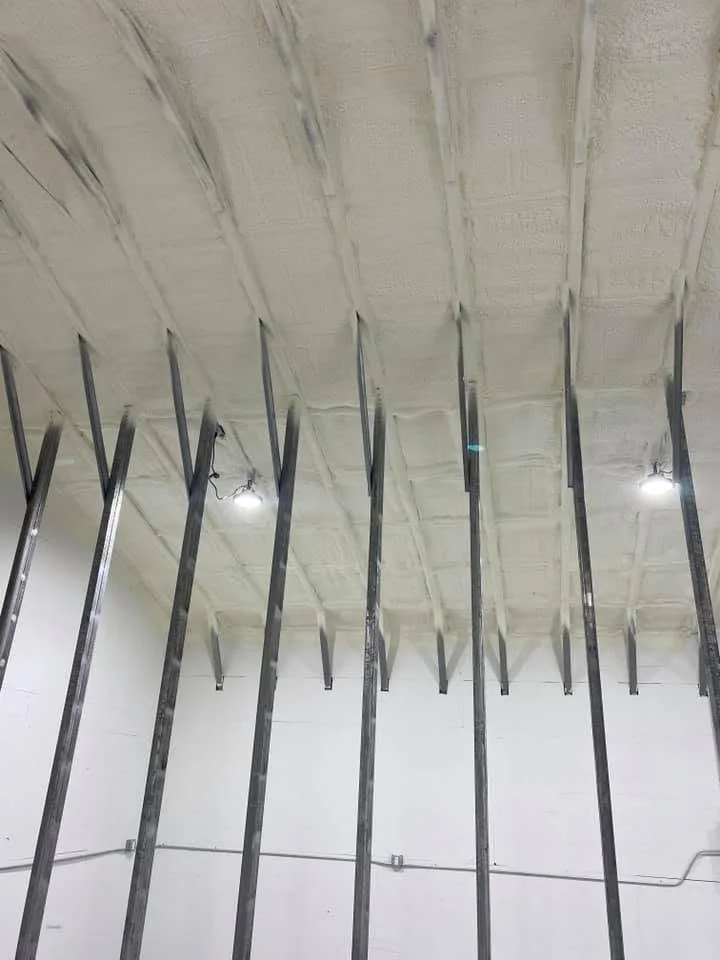
Is Blown-in Insulation a Reliable Option for Long-Term Efficiency in Idaho Falls, ID?
Skeeter Aimone
April 16th, 2026
Yes, blown-in insulation is a reliable and practical option for long-term energy efficiency in Idaho Falls homes, particularly in attics and existing wall cavities where retrofitting is difficult. The right choice between cellulose, fiberglass, and mineral wool depends on your home’s specific needs, your budget, and how much R-value you need to meet or exceed local code requirements. Idaho Falls falls primarily within Climate Zone 5, where the Idaho Energy Code mandates a minimum of R-38 for attic insulation and R-20 for exterior walls. Blown-in insulation can meet and exceed these targets affordably, but understanding how different materials perform over time in a cold-climate environment is essential before investing.
Key Takeaways
Idaho Falls sits in Climate Zone 5, requiring a minimum of R-38 in attics and R-20 in walls per Idaho’s adopted 2018 IECC code.
All three common blown-in materials (cellulose, fiberglass, mineral wool) can achieve the needed R-values, but each has different longevity and performance characteristics.
Blown-in insulation costs between $1.00 and $3.50 per square foot installed, making it one of the most cost-effective retrofit options available.
Loose-fill insulation naturally settles over time, which can reduce R-value if not accounted for during installation through overfilling.
Proper air sealing before insulating is just as important as the insulation itself for realizing full efficiency gains.
Why Idaho Falls Demands Serious Insulation
Idaho Falls experiences long, cold winters with average January temperatures hovering around 20°F and frequent stretches below freezing. Heating costs dominate energy bills for most homeowners in the region, and inadequate insulation is one of the largest contributors to heat loss. The Department of Energy explains that heat flows from warmer areas to cooler areas until there is no temperature difference, meaning in winter your heated living spaces constantly lose warmth to unconditioned attics, walls, and crawlspaces.
The local energy code, based on the 2018 International Energy Conservation Code with Idaho amendments, sets the floor for acceptable insulation levels. But meeting the minimum is not the same as optimizing for comfort and cost savings. Homes insulated only to code minimums often still experience cold spots, drafty rooms, and higher-than-necessary utility bills. Upgrading from code-minimum to Green Building Advisor -recommended levels can reduce heating energy use by 15% to 25%, depending on the home.
How Blown-In Insulation Works and Where It Excels
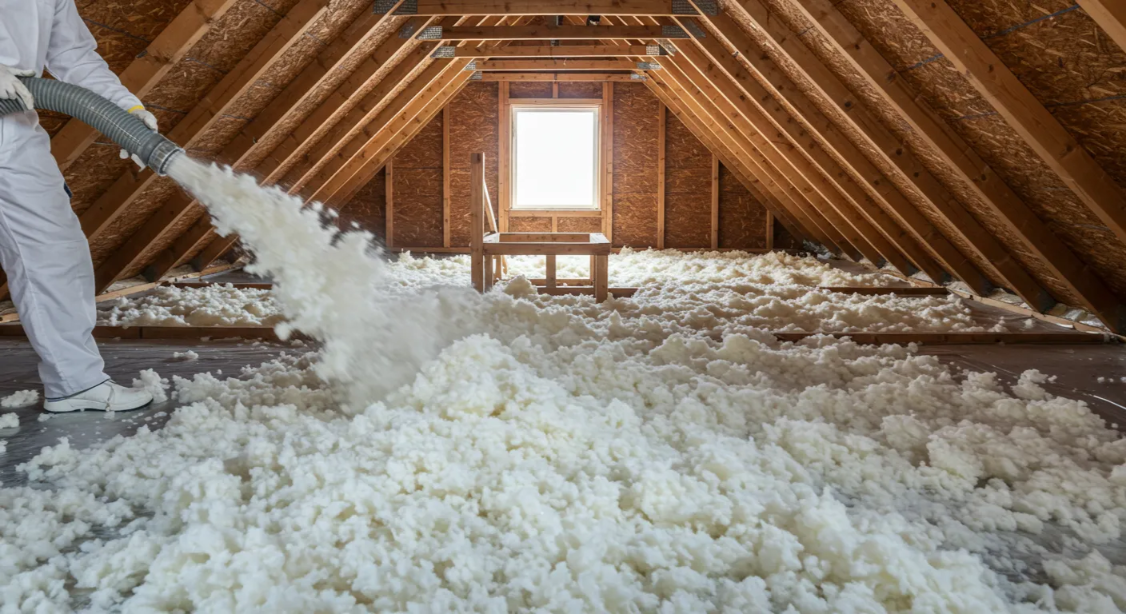
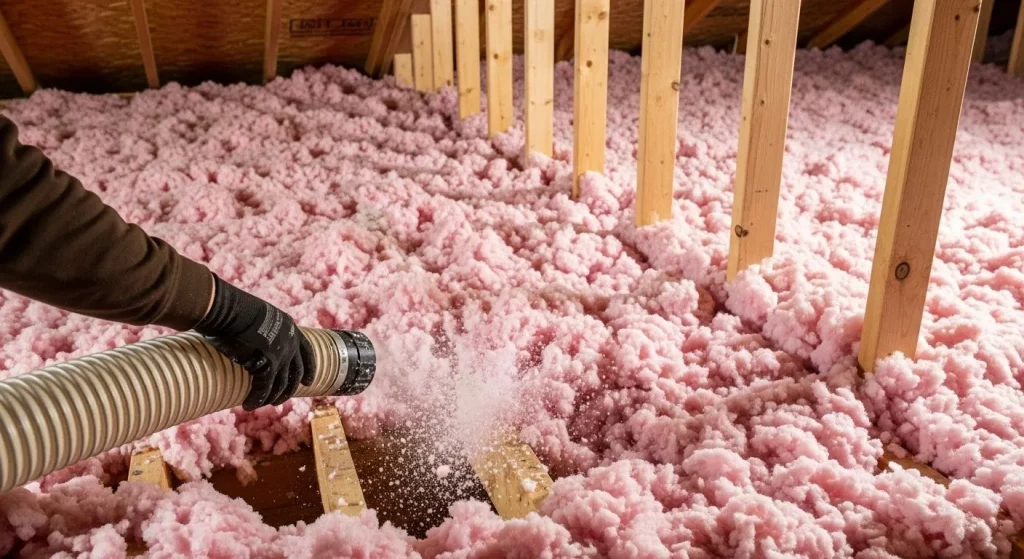
Blown-in (also called loose-fill) insulation is installed using a machine that feeds material through a long hose, distributing it evenly across attic floors, into wall cavities, or above ceiling joists. The material fills gaps, covers irregular surfaces, and wraps around obstructions like wiring and plumbing far better than batt insulation ever could. For a broader understanding, see blown-in insulation systems and applications.
This makes blown-in insulation the preferred choice for:
Retrofitting existing homes where wall cavities are already closed
Attics with irregular framing, ductwork, or low-clearance areas
Homes with settled or compressed existing insulation that needs a top-off layer
Sound dampening between floors and interior walls
The ability to conform to any space without cutting and fitting is what gives blown-in its practical advantage, especially in older Idaho Falls homes that may have been built with minimal insulation or none at all.
Comparing the Three Main Blown-In Materials
Not all blown-in insulation performs the same way over time. The material you choose directly affects R-value per inch, settling behavior, moisture resistance, and lifespan. Here is how the three primary options compare for cold-climate applications:
Material
R-Value Per Inch
Typical Lifespan
Settling Risk
Moisture Resistance
Best Use in Idaho Falls
Cellulose
3.2 – 3.8
20 – 30 years
Moderate
Low (absorbs moisture)
Attics with good ventilation, wall cavity retrofits
Fiberglass
2.2 – 2.7
15 – 80+ years
Low to moderate
Good
Attics, walls, and areas prone to occasional moisture
Mineral Wool
3.0 – 3.7
30 – 80+ years
Low
Very good
Walls, fire-rated assemblies, and moisture-prone areas
Cellulose
Made from recycled paper treated with fire retardants, cellulose offers one of the highest R-values per inch among blown-in materials. It dense-packs well into wall cavities, providing both thermal resistance and meaningful air sealing. The trade-off is moisture sensitivity. Cellulose can absorb and hold water if exposed to high humidity or roof leaks, which accelerates settling and can promote mold growth. In Idaho Falls, where heavy snow loads on roofs are common, ensuring the attic has proper ventilation and no leaks before installing cellulose is non-negotiable. For alternative solutions, consider spray foam insulation services in Idaho Falls, ID.
Fiberglass
Fiberglass is the most widely installed blown-in material in the United States. It is lightweight, resists moisture well, and maintains its R-value over decades when kept dry. However, its lower R-value per inch means you need more depth to reach the same thermal resistance as cellulose. The DOE notes that loose-fill fiberglass can lose a measurable percentage of its R-value under extreme temperature differences, which is relevant in a climate where indoor-to-outdoor temperature differentials can exceed 70°F in winter.
Mineral Wool
Mineral wool (rock wool) offers the best balance of fire resistance, moisture performance, and sound dampening. It is more expensive than cellulose or fiberglass, but it holds its shape and R-value exceptionally well over time. For homeowners willing to invest more up front, mineral wool is the most durable blown-in option for long-term performance in demanding climates.
The Settling Problem and What It Means for Long-Term Efficiency
The single biggest concern with blown-in insulation for long-term efficiency is settling. All loose-fill materials compress under their own weight over time, reducing total thickness and R-value. If a 12-inch layer of cellulose settles to 8 inches, it loses roughly one-third of its insulating power.
Experienced installers compensate for this by overfilling. For example, to achieve a settled R-49 in an attic, an installer may blow in enough material to reach an initial depth corresponding to R-55 or higher, knowing it will compact down to the target level. This is standard practice, but it means the quality of your long-term results depends entirely on the installer’s knowledge of the specific material’s settling characteristics. For more detail, see blown-in insulation settling and coverage.
If your home already has blown-in insulation that was installed 15 or more years ago, an inspection is worthwhile. Visible compression, thinning areas, or gaps near the eaves are signs that the material has settled past the point of effective performance.
Cost Expectations for Idaho Falls Homeowners
Blown-in insulation is one of the most affordable ways to improve a home’s thermal envelope. Based on current market data, here is what to expect:
Project Scope
Estimated Cost Range
Typical R-Value Achieved
Attic top-off (add to existing)
$800 – $2,000
R-38 to R-49
Full attic insulation (1,000 sq ft)
$1,000 – $2,800
R-49 to R-60
Wall cavity dense-pack (1,500 sq ft)
$1,500 – $4,200
R-13 to R-15 per cavity
Whole-house retrofit
$2,500 – $6,000+
Code-compliant or better
These ranges account for material choice, labor, and project complexity. Fiberglass tends to be the least expensive, followed by cellulose, with mineral wool at the premium end.
Signs You Need a Blown-In Insulation Upgrade
Several indicators suggest your current insulation is underperforming, and a blown-in retrofit would deliver measurable results:
High winter heating bills that keep climbing despite mild winters
Ice dams forming along the roof edges signal heat escaping through the attic
Cold rooms or floors, especially above the garage or on the second story
Drafty walls, even with windows and doors closed
Visible insulation that is flat, compressed, or discolored in the attic
Homes built before 1990, which commonly have little or no wall insulation
Any combination of these symptoms points to insufficient thermal resistance that blown-in insulation can address effectively.
Recommendations by Home Type
Older Homes (Pre-1980 Construction)
Many older Idaho Falls homes were built with R-11 or less in walls and R-19 or nothing in attics. Dense-pack cellulose blown into wall cavities through drilled holes is the most cost-effective way to bring walls up to modern standards. For attics, a full layer of blown-in fiberglass or cellulose over any existing material brings the total R-value into the R-49 to R-60 range.
Homes Built 1980 – 2005
These homes likely have some insulation, but often fall short of current code. An attic top-off with blown-in material is usually the highest-return project, as most heat loss occurs through the ceiling. The existing insulation does not need to be removed unless it is damaged, wet, or contaminated with pests.
Newer Homes (Post-2005)
Even newer homes may benefit from attic insulation upgrades, particularly if the builder only installed to the code minimum of R-38. Bringing attic insulation to R-49 or R-60 is relatively inexpensive and pays for itself within a few heating seasons in a climate like Idaho Falls.
Signs You Have Found the Right Insulation Contractor
Choosing the right installer matters as much as choosing the right material. A qualified contractor will perform a thorough assessment before quoting a price, including measuring existing insulation depth, checking for air leaks, inspecting ventilation, and identifying moisture issues. They should explain which material they recommend and why, specify the target R-value in writing, and account for settling in their installation calculations. Clear communication about timeline, warranty, and what happens if you need an inspection for code compliance separates reputable professionals from the rest.
Get an Expert Assessment for Your Idaho Falls Home
High Country Solutions helps Idaho Falls homeowners evaluate their current insulation, identify where heat loss is occurring, and determine the most cost-effective path to long-term energy efficiency. Our team understands the demands of Climate Zone 5 and knows how to get blown-in insulation right the first time, from material selection to proper depth and settling compensation.
Call us at (307) 248-9063 or email [email protected] to discuss your project. We provide honest recommendations, competitive pricing, and installation that holds up for decades in Idaho’s cold climate.
Frequently Asked Questions
Q: Can blown-in insulation be installed over existing batt insulation?
A: Yes, blown-in insulation can be installed directly over existing batts in most cases. A professional should first check the condition of the existing insulation for moisture damage, compression, or pest contamination before layering new material on top.
Q: How long does blown-in insulation last in a cold climate like Idaho Falls?
A: Cellulose typically lasts 20 to 30 years, while fiberglass can perform well for 15 to 80-plus years, depending on conditions. Mineral wool tends to last 30 years or more. Lifespan depends heavily on whether the material stays dry and undisturbed.
Q: Does blown-in insulation help with summer cooling, too?
A: Yes, insulation resists heat flow in both directions. In summer, it reduces heat gain from the hot attic into your living spaces, lowering cooling costs and improving comfort even in Idaho Falls, where air conditioning use is seasonal.
Q: Is blown-in insulation safe for homes with forced-air ductwork in the attic?
A: Blown-in insulation can be installed around and over ductwork, and duct insulation to at least R-8 is required by Idaho code for supply and return ducts in attic spaces. Sealing duct joints before insulating prevents air leaks that would otherwise waste energy.
Q: How do I know if my home meets Idaho insulation code requirements?
A: A professional energy audit or insulation assessment can measure your current R-values against the Idaho Energy Code minimums of R-38 for attics and R-20 for walls in Climate Zone 5. Many homes, even newer ones, have areas that fall short of these requirements Energy Vanguard.
Insulation – U.S. Department of Energy – DOE’s comprehensive guide to how insulation works, R-value factors, material types, and climate zone requirements.
Residential Code – Idaho Energy Code – Idaho’s adopted 2018 IECC residential provisions with state-specific amendments, including minimum R-value requirements for Climate Zones 5 and 6.
I’m Skeeter Aimone, owner of High Country Solutions in Alpine, Wyoming, leading the company since 2019. I focus on quality installation, building science, and insulation solutions suited to harsh Wyoming and eastern Idaho conditions.