How Blown-In Insulation Works and Where It Should Be Used in Homes?
Skeeter Aimone
April 16th, 2026
Blown-in insulation is a loose-fill material made from small particles of fiber that get pneumatically blown into wall cavities, attic floors, and other hard-to-reach spaces through a specialized hose and machine. Unlike batts or rolls that must be cut and fitted by hand, blown-in insulation conforms to irregular shapes, wraps around obstructions like wiring and plumbing, and fills gaps that traditional insulation often misses. According to the U.S. Department of Energy, the three most common materials used for blown-in insulation are cellulose, fiberglass, and mineral wool, each made primarily from recycled content. The right choice for your home depends on the area being insulated, your climate zone, your budget, and whether you are retrofitting an existing home or insulating new construction.
TL;DR
Blown-in insulation fills gaps and voids that batts cannot reach, making it especially effective for retrofitting existing walls and attic floors.
Three primary material options exist: cellulose (R-3.2 to 3.8 per inch), fiberglass (R-2.2 to 2.9 per inch), and mineral wool (R-3.1 to 3.3 per inch).
Professional installation is recommended for enclosed wall cavities using the dense pack technique, while attic floors can sometimes be done as a DIY project.
Cellulose is made from 82% to 85% recycled newsprint and treated with borate for fire and insect resistance, per the DOE’s insulation materials guide.
Typical installed costs range from $1.50 to $3.50 per square foot, depending on material, depth, and access difficulty.
How the Blown-In Installation Process Works
The installation process for blown-in insulation is straightforward but requires specialized equipment and, in many cases, professional expertise. Loose-fill insulation consists of small particles that are fed into a blowing machine and propelled through a long, flexible hose into the target area. The machine breaks up clumps and separates the fibers, distributing them evenly as they exit the nozzle. For a complete overview, review the blown-in insulation installation process and methods.
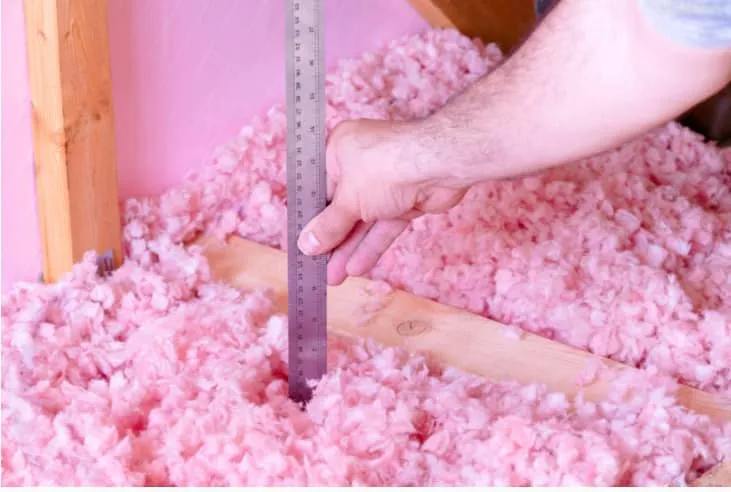
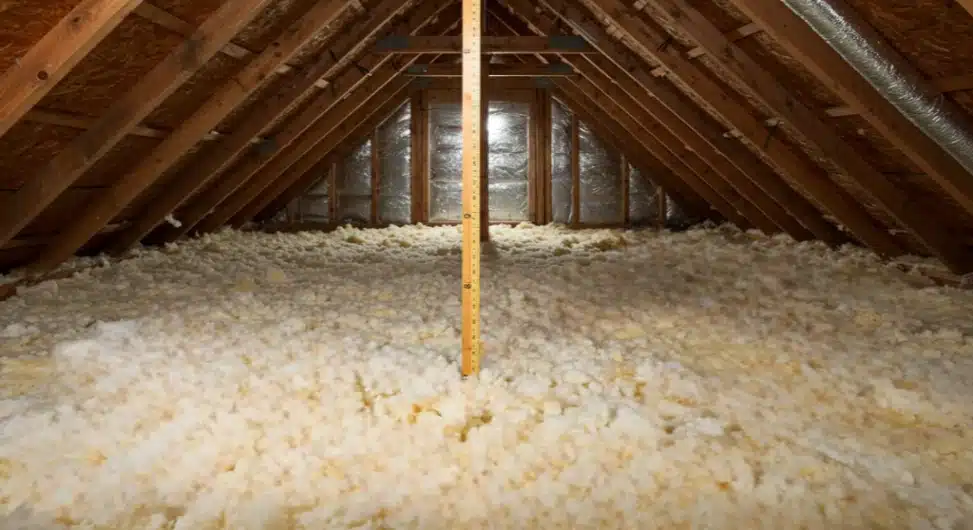
For open attic floors, the process is relatively simple. A contractor or homeowner spreads the material across the attic floor, building it up to the target depth. Depth markers and rulers are used to ensure consistent coverage. In an hour or two, a thick blanket of insulation can cover an entire attic floor with minimal disruption to the living space below.
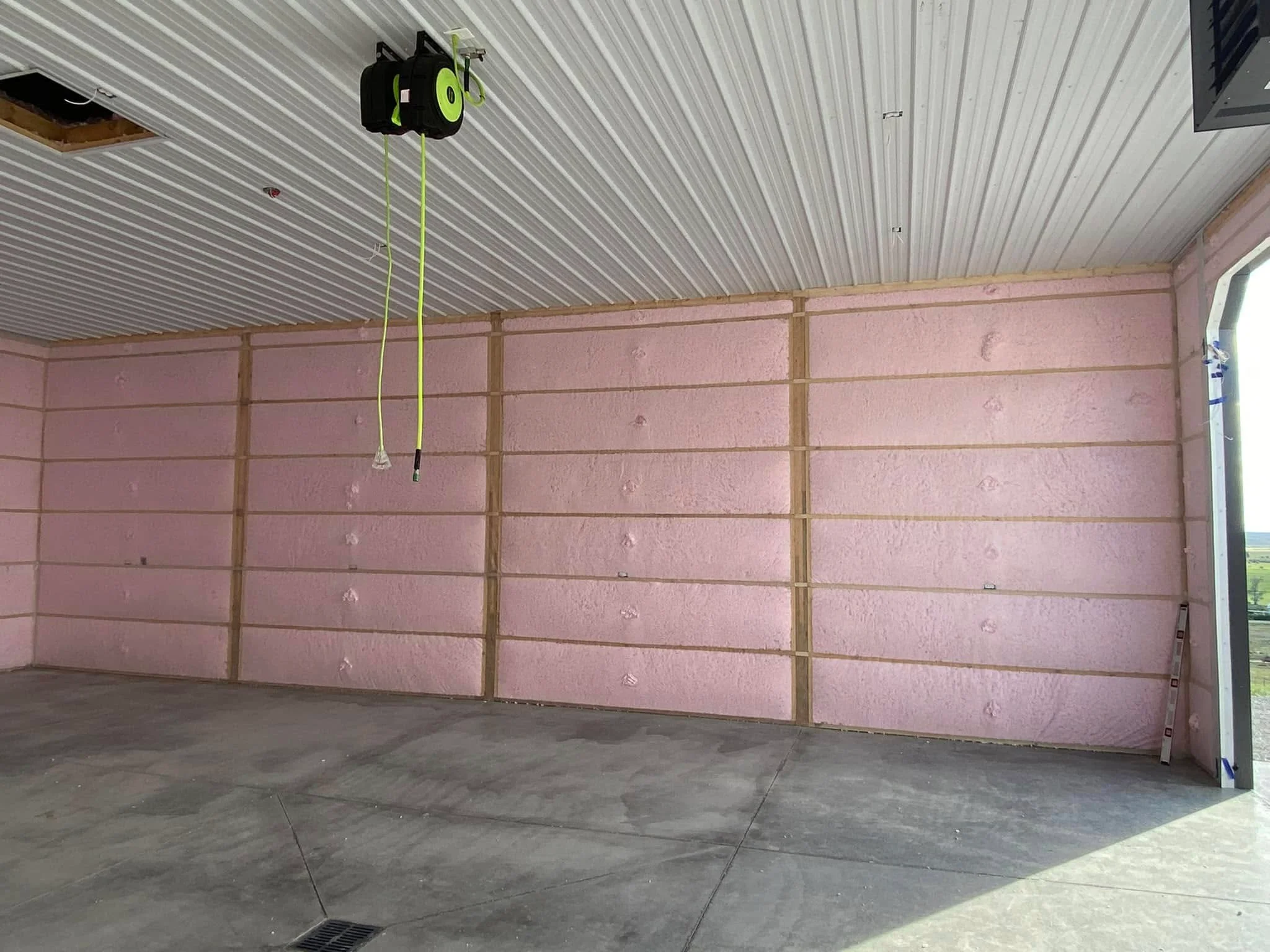
For enclosed wall cavities, the process is more involved. Installers typically drill small holes (about two to three inches in diameter) into the exterior or interior wall at the top of each stud bay. A filler tube is inserted into the bottom of the cavity, and insulation is blown in from the bottom up. The dense pack technique compresses the material to a density of roughly 3.5 pounds per cubic foot, which prevents settling and provides a higher effective R-value. Once filled, the holes are plugged, and the wall surface is restored. The Building America Solution Center notes that this approach is designed specifically for upgrading existing exterior walls that are uninsulated or poorly insulated.
Types of Blown-In Insulation Materials
Not all blown-in insulation is the same. The material you choose affects thermal performance, cost, fire resistance, and suitability for different areas of the home.
Cellulose stands out for its higher R-value per inch and its ability to densely pack into wall cavities without settling. The DOE confirms that cellulose insulation, when installed at proper densities, cannot settle in a building cavity, which means it maintains its R-value over time. It also provides better sound dampening than fiberglass when densely packed.
Fiberglass is lighter weight and tends to be less expensive per bag, but it requires greater thickness to achieve the same R-value as cellulose. It is a common choice for open attic blow applications where high density is less of a concern.
Mineral wool offers the highest fire resistance of the three and is naturally water repellent, making it a strong option for homes in fire-prone areas or where moisture exposure is a concern.
Where Blown-In Insulation Should Be Used in Your Home
The Department of Energy advises that for optimal energy efficiency, a home should be properly insulated from the roof down to the foundation. Here are the specific areas where blown-in insulation delivers the most value.
Unfinished Attic Floors
This is by far the most common and cost-effective application. In unfinished attic spaces, blown-in insulation is installed between and over the floor joists to seal off the living spaces below. The DOE recommends a minimum of R-30 (about 10 to 13 inches of blown material), though many climate zones call for R-38 to R-60. If your existing insulation is below R-30, adding blown-in material on top is one of the fastest ways to reduce energy bills. Loose-fill insulation typically provides better coverage and costs less to install than batts in attics. For more detail, see blown-in insulation systems.
Existing Exterior Walls
If your home still feels drafty after upgrading attic insulation, the exterior walls are likely the culprit. Blown-in insulation, specifically using the dense pack technique, is the most practical way to insulate existing wall cavities without tearing down drywall or removing siding entirely. The DOE notes that this is more expensive than attic insulation but may be worth the cost, especially in very cold climates.
Knee Walls and Cathedral Ceilings
Knee walls (short vertical walls in finished attic rooms with attic space behind them) are often poorly insulated in older homes. Blown-in insulation can fill these cavities effectively. Cathedral ceilings present a trickier challenge because the rafter bays must accommodate both insulation and ventilation, but blown-in fiberglass or mineral wool can work well when the cavity depth is sufficient.
Floors Over Unconditioned Spaces
Floors above vented crawl spaces, unheated garages, and cantilevered floors can all benefit from blown-in insulation. The material conforms around joists, wiring, and ductwork better than batts, reducing gaps where air can pass through.
Basement Rim Joists
The rim joist area, where the floor framing meets the foundation, is a major source of air leakage and heat loss. Blown-in insulation combined with proper air sealing at the rim joist can significantly improve comfort and efficiency.
Energy Savings and Cost Expectations
The financial case for blown-in insulation is supported by data from federal agencies. According to ENERGY STAR, homeowners can save an average of 15% on heating and cooling costs, or about 11% on total energy costs, by combining air sealing with attic insulation, crawl space insulation, and basement rim joist insulation. Savings are higher in northern climates, ranging from 14% to 16% on total energy bills, compared to 5% to 8% in southern climate zones.
Typical installed costs for blown-in insulation range from $1.50 to $3.50 per square foot, depending on the material chosen, the depth required, and the complexity of access. For a 1,500-square-foot attic, total costs generally fall between $1,500 and $3,500. Wall insulation tends to cost more per square foot due to the labor of drilling, filling, and patching. Most homeowners recoup the investment within three to six years through lower utility bills.
Recommendations by Home Type
Home Type
Recommended Approach
Key Notes
Older homes (pre-1980) with no wall insulation
Dense pack cellulose in walls, blown cellulose or fiberglass in the attic
Largest potential for energy savings; walls are often completely empty
Homes with adequate attic but poor wall insulation
Dense pack cellulose in exterior walls
Address drafts and cold rooms without major renovation
New construction
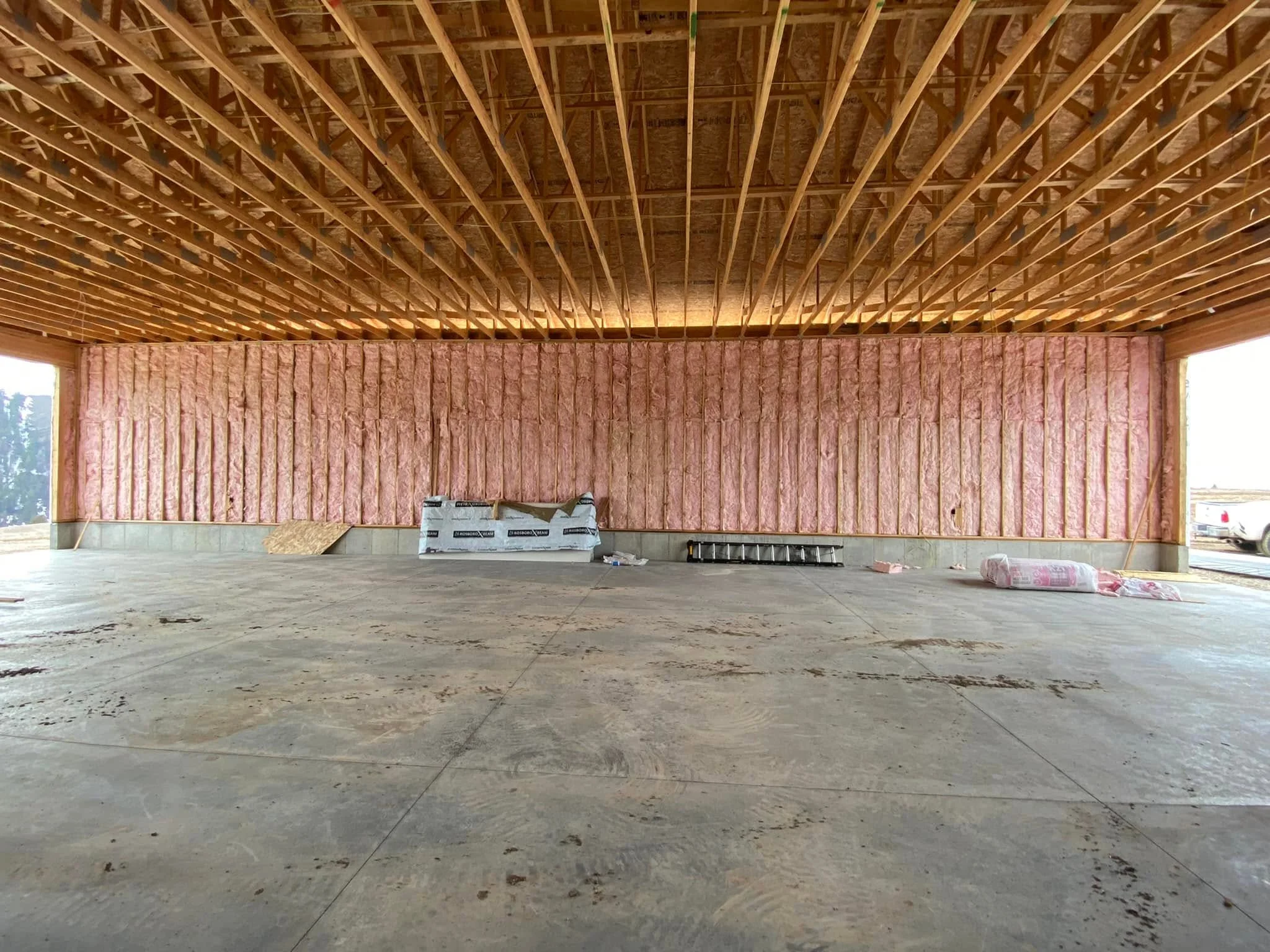
Blown-in behind netting or damp-sprayed cellulose in walls, blown fiberglass in the attic
Superior cavity fill compared to batts; can be combined with advanced framing
Homes in fire-prone areas
Mineral wool in walls and attic
Highest fire resistance; naturally noncombustible
Homes with sound transmission issues
Dense pack cellulose in shared or exterior walls
Excellent sound-dampening properties when densely installed
Common Mistakes to Avoid
Even well-intentioned insulation projects can go wrong. Here are the most frequent problems we see:
Skipping air sealing first: Insulation works best when air leaks are sealed before installation. The DOE emphasizes that you should seal all air leaks and make necessary roof repairs before adding attic insulation.
Blocking soffit ventilation in attics: Baffles must be installed at the eaves to keep insulation from covering soffit vents. Without proper airflow, moisture can build up and cause roof damage.
Under-insulating: Stopping at R-19 or R-30 when your climate zone calls for R-49 or R-60 leaves significant savings on the table.
Ignoring the dense pack requirement for walls: Loose-fill insulation in wall cavities must be installed at the correct density to prevent settling and voids.
Using the wrong material for the application: Fiberglass may be adequate for open attics, but cellulose or mineral wool generally performs better in enclosed wall cavities where density matters.
Signs You Have the Right Insulation Contractor
Choosing a qualified installer matters as much as selecting the right material. Here are the indicators that a contractor knows what they are doing:
They recommend air sealing before insulating and include it as part of the scope of work.
They provide a written estimate specifying the target R-value, material type, and number of bags to be installed.
They discuss ventilation requirements and plan to install baffles at the eaves for attic applications.
They explain the dense pack process and can describe how they will verify proper density in wall cavities.
They have experience with your specific home type and can point to similar projects they have completed.
They do not pressure you into the most expensive option and instead explain the trade-offs between materials.
Get Expert Insulation for Your Home
High Country Solutions helps homeowners identify exactly where their home is losing energy and recommends the right blown-in insulation strategy for each area. Our team assesses your attic, walls, and other priority zones to determine the most cost-effective approach for your situation. Whether you need dense pack wall insulation for a drafty older home or an attic top-up to meet current R-value standards, we handle every step from assessment to installation.
Call us at (307) 248-9063 or email [email protected] to get started. We serve homeowners throughout the region and provide honest, detailed recommendations backed by building science.
Frequently Asked Questions
How long does blown-in insulation last?
When installed at the proper density, blown-in cellulose, fiberglass, and mineral wool can last the life of the home without needing replacement. Cellulose in wall cavities will not settle when dense-packed correctly.
Can blown-in insulation be installed over existing insulation?
Yes, in attics, you can blow new insulation directly over existing batts or loose-fill material. The total combined R-value is what matters. However, if existing insulation is damaged, compressed, or moisture-contaminated, it should be removed first.
Does blown-in insulation help with soundproofing?
Dense pack cellulose provides excellent sound reduction, making it a popular choice for interior walls, shared walls between units, and exterior walls near busy streets. Fiberglass and mineral wool also offer sound dampening, but to a lesser degree.
Is blown-in insulation safe for my family?
All three primary materials are safe once installed. Cellulose is treated with borate, a naturally occurring mineral, for fire and pest resistance. Fiberglass and mineral wool may cause temporary skin or respiratory irritation during installation, but are not hazardous once contained within wall or ceiling cavities.
Do I need to remove my old insulation before blowing in new material?
Not necessarily. If the existing insulation is dry, intact, and free of mold or pests, new blown-in material can be added on top. You only need to remove old insulation if it has been compromised by water damage, rodent activity, or mold growth.
U.S. Department of Energy – Types of Insulation – Overview of all insulation types including loose-fill and blown-in, with installation methods, applicable locations, and advantages of each.
U.S. Department of Energy – Insulation Materials – Detailed breakdown of cellulose, fiberglass, and mineral wool materials including composition, recycled content, and performance characteristics.
I’m Skeeter Aimone, owner of High Country Solutions in Alpine, Wyoming, leading the company since 2019. I focus on quality installation, building science, and insulation solutions suited to harsh Wyoming and eastern Idaho conditions.