Mineral Wool vs Fiberglass Insulation: Which Option Is Better for Your Home?
Quick answer: In the mineral wool vs fiberglass insulation debate, mineral wool usually wins on fire resistance, moisture handling, sound…


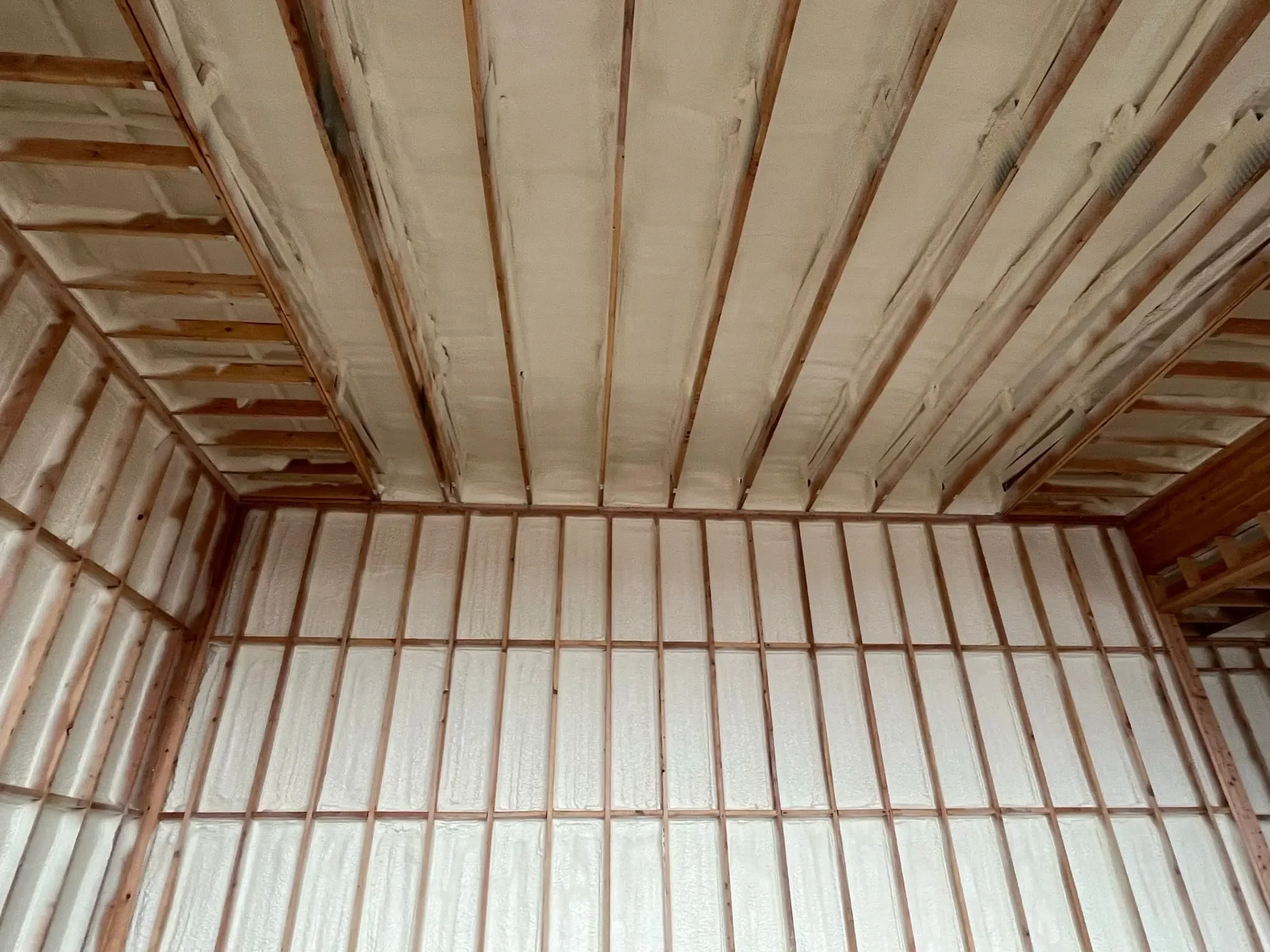
Closed-cell spray foam insulation is one of the most effective materials available for stopping air leaks in buildings, and its value is especially clear in a climate like Franklin, Idaho’s. The material expands on application, fills gaps and cracks in walls, attics, and crawlspaces, and cures into a rigid, airtight barrier that also resists moisture. In cold climates like Franklin’s (IECC Climate Zones 5 through 7), air leaks through the building envelope can account for a quarter to a third or more of total heating and cooling energy loss. Closed-cell spray foam directly addresses this problem by creating a continuous air barrier at the point of installation, something traditional insulation materials like fiberglass batts simply cannot match. A comprehensive closed-cell spray foam guide explains why this approach is so effective in heating-dominated regions.
Franklin, Idaho, sits in a cold climate zone where winter temperatures regularly drop well below freezing. In these conditions, air leaks through the building envelope are driven by three forces: wind pressure, stack effect, and mechanical exhaust fans.
The stack effect is particularly aggressive in cold weather. Warm indoor air rises and pushes out through leaks at the top of the building, drawing cold outside air in through cracks at the bottom. According to building science research, approximately 30% to 50% of space conditioning energy consumption in well-insulated buildings is directly caused by uncontrolled air leakage through the building enclosure. This means that even if a building has adequate fiberglass or cellulose insulation, it can still lose a massive amount of energy if the building envelope is not properly sealed.
The consequences extend beyond energy waste. Air leaking through walls, roofs, and floors carries water vapor. When warm, moist indoor air passes through gaps and reaches cold surfaces inside wall or ceiling cavities, condensation forms. Over time, this leads to mold, wood rot, and degraded structural integrity. As noted by the Building Science Corporation, stopping air movement through the shell is the second-most-important job of a building enclosure, right after keeping rain out.
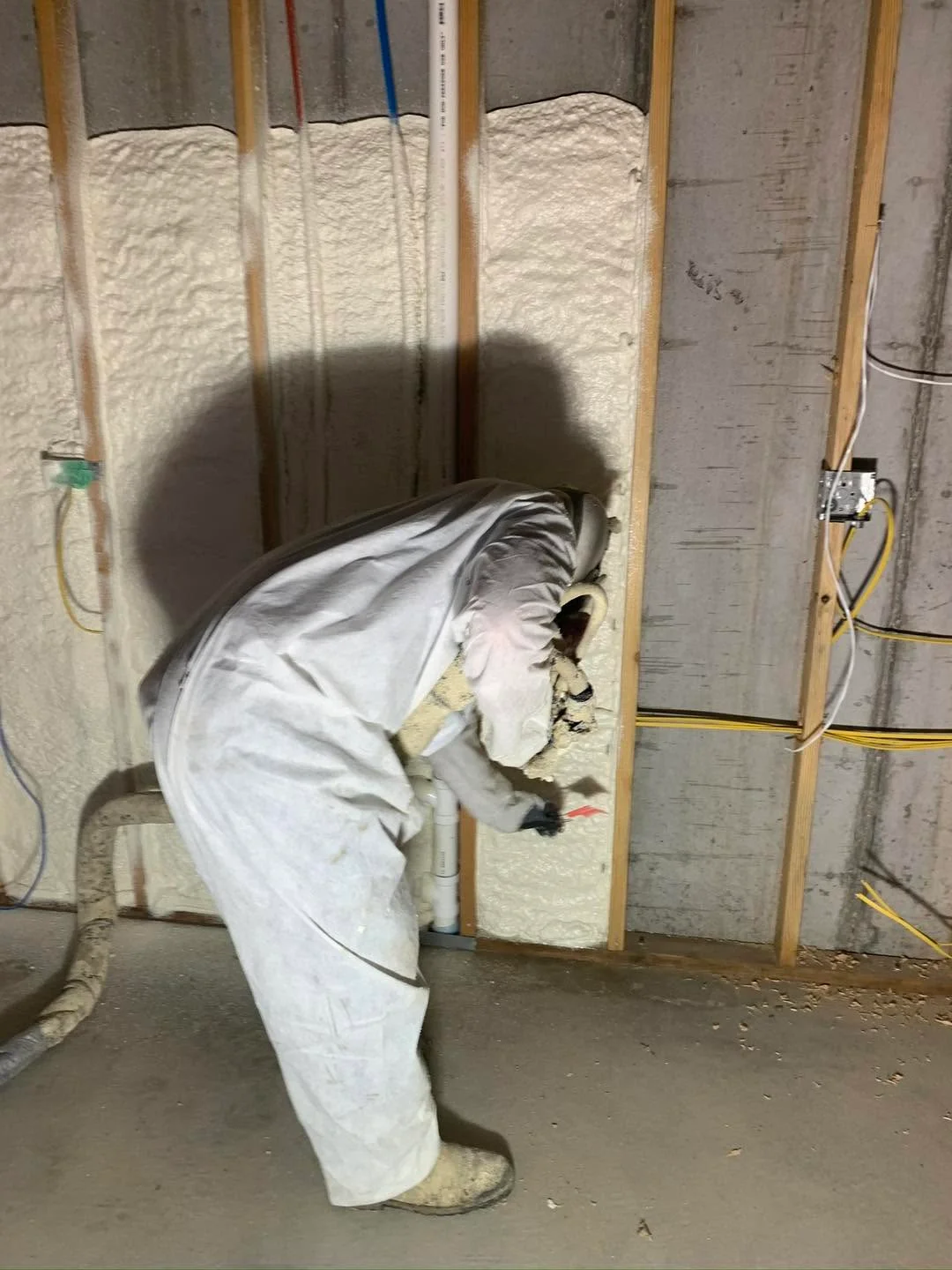
Closed-cell spray foam is a two-component polyurethane product that is mixed and sprayed on-site. As it contacts surfaces, it expands roughly 30 to 60 times its liquid volume and cures into a dense, rigid solid with completely closed gas-filled cells. This structure is what gives the material its air-sealing capability.
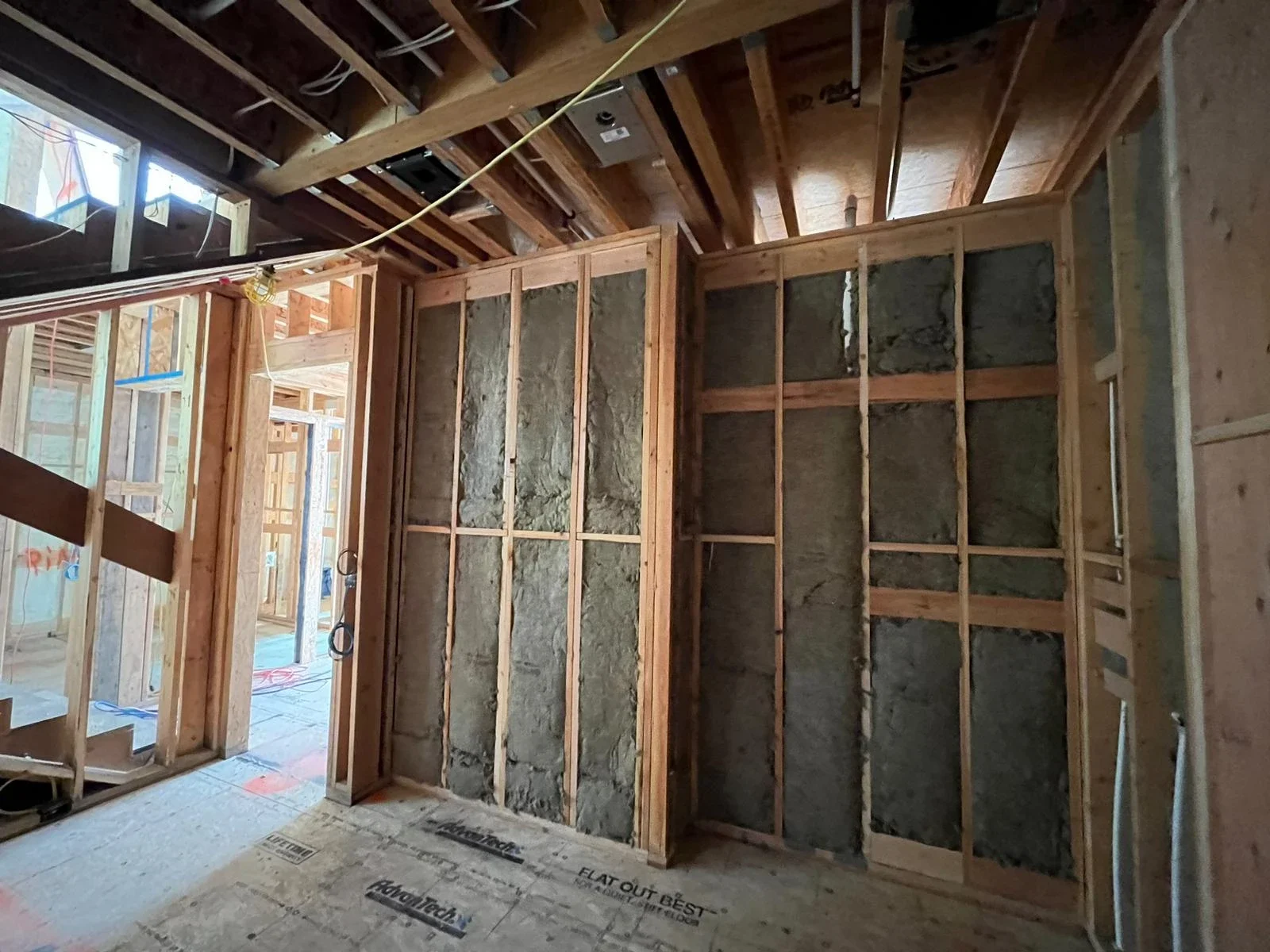
Unlike fiberglass batts or blown cellulose, which are air-permeable materials that rely on a separate air barrier to perform effectively, closed-cell spray foam serves as both insulation and air barrier in one step. When sprayed to the minimum depth classified as an air-impermeable insulation, the foam creates a monolithic layer that blocks airflow through the cavity, even if it does not fill the stud or joist bay. This approach helps reduce energy loss throughout the building envelope.
The closed-cell structure traps a low-conductivity gas inside each cell, which is why the material achieves a much higher thermal resistance per inch than other common insulation types. While the exact R-value depends on formulation, closed-cell spray foam typically delivers between R-6 and R-7 per inch of thickness. For comparison, fiberglass batts achieve roughly R-3.1 to R-3.8 per inch and offer essentially no air resistance.
| Building Area | How Air Leaks Occur | How Closed-Cell Foam Helps |
|---|---|---|
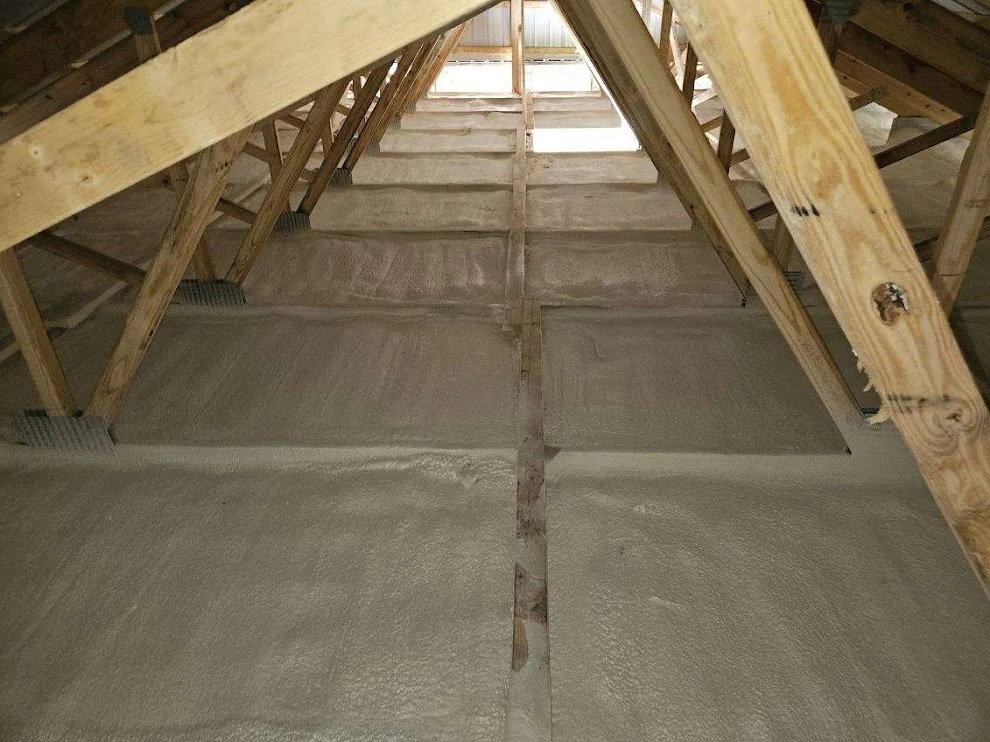
| Attic / Roof Deck | Gaps at ceiling penetrations, top plates, and chimney chases allow warm air to escape into the unconditioned attic space | Applied directly to the underside of the roof deck to create an unvented, conditioned attic that eliminates ceiling-plane leakage |
| Rim Joists / Band Joists | The junction between the foundation and floor framing is one of the leakiest areas in most homes | Expands into irregular framing gaps to seal the perimeter completely |
| Walls | Leaks around windows, doors, electrical boxes, and plumbing penetrations | Fills every crack and void when sprayed into cavities, creating a continuous air barrier |
| Crawlspace Floors | Ground-level air infiltration through floor framing and plumbing penetrations | Seals the floor assembly from below, keeping crawl space air out of the living space |
In vented unconditioned attics, the key performance factor is continuity of the air control layer at the ceiling plane. Closed-cell spray foam is commonly used to create what building scientists call an airtight “bathtub” at the ceiling perimeter, which prevents wind washing of air-permeable insulation above.
Franklin, Idaho, falls within IECC Climate Zones 5 through 7, which carry specific requirements for insulation and vapor control. In these zones, the International Residential Code (IRC) prescribes minimum thickness requirements for closed-cell spray foam when it is used for condensation control in walls, roofs, and foundations.
In IECC Climate Zones 5 and higher, the IRC specifies that only high-density closed-cell spray foam should be used in unvented conditioned attics applied to the underside of the roof deck. Open-cell foam is not recommended in these applications because it does not provide sufficient condensation control. Closed-cell spray foam applied at 1.5 inches or greater qualifies as a Class II vapor retarder, which is the IRC-prescribed requirement for condensation control in wall assemblies in cold climates.
For foundations, high-density closed-cell spray foam is recommended on the interior of concrete basement walls in IECC Climate Zones 5 and higher. In vented crawlspaces, the IRC recommends only closed-cell spray foam across all climate zones to keep air and moisture out of the floor framing assembly.
Both spray foam types provide air sealing, but they perform very differently in cold climates. Understanding the distinction helps property owners make the right choice.
| Property | Closed-Cell Spray Foam | Open-Cell Spray Foam |
|---|---|---|
| R-value per inch | R-6 to R-7 | R-3.5 to R-3.8 |
| Air barrier | Yes (at minimum classified depth) | Yes (at minimum classified depth) |
| Vapor retarder | Class II at 1.5 inches (0.1 perm) | Not a vapor retarder |
| Density | High (approximately 1.5 to 2.0 lb/ft³) | Low (approximately 0.5 lb/ft³) |
| Best for cold climates | Recommended for Zones 5 and higher | Limited to warm and mixed climates |
| Structural benefit | Adds wall and roof rigidity | Minimal structural contribution |
| Moisture resistance | Impervious to liquid water and water vapor | Permeable, absorbs moisture |
For Franklin, Idaho, buildings, the choice is straightforward. Closed-cell spray foam provides the vapor retarder properties needed in cold climates to prevent condensation within wall and roof assemblies. Open-cell foam, while effective as an air barrier, allows water vapor to pass through, which can lead to hidden condensation problems during long, cold winters.
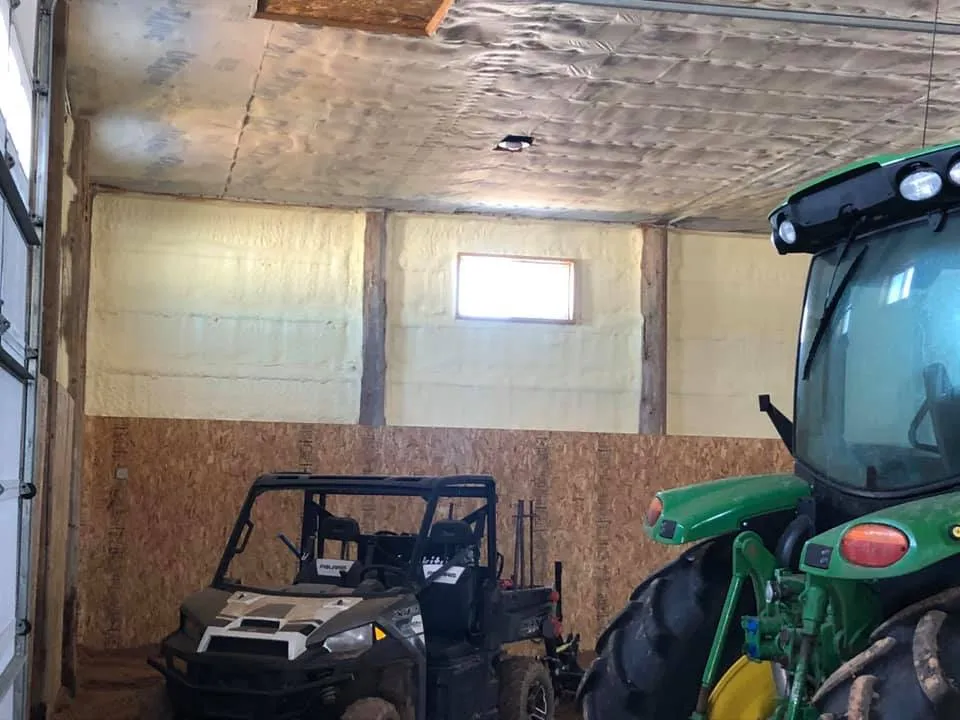
Closed-cell spray foam contributes to building durability in ways that go beyond energy efficiency. The cured foam is rigid and adheres tightly to wood framing, concrete, metal, and other substrates. This adhesion adds structural shear strength to wall and roof assemblies. In high-wind areas, spray-foam-insulated wall assemblies have demonstrated improved resistance to racking loads compared to conventionally insulated assemblies.
The material also blocks liquid water and water vapor, which protects framing lumber from moisture-related decay. This is especially important in areas where snow accumulation against foundation walls or roof ice dams could otherwise introduce water into the building envelope.
Buildings in Franklin that exhibit any of the following symptoms likely have significant air infiltration issues that closed-cell spray foam can address:
A blower door test conducted by a qualified energy auditor can quantify the extent of air leakage and pinpoint the most significant leakage locations.
Even the best insulation material will underperform if installed incorrectly. When considering closed-cell spray foam for air sealing in Franklin buildings, watch for these common issues:
| Building Type | Recommended Application | Reasoning |
|---|---|---|
| Existing homes (retrofit) | Rim joists, attic floor sealing, crawlspace encapsulation | Targets the highest-leakage areas without requiring wall cavity access |
| New construction homes | Full wall cavities, roof deck, and foundation walls | Maximizes air sealing, vapor control, and structural benefit from the start |
| Pole barns and metal buildings | Roof deck and wall liner | Controls condensation and air movement in structures with high thermal bridging |
| Commercial buildings | Roof deck, walls, and mechanical penetrations | Reduces HVAC loads and provides the continuous air barrier required by modern energy codes |
Choosing the right team to install closed-cell spray foam matters as much as choosing the material. Look for these indicators of a qualified contractor:
High Country Solutions delivers professional closed-cell spray foam insulation services for residential, commercial, and agricultural buildings. Our team assesses every building individually to identify air leakage paths and recommend the right application strategy for Franklin’s cold climate. We handle everything from new construction insulation to retrofit air sealing for existing structures.
Request a Quote | Schedule an Assessment
Call us at (307) 248-9063 or email [email protected] to discuss your building’s insulation needs with our experienced team.
Fiberglass insulation is air-permeable and does not block airflow on its own. It requires a separate air barrier system to perform effectively. Closed-cell spray foam acts as both insulation and an air barrier in a single application, expanding into gaps and cracks that fiberglass cannot reach.
The IRC prescribes specific minimum thicknesses based on the climate zone and building assembly. For condensation control in walls in IECC Zones 5 through 8, the code requires a minimum thickness of closed-cell spray foam to qualify as both an air impermeable insulation and a Class II vapor retarder. Our team determines the correct depth for each project based on code requirements and the specific assembly.
Yes. The most common retrofit applications are rim joists, attic sealing, and crawlspace encapsulation. These areas often have the highest air leakage rates and are accessible without removing finished surfaces. Wall cavity injection is possible in some cases, but requires drilling through the finished wall.
A building sealed with closed-cell spray foam will be significantly tighter than one insulated with traditional materials. Controlled mechanical ventilation is recommended to provide fresh air, manage humidity, and maintain good indoor air quality. The specific ventilation approach depends on the building size, occupancy, and HVAC system design.
When properly installed, closed-cell spray foam is a permanent building material. It does not settle, sag, or degrade over time like fiberglass or cellulose. The material maintains its R-value, air barrier properties, and structural rigidity for the life of the building.