How Can Mineral Wool Insulation Improve Overall Building Performance?
Mineral wool insulation improves overall building performance by strengthening the four systems that decide how a building actually runs: thermal…


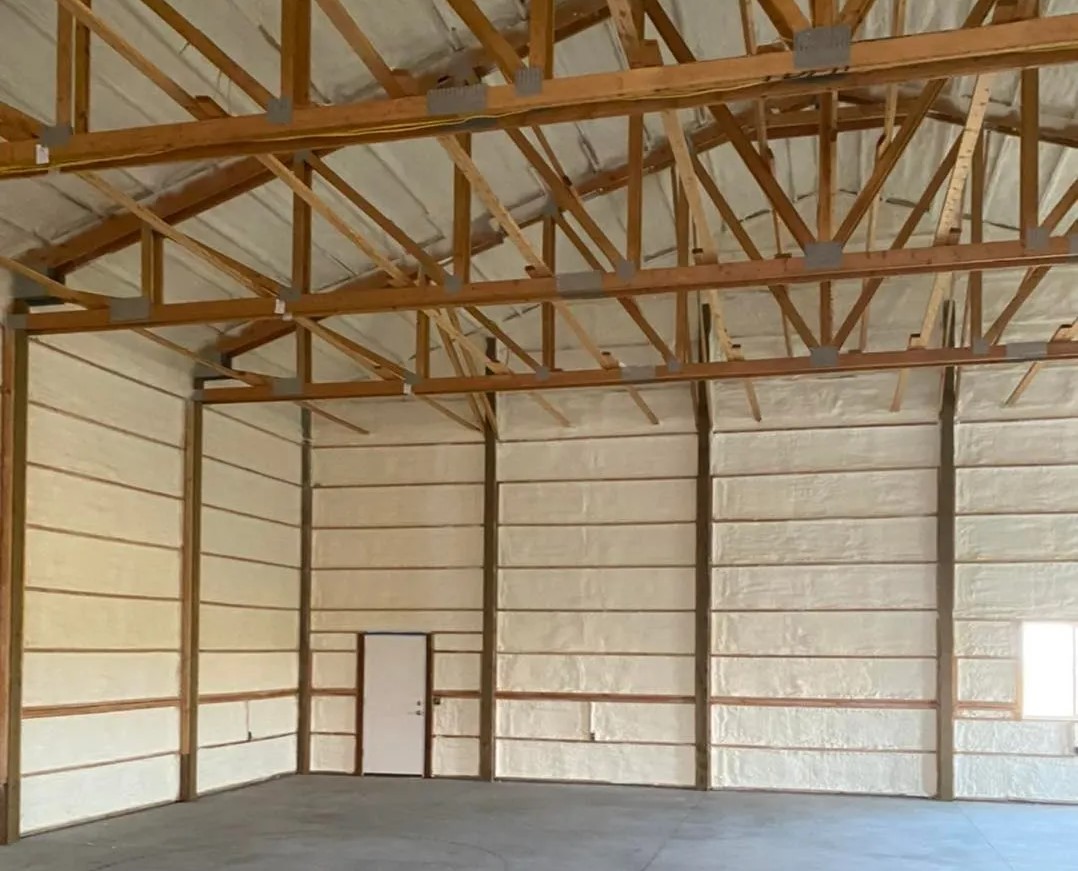
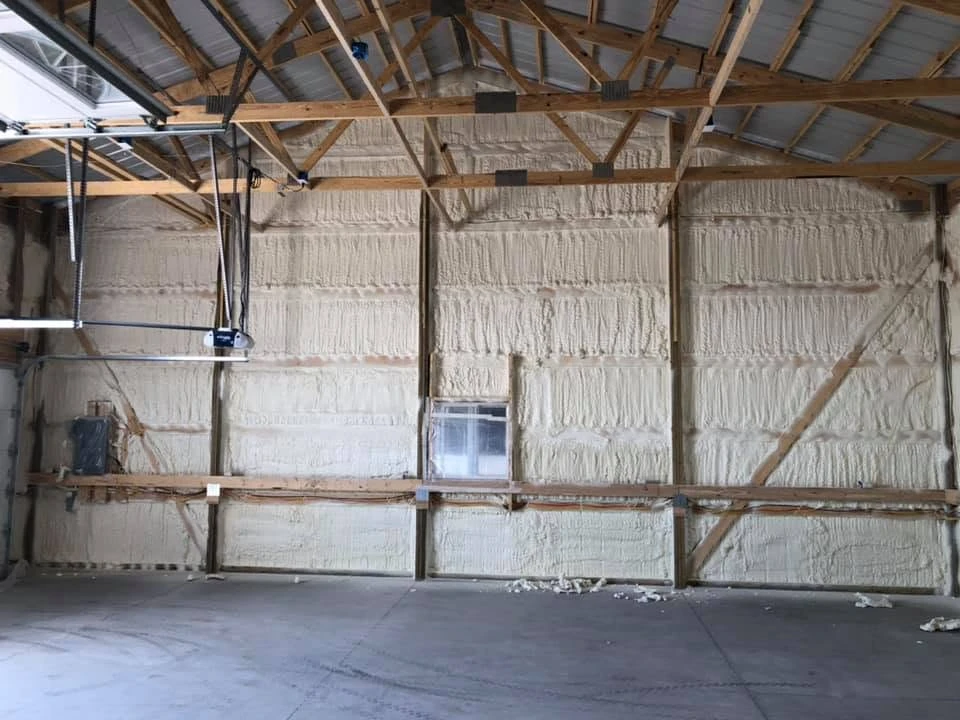
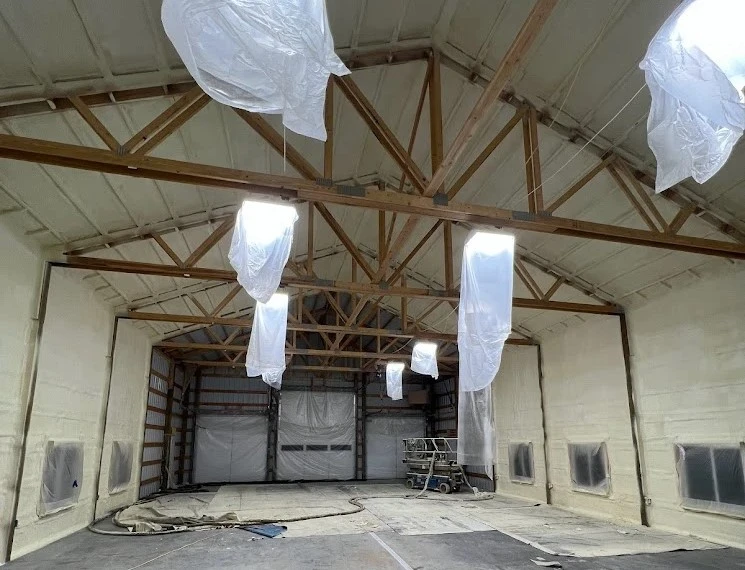
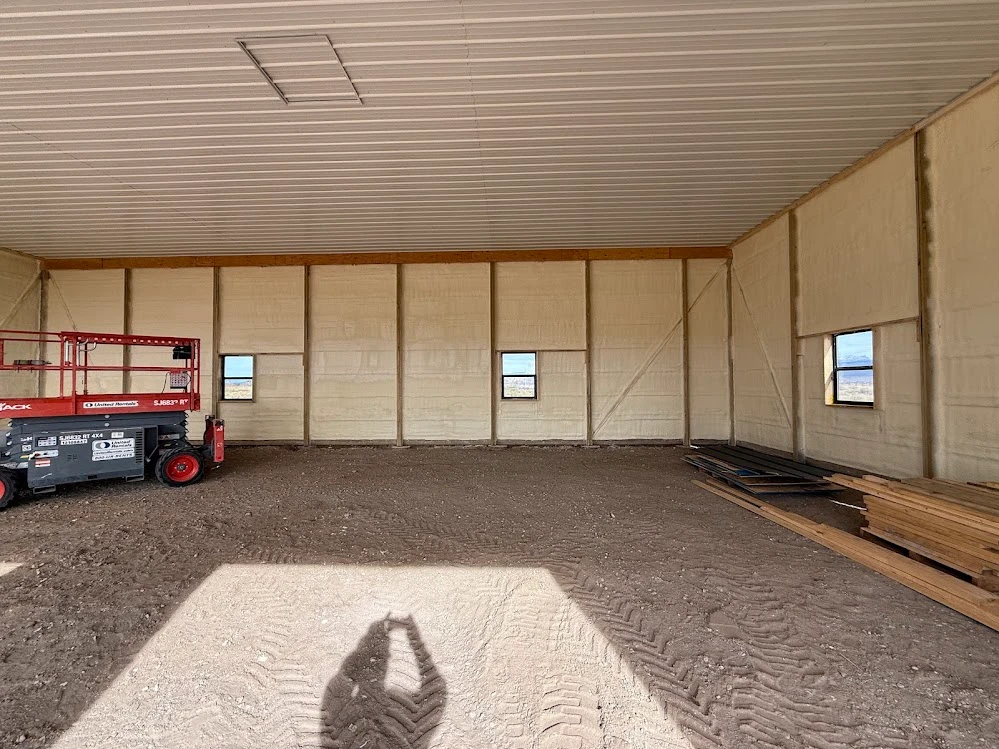
The performance of commercial spray foam insulation is driven by five main factors: the foam type and density you select, the skill and certification of the installation crew, jobsite conditions during application (substrate temperature, humidity, and moisture), the building’s envelope design (thermal bridging, air sealing, and vapor control), and the natural aging of the foam over time. Open-cell foam serves interior walls and ceilings where air sealing and sound control matter most, while closed-cell foam delivers higher R-value per inch, moisture resistance, and rigidity for roofs, metal buildings, and exterior assemblies. No single product is universally superior; the right specification depends on climate zone, building use, and how the space will be operated.
SPF is a two-part chemical system: Side A contains isocyanates and Side B contains a polyol blend with catalysts, flame retardants, and blowing agents. When the liquids meet at the gun tip, the reaction creates millions of cells and the material expands to fill cracks, crevices, and irregular surfaces. The cell structure that results is the single biggest predictor of thermal performance.
Closed-cell foam (about 2 lb density) seals every cell shut and traps a low-conductivity gas inside, which is why it blocks conductive, convective, and radiant heat transfer while also resisting bulk water. Open-cell foam (about 0.5 lb density) has a sponge-like structure that fills voids and absorbs sound, but air moves through the open matrix, so it does not qualify as a vapor barrier at typical thicknesses.
| Factor | Open-Cell Foam | Closed-Cell Foam |
|---|---|---|
| Typical long-term R-value per inch | ~R-3.8 | ~R-5.1 to R-6 |
| Air barrier | Yes, at 5.5 inches or more | Yes, at minimum 50 mm (about 2 inches) |
| Vapor barrier | No | Yes |
| Best commercial uses | Interior walls, office partitions, sound dampening | Roofs, metal buildings, crawlspaces, cold storage |
| Moisture exposure tolerance | Low, interior only | High, resists bulk water |
The choice between the two depends on where the foam will live. Exterior walls, roof decks, and any assembly exposed to humidity or temperature swings almost always justify closed-cell foam. Interior demising walls and sound-sensitive spaces are well served by open-cell material, which expands more aggressively and fills awkward cavities.
A perfectly formulated foam can still underperform when applied poorly. The factors that decide field performance include:
Because manufacturer R-values assume proper installation, verification matters. The Federal Trade Commission’s R-Value Rule requires installers and manufacturers to disclose R-values based on standard test results, so request the fact sheet before the crew arrives, not after a problem surfaces (FTC – R-Value Rule).
Commercial energy standards set insulation requirements by climate zone, with steel-framed walls in most zones requiring continuous insulation on top of cavity fill. That is because metal and wood studs create thermal bridges, parallel heat paths that insulation between framing members cannot touch. Doubling cavity R-value can cut heat loss far less than expected when framing short-circuits the assembly, which is why continuous insulation or an unbroken foam layer across the sheathing matters so much in commercial construction (Wikipedia – Building Insulation).
Air sealing is the other half of the equation. Air infiltration allows convective heat transfer and condensation inside assemblies, both of which degrade insulation performance. SPF’s strongest attribute is its ability to form a continuous airtight layer directly against the substrate, which is why sealed buildings often outperform their rated R-values in real energy use.
Closed-cell foam relies on trapped blowing agent gas for part of its insulating power, and that gas slowly diffuses out over years. The industry rates this with Long Term Thermal Resistance (LTTR) values, which reflect aged rather than day-one performance. Moisture is the second threat: research indicates moisture absorption and blowing agent loss are the leading causes of R-value decline in closed-cell SPF, with one Army study measuring a 27.5% reduction, while fiberglass and extruded polystyrene retained over 97% of initial R-value (Wikipedia – R-value (Insulation)).
The practical takeaway for building owners is to design for aged values, keep foam dry through proper vapor management, and inspect assemblies periodically. Foam applied incorrectly or in damp spaces can trap moisture against structural members, so moisture planning is part of the insulation spec, not an afterthought.
| Building Context | Recommended Approach | Key Notes |
|---|---|---|
| Warehouse or metal building | Closed-cell on roof deck and walls | Adds rigidity, blocks condensation, interrupts fastener bridging |
| Retail or office interior | Open-cell on demising walls | Sound control plus air sealing between tenant spaces |
| Cold storage or food processing | Closed-cell at full vapor-barrier thickness | Watch substrate moisture and cure time before racking install |
| Agricultural buildings | Closed-cell, moisture-tolerant spec | Handles humidity swings and washdown exposure |
We help commercial building owners, general contractors, and facility managers specify and install spray foam systems that perform as designed, not just on paper. Our team evaluates your assemblies, climate exposure, and moisture risks, then applies foam with documented ratio checks and thickness verification on every pass. Email us at [email protected] or call (307) 248-9063 to get started.
Schedule a Building Envelope Assessment
The right insulation decision pays for itself every month on your energy statement, so let’s make it correctly the first time.
Yes, the blowing agent gas in closed-cell foam diffuses out gradually, which is why industry ratings use Long Term Thermal Resistance values. Age-related loss is modest when the foam stays dry and properly installed.
Application is possible in cold conditions, but substrate temperature must be within the manufacturer’s specified range for adhesion and proper cell structure. Our crew preconditions materials and verifies surface temperature before spraying.
At about 2 inches, closed-cell foam qualifies as both an air barrier and vapor barrier. Total thickness is then set by your climate zone R-value target and energy code requirements.
Yes, open-cell foam works well for interior walls, ceilings, and sound control between occupied spaces. It should stay away from exterior envelopes and anywhere with bulk moisture exposure.
Ask for manufacturer certifications, quality assurance participation, and R-value fact sheets. Federal rules require R-value disclosure based on standard tests, so any hesitation to provide documentation is a red flag.