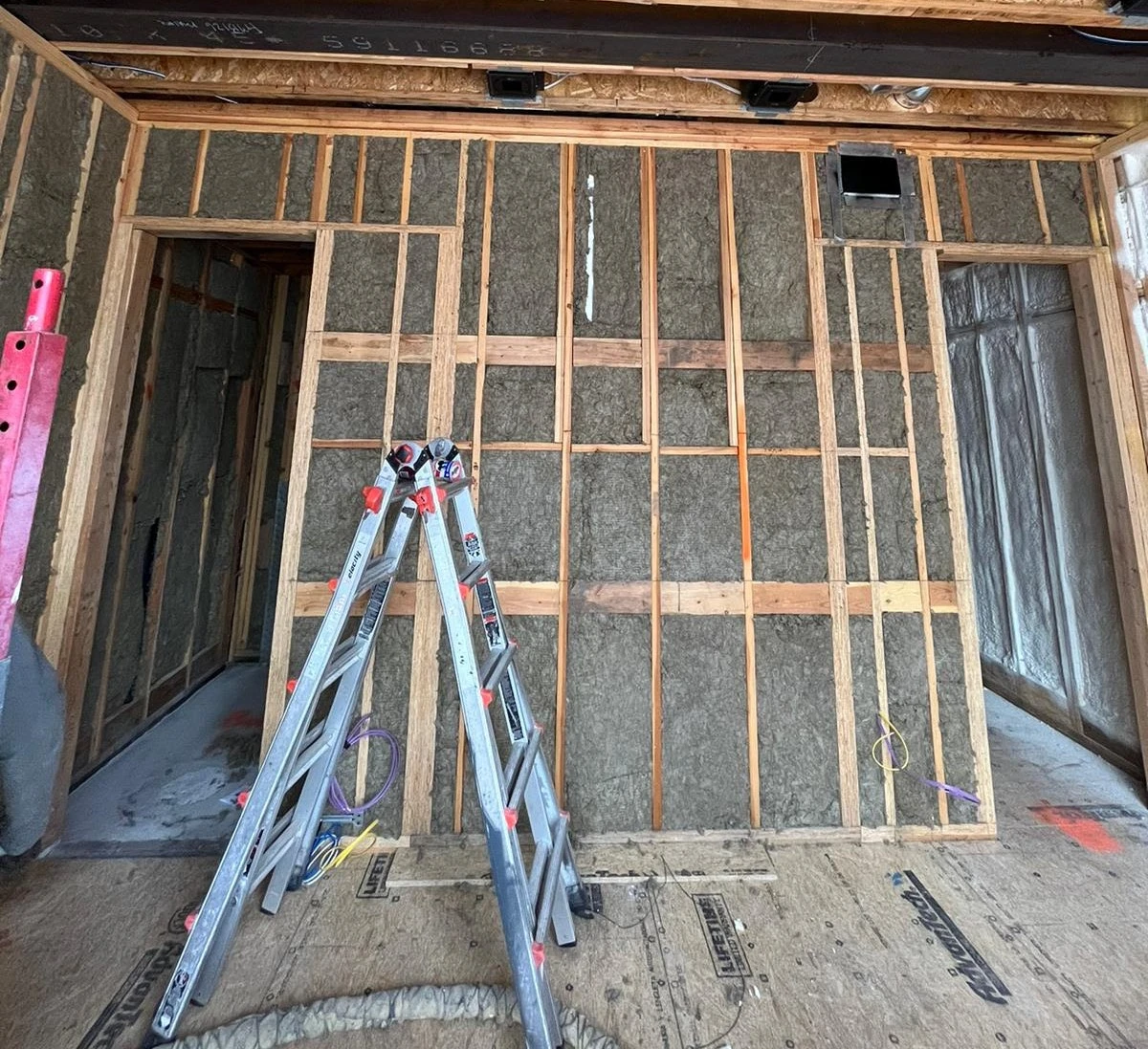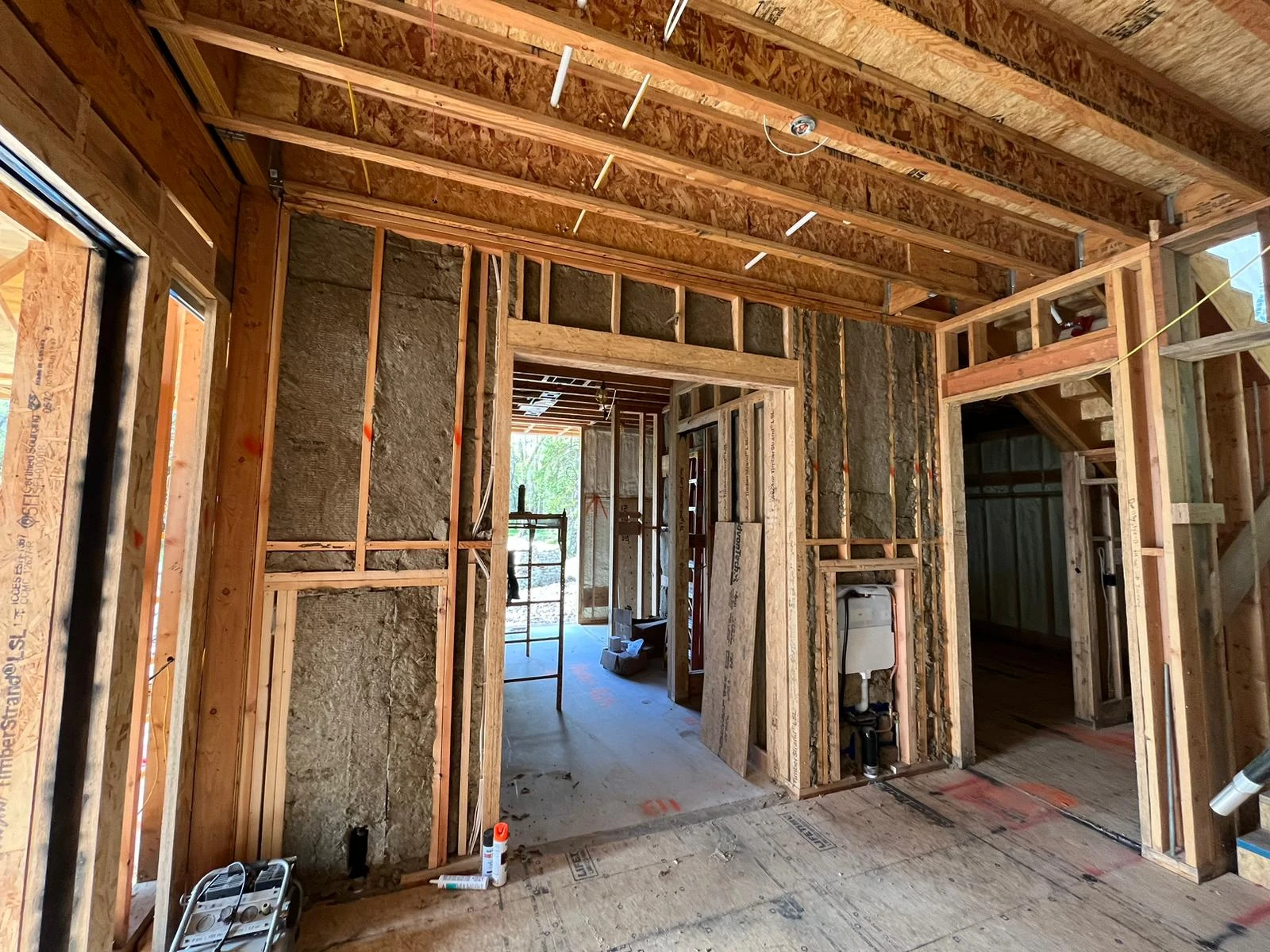
Which Areas of Your Home in Jackson Hole, WY Benefit Most From Mineral Wool Insulation?
Mineral wool insulation delivers its biggest payoff in the areas of your Jackson Hole home that lose the most heat…


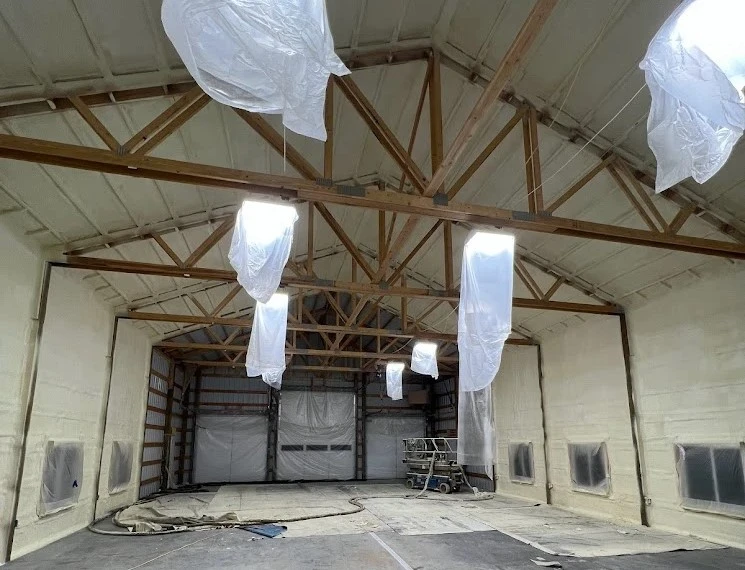
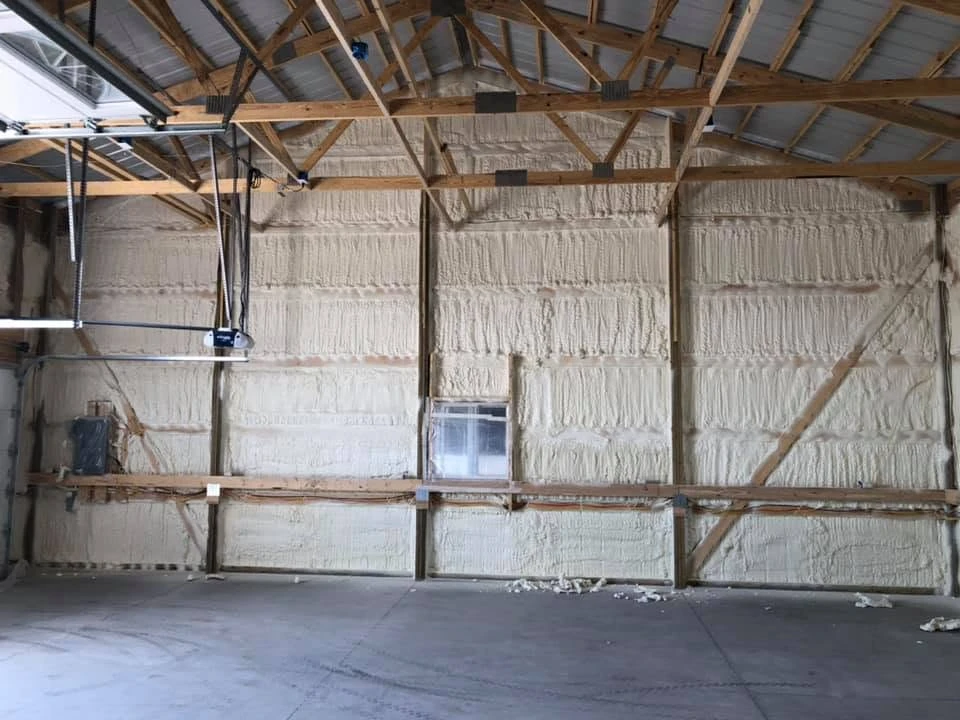
Professional commercial spray foam insulation combines high R-value and full-envelope air sealing in a single application, and that pairing matters more in Ammon, ID than in most markets. Space heating alone accounts for about 32% of all energy used in U.S. commercial buildings, according to the U.S. Energy Information Administration, so a leaky envelope quietly drains budget through every week of eastern Idaho’s long heating season. Closed-cell foam, at roughly R-6 to R-6.5 per inch, fits metal buildings, roof decks, foundations, and moisture-exposed assemblies, while open-cell foam, at about R-3.5 per inch, suits interior partitions and sound control. The right specification depends on your building type, envelope condition, and performance goals, and the installation process determines how much of that performance you actually capture. Below, our team explains how each foam behaves, where it performs best, and how to evaluate providers in the Ammon and Idaho Falls market.
Ammon sits at roughly 4,700 feet of elevation just east of Idaho Falls and has ranked among Idaho’s fastest-growing cities for two decades, with population climbing 123.3% between 2000 and 2010 and another 28.1% through 2020, per the U.S. Census data compiled on Wikipedia. That growth has produced a mix of new commercial construction along the city’s corridors and older buildings still running original insulation, and both face the same physics: warm, pressurized interior air pushes outward through every crack, joint, and penetration all winter, and the heating system replaces whatever escapes.
EPA’s ENERGY STAR savings methodology estimates that air sealing plus added insulation cuts an average of 15% from heating and cooling costs, with estimated savings of 16% to 20% in the coldest northern climate zones. Spray foam is the only common insulation that insulates and air seals in the same pass, which is why we treat it as an air barrier system first and a thermal product second.
The two foam families behave very differently, and choosing the wrong one costs performance. A building science guideline published through the U.S. Department of Energy’s Building America program puts open-cell foam at roughly R-3.6 per inch and closed-cell at roughly R-6.1 per inch aged, while EPA’s product guidance lists similar figures near 3.5 and 6.5 per inch.
| Property | Closed-Cell (2 lb) | Open-Cell (0.5 lb) |
|---|---|---|
| R-value per inch | ~R-6 to R-6.5 | ~R-3.5 |
| Cured texture | Rigid, adds structural stiffness | Soft, flexible |
| Moisture behavior | Resists water, vapor retarder at 2 in. | Vapor permeable, can absorb water |
| Expansion | 35 to 50x, sprayed in 2 to 3 in. lifts | Up to 150x, full thickness in one pass |
| Best fits | Roofs, foundations, band joists, metal panels | Interior partitions, sound control |
In our climate, closed-cell earns its keep anywhere an assembly faces cold sheathing, bulk moisture, or below-grade conditions. Open-cell remains a smart pick inside conditioned wall and partition cavities where vapor drive is managed and acoustic performance matters.
The DOE building science guidance maps applications by performance, and the pattern is consistent: closed-cell is preferred in cold climates for frame walls, roof decks, foundations, band joists, cantilevers over unconditioned space, and HVAC ducts in unconditioned zones, while open-cell is rated as not acceptable below grade or on cooling ducts because of moisture.
Where we most often recommend commercial spray foam insulation for Ammon area properties:
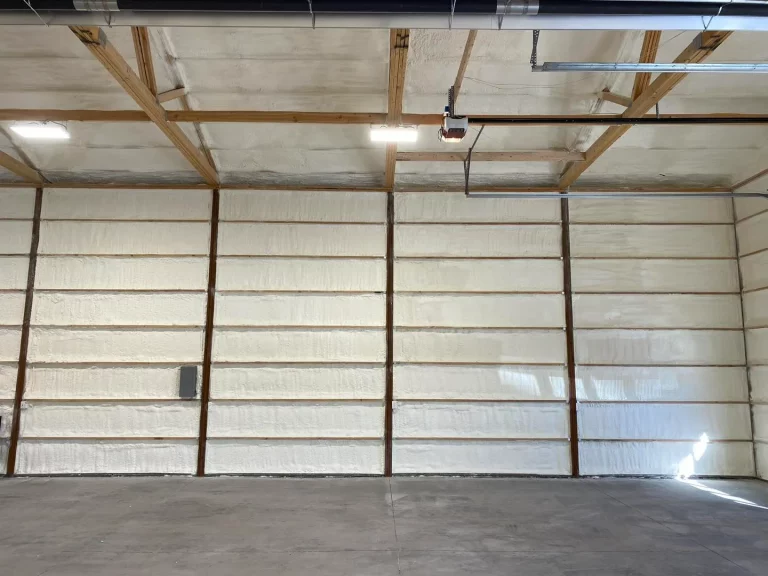
Spray polyurethane foam is a jobsite chemical reaction, not a passive material. EPA’s spray polyurethane foam product guidance classifies two-part high-pressure systems as professional use only: two reactive chemicals are pumped through heated hoses and sprayed at over 150°F and 1,200 psi, and applicators work in supplied-air respirators and chemical-resistant gear while unprotected workers and building occupants vacate the area. Many manufacturers recommend about 24 hours before routine re-entry, and improper handling carries respiratory sensitization risks.
Professional process also protects the investment itself:
Before signing, look for these markers of a professional operation:
| Property Type | Recommended Approach | Key Notes | Expected Outcome |
|---|---|---|---|
| Metal warehouse or shop | Closed-cell on walls and roof deck | Condensation control on steel | Stable temps, fewer drip and corrosion complaints |
| Office or retail | Flash of closed-cell plus batt fill, open-cell in partitions | Balances performance and budget | Code R-values, quieter tenant spaces |
| Food service or processing | Closed-cell at envelope and cold zones | Handles wash-down moisture | Drier assemblies, easier humidity control |
| Agricultural or equipment storage | Closed-cell at band joists, slab edges, below grade | Moisture and freeze protection | Warmer floors, protected inventory |
Performance goals should drive the specification, not habit. Our team evaluates each assembly against Ammon’s climate demands before recommending a foam type or depth.
You will recognize a strong provider quickly: the scope is written before anyone mobilizes, trade-offs between foam types are explained instead of glossed over, substrate conditions are measured rather than assumed, and the thermal barrier question is raised before you ask it. Scheduling that respects your operating hours and re-entry times delivered in writing are further signals that results, not speed, are the priority.
High Country Solutions designs and installs professional commercial spray foam insulation for property owners and managers throughout Ammon, ID and the greater Idaho Falls area. Our team specifies the right foam for each assembly, verifies thickness as we spray, and hands you documentation you can file with your building records. Call us at (307) 248-9063 or email [email protected] to talk through your project.
A well-sealed building works for you every billing cycle, and it starts with one conversation with our team.
Most single-building projects finish in days rather than weeks, depending on square footage and target thickness. Closed-cell is applied in 2- to 3-inch lifts, and re-entry typically follows manufacturer guidance of about 24 hours.
For exterior walls, roofs, foundations, and moisture-exposed assemblies, closed-cell is the stronger fit in our heating-dominated climate. Open-cell performs well inside conditioned partitions where vapor drive is managed and sound control matters.
In most occupied applications, code requires a 15-minute thermal barrier, typically the equivalent of 1/2-inch gypsum board, over the foam. Attics and crawl spaces may qualify for ignition barriers under tested assemblies, so ask our team to document the approach.
Yes, with planning. Applicators condition materials, monitor substrate temperature, and use formulations rated for cooler conditions. A professional measures the surface and adjusts the plan rather than spraying over an unprepared substrate.
Needs vary with assembly type, climate zone targets, and how each space is used. Our team evaluates your envelope, reviews applicable code targets, and provides a written scope with exact thickness and R-value recommendations.