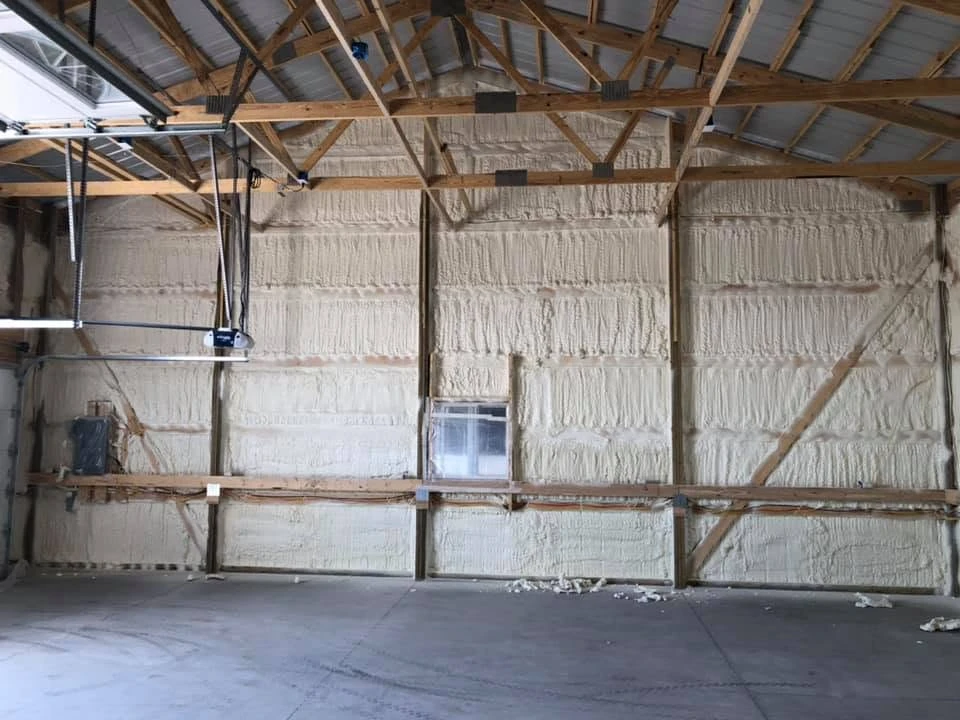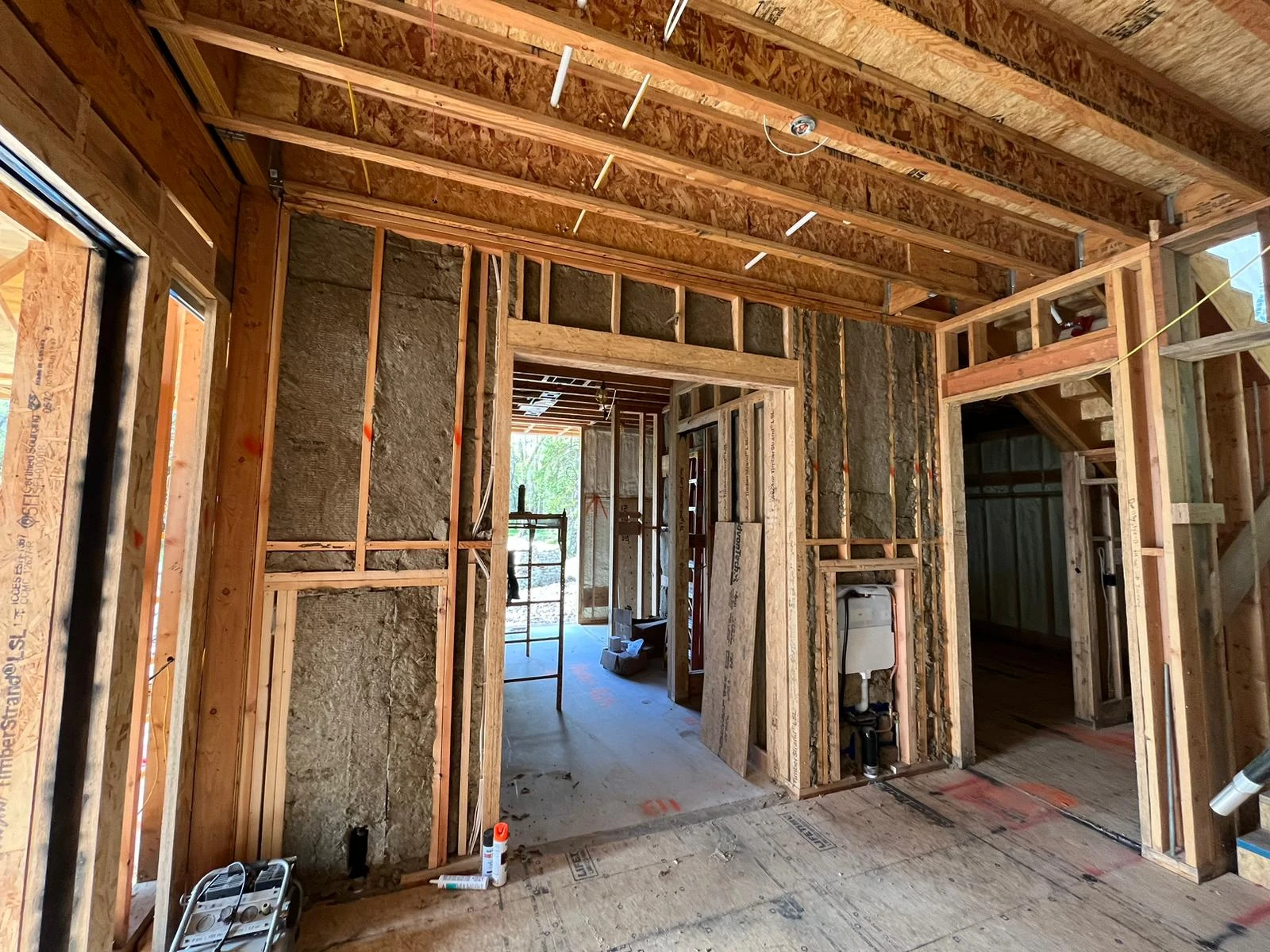
Which Areas of Your Home in Jackson Hole, WY Benefit Most From Mineral Wool Insulation?
Mineral wool insulation delivers its biggest payoff in the areas of your Jackson Hole home that lose the most heat…


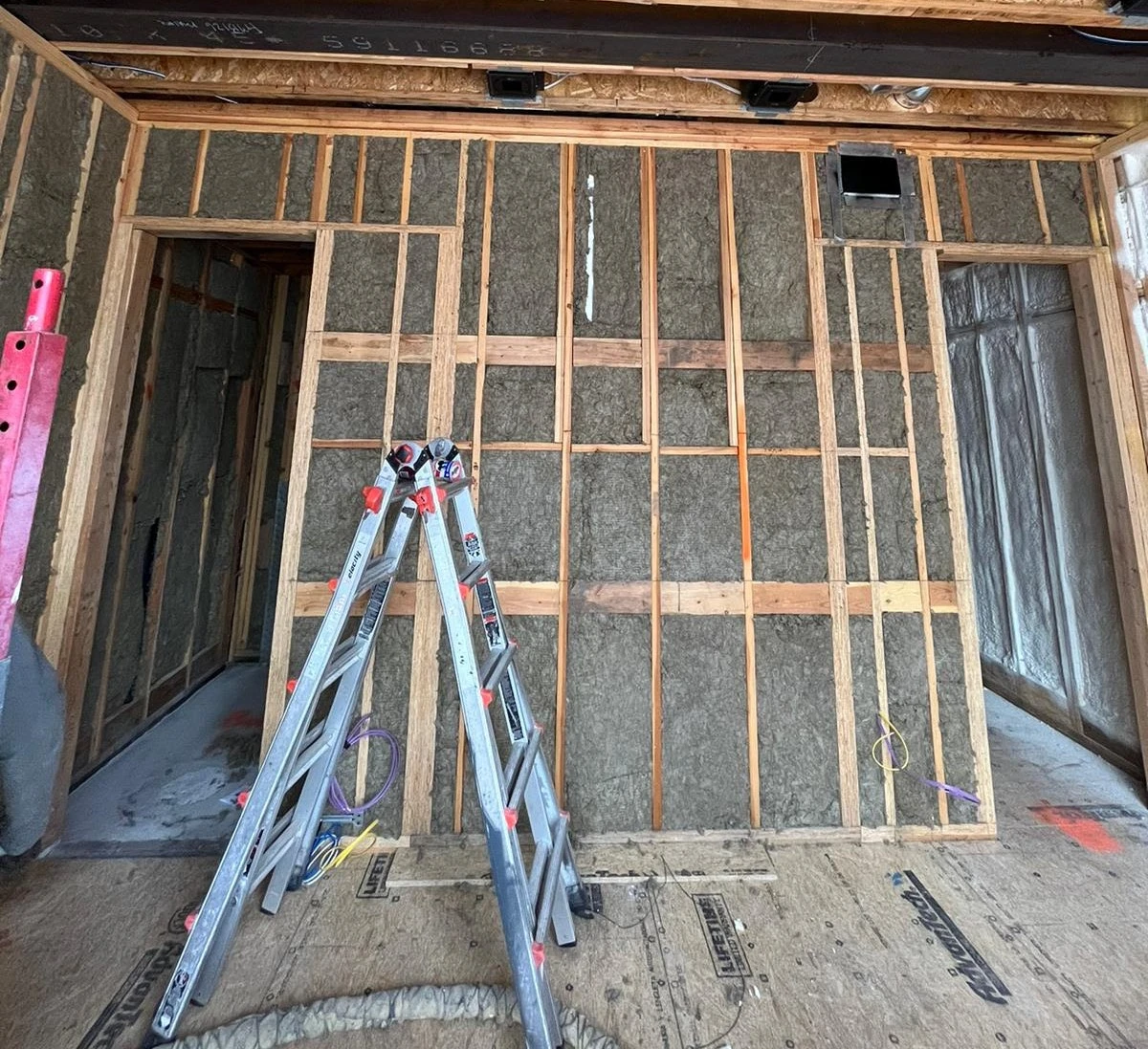
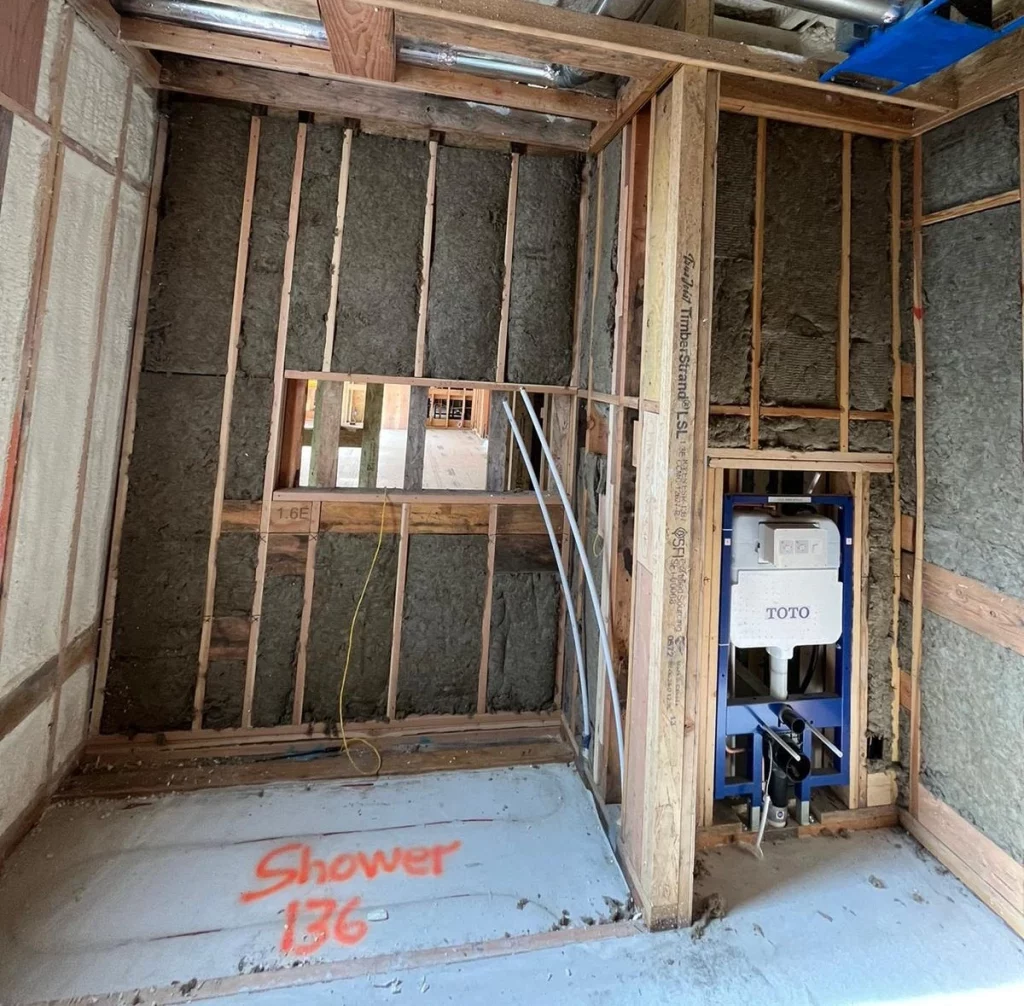
Mineral wool insulation improves overall building performance by strengthening the four systems that decide how a building actually runs: thermal efficiency, fire safety, acoustic control, and long-term durability. Manufactured by spinning molten rock or recycled steel slag into dense fibers, it traps air inside its structure, which steadies indoor temperatures, resists combustion at temperatures above 1,000°C, and cuts sound transfer through walls and floors. The right specification depends on climate zone, wall assembly, code requirements, and budget. Stone wool batts suit framed cavity walls, semi-rigid boards suit continuous exterior insulation, and high-temperature grades suit industrial and mechanical applications. In the sections below, we break down where each strategy pays off and how to plan an install that holds its performance for decades.
Mineral wool starts as basalt rock or slag from steel mills. Producers melt these materials at roughly 1,600°C and spin them into fibers with a typical diameter of 2 to 6 micrometers, creating a mat of intertwined strands that hold air still Wikipedia – Mineral Wool. Because the fibers insulate by partitioning air rather than conducting heat through it, the finished product delivers thermal, acoustic, and fire properties from a single material. The category covers glass wool, stone wool, and slag wool, and it has been specified in buildings for more than 60 years Eurima – What Is Mineral Wool Insulation. That track record matters: the material performs for decades and can be recycled into new mineral wool when a building reaches the end of its life.
Heating and cooling dominate building energy budgets. U.S. households spent 52% of annual energy consumption on space heating and air conditioning in 2020, and the U.S. Energy Information Administration credits improvements in building insulation and materials as one reason average per-home energy use keeps falling. Mineral wool attacks that load directly. Its thermal conductivity typically falls between 0.034 and 0.040 W/mK Thermal Engineering – Mineral Wool, and a properly installed product reduces heating and cooling demand cost-effectively over the life of the building. Industry research estimates that up to 80% of the energy used by European buildings could be saved with existing, proven technology like mineral wool, a signal of how much headroom underperforming envelopes still have.
Mineral wool is non-combustible and resists temperatures above 1,000°C, so it delays fire spread instead of feeding it. That makes it a working part of passive fire protection: packed into stud cavities behind drywall, set into firestops, and used in fire doors and partition walls, it buys occupants and emergency crews time. The temperature margins are wide. Stone wool handles continuous service between 700 and 850°C, compared with 230 to 260°C for glass wool, and specialty high-temperature grades serve industrial furnaces.
Sound control is where density pays. Mineral wool’s dense fibrous structure absorbs sound waves rather than letting them pass, and a 10dB drop reads to the human ear as a halving of audible noise. A well-constructed wall using mineral wool can reduce transmission by more than 50 dB Eurima – Benefits of Mineral Wool, which is why the material appears in partition cavities, floor and ceiling assemblies, studios, and multi-family separation walls. For builders, that turns a standard framed wall into a privacy upgrade without changing the framing plan.
Insulation that sags, slumps, or soaks loses its rating, so longevity is a performance metric, not a bonus. Research across Germany, Denmark, Lithuania, and Switzerland measured mineral wool products that were fully functional up to 55 years after installation, with water-repellent characteristics still intact. Being inorganic, the material also minimizes the moisture and nutrient conditions that fungal growth needs, which protects both the assembly and the people inside it .
| Building Context | Recommended Approach | Why It Performs |
|---|---|---|
| Single-family homes and retrofits | Stone wool batts in framed walls, attics, and rim joists | Targets the heating and cooling load that drives over half of home energy use; batts friction-fit cavities without settling |
| Multi-family and hospitality | Dense batts in party walls, floor separations, and corridor assemblies | More than 50dB noise reduction is achievable between units |
| Commercial and metal buildings | Semi-rigid board installed as continuous exterior insulation | Covers framing where heat would otherwise escape and adds fire resistance at the exterior plane |
| Industrial and mechanical | High-temperature wool, pipe covering, and equipment lagging | Specialty grades carry classification temperatures up to 1,600°C for demanding process environments |
For residential contractors, batts and boards cover most scopes. For commercial general contractors, continuous exterior mineral wool pairs with cladding systems and simplifies fire documentation. For property managers and developers, the durability data supports specifying mineral wool wherever access after closeout would be expensive.
Mineral wool insulation is one of the few upgrades that improves energy use, fire safety, acoustics, and durability in a single specification, and High Country Solutions installs it with the assembly-level detail that protects those gains. Our team will review your plans or your existing building, identify where performance is leaking, and recommend the right product format for your walls, roofs, and mechanical spaces. Reach us at [email protected] or call (307) 248-9063 to get started.
Better buildings start with better envelopes, and the right insulation decision pays you back every month the building runs.
It is water-repellent rather than waterproof, and field studies found those repellent characteristics intact in products up to 55 years old. Exterior assemblies still need a proper weather barrier behind the cladding.
Decades. Research on installations in Germany, Denmark, Lithuania, and Switzerland found full thermal performance up to 55 years after installation, without defects or loss of water repellency.
Yes. Its dense fiber structure absorbs sound, and a well-constructed wall can cut noise transmission by more than 50dB, roughly the difference between a busy residential road and a quiet bedroom.
The fibers can cause temporary skin itching, so gloves, long sleeves, and eye protection are standard practice. Insulation wools produced since 2000, including stone wool, are considered not classifiable as to carcinogenicity by IARC.
Yes. Batts fit standard framed cavities during remodels, semi-rigid boards apply in continuous layers over existing sheathing, and the material is recyclable at end of life.