Spray Foam vs Rigid Foam Board: Key Differences for Homes in Jackson, WY
Skeeter Aimone
April 17th, 2026
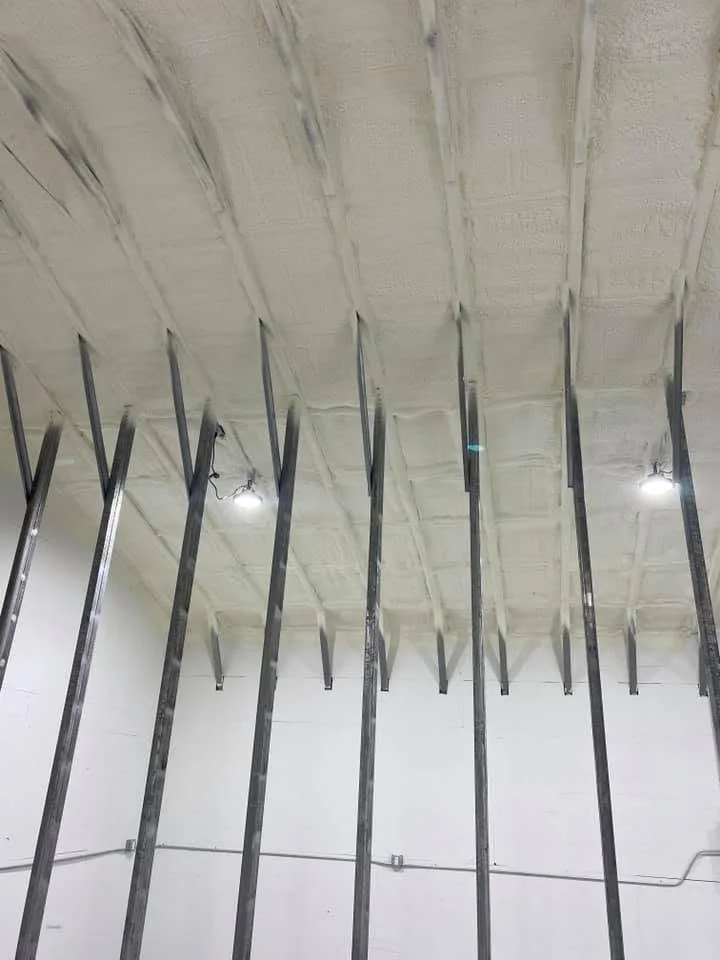
Spray foam insulation delivers superior air sealing and higher R-value per inch (R-6 to R-7), making it the stronger choice for Jackson, WY homes in Climate Zone 7, where winter temperatures regularly drop below zero. Rigid foam board insulation offers a lower-cost alternative with solid thermal performance (R-3.6 to R-6 per inch, depending on type) and works well as continuous exterior insulation in new construction. Spray foam is better for retrofitting existing homes and sealing hard-to-reach cavities, while rigid foam board excels in new builds, basement walls, and continuous wall sheathing applications. In Jackson’s extreme cold climate, the right choice depends on your project type, budget, and whether you need an air barrier or structural thermal protection, which is why many compare spray foam insulation applications.
TL;DR
Jackson, WY (Teton County) falls within IECC Climate Zone 7, requiring R-60 attics, R-13 wall cavities plus R-10 continuous insulation, and R-15 basement walls to meet energy code.
Closed-cell spray foam delivers the highest R-value per inch at R-6 to R-7, while rigid foam board ranges from R-3.6 to R-6 per inch depending on the material type (EPS, XPS, or polyiso).
Spray foam expands to fill every crack and crevice, providing an integral air and vapor barrier that rigid board cannot achieve alone.
Rigid foam board is less expensive to install than spray foam and does not require specialized equipment or certified installers.
For new construction in Jackson, combining both rigid foam board as continuous exterior sheathing and spray foam in wall cavities delivers the highest overall performance.
Basement and below-grade insulation in Jackson homes is best handled with rigid foam board due to its moisture resistance and straightforward mechanical attachment.
What Makes Jackson, WY Different for Insulation
Jackson sits at roughly 6,200 feet in the shadow of the Teton Range. Winters are long, temperatures routinely plunge below zero, and heating degree days exceed 10,000 per year. The U.S. Department of Energy classifies Teton County as Climate Zone 7, “Very Cold”, which carries some of the most demanding insulation requirements in the lower 48 states.
According to ENERGY STAR, homes in Zone 7 and Zone 8 need:
R-60 in the attic (if uninsulated) or R-49 (if adding to existing insulation)
R-13 in wall cavities plus R-5 to R-10 continuous exterior wall sheathing
R-15 for basement walls or R-19 for crawlspaces
R-38 for cathedral ceilings
R-30 for floors over unheated spaces
These are not suggestions. They are the minimums needed to keep heating costs manageable and prevent issues like ice dams, frozen pipes, and condensation damage that are common in mountain climates. The insulation method you choose directly impacts whether your home meets or falls short of these targets.
R-Value Showdown: Spray Foam vs Rigid Foam Board
R-value measures how well a material resists heat flow. Higher R-value means better thermal performance. In a cold climate like Jackson, every point of R-value translates directly into energy savings and indoor comfort.
Factor
Closed-Cell Spray Foam
Open-Cell Spray Foam
EPS Rigid Board
XPS Rigid Board
Polyiso Rigid Board
R-Value Per Inch
R-6 to R-7
R-3.5 to R-3.7
R-3.6 to R-4.2
R-5.0
R-5.7 to R-6.5
Air Barrier
Yes (integral)
Yes (integral)
No (seams need taping)
No (seams need taping)
No (seams need taping)
Vapor Barrier
Yes (Class II)
No
Varies
Varies
Varies
Moisture Resistance
High
Low (absorbs water)
Low
High
Moderate
Cost Per Sq Ft (installed)
$1.50 to $4.50
$0.75 to $1.50
$0.50 to $1.50
$0.75 to $2.00
$0.75 to $2.00
Installation
Professional, on-site
Professional, on-site
DIY or professional
DIY or professional
DIY or professional
Best Application
Cavity fill, rim joist, crawlspaces
Wall cavities, sound dampening
Exterior sheathing, below-grade
Foundation walls, slabs
Exterior walls, roofing
Closed-cell spray foam leads in R-value per inch, but polyiso rigid board is a close second. The real differentiator is the air sealing capability. Spray foam creates a monolithic seal that eliminates air infiltration at every stud, joint, and penetration point. Rigid board, when properly installed with taped seams, provides continuous insulation but requires additional air sealing measures to match spray foam’s airtightness, which is why many compare spray foam insulation and rigid foam boards.
How Each Performs in Jackson’s Climate
Spray Foam in Jackson Homes
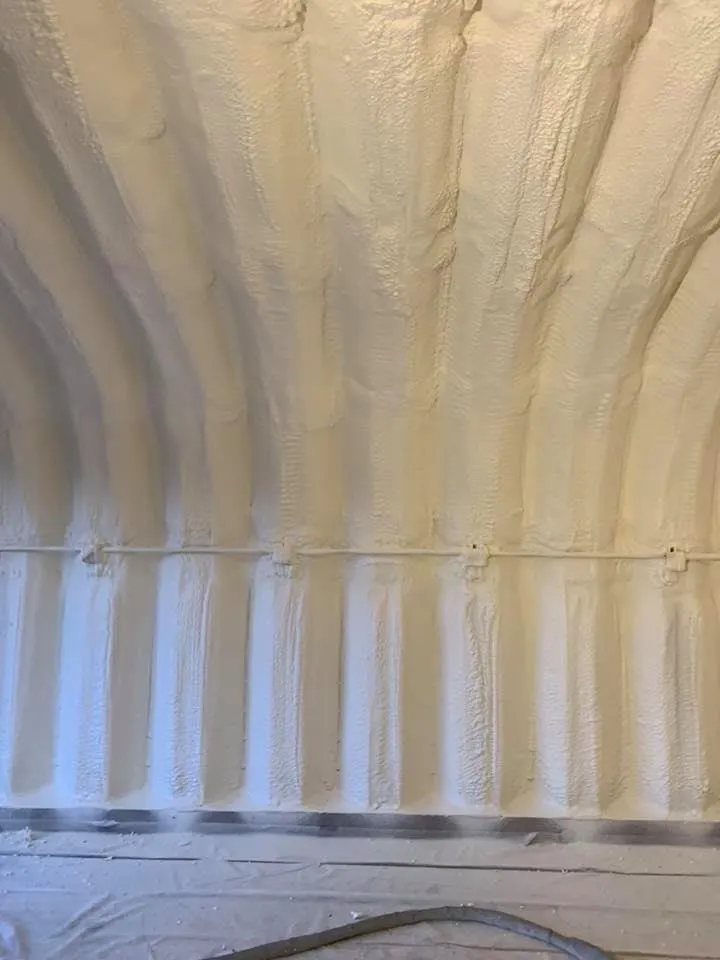
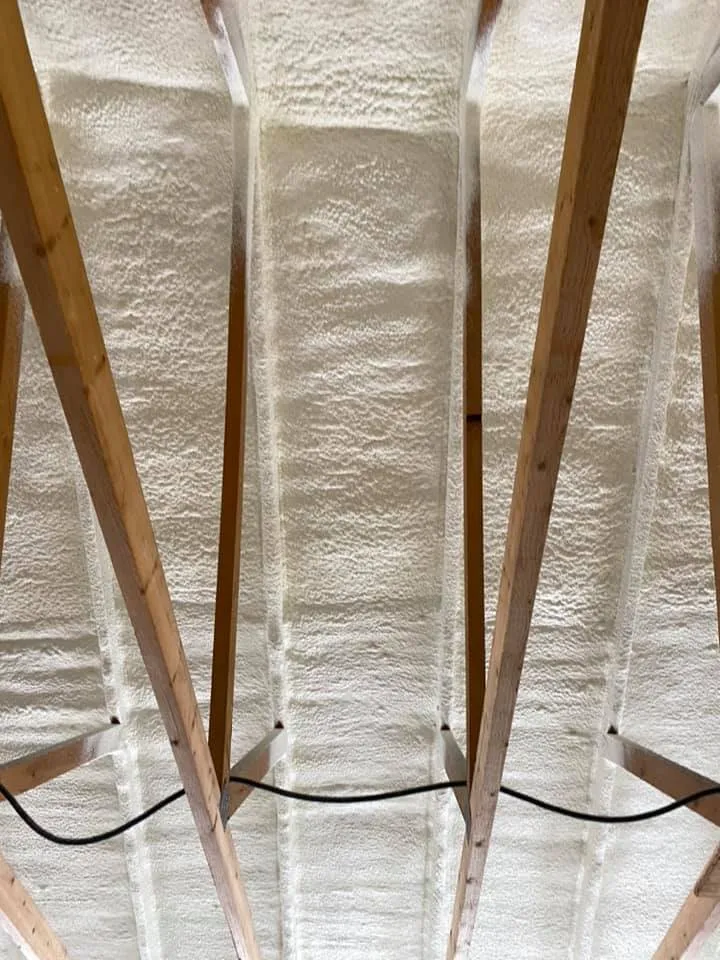
Spray foam is the gold standard for air sealing in cold climates. When applied to wall cavities, rim joists, and attic roof decks, it eliminates the drafts and cold spots that plague older Jackson homes. The material expands 30 to 100 times its liquid volume, filling every gap around plumbing, electrical runs, and framing irregularities.
Closed-cell spray foam is the better choice for Jackson because it acts as both an air barrier and a Class II vapor retarder. In a climate where indoor humidity meets exterior cold surfaces, controlling vapor diffusion is essential to prevent condensation and mold within wall assemblies.
The main drawback is cost. Spray foam installation requires specialized equipment, trained crews, and precise temperature and humidity conditions during application. Jackson’s cold weather narrows the installation window, and the material itself costs significantly more per square foot than rigid board.
Rigid Foam Board in Jackson Homes
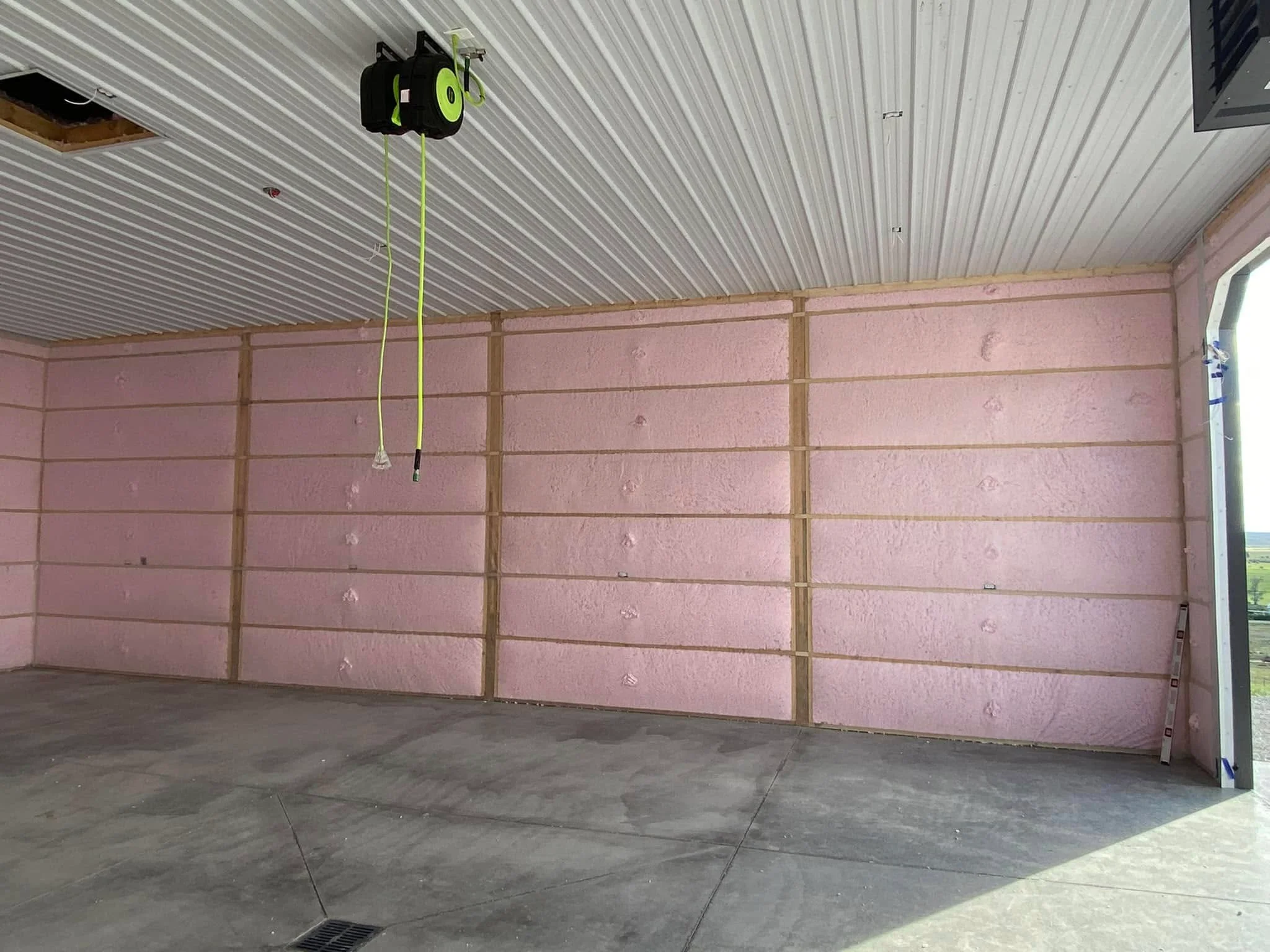
Rigid foam board shines in new construction and renovation projects where wall assemblies are open. As continuous exterior insulation, rigid board eliminates thermal bridging through wood studs, which can account for 20 to 25 percent of heat loss in a standard framed wall. In colder markets, many contractors compare it directly with spray foam insulation services in Jackson, WY.
Polyiso rigid board delivers the highest R-value per inch among board types at R-5.7 to R-6.5, according to Rmax. XPS and EPS boards are also widely used, with XPS offering better moisture resistance for below-grade applications.
For basement walls in Jackson homes, rigid foam board is often the preferred choice. It can be mechanically fastened directly to concrete foundation walls, providing both insulation and a drainage plane. Unlike spray foam, rigid board does not require special ventilation during or after installation.
Cost Comparison for a Typical Jackson Home
Costs vary based on project size, accessibility, and material selection. The following estimates reflect typical installed costs for a 2,000 square foot home in the Jackson area.
Application
Spray Foam (Closed-Cell)
Rigid Foam Board (Polyiso)
Exterior Walls (2,000 sq ft)
$4,500 to $9,000
$1,500 to $4,000
Attic / Roof Deck (2,000 sq ft)
$5,000 to $10,000
$2,000 to $4,500
Basement Walls (1,200 sq ft)
$1,800 to $5,400
$600 to $2,400
Rim Joist (150 linear ft)
$600 to $1,500
Not applicable
Total Estimated Range
$11,900 to $25,900
$4,100 to $10,900
Spray foam can cost two to three times more than rigid foam board on a per-square-foot basis. However, spray foam’s air sealing capability may eliminate the need for separate air barrier systems, caulking, and weatherization work, which narrows the gap in total project cost.
Maximizes R-value and air sealing for extreme cold
Retrofit insulation in existing 1980s home
2,000 sq ft ranch with fiberglass batts
Closed-cell spray foam in cavities and rim joist
Seals air leaks without removing exterior siding
Finished basement remodel
Walkout basement, 1,200 sq ft
XPS rigid foam board on walls
Moisture-resistant, easy to attach behind new framing
New garage with conditioned workshop
Detached 800 sq ft garage
Polyiso rigid foam board on walls and ceiling
Cost-effective for large open areas
Attic insulation upgrade
Existing home with R-19 attic fiberglass
Closed-cell spray foam on roof deck (or rigid board over existing)
Eliminates attic air leakage and brings attic to R-60
Factors That Influence the Decision
Several variables determine which insulation type performs better for your specific situation:
Project type: New construction favors rigid foam board for continuous exterior insulation. Retrofits and remodels favor spray foam for its ability to fill existing cavities.
Budget: Rigid foam board costs significantly less per square foot. If budget is the primary constraint, rigid board delivers the best thermal performance per dollar.
Air sealing priority: If your home suffers from drafts, ice dams, or high energy bills driven by air infiltration, spray foam addresses the root cause in a single application.
Moisture control: Basement and below-grade applications benefit from rigid foam board’s water resistance. Above-grade walls in cold climates benefit from closed-cell spray foam’s vapor retarder properties.
Installation timing: Spray foam requires specific temperature ranges (typically above 50 degrees F) during application, which limits the Jackson installation season. Rigid board can be installed year-round.
Wall thickness constraints: When you need maximum R-value in a thin wall assembly, closed-cell spray foam and polyiso board both deliver high R-values per inch.
Who Spray Foam Is Best For (and Who It Is NOT)
Spray foam is the right choice if:
You are retrofitting an existing home with drafty walls, attic, or crawlspaces
Air sealing is a top priority for energy efficiency and comfort
Your budget allows for the higher material and labor costs
You want an integrated air and vapor barrier in one application
Spray foam is NOT the right choice if:
You are working with a tight budget on a new construction project
You need to insulate a large, open area like a garage or pole barn
You are looking for a DIY-friendly insulation solution
The project involves extensive below-grade or foundation wall insulation
Who Rigid Foam Board Is Best For (and Who It Is NOT)
Rigid foam board is the right choice if:
You are building new and want cost-effective continuous exterior insulation
You need to insulate basement walls, foundation, or below-grade surfaces
You want a material that is easy to cut, fit, and mechanically fasten on site
You are insulating large surface areas where spray foam would be cost-prohibitive
Rigid foam board is NOT the right choice if:
You need to fill irregular cavities or seal around plumbing and electrical penetrations
Air sealing is your primary concern
You are insulating an existing wall without removing the interior or exterior finish
Get an Insulation Assessment for Your Jackson Home
High Country Solutions helps homeowners and builders across Jackson, WY choose and install the right insulation for their specific property and climate demands. Our team evaluates your home’s current thermal performance, identifies air leakage points, and recommends the insulation strategy that balances performance, budget, and long-term value. Whether you are building new, remodeling, or upgrading an existing home, we provide expert guidance and professional installation for both spray foam and rigid foam board systems.
Can spray foam and rigid foam board be used together in the same home?
Yes, and this combination is common in high-performance Jackson homes. Rigid foam board provides continuous exterior insulation while spray foam seals wall cavities, rim joists, and attic roof decks for maximum thermal and air barrier performance.
Which insulation type is better for a Jackson basement?
Rigid foam board, particularly XPS, is typically the better choice for Jackson basements because of its moisture resistance and straightforward mechanical attachment to concrete foundation walls. Closed-cell spray foam can also work but costs more.
How long does spray foam last compared to rigid foam board?
Both materials are designed to last the lifetime of the building when properly installed. Spray foam does not settle, sag, or degrade over time. Rigid foam board is dimensionally stable and resistant to moisture and compression when protected from direct sunlight.
Does rigid foam board need an air barrier in addition to insulation?
Yes. Rigid foam board provides thermal resistance but does not seal air leaks on its own. Joints and seams must be taped, and penetrations sealed, or a separate air barrier system must be installed to achieve the airtightness that spray foam provides inherently.
Is spray foam insulation safe for indoor air quality?
When properly installed by certified professionals and allowed to fully cure before occupancy, spray foam is considered safe. Improper mixing or installation can produce off-gassing odors, which is why hiring experienced installers is essential, especially in tightly sealed mountain homes.
Sources
ENERGY STAR – Recommended Home Insulation R-Values – Official U.S. government resource providing R-value recommendations by climate zone, including Zone 7 requirements for attics, walls, basements, and crawlspaces.
Insulation R-Value Calculator – DOE Climate Zones – Comprehensive breakdown of DOE climate zone insulation requirements with detailed R-value specifications for all building components across Zones 1 through 8.
Rmax – Rigid Insulation R-Value Per Inch Guide – Industry technical resource comparing R-values per inch across rigid foam insulation types, including EPS (R-3.6 to R-4.2), XPS (R-5), polyiso (R-6), and spray foam (R-6 to R-7).
Rmax – Rigid Foam Board or Spray Foam Insulation – Detailed comparison of rigid foam board and spray foam insulation covering installation methods, applications, cost differences, and performance characteristics.
I’m Skeeter Aimone, owner of High Country Solutions in Alpine, Wyoming, leading the company since 2019. I focus on quality installation, building science, and insulation solutions suited to harsh Wyoming and eastern Idaho conditions.