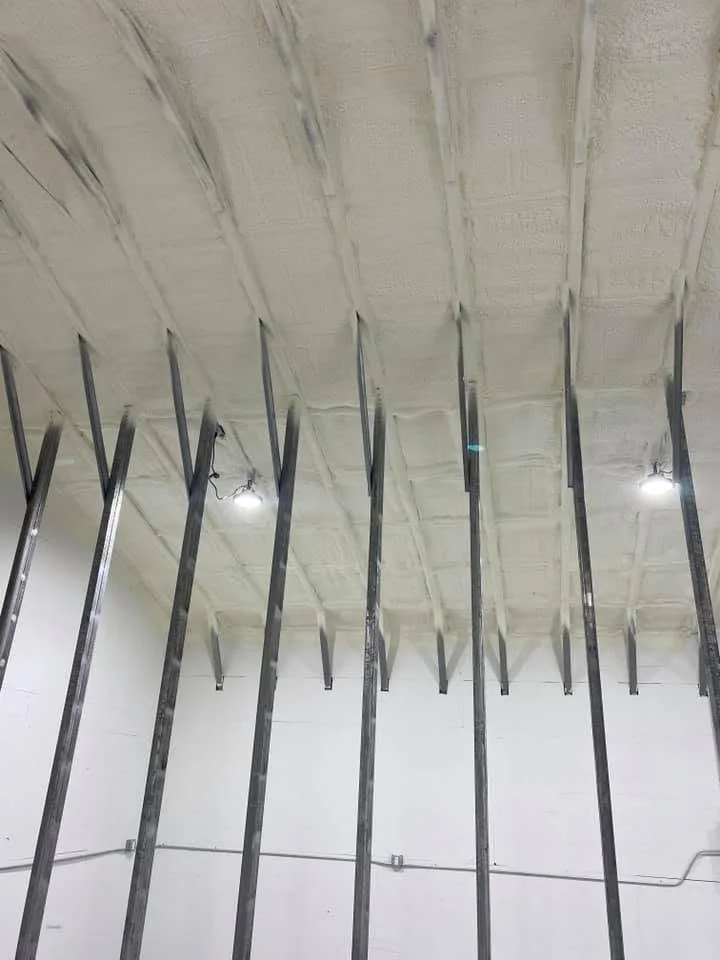
Understanding the Long-Term Benefits of Spray Foam Insulation in 2026
Skeeter Aimone
April 17th, 2026
Spray foam insulation continues to gain ground as one of the most effective building envelope upgrades available to homeowners, builders, and contractors heading into 2026, especially when considering spray foam insulation solutions. The global foam insulation market is projected to grow from $41.58 billion in 2026 to $61.54 billion by 2034, reflecting a compound annual growth rate of 4.9% and underscoring the confidence the construction industry places in this technology. For property owners weighing their options, the long-term benefits of spray foam insulation go well beyond immediate energy savings, covering structural protection, indoor air quality, moisture management, and even property value. The right choice between open-cell and closed-cell spray foam depends on climate, budget, building type, and specific performance goals, and understanding those differences is the first step toward making a sound investment.
TL;DR
Spray foam delivers R-values of 3.5 to 7 per inch, outperforming fiberglass and cellulose in thermal resistance per inch of thickness.
The U.S. Department of Energy reports that proper insulation can reduce heating and cooling costs by up to 20%, and spray foam’s air-sealing properties often push savings even higher.
Closed-cell spray foam adds structural rigidity to walls and roof decks, increasing resistance to wind uplift by up to 300%.
The global foam insulation market is projected to reach $61.54 billion by 2034, growing at a 4.9% CAGR, signaling sustained industry confidence.
Spray foam acts as a vapor barrier and air sealant, reducing moisture infiltration that leads to mold, rot, and structural degradation.
ENERGY STAR offers a federal tax credit covering 30% of insulation costs up to $1,200 for qualifying improvements through 2025.
Typical return on investment for spray foam insulation falls between 3 and 7 years, depending on building size and climate zone.
Open-cell foam costs less upfront and works well for interior wall cavities, while closed-cell foam excels in basements, crawl spaces, and exterior applications where moisture resistance matters.
Energy Efficiency and Cost Savings Over Time
The primary reason most property owners consider spray foam is energy performance. Unlike traditional batt insulation that leaves gaps around studs, pipes, and electrical boxes, spray foam expands to fill every crack and crevice, creating a continuous air barrier. This matters because air leakage accounts for a significant portion of energy waste in residential and commercial buildings, which is why many choose spray foam insulation systems.
According to the U.S. Department of Energy, homeowners can save up to 20% on heating and cooling costs with proper insulation and air sealing. Spray foam, by combining both functions into a single application, often exceeds that baseline. Homes insulated with closed-cell spray foam have reported energy cost reductions of 30 to 50% on heating and cooling, particularly in homes with older, under-insulated envelopes.
The R-value per inch tells the full story:
Insulation Type
R-Value Per Inch
Air Sealing
Moisture Barrier
Cost Per Sq Ft (Installed)
Fiberglass Batt
2.9 to 3.8
No
No
$0.30 to $1.80
Cellulose (Blown-In)
3.1 to 3.8
Partial
No
$0.50 to $2.00
Open-Cell Spray Foam
3.5 to 3.7
Yes
No
$0.75 to $1.50
Closed-Cell Spray Foam
6.0 to 7.0
Yes
Yes
$1.50 to $4.50
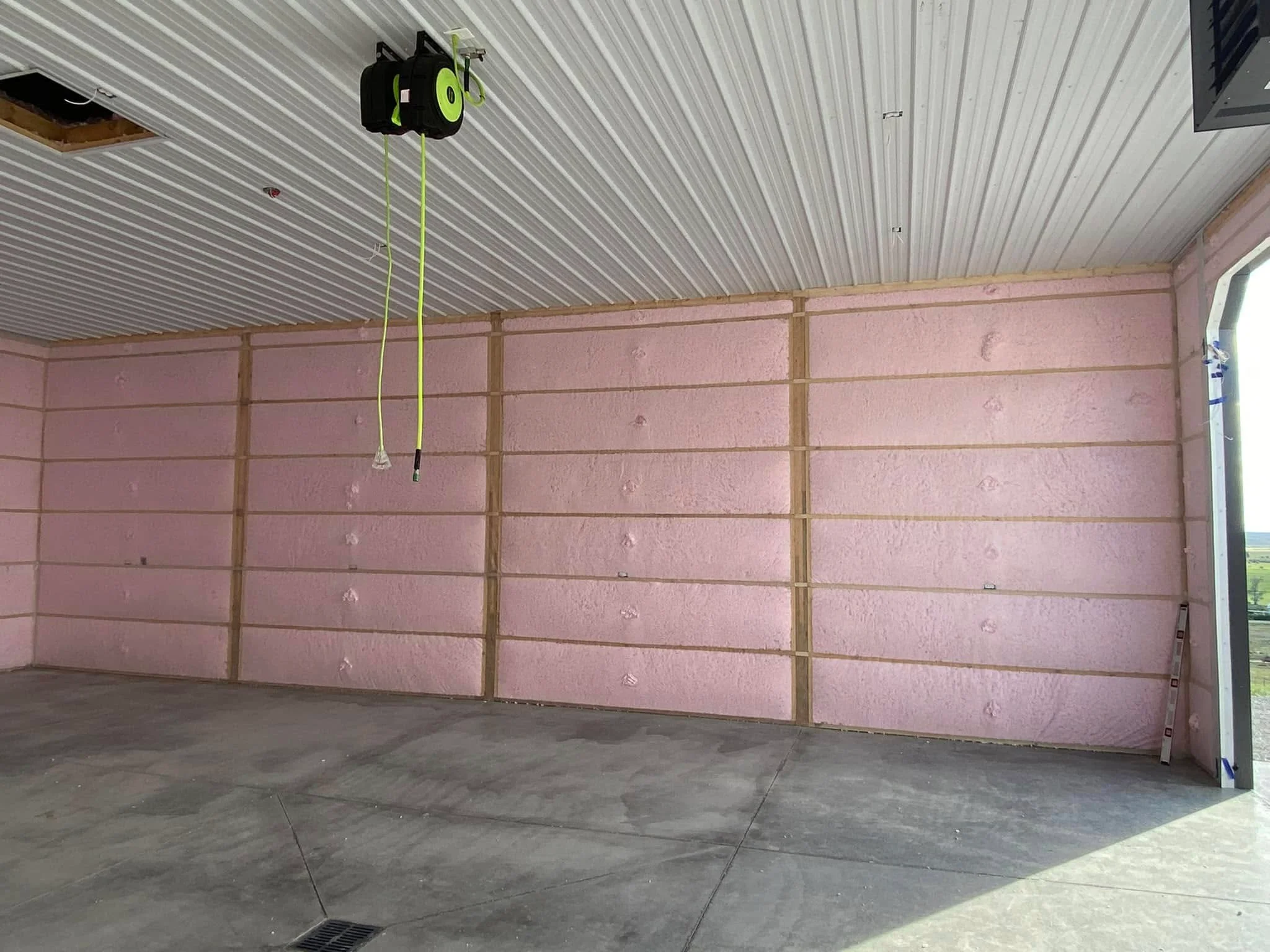
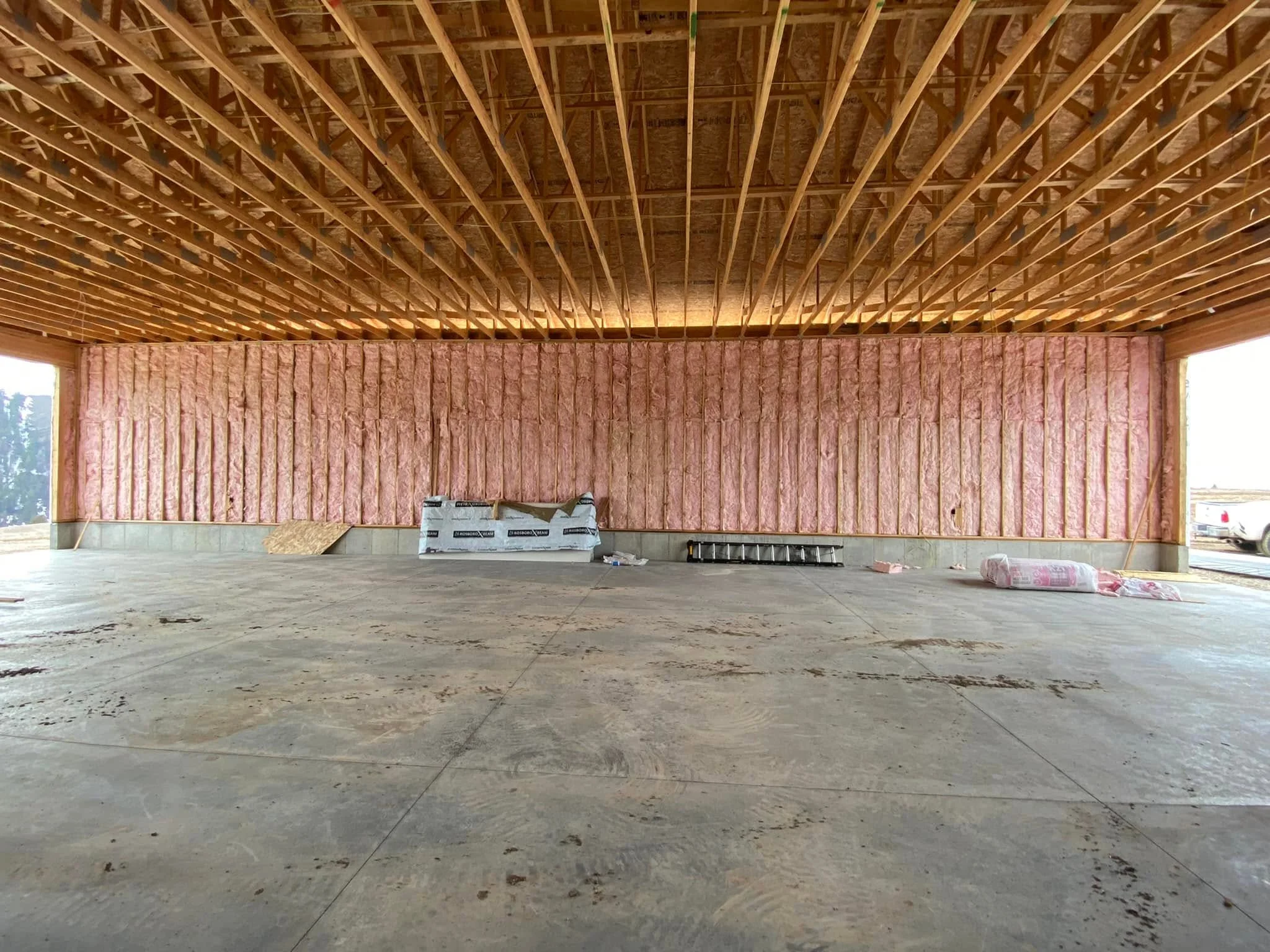
Closed-cell spray foam delivers nearly twice the thermal resistance per inch compared to fiberglass, and it does so while simultaneously sealing air leaks. For a 2×4 wall cavity, closed-cell spray foam at R-21 to R-24 outperforms fiberglass at R-13 to R-15 by a wide margin.
Structural Integrity and Moisture Management
Spray foam does more than insulate. Closed-cell spray foam adheres directly to framing, sheathing, and substrate materials, adding structural strength to the building assembly. Testing has shown that closed-cell foam can increase the racking strength of wall assemblies by up to 300%, making it a practical choice in hurricane-prone and high-wind regions.
Moisture control is another long-term advantage. Building Science Corporation research demonstrates that spray polyurethane foam assemblies, particularly those using closed-cell foam, provide both air leakage control and vapor diffusion resistance. This dual function prevents condensation from forming within wall cavities, which is one of the leading causes of mold growth, wood rot, and insulation degradation.
In crawl spaces and basements, where humidity and groundwater vapor are persistent concerns, closed-cell spray foam applied to rim joists and foundation walls creates a continuous vapor barrier that blocks moisture from entering the living space. Over decades, this protection can prevent thousands of dollars in water damage repairs and mold remediation.
Indoor Air Quality Improvements
The airtight seal created by spray foam has a direct and measurable impact on indoor air quality. By blocking uncontrolled air infiltration, spray foam keeps outdoor pollutants, pollen, dust, and allergens from entering through gaps in the building envelope. This matters for occupants with allergies, asthma, or other respiratory sensitivities.
However, the tight building envelope that spray foam creates also means that mechanical ventilation becomes more important. The U.S. Environmental Protection Agency notes that spray polyurethane foam is a highly effective insulation and air sealant, but emphasizes that proper ventilation is necessary to maintain healthy indoor air after installation. Heat recovery ventilators (HRVs) or energy recovery ventilators (ERVs) are recommended complements to spray foam insulation in tightly-sealed homes.
Once fully cured, properly applied spray foam is considered chemically inert and does not off-gas at levels that pose health risks. The curing process typically takes 24 to 72 hours, during which the EPA recommends that building occupants vacate the premises.
Financial Incentives and Market Growth
The financial case for spray foam insulation has strengthened in recent years thanks to federal and state incentives. The ENERGY STAR Insulation Tax Credit allows homeowners to claim 30% of the cost of qualifying insulation materials and installation, up to $1,200 per year. This credit applies to bulk insulation products, including expanding spray foam, when installed in an existing principal residence.
For contractors and builders, the growing demand for energy-efficient construction creates a competitive advantage. According to Fortune Business Insights, the global foam insulation market is on a strong growth trajectory through 2034, driven by tightening building codes, rising energy costs, and increased awareness of building performance among consumers.
Timeframe
Market Projection
CAGR
2026
$41.58 billion
4.9%
2030 (est.)
~$50 billion
4.9%
2034
$61.54 billion
4.9%
This market growth translates into more availability, competitive pricing, and continued product innovation, all of which benefit end users.
Open-Cell vs. Closed-Cell: Choosing the Right Application
The two main types of spray foam insulation serve different purposes, and selecting the correct one depends on the specific demands of the project.
Open-cell spray foam is less dense, more flexible, and lower in cost. It expands significantly upon application, filling irregular cavities effectively. With an R-value of approximately 3.5 to 3.7 per inch, it performs well in interior wall cavities, attics, and sound-dampening applications. Its flexibility allows it to accommodate building movement without cracking, but it does not function as a vapor barrier.
Closed-cell spray foam is denser, more rigid, and more expensive. It delivers R-values of 6.0 to 7.0 per inch and acts as both an air barrier and a vapor retarder. Its rigidity adds structural strength, and its moisture resistance makes it the preferred choice for basements, crawl spaces, metal buildings, and exterior applications where exposure to water and humidity is likely.
Factor
Open-Cell
Closed-Cell
R-Value Per Inch
3.5 to 3.7
6.0 to 7.0
Density
Low (0.5 lb/cu ft)
High (2.0 lb/cu ft)
Vapor Barrier
No
Yes
Structural Strength
Minimal
Significant
Best Applications
Walls, attics, sound control
Basements, crawl spaces, and roofs
Installed Cost
Lower
Higher
Recommendations by Building Type
Different buildings have different insulation priorities. Here is how spray foam applies across common scenarios:
New Construction Homes: Closed-cell spray foam in the basement rim joist and crawl spaces, with open-cell or a hybrid approach in wall cavities and attics, provides the best balance of cost and performance.
Existing Home Retrofits: Retrofitting spray foam into wall cavities of existing homes is challenging, but attic floor and roof deck applications, along with crawl space encapsulation, deliver the highest return on investment with minimal disruption.
Commercial Buildings: Closed-cell spray foam on roof decks and exterior walls meets commercial energy code requirements while reducing HVAC tonnage requirements, leading to lower equipment costs.
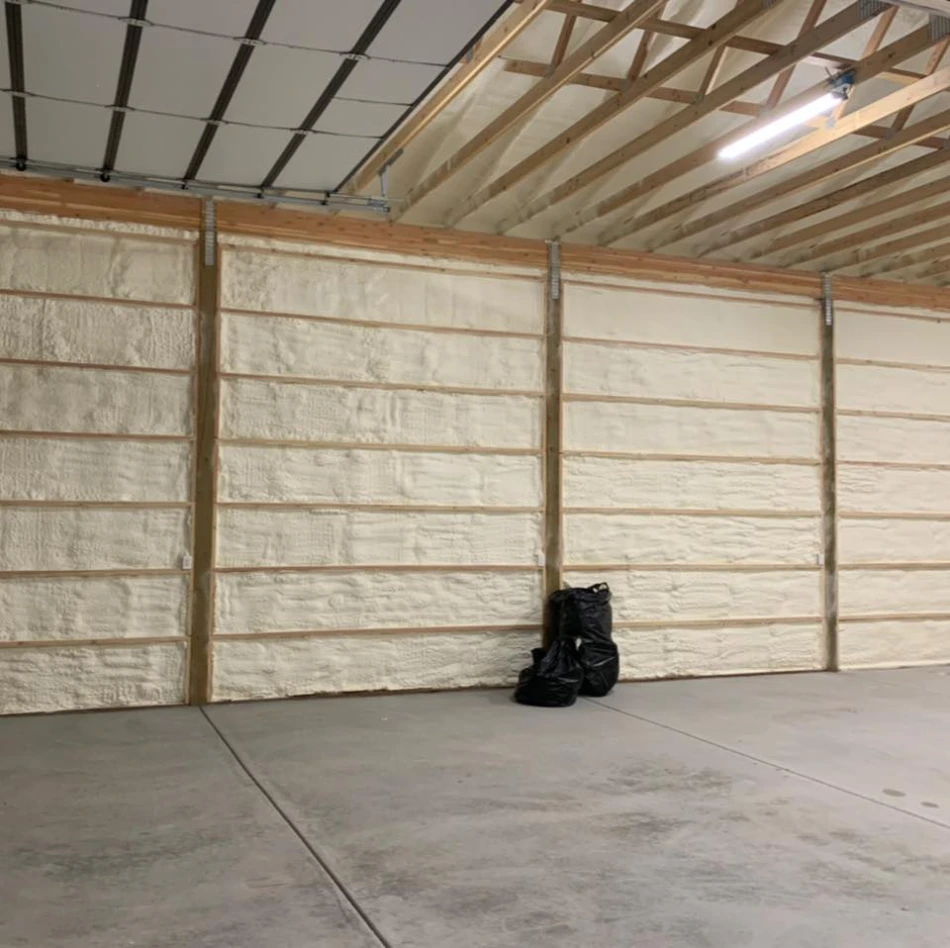
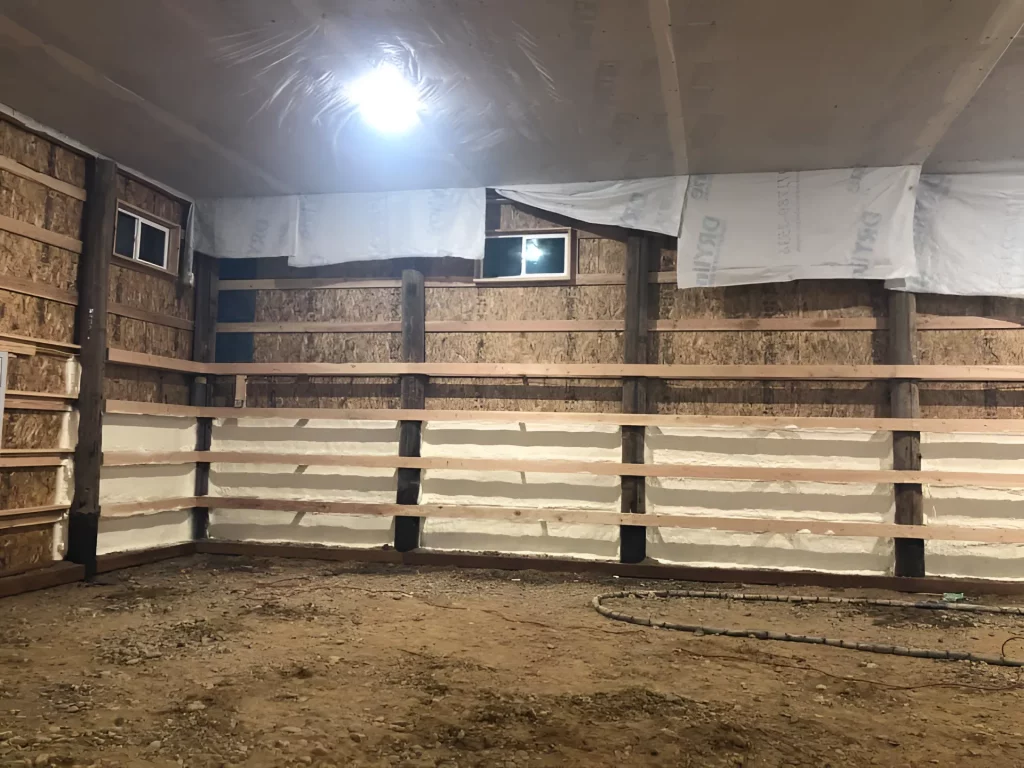
Metal Buildings and Barndominiums: Closed-cell spray foam is the most practical choice for metal structures, where condensation and thermal bridging through metal framing are primary concerns.
Signs You Have Found the Right Insulation Contractor
Choosing the right installer is as important as choosing the right product. Look for these indicators:
Clear communication about product types: A qualified contractor explains the differences between open-cell and closed-cell foam and recommends the appropriate option for your specific project, rather than pushing a one-size-fits-all solution.
Transparent pricing with detailed scope: The proposal should specify foam type, thickness, R-value targets, square footage, and total installed cost, with no hidden line items.
Safety protocols during installation: The contractor follows EPA guidelines for ventilation, protective equipment, and occupancy re-entry timing during and after spray foam application.
Warranty and documentation: The installer provides manufacturer warranties on the foam product, a workmanship warranty, and documentation needed for tax credit claims.
Experience with your building type: Contractors who have completed projects similar to yours, whether residential, commercial, or specialty structures, understand the specific challenges your project presents.
Ready to Upgrade Your Building Envelope
High Country Solutions helps property owners and builders make informed insulation decisions that deliver lasting energy savings, structural protection, and comfort. Whether you are planning a new build, retrofitting an existing home, or insulating a commercial space, our team evaluates your specific needs and recommends the spray foam solution that fits your goals and budget.
Spray foam insulation typically lasts the lifetime of the building without needing replacement, provided it is installed correctly and not exposed to physical damage or prolonged UV radiation.
Does spray foam insulation qualify for tax credits?
Yes, qualifying spray foam insulation installed in a principal residence may be eligible for a federal tax credit of 30% of the cost, up to $1,200, through the ENERGY STAR program.
Is spray foam insulation safe after installation?
Once fully cured, which typically takes 24 to 72 hours, spray foam is considered chemically inert and safe for occupancy. The EPA recommends vacating the building during the curing period and ensuring adequate ventilation.
Can spray foam be installed in existing walls?
Installing spray foam in existing wall cavities is possible, but more complex and costly than new construction applications. It is more common and cost-effective to apply spray foam in attics, crawl spaces, and basements during retrofits.
How does spray foam compare to fiberglass for energy savings?
Spray foam provides a higher R-value per inch and creates an airtight seal that fiberglass cannot match. Homes insulated with spray foam typically see 30 to 50% reductions in heating and cooling costs, compared to 20 to 30% with fiberglass alone.
ENERGY STAR – Insulation Tax Credit – Federal tax credit details for qualifying insulation products including spray foam, with eligibility requirements and annual limits.
U.S. EPA – Spray Polyurethane Foam Safety – EPA guidance on safe installation practices, health considerations, and ventilation requirements for spray foam insulation.
I’m Skeeter Aimone, owner of High Country Solutions in Alpine, Wyoming, leading the company since 2019. I focus on quality installation, building science, and insulation solutions suited to harsh Wyoming and eastern Idaho conditions.