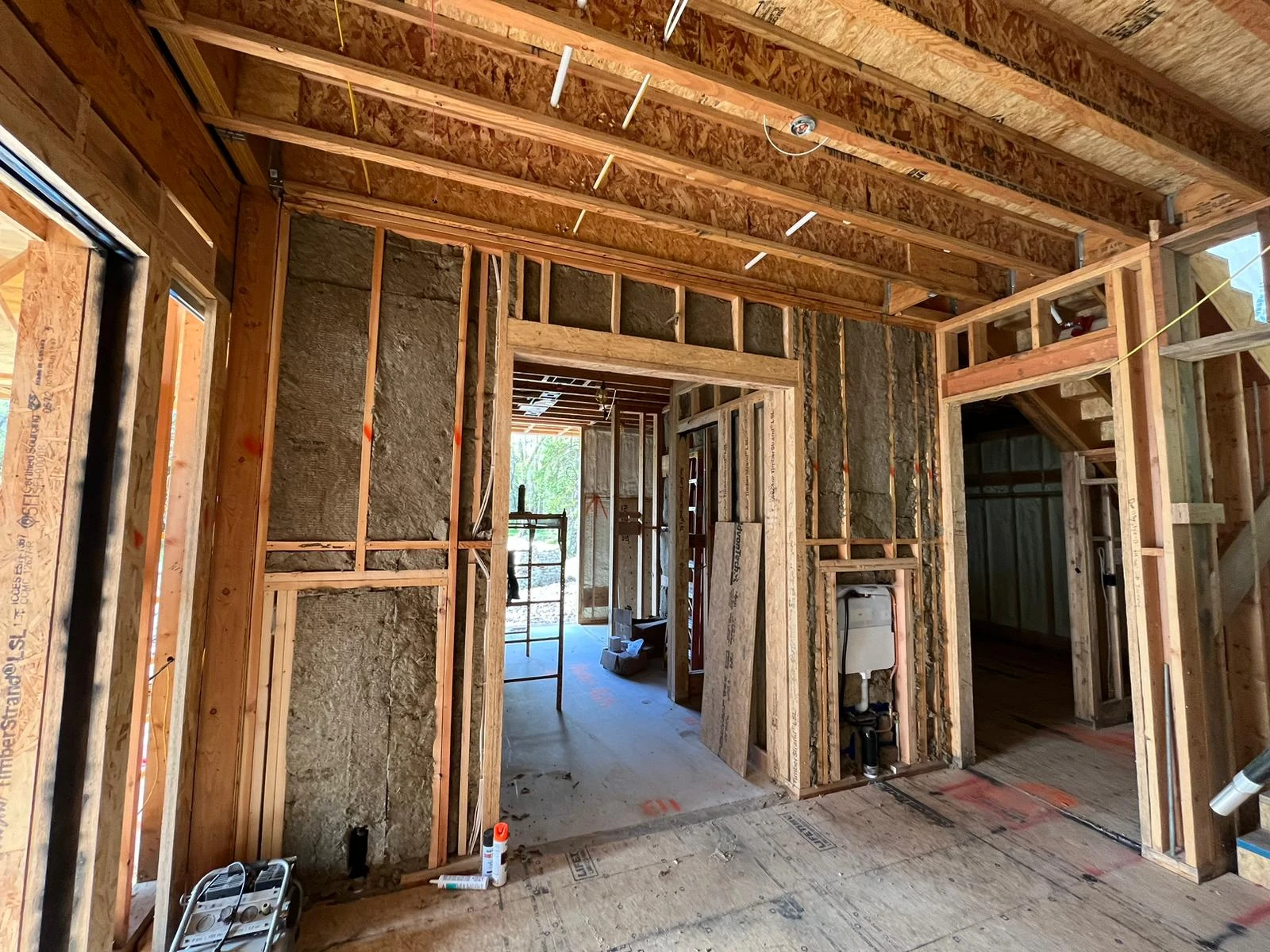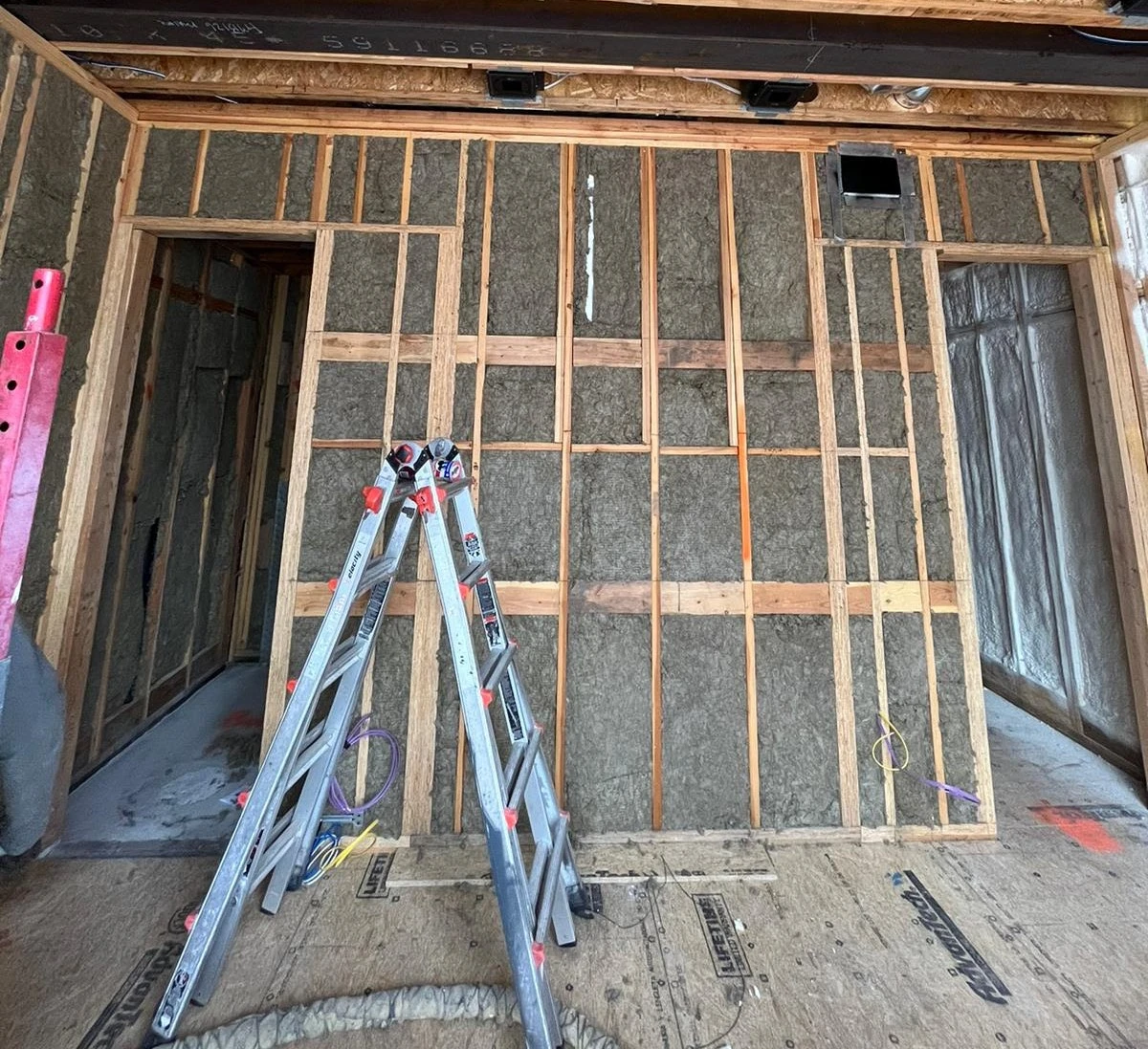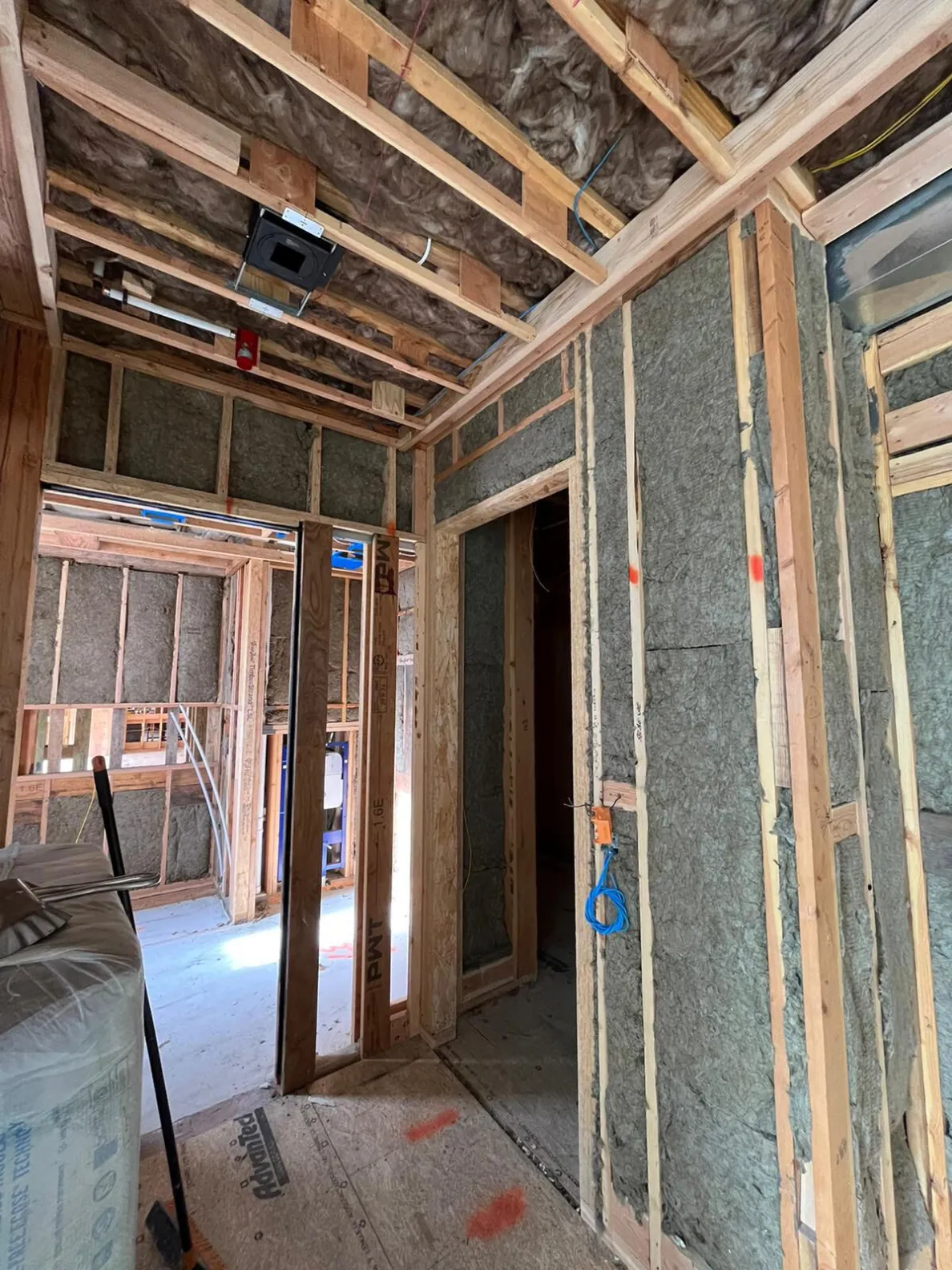
Why Are Homeowners in Thayne, WY Considering Mineral Wool for Insulation Upgrades?
Homeowners in Thayne, WY are turning to a mineral wool insulation guide because Star Valley winters push heating systems to their…


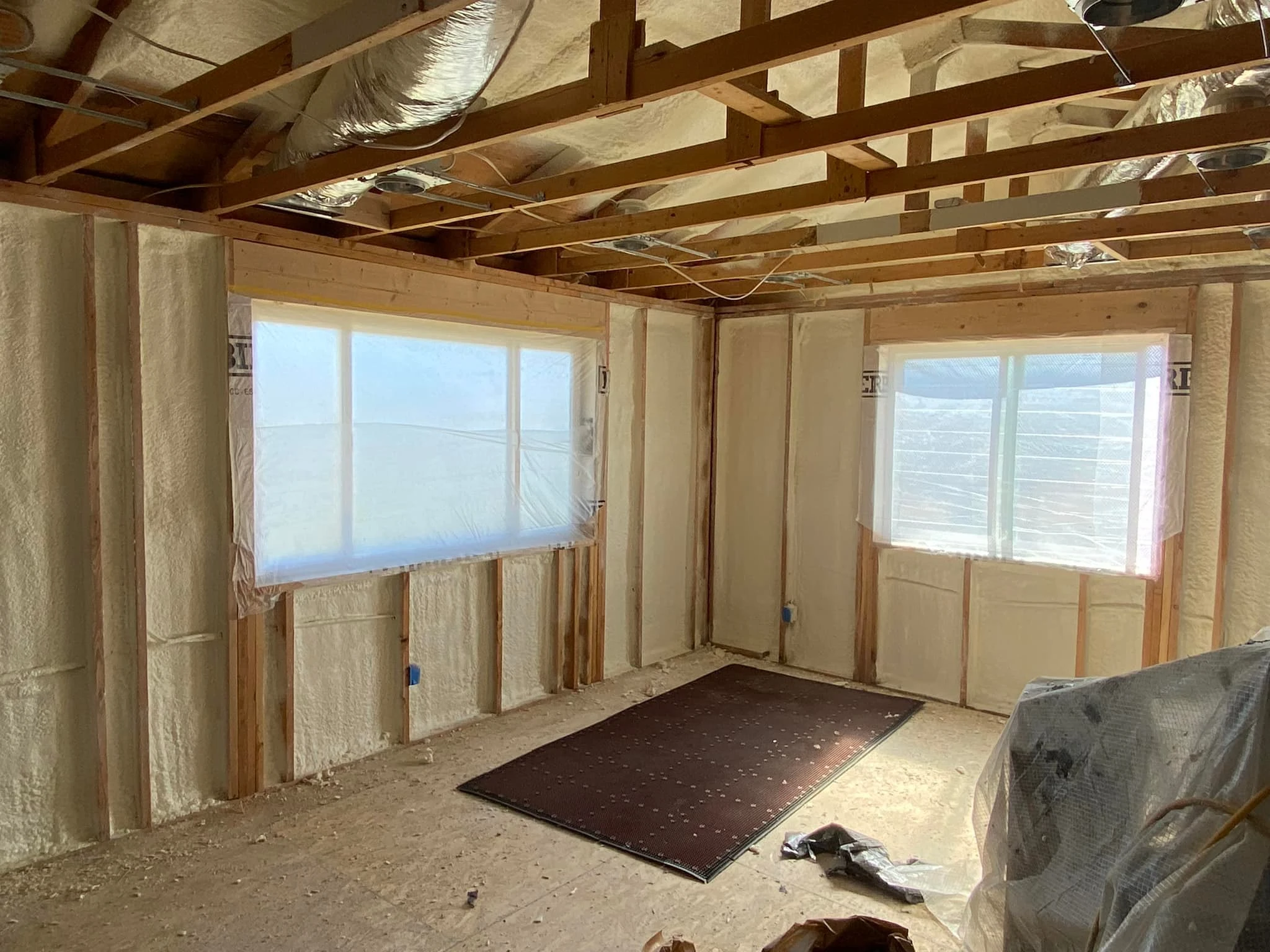
Spray foam insulation fails in Idaho Falls primarily because the wrong foam type is chosen for our cold climate, installation conditions are not properly controlled, and moisture management is overlooked during and after application. Idaho Falls sits in a cold climate region where winter temperatures regularly drop well below freezing, making closed-cell spray foam the correct choice for most applications, while open-cell foam often leads to condensation, wood rot, and structural damage when used incorrectly, underscoring the importance of proper spray foam insulation protection.
Idaho Falls experiences long, cold winters with temperatures that can drop well below zero degrees Fahrenheit. The area falls within the International Energy Conservation Code (IECC) Climate Zone 5B, which places it squarely in the cold climate category where insulation decisions carry serious consequences for building durability and occupant comfort.
The Building Science Corporation’s Residential Spray Foam Guide states that in IECC Climate Zones 5 and higher, high-density closed-cell spray foam provides additional condensation control and qualifies as a Class II vapor retarder at 1.5 inches of thickness. This matters enormously in Idaho Falls because the temperature differential between heated indoor spaces and the cold exterior drives moisture vapor outward through wall and roof assemblies. If the insulation cannot stop that vapor from reaching cold surfaces, condensation forms, and over time, that trapped moisture causes wood rot, mold growth, and structural degradation.
The DOE’s Types of Insulation guide confirms that closed-cell foam has a higher R-value and provides stronger resistance against moisture and air leakage compared to open-cell foam, while also noting that some building codes do not recognize sprayed foam as a vapor barrier, meaning an additional vapor retarder may be required depending on the application.
The choice between open-cell and closed-cell spray foam is not a matter of preference. In a cold climate like Idaho Falls, it is a matter of building science. The table below shows how the two foam types compare on the performance metrics that matter most for our local conditions.
| Property | Closed-Cell Spray Foam | Open-Cell Spray Foam |
|---|---|---|
| R-Value per Inch | R-6.0 to R-6.5 | R-3.5 to R-3.7 |
| Vapor Permeability | Class II vapor retarder at 1.5″ | Vapor-permeable (12-20 perms) |
| Air Barrier | Yes, at any classified thickness | Yes, at minimum classified depth |
| Moisture Resistance | High, resists water absorption | Low, absorbs and holds water |
| Structural Rigidity | Adds wall and roof rigidity | No structural benefit |
| Density | High (approx. 2 lb/ft³) | Low (approx. 0.5 lb/ft³) |
| Best Applications in Idaho Falls | Exterior walls, unvented attics, basements, rim joists, crawlspaces | Interior partition walls, sound deadening, only with proper vapor control |
In unvented attics, the Building Science Corporation specifically recommends that in IECC Climate Zones 5 and higher, only high-density closed-cell spray foam should be used directly against the underside of the roof deck. Using open-cell foam in this configuration in Idaho Falls allows interior moisture to diffuse through the foam, reach the cold roof sheathing, and condense. Over time, this leads to elevated wood moisture content, mold growth, and in severe cases, structural failure of the roof sheathing.
Understanding the failure modes helps homeowners and builders prevent problems before they start. Based on our experience and supported by building science research, spray foam insulation failures in Idaho Falls fall into several clear categories.
When open-cell spray foam is installed on exterior walls or cathedral ceilings in a cold climate without an interior vapor retarder, moisture vapor from the heated living space passes through the foam and condenses on the cold exterior sheathing. This is the most common and most destructive failure mode we encounter. The moisture accumulates over weeks and months during winter, and because the foam prevents the sheathing from drying to the interior, the wood moisture content climbs steadily. The BSC guide notes that low-density open-cell spray foam can only be utilized with an interior vapor retarder to control condensation in cold climates, which is a critical consideration when determining the best time to install spray foam.
Spray foam chemistry is temperature-sensitive. When ambient temperatures, substrate temperatures, or chemical temperatures fall below manufacturer specifications, the foam can cure improperly, resulting in brittle material, poor adhesion, off-ratio curing, and shrinkage. In Idaho Falls, winter installation requires heated enclosures, warm substrate surfaces, and temperature-controlled chemical storage. Skipping these steps produces foam that may look acceptable initially but fails within the first heating season as the material cracks, separates from the substrate, and loses its air-sealing properties.
The BA-1312 report from Building Science Corporation documents a case where a full roof system failure was traced back to spray foam being installed on wet OSB sheathing. The manufacturer’s investigation found that the closed-cell foam did not adhere properly, and the pore structure at the foam-to-OSB interface indicated a wet substrate at the time of application. In Idaho Falls, morning dew, frost, rain, and construction moisture all create conditions where substrates may appear dry on the surface but hold enough moisture underneath to compromise adhesion.
Spray foam requires precise ratio control between the two chemical components, commonly called Side A (isocyanate) and Side B (polyol blend). When the proportion is off, even slightly, the cured foam may be too soft, too brittle, or may not expand to its rated density. Off-ratio foam provides reduced R-value, poor adhesion, and can shrink away from framing members, creating air gaps that defeat the insulation’s primary purpose.
The EPA’s guidance on spray polyurethane foam identifies isocyanates as a leading chemical cause of work-related asthma and notes that there is no recognized safe exposure level for sensitized individuals. Installers who do not wear proper respiratory protection, skin protection, and eye protection during application put themselves at serious risk. For homeowners, inadequate ventilation during and after installation can lead to persistent chemical odors and potential respiratory issues. The EPA specifically warns that some marketing claims for SPF do not clearly indicate that these products contain hazardous chemicals, which can lead to inadequate safety precautions being taken.
The following scenarios illustrate the types of spray foam failures we encounter and how they were resolved.
| Scenario | Home Type | Problem | Solution | Outcome |
|---|---|---|---|---|
| Unvented attic retrofit | 1990s ranch home, Idaho Falls | Open-cell foam sprayed to the roof deck caused sheathing moisture above 20%, and visible mold on the north-facing slopes | Removed compromised foam, dried sheathing, applied 2 inches of closed-cell foam with proper vapor control, and added attic ventilation fan | Sheathing moisture dropped to safe levels, and no further mold growth |
| Basement insulation failure | New construction, Bonneville County | Open-cell foam applied to the basement walls absorbed groundwater seepage through foundation cracks, and became waterlogged | Removed saturated foam, sealed foundation cracks, and installed closed-cell spray foam with proper moisture management | Dry basement, no recurring moisture issues |
| Rim joist condensation | 1970s two-story home | Fiberglass batts in rim joist cavities allowed air leakage and condensation, causing frost accumulation in winter | Removed batts, applied 2 inches of closed-cell spray foam to all rim joist areas | Eliminated frost, reduced heating bills, and no air leakage |
| Off-ratio wall foam | New build, eastern Idaho | Improperly mixed closed-cell foam in exterior walls was crumbly and had separated from the studs | Removed failed foam, corrected equipment calibration, and reapplied closed-cell foam per manufacturer specifications | Proper adhesion and R-value achieved, passed insulation inspection |
| Crawlspace moisture problem | Older home with a vented crawlspace | Open-cell foam installed on the crawlspace floor framing absorbed moisture from the damp soil below | Removed foam, installed ground vapor barrier, applied closed-cell foam to floor joists | Floor above crawlspace dried out, no musty odors |
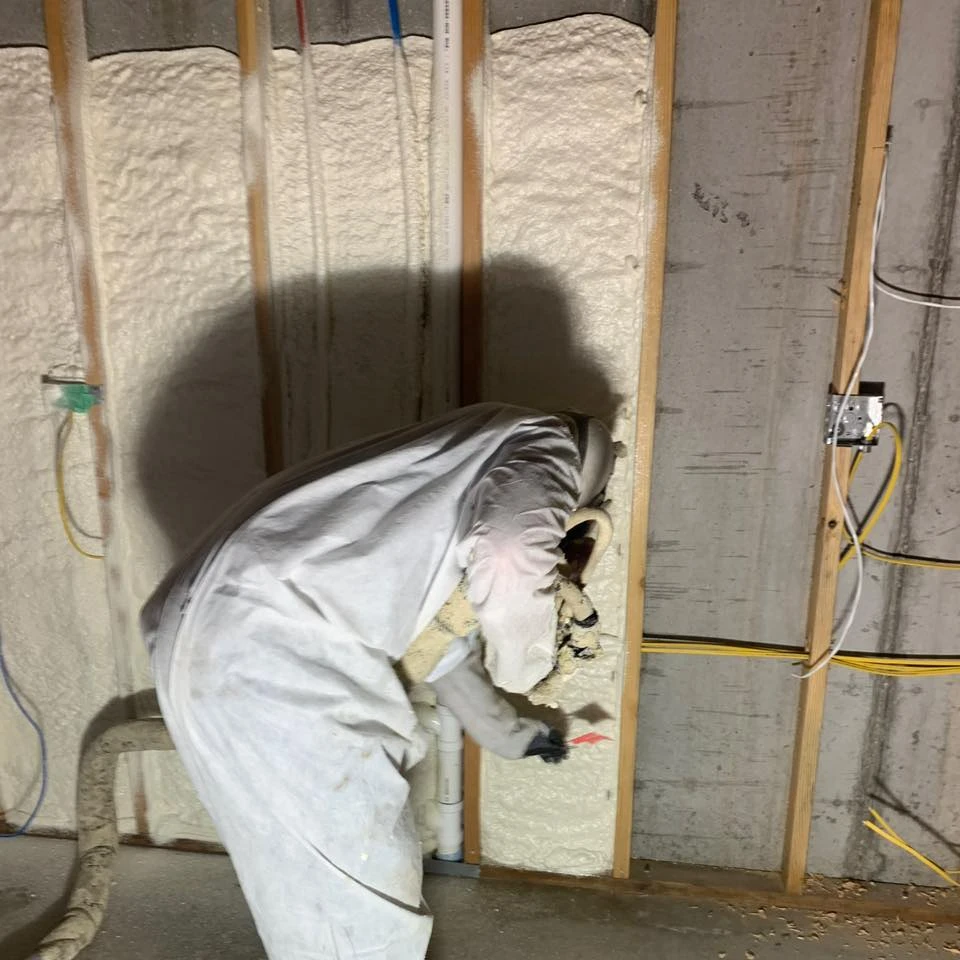
Our team follows a strict set of best practices to ensure spray foam insulation performs reliably in Idaho Falls. These steps apply to every project, whether new construction or retrofit.
Several variables influence whether spray foam insulation succeeds or fails in our local climate. Understanding these factors helps homeowners and builders make informed decisions.
Climate Zone Classification: Idaho Falls is in IECC Climate Zone 5B, which has specific code requirements for insulation R-values and vapor control. These requirements are not optional guidelines. They represent the minimum performance thresholds needed to prevent moisture damage in our climate.
Foam Thickness: Closed-cell spray foam must be installed at the thickness specified by the IRC for the local climate zone to provide adequate condensation control. For walls in Climate Zones 5 and 6, this is typically 1.5 to 2 inches of closed-cell foam. Thinner applications may not provide sufficient vapor retardancy.
Building Age and Construction Type: Older homes in Idaho Falls may have balloon framing, knob-and-tube wiring, or existing moisture issues that must be addressed before any insulation is installed. Newer homes with modern framing and proper exterior water management are generally better candidates for spray foam retrofits.
Indoor Humidity Levels: The Building Science Corporation recommends maintaining indoor relative humidity at or below 40% during winter in cold climates. Higher indoor humidity increases the moisture drive through wall and roof assemblies, raising the risk of condensation even behind properly installed insulation.
Ventilation Strategy: Tightly sealed homes with spray foam insulation require mechanical ventilation to manage indoor air quality and remove excess moisture. Without controlled fresh air, humidity builds up inside the home and drives moisture into the wall and roof cavities.
At High Country Solutions, our team has extensive experience installing spray foam insulation in Idaho Falls and the surrounding region. We understand the specific demands of IECC Climate Zone 5B and follow the building science guidelines recommended by the Department of Energy and Building Science Corporation for every project. Our professionals evaluate substrate conditions, control installation temperatures, verify chemical ratios, and ensure proper foam thickness to deliver insulation that performs for decades through expert spray foam insulation services in Idaho Falls, ID.
Whether you need closed-cell foam for an unvented attic conversion, basement wall insulation, rim joist air sealing, or a full home insulation retrofit, we are ready to help. Contact our team at [email protected] or call (307) 248-9063 to discuss your project.
Open-cell spray foam can be used in interior partition walls and sound-dampening applications where there is no risk of moisture condensation against a cold surface. It should never be used on exterior walls, unvented attics, basement walls, or crawlspaces in IECC Climate Zone 5B without a properly specified interior vapor retarder, as confirmed by building science research.
Re-occupancy times vary by manufacturer and product but typically range from 24 to 48 hours after the application is complete. The EPA recommends maintaining ventilation during and after installation until all chemical odors have dissipated. Our team follows all manufacturer-specific re-occupancy guidelines and verifies air quality before clearing a home for return.
Foam applied to a wet substrate will not adhere properly and will likely delaminate over time as the moisture underneath creates a bond failure. Building Science Corporation research has documented complete roof sheathing failures caused by closed-cell spray foam applied over wet OSB. Our installers always test substrate moisture content before any application.
In most wall and roof assemblies in IECC Climate Zones 5 through 8, closed-cell spray foam installed at 1.5 inches or greater qualifies as a Class II vapor retarder under the IRC, eliminating the need for a separate polyethylene vapor barrier. However, some local building codes may have additional requirements, so our team verifies compliance with all applicable codes before completing any project.
Rim joist areas are among the most poorly insulated and air-leaky parts of any home. In cold climates like Idaho Falls, air leakage through rim joists causes significant heat loss and creates conditions where warm indoor air meets cold exterior surfaces, producing condensation, frost, and mold. Closed-cell spray foam applied directly to rim joists eliminates both the air leakage and the condensation risk in a single application.