Residential Insulation vs Commercial Insulation: Key Differences Homeowners Should Understand
Skeeter Aimone
April 16th, 2026
Residential insulation and commercial insulation serve the same fundamental purpose of reducing heat transfer, but they differ significantly in scale, building code requirements, material selection, installation complexity, and performance expectations. Residential insulation focuses primarily on occupant comfort, energy bill savings, and meeting the International Energy Conservation Code (IECC) Residential Provisions, with recommended R-values ranging from R-30 to R-60 for attics, depending on climate zone. Commercial insulation, governed by the IECC Commercial Provisions and ASHRAE 90.1 standards, must address continuous insulation requirements, stricter fire safety ratings, higher thermal loads from equipment and occupancy, and often involves rigid foam boards, high-density spray foam, and specialized systems installed at a much larger scale. For homeowners exploring insulation options, understanding these differences matters whether you are upgrading a single-family home, insulating a home office, or evaluating a property that blends residential and commercial functions. Residential insulation solutions and applications
TL;DR
Residential insulation targets comfort and energy savings for living spaces, while commercial insulation prioritizes code compliance, fire safety, and operational efficiency for large-scale buildings.
The IECC Residential Provisions recommend R-30 to R-60 for attics and R-13 to R-38 for floors, depending on climate zone.
Commercial buildings follow IECC Commercial and ASHRAE 90.1 standards that mandate continuous insulation (CI) to address thermal bridging across large envelope areas.
Residential projects typically use fiberglass batts, blown-in cellulose, or standard spray foam. Commercial projects lean toward rigid foam boards, high-density spray foam, and mineral wool systems.
Commercial installation costs are significantly higher in total but often offer a better cost-per-square-foot rate due to volume purchasing and large-scale equipment deployment.
Fire safety and health requirements are more demanding in commercial settings, with stricter ratings and, in some cases, mandatory evacuation of other trades during spray foam installation.
Both categories use similar insulation material types (batts, foam board, spray foam, loose-fill), but commercial applications frequently demand higher density and performance grades.
Homeowners managing mixed-use properties should consult insulation professionals who understand both code sets to avoid compliance gaps.
What Sets Residential and Commercial Insulation Apart
The distinction between residential and commercial insulation goes far beyond building size. The entire approach to material selection, code compliance, and performance goals shifts depending on the building type.
Building Code Frameworks
Residential insulation in the United States is primarily governed by the IECC Residential Provisions, which specify minimum R-values for attics, walls, floors, and basements based on climate zone. For example, a home in Climate Zone 4 needs R-60 in an uninsulated attic and R-19 for floors. These standards focus on creating a comfortable, energy-efficient living environment. Residential insulation standards and requirements
Commercial insulation follows a different set of rules. The IECC Commercial Provisions and ASHRAE 90.1 standards require continuous insulation across structural members to eliminate thermal bridging. This means commercial buildings need an unbroken thermal barrier, often achieved with rigid foam board or insulated panels installed over the entire exterior envelope.
Scale and Project Complexity
A typical residential insulation project might cover 1,500 to 3,000 square feet across an attic, walls, and basement. A commercial project can span tens of thousands of square feet, including metal building systems, flat roofing assemblies, and complex mechanical layouts. This difference in scale affects every aspect of the job, from material procurement to crew size and equipment needs.
Commercial buildings also generate more internal heat from lighting, equipment, and high occupancy levels, which means the insulation must work harder to maintain thermal balance. According to the Insulation Institute, all insulation types perform equally well when properly installed and air sealed, but commercial applications demand more rigorous installation standards and quality control.
Often required for occupant comfort in shared spaces
Material Selection Differences
Both residential and commercial projects draw from the same general pool of insulation materials, but the specific products and grades differ considerably.
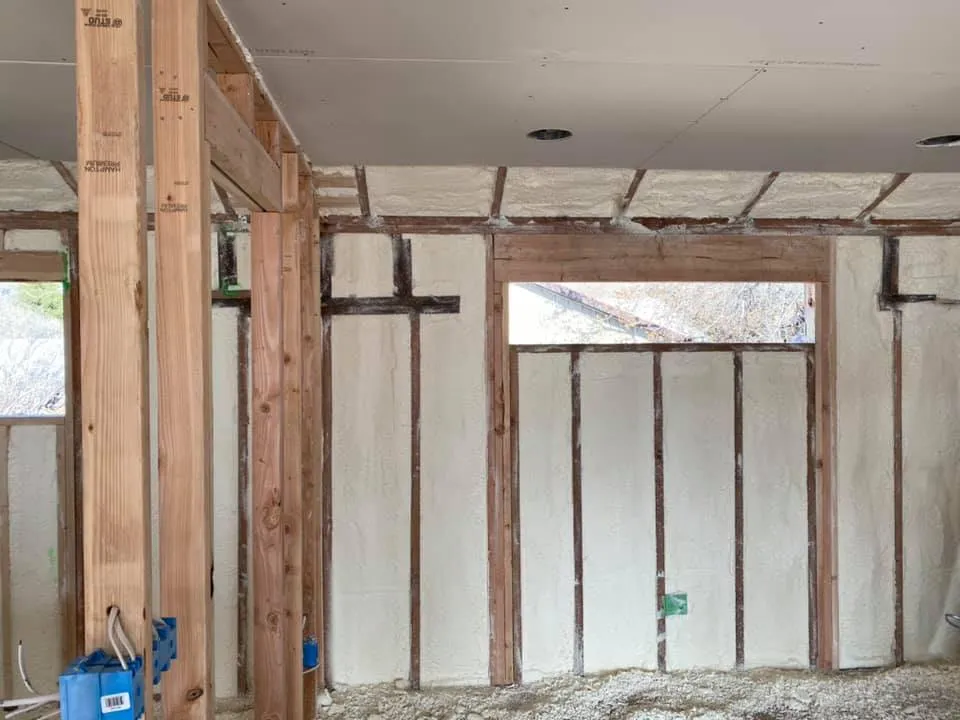
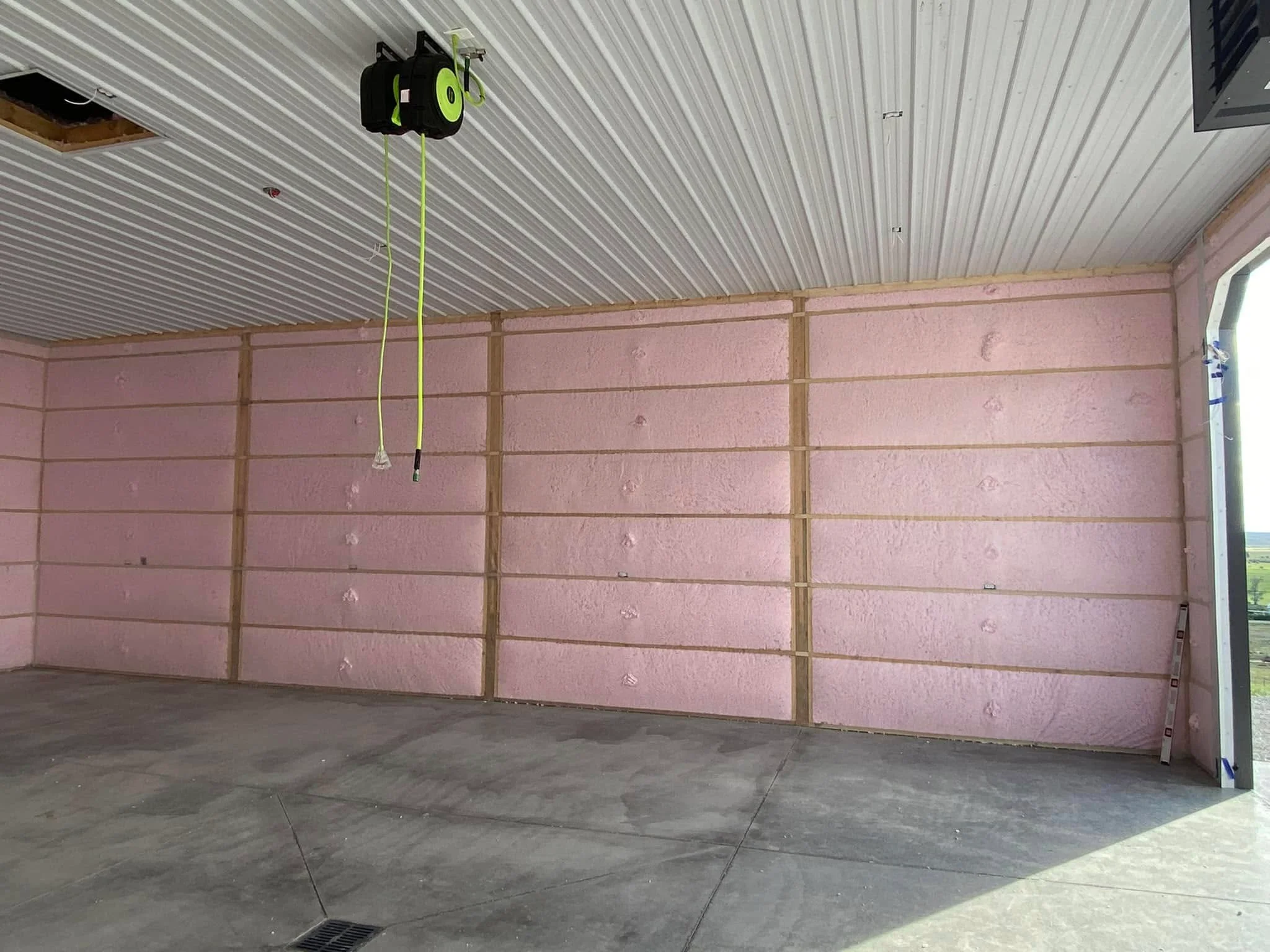
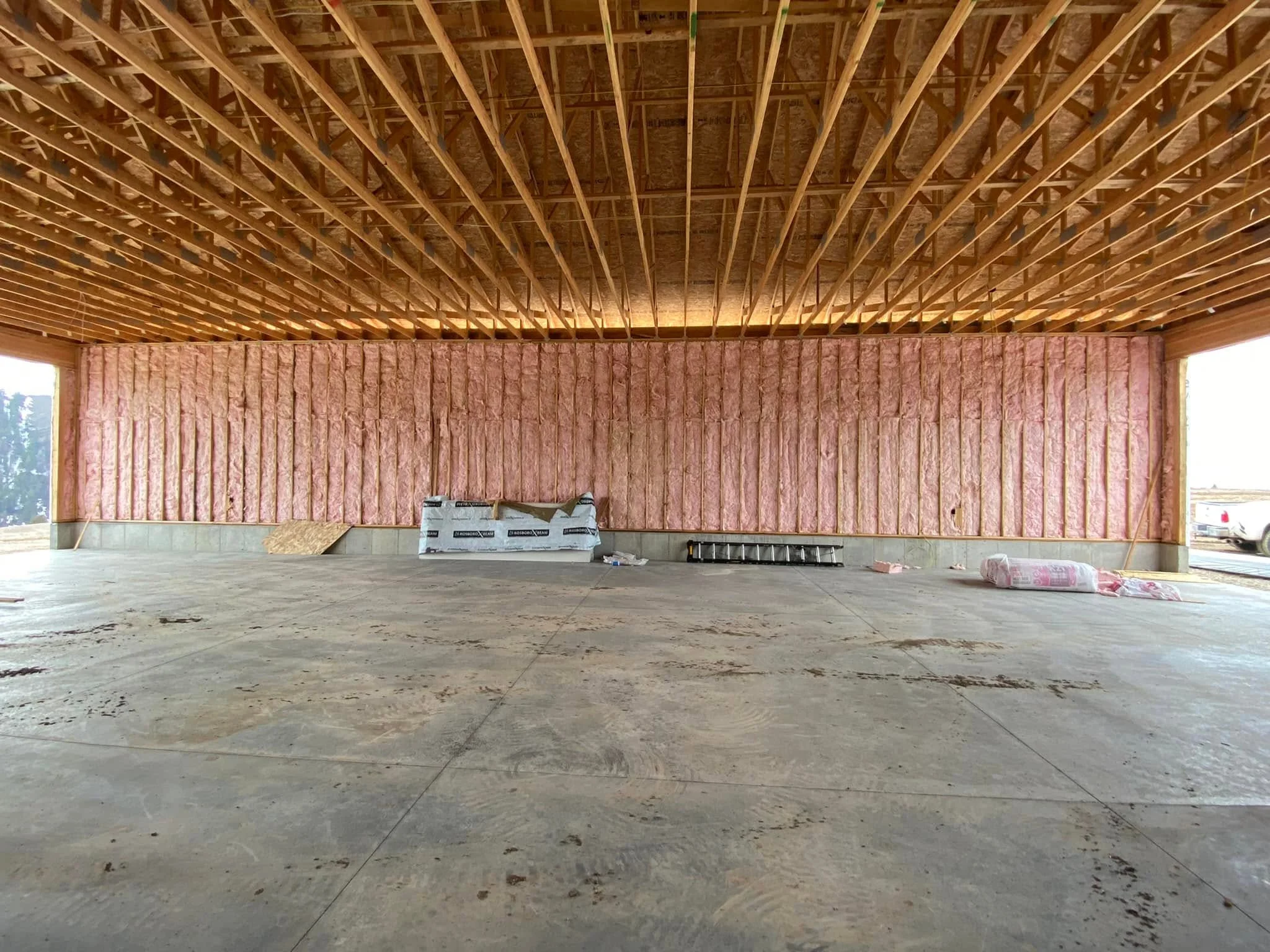
The U.S. Department of Energy identifies several primary insulation types, including blanket batts and rolls, foam board, loose-fill and blown-in, sprayed foam, and structural insulated panels. In residential settings, fiberglass batts and blown-in cellulose are the most common choices due to their affordability and ease of installation. Spray foam, both open-cell and closed-cell, is increasingly popular in homes for its air-sealing properties.
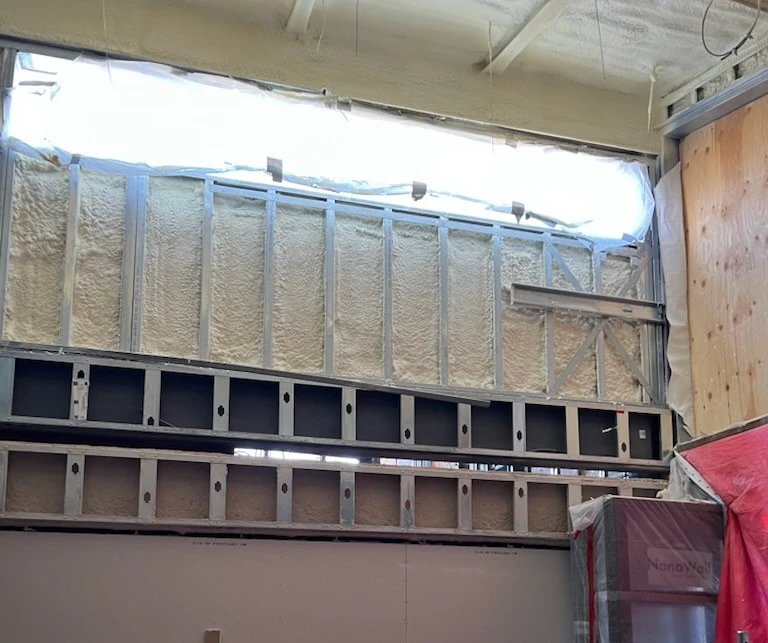
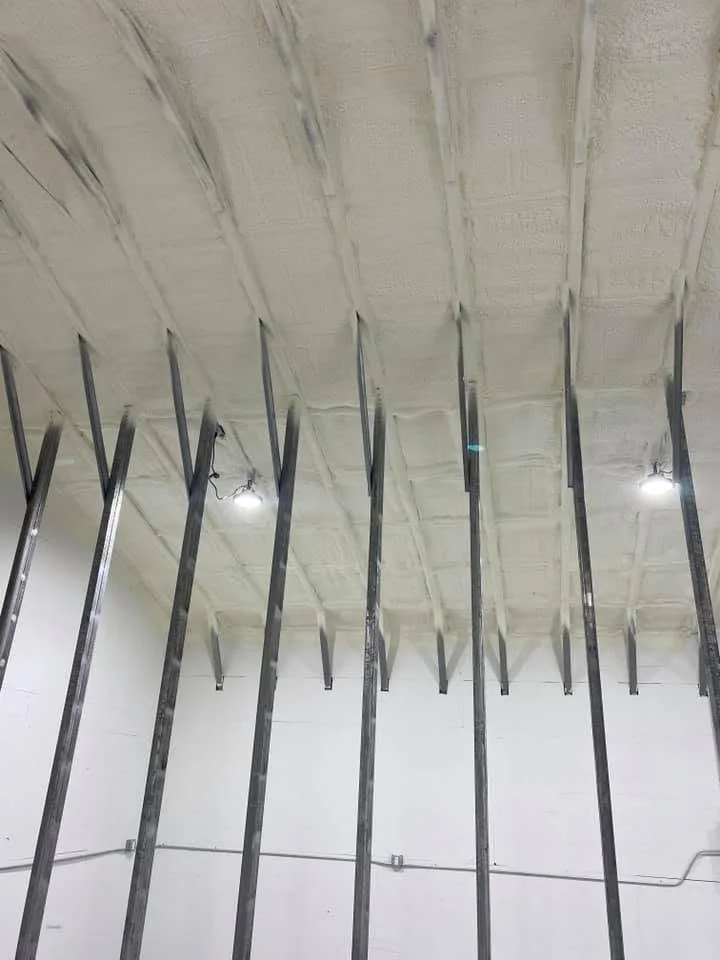
Commercial projects, however, frequently rely on rigid foam boards such as polyisocyanurate (polyiso) for continuous insulation on walls and roofs. High-density closed-cell spray foam is used where both insulation and structural reinforcement are needed. Mineral wool boards are common in commercial wall assemblies because they offer fire resistance, acoustic control, and moisture resistance in a single product.
The Insulation Institute notes that fiberglass and mineral wool batts achieve a Sound Transmission Class (STC) of 43 in a complete wall system, while spray foam achieves STC 37-39. For commercial buildings where noise control between offices, retail spaces, or manufacturing areas matters, this acoustic advantage can drive material selection.
Installation and Safety Considerations
Installation practices also diverge between the two categories. Residential insulation can often be installed by a small crew using portable equipment. Many homeowners even handle basic batt installation as a DIY project in accessible areas like attics.
Commercial insulation installation requires specialized equipment, larger crews, and often coordination with other trades. Spray foam installation in commercial settings may require evacuation of all other trades from the structure during application due to isocyanate exposure concerns. This adds scheduling complexity and cost that residential projects rarely face.
Fire safety requirements are substantially more demanding in commercial construction. While residential insulation must meet basic fire codes, commercial insulation often needs to be part of fire-rated assemblies tested under NFPA standards. Mineral wool and fiberglass are naturally non-combustible, which makes them favorable choices for commercial applications where fire resistance is a top priority.
Real-World Scenarios
Scenario
Property Type
Recommended Approach
Estimated Cost
30-year-old home with drafty attic and high energy bills
Single-family residential
Blown-in cellulose or fiberglass to R-49 in attic
$1,500 to $3,500
Homeowner converting detached garage to a workspace
Closed-cell spray foam for air sealing and R-value in walls and ceiling
$2,000 to $5,000
Small retail storefront in a strip mall
Commercial
Rigid foam board continuous insulation on walls, spray foam at penetrations
$5,000 to $15,000
New construction 2,500 sq ft home with open floor plan
Residential new build
Fiberglass batts in walls (R-21), blown-in attic (R-60), rigid foam on basement walls
$4,000 to $8,000
Multi-tenant office building undergoing renovation
Commercial
Mineral wool perimeter insulation, polyiso roofing system, spray foam at junctions
$25,000 to $75,000+
Factors That Influence the Decision
Several key variables determine whether a property needs residential-grade or commercial-grade insulation:
Building use and occupancy: High-traffic commercial spaces need better acoustic and fire-rated insulation than a typical home
Climate zone: Colder zones (5-8) demand higher R-values for both residential and commercial, but commercial codes may require continuous insulation that residential codes do not
Building structure: Metal buildings, common in commercial construction, have different thermal bridging challenges than wood-frame residential structures
Budget and ROI expectations: Commercial projects often justify higher upfront costs through energy savings and operational efficiency over the building lifecycle
Local building codes: Some jurisdictions have adopted stricter energy codes that may blur the line between residential and commercial requirements
Existing conditions: Retrofit projects face different constraints than new construction for both building types
Who Residential Insulation Is Best For (and Who It Is Not)
Ideal candidates:
Homeowners upgrading attics, walls, or basements in single-family homes
Builders constructing new homes to IECC residential standards
Property owners focused on reducing monthly energy bills and improving indoor comfort
DIY-capable homeowners tackling accessible attic or basement insulation projects
Not the right fit when:
The building is classified as commercial under local code (even if used as a residence)
The property is a mixed-use building with commercial tenant spaces
Fire-rated assemblies or NFPA-compliant systems are required by the local authority
Who Commercial Insulation Is Best For (and Who It Is Not)
Ideal candidates:
Business owners constructing or renovating office buildings, retail spaces, or warehouses
Property developers building multi-tenant commercial properties
Facility managers seeking to improve energy performance across large building portfolios
Owners of metal building structures that need continuous insulation systems
Not the right fit when:
The project is a standard single-family home with no commercial classification
The budget does not account for specialized installation crews and equipment
The building code authority has confirmed that residential-grade insulation meets all local requirements
Get Professional Insulation Guidance for Your Property
Whether you are insulating a family home, a home office conversion, or a commercial building, choosing the right insulation system requires expertise in both materials and local building codes. High Country Solutions brings experienced professionals who understand the differences between residential and commercial insulation standards and can recommend the best approach for your specific property and goals. Contact our team at (307) 248-9063 or email [email protected] to discuss your project and get started with a plan that fits your needs.
Frequently Asked Questions
Can I use commercial-grade insulation in my home?
Yes, commercial materials like rigid foam board or mineral wool can be installed in residential settings, and they often provide superior performance. However, the additional cost may not be justified unless your home has specific needs such as fire-rated wall assemblies or significant moisture concerns.
Does commercial insulation last longer than residential insulation?
Not necessarily. The Insulation Institute reports that fiberglass and mineral wool batts do not settle over time and maintain thermal performance for the life of the building in both residential and commercial applications. Material lifespan depends more on the product type and installation quality than on the building category.
What R-value do I need for my home’s attic?
The answer depends on your climate zone. According to ENERGY STAR, Climate Zones 4A and 4B require R-60 for an uninsulated attic, while Climate Zones 6, 5, and 4C also require R-60. Zone 3 requires R-49, and Zone 1 requires R-30.
Why does commercial insulation require continuous insulation, but residential does not always?
Commercial buildings have larger structural frames and more thermal bridging points where heat escapes through steel or concrete framing. The IECC Commercial Provisions mandate continuous insulation across the entire envelope to address this issue. Residential wood-framed walls have less severe thermal bridging, so cavity insulation alone has traditionally been sufficient, though many modern residential codes are moving toward continuous insulation as well.
Is spray foam insulation worth the extra cost for a home?
Closed-cell spray foam offers higher R-value per inch and acts as both insulation and an air barrier, which can reduce the need for separate weatherization tasks. The U.S. Department of Energy notes that while foam insulation costs more upfront than batt insulation, it can reduce construction time and the number of specialized contractors needed on a project. Whether it is worth the investment depends on your climate zone, budget, and long-term energy savings goals.
Sources
ENERGY STAR – Recommended Home Insulation R-Values – Climate-zone-specific R-value recommendations for residential attic, wall, floor, and basement insulation based on the 2021 IECC Residential Provisions.
U.S. Department of Energy – Types of Insulation – Comprehensive overview of insulation materials including batts, foam board, loose-fill, spray foam, and SIPs, with installation guidance and cost considerations.
I’m Skeeter Aimone, owner of High Country Solutions in Alpine, Wyoming, leading the company since 2019. I focus on quality installation, building science, and insulation solutions suited to harsh Wyoming and eastern Idaho conditions.