What Problems Can Mineral Wool Insulation Help Solve in Residential Buildings?
Quick answer: The main benefits of mineral wool insulation in a house come down to five problems: rooms that lose…


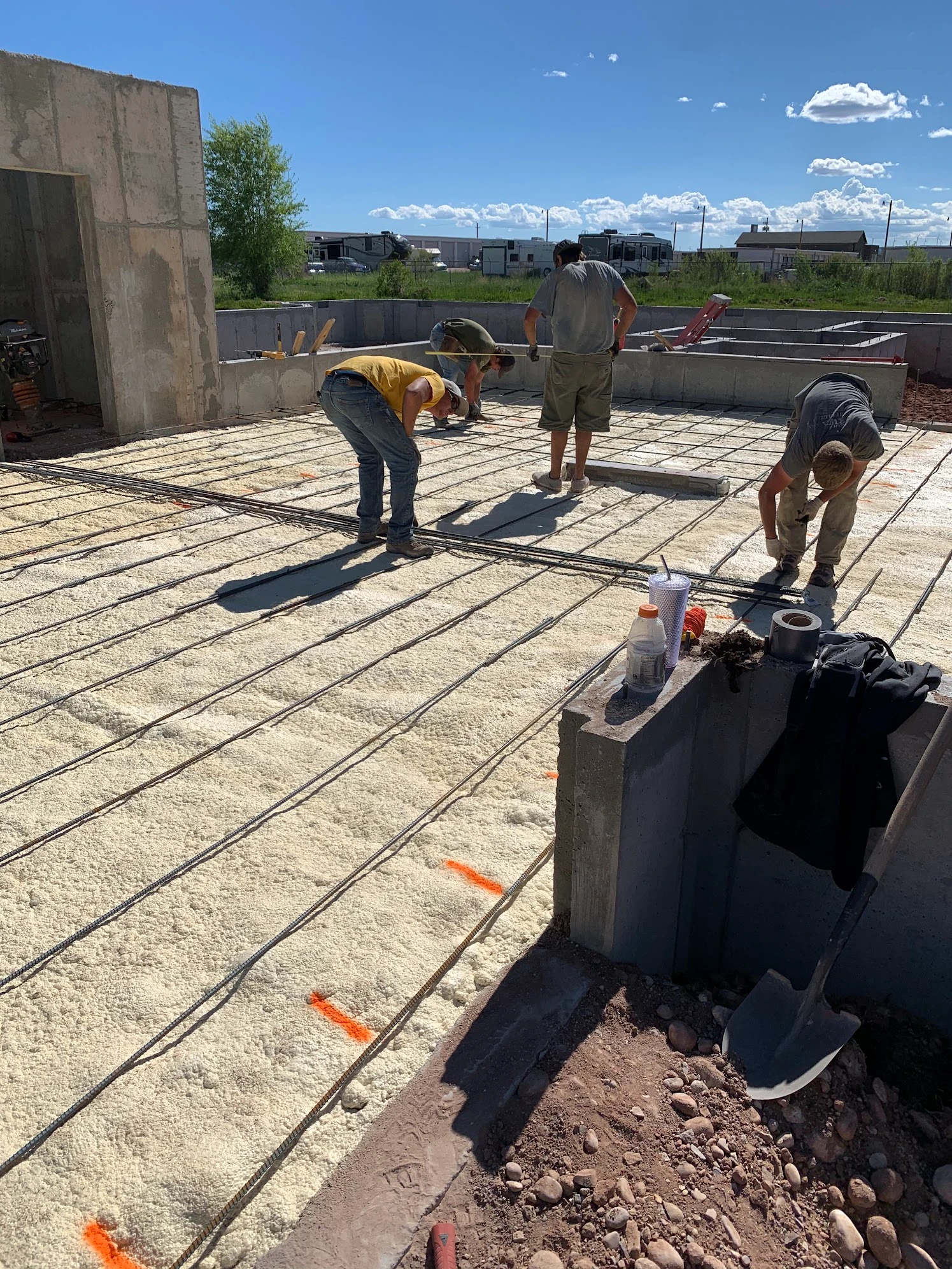
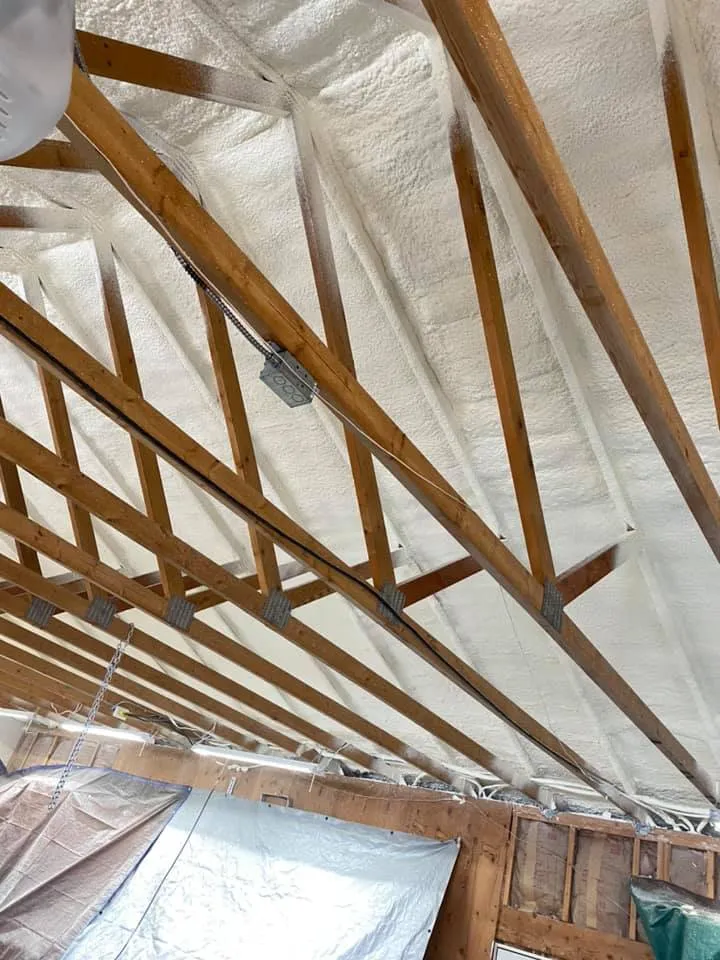
Builders in Victor, ID, are choosing spray foam insulation for new construction because it handles four control layers simultaneously: water, air, vapor, and heat. In a Climate Zone 6B environment where winter design temperatures hit 20°F below zero, a material that provides thermal resistance, an air barrier, and a Class II vapor retarder in a single application is not a luxury. It is a practical, code-driven necessity. Spray foam insulation contractors deliver that combination in a way fiberglass batts and blown cellulose simply cannot match on their own. The right product choice depends on the building assembly (walls, attics, crawlspaces, basements) and whether the project calls for the higher R-value per inch of closed-cell foam or the full-cavity fill advantage of open-cell foam. When applied by experienced professionals during the framing stage, spray foam creates a continuous sealed envelope that passes inspection and performs for decades. Working with a trusted insulation partner helps ensure the system is installed correctly from the start.
Teton County, which includes Victor, is classified as IECC Climate Zone 6B according to both the Idaho compliance guide and the Teton County Building Department. The county design checklist specifies a winter design temperature of 20°F below zero, a frost line depth of 32 inches, a ground-to-roof snow load of 85 psf at lower elevations, and a wind design speed of 115 mph. These conditions demand insulation and air sealing that go beyond the minimum in milder zones.
Per the Idaho IECC Compliance Guide, Climate Zone 6 residential buildings must meet the following prescriptive envelope requirements:
| Building Component | Minimum R-Value Requirement |
|---|---|
| Ceiling (uninsulated attic) | R-49 |
| Wood frame wall | R-22 or R-13 + R-5 continuous insulation |
| Floor over unconditioned space | R-30 |
| Basement wall | R-15 continuous or R-19 cavity |
| Crawl space wall | R-15 continuous or R-19 cavity |
| Slab on grade (heated) | R-10, 4 ft depth |
These are not optional targets. The Teton County Design Standards Checklist requires builders to indicate R-values for roof, walls, floors, crawlspaces, basement walls, and concrete slabs on every submitted plan. Failing to meet these thresholds means failed inspections and delayed schedules.
The fundamental advantage of spray foam is its ability to provide continuity across all four environmental control layers: water, air, vapor, and heat. According to Building Science Corporation’s Residential Spray Foam Guide, spray foam insulation has significant advantages over other insulation systems, specifically because of this continuity. When sprayed against framing, sheathing, and rim joists, the foam adheres to every surface and seals gaps that batts and rolls leave open.
Traditional insulation materials like fiberglass and cellulose rely on separate air sealing steps: caulk, tape, gaskets, and sealants applied at dozens of junctions. Spray foam combines insulation and air barrier into one pass. This matters because air leakage through a building envelope is one of the largest sources of energy loss. The U.S. Department of Energy identifies air sealing as a cost-effective way to reduce heating and cooling costs, improve durability, and create a healthier indoor environment.
Spray foam adheres directly to studs, plates, headers, rim joists, and sheathing. It expands into gaps around plumbing penetrations, electrical boxes, and framing intersections that caulk and tape often miss. This creates a continuous air barrier without additional materials. The Center for the Polyurethanes Industry notes that spray foam can form an air barrier without the use of additional products, and that air sealing a home in addition to maximizing R-value further improves energy performance, providing whole-home insulation protection that traditional materials cannot match.
In Climate Zone 6B, moisture control is a serious concern. Warm indoor air carries water vapor that will condense on cold surfaces inside wall and ceiling assemblies if not properly managed. Closed-cell spray foam qualifies as a Class II vapor retarder as defined by the International Residential Code, per the Center for the Polyurethanes Industry. This means it resists water vapor transmission without creating a complete vapor barrier that could trap moisture. Building Science Corporation recommends high-density closed-cell spray foam in IECC Climate Zones 5 and higher, specifically for its condensation control and vapor retarder properties.
Both foam types serve new construction, but they serve different assemblies and purposes. Builders in Victor need to understand the tradeoffs because the wrong choice can waste money or fail code.
| Property | Open-Cell Spray Foam | Closed-Cell Spray Foam |
|---|---|---|
| R-value per inch | Starting at 3.6 | Starting at 5.7 |
| 2×4 cavity full fill | R-13 (fills entire 3.5″ cavity) | R-20 (3″ typical, does not fill) |
| Air barrier | Yes | Yes |
| Vapor retarder | No (vapor permeable) | Yes (Class II at 1.5″+) |
| Density | Low | High (adds structural rigidity) |
| Best applications | Walls, vented attics, sound control | Rim joists, crawlspaces, conditioned attics, and basements |
As Fine Homebuilding has documented, closed-cell foam in a standard 2×4 wall does not fill the cavity because installers typically stop at about 3 inches to avoid difficult trimming. Open-cell foam fills the entire cavity and is easily trimmed flush with the studs. For walls in Victor’s climate, a hybrid approach using closed-cell spray foam for condensation control combined with another cavity insulation for full depth can deliver the best whole-wall performance.
Unvented conditioned attics are an excellent application for spray foam in Victor. When mechanical systems and ductwork are located in attic spaces, placing them inside conditioned space avoids the thermal penalty of vented attics in cold climates. Both foam types can be sprayed directly to the underside of the roof deck. Building Science Corporation notes that in Climate Zones 5 and higher, only high-density closed-cell spray foam should be used for unvented conditioned attics to provide the necessary condensation control.
Vented crawlspaces in Climate Zone 6B present moisture and air leakage problems. Building Science Corporation recommends that only high-density closed-cell spray foam be used on the floor framing above vented crawlspaces across all IECC climate zones. For basement foundation walls, spray foam can be applied directly to the interior of concrete walls, which avoids issues with exterior foam protection during construction and the life of the building.
Rim joist areas are among the most leaky parts of any building envelope. Spray foam seals each joist bay completely, addressing air infiltration at the critical junction between foundation and first floor framing. This is an area where traditional batt insulation fails to create an effective seal.
Spray foam is regulated through model building codes, including the International Residential Code and International Energy Conservation Code. The Center for the Polyurethanes Industry confirms that spray foam products meet fire resistance ratings and stringent flammability code requirements. Teton County requires air barrier verification as part of the building envelope inspection process. When spray foam is applied during framing, the air barrier is visible to inspectors before drywall conceals the work. This visibility can reduce the back-and-forth that occurs when hidden air sealing methods fail blower door testing at final inspection. Early coordination with builder spray foam services helps keep projects on schedule and minimizes costly delays.
The Idaho compliance guide requires duct leakage testing of no more than 4 CFM per 100 square feet of conditioned floor area. Spray foam used to seal around duct penetrations, register boots, and the ceiling plane directly supports passing this test.
| Project Type in Victor, ID | Recommended Foam Strategy | Rationale |
|---|---|---|
| Custom single-family home with conditioned attic | Closed-cell on roof deck (minimum per IRC Table R806.5) | Condensation control in Zone 6B protects mechanical systems in the attic |
| Production home with a vented attic | Closed-cell for ceiling plane air sealing + fiberglass/cellulose fill | Meets air barrier requirement cost-effectively, passes blower door |
| Home with crawlspace foundation | Closed-cell on floor framing, rim joist + crawlspace walls | Vapor retarder and air seal at the most critical junction |
| Basement foundation | Closed-cell on interior concrete walls | Avoids exterior foam damage, provides a Class II vapor retarder |
| Hybrid wall assembly | Closed-cell first 2-3 inches + open-cell or fiberglass fill | Combines vapor control with full cavity depth for better whole-wall R-value |
Not every insulation installer delivers the same results. Builders in Victor should evaluate spray foam contractors on these practical indicators:
High Country Solutions provides spray foam insulation services for new construction projects in Victor, ID, and surrounding areas. Our team works with builders to select the right foam type and application depth for each building assembly based on Climate Zone 6B requirements and the specific design of your project. Whether you need closed-cell spray foam for a conditioned attic assembly, open-cell foam for wall cavities, or a hybrid approach across multiple assemblies, we handle the full scope.
Request a Quote | Schedule a Consultation
Reach us at [email protected] or call (307) 248-9063 to discuss your next new construction insulation plan. We review plans, recommend the right approach, and show up ready to work within your build schedule.
Closed-cell spray foam is the better choice for most assemblies in Climate Zone 6B because it provides R-5.7 per inch and doubles as a Class II vapor retarder, which is critical for condensation control during cold winters.
Yes. Spray foam can satisfy R-value requirements for walls, floors, ceilings, and roofs in every climate zone, and it provides air barrier continuity that supports the air leakage testing required under Idaho’s adopted IECC standards.
Spray foam should be applied after framing, rough plumbing, and rough electrical are complete, but before interior drywall is hung. This allows the foam to seal penetrations directly and gives inspectors a visible air barrier.
Yes. Because spray foam creates a tight building envelope with low air leakage, heating and cooling loads are reduced. This can allow for smaller, more efficient HVAC equipment, which our team can coordinate with your mechanical contractor.
When installed by trained professionals following manufacturer guidelines, spray foam is safe for occupancy after the recommended curing and ventilation period. Proper installation includes protecting adjacent surfaces and ensuring adequate ventilation during application.