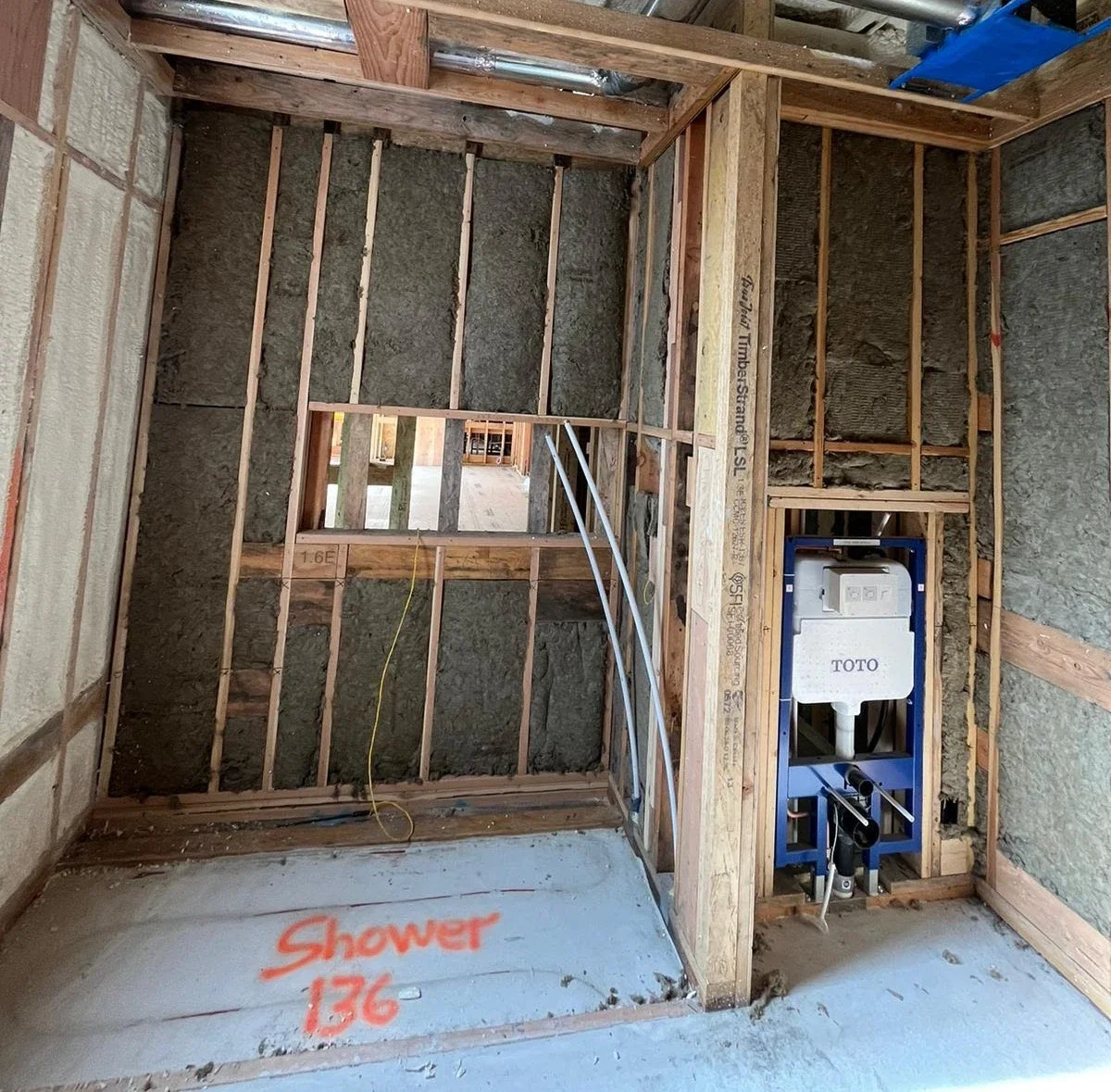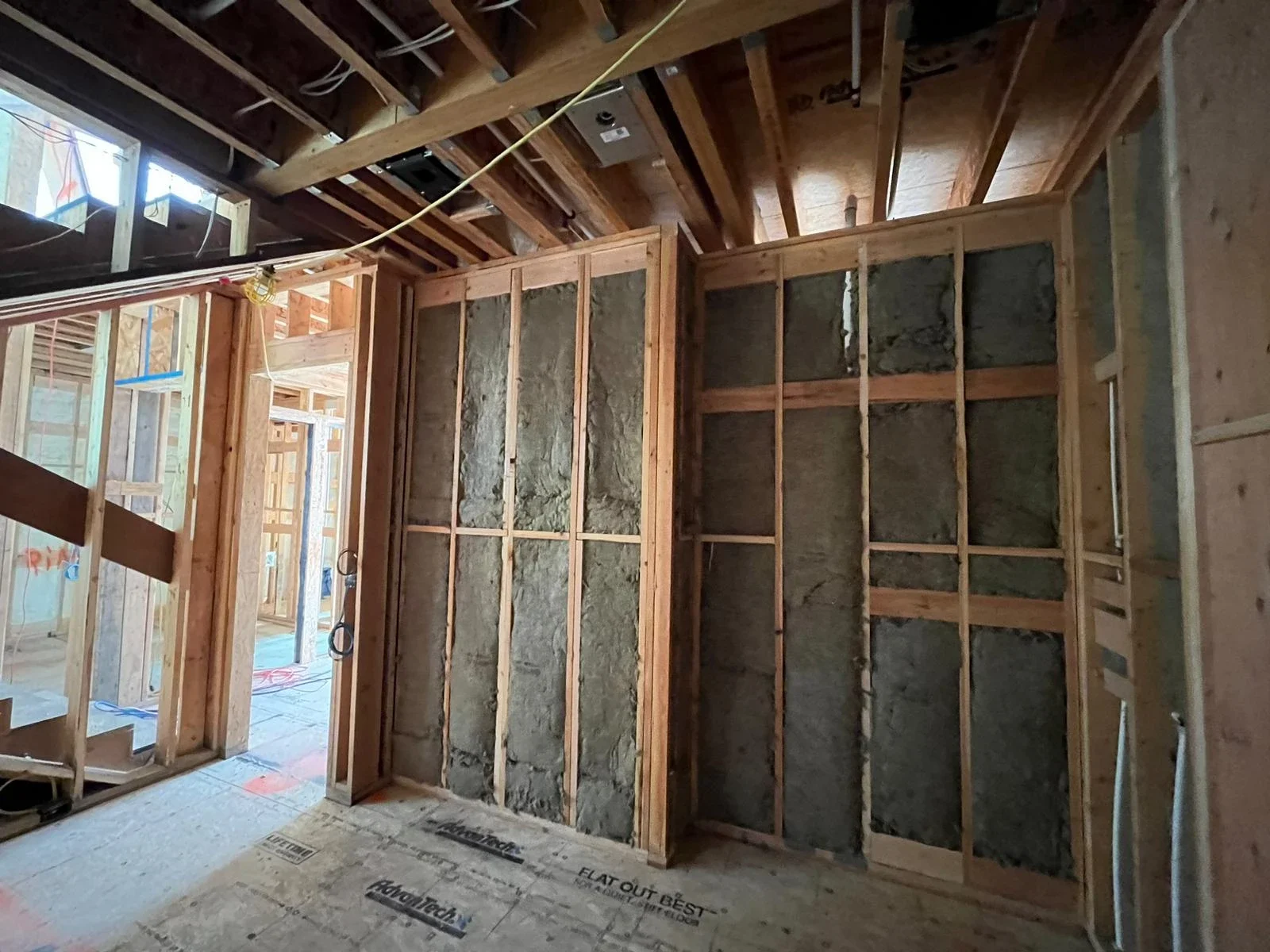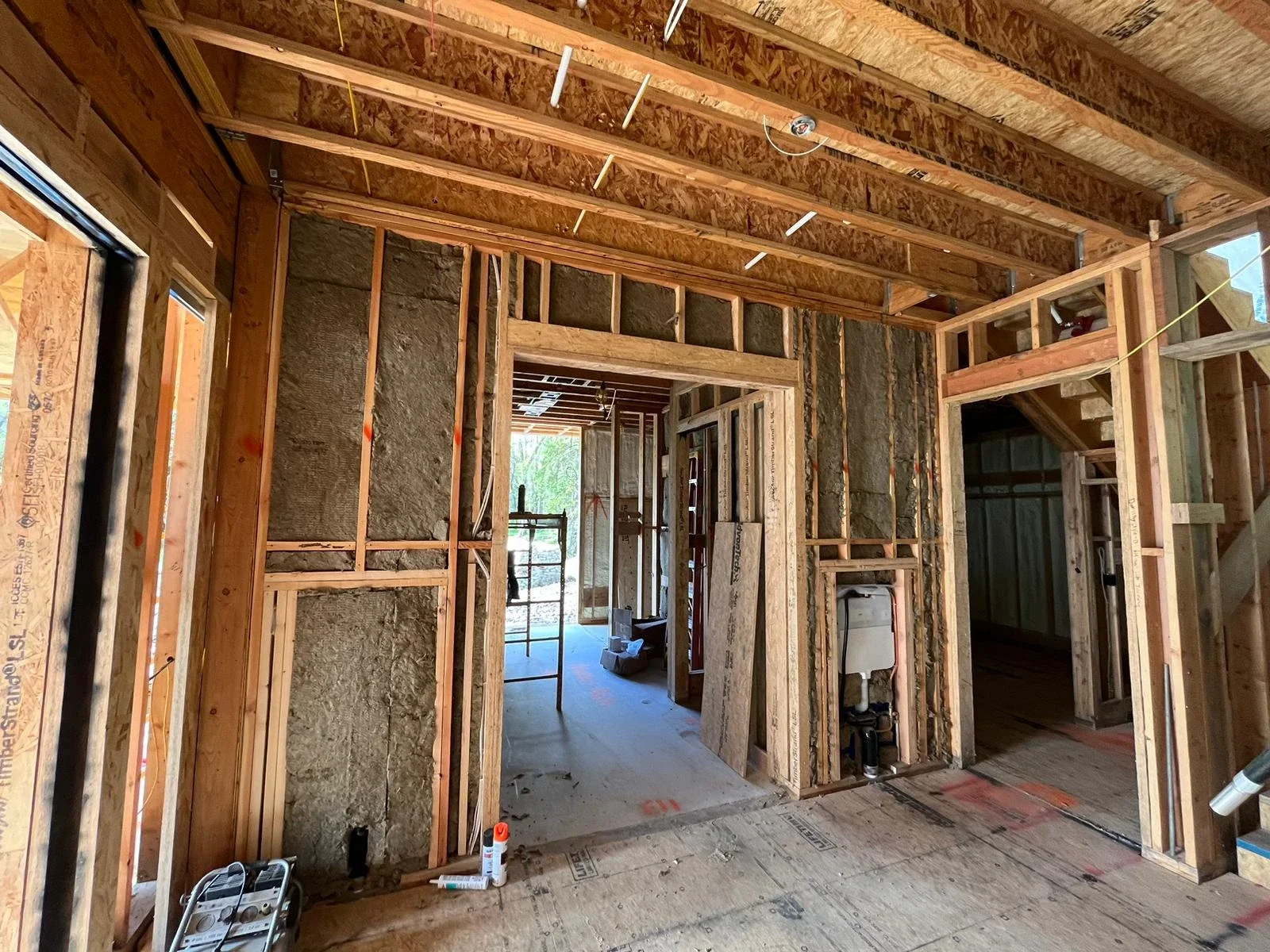
What Problems Can Mineral Wool Insulation Help Solve in Residential Buildings?
Quick answer: The main benefits of mineral wool insulation in a house come down to five problems: rooms that lose…


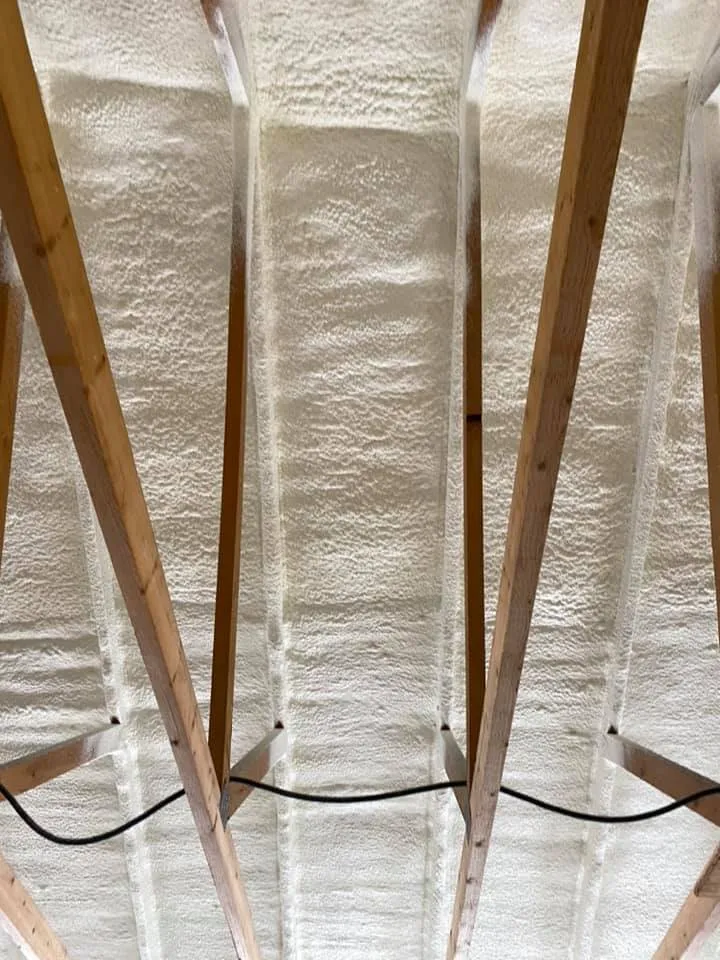
New builders in Victor, ID, are bringing spray foam insulation contractors into the planning phase of their projects rather than waiting until drywall is up and framing is closed in. The reasoning comes down to three realities that define building in Teton Valley: a cold, heating-dominated climate at 6,200 feet elevation, aggressive energy code requirements for Climate Zone 6, and a housing market under pressure to deliver performance and efficiency from day one. Spray foam insulation is the only material that functions simultaneously as a high R-value insulator, an air barrier, and a moisture barrier in a single application, which makes early coordination with an experienced builder insulation specialist essential to getting the building envelope right before problems get baked into the structure.
Victor has a warm-summer humid continental climate (Dfb), with average daily minimum temperatures dipping below 10°F from December through February, and mean daily highs only reaching the 80s in July, Wikipedia – Victor, Idaho. At an elevation of 6,217 feet, the heating season is long, and the heating load dominates energy consumption in every building. The Department of Energy classifies northern Idaho and the Intermountain West as “heating-dominated” climate zones, which means insulation decisions carry far more weight than in milder regions. DOE – Energy-Efficient Home Improvement Credit.
Under the Idaho Energy Conservation Code, Victor falls within Climate Zone 6. The prescriptive table in the code requires minimum ceiling insulation of R-49, wood frame wall insulation of R-22 or R-13 plus R-5 continuous insulation, floor insulation of R-30, and basement wall insulation of R-15 continuous or R-19 cavity. These are not optional guidelines. They are code requirements that every new build must satisfy, and the building must also pass a blower door test demonstrating no more than 3 air changes per hour at 50 Pascals of pressure.
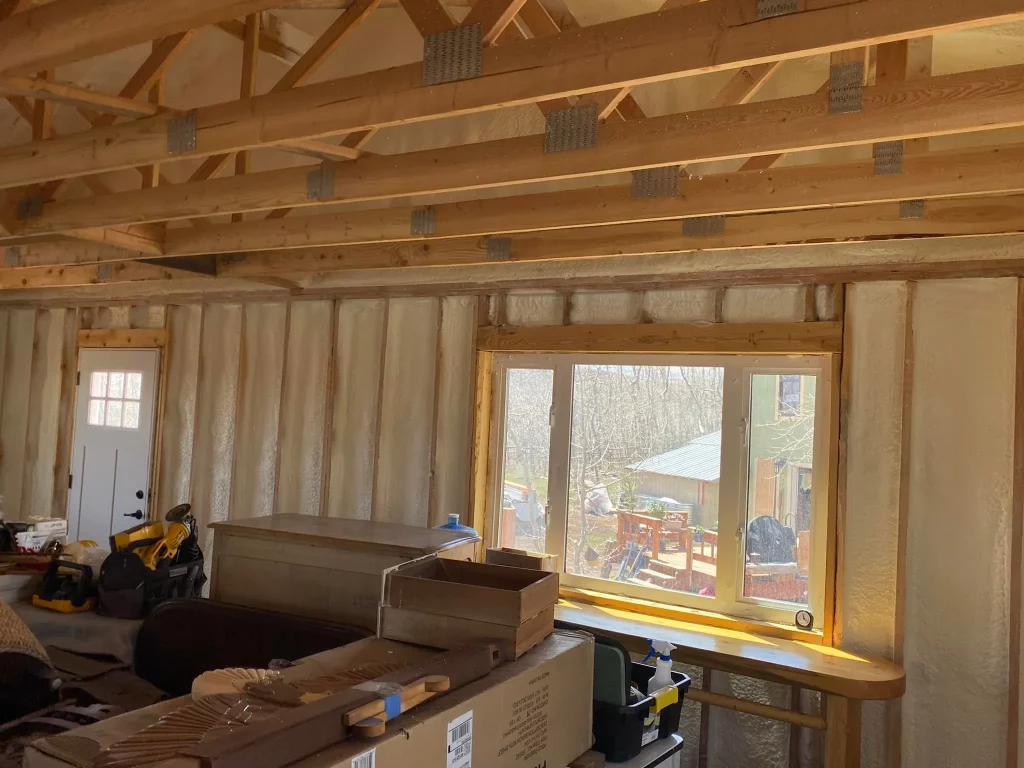
Meeting these targets with traditional batt insulation alone is difficult. Fiberglass and mineral wool batts leave gaps around framing, penetrations, and complex junctions. Spray foam expands into cavities and around obstructions, creating a continuous seal that traditional materials cannot match. This added layer of spray foam protection helps improve energy efficiency and long-term building durability.
The Idaho Energy Conservation Code specifies detailed air barrier and insulation installation criteria through Table R402.4.1.1. Every junction between the foundation and sill plate, every top plate connection at exterior walls, every rim joist, and every penetration through the building envelope must be sealed. UpCodes – Idaho IECC Chapter 4 RE. Spray foam addresses these requirements in a single pass because it expands to fill irregular spaces, bonds to framing and sheathing, and forms an air-impermeable layer.
The DOE reports that insulation solutions change depending on climate zone and that continuous insulation applied to the exterior of wall assemblies is one accepted method for meeting R-value requirements. Spray foam applied to wall cavities, rim joists, and attic surfaces provides a continuous thermal and air barrier without the need for separate tape, sealants, or rigid foam board at fasteners and joints.
Builders working in Victor also benefit from the performance compliance path. When spray foam creates a tighter envelope with higher effective R-values, the overall building performance model shows lower energy consumption, which makes it easier to pass the simulated performance alternative (Section R405 of the IECC) or the Energy Rating Index (ERI) path. This flexibility can reduce costs elsewhere in the build by allowing tradeoffs on fenestration U-factors or other envelope components.
Teton County’s population reached an estimated 13,254 in July 2025, representing 13.9% growth since the 2020 census, U.S. Census Bureau – Teton County QuickFacts. Victor itself has seen even faster growth, with estimates showing an 18.8% increase since 2020. The county issued 384 building permits in 2025 alone, reflecting the pressure to add housing stock quickly.
Local reporting confirms that Teton County needs approximately 1,580 new homes by 2027 to keep pace with growth, and at least 60% of those need to be priced below market rate. Workforce housing projects, including a 90-unit apartment development in Victor, are moving forward with state funding from Idaho Housing and Finance. These projects require careful cost management, and energy efficiency is not a luxury feature but a baseline expectation for buyers and renters evaluating the total cost of ownership.
For builders, this means a well-insulated home with spray foam delivers immediate monthly savings to owners. The EPA estimates that homeowners save an average of 15% on heating and cooling costs (or 11% on total energy costs) by air sealing their homes and adding insulation. ENERGY STAR – Why Seal and Insulate. In a climate where heating runs from October through April, that 15% translates into real dollars month after month.
Choosing between closed-cell and open-cell spray foam depends on the application, the R-value target, and moisture conditions. Our approach is to recommend based on the specific assembly and code requirements for each zone of the building.
| Factor | Closed Cell Spray Foam | Open Cell Spray Foam |
|---|---|---|
| R-value per inch | Approximately R-6 to R-7 | Approximately R-3 to R-4 |
| Air barrier | Yes, class II vapor retarder | Yes, but vapor permeable |
| Moisture resistance | High, resists water intrusion | Low, absorbs and retains moisture |
| Best applications | Rim joists, crawl spaces, basements, exterior walls, below grade | Interior wall cavities, attics, sound-dampening partitions |
| Structural benefit | Adds shear strength to wall assemblies | No structural contribution |
| Code advantage in CZ6 | Meets R-49 ceiling and R-22 wall targets with less thickness | May require greater thickness to meet the same R-value |
In Climate Zone 6, closed-cell spray foam is particularly effective in rim joist areas, crawl space walls, and basement rim conditions where moisture resistance is essential. Open cell performs well in large attic floor assemblies and interior partition walls where the goal is air sealing and sound control rather than vapor management.
Builders who wait until the framing stage to engage an insulation contractor often run into avoidable problems. Common issues include framing layouts that block spray foam access, missing headers that should have been insulated before closing, and HVAC duct routing that conflicts with planned foam application zones.
When our team gets involved during the planning phase, we can review framing plans, identify air barrier transition details, and flag potential trouble spots before the first wall goes up. This coordination saves time on the job site, eliminates the need for costly rework, and ensures the building envelope will perform as designed from the start.
Builders also gain scheduling flexibility. Spray foam application requires specific temperature and humidity conditions, and coordinating this with other trades is easier when the timeline is established early. In Victor, where the construction window is compressed by winter weather, efficient scheduling directly affects the bottom line. That is one reason many contractors rely on builder-focused spray foam services to keep projects moving efficiently.
Not every insulation contractor operates at the same level. Here are the indicators that separate a partner who adds value from one who just fills cavities:
Building in Victor, ID demands insulation that matches the demands of a high-altitude, cold-climate environment and a code framework that enforces strict envelope performance. Our team at High Country Solutions brings early planning coordination, code expertise, and hands-on application experience to every new construction project we partner on. Whether you are framing up a custom home, a multi-unit workforce housing development, or a commercial building, we help you get the building envelope right the first time.
Request a Quote | [email protected] | (307) 248-9063
Request a Quote Schedule a Planning Consultation
Victor is in Climate Zone 6 under the Idaho Energy Conservation Code, which requires minimum R-49 ceiling insulation, R-22 or R-13 plus R-5 continuous wall insulation, and a blower door test result of 3 air changes per hour or less.
Ideally, during the planning or design phase, before framing begins. Early involvement allows the insulation contractor to review plans, identify air barrier details, and prevent costly conflicts with other trades.
Yes. Because spray foam creates a tighter building envelope with less air infiltration, heating and cooling loads drop, which can allow HVAC equipment to be sized smaller without sacrificing comfort.
Spray foam provides both insulation and air sealing in one application, expanding to fill gaps around framing and penetrations. Fiberglass batts insulate but do not seal air leaks, which means separate air barrier work is required to meet code.
Closed-cell spray foam offers a higher R-value per inch, acts as a vapor retarder, and adds structural rigidity. Open-cell spray foam provides air sealing and sound dampening at a lower material cost but is vapor permeable.