What Problems Can Mineral Wool Insulation Help Solve in Residential Buildings?
Quick answer: The main mineral wool insulation benefits in a house come down to five problems: rooms that lose heat…


Quick answer: In the mineral wool vs fiberglass insulation debate, mineral wool usually wins on fire resistance, moisture handling, sound control, and getting a tight fit. Fiberglass wins on price, weight, and availability. Pick fiberglass for deep attic floors and tight budgets. Pick mineral wool for walls, basements, and rooms where noise or fire safety matter most.
TL;DR
Both are fibers spun from molten minerals and sold as batts, rolls, and blown-in loose fill. The raw material is what sets them apart.
Mineral wool insulation is spun from basalt rock or steel-mill slag. According to the DOE, most fiberglass products contain 40% to 60% recycled glass, and mineral wool is usually made with about 75% post-industrial recycled content. Fiberglass insulation is spun from molten glass. You’ll often hear “Rockwool” used for all mineral wool, but that’s a brand name.
These are the points homeowners ask about most. The numbers are typical for standard home batts, so always check the label on the exact product.
| Factor | Mineral Wool | Fiberglass |
|---|---|---|
| 2×4 wall | R-15 | R-13 (R-15 high-density) |
| 2×6 wall | R-23 | R-19 to R-21 |
| Heat tolerance | About 2,150°F | About 1,100°F |
| Liquid water | Sheds it | Can soak it up |
| Facing | Unfaced | Faced or unfaced |
| Weight | Heavier | Lighter |
| Price | Higher | Lower |
| In stock | Sometimes special order | Almost everywhere |
Spec sheets only tell part of the story. Here’s what each difference means for your comfort, safety, and wallet.
One manufacturer that makes both products rates its mineral wool batt at R-15 and its fiberglass batt at R-13 at the same 3.5-inch thickness. You can special-order high-density R-15 fiberglass batts, though.
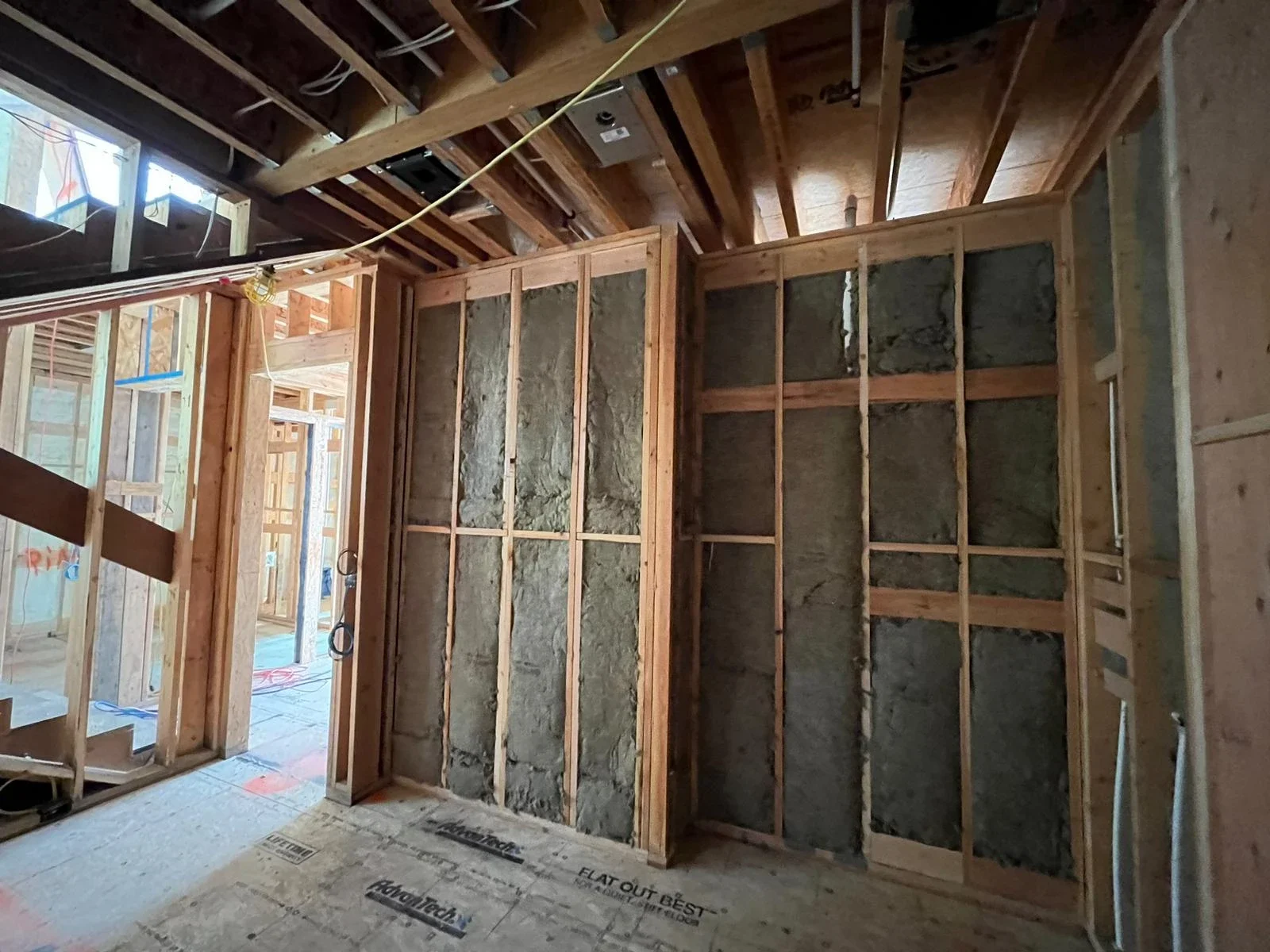
The bigger real-world gap is fit. Mineral wool is stiff, friction-fits between studs, and cuts cleanly around outlets. Fiberglass squishes and gaps easily. The U.S. Department of Energy says an insulation’s real thermal performance depends heavily on proper installation, and gaps mean cold spots and higher heating bills.
Unfaced fiberglass and unfaced mineral wool are both noncombustible, but mineral wool has a much higher melting point. ROCKWOOL’s product literature lists its stone wool at about 2,150°F versus roughly 1,112°F for fiberglass. Other sources put fiberglass anywhere from about 1,000°F to 1,200°F, so treat that number as a range.
Keep in mind that kraft paper facing on fiberglass can burn. It needs to be covered, not left exposed.
Mineral wool repels liquid water and won’t feed mold. ROCKWOOL reports its Comfortbatt passes the ASTM C1338 fungi resistance test and scores 0 for both flame spread and smoke development.
Neither material stops air or vapor on its own, though. If your insulation is getting wet, you leak to fix no matter which one you choose.
Denser mineral wool soaks up a bit more sound. Still, one manufacturer admits the acoustic difference inside a closed wall cavity is so small most people couldn’t hear it. For a bedroom or bathroom wall, it’s a fair upgrade, but don’t expect it to soundproof a room by itself.
For very high attic R-values like R-49, mineral wool gets heavy enough on ceiling drywall that fiberglass is often the better choice. Mineral wool can still go overhead. ROCKWOOL now sells Comfortbatt in a 9.5-inch R-38 option for attics and cathedral ceilings, which older comparison articles miss.
Mineral wool costs more per square foot, and prices shift by region and season. As an example, one homeowner on a building forum reported quotes of about $10,000 for fiberglass and $16,000 for rockwool on the same project. The DOE also warns that contractor quotes for the same R-value can differ by more than a factor of two, so get several written estimates.
Health worries come up a lot, partly because of old cancer warning labels on fiberglass. The current science is more reassuring than many people expect.
The EPA notes that IARC classifies glass wool, rock wool, and slag wool as Group 3, meaning not classifiable as to their carcinogenicity to humans. Both can still irritate your skin, eyes and throat during installation, so wear gloves, long sleeves, goggles and a dust mask.
On environmental impact, opinions clash. Some forum users say mineral wool production is more energy-heavy, while a Green Building Advisor contributor described the two as having similar embodied carbon. Reliable side-by-side data was not found.
If you searched “best insulation mineral wool or fiberglass,” the honest answer depends on the room. Here’s how we’d break it down.
Run through this list before you buy a single bundle. It’ll save you from the most common mistakes.
Still weighing fiberglass vs mineral wool insulation for your walls, attic, or basement? High Country Solutions offers free quotes and can help you match the material to your home, your goals, and your budget. Call (307) 248-9063 or email [email protected] to get started.
It can be. Contact with mineral wool can cause itching or even a mild rash, much like fiberglass. Wear protective gear with either one.
Often yes for walls, basements, and noise-sensitive rooms. One pro’s view on Green Building Advisor: if your installer can do a top-grade fiberglass install, skip the mineral wool.
Johns Manville says its bonded glass fibers won’t slump, settle, or break down in normal wall applications. Problems usually come from poor fit or water leaks.
Mineral wool batts come unfaced, so if you need vapor control, you’ll add a separate barrier, while faced fiberglass has one built in. Your climate and local code decide whether you need one.
No. High Country Solutions offers free quotes, so you can find out which material fits your home and budget before you commit. Call (307) 248-9063 or email [email protected] to request yours.