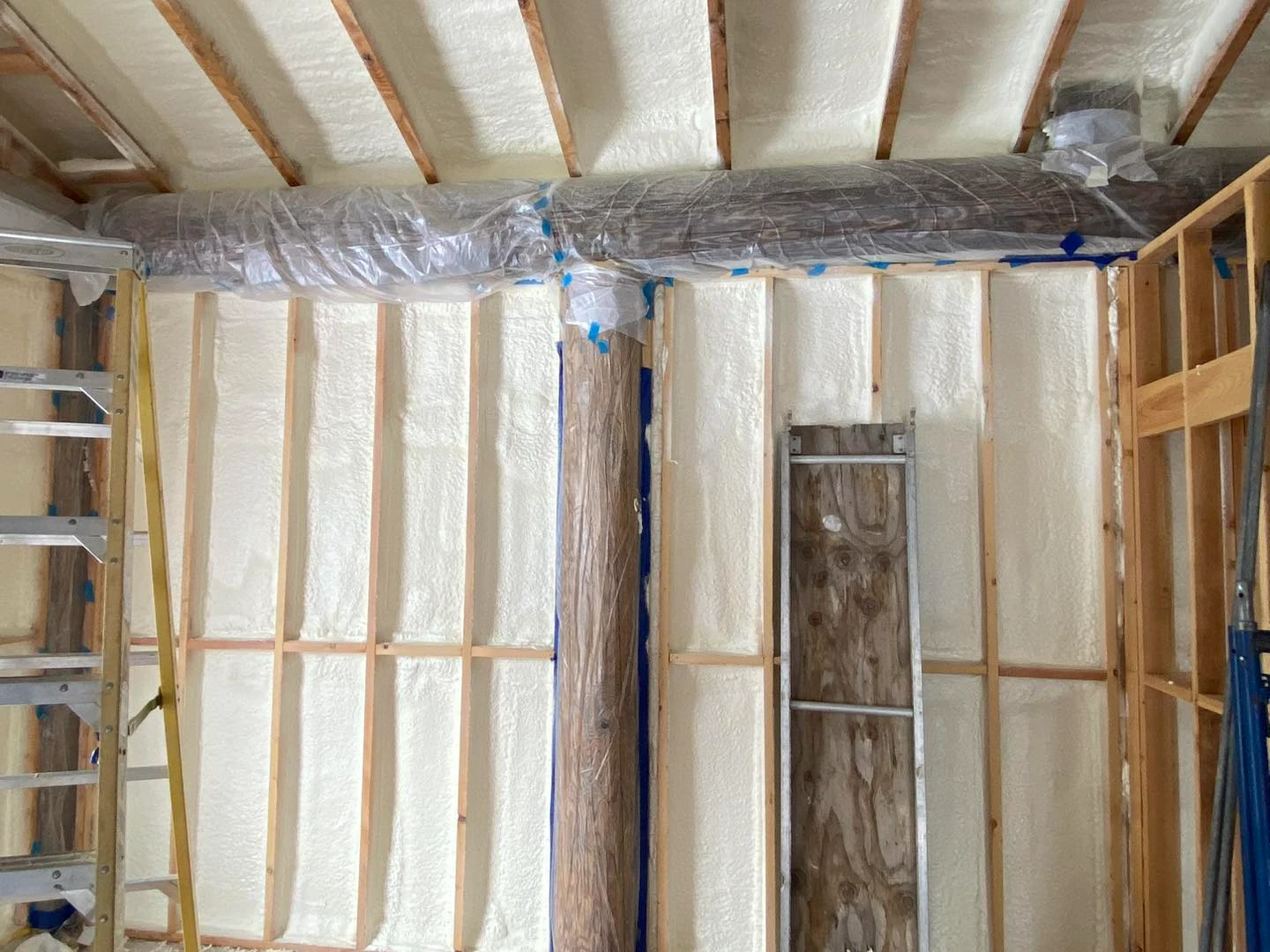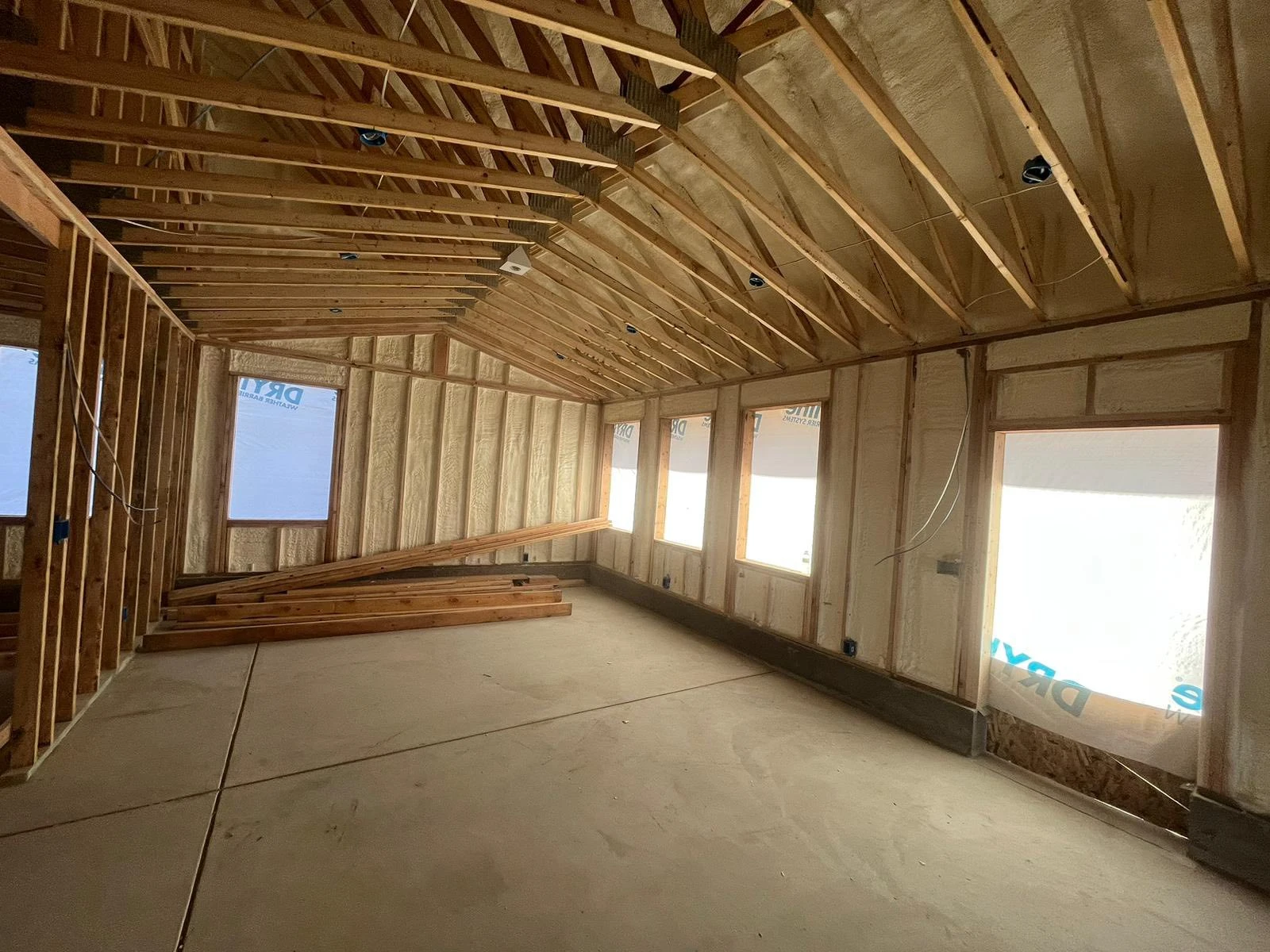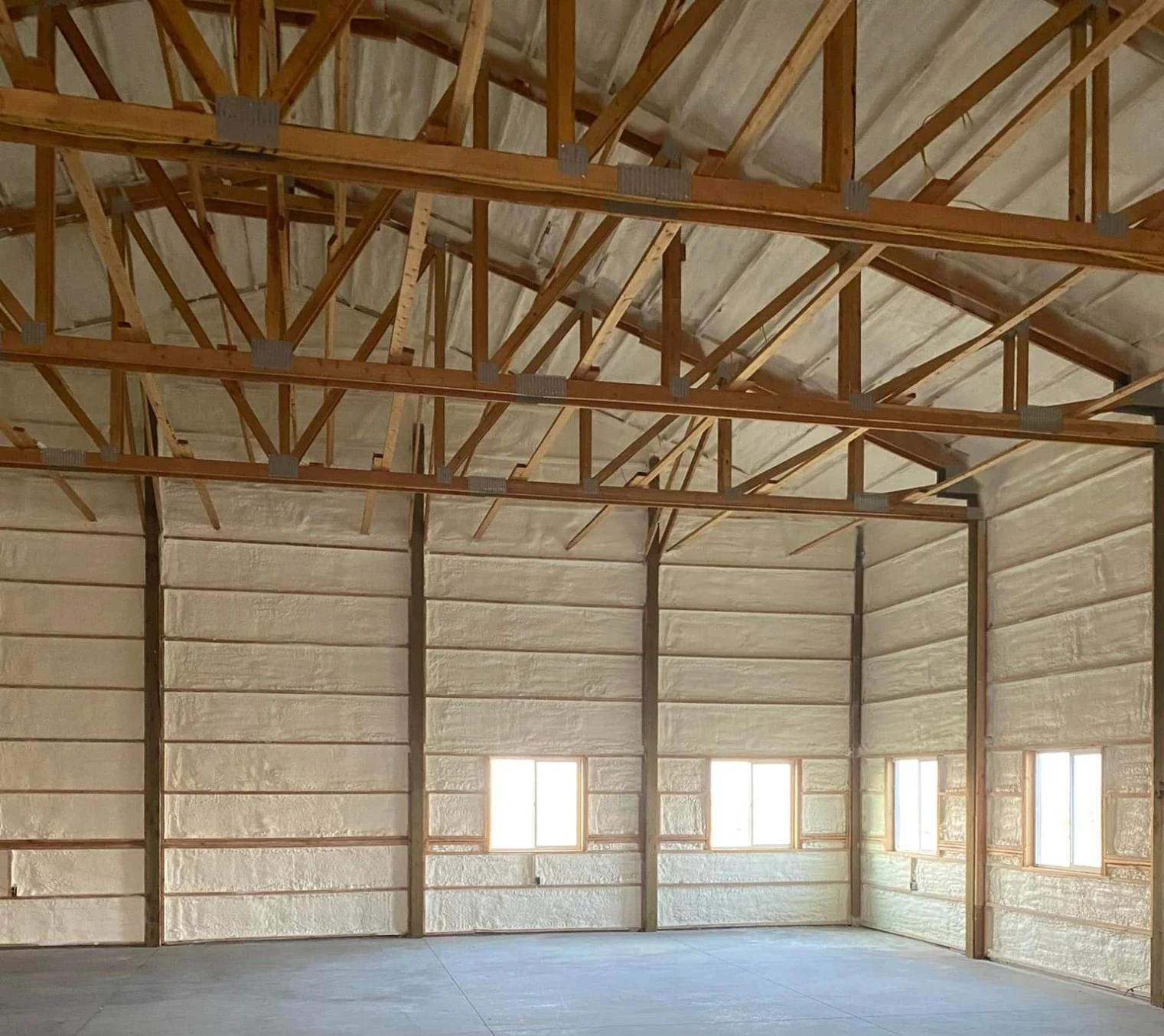
Insulated vs Uninsulated Walls: How Big Is the Energy Difference?
The energy difference between insulated and uninsulated walls is substantial, typically ranging from 30% to over 50% in heating and…


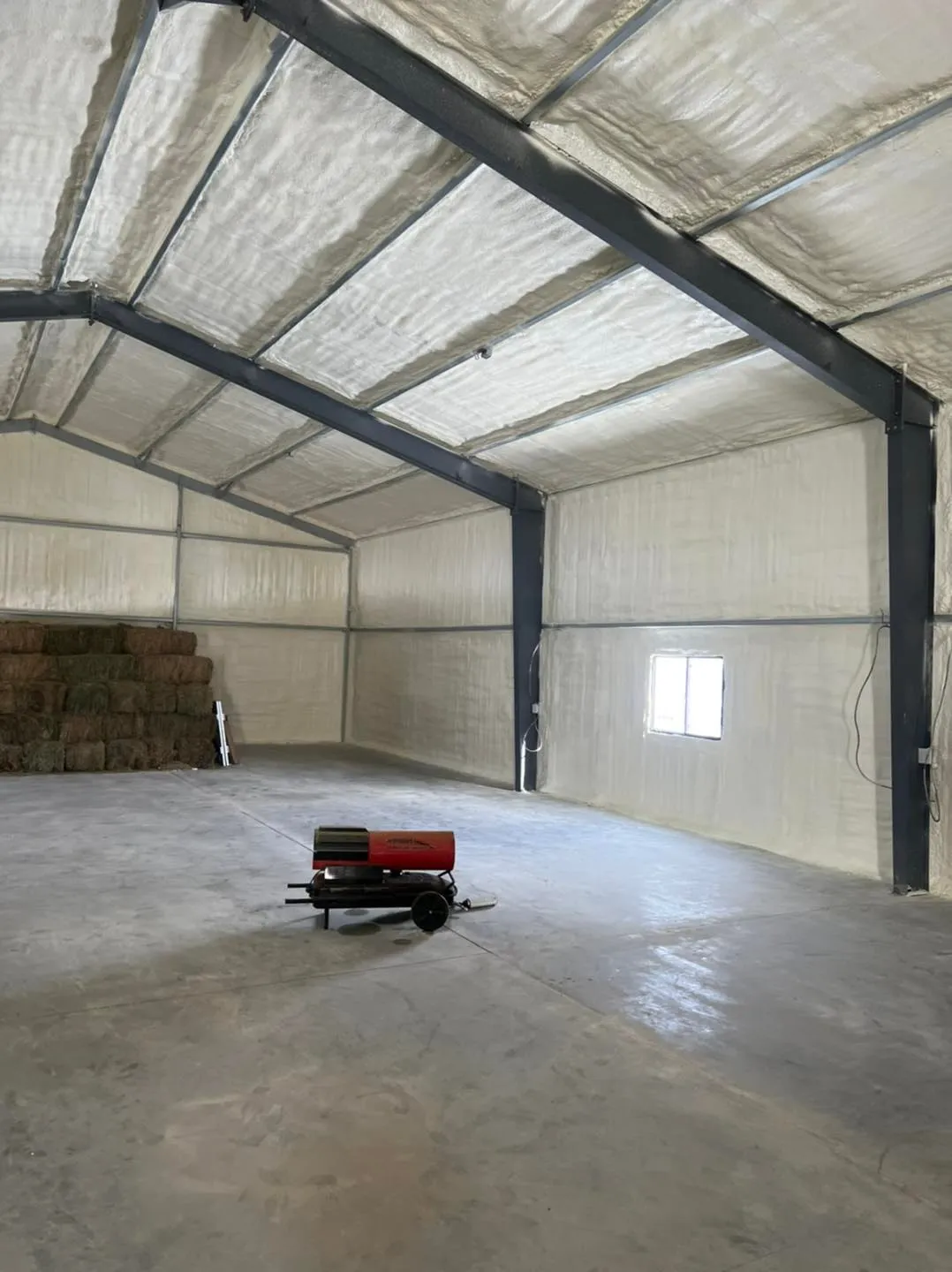
Commercial spray foam pays for itself through significant reductions in heating and cooling costs, extended building lifespans, and substantial tax incentives. Unlike traditional repairs, which act as recurring expenses to fix immediate problems, Spray Polyurethane Foam (SPF) serves as a capital improvement that lowers operating costs (OpEx) from the moment of installation. For business owners and facility managers, the shift in perspective from “repair cost” to “asset performance” reveals the true financial capability of this material.
High Country Solutions approaches this topic with years of field experience, analyzing how building envelopes fail and how modern chemistry permanently fixes those failures. The data indicates that treating insulation and roofing as a long-term financial strategy rather than a maintenance line item yields a higher Return on Investment (ROI) and secures the company’s physical assets.
The primary driver of ROI with spray foam is the immediate reduction in energy demand. Most commercial buildings bleed revenue through air leaks. The U.S. Department of Energy estimates that air leakage accounts for a significant portion of the heating and cooling energy used in buildings. Traditional insulation materials like fiberglass or cellulose might offer thermal resistance, but they do not stop air movement.
Spray foam provides both a high R-value (thermal resistance) and a complete air seal. When applied, the foam expands to fill cracks, gaps, and crevices that rigid boards or rolled batts miss. This creates a monolithic thermal envelope. By preventing conditioned air from escaping and outside air from entering, HVAC systems run less often and at lower intensity.
Market data support these operational savings. According to the Spray Polyurethane Foam Alliance, applying SPF roofing systems can reduce building energy costs by up to 50% in certain climates. This drastic cut in monthly overhead frees up capital that businesses can reinvest elsewhere.
Metal buildings and structures with steel studs are prone to thermal bridging, where heat travels easily through conductive materials, bypassing insulation. SPF covers these bridges completely. This continuous layer prevents energy transfer that typically undermines the efficiency of other insulation systems.
Bonus Tip: Request an energy audit before installation. Establishing a baseline for current energy consumption helps in calculating accurate ROI projections post-installation.
The financial argument for spray foam is strengthened by analyzing the current tax code. Governments incentivize energy-efficient upgrades, effectively subsidizing the cost of the “investment.” The Inflation Reduction Act has updated Section 179D, the Energy Efficient Commercial Buildings Deduction.
Information detailed by the Office of Energy Efficiency & Renewable Energy explains that building owners can claim significant deductions for installing energy-efficient systems, including building envelopes. By meeting specific energy-reduction targets, the project’s cost becomes a tax advantage rather than a simple expense.
Furthermore, because spray foam roofing is often classified as “maintenance” or “restoration” rather than a complete roof replacement (a capital improvement), it may qualify for immediate expensing under Section 179 rather than depreciation over 39 years. This allows businesses to write off the entire project cost in the tax year it was completed.
An actual investment continues to pay dividends over time. Traditional roofing systems like Built-Up Roofing (BUR) or single-ply membranes (TPO/EPDM) have distinct lifecycles that end in expensive tear-offs and replacements. SPF systems offer renewable lifecycles.
When an SPF roof nears the end of its warranty period (typically 10 to 20 years), it does not need to be removed. It simply requires cleaning and a new top coat of silicone or acrylic. This recoating process costs a fraction of a new roof and extends the warranty for another decade or more.
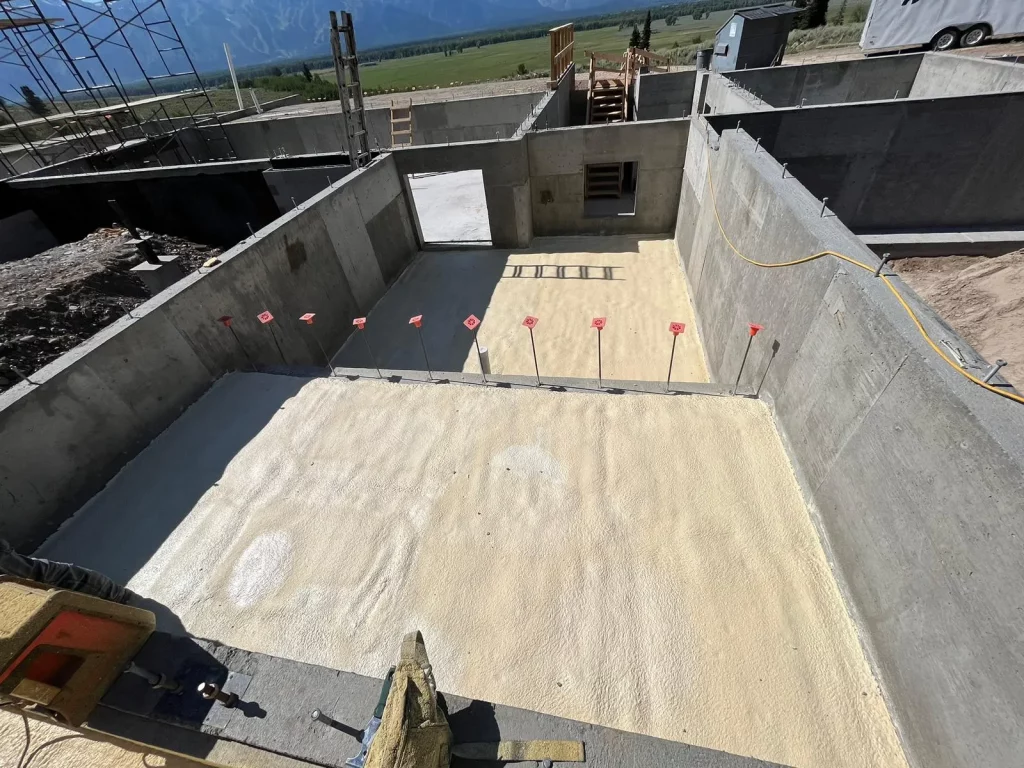
The following table compares SPF with other common commercial materials in terms of longevity and thermal performance.
| Feature | Spray Polyurethane Foam (SPF) | TPO / EPDM (Single-Ply) | Metal Roof (Uninsulated) |
|---|---|---|---|
| Air Sealing | Excellent (100% Adhesion) | Moderate (Seams can fail) | Poor (Overlap gaps) |
| R-Value per Inch | ~6.5 | ~5.5 (if insulated below) | ~0 (Conductive) |
| Waterproofing | Seamless / Self-Flashing | Seamed (Leak prone) | Fastener / Seam reliance |
| Maintenance Strategy | Recoat and Renew | Patch or Replace | Coat or Replace |
| Sustainability | Low Waste (No Tear-off) | High Waste (Landfill) | Recyclable |
Beyond thermal benefits, spray foam physically strengthens the building. Closed-cell spray foam is dense and rigid. The Federal Emergency Management Agency (FEMA) notes in technical fact sheets that spray foam insulation can significantly increase a building’s racking strength (resistance to wind loads).
By adhering directly to the substrate, SPF glues the building assembly together. For commercial buildings in high-wind areas, this added durability acts as an insurance policy against storm damage. Protecting inventory and equipment from water intrusion or structural failure is an indirect financial benefit that risk managers value highly.
While the financial case is strong, specific operational factors determine if SPF is the right fit for a facility.
Bonus Tip: Verify the foam density being quoted. Roofing applications require high-density closed-cell foam (typically 2.7 to 3.0 lbs) to withstand foot traffic and hail.
An SPF roof can last indefinitely if properly maintained. The foam itself does not degrade unless exposed to UV light. The protective silicone or acrylic coating blocks UV rays. By recoating this top layer every 10-20 years, the underlying foam remains protected and functional for the life of the building.
Yes. Modern spray foams use blowing agents with low Global Warming Potential (GWP). Additionally, SPF systems prevent tons of roofing waste from entering landfills by eliminating the need for tear-offs. The energy reduction it provides also lowers the building’s overall carbon footprint.
Closed-cell roofing foam is dense and can withstand regular maintenance foot traffic. It creates a hard, durable surface. In areas with heavy daily traffic (such as around HVAC units), installers can create designated walkways with extra granules or reinforcement to provide added protection.
No, it actually simplifies leak detection. Because the foam is monolithic and fully adhered to the deck, water cannot travel laterally underneath it. If a puncture occurs, the leak inside the building will be directly below the roof damage, making repairs quick and targeted.
Viewing commercial spray foam as an investment rather than an expense shifts a facility’s financial trajectory. The combination of aggressive energy savings, tax advantages through Section 179 and 179D, and the ability to renew the roof indefinitely creates a compounding return on capital. It turns the building envelope into a high-performance system that pays the owner back. Business leaders should evaluate their current energy waste and maintenance cycles to determine if their building is a liability or an optimized asset.
High Country Solutions is ready to help you analyze the numbers and determine if an SPF system aligns with your financial goals. Contact us to discuss your building’s specific needs and potential ROI. You can reach the team directly at (307) 248-9063 or send project details to [email protected]. Stop paying for energy loss and start investing in a permanent solution.