
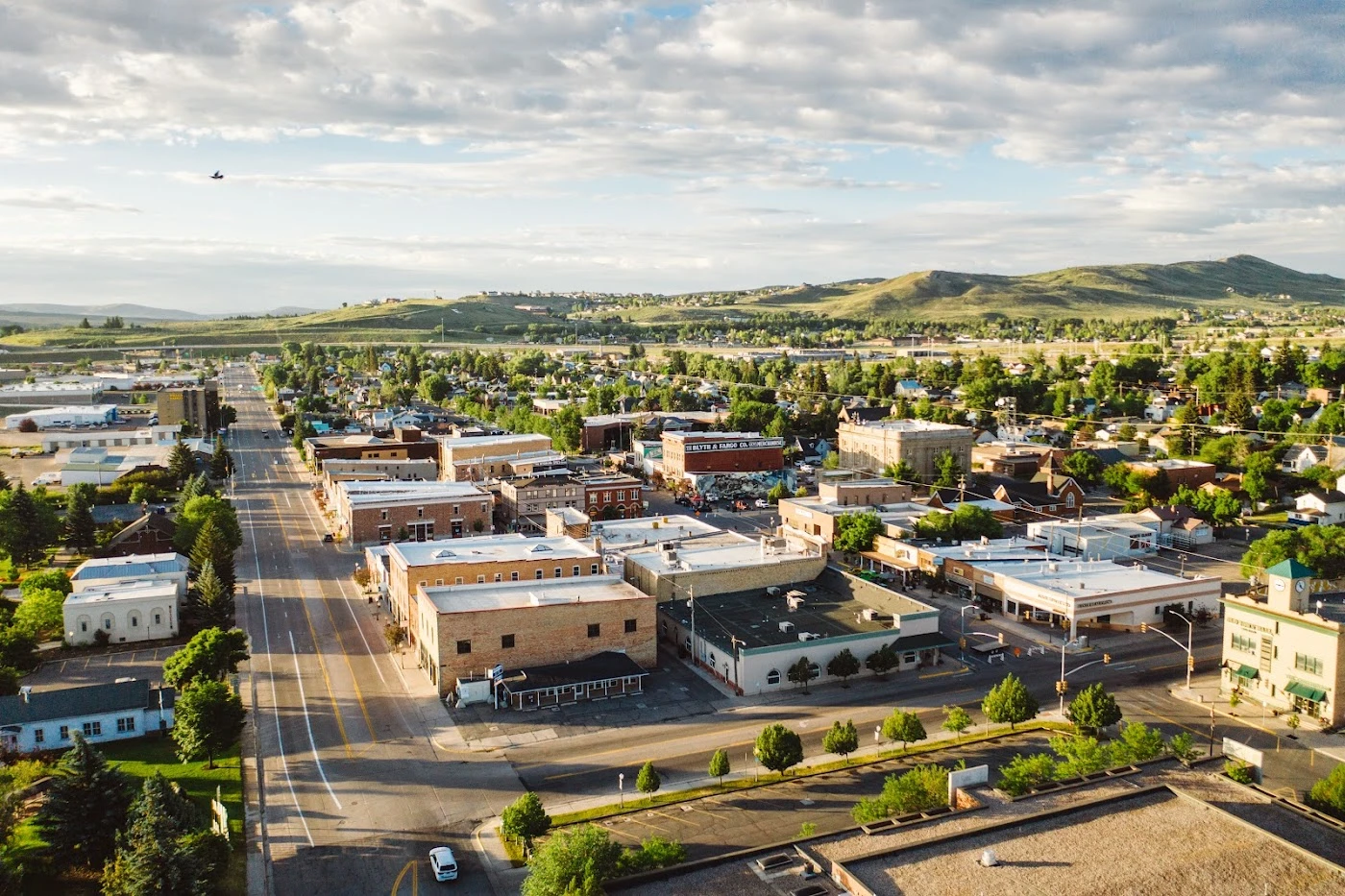
Evanston sits along the Bear River in southwestern Wyoming, founded in the late 1860s during the construction of the First Transcontinental Railroad. The city grew quickly as a railroad hub and supply center, and it still carries that proud pioneer spirit today with a historic downtown district lined with buildings that date back more than a century. Residents here know what it means to endure long, cold winters where temperatures regularly drop well below freezing for months on end, and that hard-earned resilience shows up in every aspect of community life.
Beyond its railroad heritage, Evanston is known for nearby attractions like the Bear River State Park, where elk and bison roam freely just minutes from downtown, and the Uinta Mountains to the south offer world-class fishing, hiking, and camping. With a population of around 12,000, it is the largest city in Uinta County and serves as a regional center for commerce, healthcare, and education. The local economy has diversified well beyond its railroad roots, but the harsh high-altitude climate remains a constant challenge for homeowners trying to keep their properties comfortable and energy efficient through every season.
When frigid winds sweep off the Uintas and rattle against your walls, you need more than basic fiberglass batting to hold back the cold. Open-Cell Spray Foam Insulation from High Country Solution seals every gap, crack, and hidden air leak in your walls and ceilings, creating a continuous thermal barrier that keeps your Evanston home warm without overworking your furnace. Our approach protects your family's comfort, cuts your energy bills, and blocks moisture buildup that leads to mold and structural damage in Wyoming's demanding climate.
Open-cell foam expands to fill cavities completely, leaving no voids or weak spots where air can sneak through. This stops drafts dead, keeps temperatures even across every room, and takes the load off your heating and cooling system.
According to the U.S. Department of Energy, proper air sealing and insulation can reduce home energy costs by an average of 15% (energy.gov). Our Open-Cell Spray Foam Insulation delivers those savings while doubling as a sound barrier that muffles noise between rooms and from outside.
We start by inspecting your attic, walls, and crawl spaces to pinpoint exactly where air is leaking and where insulation is falling short. Then we mask off surfaces and apply the foam with precision equipment that guarantees full coverage and proper expansion.
Every project we handle in Evanston receives the same careful approach, whether it is a new build, an older home retrofit, or a pole barn needing insulation. Our crews follow manufacturer specs for thickness so the foam performs exactly as designed for the long haul.
|
Application Area |
Recommended Thickness |
Primary Benefit |
|---|---|---|
|
Exterior Walls |
3.5 to 5.5 inches |
Air sealing and sound dampening |
|
Attic Ceilings |
5.5 to 8 inches |
Thermal resistance and draft prevention |
|
Interior Partition Walls |
3.5 inches |
Sound control between rooms |
|
Crawlspace Ceilings |
3.5 to 5.5 inches |
Moisture barrier and air sealing |
Common Applications
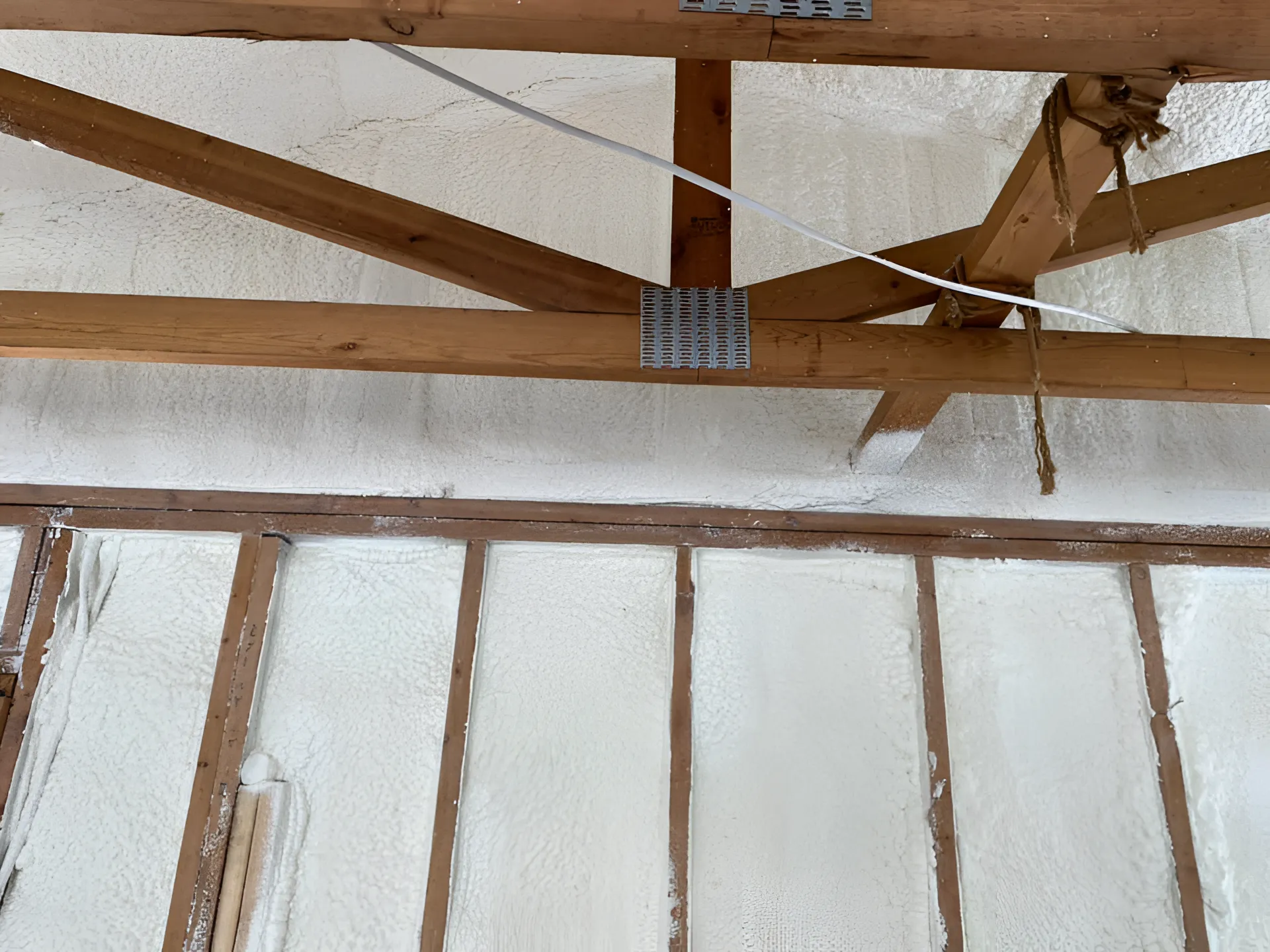
Fiberglass batts leave gaps around framing and sag over time, while blown cellulose settles and loses R-value. Open-Cell Spray Foam Insulation bonds to every surface it contacts, so it holds its performance year after year without shifting or degrading.
The EPA estimates that upgrading insulation in under-insulated homes saves roughly 10-15% on total energy costs (epa.gov). Unlike rigid boards or dense-packed cellulose, open-cell foam lets moisture vapor pass through slowly, which keeps condensation from rotting wood or feeding mold behind your walls.
General Polyurethane Foam Types
Evanston's elevation of roughly 6,700 feet brings thin air, intense summer sun, and winters that stretch on for months with temperatures often plunging well below zero. Older homes here frequently have nothing more than a thin layer of fiberglass in the attic and no air sealing at all in the wall cavities, which explains why so many residents put up with cold spots, high utility bills, and ice dams forming along their roof edges every winter.
Our experience working across Evanston means we know the building styles common here, from railroad-era houses with balloon framing to newer subdivisions built in the last twenty years. We can spot the areas most vulnerable to air leakage in these specific structures and apply Open-Cell Spray Foam Insulation, where it will make the biggest difference in both comfort and monthly energy costs for the homeowner.
A homeowner on Evanston's north side was spending over $350 a month heating a 1,800-square-foot ranch house with drafty walls and an under-insulated attic. We applied Open-Cell Spray Foam Insulation to the exterior walls and attic ceiling, and by the following winter, their heating costs dropped to around $190 per month with noticeably even temperatures throughout the house.
If your home is losing heat, your energy bills keep climbing, or you are tired of cold rooms that never feel comfortable, call us at (307) 248-9063 or email [email protected] to schedule a free consultation. High Country Solution will assess your property and deliver an insulation solution that actually works.
When installed correctly, it lasts the lifetime of the building without settling or losing its insulating properties.
Once cured, the foam is completely inert and non-toxic, and during installation, we use proper ventilation and protective equipment.
Yes, we can retrofit open-cell foam into existing wall cavities and attics without tearing out drywall in most cases.
Open-cell foam is less dense, more flexible, and lower in cost per inch, making it better suited for interior walls and attics where maximum R-value per inch is not required.
Its open-cell structure absorbs sound waves effectively, making it a strong choice for reducing noise between rooms and from outside.