Why ventilation is a critical partner to your insulation system in Idaho Falls, ID
Ventilation and insulation work as an essential team in Idaho Falls homes, where insulation keeps heat in during winter and…


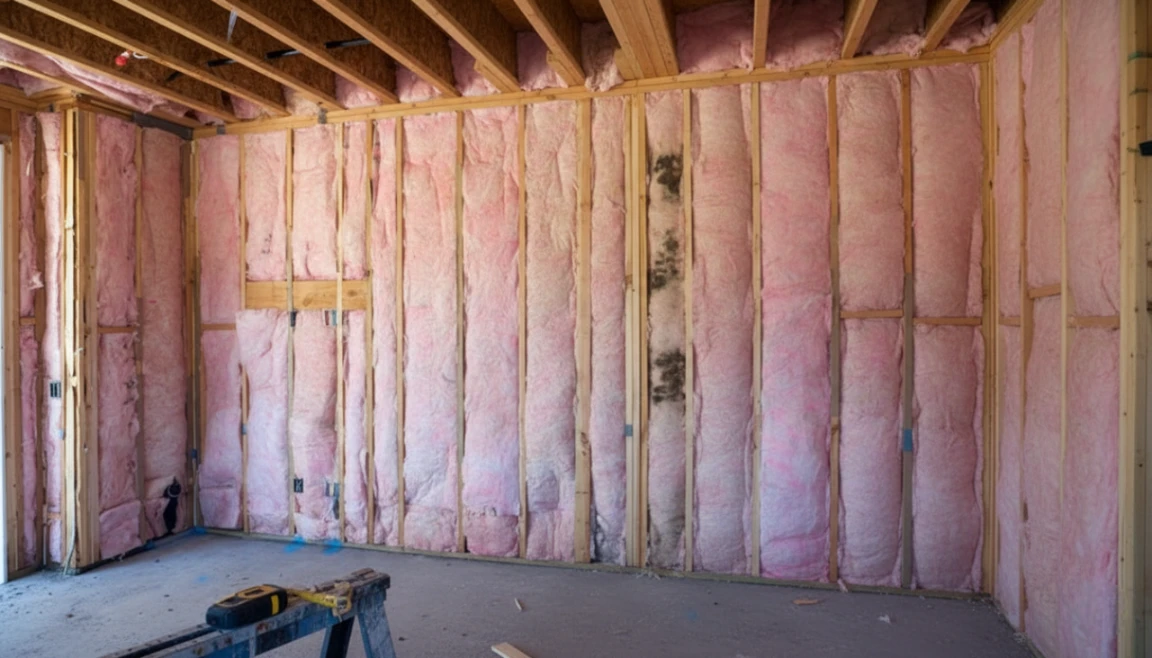
Fiberglass insulation loses effectiveness when it becomes compressed, wet, contaminated with dirt, or when air gaps form around it. The most reliable indicators are rising energy bills, uneven room temperatures, visible moisture damage, and insulation that has settled significantly below its original height. Touching the material can also reveal problems – if it feels packed down or has hard sections, it’s no longer performing as intended.
This guide provides practical methods to assess insulation condition, understand what causes performance decline, and determine when replacement becomes necessary. High Country Solutions has extensive experience evaluating insulation systems across different climate zones and building types, offering these evidence-based insights to help homeowners make informed decisions about their energy efficiency investments.
Visible deterioration often provides the first clues about insulation problems. In attics, look for insulation that has fallen below the top of ceiling joists, especially near eaves where ventilation might have caused settling. The original R-value should still be visible on paper-faced batts – if these numbers are covered by dust or the paper has torn, the material may be compromised.
Water damage leaves distinct patterns. Yellowing or brown stains indicate past moisture exposure, while black spots suggest mold growth. Both conditions reduce insulation performance and can create health hazards. Check around roof penetrations like vents and chimneys where water often enters first.
Compression marks from storage boxes or foot traffic create permanent damage zones. Pressed-down insulation loses its trapped air pockets, which are essential for thermal resistance. Even restored appearance doesn’t mean the insulating properties return.
Bonus Tip: Use a flashlight at a low angle when inspecting attic insulation. The side lighting reveals depressions and thin spots that overhead lighting might hide.
Your home’s behavior often reveals insulation issues before visible damage becomes obvious. Rooms that feel drafty despite closed windows, or floors that are noticeably cold in winter, indicate compromised insulation barriers. The U.S. Department of Energy reports that proper insulation can reduce heating and cooling costs by 15% on average, so rising utility bills deserve immediate attention.
Pay attention to temperature variations between rooms. A well-insulated home maintains consistent temperatures throughout. Hot ceilings in summer or cold walls in winter suggest the insulation layer has failed. Ice dams forming along roof edges in winter specifically point to heat escaping through insufficient attic insulation.
Listen for your HVAC system running longer cycles than usual. When insulation works properly, heating and cooling equipment shouldn’t need to run continuously to maintain comfort settings. The system cycling on every few minutes indicates heat transfer problems that insulation should be preventing.
Climate conditions directly impact insulation lifespan. In humid regions, moisture absorption becomes the primary enemy of fiberglass performance. Research from the Lawrence Berkeley National Laboratory shows that just 1.5% moisture content can reduce fiberglass insulation effectiveness by up to 35%. Coastal homes and properties in damp climates face faster degradation rates.
Temperature cycling also affects longevity. Areas with extreme seasonal variations cause more expansion and contraction of building materials, creating gaps around insulation edges. Older homes settle over time, and insulation moves with the structure, leaving voids that compromise the thermal barrier.
Air movement through attic spaces creates another degradation pathway. Continuous airflow can carry fine dust particles that settle into insulation, adding weight and reducing air-trapping capacity. In windy regions, dust accumulates faster than in protected areas.
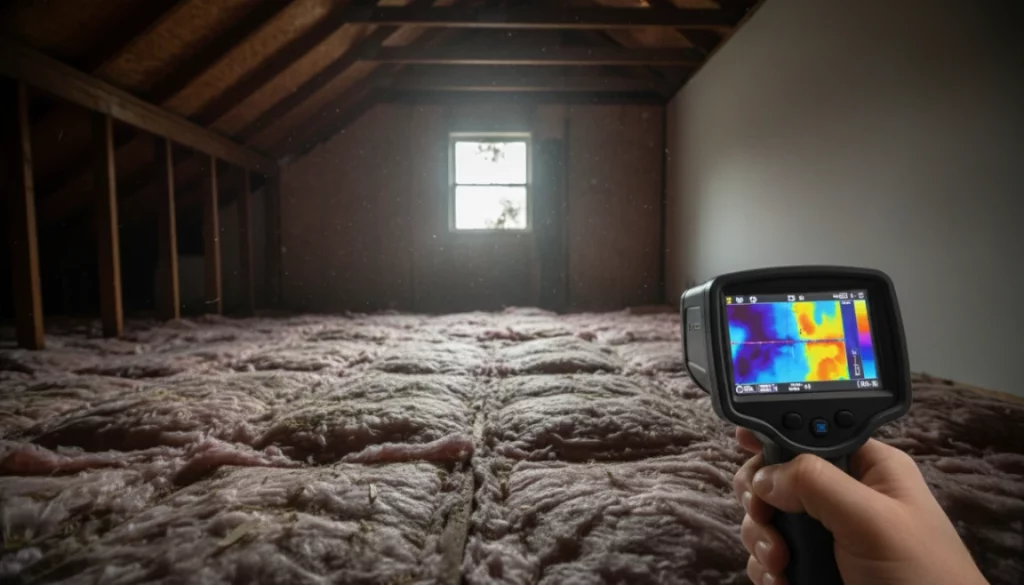
Professional insulation assessments use several diagnostic tools. Infrared thermography cameras detect temperature differences across surfaces, revealing thin spots and gaps in coverage.
A simple DIY method involves checking temperature differentials. Place a thermometer against an interior wall and another against an exterior wall during extreme weather. More than a 10-degree difference suggests inadequate insulation. The same test on ceilings versus attic spaces can indicate heat loss through the roof assembly.
Moisture meters provide quantitative data about water content in insulation. Professional meters measure through deep-penetration probes to assess insulation depth without removing material. Readings above 12% moisture content indicate compromised effectiveness that warrants replacement.
| Indicator | What It Means | Urgency Level |
|---|---|---|
| Insulation below joist height | 25-50% effectiveness loss | Medium |
| Yellow/brown staining | Past water damage | Medium |
| Visible mold growth | Active moisture problem | High |
| Hard/packed sections | Permanent compression | High |
| Significant dust accumulation | Reduced R-value over time | Low |
Assess the full scope before deciding between repair and replacement. Partial replacement works well for localized damage from roof leaks or pest activity. However, if insulation is older than 20-25 years, complete removal often proves more cost-effective than piecemeal fixes.
Consider your climate zone requirements. The International Energy Conservation Code specifies minimum R-values by region. Homes in northern zones need R-49 to R-60 in attics, while southern zones require R-30 to R-38. If your current insulation falls short of local standards, upgrading makes financial sense.
Evaluate access conditions. Attics with difficult access or limited headroom increase replacement costs significantly. In these cases, adding new insulation over existing material (densifying) might provide better value than complete removal. However, this approach only works if existing insulation is dry and intact.
Bonus Tip: Check for available energy efficiency rebates before starting insulation projects. Many utility companies offer incentives that offset 25-50% of upgrade costs when meeting specific performance targets.
Bonus Tip: When replacing insulation after leaks, identify and fix all water entry points first. New insulation will quickly become compromised if underlying moisture issues remain unresolved.
Evaluating fiberglass insulation requires checking both visible condition and performance indicators. Look for settlement below joist height, water staining, compression damage, and dust accumulation. Monitor your home for temperature variations, drafts, and increasing energy costs. Professional testing with infrared cameras or moisture meters provides a definitive diagnosis when visual inspection isn’t conclusive.
Before deciding on repairs versus replacement, consider your climate zone requirements, the age of existing insulation, and access conditions. Address any moisture problems before beginning insulation work to ensure long-term performance gains. For homes with insulation older than 20-25 years or showing multiple failure signs, complete removal and new installation typically offers the best return on investment.
High Country Solutions provides comprehensive insulation evaluations using infrared thermography and moisture detection equipment. Contact the team at [email protected] or call (307) 248-9063 to schedule a detailed assessment. Professional testing helps identify hidden problems and creates accurate replacement specifications that meet current energy code requirements. High Country Solutions serves homeowners throughout the region with evidence-based recommendations for improving home energy efficiency through proper insulation strategies.
Typical settlement ranges from 1-2 inches over 20 years for loose-fill fiberglass. More significant settling indicates installation problems or material degradation. Batts should maintain their original height with minimal compression.
No. Mold growth in fiberglass cannot be effectively cleaned because spores penetrate deep into the material. Attempting to clean only disturbs and spreads mold spores throughout the home. Complete removal and replacement is the proper solution.
It depends on your climate. In cold climates, interior vapor barriers prevent moisture migration into insulation. In warm, humid climates, vapor barriers can trap moisture and worsen problems. Always follow local building code requirements for vapor barrier placement.
Not necessarily. Proper installation matters more than thickness. Poorly installed thick insulation with gaps and voids performs worse than correctly installed thinner material. Focus on achieving continuous coverage without compression first, then add thickness for higher R-values.