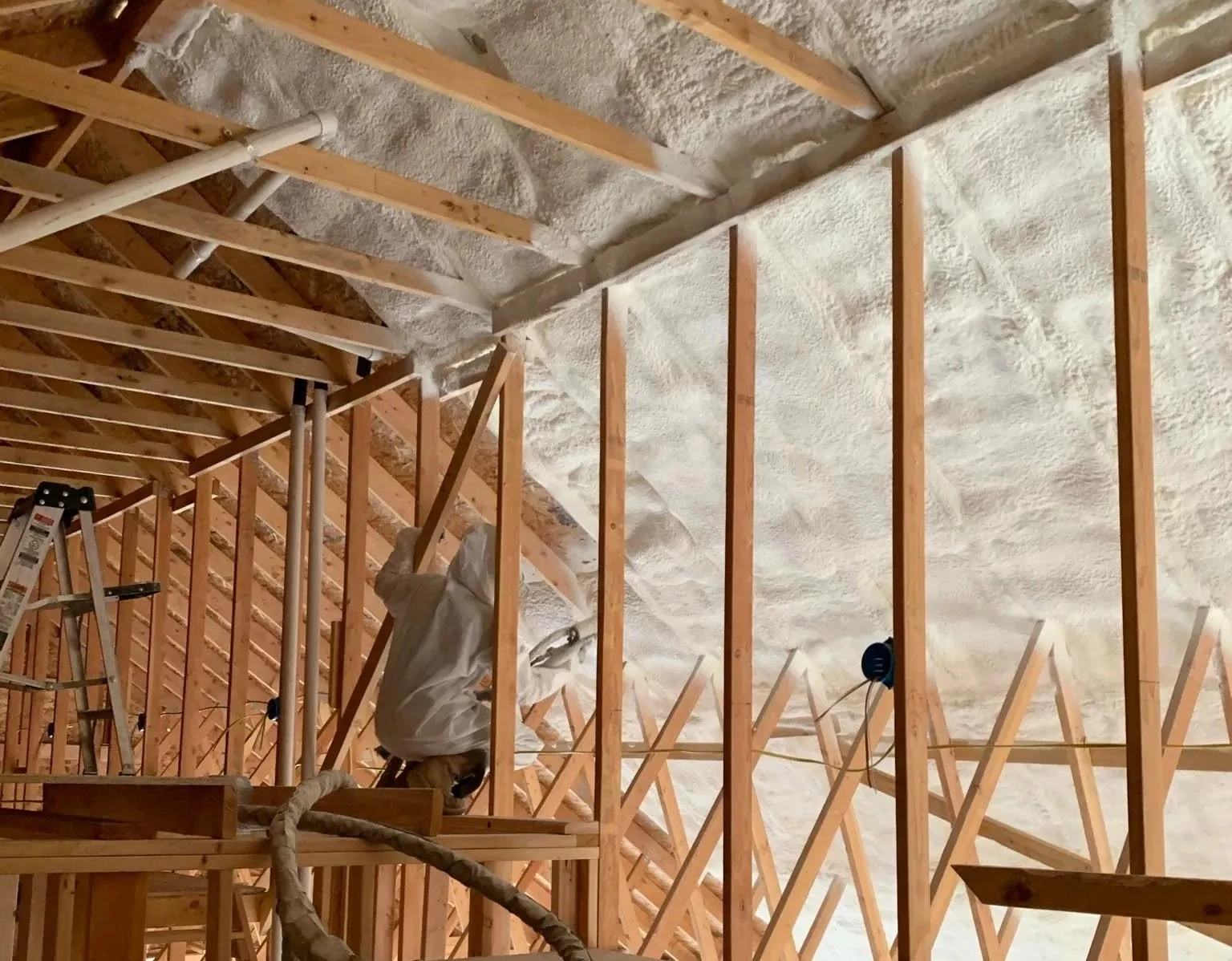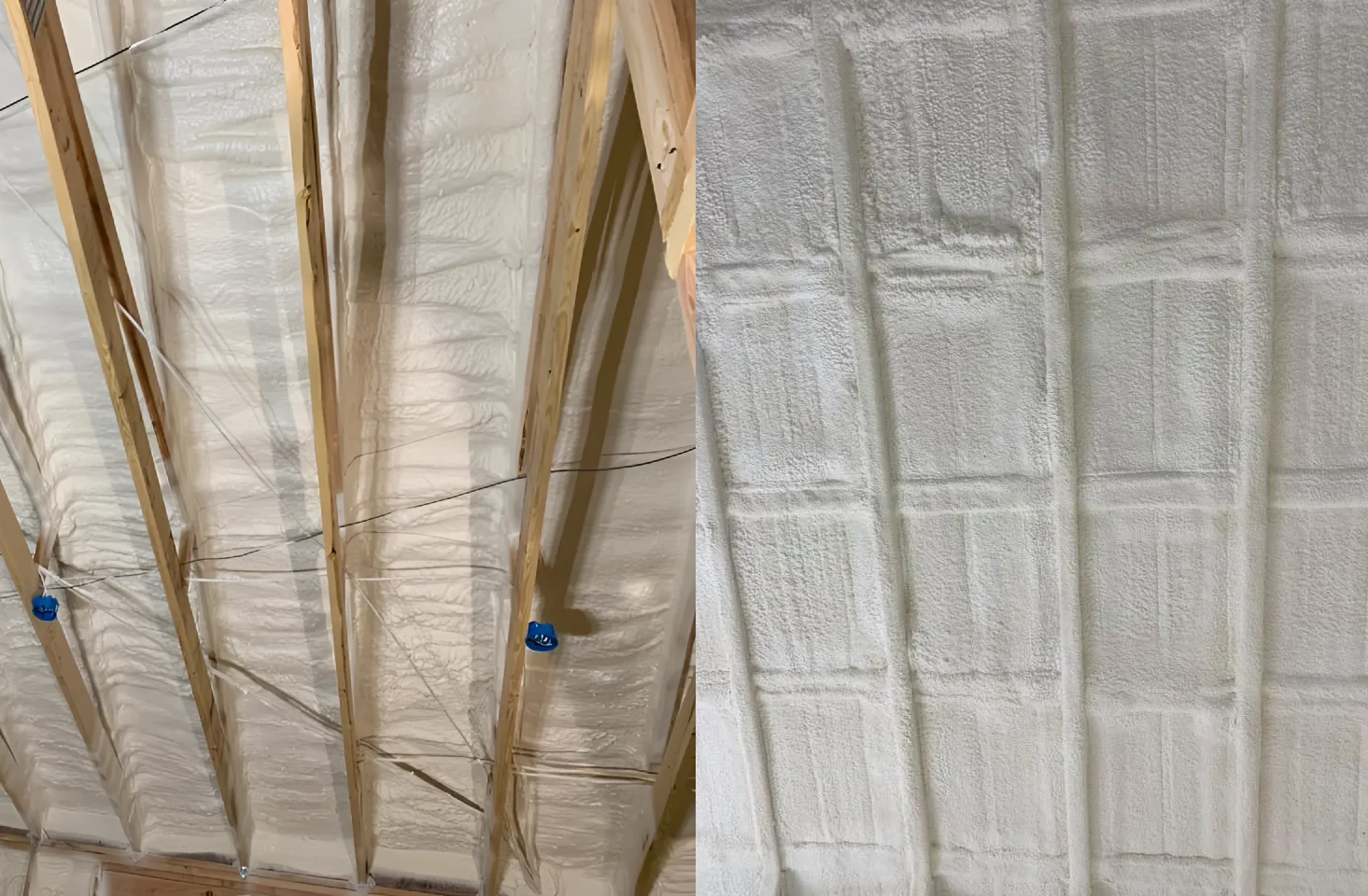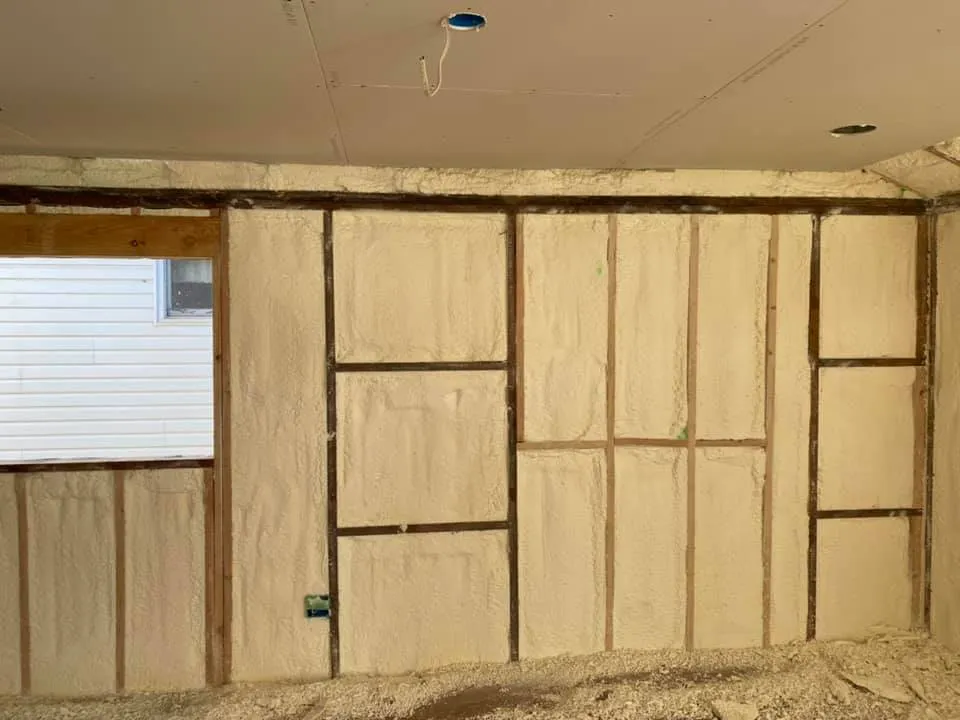
Wall Insulation vs Residential Insulation Scope Comparison in Alpine, WY
Wall insulation targets a single building envelope component, while residential insulation covers the full home envelope, including walls, attic, crawl…


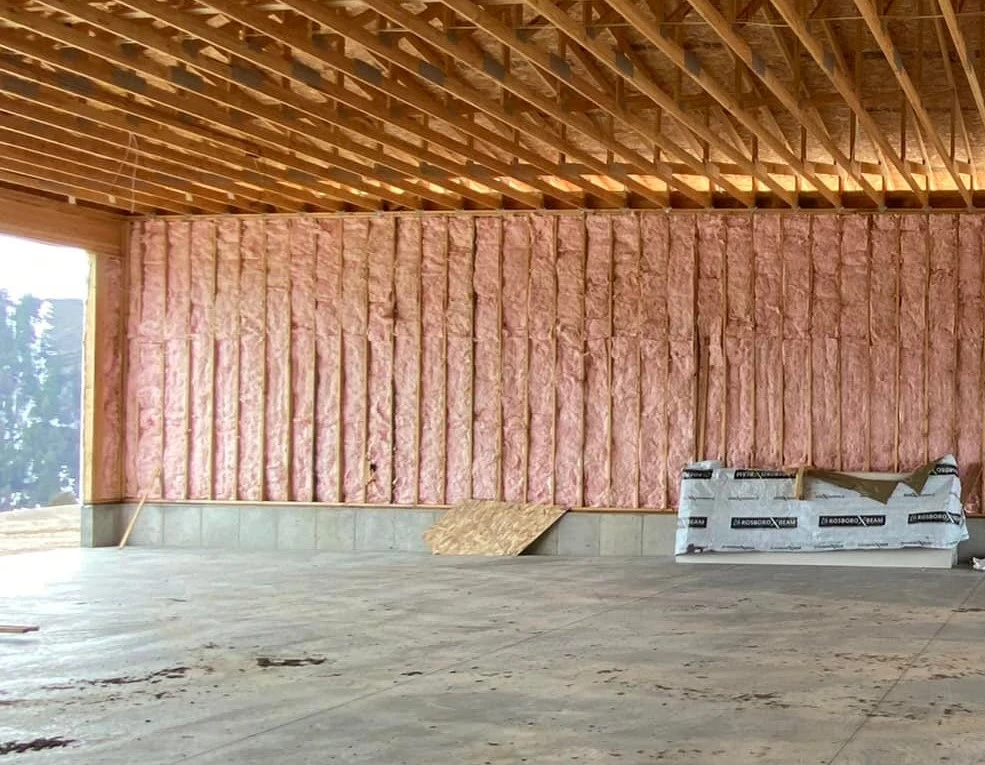
Fiberglass insulation improves thermal performance in Shelley, Idaho homes by trapping millions of tiny air pockets within spun glass fibers, which slows conductive and convective heat transfer through walls, attics, and floors. In Shelley’s Climate Zone 5, where temperatures regularly drop well below freezing, properly installed fiberglass insulation provides the thermal resistance needed to keep heated air inside and reduce the load on HVAC systems. According to the U.S. Department of Energy, insulation works by slowing the three mechanisms of heat flow: conduction, convection, and radiation, with fiberglass primarily addressing the first two.
Shelley sits in the Snake River Valley of southeastern Idaho, within IECC Climate Zone 5. This classification means the area experiences 5,400 to 7,200 heating degree days annually, with winter lows frequently reaching single digits and wind chills dropping well below zero. The Idaho Residential Energy Code Compliance guidelines specify insulation minimums that reflect these demanding conditions.
In Climate Zone 5, the heat flow direction during winter is almost entirely from the interior outward. Every uninsulated or under-insulated wall cavity, attic hatch, and rim joist becomes a thermal highway for expensive heated air to escape. The Idaho Energy Code requires specific minimum R-values for new construction and significant renovations, and fiberglass is one of the most commonly specified materials to meet those requirements.
Without adequate insulation, Shelley homeowners face higher utility bills, uneven indoor temperatures, cold spots near exterior walls, and increased wear on furnaces and heat pumps. The problem compounds in older homes built before modern energy codes, where wall cavities may contain little more than empty space or degraded insulation from decades past. Upgrading with fiberglass insulation solutions can help restore consistent indoor temperatures and improve overall energy efficiency.
The physics behind fiberglass insulation is straightforward but worth understanding in detail. Heat moves through buildings in three ways, and fiberglass addresses the two most significant ones in residential construction.
Conduction is the transfer of heat through solid materials. When the interior wall surface of a Shelley home is 70 degrees, and the exterior sheathing is 15 degrees, heat naturally flows from warm to cold through the wall studs, drywall, and sheathing. Fiberglass insulation inserted into the wall cavity interrupts this path. The glass fibers themselves have low thermal conductivity, and more importantly, the air trapped between those fibers is one of the poorest conductors of heat available. For a deeper understanding of how different insulation materials work, it helps to compare how each type handles heat transfer. Since still air has an R-value of roughly R-5.4 per inch, the millions of air pockets within fiberglass do the heavy lifting in resisting conductive heat flow.
Convection occurs when air moves and carries heat with it. Inside an uninsulated wall cavity, warm air rises along the interior drywall, transfers its heat to the exterior sheathing, cools, and sinks back down. This creates a continuous loop that moves heat out of the home. Fiberglass insulation breaks this cycle by filling the cavity with tangled fibers that disrupt airflow. The Insulation Institute notes that higher-density fiberglass products are particularly effective at controlling convective loops within wall assemblies.
Fiberglass has a limited ability to address radiant heat transfer, which is the movement of heat through electromagnetic waves. In Shelley’s climate, radiant heat loss is less of a concern than conduction and convection, but it can still contribute to comfort issues, especially near windows and in attics where the sun can create significant radiant heat gain during summer months. In such cases, consulting a residential insulation contractor in Shelley, ID can help identify the right combination of materials to manage different types of heat transfer effectively.
Choosing the right insulation material matters, especially when you are balancing performance, cost, and practical installation considerations for Shelley’s climate. Here is how fiberglass compares to other common options:
| Insulation Type | R-Value per Inch | Air Barrier | Moisture Barrier | Best Application in Zone 5 |
|---|---|---|---|---|
| Fiberglass Batts | R-3.1 to R-3.4 | No | No | Wall cavities, attics, and floors |
| Fiberglass Blown-In | R-2.2 to R-2.7 | No | No | Attics, irregular cavities |
| Cellulose Blown-In | R-3.1 to R-3.8 | No | No | Attics, existing wall cavities |
| Closed-Cell Spray Foam | R-6.0 to R-7.0 | Yes | Yes | Rim joists, crawl spaces, headers |
| Open-Cell Spray Foam | R-3.5 to R-3.7 | Yes | No | Wall cavities, sound control |
| Rigid Foam Board | R-3.8 to R-6.5 | Varies | Varies | Exterior continuous insulation |
Fiberglass stands out as the most economical choice per R-value for standard cavity fills. It does not seal air leaks on its own, which means proper air sealing is a prerequisite, not an afterthought. In Shelley homes where budget is a primary concern and cavity depths are standard, fiberglass batts or blown-in fiberglass remain practical, code-compliant options.
Bar Chart Suggestion: A side-by-side comparison of R-value per inch across fiberglass batts, blown-in fiberglass, cellulose, closed-cell spray foam, and open-cell spray foam, highlighting the cost per R-value for each type in the Shelley, ID market.
The Idaho energy code adopts the IECC with state-specific amendments. For Shelley homes in Climate Zone 5, the current code requirements for insulation are:
| Building Component | Minimum R-Value | Common Fiberglass Solution |
|---|---|---|
| Attic (flat or cathedral) | R-49 | Blown-in fiberglass, 14-17 inches |
| Wood frame wall cavity | R-20 or R-13 + R-5 ci | R-21 cavity batts or R-13 + R-5 rigid |
| Floor over unconditioned space | R-30 | R-30 batts or blown-in |
| Basement wall | R-15/R-19 | R-15 batts with interior facing |
| Crawlspace wall | R-15/R-19 | R-15 batts with vapor retarder |
| Rim joist | R-13 minimum | R-19 batts, cut to fit |
Meeting these minimums with fiberglass is entirely achievable and represents the baseline for legal compliance. However, building science research from Building Science Corporation consistently shows that exceeding code minimums delivers diminishing but still meaningful returns on energy savings, especially when combined with effective air sealing.
Understanding what can reduce fiberglass insulation from its rated R-value to something far less effective is essential for homeowners and contractors alike. Several variables influence the actual thermal performance you get in the field.
This is the single largest factor. According to Building Science Corporation’s field research, fiberglass batts installed with compressions, gaps, voids, or misalignments can lose 30% to 50% of their labeled R-value. A batt rated at R-15 might perform at R-8 in real-world conditions if it is stuffed behind electrical wires, compressed behind plumbing, or left with gaps around electrical boxes. In Shelley’s cold winters, that performance loss translates directly to higher heating costs.
Fiberglass is not an air barrier. If warm indoor air can circulate through and around the fiberglass, convection within the cavity reduces the effective R-value. This is why the DOE’s energy code field study for Idaho found that many homes, even those with code-compliant insulation levels, underperformed on energy efficiency due to poor air sealing. Caulking, spray foam sealant, and gasketing around penetrations must happen before insulation goes in.
In Climate Zone 5, the interior of a heated home during winter is warm and humid relative to the exterior. This creates a vapor drive from inside to outside. If fiberglass in a wall cavity becomes wet from condensation, its R-value drops significantly, and the material risks mold growth. Proper vapor retarder placement, typically on the warm-in-winter side of the assembly, is critical. In Shelley, this means a vapor retarder facing the interior of conditioned spaces.
Wood studs conduct heat better than the fiberglass insulation between them. In a standard 2×4 wall with R-13 fiberglass, the studs themselves create thermal bridges that reduce the whole-wall R-value to approximately R-10 or less. Adding continuous exterior insulation, such as rigid foam sheathing, is the most effective way to address this, though it adds cost and complexity to the project.
When fiberglass batts are compressed to fit into a space narrower than their designed thickness, the air pockets that provide thermal resistance get squeezed out. An R-19 batt compressed from 6.25 inches to 5.5 inches loses a significant portion of its insulating value. Always match batt thickness to cavity depth, and never force oversized batts into tight spaces.
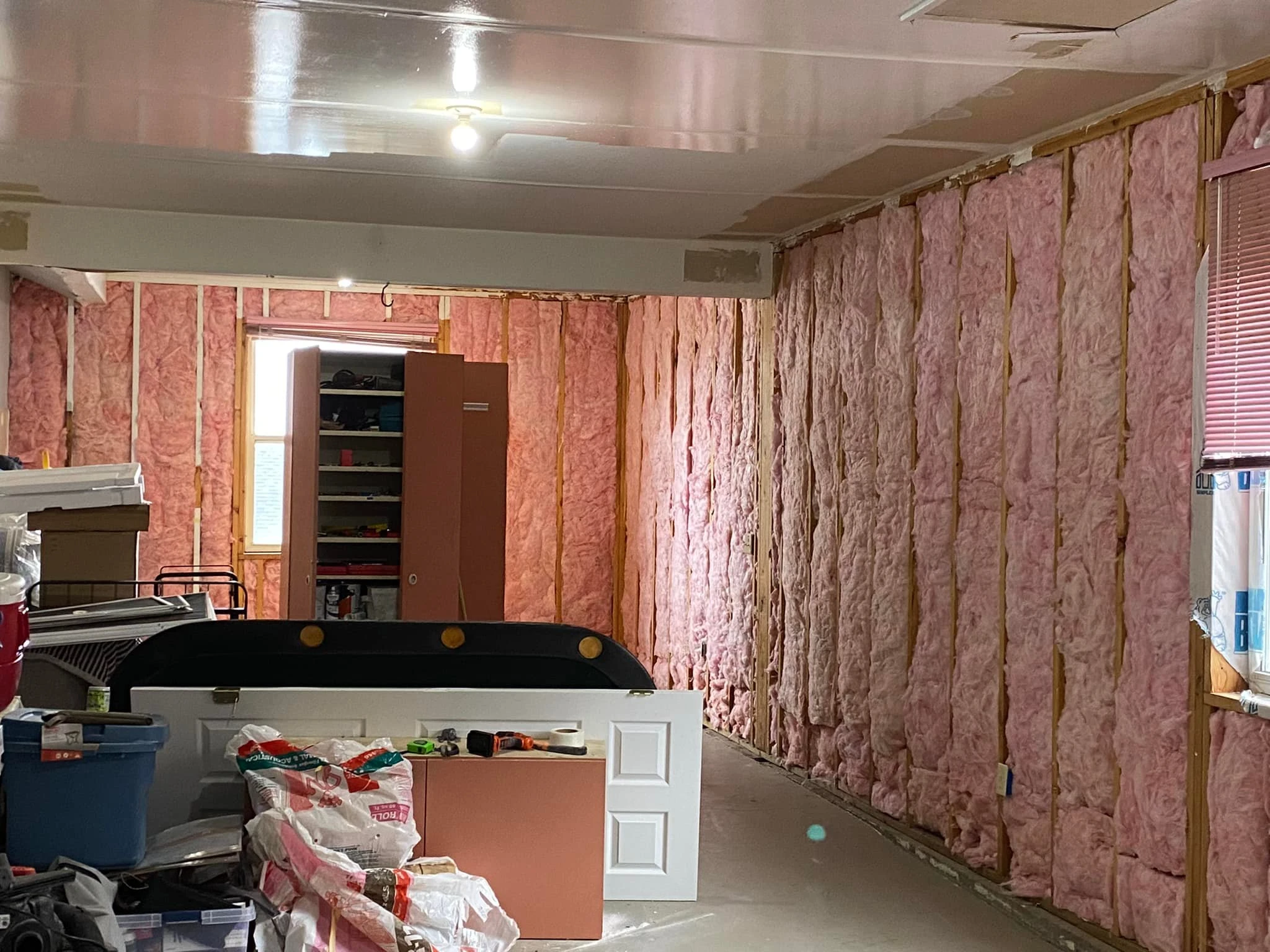
| Scenario | Home Type | Problem | Solution | Outcome |
|---|---|---|---|---|
| 1970s ranch home | 1,400 sq ft, 2×4 walls | Original R-11 batts degraded and sagging; ice dams on the roof | Removed old insulation, air-sealed attic floor, and blew in R-49 fiberglass | Heating bills dropped 28%; ice dams eliminated |
| New construction build | 2,200 sq ft, two-story | Meeting 2021 IECC code for Climate Zone 5 | R-21 fiberglass batts in walls, R-49 blown fiberglass in attic, sealed penetrations | Passed blower door test at 3.2 ACH50; comfortable first winter |
| Basement remodel | 1,800 sq ft, full basement | Cold floors above an unconditioned basement; HVAC running constantly | R-30 fiberglass batts between floor joists with faced side up; rim joist sealed and insulated | Upstairs rooms 8 degrees warmer; furnace short-cycling stopped |
| Pole barn shop | 1,200 sq ft, metal building | Unusable in winter; condensation dripping from the ceiling | Double-layer vinyl-faced fiberglass blanket in walls and ceiling with sealed joints | Space maintains 55 degrees with a single torpedo heater |
| Attic conversion | 800 sq ft bonus room | Cathedral ceiling with R-19 underinsulated for Zone 5 | Added R-15 rigid foam over existing sheathing, then R-19 fiberglass baffled rafters | Room stays comfortable year-round; no condensation issues |
Fiberglass insulation is one of the few home improvements with a measurable and relatively quick return on investment. For Shelley homeowners, the combination of high heating costs and a cold climate makes insulation upgrades especially attractive. The DOE’s Energy Saver program reports that adding insulation to an under-insulated attic can reduce heating and cooling costs by 10% to 50%, depending on existing conditions and climate zone.
In practical terms, a Shelley homeowner spending $200 per month on winter heating could save $20 to $100 per month by bringing attic insulation from R-19 up to R-49 with blown fiberglass. At an installation cost of roughly $1,500 to $2,500 for a typical 1,500 square foot attic, the upgrade pays for itself in two to five heating seasons. Additionally, fiberglass insulation carries a manufacturer’s warranty of 70+ years in many cases, making it a permanent improvement that adds resale value to the home.
If your Shelley, ID home is losing heat through under-insulated walls, an underperforming attic, or drafty rim joists, the team at High Country Solution can help you identify exactly where your building envelope is failing and recommend the right fiberglass insulation strategy for your specific situation. We work with homeowners and contractors throughout the region to deliver insulation solutions that meet or exceed the Idaho energy code while keeping your budget intact.
Request a Quote📞 Schedule an Insulation Assessment | [email protected] | (307) 248-9063
Getting the right insulation in place before the next heating season is one of the smartest investments you can make in your Shelley home. Let us help you get it done right the first time.
Shelley is in Climate Zone 5, which requires a minimum of R-49 for attic insulation under the Idaho energy code. Most homes achieve this with approximately 14 to 17 inches of blown-in fiberglass, or a combination of existing batts topped with a blown fiberglass layer.
Yes, you can install blown fiberglass directly over existing batts as long as the existing insulation is dry, in good condition, and does not contain a vapor barrier facing down toward the living space. If the existing batts have a kraft-facing vapor barrier on the bottom side, you should either remove them or face the new insulation to avoid trapping moisture.
Fiberglass itself does not degrade or lose thermal resistance over its service life. However, fiberglass can settle in attic applications, especially blown-in products at lower densities, which slightly reduces the effective R-value. Batts that are properly fitted in wall cavities maintain their R-value for decades as long as they stay dry and undisturbed.
No. Fiberglass insulation is made from inorganic glass fibers and sand, which are naturally non-combustible. Most fiberglass batts carry a Class A fire rating, meaning they do not burn, do not contribute fuel to a fire, and do not produce toxic smoke. Some kraft-faced products have paper backing that is flammable, but the fiberglass itself is not.
Absolutely. Fiberglass is not an air barrier and will not stop air leaks on its own. In fact, if air moves through fiberglass insulation, it carries heat with it and significantly reduces the effective R-value. Air sealing should always be completed before insulation is installed for the best thermal performance.