Insulated vs Uninsulated Walls: How Big Is the Energy Difference?
The energy difference between insulated and uninsulated walls is substantial, typically ranging from 30% to over 50% in heating and…


Managing a commercial facility often feels like a constant battle against rising operational costs. You analyze utility bills, tweak HVAC schedules, and identify efficiency gaps, yet heating and cooling expenses often remain the largest line item in your budget. While high-efficiency mechanical systems usually get the glory, the real workhorse of building performance is much quieter. It hides behind your walls and above your ceilings.
Commercial insulation is the foundational element of building efficiency. It is not merely about stuffing fiberglass between studs; it is about creating a unified thermal envelope that dictates how your building interacts with the outside environment. When executed correctly, a strategic insulation plan creates a stable interior climate, reduces mechanical system load, and extends the lifespan of the structure.
This guide provides a comprehensive look at commercial insulation strategies. You will move past the basics and explore the building science, material selection, and installation techniques that drive real ROI. Whether you are constructing a new facility or retrofitting an aging warehouse, understanding these principles will help you make decisions that pay dividends for decades.
Many building owners view insulation as a “check-the-box” code requirement. This perspective leaves money on the table. Insulation is one of the few building components that saves money every single day it is installed.
According to the U.S. Environmental Protection Agency, approximately 30% of the energy used in commercial buildings is wasted. A significant portion of this waste stems from heat loss in winter and heat gain in summer, caused by poorly insulated envelopes.
When your thermal envelope is weak, your HVAC system has to work overtime to maintain a set temperature. This leads to higher electricity and gas usage, but it also increases wear and tear on expensive mechanical equipment. A well-insulated building can help you downsize your HVAC equipment during the design phase or extend the life of existing units in a retrofit scenario.
Thermal comfort is a primary driver of tenant satisfaction. Drafty offices, cold warehouses, or hot upper floors lead to complaints and turnover. A consistent indoor environment keeps occupants happy and productive.
Key Takeaway: Think of insulation as a fixed-cost reduction strategy. The upfront investment locks in lower utility rates relative to usage for the life of the building.
Before selecting products, you must understand the forces at play within your walls. Commercial structures, often built with steel and concrete, behave differently from residential wood-framed houses.
Most people know R-value, which measures a material’s resistance to heat flow. The higher the R-value, the better it insulates. However, in commercial construction, U-factor is often the more accurate metric. U-factor measures the rate of heat transfer through an entire assembly (studs, siding, insulation, and drywall combined). A lower U-factor indicates a better-performing wall or roof.
Steel studs are excellent conductors of heat. If you place R-19 fiberglass batts between steel studs, the wall’s effective R-value might drop by 50% or more because heat bypasses the insulation and travels through the steel studs. This is called thermal bridging.
Insulation cannot do its job if air is leaking through the walls. Air leakage carries heat and moisture, compromising the R-value and inviting mold.
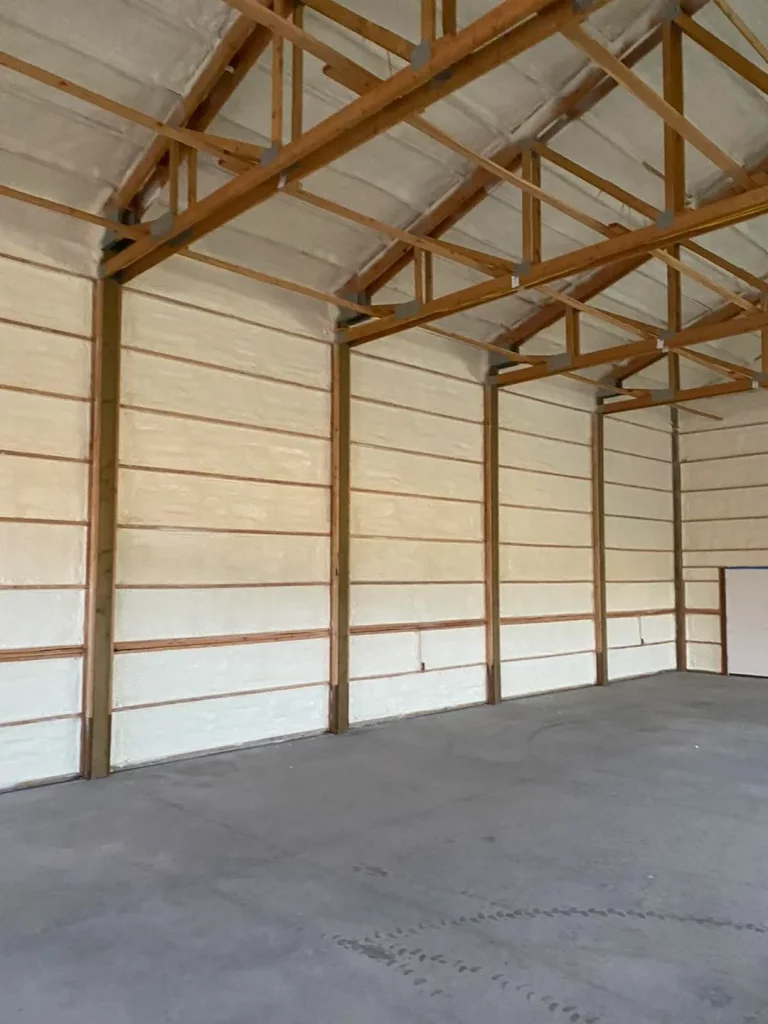
The market offers a wide array of materials, each with specific strengths. Selecting the right one depends on your climate zone, building type, and budget.
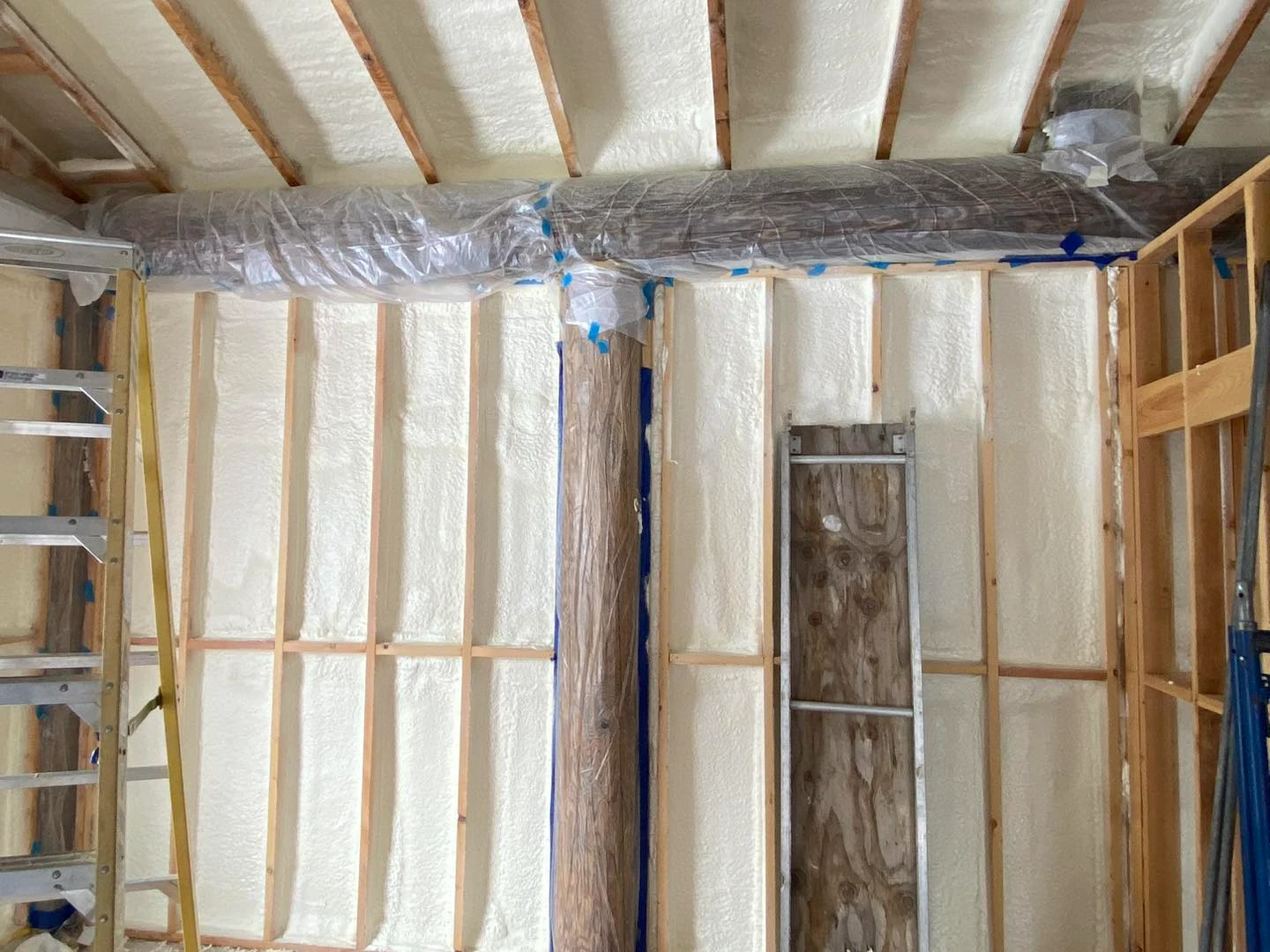
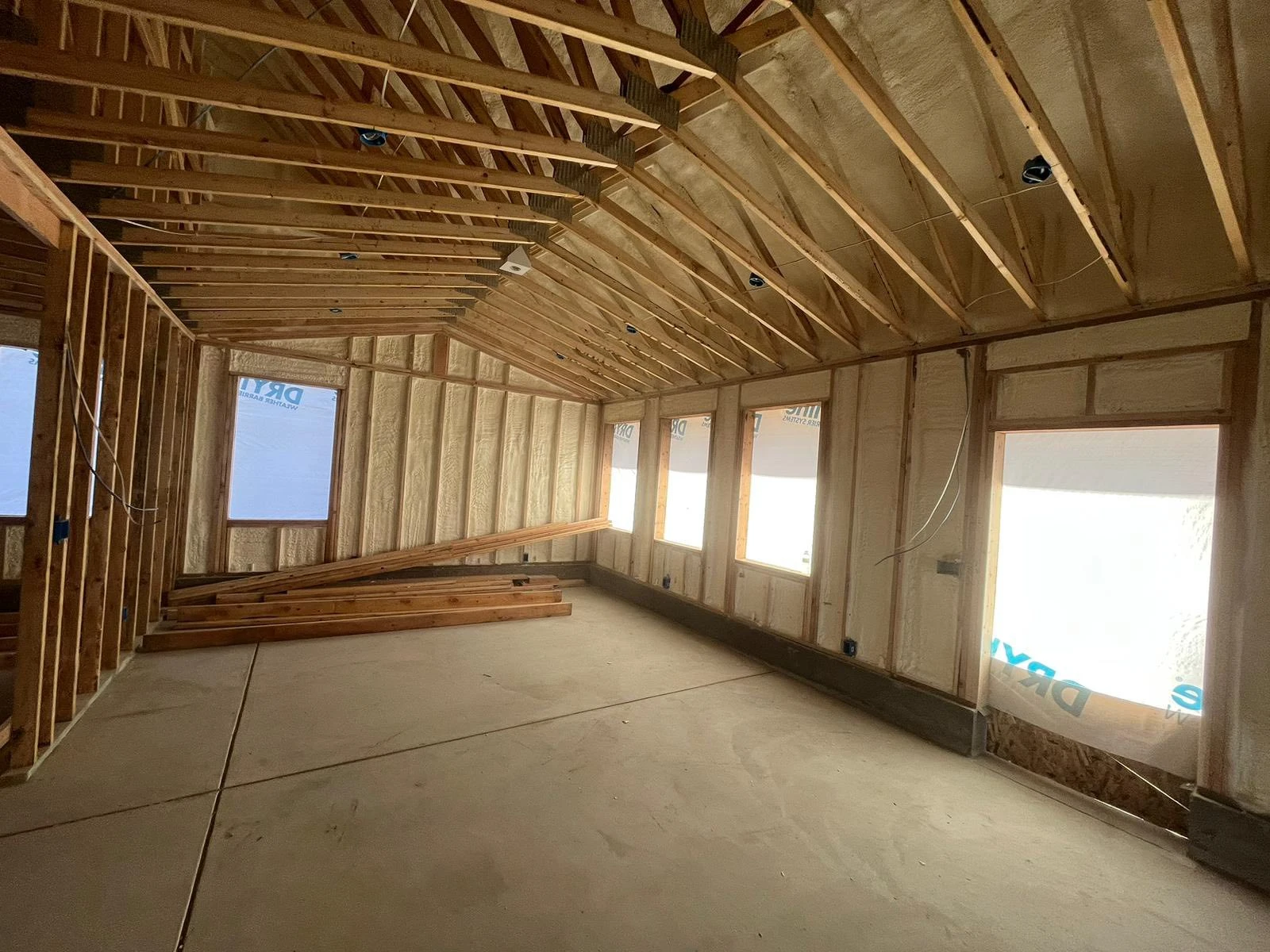
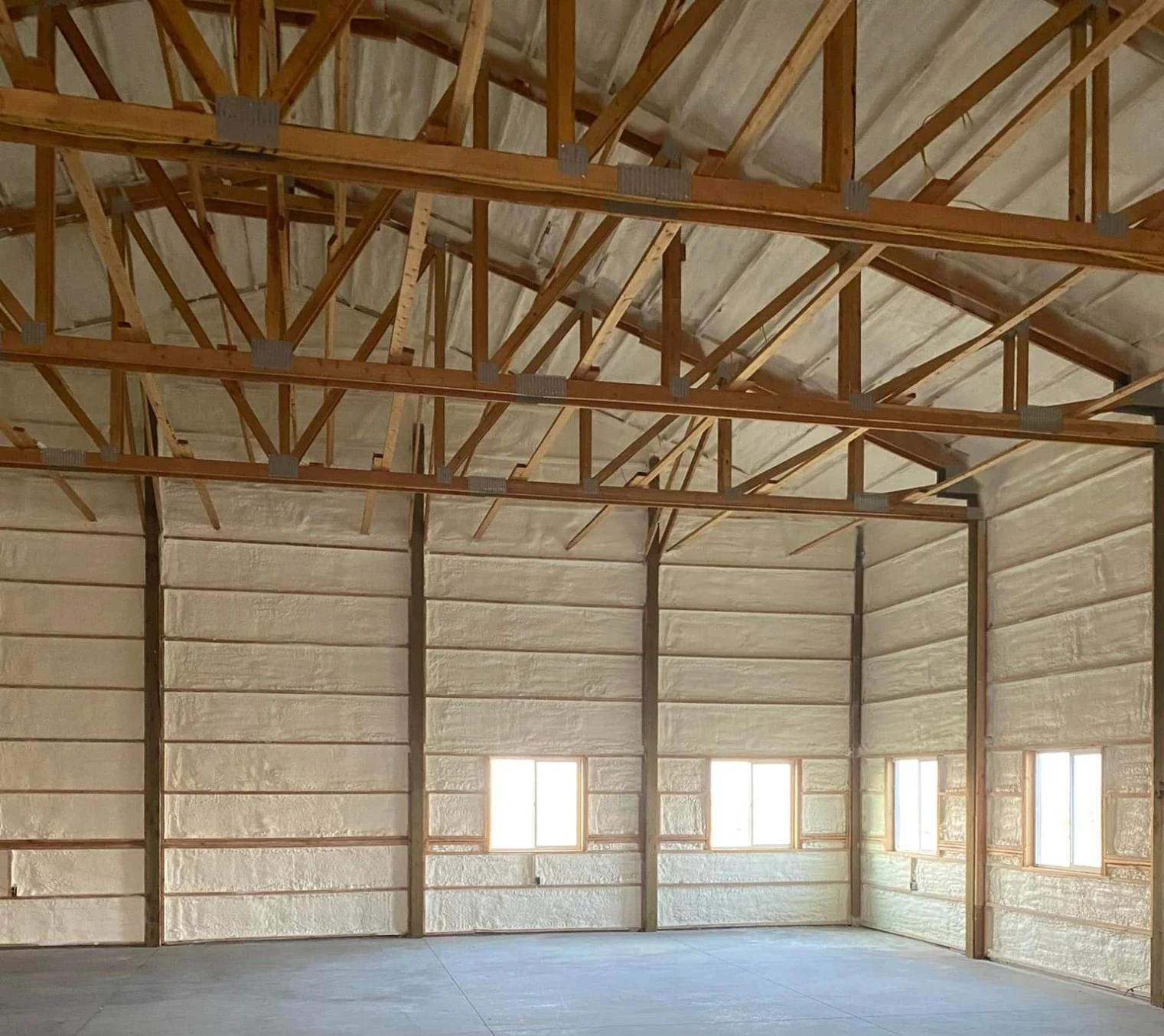
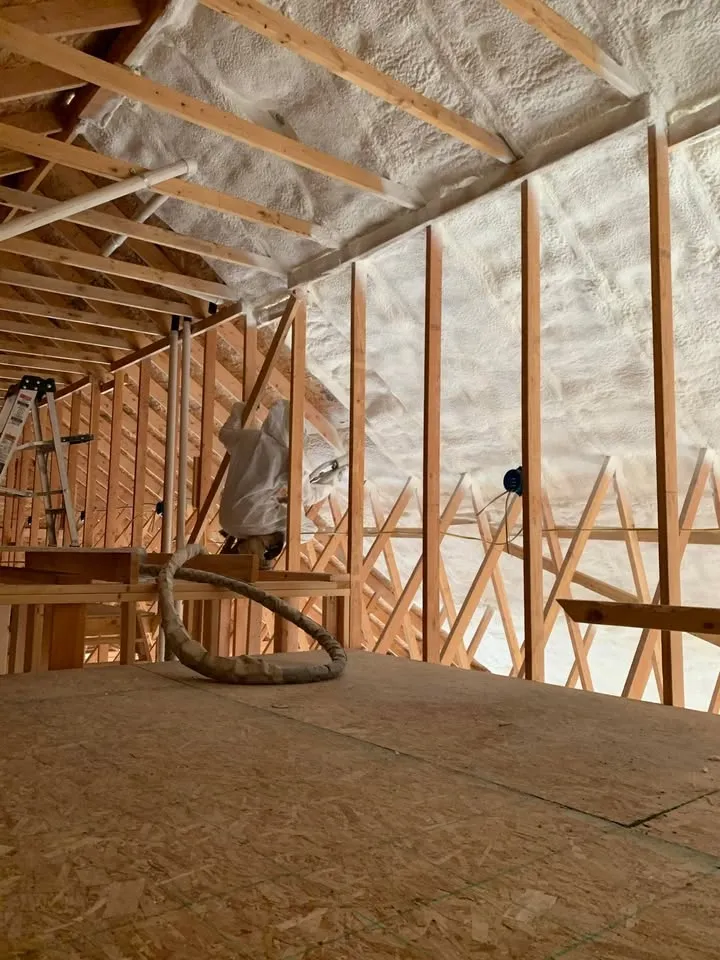
SPF is a powerhouse in commercial construction because it insulates and seals air leaks simultaneously.
Rigid boards are ideal for continuous insulation applications on the exterior of buildings or on flat roofs.
Made from spun rock or slag, mineral wool is fire-resistant and hydrophobic (repels water). It is the preferred choice for fire-rated assemblies and high-temperature environments.
The traditional choice. In commercial settings, high-density fiberglass batts are standard for interior sound control, while metal building insulation (MBI) is used for large metal structures.
| Material | Approx R-Value/Inch | Best Application | Key Benefit |
|---|---|---|---|
| Closed-Cell Spray Foam | 6.0 – 7.0 | Walls, Roofs, Hard-to-reach areas | Highest R-value; Air & Vapor barrier |
| Open-Cell Spray Foam | 3.5 – 3.8 | Interior walls, Roof decks | Air sealing; Sound attenuation |
| Polyiso Board | 5.6 – 6.0 | Commercial Roofing, Wall sheathing | High thermal performance per inch |
| Mineral Wool | 4.0 – 4.3 | Fire walls, Curtain walls | Fire resistance; Water repellency |
| Fiberglass | 3.1 – 4.3 | Metal buildings, Interior partitions | Cost-effective; Widely available |
Where you place insulation is just as critical as what you buy. A piecemeal approach leaves gaps that undermine the whole system.
In many commercial buildings, specifically single-story warehouses or retail centers, the roof represents the largest surface area exposed to the elements. Data from the National Roofing Contractors Association suggests that upgrading roof insulation during a re-roofing project is one of the most cost-effective energy retrofits available. Polyiso boards installed above the deck (but below the membrane) effectively utilize the building’s thermal mass.
In steel-framed buildings, insulating between the studs is rarely enough because of thermal bridging. The modern standard is to apply Continuous Insulation (CI) over the exterior sheathing. This wraps the building in a thermal blanket, breaking the bridge created by steel studs.
Concrete slabs conduct cold from the ground into the building. Perimeter insulation at the slab edge prevents this heat loss. In colder climates, under-slab insulation is also necessary to maintain floor comfort and to avoid condensation.
Expert Tip: Don’t ignore the rim joist or the wall-to-roof connection. In many commercial buildings, the gap where the wall meets the roof deck is a significant source of air leakage. Sealing this junction with spray foam before adding insulation can solve draft issues that larger capital projects miss.
To truly maximize efficiency, High Country Solutions recommends moving beyond standard practices toward high-performance assemblies.
Continuous insulation runs uninterrupted across all structural members. It is the only effective way to stop thermal bridging in metal buildings.
Millions of square feet of commercial space exist in pre-engineered metal buildings. Older metal buildings often suffer from “sagging bag” insulation that has lost its loft.
Every commercial project faces hurdles. Anticipating them saves time and prevents expensive callbacks.
Moisture is the primary enemy of building durability. If warm, moist interior air contacts a cold surface inside the wall (such as a steel stud), it condenses into water. Over time, this corrodes steel and rots sheathing.
Commercial buildings have strict fire codes. Foam plastics (spray foam, XPS, EPS) generally require a thermal barrier (like drywall) or an ignition barrier to separate them from the interior space.
The International Energy Conservation Code (IECC) sets the baseline for energy efficiency. Adhering to the “Prescriptive Path” (meeting specific R-values) is simple but rigid. The “Performance Path” allows trade-offs (e.g., better windows that require slightly less wall insulation) but requires energy modeling software.
How do you justify the upfront cost of premium insulation systems? You need data.
Before starting a retrofit, conduct a commercial energy audit (ASHRAE Level 1 or 2). This identifies exactly where you are losing energy. Infrared thermography can detect heat loss through roofs or walls, making the problem visible to stakeholders.
Calculate the Simple Payback Period:
However, a comprehensive analysis should also include:
A report by the American Chemistry Council highlights that for every Btu of energy consumed in the production of insulation, 12 Btus are saved each year by using that insulation. This is a massive return on investment in energy.
The industry is moving toward smarter, greener materials.
Spray foam manufacturers are transitioning to blowing agents with a strictly lower Global Warming Potential (GWP). These hydrofluoroolefin (HFO) agents offer the same performance as older foams but with a drastically reduced environmental footprint.
In areas with extremely tight spaces, VIPs offer exceptional thermal resistance (up to R-30 per inch). While currently expensive, costs are dropping, making them viable for specialized commercial applications.
Most insulation materials are designed to last the life of the building, typically 50 to 100 years. However, this depends on moisture control. Fiberglass that gets wet can settle and degrade. Rigid foam and spray foam are generally more stable over long periods, provided they are not exposed to UV light.
Yes, often you can. Adding a layer of blown-in fiberglass over existing batts in an attic is common. However, you must ensure you are not creating a “double vapor barrier,” which traps moisture between layers. If the old insulation is wet or moldy, it must be removed first.
For complex geometries, air sealing requirements, or flood-prone areas, yes. The ability of spray foam to seal air leaks often results in greater total energy savings than less expensive materials, even if their R-values on paper are similar. The labor savings from doing insulation and air sealing in one pass also offset the material cost.
Insulation materials are rated for Flame Spread and Smoke Development. Mineral wool is non-combustible and can actually increase the fire resistance of a wall assembly. Foam plastics are combustible and must be covered by a thermal barrier (like 1/2″ gypsum board) to meet code.
There is no single number. The required R-value is dictated by your local climate zone (IECC Zone map) and the part of the building (roof vs. wall). For example, a roof in a northern climate (Zone 6) requires a much higher R-value than a wall in a southern climate (Zone 2).
A robust insulation strategy is the silent guardian of your commercial property’s value. It lowers monthly overhead, protects the facility’s structural integrity from moisture damage, and creates an environment that tenants want to stay in.
To move forward, start by assessing your current building envelope. Look for the invisible leaks and the thermal bridges that are draining your budget. Choose materials not just on price per square foot, but on performance per year. Whether you opt for the seamless seal of spray foam or the robust thermal break of continuous rigid board, the key is attention to detail during installation.
Effective insulation is about continuity. By eliminating gaps and addressing the building’s physics, you turn your facility into a high-performance asset.
Navigating commercial energy codes and selecting the right material mix can be complex. If you are looking for a partner to help assess your facility’s needs or execute a high-performance installation, we are here to help.
High Country Solutions
Reach out today to discuss your project and discover how we can improve your building’s efficiency.